PulseAugur
实时 23:19:16
中文(ZH) DAM-VLA——手臂与夹爪解耦,三星研究院的动态动作VLA刷新机器人操控SOTA | ICRA 2026

Samsung's DAM-VLA decouples robot arm and gripper actions for SOTA manipulation

Researchers have introduced DAM-VLA, a novel Vision-Language-Action (VLA) model designed to enhance robot manipulation by decoupling arm movements from gripper actions. This approach addresses the limitations of existing models that use a single action framework for all tasks, which struggles with the distinct requirements of large-scale arm movements and precise gripper operations. DAM-VLA utilizes a dual-scale weighting mechanism and dynamic action routing to improve efficiency and accuracy, achieving state-of-the-art results on pick-and-place and furniture assembly tasks. AI

影响 Introduces a new VLA architecture that improves robot manipulation accuracy and generalization, potentially accelerating progress in embodied AI.

排序理由 This is a research paper detailing a new model architecture for robot manipulation.

在 雷峰网 (Leiphone) 阅读 →

AI 生成摘要 · Google Gemini · 来自 1 个来源。 我们如何撰写摘要 →
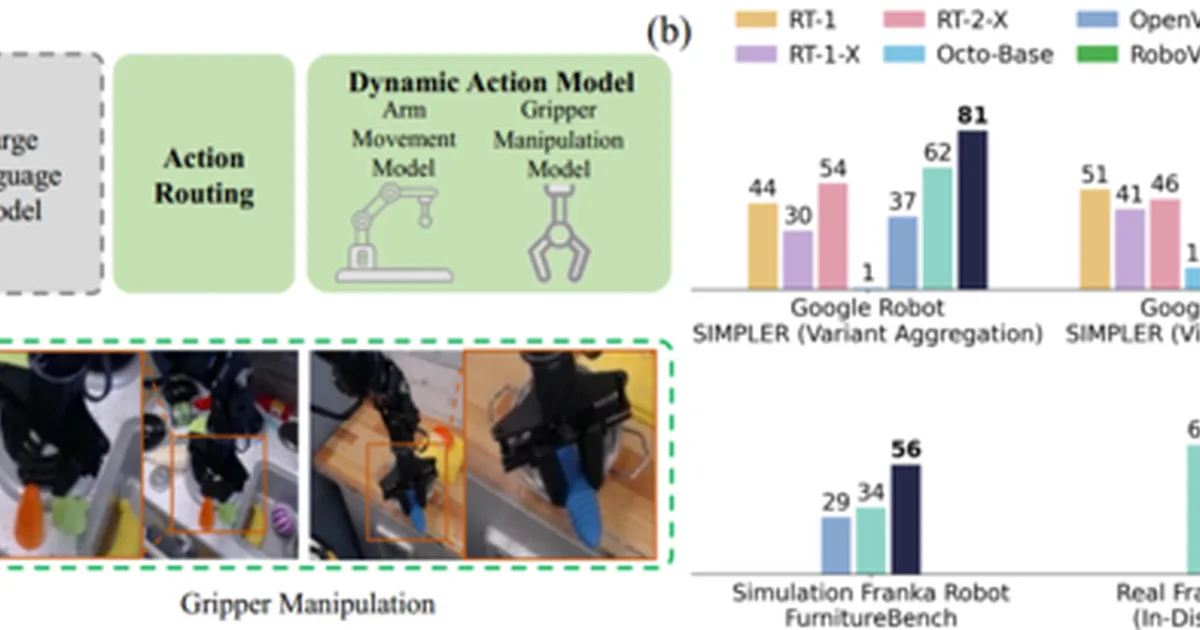
Samsung's DAM-VLA decouples robot arm and gripper actions for SOTA manipulation

报道来源 [1]

  1. 雷峰网 (Leiphone) TIER_1 中文(ZH) ·

    DAM-VLA -- Decoupling Arms and Grippers, Samsung Research's Dynamic Action VLA Refreshes Robot Manipulation SOTA | ICRA 2026

    <h2>一、背景&nbsp;</h2><p>视觉-语言-动作(VLA)模型正成为机器人智能化的核心架构,但现有主流方法(如OpenVLA、π0、CogACT)存在一个根本性缺陷:用同一个动作模型统一处理所有类型的动作。这种「一刀切」的设计在面对机器人操控任务时暴露出两大内在矛盾。</p><p>从任务特性来看,机器人操控存在两种本质不同的动作类型:手臂大幅度运动(粗动作)需要全局场景理解、路径约束宽松;夹爪精细操作(精细动作)需要局部精细聚焦、精确抓取姿态、容错率极低。这两种动作在路径约束、视觉注意力和数据分布上有本质差异,用同一个模型兼顾「粗定位」与「精…