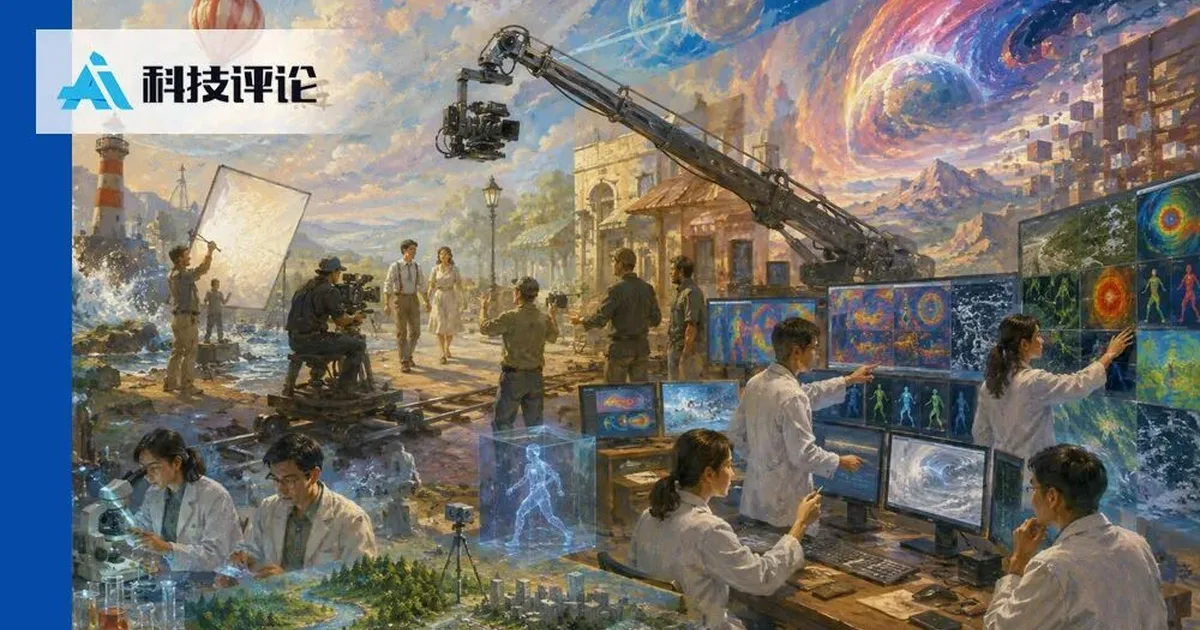
Recent advancements in video AI are shifting focus from generating visually appealing frames to understanding and controlling the underlying dynamics of motion and physics. Research presented at CVPR 2026 highlights methods for editing video motion, such as manipulating object trajectories and camera movements, by representing motion as editable points or 3D tracks. Other innovations include generating consistent orbital videos from single images using 3D shape priors and developing self-improving agents that iteratively refine video generation based on feedback. Efficiently tokenizing video data and learning long-term motion embeddings are also key areas of development for more capable video models. AI
影响 Video AI is evolving beyond simple frame generation to understand and manipulate complex motion and physics, enabling more sophisticated editing and realistic simulations.
排序理由 The cluster summarizes multiple research papers presented at a conference, focusing on advancements in video AI models and techniques. [lever_c_demoted from research: ic=1 ai=1.0]
- Adobe
- Amazon
- Apple
- Australian National University
- LMU Munich
- National University of Singapore
- CVPR
- Shanghai Artificial Intelligence Laboratory
- Shanghai Jiao Tong University
- Stony Brook University
- Chinese University of Hong Kong
- Tsinghua University
- University of Maryland, College Park
AI 生成摘要 · Google Gemini · 来自 1 个来源。 我们如何撰写摘要 →