PulseAugur
实时 20:11:34
English(EN) January 32: how to know if an AI trained on your content, and prove it

AI水印可被检测,并在模型训练链中持续存在

研究人员开发了为AI生成文本添加水印的方法,使其具有统计学上的可检测性。这项技术由Kirchenbauer等人开创,并得到Google Gemini中的SynthID-Text验证,它在输出中嵌入了微妙的统计信号,无需直接访问模型即可识别。Meta研究人员提出的一个相关概念,称为“放射性”,表明即使使用经过标记数据训练的模型来训练后续模型,这些水印也能持续存在,这为AI生成内容的来源提供了一条潜在的追溯链。 AI

影响 为追踪跨模型世代的AI生成内容的来源建立了一种潜在方法。

排序理由 该条目讨论了关于AI水印技术及其在模型训练中持续存在的新研究发现。[lever_c_demoted from research: ic=1 ai=1.0]

在 dev.to — LLM tag 阅读 →

AI 生成摘要 · Google Gemini · 来自 1 个来源。 我们如何撰写摘要 →
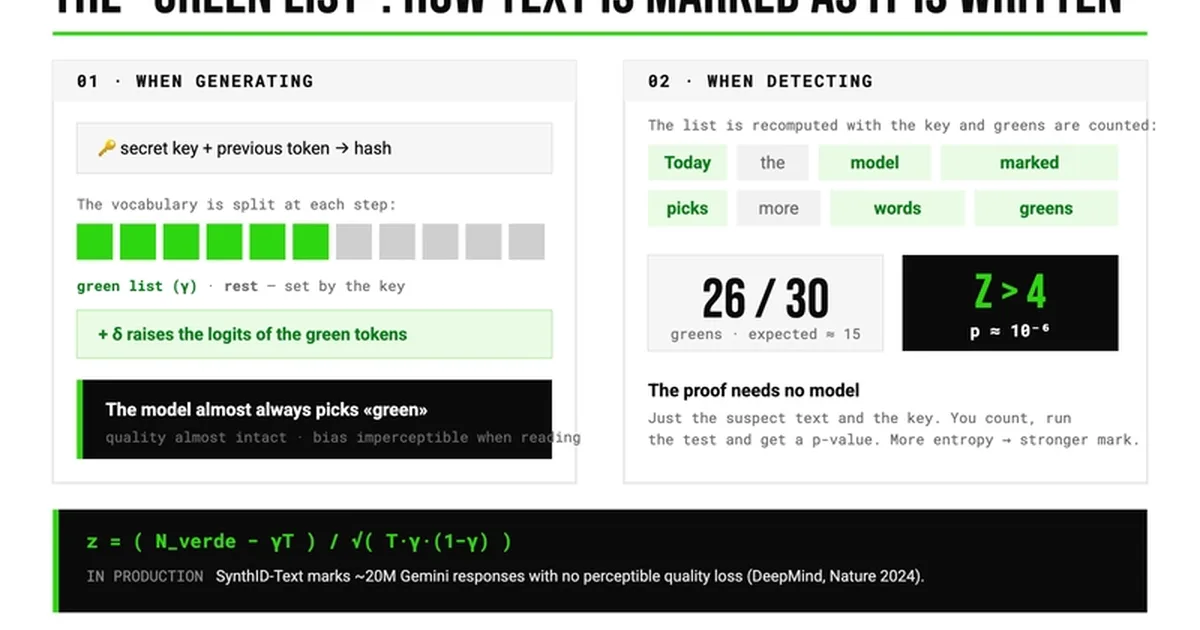
AI水印可被检测,并在模型训练链中持续存在

本文如何被排名

Signal score
0 / 100
Composite score across the factors below. Higher = stronger signal that this story matters right now.
Newsworthiness bucket
Tool
该条目讨论了关于AI水印技术及其在模型训练中持续存在的新研究发现。[lever_c_demoted from research: ic=1 ai=1.0]
Source corroboration
Single-source cluster
Only one publisher covered this so far. Single-source stories can still rank when the publisher is high-authority, but they lack cross-source corroboration.
Topics
model release, paper
Editorial topic classification. Feeds into how the story surfaces on /topic/<slug> hub pages and into the per-entity coverage mix.
AI-industry relevance
High
Clearly on-topic for AI-industry coverage.
Story freshness
47 days old
Aged out of breaking-news scoring windows; ranking reflects the durable signal from the full source set.

完整方法见我们的编辑标准

报道来源 [1]

  1. dev.to — LLM tag TIER_1 English(EN) · carlosortet ·

    1月32日:如何知道AI是否使用了你的内容,并加以证明

    <p>I had a hunch, and it turned out to be published. The idea was simple: if I mark my content before publishing it, and an AI model trains on it, that model should carry the mark inside. And if someone takes that model to train another one, a Chinese one for example, the new one…