PulseAugur / Brief
EN
LIVE 05:16:23

Brief

last 24h
[11/11] 221 sources

Multi-source AI news clustered, deduplicated, and scored 0–100 across authority, cluster strength, headline signal, and time decay.

  1. Samsung's $400,000 payout for memory workers sparks revolt as other divisions get only $4,000, fueling intentional production slowdowns — internal resentment disrupts packaging operations, major AI chip project decisions to a complete halt

    Samsung is facing internal turmoil due to a significant bonus disparity between its memory division and other departments. Employees in the memory division are set to receive approximately $400,000, while those in divisions like Device eXperience (DX) will get only $4,000. This has led to widespread resentment, intentional production slowdowns, and a halt in decision-making for major projects, particularly impacting the testing and packaging of AI memory chips. The dispute threatens Samsung's ability to meet HBM production schedules for critical AI accelerators. AI
    Samsung's $400,000 payout for memory workers sparks revolt as other divisions get only $4,000, fueling intentional production slowdowns — internal resentment disrupts packaging operations, major AI chip project decisions to a complete halt

    IMPACT Disruptions in Samsung's AI memory production threaten to delay critical components for AI accelerators, potentially impacting the supply chain for major AI hardware.
  2. The memory shortage is causing a repricing of consumer electronics

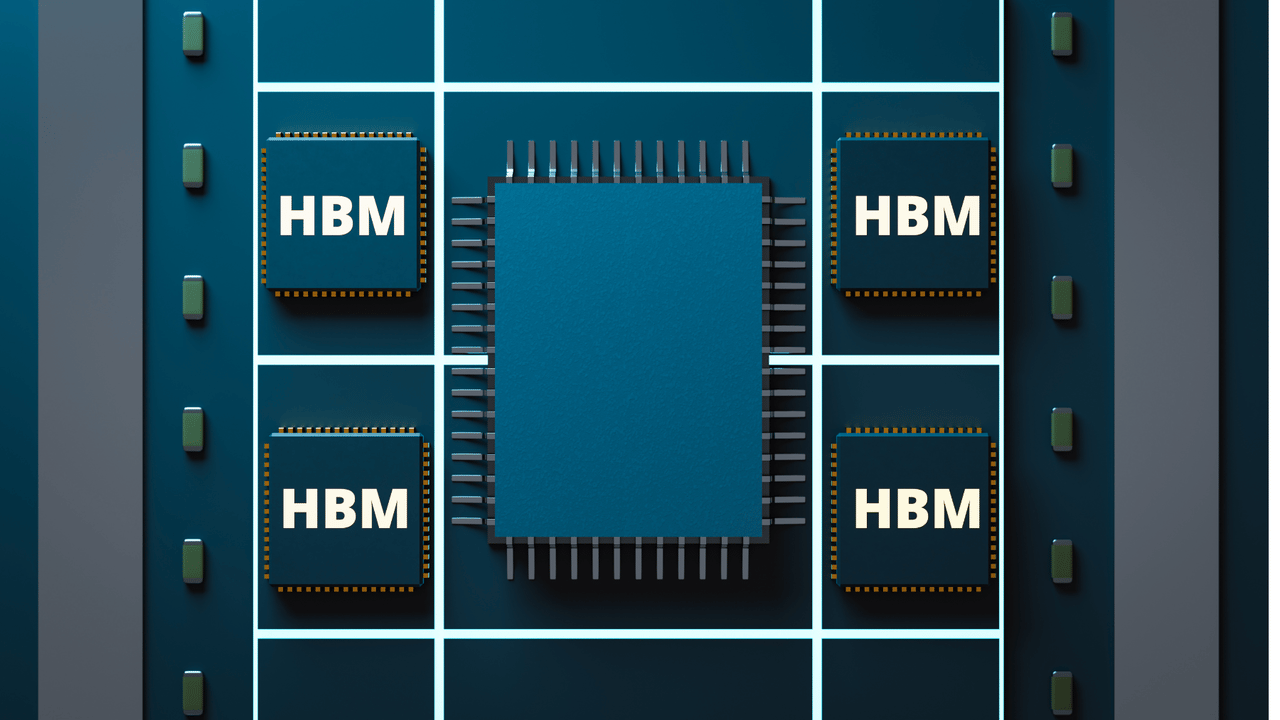
    A significant shortage in memory production is driving up the cost of consumer electronics, particularly impacting the sub-$100 smartphone market. This shortage is attributed to the increasing demand for High Bandwidth Memory (HBM) used in AI data centers, which now consumes a much larger portion of wafer capacity compared to traditional DDR and LPDDR memory. Memory manufacturers are prioritizing HBM due to its profitability and the lessons learned from past industry consolidation, leading to constrained production of memory for everyday devices. AI

    IMPACT AI's demand for HBM is causing a memory shortage, leading to higher prices for consumer electronics and impacting the availability of affordable smartphones.

  3. Memory has grown to nearly two-thirds of AI chip component costs

    A recent analysis indicates that memory components, particularly High Bandwidth Memory (HBM), now constitute nearly two-thirds of the total cost for AI chips. This share has significantly increased from 52% to 63% between Q1 2024 and Q4 2025. Concurrently, the cost share for advanced packaging has decreased, while logic die costs remain relatively stable. The overall expenditure on AI chip components is projected to more than double from approximately $22 billion in 2024 to $52 billion in 2025, with HBM alone driving a substantial portion of this growth. AI

    IMPACT Memory costs are becoming the dominant factor in AI chip production, potentially influencing future hardware development and supply chain strategies.

  4. Micron's Virginia fab begins producing America's most advanced DRAM memory — fab expansion to quadruple output, easing DDR4 shortage for automotive and defense sectors

    Micron has initiated production of its most advanced DDR4-compatible DRAM at its Manassas, Virginia facility, marking the first time this technology is manufactured in the U.S. This expansion, a $2 billion investment supported by CHIPS Act funding, is set to quadruple the site's DDR4 wafer output. The move aims to alleviate a critical shortage of the older memory standard, which is essential for long-lifecycle industries like automotive and defense, as major DRAM producers shift capacity towards AI-driven demand for newer memory types. AI

    Micron's Virginia fab begins producing America's most advanced DRAM memory — fab expansion to quadruple output, easing DDR4 shortage for automotive and defense sectors

    IMPACT Secures supply of older memory for non-AI sectors, freeing up advanced memory production for AI workloads.

  5. @AIRevolution # Google ’s New # Omni And # Spark Just Changed AI 🤖 again! 🙄 https:// youtu.be/I_cevlqe_Gw?si=i8X130 iEn9uCIp_R # AI # GoogleIO

    Memory, specifically High-Bandwidth Memory (HBM), is becoming the most significant and rapidly increasing cost in frontier AI chips. Between Q1 2024 and Q4 2025, HBM's share of total AI chip component spending is projected to rise from 52% to 63%. This trend highlights memory as a critical factor in the economics of advanced AI hardware development. AI

    IMPACT Memory costs are escalating for frontier AI chips, with HBM's share of component spending projected to rise significantly, impacting the economics of AI hardware development.

  6. Scaling the Memory Wall: HBM, CXL, and the New GPU Playbook

    The AI industry is grappling with a significant 'memory wall' bottleneck, where GPU processing power outstrips memory bandwidth and capacity. This challenge is exacerbated by the increasing demands of training large generative AI models and the growing need for edge inference and agentic AI. Solutions like High Bandwidth Memory (HBM), Compute Express Link (CXL), and specialized on-processor SRAM meshes are being developed to address these limitations, though they introduce new challenges in supply, cost, and thermal management. AI

    Scaling the Memory Wall: HBM, CXL, and the New GPU Playbook

    IMPACT Addresses critical memory bottlenecks in AI infrastructure, impacting the cost and efficiency of training and inference.

  7. DeepSeek V4 on Huawei's Ascend 950: A Real Stress Test for China's AI Chip Ecosystem

    DeepSeek's V4 model has successfully validated inference on Huawei's Ascend 950 chip, marking a significant step for China's domestic AI hardware. This validation required substantial engineering effort, including rewriting numerous CUDA operators and extensive testing, to achieve performance parity with NVIDIA's offerings for inference workloads within China. The Ascend 950 features a unique dual-architecture design with high-bandwidth memory to address both compute-bound and memory-bound phases of LLM operations, though its widespread adoption is hindered by manufacturing capacity limitations. AI

    DeepSeek V4 on Huawei's Ascend 950: A Real Stress Test for China's AI Chip Ecosystem

    IMPACT Validates domestic AI hardware for inference, potentially reducing reliance on foreign suppliers within China.

  8. The current AI pricing was always going to go away. The existing fixed pricing for AI services has become unsustainable due to rising AI inference costs and surging usage. Soaring prices for GPUs and High Bandwidth Memory (HBM), along with increased power and cooling costs, have significantly driven up supply-side costs.

    The existing fixed pricing models for AI services are becoming unsustainable due to rising inference costs and increased usage. Surging prices for GPUs and High Bandwidth Memory (HBM), coupled with higher power and cooling expenses, are pushing AI companies to raise prices to offset losses. Future AI products will likely focus on cost-effective use cases and adopt flexible pricing structures like API call-based billing, credit systems, or hybrid models to manage cost fluctuations. AI

    IMPACT AI service providers must adapt pricing to manage rising hardware and operational costs, potentially impacting adoption and profitability.

  9. Intel leans on LPDDR5X to dodge global HBM crisis, leaked Crescent Island AI GPU pics reveal massive Xe3P core — chip sidesteps HBM shortage with 160GB of cheaper memory

    Intel's upcoming Crescent Island data center GPU, codenamed Xe3P, will reportedly use LPDDR5X memory instead of the industry-standard HBM. This decision appears to be a strategic move to circumvent the ongoing HBM shortage and reduce production costs. While this choice may lead to lower memory bandwidth compared to HBM-equipped competitors, Intel plans to begin sampling the air-cooled GPU to customers in the latter half of 2026. AI

    Intel leans on LPDDR5X to dodge global HBM crisis, leaked Crescent Island AI GPU pics reveal massive Xe3P core — chip sidesteps HBM shortage with 160GB of cheaper memory

    IMPACT Intel's choice of LPDDR5X over HBM for its upcoming AI GPU could impact performance benchmarks and cost-effectiveness in the competitive AI hardware market.

  10. US Top News and Analysis | Beware the boom and bust cycle of memory stocks, investors warn amid AI boom AI generated summary, Read the full article for complete

    Samsung's memory chip employees have negotiated a tentative deal that could provide average annual bonuses of $340,000, with some workers potentially earning up to $416,000. This agreement comes after threats of a strike and follows a boom in AI component demand that has benefited rival SK Hynix. The deal includes a regular bonus of 50% of annual salary and a share of operating profits, though a significant portion is tied to stock and conditional on company profit milestones, making it potentially more favorable to Samsung than SK Hynix's offerings. AI

    IMPACT Record bonuses for AI chip workers highlight the immense profitability and demand in the semiconductor sector, potentially influencing labor negotiations across the industry.

  11. A-share three major indices collectively opened lower, Hunan Silver fell more than 3%

    The A-share market opened lower today, with major indices like the Shanghai Composite, Shenzhen Component, and ChiNext all experiencing declines. The semiconductor and computer hardware sectors are leading the losses, while sectors such as paper manufacturing, healthcare, and shipping show some gains. In currency news, the RMB strengthened against the US dollar. AI