PulseAugur / Brief
EN
LIVE 09:13:29

Brief

last 24h
[13/13] 221 sources

Multi-source AI news clustered, deduplicated, and scored 0–100 across authority, cluster strength, headline signal, and time decay.

  1. How I Built an LLM Router That Cut My API Costs in Half

    A developer built an LLM router to optimize API costs by classifying prompt complexity and directing requests to the most cost-effective model. This system uses Pydantic AI and Claude 3.5 Haiku for classification, LiteLLM for routing, and tracks costs in real-time. The solution achieved a 62% cost reduction, saving $2,602 per month, while maintaining 99.2% quality, though it introduces a slight latency overhead. AI

    IMPACT Enables cost savings for developers and businesses using multiple LLM APIs by intelligently routing requests.

  2. A palm-sized, 300-gram AI host, why can it run a 122B model?

    Lenovo has launched the P7, a compact AI host weighing 300 grams and consuming 30W, capable of running 122B parameter models locally. This device is designed as an "Agent Computer" for the AI 2.0 era, focusing on continuous, low-power operation for complex tasks. The P7 utilizes a novel computing-in-memory architecture from Post-Silicon Intelligence, specifically the M50 dNPU, to achieve high performance with reduced power consumption and noise. AI

    A palm-sized, 300-gram AI host, why can it run a 122B model?

    IMPACT This new class of compact, low-power AI hosts could enable widespread local inference of large models, driving the adoption of AI agents in consumer and enterprise devices.

  3. AdapTive

    Together AI has introduced ATLAS, a novel adaptive-learning system for speculative decoding that dynamically improves LLM inference performance without manual tuning. Unlike standard or custom speculators, ATLAS continuously learns from runtime usage and evolving workloads to optimize token drafting in real time. This system achieves significant speedups, reaching up to 500 TPS on DeepSeek-V3.1 and 460 TPS on Kimi-K2, outperforming even specialized hardware like Groq. AI

    AdapTive

    IMPACT Accelerates LLM inference speed and reduces costs by dynamically optimizing speculative decoding.

  4. Turn ~800M Free AI Tokens Into a Single OpenAI API with FreeLLMAPI

    FreeLLMAPI is a self-hosted proxy designed to aggregate free API tokens from various AI providers into a single, unified endpoint. This tool allows users to leverage approximately 800 million free tokens per month across 14 different services, simplifying development by presenting a single OpenAI-compatible API. It offers features like automatic failover, sticky sessions for multi-turn conversations, and an admin dashboard, though it is intended for personal use and prototyping rather than production workloads. AI

    IMPACT Simplifies prototyping for AI agents and researchers by consolidating free token access across multiple providers.

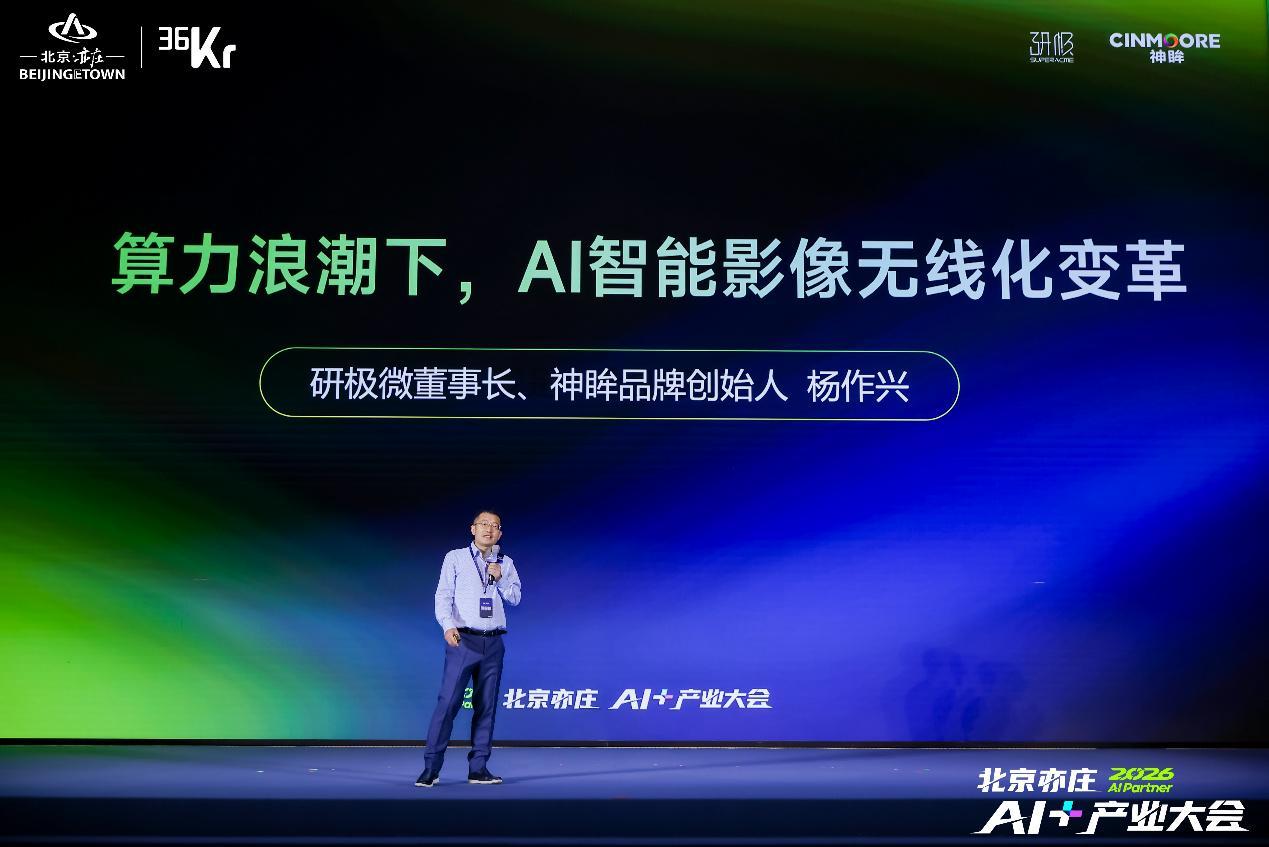
  5. The Wireless Revolution of AI Intelligent Imaging Under the Computing Power Wave | 2026 AI Partner · Beijing Yizhuang AI+ Industry Conference

    Shenmou, led by Yang Zuoxing, is developing ultra-low-power chip designs to free cameras from wires, envisioning a future with billions of smart visual terminals. Their first-generation chip achieves one-third the industry's power consumption, while the second generation reaches one-tenth, enabling all-weather smart cameras powered by a single watt of solar energy. Yang predicts a massive increase in camera demand, from hundreds of millions annually to potentially 100 billion by 2045, to feed real-time data into world-scale AI models. AI

    The Wireless Revolution of AI Intelligent Imaging Under the Computing Power Wave | 2026 AI Partner · Beijing Yizhuang AI+ Industry Conference

    IMPACT Enables massive scaling of real-world data input for AI models, potentially reducing hardware costs and expanding AI applications.

  6. The cheapest model call is the one you don't make

    A developer built an alert triage co-pilot that prioritizes efficiency by intelligently bypassing large language model calls when possible. The system uses a memory layer, Hindsight, to store and recall past incident data, keyed by a structured fingerprint of the incoming alert. If a new alert strongly matches a previous incident with a consistent triage decision and meets other confidence thresholds, the system avoids calling a costly LLM, saving resources and reducing latency. AI

    The cheapest model call is the one you don't make

    IMPACT Demonstrates a practical approach to cost optimization in AI applications by intelligently routing or bypassing LLM calls.

  7. Scaling the Memory Wall: HBM, CXL, and the New GPU Playbook

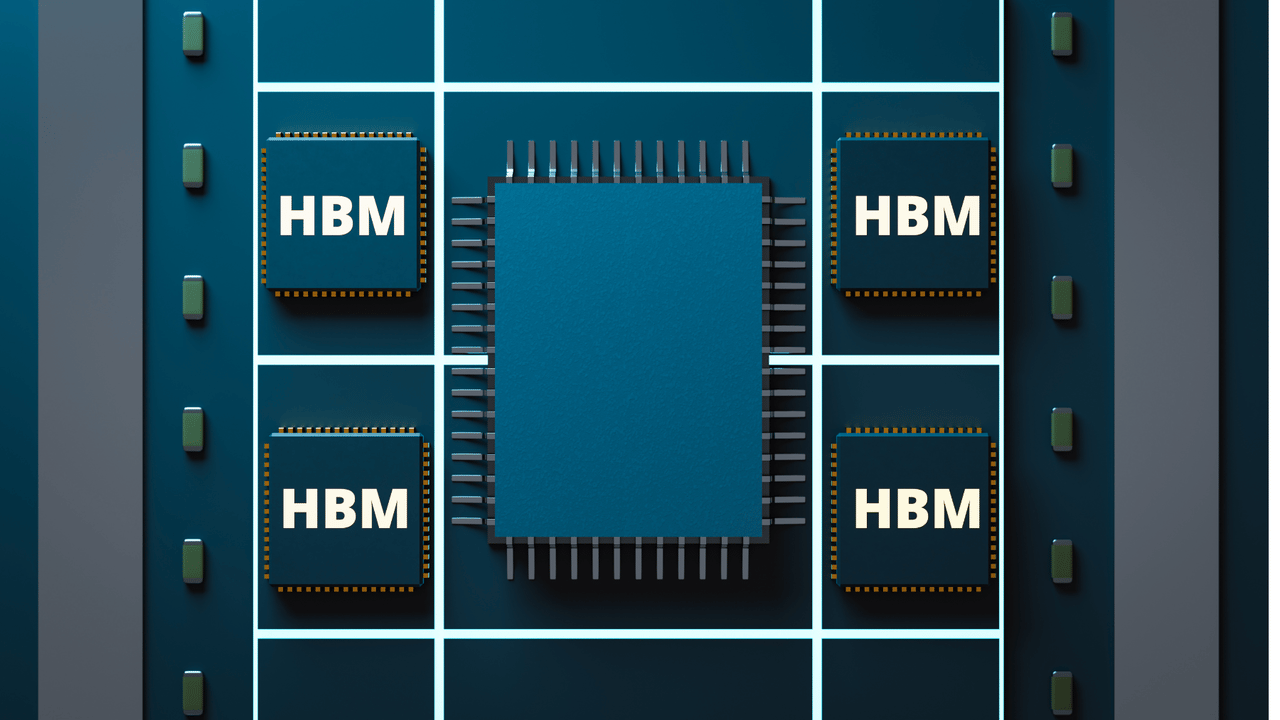
    The AI industry is grappling with a significant 'memory wall' bottleneck, where GPU processing power outstrips memory bandwidth and capacity. This challenge is exacerbated by the increasing demands of training large generative AI models and the growing need for edge inference and agentic AI. Solutions like High Bandwidth Memory (HBM), Compute Express Link (CXL), and specialized on-processor SRAM meshes are being developed to address these limitations, though they introduce new challenges in supply, cost, and thermal management. AI

    Scaling the Memory Wall: HBM, CXL, and the New GPU Playbook

    IMPACT Addresses critical memory bottlenecks in AI infrastructure, impacting the cost and efficiency of training and inference.

  8. Nvidia’s Vera chip is the US$200 billion bet Jensen Huang doesn’t want you to overlook

    Nvidia CEO Jensen Huang has introduced the Vera chip, a new CPU designed specifically for agentic AI, targeting a substantial $200 billion market segment. This initiative aims to diversify Nvidia's revenue beyond its dominant AI GPU offerings, with Huang projecting Vera to become the company's second-largest sales contributor. The chip is positioned to address the growing demand for efficient inference workloads, a space where custom silicon from hyperscalers presents increasing competition. AI

    Nvidia’s Vera chip is the US$200 billion bet Jensen Huang doesn’t want you to overlook

    IMPACT Nvidia's new Vera chip could shift inference workload dynamics and create a new competitive front against hyperscaler custom silicon.

  9. Our AI Inference Bill Dropped 65% After We Stopped Treating Every Query the Same

    SentinelOps AI implemented a routing layer called CascadeFlow to optimize LLM inference costs. This system directs queries to different models based on complexity, sending simple lookups to a cheaper, faster 8B parameter model and complex operational or compliance questions to a more powerful 70B parameter model. This tiered approach reduced their AI inference bill by 65%, though initial misclassification rates required adjustments like keyword pre-checks and confidence thresholds to maintain accuracy for critical queries. AI

    Our AI Inference Bill Dropped 65% After We Stopped Treating Every Query the Same

    IMPACT Optimizing LLM inference costs through tiered routing can significantly reduce operational expenses for AI-powered applications.

  10. Inference economics are shifting. Expect more "fast tier" pricing (Opus Fast, Gemini Flash), more specialized inference hardware (Cerebras, Groq), and more pres

    Agentic workloads are significantly altering the economics of AI inference, with roughly half of real-world coding agent requests exceeding 128,000 tokens. This trend is driving a shift towards specialized inference hardware and tiered pricing models, such as "fast tier" options for models like Opus and Gemini Flash. The increasing token usage is attributed not to longer user prompts, but to the extensive context agents themselves generate and utilize. AI

    IMPACT Agentic AI workloads are increasing token usage and driving demand for specialized hardware, potentially leading to new pricing structures for AI services.

  11. I Benchmarked 47 LLM Providers Against Real Queries - Here's What I Found 📊

    A developer benchmarked 47 LLM providers using real production queries, spending $3,200 and analyzing 12,847 requests over three months. The findings revealed significant discrepancies between marketing claims and actual performance, particularly in latency and cost-effectiveness for longer responses. The analysis highlighted that while premium models like GPT-4 are necessary for complex tasks, cheaper alternatives can suffice for simpler queries, leading to the development of an open-source router to optimize LLM usage. AI

    I Benchmarked 47 LLM Providers Against Real Queries - Here's What I Found 📊

    IMPACT Optimizes LLM usage by routing queries to the most cost-effective and performant models, saving significant operational expenses.

  12. South Korea's May trade data shows chip exports remain strong

    Nvidia is reportedly acquiring assets from AI chip startup Groq for approximately $20 billion, marking its largest deal to date. This acquisition aims to integrate Groq's low-latency inference technology into Nvidia's AI factory architecture. While Nvidia is licensing Groq's intellectual property and hiring key personnel, Groq will continue to operate as an independent company, with its cloud business unaffected. AI

    IMPACT Accelerates Nvidia's AI inference capabilities and potentially broadens its custom chip offerings.

  13. Announcing Replit Extensions

    Replit has launched two new features aimed at empowering developers and fostering learning. Replit Guides offer structured content for acquiring new skills and building applications, with initial guides focusing on integrating models like Google's Gemini 1.5 Flash, OpenAI's GPT-4o, and Anthropic's Claude, alongside tools such as Groq and Streamlit. Complementing this, Replit Extensions provide a new platform for developers to customize their coding environment and build tools for the Replit community, with plans for a future monetization system. AI

    Announcing Replit Extensions

    IMPACT Enhances developer workflows and learning by integrating various AI models and tools into a single platform.