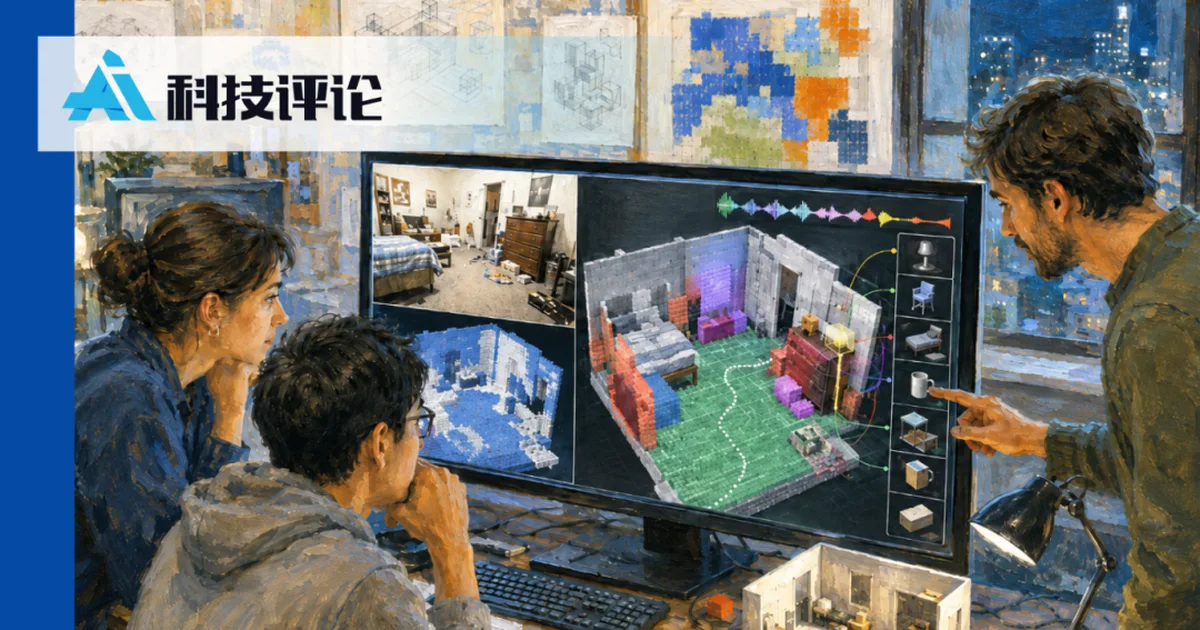
Researchers from Hong Kong University of Science and Technology (Guangzhou) have developed LegoOcc, a novel system capable of predicting 3D occupancy in indoor scenes using only a single RGB image. This method bypasses the need for expensive 3D semantic annotations or multi-view data, enabling robots to understand spatial occupancy and identify objects based on natural language queries. LegoOcc achieves state-of-the-art performance in geometric occupancy prediction while also demonstrating significant breakthroughs in open-vocabulary semantic understanding, allowing it to recognize a wider range of objects beyond predefined categories. AI
影响 Enables robots to better understand and interact with indoor environments using only a single camera, potentially accelerating adoption in robotics and AR/VR.
排序理由 The cluster reports on a new research paper accepted to CVPR 2026 detailing a novel method for 3D occupancy prediction. [lever_c_demoted from research: ic=1 ai=1.0]
- Chen Changhao
- CVPR 2026
- EmbodiedOcc
- GaussianFormer2
- Hong Kong University of Science and Technology (Guangzhou)
- ISO
- LegoOcc
- Occ-ScanNet
- RoboOcc
- POP-3D
AI 生成摘要 · Google Gemini · 来自 1 个来源。 我们如何撰写摘要 →