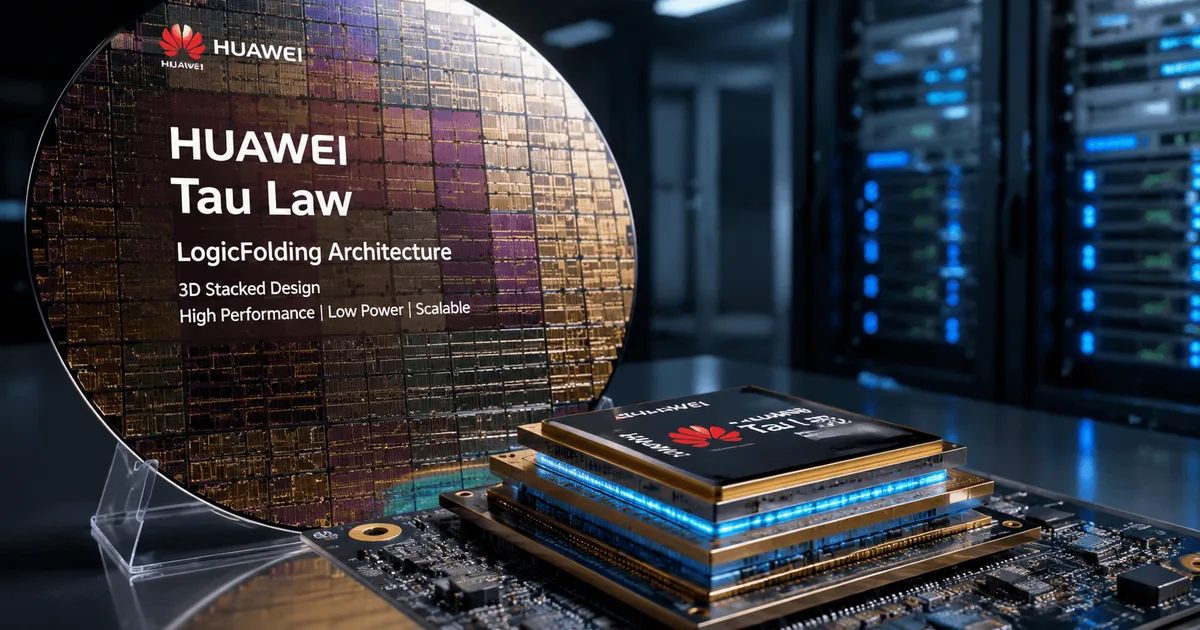
华为推出了新的芯片扩展框架“Tau定律”,该框架优先考虑降低整体系统延迟,而非晶体管密度。这种方法挑战了摩尔定律所规定的传统扩展方式,并通过封装和互连等领域为到2035年的性能提升提供了路线图。 AI
影响 通过关注系统延迟,可能为AI工作负载实现更高效的芯片架构。
排序理由 一家主要科技公司提出了新的芯片设计理论框架。
AI 生成摘要 · Google Gemini · 来自 2 个来源。 我们如何撰写摘要 →
华为推出了新的芯片扩展框架“Tau定律”,该框架优先考虑降低整体系统延迟,而非晶体管密度。这种方法挑战了摩尔定律所规定的传统扩展方式,并通过封装和互连等领域为到2035年的性能提升提供了路线图。 AI
影响 通过关注系统延迟,可能为AI工作负载实现更高效的芯片架构。
排序理由 一家主要科技公司提出了新的芯片设计理论框架。
AI 生成摘要 · Google Gemini · 来自 2 个来源。 我们如何撰写摘要 →
完整方法见我们的编辑标准。
Huawei's Tao's Law V2 unveils a new chip scaling framework based on total system latency reduction, challenging Moore's Law with concrete production data and a roadmap through 2035.
Huawei's 'Tau Law' Challenges Traditional Chip Scaling Huawei has introduced 'Tau Law,' a new theoretical framework for chip design that aims to extend performance improvements beyond the limits of Moore's Law, particularly in packaging and interconnects. This Chinese innovation …