PulseAugur
实时 19:53:42
English(EN) You can keep adding renewables and still watch the usable headroom crumble away…GONE by 2027  as we point out in our latest newsletter. But now that represents

AI数据中心自建发电设施,因电网容量增长滞后于太阳能/储能增长 · 追踪3个来源

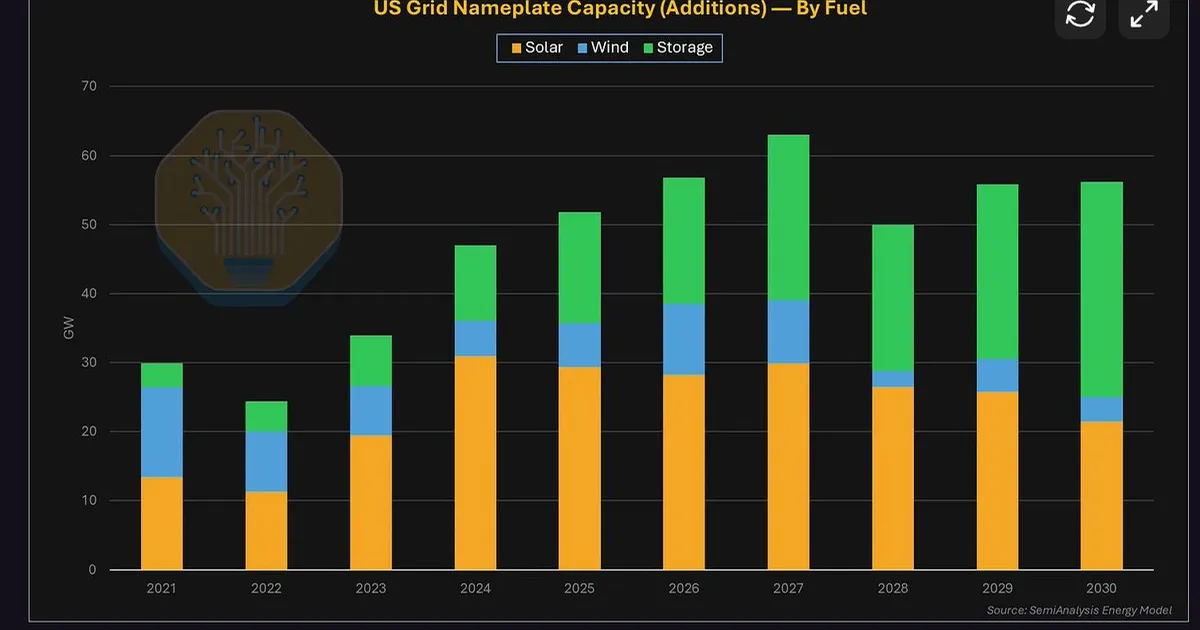
根据SemiAnalysis的数据,电网可靠满足峰值需求的能力未能跟上太阳能和储能发电的增加。虽然太阳能和储能每年都增加超过20吉瓦,但它们对稳定容量的贡献已停滞不前。这是因为太阳能的输出集中在特定时间,而电池只能解决短期缺口,导致像德州ERCOT这样的地区在规划时将新增太阳能视为零。因此,AI数据中心运营商越来越多地选择自建发电设施,而不是依赖电网,这一趋势预计将在2027年加速。 AI

影响 由于电网限制,AI数据中心越来越多地自建发电基础设施,这可能会影响未来的AI开发和部署。

排序理由 对电网容量限制及其对AI数据中心影响的分析,而非直接发布或事件。

在 X — SemiAnalysis 阅读 →

AI 生成摘要 · Google Gemini · 来自 3 个来源。 我们如何撰写摘要 →
AI数据中心自建发电设施,因电网容量增长滞后于太阳能/储能增长 · 追踪3个来源

报道来源 [3]

  1. X — SemiAnalysis TIER_1 English(EN) · SemiAnalysis_ ·

    You can keep adding renewables and still watch the usable headroom crumble away…GONE by 2027  as we point out in our latest newsletter. But now that represents

    You can keep adding renewables and still watch the usable headroom crumble away…GONE by 2027  as we point out in our latest newsletter. But now that represents the point when datacenter operators stop waiting around, and crank up onsite gas.🔥 (3/3) https://t.co/MsQ485wK5F

  2. X — SemiAnalysis TIER_1 English(EN) · SemiAnalysis_ ·

    Here's why…. All solar capacity produces at the same time of day, so once you have a lot of it, the next batch adds almost nothing when you need it. Batteries h

    Here's why…. All solar capacity produces at the same time of day, so once you have a lot of it, the next batch adds almost nothing when you need it. Batteries hit the same issue : a 4-hour battery covers a 4-hour shortfall, but when the gap is covered, the next battery is fixing …

  3. X — SemiAnalysis TIER_1 English(EN) · SemiAnalysis_ ·

    Solar and storage are each adding more than 20GW a year. Sounds like a LOT of new power. But the amount the grid can actually count on when demand peaks has bar

    Solar and storage are each adding more than 20GW a year. Sounds like a LOT of new power. But the amount the grid can actually count on when demand peaks has barely moved. That gap is why AI datacenters are starting to build their own power capacity instead of waiting in line to