人工智能需求激增,导致计算机和半导体进口价格大幅上涨,超出了历史趋势和摩尔定律。5月份价格上涨了3.6%,同比上涨14.4%,表明真实的芯片短缺正在推高单位计算成本。这一激增在历史记录中是前所未有的,“有史以来最快”也无法捕捉到增长的幅度。 AI
影响 加速人工智能基础设施的成本,并可能预示着计算经济学的转变。
排序理由 关键行业组件因需求驱动而价格大幅上涨。
AI 生成摘要 · Google Gemini · 来自 4 个来源。 我们如何撰写摘要 →
人工智能需求激增,导致计算机和半导体进口价格大幅上涨,超出了历史趋势和摩尔定律。5月份价格上涨了3.6%,同比上涨14.4%,表明真实的芯片短缺正在推高单位计算成本。这一激增在历史记录中是前所未有的,“有史以来最快”也无法捕捉到增长的幅度。 AI
影响 加速人工智能基础设施的成本,并可能预示着计算经济学的转变。
排序理由 关键行业组件因需求驱动而价格大幅上涨。
AI 生成摘要 · Google Gemini · 来自 4 个来源。 我们如何撰写摘要 →
完整方法见我们的编辑标准。
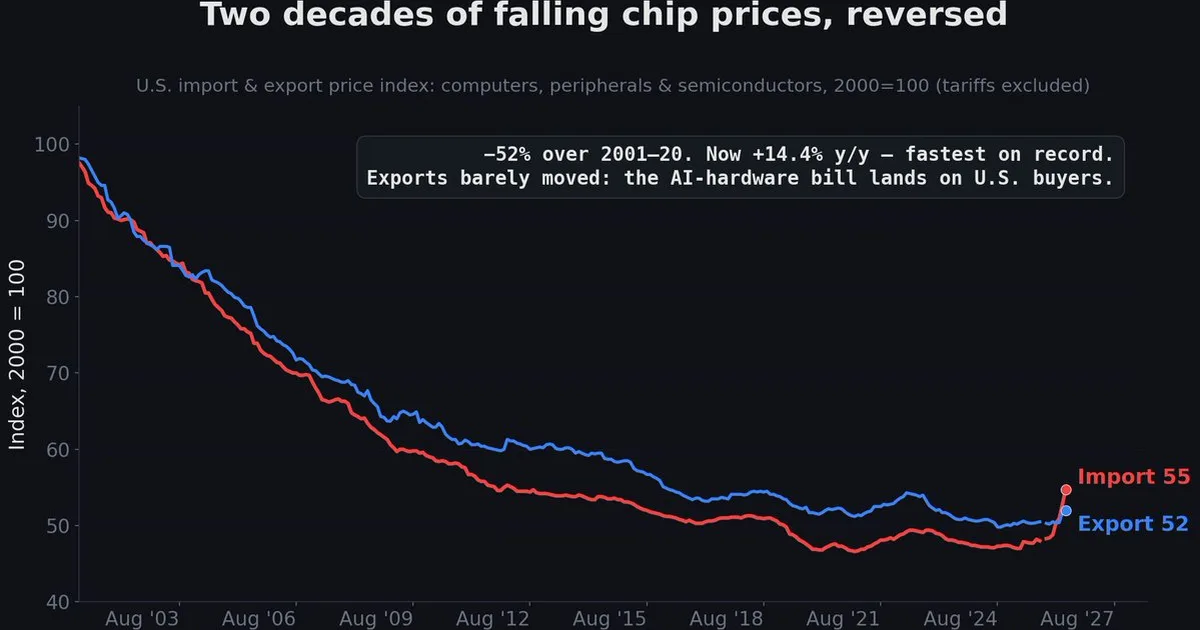
Genuine shortages of chips are now pushing up these same hedonically adjusted prices, we are paying more per unit of compute, not just paying more for better chips. And import prices are calculated pre-tariffs, so these are the underlying prices, before any tariff markup. (4/4)
Import prices are hedonically adjusted (accounting for chip speed and capacity) so Moore's law means they normally fall over time. (3/4) https://t.co/JhWiQMsbOY
AI demand has surged so high that import prices for computers and semiconductors rose 3.6% in May, now up 14.4% year-to-year. This is so far from anything in the historical record that 'fastest ever' doesn't do justice to it. (2/4)
AI demand is outstripping Moore's law in the short run Moore's law drove import prices of computers and semiconductors down by 52% between 2001 and 2020. (1/4)🧵 https://t.co/2NFl6MiVZn