PulseAugur / Brief
EN
LIVE 22:46:51

Brief

last 24h
[40/2990] 223 sources

Multi-source AI news clustered, deduplicated, and scored 0–100 across authority, cluster strength, headline signal, and time decay.

  1. Why AI Infrastructure Startups Are Insanely Hard to Build

    Building AI infrastructure startups is exceptionally difficult due to intense competition and a lack of sustainable differentiation. These companies struggle to capture enterprise clients because major cloud providers and established tech firms rapidly replicate innovations. Furthermore, the fast-evolving AI landscape causes enterprise customers to delay onboarding new vendors, lengthening sales cycles and increasing churn for startups. AI
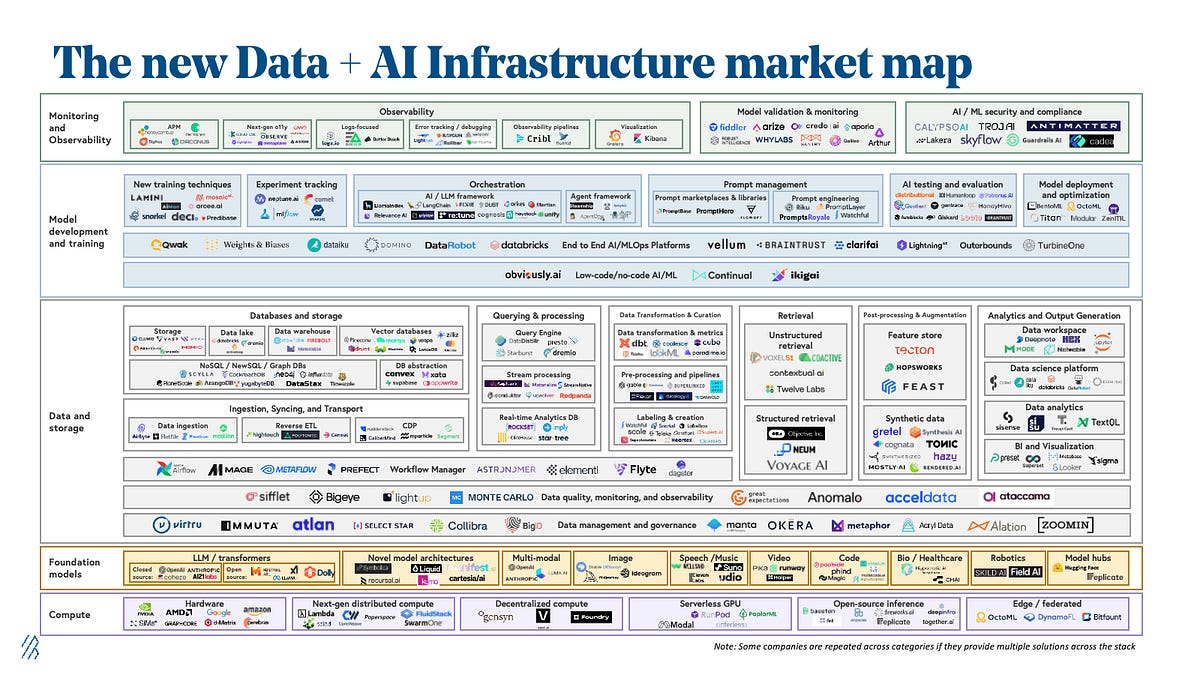
    Why AI Infrastructure Startups Are Insanely Hard to Build

    IMPACT Highlights the significant challenges for AI infrastructure startups in achieving venture-scale success due to competitive pressures and rapid commoditization.


  2. Sequential Learning and Catastrophic Forgetting in Differentiable Resistor Networks

    Researchers have developed a novel analog network of resistors capable of performing machine learning tasks without a traditional processor. This system, based on transistors, can learn and adapt to new tasks, demonstrating potential for highly energy-efficient computation. While currently a prototype, the technology shows promise for applications in edge devices and could eventually outperform conventional digital processors for specific machine learning workloads. AI

    Sequential Learning and Catastrophic Forgetting in Differentiable Resistor Networks

    IMPACT This research could lead to more energy-efficient AI hardware, particularly for edge computing applications.

  3. OpenAI Selects Oracle Cloud Infrastructure to Extend Microsoft Azure AI Platform

    OpenAI has entered into a new agreement to utilize Oracle Cloud Infrastructure (OCI) for its artificial intelligence workloads. This partnership aims to expand OpenAI's existing AI platform, which is primarily hosted on Microsoft Azure. The collaboration will leverage OCI's high-performance computing capabilities to support OpenAI's growing demand for AI training and inference. AI

    IMPACT Expands AI training and inference capacity by diversifying cloud infrastructure providers.

  4. Apple's On-Device and Server Foundation Models

    Apple has detailed its new foundation language models powering Apple Intelligence, including a ~3 billion parameter on-device model and a larger server-based model. These models are designed for multilingual and multimodal tasks, supporting image understanding and tool execution. The company emphasizes its Responsible AI approach, focusing on user privacy through innovations like Private Cloud Compute and on-device processing, ensuring user data is not used for training. AI

    Apple's On-Device and Server Foundation Models

    IMPACT Apple's detailed technical report on its foundation models may influence the development of efficient on-device and specialized server-based AI systems.

  5. Ask HN: How to pivot to a Machine Learning engineer?

    A discussion on Hacker News explores the evolving role of AI in professional life, with some arguing that over-reliance on AI could hinder human learning and critical thinking. Concurrently, aspiring machine learning engineers are seeking advice on transitioning into the field, particularly in roles focused on deployment and scaling rather than core model development. Participants share insights on the practicalities of ML engineering, including data management, collaboration with non-technical stakeholders, and the potential for AI integration to streamline complex tasks. AI

    Ask HN: How to pivot to a Machine Learning engineer?

    IMPACT Discusses the potential for AI to either augment or atrophy human skills, and explores career paths in ML engineering.

  6. What kind of bug would make machine learning suddenly 40% worse at NetHack?

    Researchers Bartłomiej Cupiał and Maciej Wołczyk observed a significant performance drop in their neural network trained to play NetHack. The model, which had been consistently scoring around 5,000 points, suddenly began scoring only 3,000 points, a 40% decrease. Despite extensive troubleshooting, including code reversion, software stack restoration, and rebuilding the entire system from scratch, the performance issue persisted. AI

    What kind of bug would make machine learning suddenly 40% worse at NetHack?

    IMPACT Highlights potential fragility in reinforcement learning models and the challenges of diagnosing performance regressions.

  7. Show HN: Every mountain, building and tree shadow mapped for any date and time

    Shadowmap.app is a new web-based tool that allows users to visualize and simulate shadows cast by various objects on any date and time. The application provides features such as sun path calculation, sun exposure analysis, and the generation of shadow accumulation maps. It aims to offer a user-friendly alternative to desktop software like Google Earth Pro for shadow studies. AI

    Show HN: Every mountain, building and tree shadow mapped for any date and time

    IMPACT Provides a niche tool for visualization and planning, with minimal direct impact on AI operations.

  8. Elixir and Machine Learning in 2024 so far: MLIR, Arrow, structured LLM, etc.

    The Elixir programming language community is expanding its machine learning capabilities with several key project updates. Numerical Elixir (Nx) now supports MLIR, enabling broader hardware compatibility and quantization, while Explorer, an Elixir data manipulation library, has achieved full compatibility with Apache Arrow numeric types. Additionally, the Scholar project, focused on traditional machine learning, has introduced new algorithms for visualization, classification, and dimensionality reduction, enhancing the ecosystem's ability to handle diverse ML tasks. AI

    Elixir and Machine Learning in 2024 so far: MLIR, Arrow, structured LLM, etc.

    IMPACT Enhances the Elixir ecosystem's tooling for data analysis and traditional machine learning, potentially broadening its adoption for ML tasks.

  9. Ask HN: How do I balance all my 200 interests in life?

    A user on Hacker News sought advice on managing numerous interests, including data science and machine learning, alongside other pursuits. Responses ranged from humorous and self-deprecating to philosophical, with some users sharing personal struggles with balancing passion projects and responsibilities. One commenter suggested prioritizing interests and limiting work in progress, drawing parallels to Kanban principles. AI

    IMPACT N/A

  10. Show HN: Spin up populated test databases in seconds

    Tonic.ai has released a new feature that allows developers to quickly create populated test databases. This tool aims to streamline the development process by providing realistic data for testing purposes. The feature is accessible through their documentation and is designed for integration into existing workflows. AI

    IMPACT Streamlines database testing for AI development workflows.

  11. Show HN: An open source framework for voice assistants

    Pipecat is a new open-source Python framework designed for building real-time voice and multimodal conversational agents. It allows developers to orchestrate various components like AI services, audio/video streams, and different communication transports. The framework supports building complex systems with features such as multi-agent coordination, structured conversation flows, and real-time debugging tools. AI

    Show HN: An open source framework for voice assistants

    IMPACT Enables developers to build and deploy sophisticated voice and multimodal AI agents more efficiently.

  12. What I mean when I say that machine learning in Elixir is production-ready

    The author argues that machine learning is now production-ready within the Elixir programming language ecosystem. This readiness is attributed to advancements in libraries and tools that simplify the integration of ML models into Elixir applications. The presentation aims to demonstrate practical applications and successful deployments, encouraging wider adoption. AI

    IMPACT Suggests that Elixir developers can now more readily integrate and deploy machine learning models into production systems.

  13. Launch HN: Baselit (YC W23) – Automatically Reduce Snowflake Costs

    Baselit, a Y Combinator-backed startup, has launched a tool designed to automatically reduce costs associated with using Snowflake, a popular data warehouse. The platform focuses on optimizing Snowflake's compute resources, specifically by minimizing warehouse idle time and offering custom scaling policies. This aims to address a growing concern among users about escalating data processing expenses. AI

    IMPACT Offers a solution for optimizing cloud data warehousing costs, a common challenge for organizations leveraging AI/ML workloads.

  14. Show HN: I made a better Perplexity for developers

    A developer has created a new search interface called Devv.ai, aiming to provide a superior experience for developers compared to existing tools like Perplexity. The project is presented as a "Show HN" on Hacker News, indicating it is a new or personal project being shared with the community. AI

    Show HN: I made a better Perplexity for developers

    IMPACT Offers a specialized search tool for developers, potentially improving their workflow and access to technical information.

  15. Understanding Stein's Paradox (2021)

    Stein's paradox, a counterintuitive statistical concept, demonstrates that in dimensions three and higher, a better estimate of a Gaussian distribution's mean can be achieved than simply using the drawn sample. The James-Stein estimator, which uses a specific formula involving the sample's magnitude and dimensionality, outperforms the naive approach in terms of mean squared error. This paradox challenges conventional statistical intuition, particularly regarding parameter estimation in higher-dimensional spaces. AI

    Understanding Stein's Paradox (2021)
  16. Meta does everything OpenAI should be

    Meta has released Llama 3, an open-source large language model, in an effort to democratize AI development. The models, available in 8B and 70B parameter sizes, are designed to be more capable and efficient than their predecessors. Meta aims to foster innovation by providing broad access to powerful AI tools, contrasting with the more closed approaches of some competitors. AI

    IMPACT Accelerates open-source AI development and provides a powerful alternative to proprietary models.

  17. USAF Test Pilot School, DARPA announce aerospace machine learning breakthrough

    The USAF Test Pilot School and DARPA have announced a significant advancement in aerospace machine learning. This breakthrough involves the development and successful testing of a new AI system designed to enhance the capabilities of military aircraft. The system aims to improve decision-making and operational efficiency in complex aerial environments. AI

    IMPACT Potential to enhance military aviation capabilities through advanced AI decision-making.

  18. Show HN: Sonauto – A more controllable AI music creator

    Sonauto has released a preview of its v3 AI music creation tool, which can generate full-length songs up to 4.5 minutes long. The tool aims to turn user ideas into songs rapidly, offering thousands of new styles. While in preview, v3 may occasionally produce lower-quality results. AI

    Show HN: Sonauto – A more controllable AI music creator

    IMPACT Expands creative tooling for musicians and producers, potentially lowering the barrier to song creation.

  19. A Visual Introduction to Machine Learning (2015)

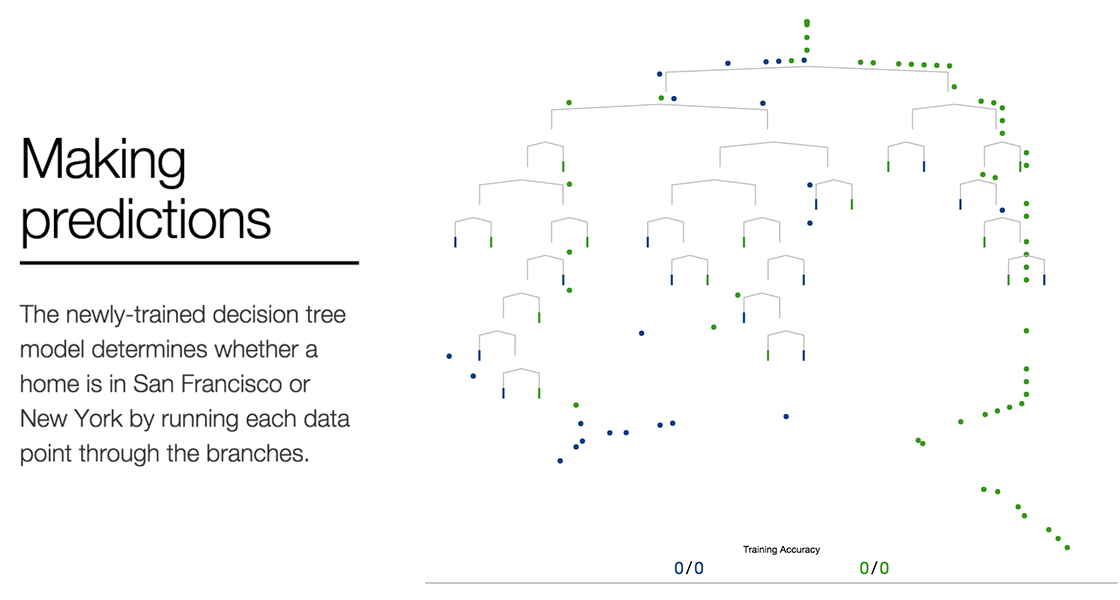
    This collection of resources offers a broad overview of machine learning, from foundational concepts and visual introductions to theoretical underpinnings and practical applications. It includes a visual guide to classification tasks, a discussion on the science and ethics of machine learning benchmarks, and pointers to comprehensive textbooks and course materials. Additionally, it highlights tools for interpretable machine learning and the engineering practices required for deploying models in production. AI

    A Visual Introduction to Machine Learning (2015)

    IMPACT Provides foundational knowledge and practical tools for understanding, developing, and deploying machine learning models.

  20. The AI industry spent 17x more on Nvidia chips than it brought in in revenue

    The AI sector's expenditure on Nvidia chips significantly outpaced its revenue generation, with a reported 17x difference. This highlights a substantial investment phase in AI infrastructure, potentially indicating a focus on future growth and capability development over immediate profitability. The data suggests a considerable capital outlay is being made to acquire the necessary hardware for training and deploying advanced AI models. AI

    IMPACT Indicates a heavy investment phase in AI infrastructure, potentially signaling future capability advancements.

  21. Show HN: Spice.ai – materialize, accelerate, and query SQL data from any source

    Spice.ai has released version 1.0-stable, an open-source engine designed to simplify the creation of data-driven AI applications and agents. The engine allows developers to query, federate, and accelerate data from various sources using SQL, while also providing OpenAI-compatible APIs for local model serving and inference. Key features include data federation across different databases, enterprise search capabilities with vector similarity search, and an AI-native runtime that combines data query with AI inference. AI

    Show HN: Spice.ai – materialize, accelerate, and query SQL data from any source

    IMPACT Simplifies building data-grounded AI applications and agents by unifying data querying and AI inference.

  22. 1-Bit AI Infrastructure

    Researchers have developed a software stack called 'this http URL' to enable fast and lossless inference of 1-bit Large Language Models (LLMs) like BitNet b1.58 on CPUs. This new infrastructure achieves significant speedups, ranging from 2.37x to 6.17x on x86 CPUs and 1.37x to 5.07x on ARM CPUs, depending on model size. The goal is to make LLMs more efficient and deployable on a wider range of devices. AI

    1-Bit AI Infrastructure

    IMPACT Enables more efficient and widespread deployment of LLMs on consumer hardware.

  23. Show HN: Glossarie – a new, immersive way to learn a language

    Glossarie is a new application designed to offer an immersive language learning experience. The platform aims to help users learn languages through engaging and interactive methods. AI

    IMPACT Niche tooling improvement; minimal industry-wide impact.

  24. Ask HN: How to change jobs with almost no interviewing experience?

    A machine learning professional is seeking advice on how to improve their interviewing skills for new job opportunities, as they have limited prior interview experience. Suggestions include utilizing platforms for mock technical interviews, practicing with free resources like Google's Interview Warmup, and engaging in peer-to-peer interview exchanges. Additionally, advice is given on how to shift the interview dynamic by asking probing questions to assess potential employers. AI

  25. Show HN: Richard – A CNN written in C++ and Vulkan (no ML or math libs)

    Richard is a new command-line application for performing classification using a neural network, written entirely in C++ and Vulkan. It supports dense and convolutional layers, with GPU acceleration via Vulkan compute shaders. The project also includes profiling tools for performance analysis. AI

    Show HN: Richard – A CNN written in C++ and Vulkan (no ML or math libs)

    IMPACT Provides a low-level, custom implementation for ML classification, potentially useful for developers seeking fine-grained control or learning purposes.

  26. Opus 1.5 released: Opus gets a machine learning upgrade

    The Opus 1.5 audio codec has been released with significant machine learning enhancements, marking the first time deep learning is used to process audio signals directly. These new ML-based features, including improved packet loss concealment (PLC) and a novel redundancy transmission method, are designed to be fully compatible with older versions and optimized to run efficiently on standard CPUs. While most users won't notice the performance impact, the ML features are disabled by default and require specific compile-time and run-time flags to activate. AI

    Opus 1.5 released: Opus gets a machine learning upgrade

    IMPACT Enhances audio codec resilience to packet loss and improves redundancy, potentially improving real-time communication quality.

  27. Where is Noether's principle in machine learning?

    This research paper explores the applicability of Noether's principle, a fundamental concept in physics linking symmetries to conservation laws, within the domain of machine learning. The authors investigate whether similar principles of invariance and conserved quantities can be identified in discrete machine learning processes, such as the training of neural networks. While acknowledging the potential for such connections, the paper suggests that directly applying Noether's theorem to machine learning is complex and not yet fully understood. AI

    IMPACT Explores theoretical underpinnings that could lead to new optimization techniques or model architectures.

  28. GSAR: Typed Grounding for Hallucination Detection and Recovery in Multi-Agent LLMs

    Multiple research papers released on arXiv address the challenge of hallucinations in large language and vision-language models. One paper introduces In-Context Visual Contrastive Optimization (IC-VCO) to mitigate multimodal hallucinations by using contrastive images within a shared context and a novel sample editing strategy. Another study investigates architectural factors influencing hallucination robustness, categorizing hallucinations and providing guidance on model design. Additionally, a new framework, BenHalluEval, is proposed for evaluating and detecting hallucinations in Bengali language models, highlighting the inadequacy of existing methods for low-resource languages. Other research explores reframing hallucination detection as out-of-distribution detection and examines how prompt toxicity affects factual reliability. AI

    GSAR: Typed Grounding for Hallucination Detection and Recovery in Multi-Agent LLMs

    IMPACT These studies offer new techniques and benchmarks for improving the factual accuracy and reliability of LLMs, crucial for their safe deployment in sensitive applications.

  29. Building Secure AI Gateways with MLflow AI Gateway

    Google Research has introduced ReasoningBank, a novel framework designed to enhance AI agents' ability to learn from their experiences, both successes and failures, after deployment. This system distills generalizable reasoning strategies from past interactions, allowing agents to continuously improve and avoid repeating mistakes. Separately, new research explores optimizing multi-agent communication through latent representations and introduces Agent Evolving Learning (AEL) for agents operating in open-ended environments, focusing on how to effectively use remembered information. Additionally, DeepSeek has released preview models of its V4 series, offering large context windows and advanced capabilities at a significantly lower cost than comparable frontier models. AI

    IMPACT New frameworks for agent learning and memory, alongside cost-effective frontier models, could accelerate AI adoption in complex tasks and personalized applications.

  30. Making LLMs more accurate by using all of their layers

    Google Research has developed a framework to evaluate the alignment of Large Language Models (LLMs) with human behavioral dispositions, using established psychological assessments adapted into situational judgment tests. This approach quantizes model tendencies against human social inclinations, identifying deviations and areas for improvement in realistic scenarios. Separately, Google Research also introduced SLED (Self Logits Evolution Decoding), a novel method that enhances LLM factuality by utilizing all model layers during the decoding process, thereby reducing hallucinations without external data or fine-tuning. AI

    Making LLMs more accurate by using all of their layers

    IMPACT New methods from Google Research offer improved LLM alignment and factuality, potentially increasing trust and reliability in AI applications.

  31. Computer-Using Agent

    OpenAI has released AgentKit, a comprehensive suite of tools designed to streamline the development, deployment, and optimization of AI agents. This new toolkit includes an Agent Builder for visual workflow creation, a Connector Registry for managing data integrations, and ChatKit for embedding agentic UIs. Concurrently, Google DeepMind has introduced CodeMender, an AI agent focused on automatically identifying and fixing software vulnerabilities, and AlphaEvolve, a Gemini-powered agent for algorithm discovery and optimization. OpenAI also detailed its Computer-Using Agent (CUA), which interacts with digital interfaces like a human, achieving state-of-the-art results on various benchmarks. AI

    Computer-Using Agent

    IMPACT New agent development tools and specialized AI agents for coding and security will accelerate software development and improve code quality.

  32. A Dive into Vision-Language Models

    Alibaba's Qwen team has released Qwen3.7-Plus, a new multimodal agent model designed to integrate vision and language capabilities for versatile agentic tasks. This release is part of a broader trend highlighted by Hugging Face, which features multiple new vision-language models and techniques. The platform showcases advancements like Google's PaliGemma 2, Microsoft's Florence-2, and Meta's Idefics2, alongside methods for aligning and optimizing these models. AI

    A Dive into Vision-Language Models

    IMPACT Alibaba's Qwen3.7-Plus release advances multimodal agent capabilities, while Hugging Face's featured models and techniques highlight broader progress in vision-language understanding and alignment.

  33. Our approach to alignment research

    OpenAI has announced a partnership with Apple to integrate ChatGPT into iOS, iPadOS, and macOS, enhancing Siri and system-wide writing tools with GPT-4o capabilities. Google DeepMind has published research on scaling AI agent systems, identifying that multi-agent coordination improves parallelizable tasks but can degrade sequential ones, and has developed a predictive model for optimal agent architectures. Additionally, OpenAI has released resources on prompting fundamentals and shared insights from Netomi on scaling agentic systems in enterprise environments, highlighting the use of GPT-4.1 and GPT-5.2 for complex workflows. AI

    Our approach to alignment research

    IMPACT Partnership integrates advanced AI into consumer devices, while research offers principles for scaling complex AI agent systems.

  34. The Annotated Diffusion Model

    Apple's research paper explores the mechanisms behind compositional generalization in conditional diffusion models, particularly focusing on how these models handle generating images with more objects than trained on. The study identifies 'local conditional scores' as a key factor enabling this ability, demonstrating that models succeeding at length generalization exhibit these scores, while those that fail do not. The research also proposes a method to enforce these local scores, which successfully enabled length generalization in a previously underperforming model. AI

    The Annotated Diffusion Model

    IMPACT Research into diffusion model generalization could lead to more robust and controllable image generation systems.

  35. Secured 70 billion yuan in funding! DeepSeek Code is really coming, ACM gold medalist Cui Tianyi is in charge

    DeepSeek is reportedly developing a new AI coding product, tentatively named DeepSeek Code, and is actively recruiting for a team led by former TSY Capital co-founder Cui Tianyi. The company has also been hiring for roles related to "Agent Harness," suggesting a focus on building agent capabilities that integrate with large language models. Meanwhile, Replit is emphasizing Python's role in AI development, highlighting its platform's optimization for Python environments and its AI tools like Replit Agent for building functional applications. Other developers are exploring ways to improve AI coding agents through continuous memory, better session management, and specialized review agents to enhance code quality and reliability. AI

    IMPACT DeepSeek's potential new coding product and Replit's focus on Python for AI development signal evolving tools and platforms for AI-assisted software creation.

  36. AI in the browser

    Libretto is a new open-source toolkit designed to enhance AI-powered browser automations, making them more deterministic and efficient. It provides coding agents with live browser access to inspect pages, reverse-engineer APIs, and record/replay user actions. The tool aims to simplify the maintenance of web integrations, particularly for complex healthcare software, and can also be used from the command line for tasks like opening URLs or executing scripts. AI

    AI in the browser
  37. Can OpenAI’s ‘Master of Disaster’ Fix AI’s Reputation Crisis?

    OpenAI has announced a significant partnership with SAP to launch 'OpenAI for Germany,' aiming to bring advanced AI capabilities to the German public sector while prioritizing data sovereignty and security on Microsoft Azure. The company also proposed policy recommendations to the U.S. White House for the national AI Action Plan, focusing on innovation freedom, export controls, copyright, infrastructure, and government adoption. Additionally, OpenAI is collaborating with U.S. National Laboratories to leverage its reasoning models for scientific breakthroughs and national security initiatives. AI

    Can OpenAI’s ‘Master of Disaster’ Fix AI’s Reputation Crisis?

    IMPACT OpenAI's strategic partnerships and policy proposals signal a push for broader AI adoption in public sectors and national infrastructure, influencing future AI development and regulation.

  38. Better language models and their implications

    Google DeepMind has introduced the FACTS Benchmark Suite, a new set of evaluations designed to systematically measure the factuality of large language models across various use cases. This suite includes benchmarks for parametric knowledge, search-based information retrieval, and multimodal understanding, alongside an updated grounding benchmark. The initiative aims to provide a more comprehensive understanding of LLM factuality and drive industry-wide improvements in accuracy and trustworthiness. AI

    Better language models and their implications

    IMPACT Provides new evaluation tools to drive progress in LLM factuality and reduce hallucinations.

  39. RL²: Fast reinforcement learning via slow reinforcement learning

    OpenAI has published a series of research papers detailing advancements in reinforcement learning. These include achieving superhuman performance in Dota 2 with OpenAI Five, developing benchmarks for safe exploration in RL, and quantifying generalization capabilities with the CoinRun environment. The company also explored novel methods like prediction-based rewards for curiosity-driven exploration, learning policy representations in multiagent systems, and an experimental metalearning approach called Evolved Policy Gradients for faster training on new tasks. Further research addresses variance reduction in policy gradients and the equivalence between policy gradients and soft Q-learning, alongside challenging robotics environments for multi-goal RL. AI

    RL²: Fast reinforcement learning via slow reinforcement learning

    IMPACT Demonstrates significant progress in RL capabilities, including superhuman performance, safety, generalization, and exploration, pushing the boundaries of AI.

  40. Introducing OpenAI

    OpenAI has launched a preview of its Codex coding assistant within the ChatGPT mobile app, allowing users to manage coding tasks remotely across devices. The company is also highlighting how various organizations, including Ramp, NVIDIA, and AutoScout24, are leveraging Codex and GPT-5.5 for accelerated code review, faster development cycles, and AI-assisted research. Meanwhile, Anthropic's Project Glasswing initiative has identified over ten thousand high-severity vulnerabilities in essential software, emphasizing the need for the industry to adapt to AI-driven security analysis. AI

    Introducing OpenAI

    IMPACT Expands accessibility of AI coding assistants and highlights AI's role in identifying software vulnerabilities, potentially accelerating development and improving security.