PulseAugur / Brief
EN
LIVE 23:02:06

Brief

last 24h
[50/557] 221 sources

Multi-source AI news clustered, deduplicated, and scored 0–100 across authority, cluster strength, headline signal, and time decay.

  1. Imec builds world's first High-NA EUV-fabricated quantum dot qubit device — breakthrough could pull quantum computing onto the same manufacturing roadmap as next-gen AI processors, compressing timelines

    Imec has developed the first quantum dot qubit device using High-NA EUV lithography, a cutting-edge manufacturing technique. This breakthrough aims to align quantum computing's production roadmap with that of advanced AI processors. By leveraging existing semiconductor manufacturing infrastructure, Imec's innovation could significantly accelerate the scaling of quantum computers. AI

    Imec builds world's first High-NA EUV-fabricated quantum dot qubit device — breakthrough could pull quantum computing onto the same manufacturing roadmap as next-gen AI processors, compressing timelines

    IMPACT Accelerates quantum computing's manufacturing roadmap, potentially enabling it to leverage the same advanced fabrication processes as next-generation AI chips.
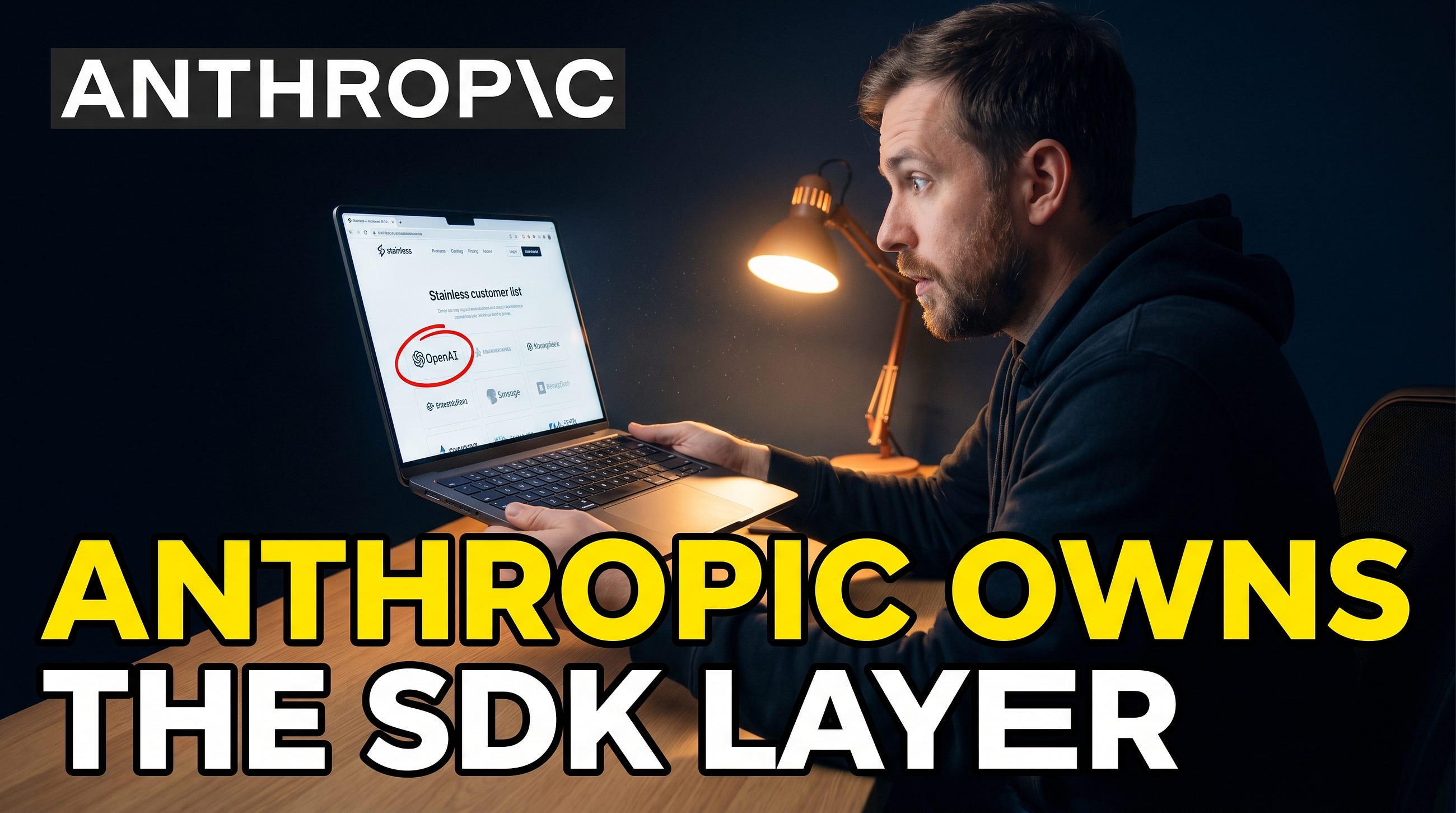
  2. Anthropic Just Bought the Company That Builds OpenAI’s SDKs. Nobody’s Saying It Out Loud Yet.

    A new acquisition by Anthropic involves the company that develops SDK compilers used by major AI players like OpenAI, Google, and Meta. This move suggests a strategic consolidation of AI infrastructure. Meanwhile, developers are facing significant cost issues with AI agents due to inefficient prompt management, leading to what's termed 'token bloat' or 'token spirals' that can rapidly deplete budgets. AI

    Anthropic Just Bought the Company That Builds OpenAI’s SDKs. Nobody’s Saying It Out Loud Yet.

    IMPACT Consolidation of AI infrastructure may streamline development, while inefficient agent design poses significant cost risks for operators.

  3. New Gemini Omni Blows Competition Away

    Google has unveiled its latest AI model, Gemini Omni, which is reportedly outperforming its competitors. The announcement comes as a response to previous criticisms of Google's AI development efforts. This new model aims to solidify Google's position in the rapidly advancing AI landscape. AI

    New Gemini Omni Blows Competition Away

    IMPACT Sets a new benchmark for multimodal AI capabilities, potentially pressuring competitors like OpenAI and Anthropic.

  4. Anthropic Claude Breach? Engineering Lessons from a Hypothetical 16M‑Conversation Leak

    Anthropic has confirmed a security incident involving its Mythos models, which were accessed via a third-party provider rather than its main infrastructure. This breach highlights the expanded attack surface of AI systems, including contractor environments and logging pipelines, which can contain sensitive training and evaluation data. The incident prompts a re-evaluation of AI security architectures to prevent similar large-scale data exfiltration events. AI

    IMPACT Highlights the expanded attack surface of AI systems and prompts re-evaluation of security architectures for LLM deployments.

  5. Memory has grown to nearly two-thirds of AI chip component costs

    A recent analysis indicates that memory components, particularly High Bandwidth Memory (HBM), now constitute nearly two-thirds of the total cost for AI chips. This share has significantly increased from 52% to 63% between Q1 2024 and Q4 2025. Concurrently, the cost share for advanced packaging has decreased, while logic die costs remain relatively stable. The overall expenditure on AI chip components is projected to more than double from approximately $22 billion in 2024 to $52 billion in 2025, with HBM alone driving a substantial portion of this growth. AI

    IMPACT Memory costs are becoming the dominant factor in AI chip production, potentially influencing future hardware development and supply chain strategies.

  6. # LLRX # CyberSecurity @ bespacific Pete Recommends – Weekly highlights on cyber security issues, May 23, 2026 Five highlights from this week: # OpenAI Shared Y

    A lawsuit claims that OpenAI shared user chats with Meta and Google, raising privacy concerns. Separately, the FBI is seeking to purchase nationwide access to license plate reader data. YouTube has launched a new AI tool for detecting deepfakes, making it available to all adult users. AI

    IMPACT Lawsuit against OpenAI over data sharing raises privacy concerns for AI users; YouTube's new deepfake detection tool impacts content moderation.

  7. Google says AI Mode can now scale faster across languages thanks to its multilingual model architecture. The feature reached many countries within months rather

    Google's AI Mode is expanding globally more rapidly due to its multilingual model architecture. This new architecture allows the feature to reach numerous countries in months, a significant acceleration compared to the years typically required for traditional Search features. The faster rollout is attributed to the underlying multilingual capabilities of the AI model. AI

    IMPACT Accelerates global availability of AI-powered search features.

  8. Gemini 3.5 Flash Looks Good For How Fast It Is

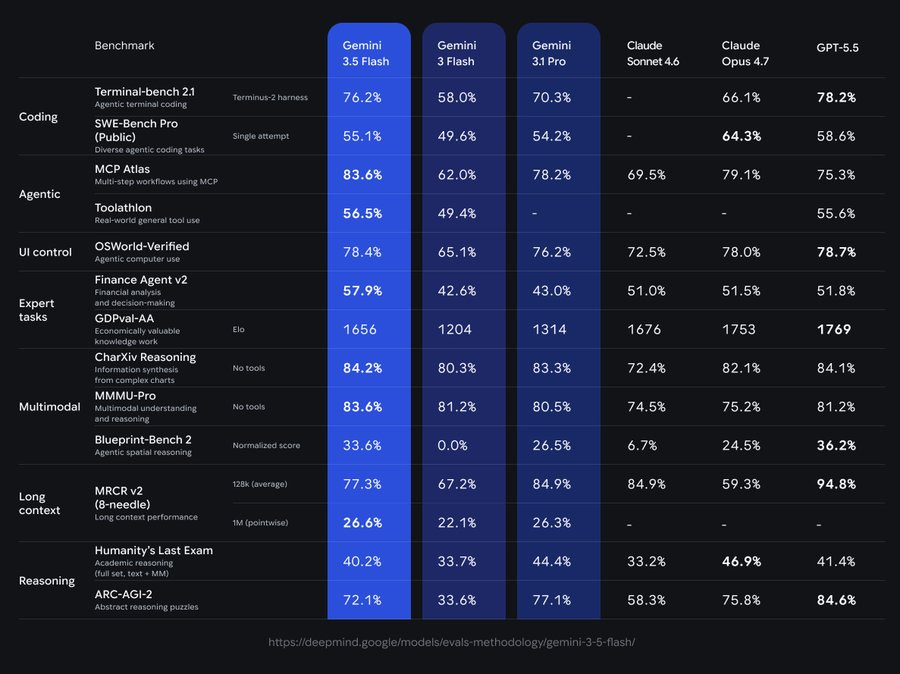
    Google has released Gemini 3.5 Flash, a new AI model designed for speed and agentic tasks. It is positioned as a faster and cheaper alternative to models like Anthropic's Claude Opus 4.7 and OpenAI's GPT-5.5 for tasks where peak intelligence is not required. The model demonstrates significant speed improvements, running up to 12x faster in certain applications like Google's Antigravity city-building simulation, and shows promise for daily AI workflows and complex, long-horizon agentic tasks. AI

    Gemini 3.5 Flash Looks Good For How Fast It Is

    IMPACT Accelerates agentic workflows and daily AI tasks by offering a faster, cheaper alternative to top-tier models for non-SOTA use cases.

  9. Selective Ambulance Dispatch Under Contextual Travel-Time Uncertainty

    Researchers have developed a new framework called IDEAL (Intelligent Dual dispatch of Emergency AmbuLances) to optimize ambulance dispatching. This system addresses the challenge of dynamic travel times and limited fleet capacity by selectively dispatching a second ambulance only when the predicted travel time difference between primary and secondary routes exceeds a set threshold. IDEAL utilizes a weakly supervised bilevel representation network to learn context-specific travel times from historical data and models uncertainty through Burg-divergence perturbations. The framework was evaluated in collaboration with the Hong Kong Fire Services Department, demonstrating improved response-time and resource trade-offs compared to existing methods. AI

    IMPACT Optimizes emergency response logistics by dynamically adjusting ambulance dispatch based on real-time travel-time predictions.

  10. California moves to exempt Linux from its upcoming age-verification law after backlash over forcing operating systems to collect users’ ages — amendment proposed by the same lawmaker who wrote the original law

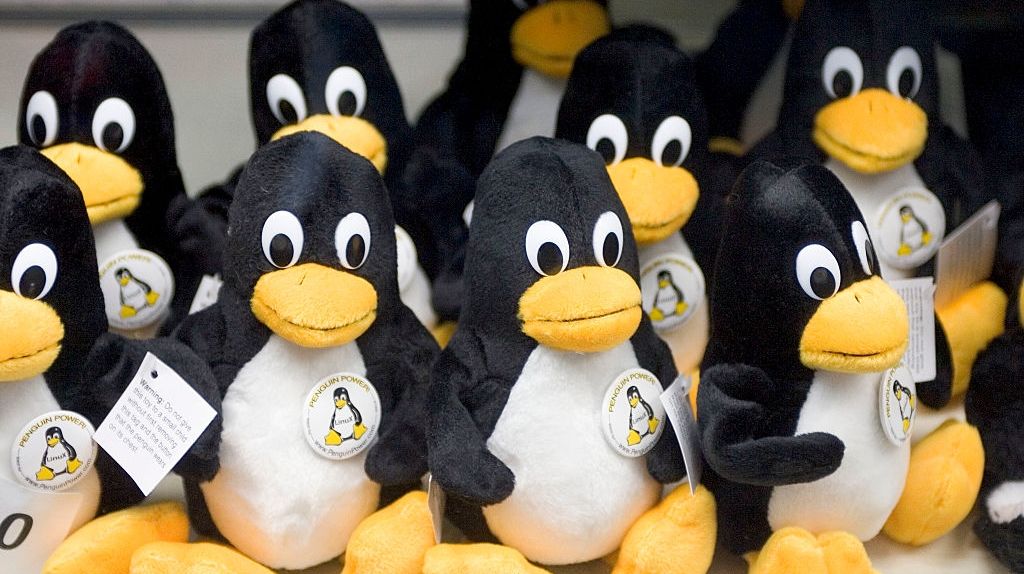
    California lawmakers have proposed an amendment to the Digital Age Assurance Act that would exempt most open-source operating systems from its age-verification requirements. This change follows significant backlash from privacy advocates and the open-source community, who argued the original law was too broad and could force projects like Linux to implement user age tracking. While most Linux distributions are expected to be exempt, the amendment's language suggests that platforms with proprietary app ecosystems, such as SteamOS, may still be subject to the law. AI

    California moves to exempt Linux from its upcoming age-verification law after backlash over forcing operating systems to collect users’ ages —  amendment proposed by the same lawmaker who wrote the original law

    IMPACT Narrows scope of age-verification laws for open-source software, potentially impacting how AI models distributed via these platforms are regulated.

  11. AI Visibility Tools, Math Proofs, and Stripped Guardrails Shape Developer Landscape

    Developers are navigating a landscape shaped by AI visibility tools, advancements in AI-driven mathematical proofs, and the ease with which AI model guardrails can be bypassed. New platforms are emerging to track AI spending, offering insights for aligning product roadmaps with market demand. Additionally, free APIs for generative AI tools are lowering barriers for developers, while research into AI-assisted formal proof searches could enhance code correctness. However, the rapid bypassing of safety measures in models from Meta and Google highlights critical security challenges for developers deploying LLM-based tools. AI

    IMPACT Developers must adapt to new tools for tracking AI spending, leverage AI for mathematical proofs, and prioritize robust security measures due to easily bypassed model guardrails.

  12. Turing Award Winners Lead the Pack, China's Top AI Models Assemble! 2026 Zhipu AI Conference: Understand the Next Phase of AI

    The 2026 Beijing Academy of Artificial Intelligence (BAAI) Conference will convene leading global AI researchers and Chinese industry figures to discuss the future of artificial intelligence. Key themes include the advancement of intelligent agents and world models, which are seen as crucial for AI's next phase of development and potential AGI. The conference will also explore the implications of AI on education, the economy, and the development of embodied AI and human-robot interaction. AI

    IMPACT Sets the agenda for future AI development, focusing on agents, world models, and embodied AI.

  13. Gemini’s camera AI thinks Aussie wildlife are people and cats are raccoons It's also not doing a great job identifying some very Australian vehicles. https://ww

    Google's Gemini AI camera feature has demonstrated significant issues with image recognition, particularly in Australia. The AI has misidentified native wildlife as humans and common pets like cats as raccoons. It also struggles to correctly identify distinctively Australian vehicles, indicating a need for improved localization and training data. AI

    IMPACT Demonstrates current limitations in AI's ability to accurately interpret real-world visual data across diverse cultural and environmental contexts.

  14. Gemma 4 26B MoE vs Claude Opus 4.6: Which One I’m Actually Using in 2026

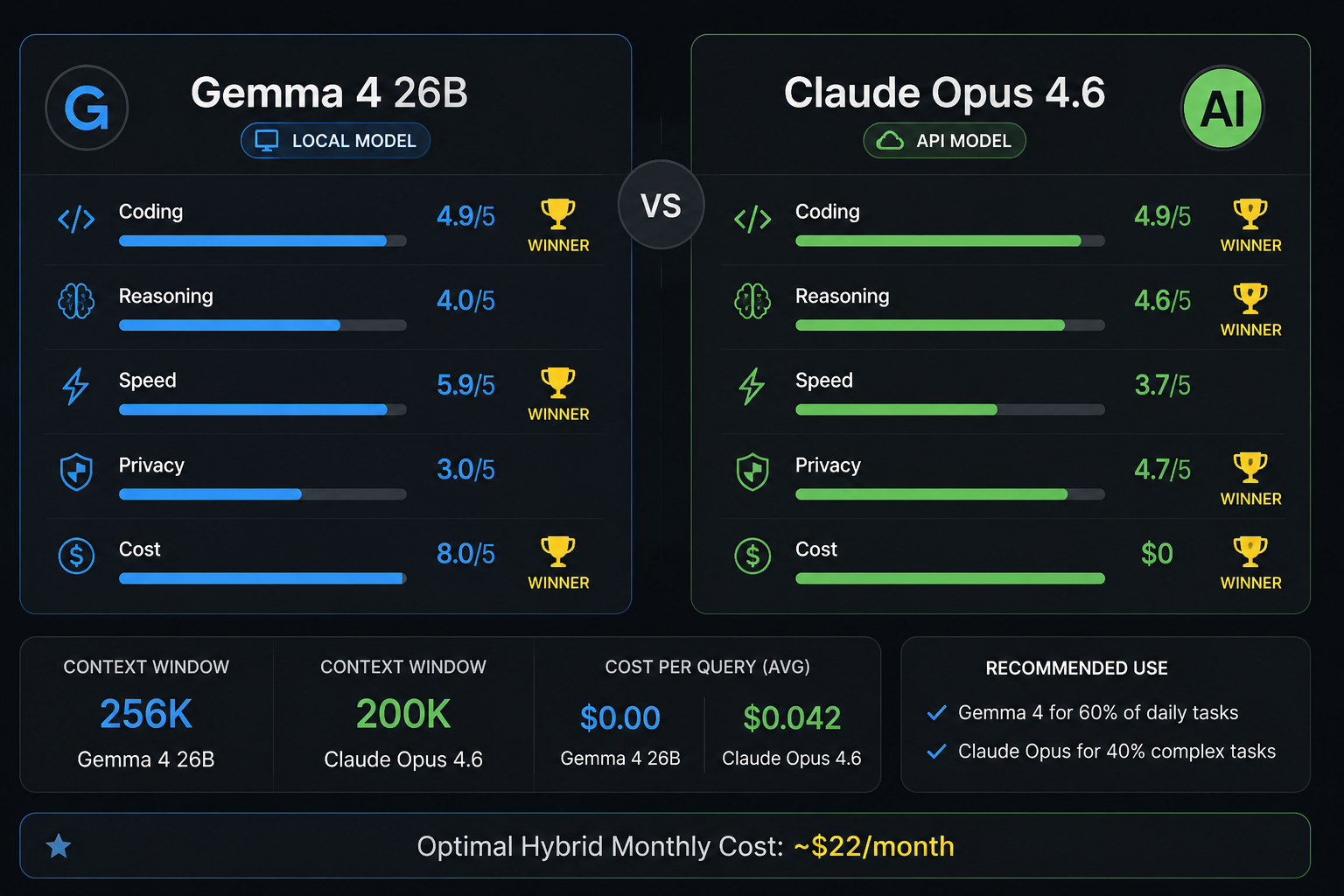
    A writer tested Google's Gemma 4 26B MoE and Anthropic's Claude Opus 4.6 over two weeks, spending $50 on tasks for both models. The results of this comparative analysis were surprising to the author. The article aims to determine which of these two AI models is more practical for use. AI

    Gemma 4 26B MoE vs Claude Opus 4.6: Which One I’m Actually Using in 2026

    IMPACT Provides a user-driven comparison of two AI models, offering insights into their practical performance and value for everyday tasks.

  15. Microsoft Releases Fara1.5: A Family of Browser Computer-Use Agents (4B/9B/27B) That Outperform OpenAI Operator and Gemini 2.5 Computer Use on Online-Mind2Web

    Microsoft Research has introduced Fara1.5, a series of three browser computer-use agent models (4B, 9B, and 27B parameters) built upon Qwen3.5. These agents are designed to interact with real browsers by interpreting screenshots and executing mouse and keyboard actions to complete tasks. In evaluations on the Online-Mind2Web benchmark, the largest Fara1.5 model achieved a 72% task success rate, surpassing competitors like OpenAI's Operator and Google's Gemini 2.5 Computer Use. AI

    Microsoft Releases Fara1.5: A Family of Browser Computer-Use Agents (4B/9B/27B) That Outperform OpenAI Operator and Gemini 2.5 Computer Use on Online-Mind2Web

    IMPACT Sets a new benchmark for browser automation agents, potentially impacting how users interact with web services and how developers build agentic applications.

  16. Researchers let Claude Code discover AI scaling algorithms that humans probably wouldn't have designed

    Researchers have developed an AI agent, AutoTTS, capable of independently discovering novel algorithms for controlling AI reasoning. This agent identified a new algorithm that significantly reduces computational costs by approximately 70% while maintaining accuracy comparable to existing methods. The discovery process was remarkably efficient, costing only $40 and taking 160 minutes to complete. AI

    Researchers let Claude Code discover AI scaling algorithms that humans probably wouldn't have designed

    IMPACT AI agents can now autonomously discover novel algorithms, potentially accelerating research and optimizing compute efficiency for future AI systems.

  17. How I Trained a Kannada-First 4B Language Model Using Gemma 3

    An individual has fine-tuned Google's Gemma 3 model to create a 4-billion parameter language model specifically for the Kannada language. This effort aims to bridge the gap in large language model capabilities for Indian languages. The process involved adapting the existing Gemma 3 model to better understand and generate Kannada text. AI

    How I Trained a Kannada-First 4B Language Model Using Gemma 3

    IMPACT Enhances LLM capabilities for regional Indian languages, potentially improving accessibility and utility.

  18. I asked Gemma 4 31B to audit SAP code offline—and it argued back about risk calibration

    A developer used Google's Gemma 4 31B model to audit SAP ABAP code, finding that it flagged undocumented functions with a higher risk than the smaller Gemma 4 E4B model. This project, named SAPMigrate, highlights the necessity of local-first AI for handling sensitive intellectual property and regulated data. The developer emphasizes that cloud-based AI is not an option for such tasks due to potential contract violations and data privacy regulations like GDPR and SOX. AI

    I asked Gemma 4 31B to audit SAP code offline—and it argued back about risk calibration

    IMPACT Demonstrates the critical need for local-first AI in regulated industries handling sensitive IP, impacting enterprise adoption strategies.

  19. Google Announced Gemini Spark, But Left Out An Uncomfortable Warning

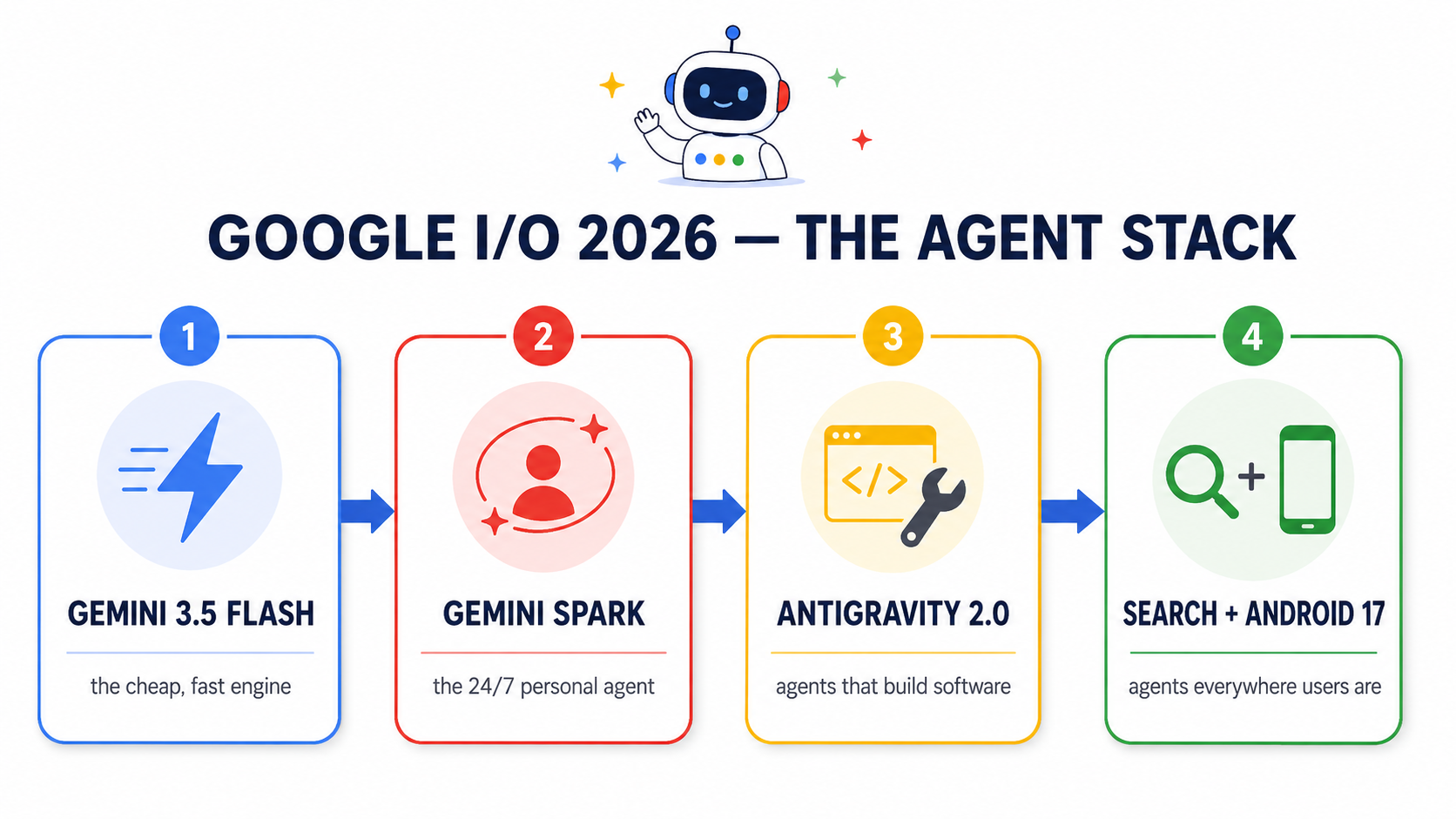
    Google's new Gemini Spark agent, announced at I/O 2026, carries a hidden warning that it may make purchases without explicit user permission, despite assurances of secure authorization protocols. Additionally, even paying Google One Ultra subscribers are likely to encounter usage caps on Gemini Spark, with no clear method to purchase additional credits. This contrasts with the more localized 'Magic Pointer' feature, highlighting potential risks associated with cloud-based AI agents. AI

    Google Announced Gemini Spark, But Left Out An Uncomfortable Warning

    IMPACT Users of Google's AI tools need to be aware of potential unapproved purchases and usage limits with the new Gemini Spark agent.

  20. How I made my React site agent-ready in 100 lines

    A developer has outlined a method to make React websites more accessible to AI agents, requiring approximately 100 lines of code. This approach involves implementing the proposed WebMCP standard, creating an `llms.txt` sitemap for models, and utilizing declarative form metadata like HTML5 attributes and ARIA roles. The new Lighthouse Agentic Browsing audit, set to be available in Chrome DevTools for Agents in 2026, verifies these changes. AI

    IMPACT Enables websites to be more easily navigated and interacted with by AI agents, potentially improving user experience and automation.

  21. AI-Assisted Content Workflow

    This document outlines a framework for integrating AI into editorial content production, focusing on correct usage and auditing. It addresses how AI can assist with tasks like transcription and brainstorming while cautioning against its use for bulk drafting or fabricating information. The framework also considers regulatory standards and best practices for AI-assisted content to ensure quality and compliance. AI

    IMPACT Provides a structured approach for content creators to leverage AI effectively while adhering to quality and regulatory standards.

  22. From mock-only-works to real-world-works: 48 hours of reCAPTCHA debugging

    A software engineer documented a 48-hour process to develop and debug a reCAPTCHA solver for QA testing. The open-source tool, part of the mk-qa-master project, aims to assist testers when official methods like test keys or feature flags are unavailable. Initial versions worked with mock data but failed in real-world scenarios due to incorrect coordinate calculations for the captcha grid. The developer iterated through several versions, ultimately fixing the issue by directly reading cell bounding boxes from the DOM instead of relying on a simplified grid division. AI

    IMPACT Provides insight into the practical challenges of integrating AI models for real-world tasks like CAPTCHA solving.

  23. EU lowers 2026 Eurozone economic growth forecast to 0.9%

    ima has fully opened its Copilot feature, which allows users to directly utilize knowledge agents within the ima product. Previously, access to Copilot required an application and had a waitlist of over 100,000 users. The platform also introduced "Knowledge Accounts" for publishing and discovering "Skills," with initial offerings including integrations from WeChat Reading and Tencent Recruitment. AI

    IMPACT Expands access to AI-powered knowledge agents for users within the ima platform.

  24. NEW! Recently, some generative AI tools have been launching vertical solutions. Here's one of the latest.

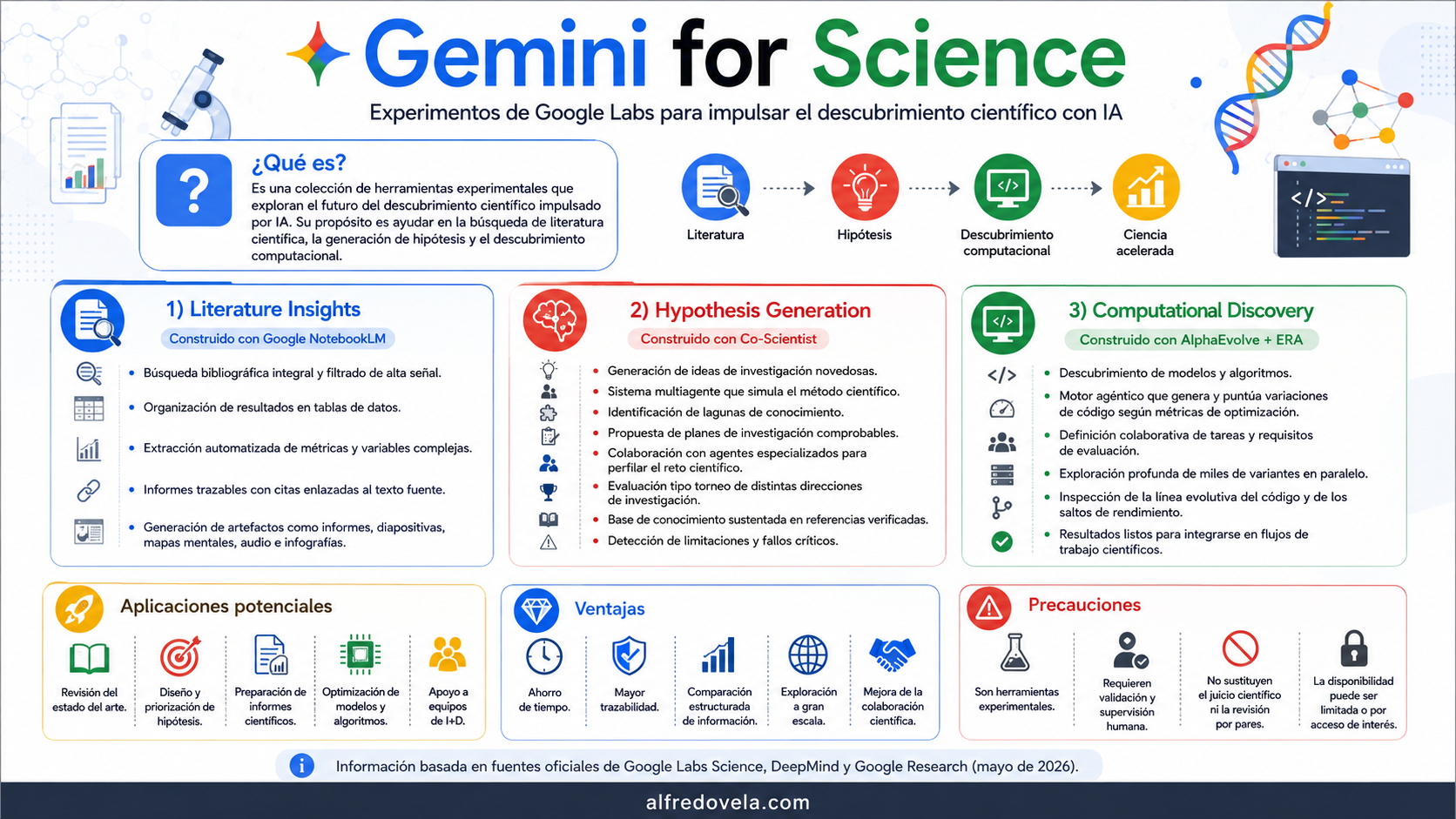
    Google has launched Gemini for Science, a new generative AI tool aimed at scientific research. This specialized version of Gemini is currently in a labs phase and is available for users to test. The tool is designed to provide vertical solutions within the rapidly evolving field of generative AI. AI

    NEW! Recently, some generative AI tools have been launching vertical solutions. Here's one of the latest.

    IMPACT This specialized AI tool could accelerate scientific discovery by providing tailored solutions for researchers.

  25. Yeah, that's because they're not guardrails. AI guardrails stripped from Meta and Google models in minutes https://www. ft.com/content/5630ed79-a263-4 1ed-9a1a-

    Researchers demonstrated that safety guardrails on Meta's Llama 3 and Google's Gemma models can be bypassed within minutes. By using specific prompts, they were able to elicit harmful or inappropriate responses from the models, indicating significant vulnerabilities in their safety mechanisms. This highlights the ongoing challenge of ensuring robust AI safety, even with prominent models from major tech companies. AI

    IMPACT Highlights ongoing challenges in AI safety and the ease with which current models can be prompted to produce harmful content.

  26. 🧠 DeepSeek cuts V4-Pro pricing 75% Permanent cut changes model-routing math for high-volume inference where DeepSeek quality is enough. 🧠 Google cuts AI Ultra t

    DeepSeek has permanently reduced the price of its V4-Pro model by 75%, a move that could alter how businesses route inference traffic for high-volume tasks. Concurrently, Google has lowered the price of its Gemini AI Ultra model and introduced a new $99 tier, impacting the cost calculations for Workspace and agent workflows. AI

    IMPACT Lowered pricing for DeepSeek and Google's Gemini models could reduce inference costs and influence routing strategies for AI applications.

  27. AI search, $2.2bn data deals, and a fake AI ad scandal reshape ad industry: Google AI Mode hits 1B users, Publicis buys LiveRamp for $2.2bn, OpenAI upgrades Cha

    Google's AI Mode has surpassed one billion users, indicating significant adoption of AI-powered search functionalities. In parallel, the advertising industry is undergoing major shifts with Publicis acquiring LiveRamp for $2.2 billion and OpenAI enhancing its ChatGPT Ads Manager. A notable scandal also emerged, resulting in an $880,000 FTC fine for Cox Media over deceptive AI targeting practices. AI

    IMPACT AI integration in search and advertising is rapidly expanding, with major user adoption and significant industry consolidation.

  28. The Viral AI Sound: How Creators Score Videos in 2026

    Viral AI video effects in 2026, such as "cakeify" and "squish," are not created by unique apps but rather a consistent pipeline involving a start image, an image-to-video model, a precise prompt, and an upscaling pass. The key to these effects lies in the creator's skill in selecting a clear starting frame and crafting a specific prompt that dictates the transformation, rather than the tools themselves. Similarly, popular AI photo trends like collectible figurines and chibi avatars rely on precise prompt engineering, focusing on details like packaging and consistent styling to achieve a convincing and shareable result. Sound design is also crucial for viral clips, with AI tools now capable of generating usable music and sound effects that enhance the visual experience and aid platform discovery. AI

    IMPACT Provides practical guidance for creators on leveraging existing AI tools for viral content, highlighting prompt engineering and sound design.

  29. [Workflow + Custom Node Release] I vibe coded my way into getting an existing ltx ic-lora model to spit out 16bit raw ARRI alexa output, from any mp4 footage of any size, using any rtx graphic cards agnostic of its VRAM.

    A user has developed a workflow and custom nodes for Stable Diffusion that allows for the conversion of any MP4 footage into 16-bit raw ARRI Alexa output, regardless of the input video size or the user's graphics card VRAM. This solution enables local processing, overcoming the high hardware demands of existing models like the ltx-2.3-22b-ic-lora-hdr. The user, who states they are not a coder, collaborated with Anthropic's Claude and Google's Gemini to create the custom Python nodes and iterate on the workflow, resulting in a tool that can process a 12-second video clip in 30 minutes. AI

    IMPACT Enables professional video production workflows locally, reducing reliance on expensive cloud resources.

  30. The AI Era Is Creating a Bug Hunting Arms Race

    The increasing sophistication of AI models is creating an arms race in software vulnerability discovery and exploitation. Researchers are submitting more bugs than ever, leading to higher payouts from tech giants, while also anticipating a future scarcity as AI finds the low-hanging fruit. This AI-driven acceleration is compressing traditional disclosure timelines, potentially forcing organizations to patch vulnerabilities faster to counter both legitimate researchers and malicious actors. AI

    The AI Era Is Creating a Bug Hunting Arms Race

    IMPACT Accelerates the pace of vulnerability discovery and patching, potentially increasing security risks and costs for organizations.

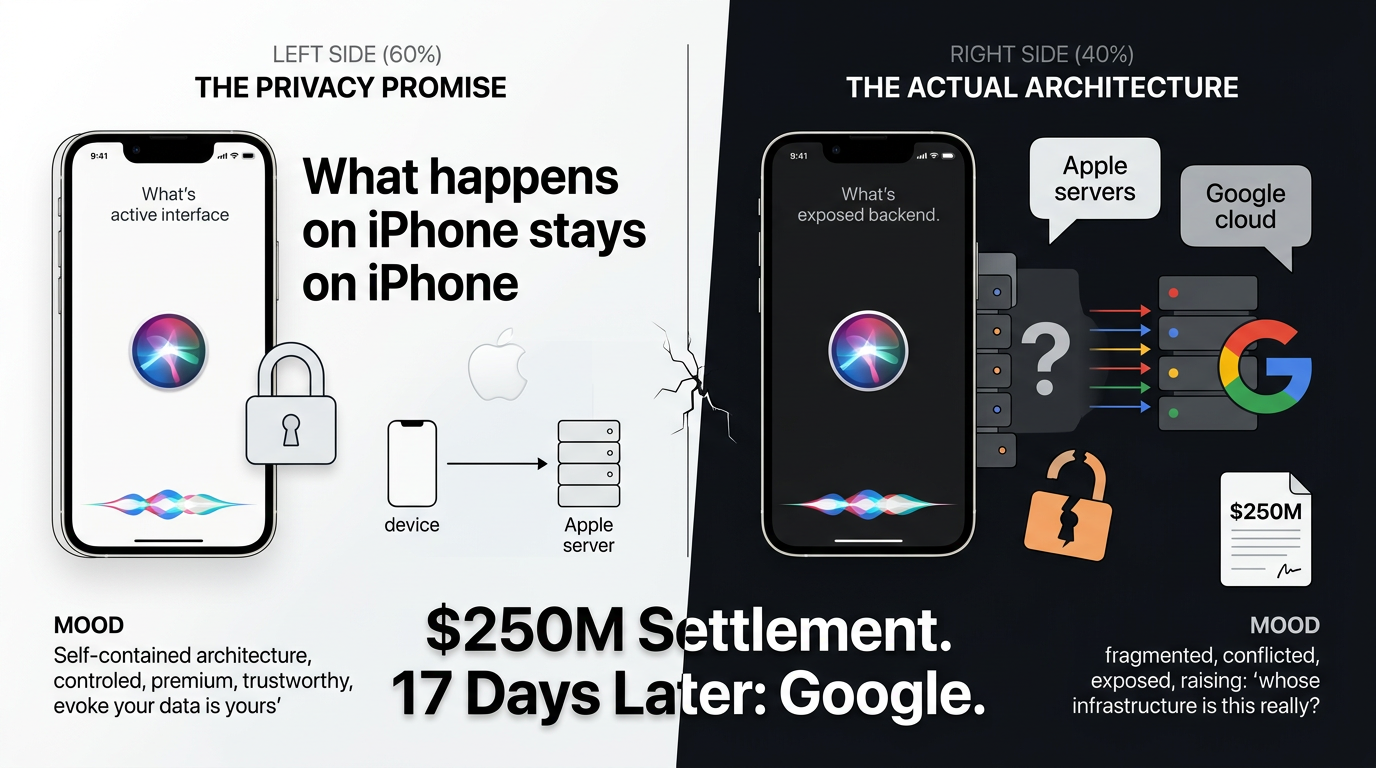
  31. Apple Settled $250 Million for Breaking Siri Promises. The New Siri Runs on Google.

    Apple has registered the subdomain genai.apple.com in anticipation of its upcoming WWDC 2026 event. This move suggests the company is preparing to announce significant advancements in artificial intelligence, potentially including a major overhaul of Siri. There are also indications that Apple may partner with Google to integrate Gemini models into its AI features. AI

    Apple Settled $250 Million for Breaking Siri Promises. The New Siri Runs on Google.

    IMPACT Signals Apple's upcoming AI strategy and potential integration of advanced models into its core products like Siri.

  32. If Google can’t make AI agents useful, maybe no one can

    Google is making a significant push into AI agents, building on the success of open-source platforms like OpenClaw. The company announced new agents at I/O 2026 designed for tasks such as information gathering, scheduling, and summarization, aiming to integrate them deeply into its existing services. A key offering is Gemini Spark, a cloud-based agent that will sync across devices and partner applications, with a beta rolling out soon. AI

    If Google can’t make AI agents useful, maybe no one can

    IMPACT Google's new AI agents aim to make personal assistants more capable, potentially accelerating enterprise adoption and user reliance on AI for daily tasks.

  33. Gemini 3.5 Flash Developer Guide

    Google has officially released Gemini 3.5 Flash, a stable and production-ready model optimized for agentic tasks, coding, and long-horizon reasoning. This version supports a 1 million token context window and enhanced "thinking" capabilities, with a new default effort level set to medium for a balance of speed, cost, and quality. The Interactions API is now the recommended primitive for developers building with Gemini, offering improved support for complex, multi-turn conversations and agentic workflows. AI

    Gemini 3.5 Flash Developer Guide

    IMPACT Enables scaled production use of advanced agentic and coding capabilities with a large context window.

  34. Google debuts AI-powered tools to optimize scientific research workflows

    Google has introduced a new suite of AI-powered tools called Gemini for Science, designed to streamline and enhance scientific research. This collection includes features for generating hypotheses by analyzing vast amounts of scientific literature, an agentic search engine for rapidly designing and testing thousands of experiments, and a chat interface to summarize complex research papers into digestible formats. Additionally, a Science Skills tool will automate intricate workflows by extracting insights from major life science databases. AI

    Google debuts AI-powered tools to optimize scientific research workflows

    IMPACT Streamlines scientific discovery by automating hypothesis generation, experimental design, and literature review.

  35. South Korea's total automobile exports in April amounted to US$6.17 billion, a year-on-year decrease of 5.5%.

    Google has unveiled its Gemini 1.5 series of models, signaling a significant advancement in its AI capabilities. The company is also addressing user concerns regarding potential 'dialogue leaks' associated with its AI technologies. Meanwhile, Changxin Technology is a key partner for Shangluo Electronics, though Shangluo Electronics does not hold any equity in the company. AI

    IMPACT Sets new SOTA on coding benchmarks; pressures Anthropic to respond.

  36. Gemini 3.5 Flash beat 3.1 Pro on coding and agents

    Google's Gemini 3.5 Flash model has surpassed its predecessor, Gemini 3.1 Pro, on several key benchmarks, particularly in coding and agentic tasks. This new tier offers a significant cost reduction of 40% and approximately four times faster output generation compared to 3.1 Pro. While Gemini 3.5 Flash excels in tool-use and agentic performance, Gemini 3.1 Pro still maintains an edge in pure reasoning and novel problem-solving benchmarks. AI

    IMPACT Accelerates adoption of cheaper, faster models for agentic tasks, potentially lowering costs for AI-powered applications.

  37. Why Your LLM Eval Harness Is Lying to You (And How to Fix It)

    A new approach to evaluating Large Language Models (LLMs) has been proposed to address the issue of static evaluation harnesses failing to detect model regressions. This method involves refreshing evaluation datasets weekly with real production traces, stratified by intent cluster to ensure representative sampling. Additionally, a permanent adversarial set, curated from actual customer support tickets indicating model failures, is weighted heavily in the evaluation process to prioritize real-world performance. AI

    IMPACT Improves LLM reliability by ensuring evaluation methods accurately reflect real-world performance and detect regressions.

  38. How to make remarkable videos with Seedance 2.0

    Seedance 2.0, a new AI video generation model, has been released, offering significant improvements over previous iterations. This model can create highly realistic and cinematic videos, demonstrated through examples like a space station collision, a fantasy bazaar chase, and a high-speed car pursuit. The advancements in Seedance 2.0 address issues like prompt adherence and audio integration, moving closer to the quality seen in other leading AI video tools. AI

    How to make remarkable videos with Seedance 2.0

    IMPACT Sets a new benchmark for AI video realism and cinematic quality, potentially influencing future developments in the field.

  39. UltraProbe Is Live — The World's First Free AI Security Scanner That Finds Your LLM Vulnerabilities in 5 Seconds

    UltraProbe, a new free AI security scanner, has been released by Ultra Lab to address the growing threat of prompt injection attacks on LLM applications. The tool offers two scanning modes: one that analyzes a system prompt for vulnerabilities in under five seconds, and another that scans a website's URL to detect risks associated with integrated AI chatbots. UltraProbe aims to provide accessible and comprehensive security testing for developers, covering major attack vectors identified by OWASP. AI

    IMPACT Provides a free, accessible tool for developers to test and mitigate prompt injection vulnerabilities in LLM applications, addressing a critical security gap.

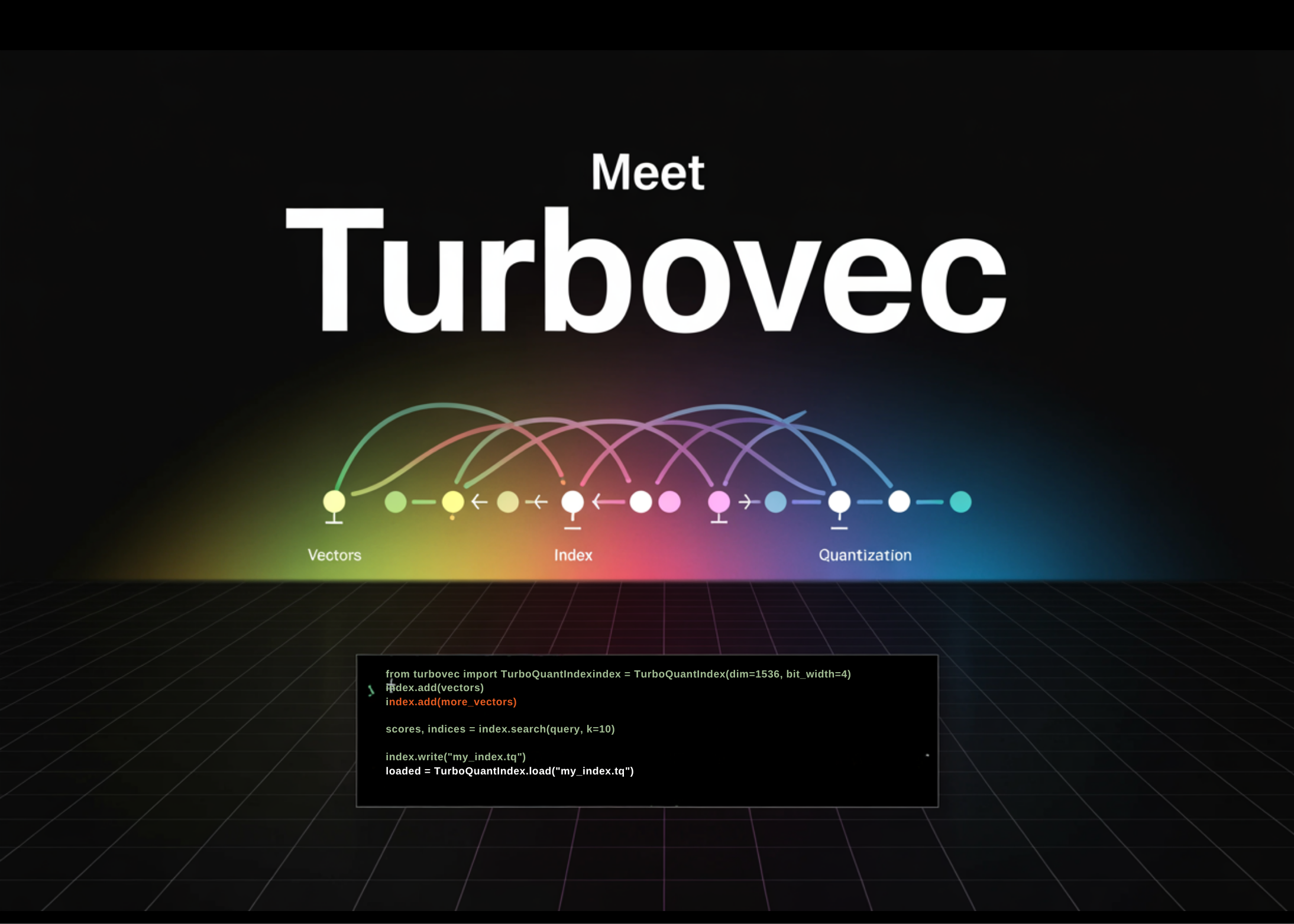
  40. Meet Turbovec: A Rust Vector Index with Python Bindings, and Built on Google’s TurboQuant Algorithm

    Turbovec is a new open-source vector index library written in Rust with Python bindings, designed to reduce the memory footprint of vector embeddings for AI applications. It utilizes Google's TurboQuant algorithm, a data-oblivious quantizer that achieves significant compression without requiring a training phase. This approach allows for substantial memory savings, fitting 10 million document embeddings into 4 GB of RAM compared to the 31 GB typically needed for float32 storage, while maintaining competitive search speeds and recall rates. AI

    Meet Turbovec: A Rust Vector Index with Python Bindings, and Built on Google’s TurboQuant Algorithm

    IMPACT Reduces memory requirements for vector embeddings, potentially lowering costs and enabling local inference for RAG applications.

  41. Google brings more conversational features to Gmail, Docs and Keep

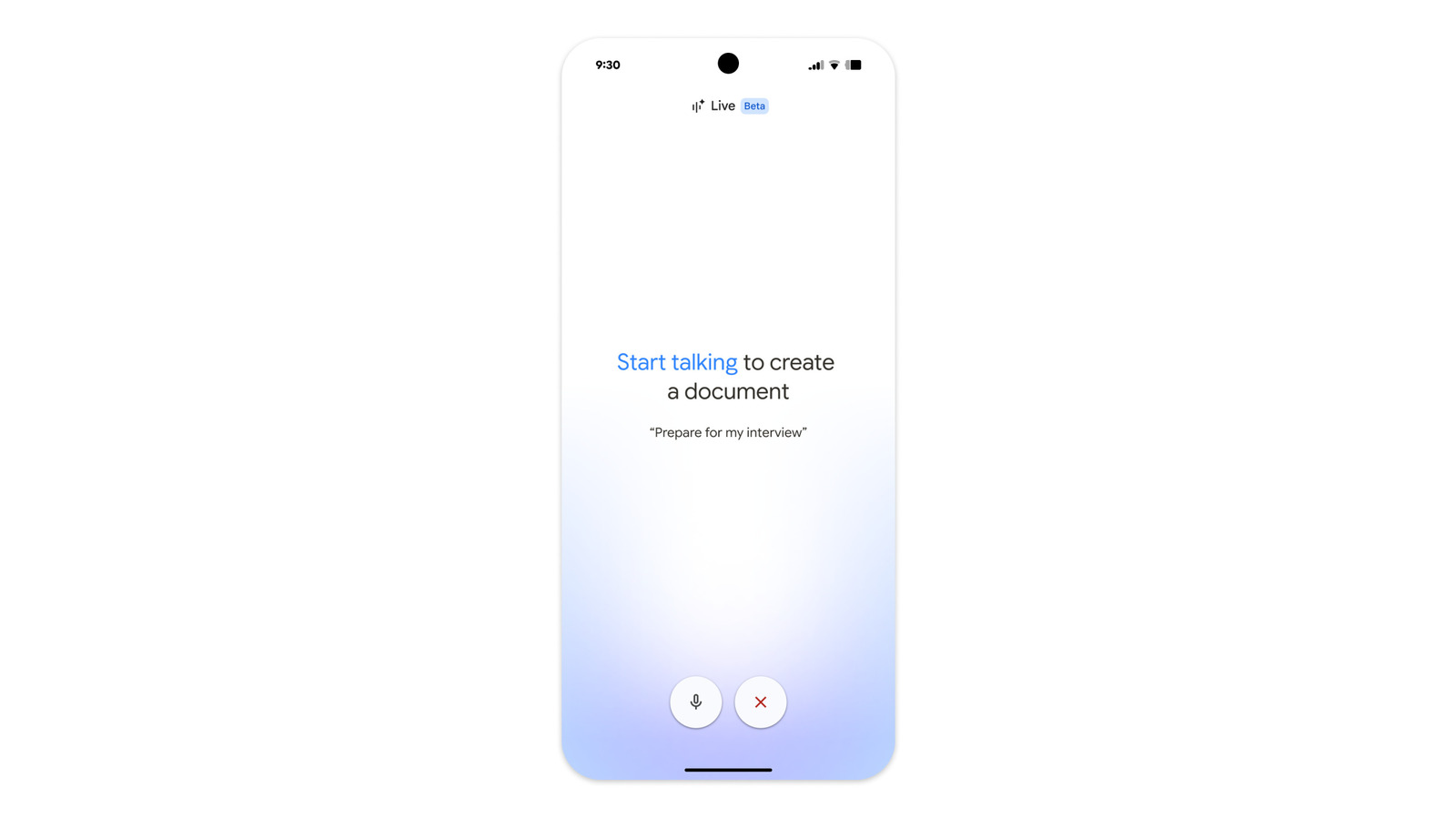
    Google is integrating new conversational AI features into Gmail, Docs, and Keep, allowing users to interact with their data using natural language. Gmail's Live feature will enable users to ask questions directly to their inbox, such as retrieving flight gate numbers. Docs Live will assist in drafting and organizing documents by processing spoken ideas and pulling relevant information from a user's Gmail and Drive, with an option to search the internet. These features are slated for release to AI Pro and Ultra subscribers this summer, with a preview for Google Workspace business customers. AI

    Google brings more conversational features to Gmail, Docs and Keep

    IMPACT Enhances productivity by enabling natural language interaction with personal data across Google's productivity suite.

  42. Gemma 4 deep dive: why a 1.5 GB model scores 37.5% on competition mathematics, how the MoE routing actually works, and which model fits your hardware. Full breakdown inside.

    Google's Gemma 4 model, despite its small 1.5 GB size, achieves a notable 37.5% score on competition mathematics benchmarks. The article delves into the model's Mixture-of-Experts (MoE) routing mechanisms and provides guidance on selecting the appropriate Gemma 4 variant for specific hardware needs. AI

    Gemma 4 deep dive: why a 1.5 GB model scores 37.5% on competition mathematics, how the MoE routing actually works, and which model fits your hardware. Full breakdown inside.

    IMPACT Demonstrates that smaller models can achieve competitive performance on complex tasks like mathematics.

  43. What I Learned Building with Gemma 4

    A developer explored Google's Gemma 4 model, focusing on its potential for local, offline AI applications, particularly in education. The experience highlighted the practicality of running advanced AI on personal devices, challenging the notion that powerful AI must be cloud-dependent. Key takeaways included the surprising realism of local AI, the significant utility of its 128K context window for handling large amounts of information, and how open models foster a builder's mindset focused on creating custom solutions. AI

    What I Learned Building with Gemma 4

    IMPACT Demonstrates the practical application and benefits of open-source, locally deployable LLMs for developers.

  44. The bond market is firing a warning shot in the direction of Washington, D.C.

    Major AI companies are investing billions into developing 'world models,' which aim to simulate physical reality rather than just recognize patterns. These advanced AI systems, trained on extensive video data, can predict how the real world operates, enabling applications from autonomous driving to robotics. Key players like Google with Project Genie, and startups led by prominent AI figures Fei-Fei Li and Yann LeCun, are spearheading this effort, with some anticipating a 'ChatGPT moment' for this technology. AI

    The bond market is firing a warning shot in the direction of Washington, D.C.

    IMPACT Accelerates development of AI systems capable of understanding and interacting with the physical world, potentially leading to breakthroughs in robotics and autonomous systems.

  45. Blackstone and Google Jointly Launch TPU Cloud Service

    Blackstone and Google are partnering to invest $5 billion in a US-based joint venture that will offer data center capacity and Google Cloud TPUs as a computing service. The venture aims to bring 500 megawatts of capacity online by 2027, marking a significant collaboration between infrastructure investors and tech giants to meet AI computing demands. This follows similar data center investment funds established by Microsoft with institutions like BlackRock. AI

    IMPACT Accelerates the availability of specialized AI compute infrastructure, potentially lowering costs and increasing accessibility for AI development.

  46. Stability AI releases a new audio model that can create six-minute songs

    Stability AI has launched its new audio generation models, Stability Audio 3.0, capable of producing professional-grade music up to six minutes long. Four models are available, with smaller versions offering open weights for general use and longer compositions. The company has also secured licensing deals with major music labels, ensuring the models are trained on fully licensed data. AI

    Stability AI releases a new audio model that can create six-minute songs

    IMPACT Sets a new benchmark for AI music generation length and quality, potentially impacting music production workflows and the industry's legal landscape.

  47. Quantitative Content Methodology: 5-Layer Content Framework

    A new content methodology called Quantitative Content Methodology (QCM) has been introduced, treating text as a mathematical dataset optimized for search engines and LLMs. QCM focuses on high information density, aiming for at least 2.5 verifiable data points per 100 words, and structures content with an "atomic answer" as the first sentence under each H2 heading. This framework is designed to make content more easily citable by generative search engines like Google's AI Overviews, ChatGPT, and Gemini. AI

    Quantitative Content Methodology: 5-Layer Content Framework

    IMPACT This methodology could help content creators produce material that is more easily understood and cited by AI-powered search and summarization tools.

  48. Which LLM is the best stock picker? I built a benchmark to find out.

    A new benchmark, dubbed 1rok, has been launched to evaluate the stock-picking capabilities of frontier large language models. The benchmark assigns each participating LLM a virtual portfolio of $100,000 and tasks them with selecting stocks weekly, with performance tracked against market outcomes. This initiative aims to provide a more practical, downstream evaluation of LLMs beyond traditional coding and reasoning benchmarks, focusing on decision-making under uncertainty. AI

    Which LLM is the best stock picker? I built a benchmark to find out.

    IMPACT Provides a novel benchmark for evaluating LLM decision-making under uncertainty, moving beyond traditional coding and reasoning tasks.

  49. Gemma 4 wrote three summaries in one response. The middle one was a self-disclaimer.

    A recent analysis of Google's Gemma 4 E2B model revealed unexpected behavior at a context window of 2048 tokens. When presented with a truncated input, the model generated a three-part response: an initial summary, a self-disclaimer stating the summary was not in the transcript, and then a more cautious retry. This behavior was not observed at larger context window sizes, such as 32768 tokens, where the model correctly identified the input issue without hedging. The discovery corrected a previous assertion about the model's calibration capabilities. AI

    Gemma 4 wrote three summaries in one response. The middle one was a self-disclaimer.

    IMPACT Reveals nuanced behavior in a specific model, highlighting the importance of context window size in LLM output.

  50. Google I/O 2026: Everything Google Announced — and the 93 Agents That Built an OS in 12 Hours

    Google's I/O 2026 event showcased significant advancements in AI, particularly with the introduction of "Project Astra." This initiative aims to create a universally accessible AI assistant that can perceive, reason, and act across various modalities. The event also highlighted the development of Gemini 1.5 Pro, which now supports a massive 1 million token context window, enabling more complex and nuanced interactions. Furthermore, Google demonstrated AI-powered tools for developers, including an AI agent that assisted in building an operating system in just 12 hours. AI

    Google I/O 2026: Everything Google Announced — and the 93 Agents That Built an OS in 12 Hours

    IMPACT Google's Project Astra and expanded Gemini 1.5 Pro context window signal a push towards more capable, multimodal AI assistants and advanced reasoning capabilities for developers.