PulseAugur / Brief
EN
LIVE 22:07:55

Brief

last 24h
[24/24] 221 sources

Multi-source AI news clustered, deduplicated, and scored 0–100 across authority, cluster strength, headline signal, and time decay.

  1. How Coach became Gen Z’s favorite affordable luxury handbag brand

    Coach has experienced a significant sales surge, with revenue up 29% last quarter, largely driven by its appeal to Gen Z shoppers seeking affordable luxury. The brand's CEO attributes this success to a substantial investment in marketing and data insights, including the strategic use of artificial intelligence for customer understanding. This resurgence contrasts with declining sales at rivals like Michael Kors and highlights Coach's successful brand rehabilitation strategy, similar to Ralph Lauren's. AI

    How Coach became Gen Z’s favorite affordable luxury handbag brand

    IMPACT Demonstrates how AI-driven customer insights can significantly boost sales and brand appeal in the competitive fashion industry.


  2. Solving The Identity Crisis: Putting Today’s Fragmented Consumer Back Together

    Modern marketing faces a significant challenge due to fragmented consumer data, leading to missed sales opportunities and decreased customer trust. Identity resolution technology, powered by AI, aims to solve this by consolidating disparate data points into a unified consumer profile. Solutions like Acxiom's Real ID enable brands to create a holistic view of customers across channels, enhancing personalization and improving customer experiences, particularly for younger, digitally-native generations. AI

    Solving The Identity Crisis: Putting Today’s Fragmented Consumer Back Together

    IMPACT AI-driven identity resolution enhances personalization and customer experience in marketing.

  3. Millionaire podcaster Mel Robbins hits back at Gen Z’s lazy label—she says they’re stuck in a world their baby boomer parents wouldn’t even recognize

    Podcaster Mel Robbins is defending Gen Z against accusations of laziness, arguing that the younger generation faces unprecedented economic and societal challenges. She contends that older generations fail to recognize the difficulties of navigating adulthood in the current era, citing issues like unattainable homeownership, significant wealth inequality, and immense student loan debt. Robbins suggests that feeling lost or anxious is a normal response to the complex and unstable world Gen Z is inheriting, especially with economic downturns and the increasing impact of AI on the job market. AI

    Millionaire podcaster Mel Robbins hits back at Gen Z’s lazy label—she says they’re stuck in a world their baby boomer parents wouldn’t even recognize

    IMPACT Discusses the impact of AI implementation on entry-level job opportunities for Gen Z.

  4. WeWork and Upwork CEOs confirm the Gen Z hiring nightmare is real—but it’s nothing new

    CEOs from WeWork and Upwork acknowledge that entry-level jobs are under pressure due to AI, but argue this is a recurring cycle of technological disruption. They emphasize the need for senior leaders to mentor and train new talent, as AI cannot replace essential human skills like empathy and leadership. Both executives suggest that while AI may cause short-term uncertainty, increased productivity will eventually lead to more hiring opportunities, and the rise of freelance work offers flexibility and a path for continuous upskilling. AI

    WeWork and Upwork CEOs confirm the Gen Z hiring nightmare is real—but it’s nothing new

    IMPACT Discusses the perceived impact of AI on entry-level employment and the future of work, offering executive perspectives on adaptation and upskilling.

  5. A dating expert says ghosting and quiet quitting are the same problem at their core, and corporate life has more to learn from romance than it admits

    A dating expert suggests that workplace issues like ghosting and quiet quitting stem from a similar core problem as in modern dating: a lack of communication skills. Lakshmi Rengarajan, formerly of Match.com and WeWork, argues that companies can learn from the dating world to foster better employee connections. She emphasizes the need for a "connection strategy" to navigate rapid workplace changes, including remote work and the integration of AI, while prioritizing human relationships. AI

    A dating expert says ghosting and quiet quitting are the same problem at their core, and corporate life has more to learn from romance than it admits

    IMPACT The integration of AI tools in the workplace is mentioned as a factor contributing to employee uncertainty and the need for better connection strategies.

  6. Uber CEO says rideshare ‘freed up’ his son from having to get a driver’s license—and he’s one of many Gen Zers who aren’t willing to drive

    Uber CEO Dara Khosrowshahi observes that Gen Z is increasingly forgoing driver's licenses, opting instead for rideshare services like Uber. This trend is supported by declining driver's license rates among young people in the U.S. and is influenced by factors such as convenience, cost, and urbanization. Rideshare companies are actively targeting this demographic with features designed for teens, emphasizing safety and independence. AI

    Uber CEO says rideshare ‘freed up’ his son from having to get a driver’s license—and he’s one of many Gen Zers who aren’t willing to drive

    IMPACT Rideshare services, increasingly powered by AI, are reshaping transportation habits and potentially reducing car ownership among younger generations.

  7. 3 reasons kids hate AI—especially the ones who refuse to even try it

    A significant portion of Generation Z is actively resisting AI adoption, a trend that contrasts with their historical role in embracing new technologies. This backlash stems from AI being presented as a mandatory assignment rather than an exciting exploration, and because it challenges their generation's strong emphasis on authenticity and genuine human connection. Surveys indicate declining enthusiasm and rising skepticism towards AI among young people, with many viewing it as a replacement for creativity and thought. AI

    3 reasons kids hate AI—especially the ones who refuse to even try it

    IMPACT Challenges the assumption of widespread youth adoption of AI, suggesting a cultural shift towards valuing authenticity over AI-generated content.

  8. Ro Khanna blames ‘clueless’ boomers for Gen Z booing AI: They handed over a ‘broken economy’

    Representative Ro Khanna addressed concerns about AI's economic impact on young people during a commencement speech, contrasting with other speakers who were met with boos. He argued that many older commencement speakers are out of touch with Gen Z's anxieties about job displacement and the current economic climate. Khanna proposed a seven-point plan, including shifting taxes from labor to capital and investing in workforce retraining, to ensure AI benefits workers rather than solely enriching billionaires. AI

    Ro Khanna blames ‘clueless’ boomers for Gen Z booing AI: They handed over a ‘broken economy’

    IMPACT Highlights growing public anxiety about AI's economic impact and the need for policy interventions to ensure equitable distribution of benefits.

  9. क्या AI आज की Gen Z को कमज़ोर दिमाग समझ रहा है? AI treating Gen Z users as dumb # AITrends # AI # GenZ # ArtificialIntelligence # TechTrends2026 # GenZHumor # T

    A discussion questions whether artificial intelligence systems are being designed to underestimate the intelligence of Gen Z users. The premise suggests that AI might be simplifying interactions or content in a way that implies a lack of cognitive ability among this demographic. This perspective raises concerns about how AI is shaping user experiences and perceptions of younger generations. AI

    IMPACT Raises questions about AI's design philosophy and its potential to perpetuate stereotypes about user demographics.

  10. The Generation That Grew Up With A.I. Hates It https://www.nytimes.com/2026/05/18/opinion/ai-boo-commencement-speeches.html # AI # Opinion # Tech

    A recent New York Times opinion piece suggests that the generation raised alongside artificial intelligence, often referred to as Gen Z, harbors a deep-seated aversion to the technology. Despite its pervasiveness, this demographic appears to view AI with skepticism and even disdain, a sentiment that is increasingly surfacing in public discourse and commencement speeches. AI

    IMPACT Suggests a growing generational divide in AI acceptance, potentially impacting future adoption and development.

  11. Campaigns pay the price for America's secular shift

    A growing number of Americans identify as religiously unaffiliated, now forming the largest single demographic group. This demographic shift presents a significant challenge for political campaigns, as these individuals are more dispersed and costly to reach than traditionally religious voters. Campaigns must increasingly rely on expensive digital advertising and direct outreach, with costs per voter significantly higher for the unaffiliated. AI

    Campaigns pay the price for America's secular shift
  12. Gen Z is over-relying on AI at work—and it could cost them their careers

    A recent study indicates that a significant portion of Gen Z workers are becoming overly reliant on AI tools, potentially hindering their skill development and career progression. This overdependence, with 62% of Gen Z admitting to it, raises concerns about their ability to perform tasks without AI assistance. While some companies encourage extensive AI use, experts caution against ceding all human judgment, emphasizing the need for a balance between adopting technology and cultivating personal expertise. AI

    Gen Z is over-relying on AI at work—and it could cost them their careers

    IMPACT Raises concerns about the long-term impact of AI on workforce skills and career development for early-career professionals.

  13. Founder of Ms. Anti Work says her ‘lazy girl job’ allowed her to only work a few hours a day—and she built her media company on the side

    Gabrielle Judge, known as "Ms. Anti Work," popularized the "lazy girl job" trend, which describes a low-effort, white-collar role offering a favorable work-life balance. Judge, a self-proclaimed high achiever, found that such a job allowed her to dedicate only a few hours daily to her employer while simultaneously building her own media company. This trend emerged from the Great Resignation, where workers sought better conditions, and is particularly popular among Gen Z, with many aspiring to entrepreneurship. AI

    Founder of Ms. Anti Work says her ‘lazy girl job’ allowed her to only work a few hours a day—and she built her media company on the side
  14. Tom Brady tells Gen Z to treat their careers like the Super Bowl: ‘You may only get one chance to impress your boss or land a promotion’

    Tom Brady, a legendary NFL quarterback, recently delivered a commencement address at Georgetown University, advising graduates to approach their careers with the same intensity and preparation he applied to his football games. He emphasized the importance of resilience, drawing on his experience in Super Bowl 51 where his team faced a seemingly insurmountable deficit. Brady urged the new graduates to seize opportunities, prepare diligently for adversity, and avoid making excuses, citing historical examples of once-dominant companies like Blockbuster and Kodak that failed to adapt. AI

    Tom Brady tells Gen Z to treat their careers like the Super Bowl: ‘You may only get one chance to impress your boss or land a promotion’
  15. Accenture exec says the consulting giant is hiring more entry-level workers out of college compared to last year

    Accenture plans to increase its hiring of entry-level employees this year, contrasting with some other companies that have reduced graduate recruitment. The consulting firm believes that recent graduates, who have grown up with AI tools like ChatGPT, will be valuable assets to the company. Accenture's global chief diversity officer, Beck Bailey, stated that while AI will transform roles, new jobs will emerge as others become obsolete, emphasizing that the current period is a transitional phase requiring adaptation and experimentation. AI

    Accenture exec says the consulting giant is hiring more entry-level workers out of college compared to last year

    IMPACT Companies are adapting hiring strategies to integrate AI-savvy graduates, suggesting a shift in workforce composition and skill requirements.

  16. 81% of Gen Z says the economy is trash — Peter St Onge #AI #culturalNorms #economics

    A recent survey indicates that a significant majority of Generation Z individuals perceive the current economic situation negatively. This sentiment is attributed to various factors, potentially including economic instability and future outlook concerns. The findings highlight a widespread dissatisfaction among young adults regarding their financial prospects. AI

  17. ‘Climaxxing’ Is A New Social Media Sex Trend

    A new social media trend called 'climaxxing' encourages individuals to increase their sexual activity and intimacy. This trend is framed as a response to a perceived 'sexual recession,' particularly noted among younger generations like Gen Z, who report lower rates of sexual activity compared to previous decades. The practice aims to leverage the physical and psychological benefits of sex, such as stress relief, improved mood, and enhanced intimacy, even if orgasms are not the primary focus. AI

    ‘Climaxxing’ Is A New Social Media Sex Trend
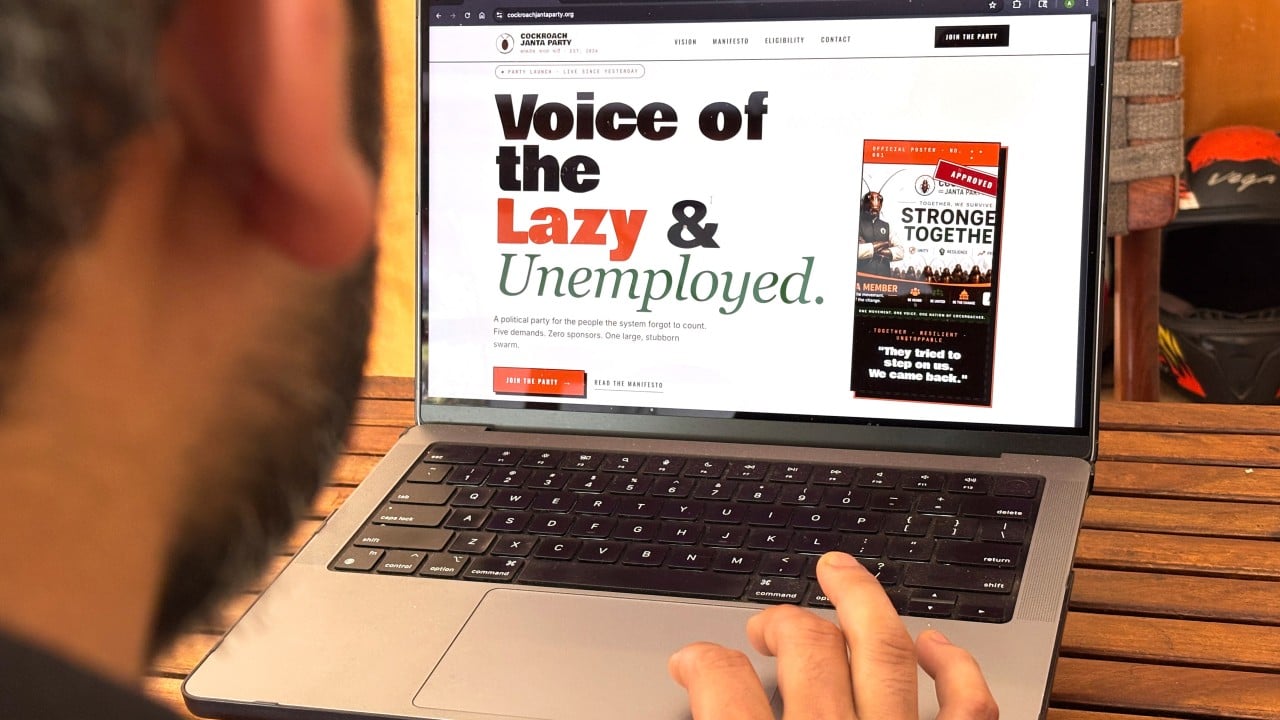
  18. Mock cockroach-theme political party draws India’s jobless youth, Modi’s rivals

    A mock political party, the "Cockroach Janta Party" (CJP), has gained traction on Indian social media, symbolizing the disillusionment of young people with the country's political landscape and its job crisis. The party's emergence follows a comment by India's Chief Justice referring to unemployed youth as "parasites" and "cockroaches." Analysts suggest the CJP's popularity highlights growing resentment among Gen Z towards the Modi government's perceived failure to create sufficient employment opportunities. AI

    Mock cockroach-theme political party draws India’s jobless youth, Modi’s rivals
  19. Single Gen Z women are destroying their male counterparts when it comes to buying their first house

    Single women in Generation Z are purchasing homes at a significantly higher rate than their male counterparts, accounting for 35% of Gen Z homebuyers compared to 18% for single men. This trend extends across all generations, with single women making up 25% of all homebuyers versus 11% for single men. Experts attribute this to women's increasing educational attainment, leading to higher incomes, and a strong desire for independent homeownership, a right they have only recently gained legal protection for. AI

    Single Gen Z women are destroying their male counterparts when it comes to buying their first house
  20. Safe Pro Group's AI technology successfully detected explosive threats in U.S. Army live fire exercise, advancing drone-based threat detection capabilities. # D

    A recent Gallup survey indicates a growing resentment among Gen Z towards artificial intelligence, with a significant portion expressing anger and anxiety about its role in their lives and workplaces. While many still use AI tools, adoption growth has slowed, and skepticism about AI's long-term impact on learning and career readiness is increasing. Despite these concerns, Gen Z students recognize the necessity of AI for future education and careers, though they largely prefer human-led services over automated ones. AI

    Safe Pro Group's AI technology successfully detected explosive threats in U.S. Army live fire exercise, advancing drone-based threat detection capabilities. # D

    IMPACT Gen Z's growing skepticism may influence future AI adoption rates and product development priorities.

  21. The Robot Revolution Has Officially Begun

    A growing number of young people, particularly Gen Z, are expressing significant dissatisfaction and even resentment towards AI technologies. Despite being early adopters and feeling pressured to use AI for career advancement, this demographic harbors deep concerns about its impact on human relationships, communication, and job security. This sentiment is contributing to a broader cultural backlash against AI, fueled by issues like disinformation, environmental impact, and the perceived erosion of critical thinking and creativity. AI

    The Robot Revolution Has Officially Begun

    IMPACT Younger generations are increasingly skeptical of AI, viewing it as a threat to jobs and human connection, despite its perceived necessity for career progression.

  22. Xiaohongshu Sends Internal Letter: Increase AI Investment, Conan Appointed President

    Graduating students are expressing anxiety and frustration over the increasing prevalence of AI, booing commencement speakers who highlight its benefits. Concerns about AI's impact on job prospects are widespread, with a significant portion of Gen Z viewing it as a threat. This sentiment contrasts with the optimistic outlook often presented by tech leaders, who encourage students to adapt to AI as a tool for the future. AI

    IMPACT Reflects growing student anxiety about AI's impact on career prospects, potentially influencing future workforce attitudes and AI adoption.

  23. Milestones like marriage and parenthood are so delayed for millennials and Gen Z many of them are skipping out on life insurance, report finds

    A recent Capgemini report indicates that millennials and Gen Z are delaying major life milestones like homeownership and starting families due to economic pressures. This delay impacts their financial planning, with many forgoing life insurance despite recognizing its importance. The report suggests that younger generations would be more inclined to purchase life insurance if policies were more affordable and clearly explained, particularly highlighting the value of 'living benefits' that can be accessed during their lifetime. AI

    Milestones like marriage and parenthood are so delayed for millennials and Gen Z many of them are skipping out on life insurance, report finds

    IMPACT This article discusses financial planning and consumer behavior related to life insurance, with no direct impact on AI operators.

  24. Where's the raccoon with the ham radio? (ChatGPT Images 2.0)

    OpenAI has released its latest image generation model, ChatGPT Images 2.0, which Sam Altman claims is a significant leap comparable to the jump from GPT-3 to GPT-5. Early tests suggest the new model excels at complex illustrations, particularly in generating detailed scenes like a "Where's Waldo" style image with a raccoon holding a ham radio, a task that previous models struggled with. While the model demonstrates impressive capabilities, there are concerns about its reliability in solving its own generated puzzles, as it failed to accurately identify the hidden raccoon in one instance. AI

    Where's the raccoon with the ham radio? (ChatGPT Images 2.0)

    IMPACT Sets a new benchmark for complex image generation, potentially influencing creative industries and AI model development.