PulseAugur / Brief
EN
LIVE 22:35:29

Brief

last 24h
[9/9] 221 sources

Multi-source AI news clustered, deduplicated, and scored 0–100 across authority, cluster strength, headline signal, and time decay.

  1. Anthropic Just Bought the Company That Builds OpenAI’s SDKs. Nobody’s Saying It Out Loud Yet.

    A new acquisition by Anthropic involves the company that develops SDK compilers used by major AI players like OpenAI, Google, and Meta. This move suggests a strategic consolidation of AI infrastructure. Meanwhile, developers are facing significant cost issues with AI agents due to inefficient prompt management, leading to what's termed 'token bloat' or 'token spirals' that can rapidly deplete budgets. AI
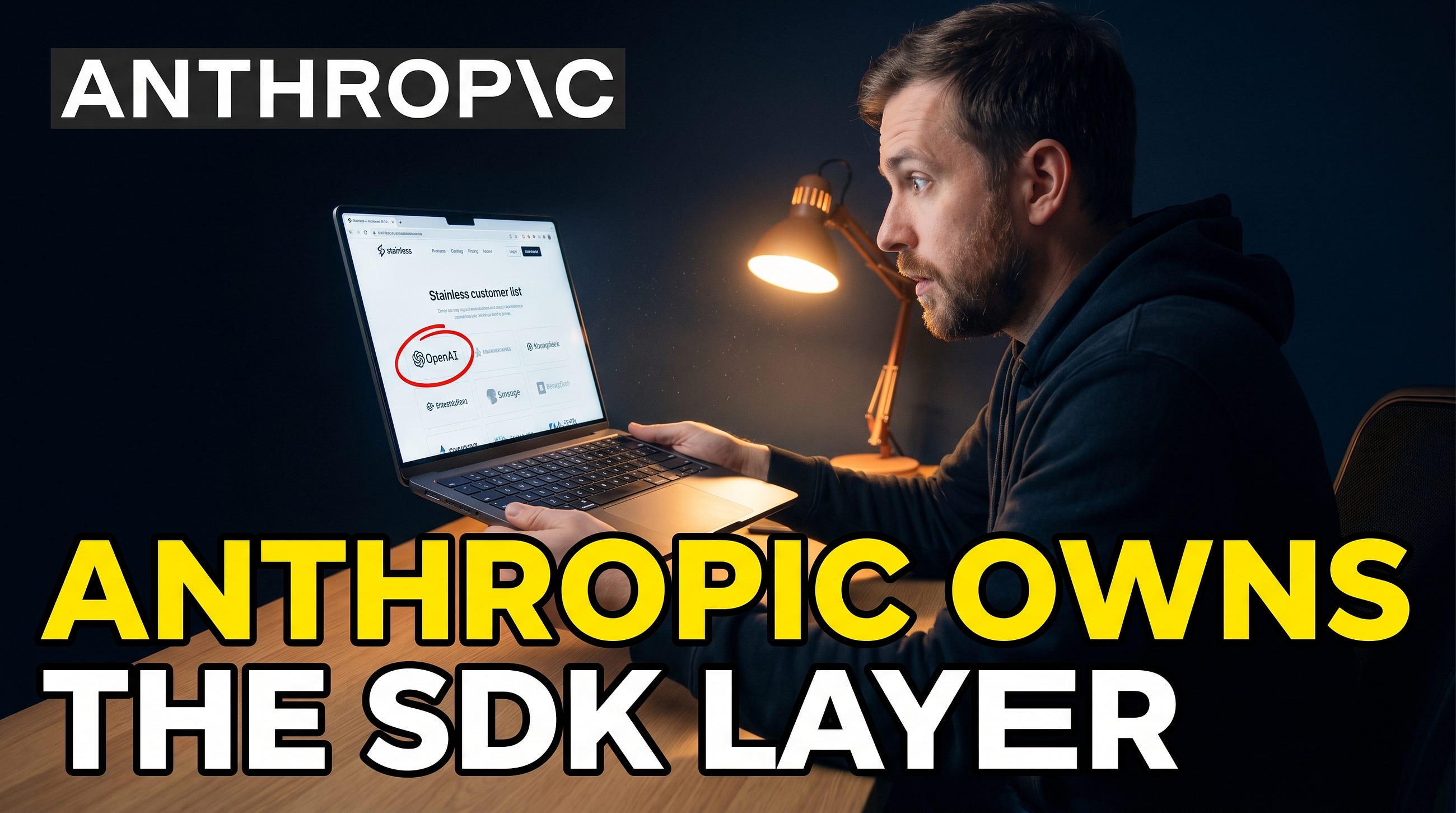
    Anthropic Just Bought the Company That Builds OpenAI’s SDKs. Nobody’s Saying It Out Loud Yet.

    IMPACT Consolidation of AI infrastructure may streamline development, while inefficient agent design poses significant cost risks for operators.

  2. Congratulations to $CBRS on its successful IPO. Cerebras's founders can now reap the rewards of their hard work and contributions to hardware innovation. CEO An

    Cerebras Systems has successfully completed its Initial Public Offering (IPO), marking a significant milestone for the company and its founders. This public debut allows the founders to realize the value of their efforts in advancing hardware innovation within the AI sector. AI

    IMPACT Cerebras's IPO provides capital for further development of AI hardware, potentially accelerating AI training and inference capabilities.

  3. Watch the entire podcast here: https://t.co/f086zEo58f

    Cerebras has developed a new system that places an entire NVL72 rack onto a single wafer. This innovative approach circumvents the traditional networking power bottleneck by routing around defects and maintaining all processing on-die. The company's technology aims to provide a more efficient solution for large-scale computing needs. AI

    IMPACT Addresses the networking power bottleneck in large-scale AI computing by integrating an entire rack onto a single wafer.

  4. Turn ~800M Free AI Tokens Into a Single OpenAI API with FreeLLMAPI

    FreeLLMAPI is a self-hosted proxy designed to aggregate free API tokens from various AI providers into a single, unified endpoint. This tool allows users to leverage approximately 800 million free tokens per month across 14 different services, simplifying development by presenting a single OpenAI-compatible API. It offers features like automatic failover, sticky sessions for multi-turn conversations, and an admin dashboard, though it is intended for personal use and prototyping rather than production workloads. AI

    IMPACT Simplifies prototyping for AI agents and researchers by consolidating free token access across multiple providers.

  5. Nvidia gets tepid reaction to forecast, boosts investor rewards

    Nvidia's latest sales forecast for the upcoming quarter was met with a muted investor response, despite strong revenue growth from data center operators. The company announced increased shareholder rewards, including a higher quarterly dividend and a significant stock repurchase program. While Nvidia's data center chip sales continue to surge, the company faces intensifying competition from rivals like AMD, Broadcom, and Google, who are developing their own AI-focused processors. AI

    Nvidia gets tepid reaction to forecast, boosts investor rewards

    IMPACT Nvidia's performance and competitive positioning are critical indicators for the AI hardware market, influencing supply chains and enterprise adoption.

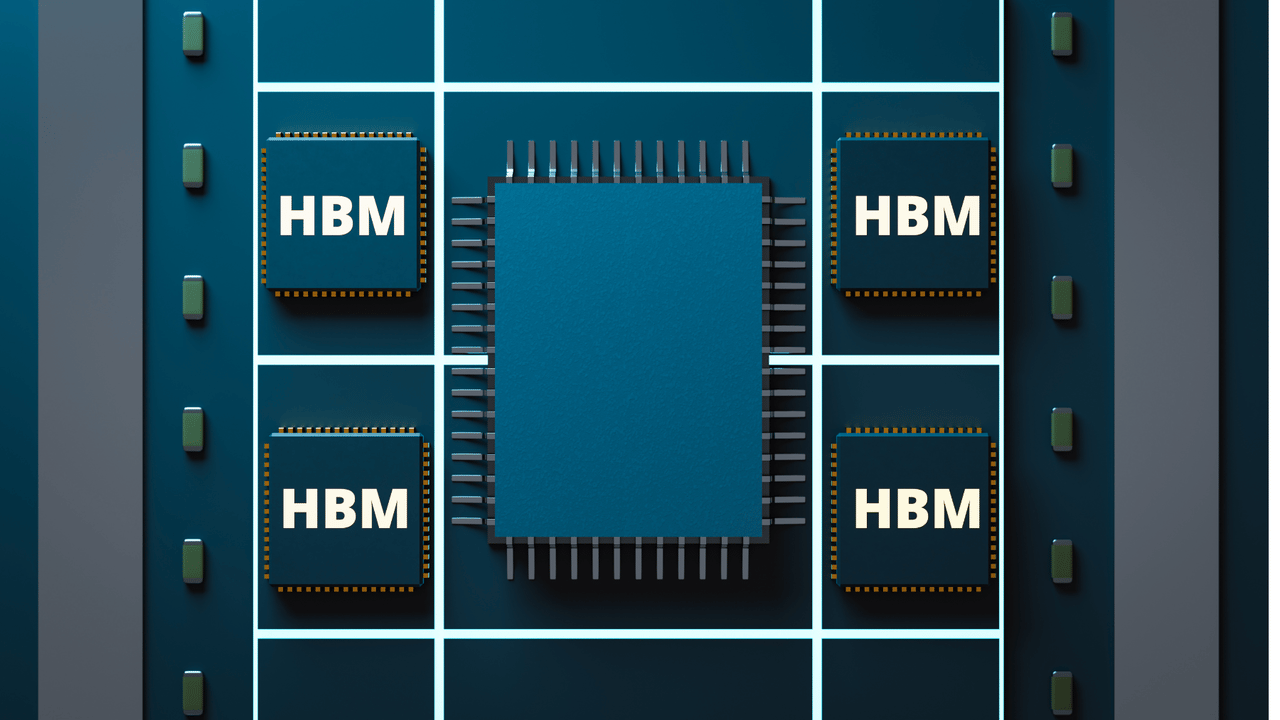
  6. Scaling the Memory Wall: HBM, CXL, and the New GPU Playbook

    The AI industry is grappling with a significant 'memory wall' bottleneck, where GPU processing power outstrips memory bandwidth and capacity. This challenge is exacerbated by the increasing demands of training large generative AI models and the growing need for edge inference and agentic AI. Solutions like High Bandwidth Memory (HBM), Compute Express Link (CXL), and specialized on-processor SRAM meshes are being developed to address these limitations, though they introduce new challenges in supply, cost, and thermal management. AI

    Scaling the Memory Wall: HBM, CXL, and the New GPU Playbook

    IMPACT Addresses critical memory bottlenecks in AI infrastructure, impacting the cost and efficiency of training and inference.

  7. Inference economics are shifting. Expect more "fast tier" pricing (Opus Fast, Gemini Flash), more specialized inference hardware (Cerebras, Groq), and more pres

    Agentic workloads are significantly altering the economics of AI inference, with roughly half of real-world coding agent requests exceeding 128,000 tokens. This trend is driving a shift towards specialized inference hardware and tiered pricing models, such as "fast tier" options for models like Opus and Gemini Flash. The increasing token usage is attributed not to longer user prompts, but to the extensive context agents themselves generate and utilize. AI

    IMPACT Agentic AI workloads are increasing token usage and driving demand for specialized hardware, potentially leading to new pricing structures for AI services.

  8. I Benchmarked 47 LLM Providers Against Real Queries - Here's What I Found 📊

    A developer benchmarked 47 LLM providers using real production queries, spending $3,200 and analyzing 12,847 requests over three months. The findings revealed significant discrepancies between marketing claims and actual performance, particularly in latency and cost-effectiveness for longer responses. The analysis highlighted that while premium models like GPT-4 are necessary for complex tasks, cheaper alternatives can suffice for simpler queries, leading to the development of an open-source router to optimize LLM usage. AI

    I Benchmarked 47 LLM Providers Against Real Queries - Here's What I Found 📊

    IMPACT Optimizes LLM usage by routing queries to the most cost-effective and performant models, saving significant operational expenses.

  9. Arm Steps Deeper into Silicon: Implications for the Semiconductor Value Chain

    Arm Holdings has announced its first complete production chip, the Arm AGI CPU, designed for AI data center workloads and manufactured by TSMC on a 3nm process. This move marks a significant shift for Arm, moving beyond its traditional IP licensing model to offer turnkey chip solutions, aiming to accelerate time-to-market and reduce costs for customers like Meta and OpenAI. The AGI CPU is expected to be available in the second half of 2026, positioning Arm to capture more value in the rapidly growing AI semiconductor market. AI

    Arm Steps Deeper into Silicon: Implications for the Semiconductor Value Chain

    IMPACT Arm's entry into full chip production with its AGI CPU could accelerate AI deployment by reducing time-to-market and development costs for major tech players.