PulseAugur / Brief
EN
LIVE 17:47:09

Brief

last 24h
[50/3909] 224 sources

Multi-source AI news clustered, deduplicated, and scored 0–100 across authority, cluster strength, headline signal, and time decay.

  1. Blockbuster new Raspberry Pi project turns any screen into old-school VCR

    Netflix engineer has developed an open-source project called Headroom, designed to significantly reduce the cost of running AI models. This tool aims to optimize AI inference, potentially saving users substantial amounts of money. The project has been made publicly available, allowing others to benefit from its cost-saving capabilities. AI

    Blockbuster new Raspberry Pi project turns any screen into old-school VCR

    IMPACT Potential to lower operational costs for AI inference, making AI more accessible.

  2. 📰 Context Compression: Reduce LLM Input by 16x Without Losing Accuracy A team of NYU researchers has developed a technique that reduces the conte

    Researchers at New York University have created a new method for compressing the input context of large language models, reducing it by up to 16 times without sacrificing accuracy. This technique allows for significantly faster processing speeds using existing infrastructure. AI

    📰 Context Compression: Reduce LLM Input by 16x Without Losing Accuracy A team of NYU researchers has developed a technique that reduces the conte

    IMPACT This technique could significantly reduce inference costs and latency for LLM applications by enabling faster processing of larger contexts.

  3. Build an AI Shopping Agent with BuyWhere in 5 Minutes

    BuyWhere has released a tool that allows AI agents to access real-time product pricing from over 15 Singaporean merchants. The tool, which integrates with platforms like LangChain and CrewAI, uses the Model Context Protocol (MCP) to connect to retailers such as FairPrice, Cold Storage, Lazada, and Shopee. Developers can integrate this functionality into their AI agents with a simple command and a free API key. AI

    IMPACT Enables AI agents to access real-time e-commerce data, potentially improving shopping assistants and price comparison tools.

  4. Seven cost leaks I keep finding when I audit production LangGraph agents

    An AI operations agent has identified seven common cost-saving opportunities in production LangGraph agents. These leaks, found through auditing agent stacks, can significantly inflate AI bills. The agent provides specific detection methods and fixes for issues like excessive context in prompts, using expensive models for simple tasks, and inefficient retry logic that incurs unnecessary costs. AI

    IMPACT Provides actionable strategies for reducing operational costs in AI agent deployments, potentially saving organizations thousands of dollars monthly.

  5. Migrating to x402 v2: what actually changed (and the traps nobody documents)

    The author details a migration from x402 v1 to v2, noting that v2 is a significant departure rather than a simple upgrade. Key changes include a shift to the @x402 npm scope, the introduction of CAIP-2 for networks, and the relocation of payment challenges from the JSON body to the PAYMENT-REQUIRED header. The article also highlights new client-side scheme handling and the integration of Bazaar discovery for paid routes. AI

    IMPACT Provides a technical guide for developers migrating to the x402 protocol v2, detailing changes and potential pitfalls.

  6. Frontier model performance on an open model, post-trained in under 24 hours. @trajectorylabs is showing what's possible when great open models meet the right tr

    Trajectory Labs has demonstrated frontier model performance on an open-source model, achieving this feat in under 24 hours of post-training. This achievement highlights the potential of combining strong open models with efficient training infrastructure. Together Compute provided the necessary computing power for this rapid development, in collaboration with Nvidia. AI

    IMPACT Demonstrates accelerated training techniques for open-source models, potentially lowering barriers to frontier-level AI development.

  7. Ollama 0.30 GPU Boost: Faster local Qwen inference on NVIDIA

    Ollama version 0.30 has been released, significantly boosting local inference speeds for Qwen models on NVIDIA GPUs. This update enhances support for Vulkan and NVIDIA hardware, improves GGUF compatibility, and streamlines the local GPU inference process. The release enables faster, privacy-focused desktop chat applications and GPU-accelerated research by providing a more efficient backend for large language models. AI

    IMPACT Improves local LLM inference speed and accessibility for users with NVIDIA GPUs.

  8. I built one API that gives AI agents live jobs from 6 boards (LinkedIn, Foundit, RemoteOK...)

    A developer has created RecruitData, an API designed to provide AI agents with live job listings from multiple sources. This tool aims to streamline the process for AI agents by offering a unified, deduplicated feed from six job boards, including LinkedIn, Foundit, and RemoteOK. RecruitData is built on Cloudflare Workers and offers a free tier with 15 jobs per call, with a paid option for LinkedIn job access. AI

    IMPACT Simplifies job searching for AI agents, potentially accelerating their use in recruitment tasks.

  9. Escalate the Model, Not the Conversation

    Trooper, a Go proxy application, has been updated to version 4.0, introducing seamless context preservation between local and cloud-based LLMs. This feature allows users to escalate a conversation from a local model like Ollama to a more powerful model such as Claude without losing chat history. The system automatically injects the full conversation context when switching models and updates the session store so the original local model can continue the conversation with full awareness of the cloud model's input. AI

    Escalate the Model, Not the Conversation

    IMPACT Enhances the usability of local LLMs by allowing seamless escalation to more powerful cloud models without context loss.

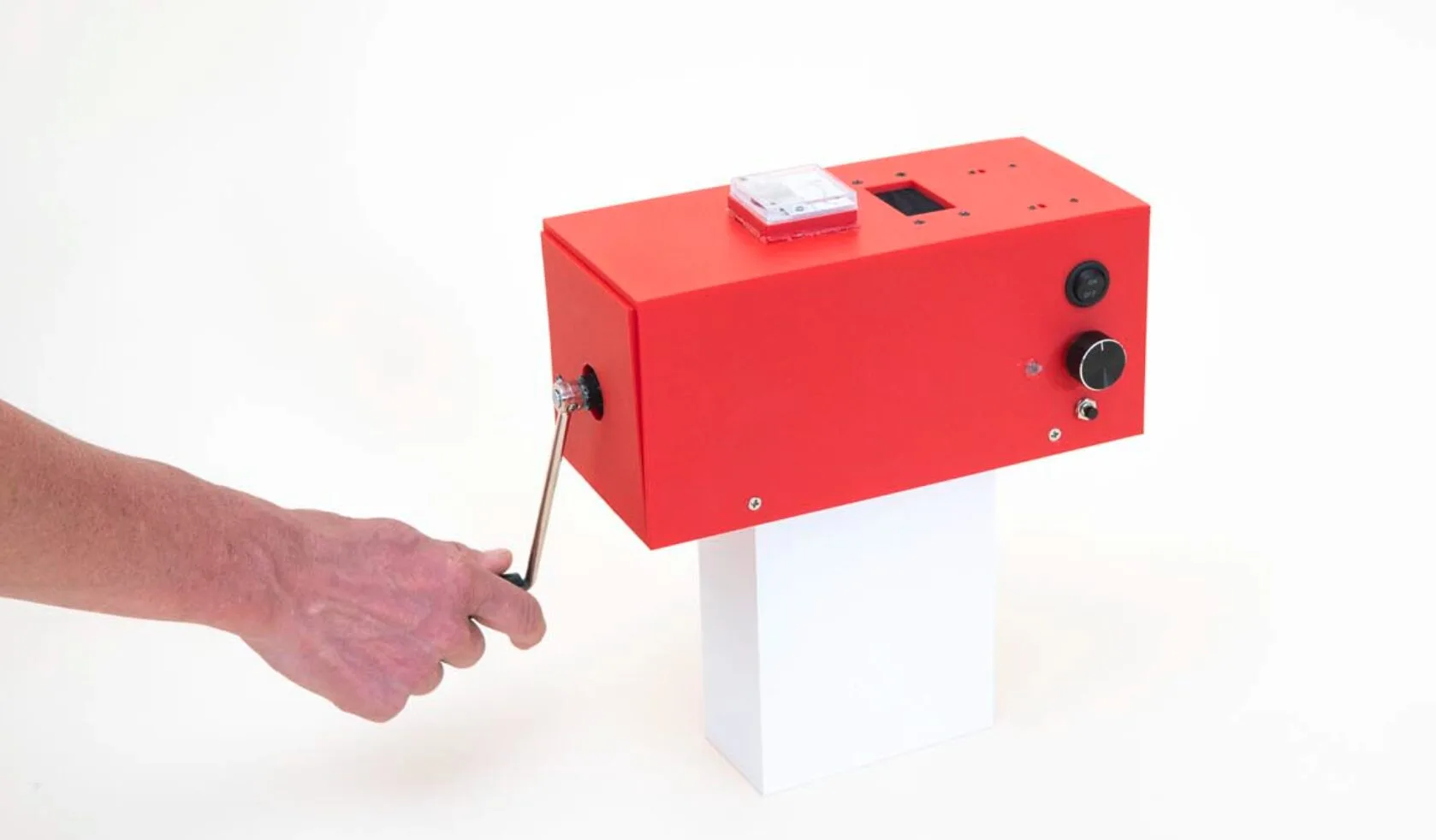
  10. No internet or power needed, converse with AI using hand-cranked power generation "CrankGPT" https://fed.brid.gy/r/https://fabscene.com/new/make/crankgpt-raspberry-pi/?utm_source=rss&utm_medium=rss&utm_campaign=crank

    Squeez Labs has developed "CrankGPT," a project that allows for AI conversation using only a hand-crank generator for power. This experimental setup runs on a Raspberry Pi 5, eliminating the need for batteries or cloud connectivity, and operates only while the generator is being cranked. The project faced challenges with power fluctuations during AI processing, which would cause the generator's protection circuit to momentarily cut power. AI

    No internet or power needed, converse with AI using hand-cranked power generation "CrankGPT" https://fed.brid.gy/r/https://fabscene.com/new/make/crankgpt-raspberry-pi/?utm_source=rss&utm_medium=rss&utm_campaign=crank

    IMPACT Demonstrates the potential for low-power AI applications, reducing reliance on constant power and cloud infrastructure.

  11. PSA: Test your "threads" argument in llama.cpp (+80% performance in my case)

    A user on Reddit's r/LocalLLaMA subreddit has discovered a significant performance improvement in the llama.cpp inference engine by adjusting the `--threads` argument. Initially, it was believed that limiting threads to the number of performance cores was optimal for hybrid CPU setups. However, testing with the Gemma 4 26B A4B QAT model revealed that increasing the thread count to 16 on a CPU with 18 cores (6 performance, 12 efficiency) resulted in an approximately 80% performance uplift. This finding suggests that users should experiment with thread counts beyond the number of performance cores to maximize inference speed, especially for CPU or hybrid CPU/GPU setups. AI

    IMPACT Optimizing thread counts can unlock significant performance gains for local LLM inference, potentially making larger models more accessible on consumer hardware.

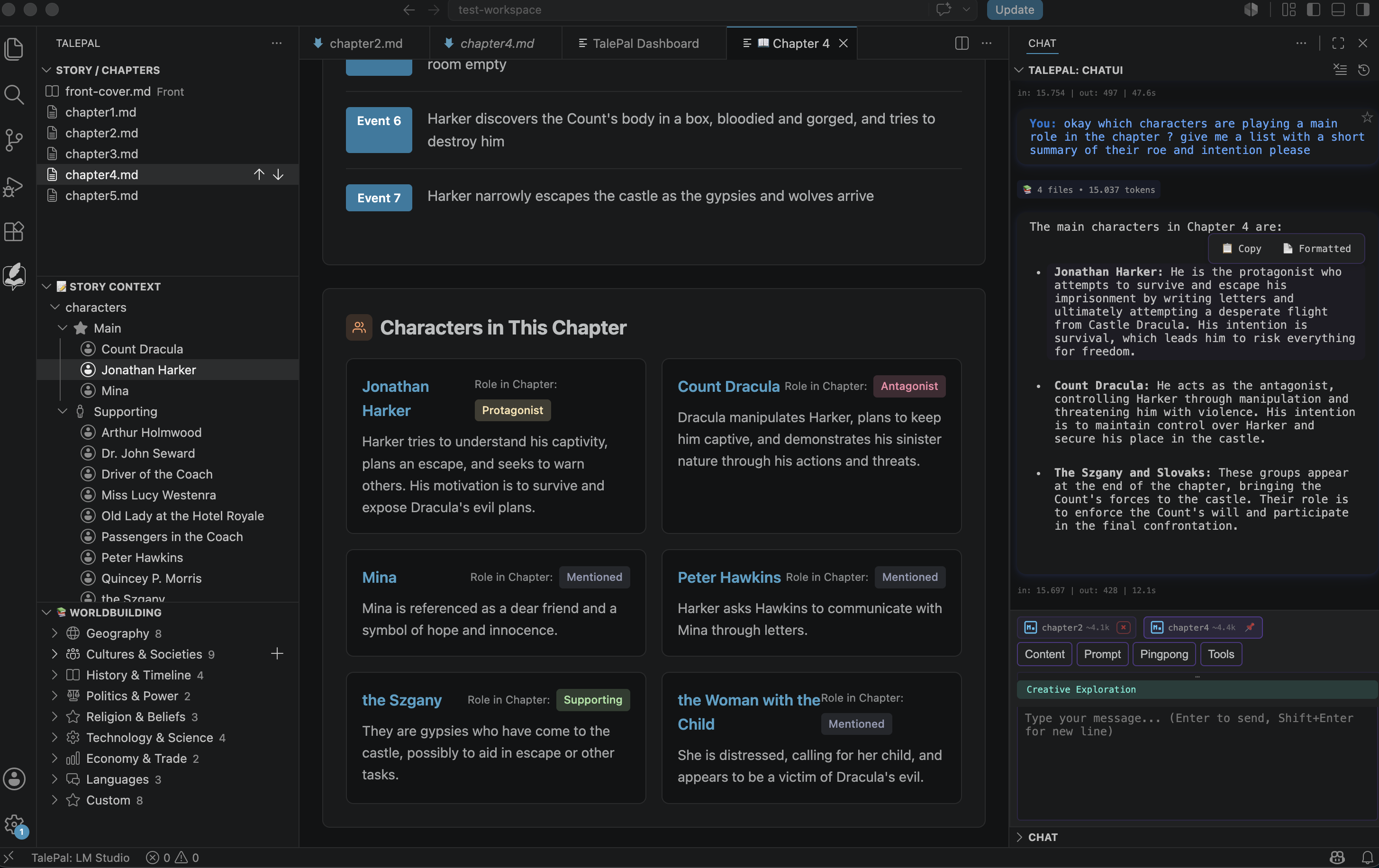
  12. Really happy with # talepal a # vscode extension for # writers and # authors your complete small # writing environment. character, story and plot, worldbuilding

    Talepal is a new VS Code extension designed for writers, offering a local AI-powered dialogue partner for story development. It assists with character, plot, and world-building, utilizing models like Gemma-4 on devices such as the MacBook Air. The tool emphasizes a local-first approach, acting as a creative assistant rather than an automated writer. AI

    Really happy with # talepal a # vscode extension for # writers and # authors your complete small # writing environment. character, story and plot, worldbuilding

    IMPACT Provides writers with a local, AI-powered dialogue partner for creative assistance.

  13. # JPMorganChase plans to deploy long-running # AIagents this year, capable of operating autonomously for extended periods. These # agents , evolving from single

    JPMorgan Chase is set to deploy advanced AI agents capable of autonomous, long-duration operation later this year. These agents will evolve beyond single-task functions to manage complex workflows across various software and steps. This advancement signifies that AI technology is overcoming previous security and governance challenges, signaling broader corporate adoption. AI

    IMPACT Signals increased enterprise adoption of AI for complex, autonomous operations, potentially improving efficiency and workflow management.

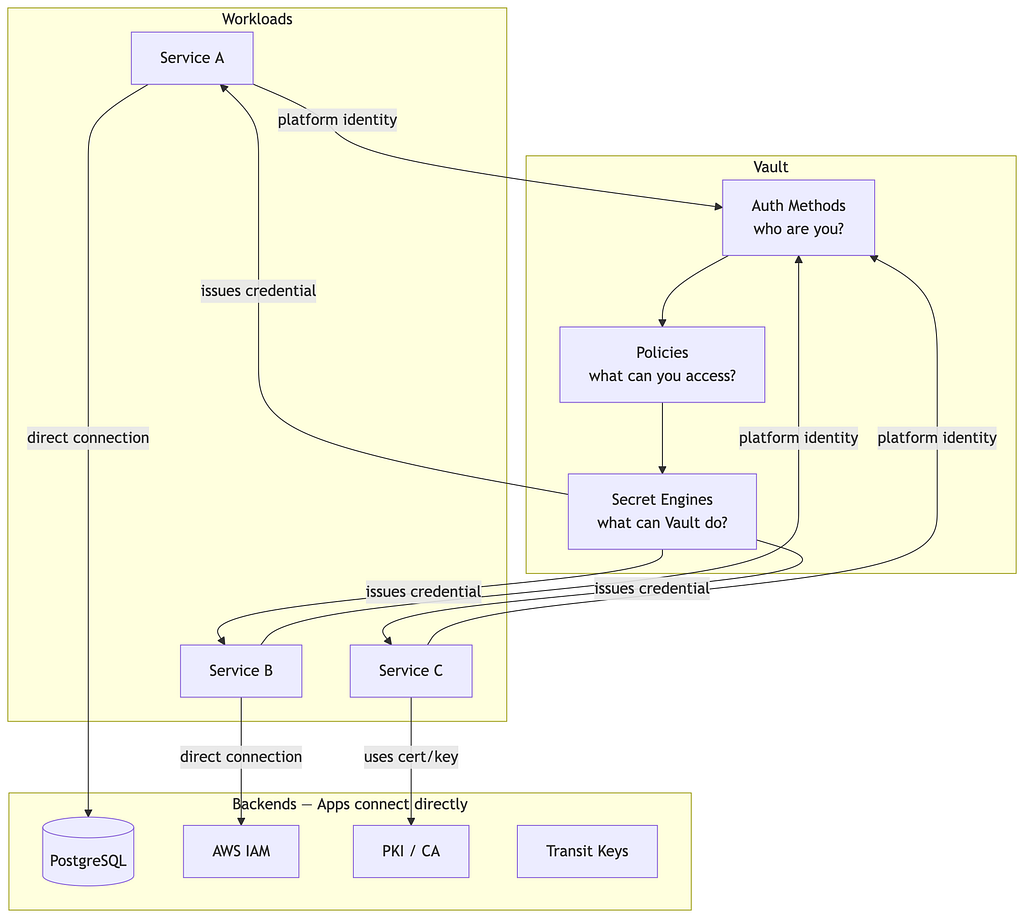
  14. HashiCorp Vault Deep Dive

    This article provides a deep dive into HashiCorp Vault, a platform designed to manage secrets and credentials. It explains Vault's core capabilities, including secure secret storage, dynamic credential generation, encryption as a service, and certificate authority functions. The piece details Vault's architecture, emphasizing its encryption barrier and operational layers, and clarifies the distinct processes of Vault initialization, sealing, and unsealing, particularly highlighting the critical nature of the initial root key and unseal shares. AI

    HashiCorp Vault Deep Dive

    IMPACT Provides insights into secure credential management, a foundational aspect for AI infrastructure and operations.

  15. How to Use Claude Code and GPT API at 90% Off

    APIVAI has launched a new service that offers access to Anthropic's Claude models and OpenAI's GPT models through a single, OpenAI-compatible API. This gateway aims to significantly reduce costs, with savings up to 90% compared to official API pricing. Developers can integrate APIVAI with tools like Claude Code and Cursor by simply changing their API base URL, allowing for cheaper access to advanced AI capabilities without subscriptions or VPNs. AI

    IMPACT Reduces operational costs for developers using leading AI models, potentially accelerating adoption of AI tools.

  16. Lua.ex: Sandboxed Lua 5.3 on the Beam, Built for AI Agents · Lua.ex

    Lua.ex is a new Elixir-native virtual machine for embedding Lua 5.3 code within applications, designed with AI agents in mind. It offers a sandboxed environment, preventing untrusted code from accessing sensitive system functions and ensuring all opcodes are auditable. The VM provides seamless interop between Elixir and Lua, allowing developers to expose specific Elixir functions to Lua scripts and call Lua functions from Elixir, with compile-time syntax validation for enhanced developer experience. AI

    IMPACT Enables safer and more flexible integration of scripting into AI agent workflows.

  17. The Prefill Wall: Why MTP's 2 Barely Moves Long-Context Latency (Qwen3.6-27B, RTX 3090)

    A technical analysis reveals that while speculative decoding techniques like MTP can significantly speed up LLM generation, they do not address the bottleneck of prompt processing, known as prefill. For models like Qwen3.6-27B on a single RTX 3090, processing a 128k token prompt can take over two minutes before the first token is generated. This prefill latency is particularly impactful in retrieval-augmented generation (RAG) scenarios where large amounts of context are processed, diminishing the benefits of faster generation. AI

    IMPACT Highlights that prompt processing (prefill) is a major bottleneck for long-context LLM applications like RAG, suggesting focus on context optimization over generation speedups.

  18. AI Serving Platform That Adapts to Your Model

    Databricks has launched a new AI serving platform designed to handle a wide variety of machine learning models, from small classifiers to large language models. The platform automatically adapts to different model resource requirements and traffic patterns, eliminating the need for manual tuning. This approach aims to reduce infrastructure costs by up to 90% and minimize latency, allowing engineering teams to focus on model development rather than production deployment. AI

    IMPACT Simplifies production deployment for diverse ML models, potentially lowering costs and accelerating time-to-market for AI applications.

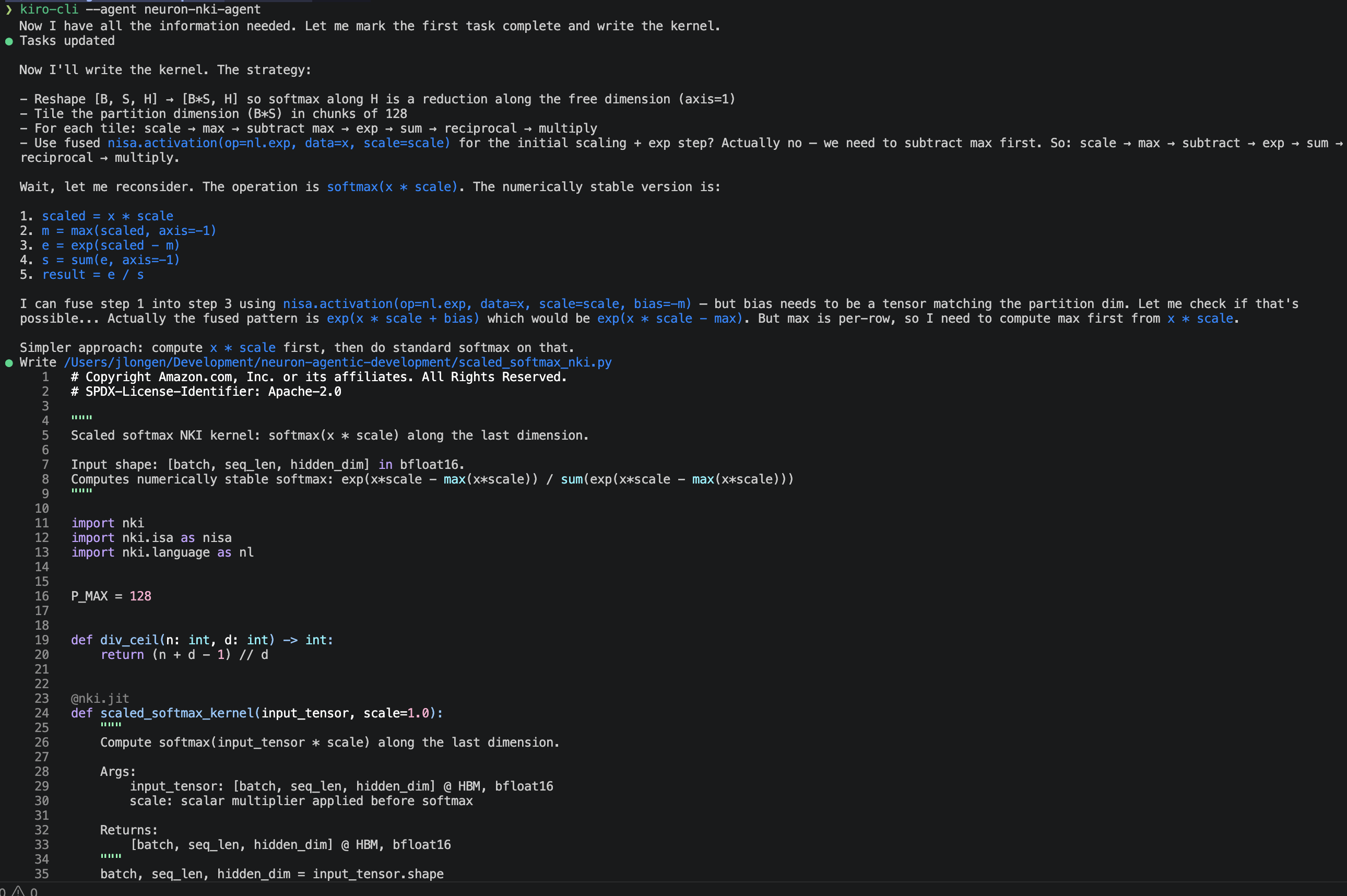
  19. Stop hand-tuning kernels: How Neuron Agentic Development accelerates AWS Trainium optimizations

    AWS has introduced Neuron Agentic Development, a suite of AI agents designed to simplify and accelerate the optimization of machine learning models on its Trainium and Inferentia chips. This new capability aims to empower ML engineers to write, debug, and profile hardware-specific kernels without requiring deep architectural expertise. By integrating with IDEs like VS Code and Cursor, these agents automate complex tasks such as kernel authoring, error resolution, and performance analysis, significantly reducing the time from model development to hardware-optimized implementation. AI

    Stop hand-tuning kernels: How Neuron Agentic Development accelerates AWS Trainium optimizations

    IMPACT Accelerates AI model deployment by simplifying hardware optimization for developers.

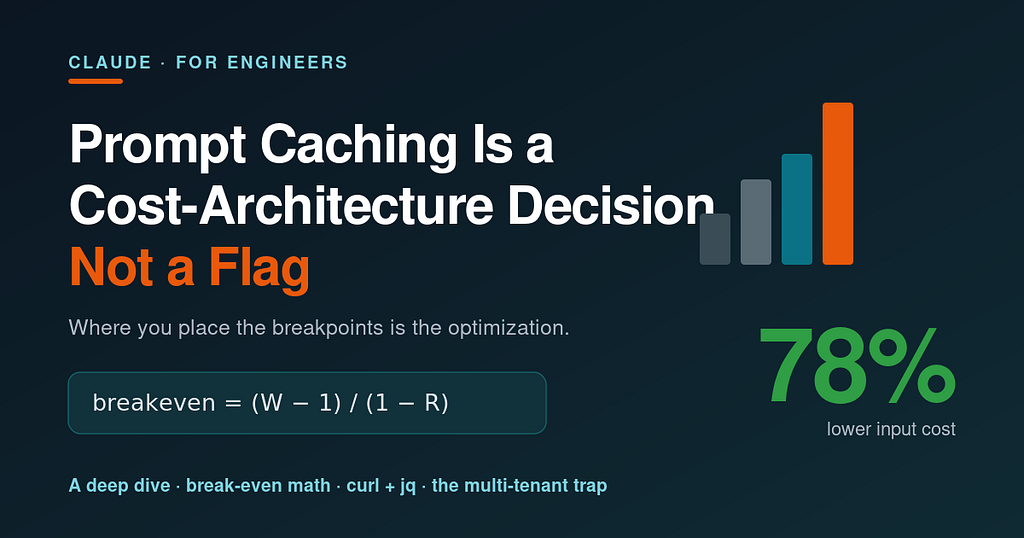
  20. Prompt Caching on Claude: Cut Input Costs 78% (The Math Nobody Writes Down)

    This article explains prompt caching as a crucial cost-saving technique for developers using Anthropic's Claude API. It highlights that Claude Code automatically employs prompt caching, but users building their own applications must manually implement it to manage input costs. The author details Claude's ephemeral prefix cache mechanism, emphasizing that effective caching relies on strategically placing 'breakpoints' within prompts to reuse stable context, which can reduce input costs by up to 78%. AI

    Prompt Caching on Claude: Cut Input Costs 78% (The Math Nobody Writes Down)

    IMPACT Developers can significantly reduce operational costs by implementing prompt caching strategies for Claude API interactions.

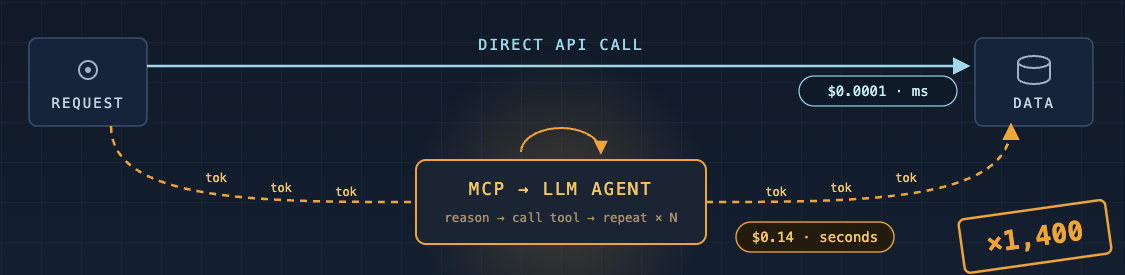
  21. Not Every API Needs an MCP: The Cost of Putting an LLM in the Loop

    Developers can significantly reduce costs associated with using Large Language Model (LLM) APIs by implementing several practical strategies. These include selecting the most cost-effective model for a given task, utilizing prompt caching to reduce repeated context costs, and employing request routing to direct simpler queries to cheaper models while reserving premium models for complex tasks. Additionally, controlling output length and batching requests can further optimize expenses. AI

    Not Every API Needs an MCP: The Cost of Putting an LLM in the Loop

    IMPACT Developers can optimize LLM API spending by strategically choosing models, caching prompts, and managing request complexity.

  22. A Stationary (and Therefore Compatible) Representation is All You Need

    Researchers have developed a method for learning stationary representations using d-Simplex fixed classifiers, which ensures model compatibility during sequential fine-tuning and updates. This approach allows for continuous retrieval services without the need for reprocessing data. By combining cross-entropy loss with a contrastive loss, the model captures higher-order dependencies and achieves state-of-the-art performance in scenarios involving model updates and replacements. AI

    IMPACT Enables continuous retrieval services without reprocessing, improving performance during model updates.

  23. Ultrafast machine learning on FPGAs via Kolmogorov-Arnold Networks

    Researchers have developed a novel approach to accelerate machine learning on Field-Programmable Gate Arrays (FPGAs) using Kolmogorov-Arnold Networks (KANs). This method aims to achieve ultrafast inference and online learning by implementing neural networks directly as digital logic, bypassing the overhead associated with traditional processors like GPUs. The work, detailed in two papers, focuses on efficient evaluation and spline locality for KANs on FPGAs, addressing the need for ultra-low latency and high hardware efficiency in specialized applications. AI

    IMPACT Enables ultra-low latency and high efficiency for specialized ML applications by leveraging FPGAs.

  24. Analog Quantum Asynchronous Event-Based Graph Neural Network

    Researchers have introduced a novel framework called Analog Quantum Asynchronous Event-Based Graph Neural Networks (QA-AEGNNs) that implements an asynchronous, event-based graph neural network on a neutral-atom quantum computer. This approach maps streaming event data to trapped neutral atoms, using their geometric proximity and interactions to represent graph nodes and edges, respectively. A hybrid quantum-classical training scheme is proposed to optimize the analog Hamiltonian parameters for learning from data, leveraging the continuous dynamics and parallelism of neutral-atom systems for event-based graph computations. AI

    IMPACT Explores potential for quantum computing to enhance efficiency and accuracy in processing event-based data for AI applications.

  25. Power Platform June ’26 brings smarter agents, version‑compare for desktop flows, new Power App launch actions, and GA for advanced connector policies—boosting

    Microsoft's Power Platform is releasing updates in June 2026, including enhanced AI agents and version comparison for desktop flows. The update also introduces new launch actions for Power Apps and general availability for advanced connector policies. These features aim to improve governance, automation, and AI-driven development within the platform. AI

    IMPACT Enhances AI capabilities within a low-code development platform, potentially accelerating AI adoption for business users.

  26. Scale Robot Reinforcement Learning with NVIDIA Isaac Lab on Amazon SageMaker AI

    Amazon SageMaker AI is enhancing robot reinforcement learning by integrating NVIDIA Isaac Lab. This allows for accelerated training of robot policies, such as for the Unitree H1 humanoid, using either SageMaker HyperPod for resilient, large-scale distributed training or SageMaker Training Jobs for ephemeral, on-demand compute. The platform aims to compress months of real-world training into hours by leveraging GPU-accelerated simulation and managed infrastructure, reducing the burden of compute cluster management for AI and robotics teams. AI

    Scale Robot Reinforcement Learning with NVIDIA Isaac Lab on Amazon SageMaker AI

    IMPACT Accelerates AI-driven robotics development by streamlining complex simulation and training processes.

  27. ComfyUI-PiD update: native models, workflows, and FP8 support

    A custom node for ComfyUI, named ComfyUI-PiD, has been updated to support native PixelDiT/PiD model loading and FP8 precision. This update removes reliance on older loading methods and integrates with ComfyUI's native model folders. New features include an image-only tiled upscaler node and support for various backbones like SD3, SDXL, and Qwen-Image, along with ready-to-use example workflows. AI

    ComfyUI-PiD update: native models, workflows, and FP8 support

    IMPACT Enhances image generation capabilities within ComfyUI by improving model loading and precision, potentially enabling more efficient upscaling and broader model compatibility.

  28. Step-3.7-Flash on AMD: ROCm corrupts long context past ~94k, and thinking needs a hard token budget

    A user running the Step-3.7-Flash model on AMD hardware with ROCm has identified two key issues. First, ROCm appears to corrupt context windows beyond approximately 94,000 tokens, causing the model to loop and fail to produce usable answers, though Vulkan remains stable at longer contexts. Second, the model requires a hard 'thinking' token budget to prevent excessive processing and empty outputs, with a budget of 256 tokens proving effective for classification tasks without significant quality degradation. AI

    IMPACT Users of Step-3.7-Flash on AMD hardware with ROCm should cap context windows below 94k tokens and implement a hard thinking budget for reliable performance.

  29. Cash flow worsens due to unpaid items left unattended; AI picks up missed collections # OpenClaw # AI # Automation # AgenticAi # AI # ArtificialIntelligence # IT # AgenticAI # SystemEngineer # Programmer #

    OpenClaw, an AI-powered automation tool, is being utilized to address cash flow issues caused by uncollected payments. The system is designed to identify and recover outstanding debts, thereby improving a company's financial liquidity. This application of AI focuses on automating the collection process, which can be a significant burden for businesses. AI

    Cash flow worsens due to unpaid items left unattended; AI picks up missed collections # OpenClaw # AI # Automation # AgenticAi # AI # ArtificialIntelligence # IT # AgenticAI # SystemEngineer # Programmer #

    IMPACT Automates a critical business process, potentially reducing operational costs and improving financial stability for businesses.

  30. LLMs are no longer created w/ human data alone. They rely on other models to generate & filter data, evaluate outputs, & guide dev work.

    Large language models are increasingly being trained on data generated and filtered by other AI models, rather than solely on human-created data. This shift involves complex interdependencies, with models like Olmo 3 relying on 89 other models and 183 datasets, and Nemotron 3 depending on 273 models and 560 datasets. To help researchers navigate this intricate web of dependencies, the creators have developed a tool called ModSleuth. AI

    IMPACT Highlights the growing reliance on synthetic data and complex model interdependencies in LLM development, impacting training efficiency and transparency.

  31. Ivanti tells Sentry customers to patch now as critical bugs hit 10.0 and 9.9

    Netflix engineer has released an open-source tool called Project Headroom that aims to significantly reduce the cost of running AI models. The project focuses on optimizing AI inference, a computationally intensive process, to make it more efficient. This could lead to substantial savings for individuals and organizations utilizing AI technologies. AI

    Ivanti tells Sentry customers to patch now as critical bugs hit 10.0 and 9.9

    IMPACT Reduces operational costs for AI inference, potentially accelerating adoption and deployment.

  32. Frontline | AI Cross-border E-commerce Tools Battle, StoreClaw Wants to Take Over Sellers' Stores with 'One Brain'

    StoreClaw, a new AI startup founded in 2026, has launched a unified platform designed to streamline cross-border e-commerce operations. The tool aims to consolidate fragmented single-point solutions by integrating AI-driven "AI Skills" that encapsulate expert e-commerce knowledge and platform-specific strategies. This allows sellers to automate and optimize tasks across multiple channels like Amazon, Shopify, and TikTok Shop, significantly reducing costs and improving conversion rates. AI

    IMPACT Consolidates fragmented AI tools into a unified platform, potentially lowering operational costs and increasing efficiency for cross-border e-commerce sellers.

  33. Apple Maps to Get These 10 New Features in iOS 27 Apple Maps is getting a range of new features in iOS 27, headlined by an upgraded Flyover experience that uses

    Apple Maps is set to receive significant upgrades with the upcoming iOS 27 update. A key enhancement will be an improved Flyover experience, leveraging AI to generate more realistic and detailed aerial imagery. The update will introduce a total of ten new features to Apple Maps, building upon its existing capabilities. AI

    IMPACT Enhances user experience in navigation and virtual exploration through AI-driven visual improvements.

  34. # Coinbase launched an # agent that can execute # trades and pay for premium research using the open # x402 payment protocol. The agent can trade in crypto spot

    Coinbase has introduced a new agent capable of executing trades and purchasing premium research through the X402 payment protocol. Initially supporting crypto spot markets and derivatives, the agent is slated to expand its capabilities to include equities and prediction markets. This development is part of Coinbase's ongoing commitment to integrating AI tools, following their prior work on AgentKit and an AI assistant. AI

    IMPACT Enables automated trading and research acquisition, potentially streamlining crypto investment workflows.

  35. Show HN: TunnelMind – reputation API for IPs, ASNs, and ad-tech supply chains https:// tunnelmind.ai/ # ai

    TunnelMind has launched a new API that provides reputation data for IP addresses, Autonomous System Numbers (ASNs), and ad-tech supply chains. The service aims to offer insights into the trustworthiness and potential risks associated with these digital infrastructure components. AI

    IMPACT Provides specialized data for risk assessment in digital infrastructure, potentially aiding AI-driven security and ad-tech operations.

  36. Replit and Databricks integration just leveled up.

    Replit and Databricks have announced an enhanced integration between their platforms. This collaboration aims to enable developers to build applications with robust data access controls, allowing users to view data relevant to their roles without compromising underlying sensitive information. A public preview of this integration is now available for sign-up. AI

    Replit and Databricks integration just leveled up.

    IMPACT Enables more secure and role-specific data access in applications built on Replit and Databricks.

  37. 🤖 NVIDIA Cuts Multi-Tenant Security Setup to Minutes NVIDIA has reduced the deployment time for multi tenant fabric security in large scale GPU clusters from ho

    NVIDIA has significantly reduced the time required to set up multi-tenant security for large-scale GPU clusters. The company has achieved this by introducing new intent-based security profiles within its NVIDIA Quantum InfiniBand platform, cutting deployment times from hours or days down to mere minutes. AI

    🤖 NVIDIA Cuts Multi-Tenant Security Setup to Minutes NVIDIA has reduced the deployment time for multi tenant fabric security in large scale GPU clusters from ho

    IMPACT Streamlines deployment of AI infrastructure, potentially accelerating large-scale AI deployments.

  38. Google Pixel 11: everything we know about specs, design, and AI innovations Leaks about the Google Pixel 11 are multiplying and starting to paint a picture

    Google's upcoming Pixel 11 series is expected to feature an evolutionary design and a new Tensor G6 chip, developed with Samsung. The lineup will likely include four models: a standard Pixel 11, a Pro, a Pro XL, and a foldable version, all launching with Android 17. A significant focus will be placed on AI capabilities, with enhanced real-time transcription, instant translation, and photo editing features, building upon the Gemini functionalities introduced in the Pixel 9. The devices are anticipated to launch in the fall of 2026, continuing Google's tradition of strong computational photography and AI integration. AI

    Google Pixel 11: everything we know about specs, design, and AI innovations Leaks about the Google Pixel 11 are multiplying and starting to paint a picture

    IMPACT Enhanced AI features in the Pixel 11 could drive broader consumer adoption of advanced mobile AI capabilities.

  39. One API Key, 14 AI Models — No Vendor Lock-in

    AIBridge offers a unified API that provides access to over 14 different AI models through a single OpenAI-compatible endpoint. This service aims to eliminate vendor lock-in, allowing users to switch between models like DeepSeek, Qwen, GLM, and Moonshot without altering their existing code. The platform promises significant cost savings, a large allocation of free tokens, and real-time analytics for users. AI

    One API Key, 14 AI Models — No Vendor Lock-in

    IMPACT Simplifies AI integration and potentially reduces costs for developers by offering a single point of access to multiple models.

  40. When Prompt Batching Made My LLM App More Expensive

    An attempt to optimize LLM costs by batching multiple text segments into single API calls backfired, significantly increasing expenses and slowing down processing. The issue stemmed from the LLM failing to consistently return all required IDs in its JSON output, triggering a fallback mechanism that retried entire batches. This led to a substantial increase in API calls due to retries, negating the intended cost savings. AI

    IMPACT Demonstrates that naive batching can increase costs and latency for LLM applications, highlighting the need for careful implementation and validation.

  41. Action pipelines and inference substrate — daily syndication · 2026-06-10

    LuisCore has launched as a decentralized runtime infrastructure designed for multi-step AI agents, focusing on action pipelines and inference rather than individual agent capabilities. It aims to provide a shared vocabulary and substrate for agents built with various frameworks, enabling them to interoperate without significant rewriting. The platform emphasizes open-source components, machine-readable discovery, and real-time telemetry for agent coordination and communication. AI

    IMPACT Provides a foundational infrastructure layer for agent interoperability, potentially reducing friction for developers building complex multi-agent systems.

  42. cheapest h200 for video gen runs right now?

    A user on Reddit is seeking the most cost-effective way to rent H200 GPUs for Stable Diffusion video generation. They are encountering VRAM limitations with their current setup, impacting workflow and quality. The user is looking for reliable providers offering H200 rentals for short-term use at a lower price point than major services, prioritizing VRAM capacity and stable network connections for sustained rendering tasks. AI

    IMPACT Identifies a potential market gap for affordable, reliable H200 GPU rentals for AI video generation tasks.

  43. Google will save your Lens photos, Search Live recordings, and Translate audio for AI training Google is making some changes to how it saves your interactions w

    Google is updating its data retention policies to include images from Lens, recordings from Search Live, and audio from Translate for AI training. Users will have a new "Search Services History" setting to manage this data, separate from the existing Web & App Activity. While this data will help Google develop and improve its services, including AI models, users can opt out to prevent their media from being saved and used for training. AI

    IMPACT Google's expanded data collection for AI training could lead to more capable AI models, but raises user privacy concerns.

  44. How I Added WebSocket-Powered Realtime Streaming to MCP Apps

    This article details how to integrate real-time data streaming into MCP Apps using WebSockets, moving beyond traditional polling methods. By declaring `connectedDomains` in the app's Content Security Policy, developers can enable direct WebSocket connections from the sandboxed iframe to a backend server. A lightweight Python WebSocket server is then implemented to push live updates for dashboards, KPIs, and transaction feeds, bypassing the need for the host to relay data and reducing latency. AI

    How I Added WebSocket-Powered Realtime Streaming to MCP Apps

    IMPACT Enables more dynamic and responsive user interfaces for AI agent applications by allowing real-time data updates.

  45. Google Gemini Outage Exceeds 7 Hours - Unresponsive Errors 1076 and 1099 Occur Worldwide | ZaiKei News https://www.yayafa.com/2820272/ # AgenticAi # AI # ArtificialGeneralIntelligence # ArtificialIntelligence

    Google's Gemini AI experienced a significant outage lasting over seven hours, affecting users globally. The disruption was characterized by an inability to respond, with error codes 1076 and 1099 being reported. The incident impacted users across various regions, disrupting access to the AI service. AI

    Google Gemini Outage Exceeds 7 Hours - Unresponsive Errors 1076 and 1099 Occur Worldwide | ZaiKei News https://www.yayafa.com/2820272/ # AgenticAi # AI # ArtificialGeneralIntelligence # ArtificialIntelligence

    IMPACT A prolonged outage of a major AI model can disrupt workflows and erode user trust, potentially slowing adoption of AI-powered tools.

  46. New from me: # Datadog supports BYOC, federated logs search and third-party # siem , but one analyst warns vendor lock-in can take multiple forms. Also featured

    Datadog has introduced new features including Bring Your Own Cloud (BYOC) support, federated logs search, and integration with third-party SIEM systems. Despite these advancements, an analyst has cautioned about the potential for vendor lock-in. The update also highlights new agentic AI security tools and discusses the complex cost structures associated with AI. AI

    IMPACT Datadog's new features may streamline AI operations and security management for users.

  47. I built a local reverse proxy to see what Claude Code actually sends to Anthropic

    A developer created an open-source tool called ccglass to monitor API calls made by coding agents, revealing significant cost-saving opportunities. The tool acts as a local reverse proxy, logging requests to services like Anthropic's Claude Code and OpenAI. Analysis showed that by optimizing prompts and understanding per-task costs across different providers, the developer reduced their monthly bill by 35% and improved efficiency. AI

    IMPACT Enables developers to optimize AI agent usage and reduce costs by providing visibility into API calls and provider pricing.

  48. Why did $4,200 vanish? Hidden successful retries.

    A developer detailed how an AI agent's hidden successful retries led to an unexpected $4,200 cost increase. The agent's system retried deterministic validation failures multiple times before succeeding, masking the issue on dashboards that only track final success rates. The author suggests implementing a `cost_per_successful_chain` metric and a local repair stage for deterministic errors to prevent such costly, silent failures. AI

    IMPACT Highlights a common pitfall in AI agent development, offering practical advice on cost management and error detection for operators.