PulseAugur / Brief
EN
LIVE 15:48:07

Brief

last 24h
[50/3896] 224 sources

Multi-source AI news clustered, deduplicated, and scored 0–100 across authority, cluster strength, headline signal, and time decay.

  1. SHFE: Adjusts price limits and trading margin ratios for gold and silver futures related contracts

    HPC-Ops has released a significant update to its open-source inference system, introducing five key operators. This upgrade addresses critical engineering bottlenecks such as attention latency, memory transfer costs, and cross-card communication on mainstream inference platforms. The new operators reportedly outperform existing open-source baselines in performance metrics, enhancing adaptability to dynamic workloads and supporting complex precision and performance fusion operators. AI

    IMPACT Enhances inference performance by addressing key engineering bottlenecks, potentially improving efficiency for AI applications.

  2. SwiftCTS: Fast Cross-Design Prediction and Pareto Optimization of Clock Tree Metrics via Few-Shot Calibration

    Researchers have developed SwiftCTS, a novel framework for optimizing clock tree synthesis in chip design. This system uses physics-informed surrogate models and gradient-boosted ensembles to achieve rapid predictions and Pareto optimization of power, wirelength, and timing skew metrics. SwiftCTS can adapt to new chip architectures with minimal calibration, significantly reducing prediction errors and enabling the evaluation of thousands of configurations in seconds. AI

    IMPACT Accelerates chip design cycles by providing rapid, accurate predictions for clock tree synthesis.

  3. XPR: An Extensible Cross-Platform Point-Based Differentiable Renderer

    Researchers have developed XPR, a new framework designed to simplify the creation and deployment of point-based differentiable renderers. This framework allows developers to implement new rendering methods with minimal code by separating method-specific logic from the core rendering pipeline. XPR's modular design enables it to compile and run on various hardware accelerators, including GPUs, TPUs, and CPUs, facilitating faster experimentation and cross-platform compatibility for graphics and AI applications. AI

  4. Access OpenAI models and Codex through your Oracle cloud commitment

    OpenAI has partnered with Oracle to offer access to its models, including Codex, through Oracle Cloud Infrastructure. This collaboration allows businesses to leverage OpenAI's AI capabilities while utilizing their existing Oracle cloud commitments. The integration aims to provide enterprise-grade security and governance for AI development and deployment. AI

    IMPACT Expands enterprise access to leading AI models through established cloud infrastructure, potentially accelerating AI adoption.

  5. Alibaba Cloud Meoo CLI Released, Local AI Programming Projects Can Be Deployed Online Directly

    Alibaba Cloud has released Meoo CLI, an open-source command-line tool designed to streamline the deployment of local AI programming projects. This tool allows local AI coding assistants like Claude Code and Cursor to leverage cloud capabilities for tasks such as database integration, user authentication, file storage, and final project release, enabling a smoother transition from local development to live deployment. AI

    IMPACT Simplifies the deployment pipeline for AI-powered development tools, potentially accelerating the release of AI-driven applications.

  6. Ministry of Commerce: Will continue to grasp the implementation and landing of relevant policies, and accelerate the cultivation of new drivers for trade in services

    Alibaba Cloud's Meoo (Miaowu) has released Meoo CLI, an open-source command-line tool. This tool enables local AI programming assistants like Claude Code, Codex, and Cursor to leverage cloud capabilities. These assistants can now perform tasks such as database access, user authentication, file storage, and project deployment, streamlining the process of moving local projects to a live online state. AI

    IMPACT Enables local AI programming tools to access cloud infrastructure for deployment and management.

  7. Developers learned to speed up queries, add caching, scale services, and monitor cloud bills. Frugal computing starts one question earlier: does the computation need to be performed?

    Frugal computing is an architectural approach that prioritizes minimizing computational resource usage, starting with the question of whether a computation, data transfer, or model call is necessary at all. This concept, primarily based on Wim Vanderbauwhede's work, advocates for achieving the same useful outcome with less energy, material, and overhead. The growing demand on data centers, particularly for AI, and increasing regulatory scrutiny in regions like Europe are driving the adoption of frugal computing principles into system design. AI

    Developers learned to speed up queries, add caching, scale services, and monitor cloud bills. Frugal computing starts one question earlier: does the computation need to be performed?

    IMPACT Promotes efficiency and resource conservation in AI infrastructure, potentially reducing operational costs and environmental impact.

  8. Stop Syncing Elasticsearch: Native Hybrid Search with Spring AI and Pgvector sparsevec

    This article details how to implement native hybrid search within PostgreSQL using the pgvector extension and Spring AI. It advocates for consolidating search functionalities into a single database, eliminating the need for separate Elasticsearch clusters and the associated synchronization issues. The approach involves storing both dense and sparse vector embeddings in PostgreSQL and performing hybrid queries with Reciprocal Rank Fusion (RRF) directly within the database. AI

    IMPACT Simplifies RAG pipelines by consolidating search into PostgreSQL, reducing infrastructure complexity and sync lag.

  9. DocLang looks to streamline how AI processes documents. https:// itsfoss.com/news/doclang-new-o pen-document-standard-for-ai/ # opensource # ai # linuxfoundatio

    DocLang is a new open document standard aiming to simplify how artificial intelligence systems process and understand various document formats. Developed under the umbrella of the Linux Foundation, this initiative seeks to create a unified approach for AI to interact with information, potentially reducing the complexity and improving the efficiency of AI-driven document analysis. AI

    IMPACT Standardizing document formats for AI could improve efficiency and interoperability in AI-powered document analysis tools.

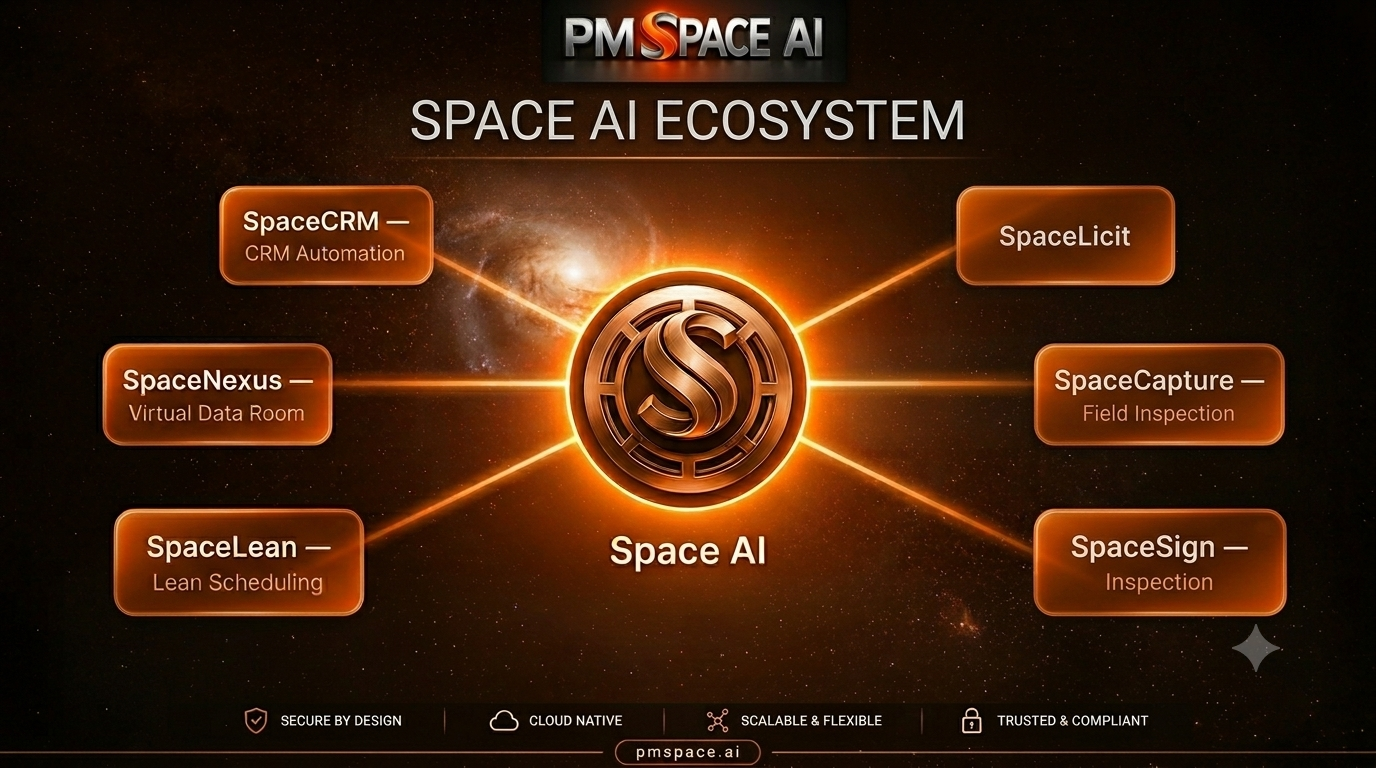
  10. 🏗️ Construction teams don't need more disconnected tools—they need connected intelligence. At SPACE AI, we're building an ecosystem that unifies planning, sched

    SPACE AI is developing an integrated ecosystem for the construction industry, aiming to connect disparate tools with AI-powered intelligence. Their platform, SPACE AI suite, is designed to unify various aspects of construction operations, including planning, scheduling, field operations, workforce management, customer engagement, and analytics. The goal is to simplify complexity, enhance visibility, and enable data-driven decision-making for construction organizations. AI

    🏗️ Construction teams don't need more disconnected tools—they need connected intelligence. At SPACE AI, we're building an ecosystem that unifies planning, sched

    IMPACT Aims to enhance decision-making and operational efficiency in the construction sector through AI integration.

  11. # AI # infrastructure # pricelist

    A new open-source project called Burn Baby Burn has been released, designed to help manage and potentially reduce the cost of AI token usage. The project, available on GitHub, is presented as a tool for understanding and controlling expenses related to large language model interactions. AI

    # AI # infrastructure # pricelist

    IMPACT Provides a new open-source tool for developers to manage and potentially reduce AI token expenses.

  12. I built a self-hosted LLM stack that grades itself — audit trail, per-user auth, and a built-in acceptance test

    A developer has created a self-hosted LLM stack designed for enterprise use, addressing the common challenges of deploying AI models beyond the demo phase. The stack prioritizes data security by keeping all information, including audit logs, on-premises. It also implements per-user authentication for access control and includes an automated acceptance testing framework to objectively evaluate model performance before deployment. AI

    I built a self-hosted LLM stack that grades itself — audit trail, per-user auth, and a built-in acceptance test

    IMPACT Provides a blueprint for building secure, auditable, and production-ready LLM deployments, addressing key enterprise adoption blockers.

  13. Exclusive: Consumer device giant LG Electronics to launch blockchain to place and sell ads

    LG Electronics is developing a blockchain-based advertising platform using Arbitrum's layer-2 technology. This new network aims to create a shared database for ad inventory and track customer interactions, streamlining the ad sales process. The company is evaluating the platform's market viability and potential value for advertisers, publishers, and audiences. AI

    Exclusive: Consumer device giant LG Electronics to launch blockchain to place and sell ads

    IMPACT LG Electronics' move into blockchain for advertising could streamline ad transactions and data management, potentially influencing how digital ad markets operate.

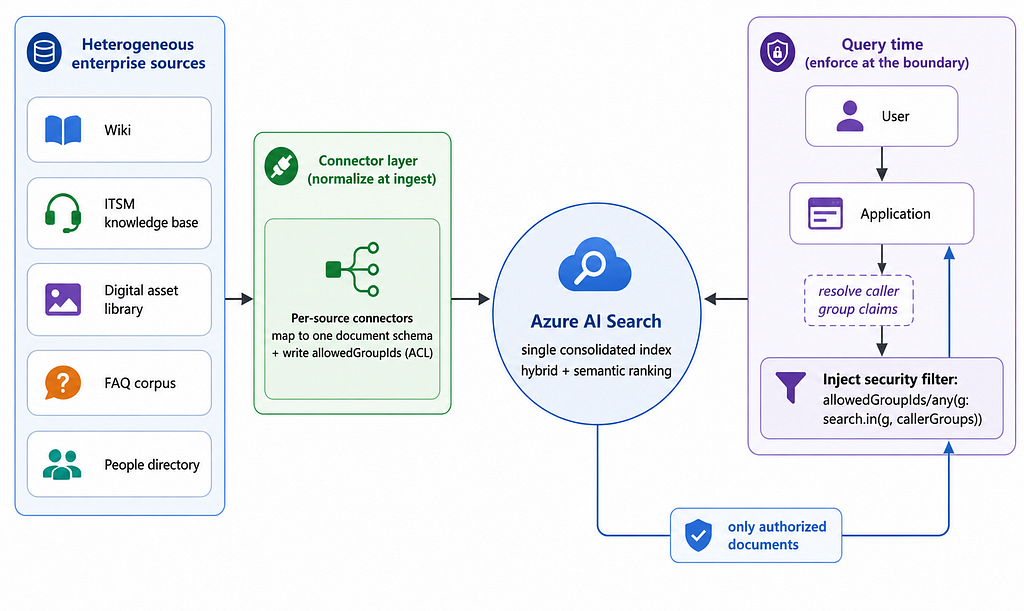
  14. A Practical Pattern to Implement Secure Enterprise AI Search

    A new pattern for enterprise AI search, termed the Security-Trimmed Index (STI), proposes normalizing data from disparate sources into a single Azure AI Search index. Each document within this index would include an Access Control List (ACL) field populated during the ingestion process. Crucially, access control is enforced at query time by injecting the user's identity into the search query, ensuring that results are filtered based on authorization before being returned to the application. AI

    A Practical Pattern to Implement Secure Enterprise AI Search

    IMPACT This pattern could improve data security and efficiency for enterprises building AI search capabilities across multiple internal data sources.

  15. Taobao Flash Sale Upgrades 'New Store Growth System' to Support Small and Medium-sized Merchants' Digitalization

    Taobao Flash Purchase has launched a new "New Store Growth System" specifically for catering businesses to help small and medium-sized merchants with their digital transformation. This initiative provides a clear growth path, enhanced traffic benefits, and AI-driven operational tools to overcome initial challenges and foster steady growth. The system breaks down complex operations into manageable tasks, offering rewards and guidance, while AI assistants help with tasks like store setup and marketing, aiming to shift the focus from simple subsidies to empowering merchants with capabilities. AI

    Taobao Flash Sale Upgrades 'New Store Growth System' to Support Small and Medium-sized Merchants' Digitalization

    IMPACT Empowers small businesses with AI tools, potentially increasing efficiency and competitiveness in the instant retail sector.

  16. I kill -9'd a running AI agent mid-task. It resumed without re-spending a cent.

    A new tool called RiskKernel has been developed to address a critical issue in long-running AI agents: the loss of budget and state when the agent crashes or is interrupted. Unlike existing solutions that only checkpoint the agent's task context, RiskKernel durably stores the entire enforcement envelope, including budget spent, loop counts, and time elapsed, in a SQLite database. This ensures that if an agent restarts after a crash, it resumes with the same budget and constraints, preventing accidental overspending and maintaining the integrity of the original task limits. AI

    IMPACT Ensures long-running AI agents can reliably resume tasks without losing budget constraints, crucial for cost control in complex operations.

  17. Run Codex CLI with Local LLM - Gemma4 with llama.cpp on WSL2

    This guide details how to set up the Codex CLI to interact with a local LLM, specifically Gemma-4, using llama.cpp on Windows Subsystem for Linux (WSL2). The process involves installing Codex, configuring it to use llama.cpp as a model provider, and then running the llama.cpp server with the Gemma-4 model. The author shares specific commands and configuration file examples, including troubleshooting a context size error. AI

    Run Codex CLI with Local LLM - Gemma4 with llama.cpp on WSL2

    IMPACT Enables developers to run LLM tools locally, reducing reliance on cloud services and potentially improving privacy.

  18. # Coinbase launched an # agent that can execute # trades and pay for premium research using the open # x402 payment protocol. The agent can trade in crypto spot

    Coinbase has introduced a new agent capable of executing trades and purchasing premium research through the X402 payment protocol. Initially supporting crypto spot markets and derivatives, the agent is slated to expand its capabilities to include equities and prediction markets. This development is part of Coinbase's ongoing commitment to integrating AI tools, following their prior work on AgentKit and an AI assistant. AI

    IMPACT Enables automated trading and research acquisition, potentially streamlining crypto investment workflows.

  19. Training a Llama 3B model with a 3M token context on a single 8xH100 node fails because model parameters alone exhaust GPU memory. @m_ryabinin explains how Unti

    Training large language models with extensive context windows, such as 3 million tokens, faces memory limitations on hardware like 8xH100 nodes. Researchers have developed a method called Untied Ulysses to overcome these constraints, enabling the training of models at 8B and 32B scales with significantly longer sequences than previously possible. AI

    IMPACT Enables training of larger models with significantly longer context windows, pushing the boundaries of LLM capabilities.

  20. Ollama Cloud Free vs Pro — Usage Limits, Pricing & What You Actually Get (2026)

    Ollama Cloud offers a managed inference service for open-source large language models, allowing users to run models on Ollama's GPUs without local hardware. The service has three tiers: Free, Pro ($20/month), and Max ($100/month), with usage measured by GPU time rather than tokens. The Free tier is suitable for experimentation with lighter models, Pro is recommended for daily engineering work with higher concurrency, and Max is designed for production workloads requiring sustained concurrent access to the most powerful models. AI

    IMPACT Provides managed cloud infrastructure for running open-source LLMs, simplifying access for developers.

  21. CompRank: Efficient LLM Reranking via Token-Level Compression and Decoding-Free Scoring

    Researchers have developed CompRank, a new framework designed to make large language model (LLM) rerankers more computationally efficient for information retrieval tasks. CompRank achieves this by reducing redundant computations through token-level compression and a decoding-free scoring method. Experiments demonstrate that CompRank significantly speeds up reranking while maintaining high performance, making LLM-based reranking more scalable for long candidate lists. AI

    IMPACT This research offers a more efficient method for LLM reranking, potentially enabling wider adoption in retrieval systems.

  22. "guestlist tells you, for any URL, whether AI agents are likely to get through. We continuously probe the web from real browsers and grade every domain green to

    Guestlist is a new tool designed to help users determine if AI agents can successfully access a given URL. The service continuously probes the web using real browsers to assess domain accessibility, assigning a 'green to red' grade. This allows users to check a URL's viability via an API call before making a request, thereby saving resources by avoiding inaccessible sites. AI

    IMPACT Helps AI agents navigate the web more efficiently by identifying accessible URLs.

  23. How to Set Up Claude Code with a Cheap API Provider

    A developer has found a way to significantly reduce the cost of using Anthropic's Claude Code CLI tool by routing requests through APIVAI, a third-party API gateway. This method allows users to access the same Claude models at a fraction of the direct Anthropic API price, requiring only a change in environment variables. Separately, another developer is seeking advice on improving their custom API's documentation and design to prevent AI agents like Claude from losing context or memory of its capabilities during interactions. AI

    IMPACT Developers can reduce costs for using AI coding tools and improve AI agent interaction with custom APIs.

  24. Timing Trick Cuts Energy Used in LLM Training by Up to 14 Percent

    Researchers at the University of Twente have developed a method to reduce the energy consumption of training large language models by up to 14%. The technique, known as dynamic voltage-frequency scaling (DVFS), involves intelligently adjusting the clock frequencies of a GPU's computational core and memory. By fine-tuning these frequencies on a per-kernel basis, the researchers achieved significant energy savings without compromising training speed. AI

    Timing Trick Cuts Energy Used in LLM Training by Up to 14 Percent

    IMPACT Reduces the significant energy footprint of LLM training, potentially lowering costs and environmental impact.

  25. Learning-Guided Integration Contours Construction for Fast Large-Scale Generalized Eigensolvers

    Researchers have developed Deepcontour, a new framework that uses deep learning to optimize the construction of integration contours for solving large-scale Generalized Eigenvalue Problems (GEPs). This method employs a deep learning-based spectral predictor and Kernel Density Estimation to automatically design efficient contours, leading to significant speedups. The framework achieved up to a 5.63x performance increase on various scientific datasets while maintaining numerical accuracy. AI

    IMPACT Introduces a novel deep learning approach to accelerate scientific computing tasks, potentially impacting fields reliant on solving large-scale eigenvalue problems.

  26. SPARX: Secure and Privacy-Aware Approximate CNN Acceleration with Edge RISC-V SoC

    Researchers have developed SPARX, a framework for accelerating Convolutional Neural Networks (CNNs) on edge devices. This system integrates approximate computing with security and privacy features within a RISC-V System-on-Chip. SPARX utilizes a custom RISC-V instruction extension and an approximate logarithmic CNN accelerator, enhanced by a differential-noise privacy engine and authentication mechanisms. Evaluations show significant reductions in area and power, alongside improved throughput, with a minimal impact on accuracy for specific CNN models. AI

    IMPACT Enables more efficient and secure AI inference on resource-constrained edge devices.

  27. Finer is Better (with the Right Scaling)

    A new arXiv paper investigates the paradox where smaller block sizes in LLM quantization can degrade model quality. Researchers found this is not an inherent limitation but stems from how statistical clustering interacts with scaling factors. The study proposes solutions like preventing scaling factor underflow and using targeted heuristics such as the 4-over-6 methodology to improve quality, emphasizing the need for tight coupling between hardware and software design for next-generation ML accelerators. AI

    IMPACT Optimizes LLM performance on next-gen hardware by addressing quantization paradoxes, potentially improving efficiency and accessibility.

  28. Sigma-Branch: Hierarchical Single-Path Network Reconstruction for Dynamic Inference with Reduced Active Parameters

    Researchers have introduced Sigma-Branch (SigmaB), a novel framework designed to optimize deep neural networks for memory-constrained edge devices. SigmaB restructures dense networks into a hierarchical tree with shared backbones, routers, and specialized leaves, enabling dynamic inference. This approach significantly reduces the number of active parameters per inference by executing only a single root-to-leaf path, thereby minimizing off-chip weight transfers without sacrificing overall model capacity. AI

    IMPACT Reduces per-inference active parameters by up to 60%, enabling more efficient AI deployment on edge devices with limited memory.

  29. How Adyen trains a Transaction Foundation Model (TFM) on 51 trillion tokens and other stories on scaling AI with Ray from Xoople, Criteo, and BMW

    Anyscale's Ray Day London event highlighted how organizations are scaling AI workloads using the Ray framework. Key presentations included Xoople's use of Ray Data for global-scale geospatial foundation model inference and Adyen's training of a Transaction Foundation Model (TFM) on a massive 51 trillion token dataset. These case studies demonstrated Ray's ability to simplify complex AI infrastructure for tasks ranging from multimodal data processing to foundation model training and reinforcement learning. AI

    How Adyen trains a Transaction Foundation Model (TFM) on 51 trillion tokens and other stories on scaling AI with Ray from Xoople, Criteo, and BMW

    IMPACT Demonstrates how existing AI frameworks like Ray are enabling companies to tackle increasingly complex AI workloads and massive datasets.

  30. Profiling in PyTorch (Part 2): From nn.Linear to a Fused MLP

    This blog post details how to profile PyTorch code, focusing on the `nn.Linear` module and its underlying operations. It explains that `nn.Linear` wraps matrix multiplication and addition, and that PyTorch optimizes this by transposing weights on the CPU and folding the bias addition into the matrix multiplication kernel via an epilogue. The post uses an NVIDIA A100 GPU and Hugging Face infrastructure to demonstrate profiling traces. AI

    IMPACT Provides insights into optimizing deep learning model performance through PyTorch profiling.

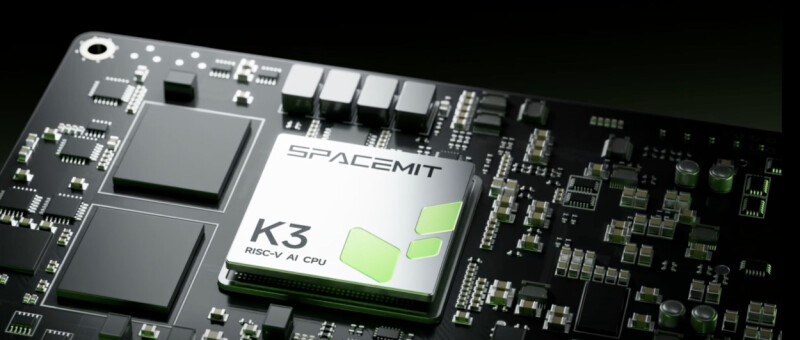
  31. SpacemiT shows off usably quick RISC-V mini desktop

    Netflix engineer has developed and open-sourced a tool called Headroom designed to significantly reduce the cost of running AI models. This project aims to provide substantial savings for users by optimizing AI computational expenses. The tool is now publicly available, allowing anyone to benefit from its cost-saving capabilities. AI

    SpacemiT shows off usably quick RISC-V mini desktop

    IMPACT Provides a direct method for AI operators to reduce inference costs.

  32. IntentKV: Cross-Turn Intent-Aware KV Cache Pruning for Agent Inference

    Researchers have developed IntentKV, a novel method for pruning KV caches in large language model agents to improve inference efficiency. This technique maintains a session-level memory of cross-turn intent, allowing it to score and selectively drop tokens without significant accuracy loss. IntentKV has demonstrated substantial reductions in peak request tokens and KV reads, particularly for long-horizon agent tasks, while keeping the base LLM unchanged. AI

    IMPACT Reduces KV cache size for LLM agents, potentially lowering inference costs and enabling longer context windows.

  33. From Volume to Value: Preference-Aligned Memory Construction for On-Device RAG

    Researchers have developed EPIC, a novel method for constructing preference-aligned memory for on-device Retrieval-Augmented Generation (RAG) systems. This approach significantly reduces memory usage by prioritizing preference-relevant information, achieving a 2,404x reduction in indexing memory. EPIC also enhances preference-following accuracy by 18.79 percentage points and drastically lowers retrieval latency, making it suitable for resource-constrained personal AI agents. AI

    IMPACT Enables more efficient and private on-device AI agents by reducing memory footprint and improving response times.

  34. ASTRA-sim 3.0: Next-Level Distributed Machine Learning Simulations via High-Fidelity GPU and Infrastructure Modeling

    Researchers have released ASTRA-sim 3.0, an updated open-source simulator designed for distributed machine learning. The new version enhances simulation fidelity by modeling GPU execution and infrastructure at a fine-grained, cache-line level. It also introduces InfraGraph, a standardized representation for network infrastructure, enabling more detailed design space exploration for collective algorithms and hardware architectures. AI

    IMPACT Enables more accurate simulation of distributed ML workloads, potentially accelerating the design of efficient AI infrastructure and algorithms.

  35. Fast Exact Nearest-Neighbor Learning for High-Frequency Financial Time Series

    Researchers have developed a new method using Mojo to accelerate AI efficiency in finance, particularly for high-frequency trading and time series analysis. Their Mojo SIMD k-d tree implementation offers significant speedups over existing libraries like scikit-learn, achieving up to 43.5x faster performance on ARM64 architectures. This advancement allows financial AI models to process larger datasets in real-time, improving accuracy in areas like derivative pricing and enabling training on ten times more data. AI

    IMPACT Mojo's performance gains could enable more complex financial AI models to operate within strict latency requirements.

  36. Cost-Aware Routing for Efficient Text-To-Image Generation

    Researchers have developed a cost-aware routing system for text-to-image generation that dynamically adjusts computational resources based on prompt complexity. This framework routes each prompt to the most suitable generation function, which could involve varying the number of denoising steps in a diffusion model or selecting an entirely different model. By learning to reserve intensive computations for complex prompts and using more economical options for simpler ones, the system aims to optimize the trade-off between image quality and computational cost. Experiments on COCO and DiffusionDB datasets showed that this routing approach, utilizing nine pre-trained models, achieved higher average quality than any single model could alone. AI

    IMPACT This approach could lead to more efficient and cost-effective image generation by dynamically allocating computational resources based on prompt complexity.

  37. HiGR: Industrial-Scale Hierarchical Generative Slate Recommendation Framework in Tencent

    Tencent has developed HiGR, a hierarchical generative framework for industrial-scale slate recommendation. This system addresses challenges in applying generative models to large-scale recommendation by learning structured item IDs and shifting autoregressive modeling to preference embeddings for efficient planning. HiGR has demonstrated significant improvements in offline recommendation quality and inference speed, and has been successfully deployed on Tencent platforms, enhancing user engagement metrics. AI

    IMPACT This framework could significantly improve recommendation efficiency and effectiveness for platforms serving hundreds of millions of users.

  38. torch-sla: Differentiable Sparse Linear Algebra with Adjoint Solvers and Sparse Tensor Parallelism for PyTorch

    Researchers have developed torch-sla, an open-source Python library designed to provide differentiable sparse linear algebra capabilities within PyTorch. This library addresses a gap in PyTorch's existing functionalities, which currently offer only low-level kernels or CPU-only, non-differentiable solvers. Torch-sla supports a unified API for various solver types across multiple backends, including CPU and GPU options, and enables distributed execution for enhanced scalability. AI

    IMPACT Enables more advanced scientific machine learning models by providing essential differentiable sparse linear algebra tools.

  39. How to Build a Skills Library for Your AI Engineering Team A practical guide to designing, versioning, and distributing shared AI skills for Claude Code and Cur

    This article provides a practical guide for AI engineering teams on creating and managing a shared "skills library." The aim is to ensure consistency and efficiency by standardizing the design, versioning, and distribution of AI skills that team members can utilize. This approach is particularly beneficial for tools like Claude Code and Cursor, enabling all engineers to work from a common foundation. AI

    IMPACT Standardizing AI skills distribution can improve developer productivity and project consistency within AI engineering teams.

  40. Achieving Up to 67% Cost Savings with Prefill-Decode Disaggregation Using Ray + vLLM on AMD MI325X

    Anyscale has demonstrated significant cost savings in LLM serving by disaggregating the prefill and decode phases of inference. This approach separates prompt processing onto dedicated GPUs from token generation, reducing interference and improving throughput. While this method can lead to up to 67% cost reduction and 2.3x more queries per second, it introduces operational complexity and can slightly increase time-to-first-token. AI

    IMPACT Optimizing LLM serving infrastructure can reduce operational costs and improve response times, potentially accelerating wider adoption of AI applications.

  41. I cut my coding agent's token usage 61% by giving it a code graph

    A developer has created GraphPilot, a tool designed to enhance coding agents by providing them with persistent structural memory. This tool indexes a TypeScript/JavaScript repository once, allowing agents to query its structure instead of re-reading files, which significantly reduces token usage and improves accuracy. In testing, GraphPilot cut token usage by 61% and improved accuracy on specific query types like "who calls X?" and impact analysis, though it had less impact on flow-tracing questions. AI

    IMPACT Reduces operational costs for AI coding agents and improves their accuracy on structural code analysis tasks.

  42. Been only two days going local and already saved $151

    A user on the r/LocalLLaMA subreddit shared their experience of saving money by running AI models locally. Over two days, they processed 50 million tokens across 49 coding sessions, estimating a cost of $151.40 if they had used Anthropic's Claude Sonnet model. The user detailed their cost calculation, highlighting the significant input token usage and comparing it to the potential expense of cloud-based AI services. AI

    IMPACT Demonstrates potential cost savings for individuals and developers by running AI models locally, encouraging self-hosting.

  43. Your MCP tool surface has a token bill — here's how to read it

    Exposing tools to AI models, such as in MCP servers, incurs a significant token cost with each API call. This cost arises because the tool's name, description, and JSON schema are sent to the model's context repeatedly. A larger number of tools not only increases this token bill but also negatively impacts the model's accuracy in selecting the correct tool. To address this, a new CLI tool has been developed to make these hidden costs visible to developers. AI

    IMPACT Developers need to be mindful of token costs associated with exposing AI tools, as it impacts both expense and performance.

  44. Blockbuster new Raspberry Pi project turns any screen into old-school VCR

    Netflix engineer has developed an open-source project called Headroom, designed to significantly reduce the cost of running AI models. This tool aims to optimize AI inference, potentially saving users substantial amounts of money. The project has been made publicly available, allowing others to benefit from its cost-saving capabilities. AI

    Blockbuster new Raspberry Pi project turns any screen into old-school VCR

    IMPACT Potential to lower operational costs for AI inference, making AI more accessible.

  45. 📰 Context Compression: Reduce LLM Input by 16x Without Losing Accuracy A team of NYU researchers has developed a technique that reduces the conte

    Researchers at New York University have created a new method for compressing the input context of large language models, reducing it by up to 16 times without sacrificing accuracy. This technique allows for significantly faster processing speeds using existing infrastructure. AI

    📰 Context Compression: Reduce LLM Input by 16x Without Losing Accuracy A team of NYU researchers has developed a technique that reduces the conte

    IMPACT This technique could significantly reduce inference costs and latency for LLM applications by enabling faster processing of larger contexts.

  46. Build an AI Shopping Agent with BuyWhere in 5 Minutes

    BuyWhere has released a tool that allows AI agents to access real-time product pricing from over 15 Singaporean merchants. The tool, which integrates with platforms like LangChain and CrewAI, uses the Model Context Protocol (MCP) to connect to retailers such as FairPrice, Cold Storage, Lazada, and Shopee. Developers can integrate this functionality into their AI agents with a simple command and a free API key. AI

    IMPACT Enables AI agents to access real-time e-commerce data, potentially improving shopping assistants and price comparison tools.

  47. Seven cost leaks I keep finding when I audit production LangGraph agents

    An AI operations agent has identified seven common cost-saving opportunities in production LangGraph agents. These leaks, found through auditing agent stacks, can significantly inflate AI bills. The agent provides specific detection methods and fixes for issues like excessive context in prompts, using expensive models for simple tasks, and inefficient retry logic that incurs unnecessary costs. AI

    IMPACT Provides actionable strategies for reducing operational costs in AI agent deployments, potentially saving organizations thousands of dollars monthly.

  48. Migrating to x402 v2: what actually changed (and the traps nobody documents)

    The author details a migration from x402 v1 to v2, noting that v2 is a significant departure rather than a simple upgrade. Key changes include a shift to the @x402 npm scope, the introduction of CAIP-2 for networks, and the relocation of payment challenges from the JSON body to the PAYMENT-REQUIRED header. The article also highlights new client-side scheme handling and the integration of Bazaar discovery for paid routes. AI

    IMPACT Provides a technical guide for developers migrating to the x402 protocol v2, detailing changes and potential pitfalls.

  49. Frontier model performance on an open model, post-trained in under 24 hours. @trajectorylabs is showing what's possible when great open models meet the right tr

    Trajectory Labs has demonstrated frontier model performance on an open-source model, achieving this feat in under 24 hours of post-training. This achievement highlights the potential of combining strong open models with efficient training infrastructure. Together Compute provided the necessary computing power for this rapid development, in collaboration with Nvidia. AI

    IMPACT Demonstrates accelerated training techniques for open-source models, potentially lowering barriers to frontier-level AI development.

  50. Ollama 0.30 GPU Boost: Faster local Qwen inference on NVIDIA

    Ollama version 0.30 has been released, significantly boosting local inference speeds for Qwen models on NVIDIA GPUs. This update enhances support for Vulkan and NVIDIA hardware, improves GGUF compatibility, and streamlines the local GPU inference process. The release enables faster, privacy-focused desktop chat applications and GPU-accelerated research by providing a more efficient backend for large language models. AI

    IMPACT Improves local LLM inference speed and accessibility for users with NVIDIA GPUs.