PulseAugur / Brief
EN
LIVE 23:41:12

Brief

last 24h
[50/3923] 224 sources

Multi-source AI news clustered, deduplicated, and scored 0–100 across authority, cluster strength, headline signal, and time decay.

  1. How to Scrape E-Commerce Sites for AI Agents Using Playwright and LLMs

    AI agents require structured data from e-commerce sites, but modern sites use JavaScript rendering and obfuscation, making traditional scraping methods unreliable. A new approach combines headless browsers like Playwright with LLMs to overcome these challenges. Playwright executes JavaScript to render the full DOM, while LLMs extract schema-validated JSON from this rendered content, creating a robust data pipeline for AI agents. AI

    IMPACT Enables AI agents to reliably access structured data from dynamic e-commerce websites, improving their ability to perform tasks like price comparison and inventory tracking.

  2. Monolithic 3D Integration Breakthrough Could Reshape the Semiconductor Roadmap

    Researchers at the University of Illinois have developed a novel monolithic 3D integration technique for semiconductors. This method allows for the stacking of transistor layers at low temperatures, achieving near-perfect yield. The breakthrough, supported by industry giants like IBM, Intel, and TSMC, has the potential to significantly alter the future roadmap for semiconductor manufacturing. AI

    Monolithic 3D Integration Breakthrough Could Reshape the Semiconductor Roadmap

    IMPACT This advancement in chip stacking could enable more powerful and efficient AI hardware by increasing transistor density.

  3. I Rebuilt My AI Agent From a 600-Line Script Into a Harness. Token Cost Dropped 40%.

    An AI developer significantly reduced token costs and improved agent performance by refactoring a monolithic 600-line script into a harness architecture. The original script repeatedly sent large amounts of irrelevant historical data and tool outputs in its prompts, leading to excessive token consumption and degraded model quality. The new harness separates the model from its surrounding logic, implementing explicit state management by summarizing progress to disk rather than carrying the entire conversation history in each prompt, which cut costs by approximately 40%. AI

    I Rebuilt My AI Agent From a 600-Line Script Into a Harness. Token Cost Dropped 40%.

    IMPACT Optimizing AI agent architectures can significantly reduce operational costs and improve performance, making AI more accessible and efficient for developers.

  4. One-Click Hardened/Secured ComfyUI Installer [WLS2>Docker]

    A new one-click installer script for Windows 11 automates the setup of a hardened ComfyUI environment using Docker and WSL2. This open-source tool aims to create a secure, "air-gapped" setup that prevents ComfyUI from accessing the host system's files. It offers distinct modes for daily offline use and for updates, with enhanced security measures like isolated model storage and node review sandboxes. AI

    IMPACT Simplifies secure deployment of a popular AI art generation interface for Windows users.

  5. # AI # datacenters # artificialintelligence

    A new AI model has been developed, focusing on efficient data center operations. This model aims to optimize resource allocation and energy consumption within these critical infrastructure hubs. Its development signifies a step towards more sustainable and cost-effective AI deployment. AI

    # AI # datacenters # artificialintelligence

    IMPACT This AI model could lead to significant cost savings and reduced environmental impact for AI operations.

  6. 🤖 University of Twente Researchers Save 14% on LLM Training Energy Researchers at the University of Twente have shown that adjusting GPU clock frequency during

    Researchers at the University of Twente have discovered a method to reduce energy consumption during LLM training by up to 14%. The technique involves adjusting the GPU clock frequency, which was found to decrease energy usage without impacting training speed. This finding was led by Ph.D. candidate Jeffrey Spaan. AI

    🤖 University of Twente Researchers Save 14% on LLM Training Energy Researchers at the University of Twente have shown that adjusting GPU clock frequency during

    IMPACT Potential to significantly reduce the energy footprint and cost of training large language models.

  7. NVIDIA cuTile Python Tutorial: Building Tiled GPU Kernels for Vector Addition, Matrix Addition, and Matrix Multiplication in Colab

    This tutorial demonstrates how to use NVIDIA cuTile, a Python interface for writing GPU kernels, within a Google Colab environment. It guides users through setting up the necessary Python dependencies and checking for cuTile compatibility, including GPU, CUDA, and driver versions. The tutorial provides examples for vector addition, matrix addition, and matrix multiplication, with a fallback to PyTorch if cuTile is not fully supported by the Colab runtime. AI

    IMPACT Enables developers to write custom GPU kernels in Python for AI workloads.

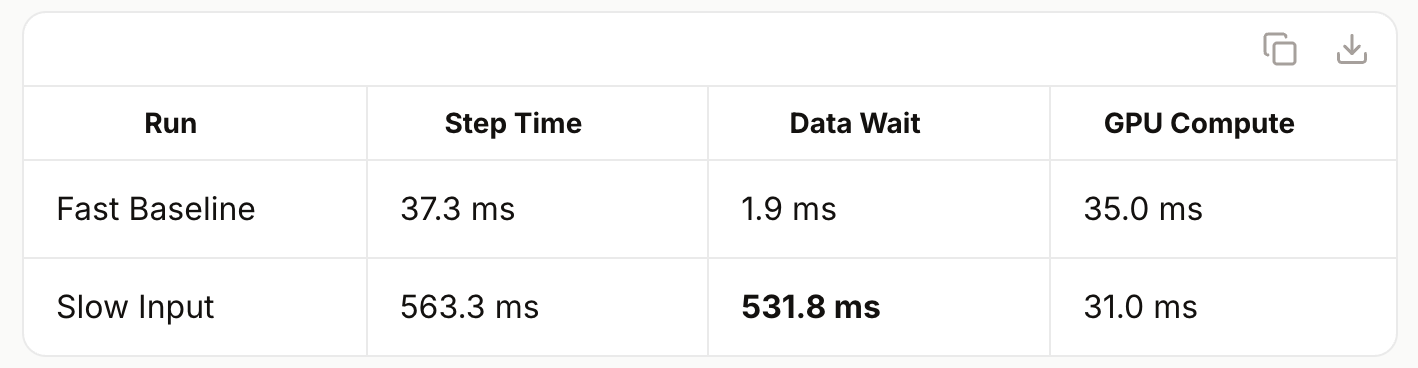
  8. Your DataLoader Is Starving Your GPU. Here is How to Prove It.

    A slow PyTorch training job may not be due to the model's complexity but rather the data loading process. The article explains how to identify if your GPU is being starved of data by a slow DataLoader. It suggests methods to diagnose and resolve these performance bottlenecks. AI

    Your DataLoader Is Starving Your GPU. Here is How to Prove It.

    IMPACT Optimizing data loading can significantly speed up ML training, reducing compute costs and accelerating model development cycles.

  9. Your AI Agent Is Paying for HTML It Never Reads — I Measured the 7x Token Tax

    A developer measured the significant token overhead incurred when AI agents access web pages, finding that raw HTML can consume up to seven times more tokens than the actual text content. This markup, including scripts and CSS, fills the context window with noise and increases costs, with one page costing $0.55 in raw tokens versus $0.078 when cleaned. A simple Python script using standard libraries and the `tiktoken` tokenizer can strip this unnecessary markup, drastically reducing token usage and cost. AI

    IMPACT Reduces AI agent operational costs and improves efficiency by minimizing token usage during web scraping.

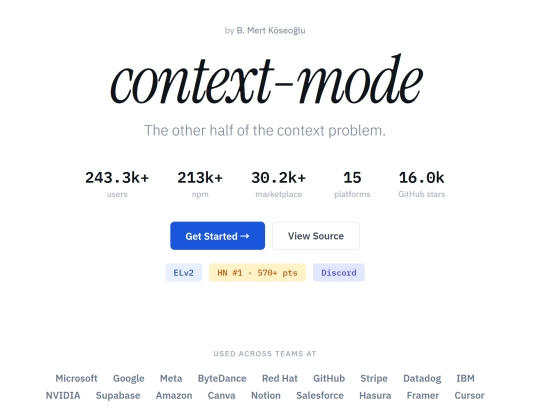
  10. Topping GitHub Hacker News, this open-source project reduces AI programming costs by 98% | New projects emerge

    Context-mode, an open-source plugin for AI programming, significantly reduces costs and improves model memory by optimizing context usage. It addresses the issues of high token consumption and model forgetfulness faced by developers. The tool has gained traction on GitHub and is being adopted by major tech companies, offering a more efficient approach to AI-assisted coding. AI

    Topping GitHub Hacker News, this open-source project reduces AI programming costs by 98% | New projects emerge

    IMPACT Accelerates AI adoption in development by drastically reducing costs and improving LLM context retention for complex coding tasks.

  11. LLM Spend Audit: The 45-Minute Diagnostic for Startups

    Startups can manage escalating LLM costs by implementing a lean version of AI FinOps, focusing on essential instrumentation and budget controls. This involves tagging every LLM call by feature to track spend, setting soft warning and hard block thresholds for each feature, and establishing clear ownership for all LLM call paths. Prioritizing optimization on high-volume, low-risk tasks like classification and routing can yield significant savings before tackling more complex reasoning features. AI

    IMPACT Provides practical strategies for startups to manage and reduce escalating LLM operational costs through effective budgeting and monitoring.

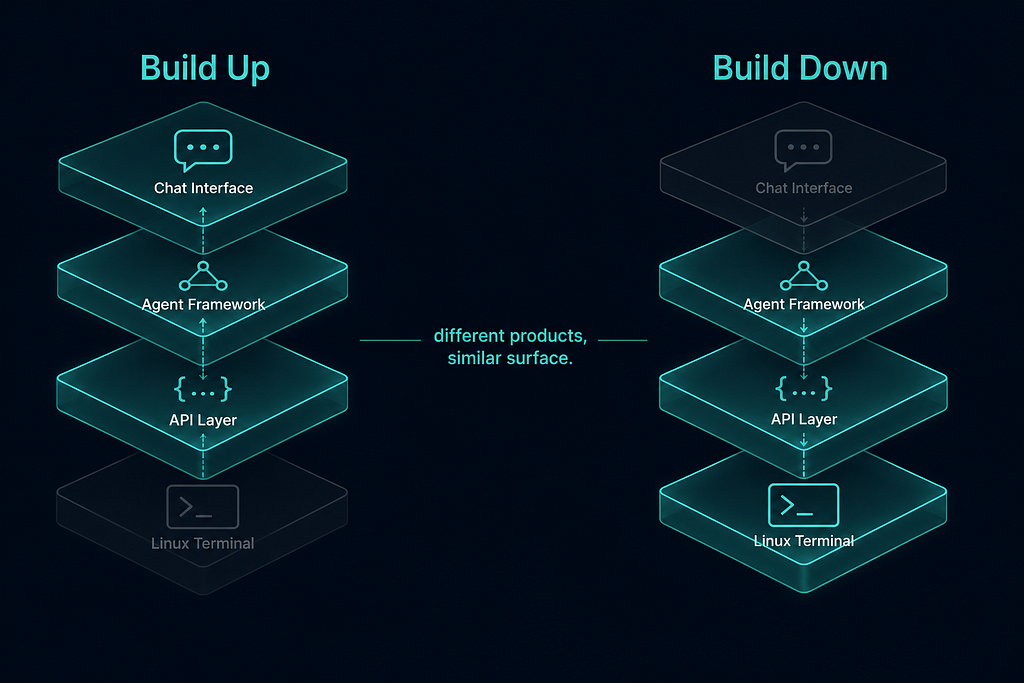
  12. Abacus Just Did the Opposite of What Everyone Else in AI Coding Is Doing. That’s Why It Matters.

    Abacus AI has launched a new product called Supercomputer, which offers developers a persistent Linux environment for $10 per month. Unlike other AI coding platforms that abstract away infrastructure, Abacus provides direct access to a virtual private server. This environment allows multiple AI coding agents, including models from OpenAI and Anthropic, to run simultaneously and interact with the same file system and terminal. AI

    Abacus Just Did the Opposite of What Everyone Else in AI Coding Is Doing. That’s Why It Matters.

    IMPACT Provides developers with direct control over AI agent compute, potentially enabling more secure and customized AI application development.

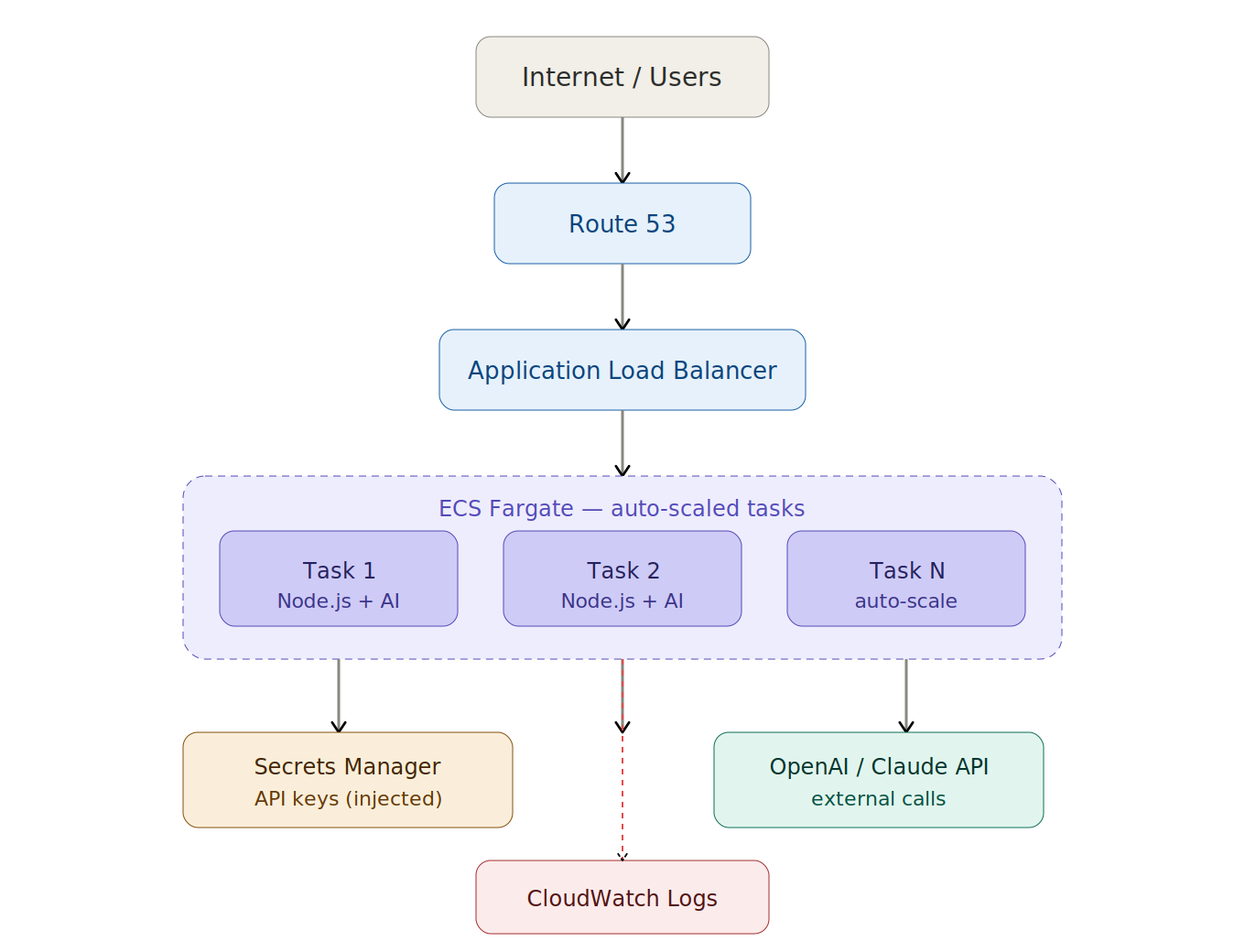
  13. How to Deploy an AI API (OpenAI/Claude) on AWS ECS Fargate — Production Guide 2026

    This guide details how to deploy AI APIs, specifically mentioning OpenAI and Claude, on AWS Elastic Container Service (ECS) Fargate. It emphasizes moving beyond single EC2 instances to a more robust setup with auto-scaling, secrets management, and zero-downtime capabilities for production environments. AI

    How to Deploy an AI API (OpenAI/Claude) on AWS ECS Fargate — Production Guide 2026

    IMPACT Provides a technical guide for deploying existing AI models in a scalable and resilient manner.

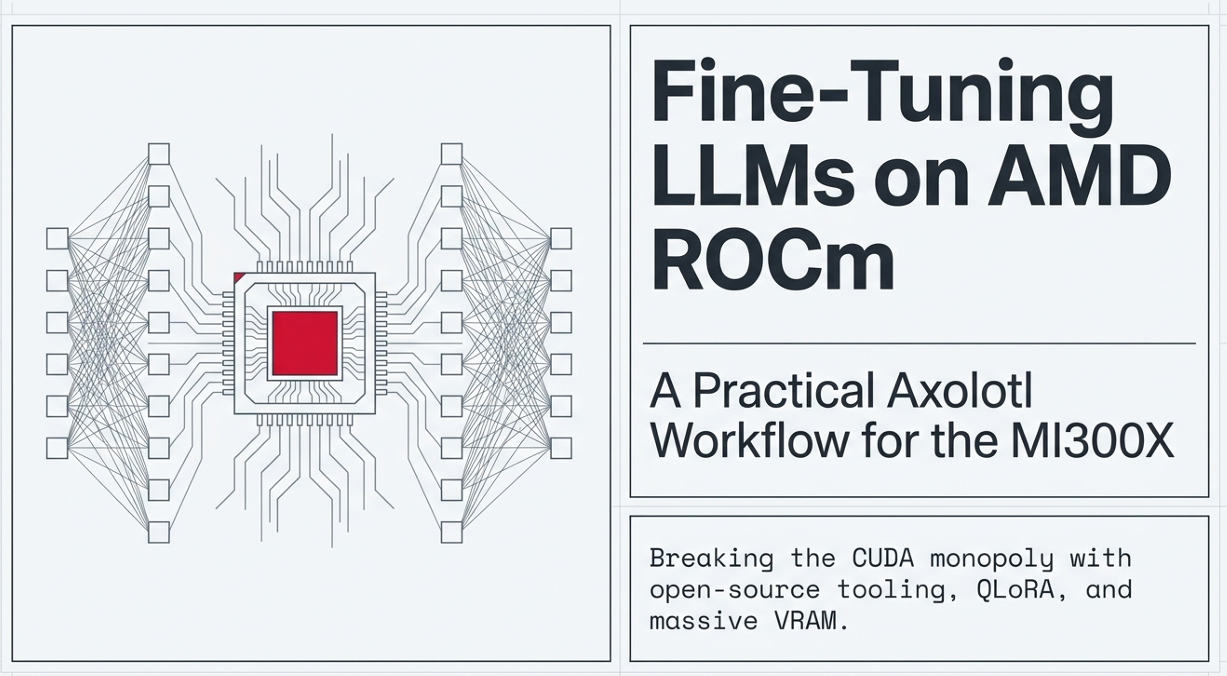
  14. Fine-Tuning LLMs on AMD ROCm: A Practical Axolotl Workflow for the MI300X

    This article details a practical workflow for fine-tuning large language models using AMD's ROCm platform, specifically on the MI300X hardware. It highlights how to overcome the dominance of NVIDIA's CUDA by leveraging ROCm, QLoRA techniques, and checkpointed training. The process is designed to utilize the substantial 192GB of VRAM available on the MI300X for efficient model customization. AI

    Fine-Tuning LLMs on AMD ROCm: A Practical Axolotl Workflow for the MI300X

    IMPACT Enables LLM fine-tuning on non-NVIDIA hardware, potentially lowering costs and increasing accessibility for researchers and developers.

  15. Stop Stuffing Context Windows: Dynamic Tool Pruning with Spring AI Vector Routing

    Developers can optimize LLM agent performance by dynamically pruning tool definitions instead of stuffing the entire context window. This approach involves indexing tool metadata in a vector database and querying it at runtime to retrieve only the most relevant tools for a given user prompt. By injecting a small, targeted subset of tools into the LLM call, developers can reduce latency, cut costs, and improve accuracy by avoiding hallucinations. AI

    IMPACT Optimizes LLM agent efficiency by reducing token usage and improving accuracy through dynamic tool selection, potentially lowering operational costs.

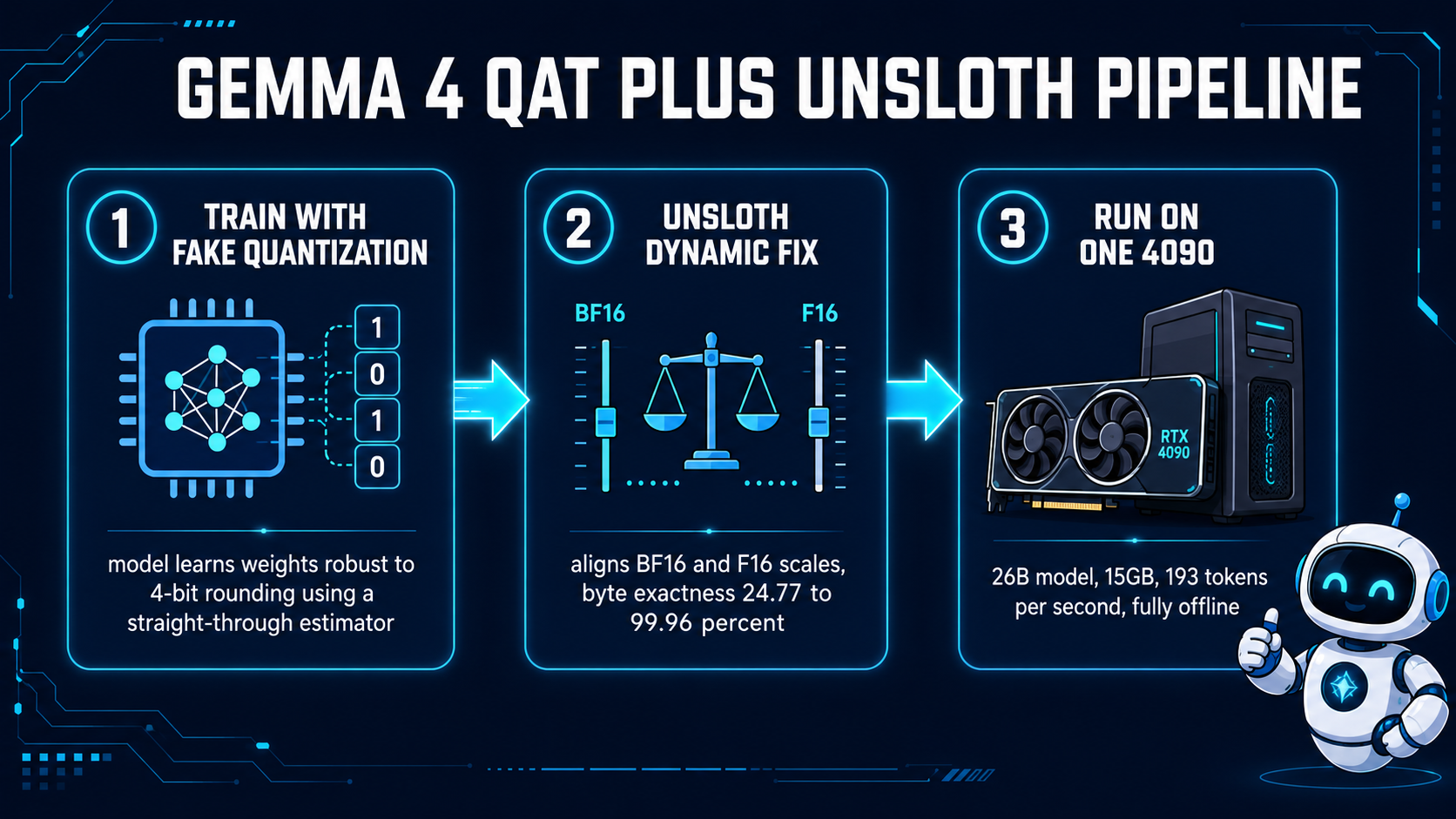
  16. Google Shrank Gemma 4 by 72% and Unsloth Fixed the 4-Bit Bug Nobody Else Caught on One 4090, and…

    A technical article details how Google's 26-billion-parameter Gemma model was optimized to run efficiently on consumer hardware. The author achieved impressive speeds of 193 tokens per second on a single RTX 4090 GPU, a feat typically associated with much smaller models. This optimization was made possible by a fix for a 4-bit quantization bug, which significantly improved performance and memory usage. AI

    Google Shrank Gemma 4 by 72% and Unsloth Fixed the 4-Bit Bug Nobody Else Caught on One 4090, and…

    IMPACT Demonstrates significant performance gains for large models on consumer hardware, potentially lowering barriers to entry for AI development.

  17. Fun fact: PinkyBrain nodes earn credits by sharing compute — and spend them to query others. No billing, no platform, just peers rewarding peers. Bonus: enable

    PinkyBrain is a decentralized AI compute network where nodes earn credits by sharing processing power and spend them to query other nodes. This peer-to-peer system operates without traditional billing or a central platform. Users can also enable a stealth mode to contribute to the network anonymously. AI

    IMPACT This decentralized approach could offer a new model for AI compute sharing, potentially reducing reliance on centralized cloud providers.

  18. I stopped reading logs but the raw API requests – here's where my tokens go cost-xray captures actual API requests from AI coding agents (Claude Code, Codex) and breaks down each token and cost by source within the request.

    Cost-xray is a new tool designed to monitor and analyze API requests made by AI coding agents like Claude Code and Codex. Unlike traditional log-based tools, it captures raw API requests to provide a detailed breakdown of token usage and costs, including system prompts and tool schemas. The tool offers a real-time TUI for intuitive visualization of session and source-specific expenses, aiding in AI agent cost optimization and debugging. AI

    IMPACT Provides developers with granular cost and token usage insights for AI coding agents, enabling better optimization.

  19. RTX 5080 vs RTX 4090 for LLM: Which Is Better in 2026?

    For large language model (LLM) inference, the NVIDIA RTX 4090 remains the superior choice over the newer RTX 5080, primarily due to its larger VRAM capacity. While the RTX 5080 boasts a newer architecture and lower power consumption, the RTX 4090's 24GB of VRAM is crucial for running larger models (32B parameters and above) and supporting longer context windows, which the 16GB RTX 5080 cannot accommodate. Although the RTX 5080 is a capable card for smaller models and gaming, the RTX 4090's VRAM advantage is non-negotiable for serious LLM work. AI

    IMPACT Hardware VRAM capacity is critical for running larger LLMs, making the RTX 4090 a better choice for serious inference tasks.

  20. Apple Core AI Framework

    Apple has released its Core AI framework, a new set of tools designed to help developers integrate artificial intelligence capabilities into their applications. The framework provides access to on-device machine learning models and functionalities, enabling richer and more responsive AI experiences within the Apple ecosystem. Developers can leverage Core AI to build features such as image analysis, natural language processing, and predictive text directly into their iOS, macOS, and other Apple platform applications. AI

    IMPACT Enables developers to more easily integrate on-device AI features into Apple applications, potentially leading to more intelligent and responsive user experiences.

  21. Milestone: Ascend 910C Completes Full-Parameter Post-Training of 1.6 Trillion Parameter Model, Domestic AI Computing Crosses Key Threshold

    A consortium including Shenzhen Hetao College and Huawei has successfully completed the full-parameter post-training of a 1.6 trillion parameter AI model. This achievement marks a significant milestone for domestic AI computing capabilities. The training was conducted using Huawei's Ascend 910C AI chips, demonstrating advancements in China's AI infrastructure. AI

    Milestone: Ascend 910C Completes Full-Parameter Post-Training of 1.6 Trillion Parameter Model, Domestic AI Computing Crosses Key Threshold

    IMPACT Demonstrates significant progress in training large-scale AI models domestically, potentially accelerating AI development and deployment in China.

  22. #AI / #ArtificialIntelligence #ElectricityCosts "Three #Amazon - #DataCenters are still under construction, but according to a new study, residents are already paying at least 10.60

    A new study indicates that three Amazon data centers, still under construction, are already costing local residents at least $10.60 per month in electricity expenses. This highlights the significant and immediate financial impact of large-scale data center development on surrounding communities. AI

  23. 📝 'Development Environment Integration' Evolves - Why Apple's Container Machine Will End Dual Environment Issues for Mac Users Announced at WWDC26, Apple's 'Container Machine' realizes a lightweight and high-speed Linux environment on macOS. Technology that improves developer productivity and resolves the complexity of environment setup.

    Apple announced "Container machine" at WWDC26, a new feature for macOS that allows users to run lightweight and fast Linux environments directly on their Macs. This development aims to enhance developer productivity by simplifying environment setup and potentially leading to significant shifts in the technology ecosystem. AI

    IMPACT Streamlines development workflows, potentially accelerating AI tool adoption and integration on macOS.

  24. I wired a fully offline voice loop to Ollama + LM Studio — 100% CPU, no GPU, nothing leaves your machine (Silero VAD + Parakeet STT + Supertonic TTS 3)

    A developer has created a fully offline voice interaction loop for local AI models, utilizing only CPU resources and ensuring all data remains on the user's machine. This system integrates Silero VAD for voice activity detection, Parakeet STT for speech-to-text, and Supertonic TTS for text-to-speech, all running via ONNX. The setup is designed for cross-platform compatibility on macOS, Linux, and Windows, and can be integrated with local LLM interfaces like Ollama and LM Studio. AI

    IMPACT Enables private, offline voice interaction with local LLMs, reducing reliance on cloud services for AI applications.

  25. Alibaba Cloud: Lowering the price of Container Computing Service ACS Agent Sandbox

    Alibaba Cloud has announced a price reduction for its ACS Agent Sandbox container computing service, specifically for the default compute quality. This price adjustment will take effect on June 15, 2026, at 12:00 PM Beijing time. The reduction applies only to the default compute quality of ACS Agent Sandbox, while other compute qualities and types remain unchanged. AI

    IMPACT Minor impact for cloud users; price adjustments on existing services typically do not alter industry direction.

  26. Finding the Sweet Spot for Local LLMs: Qwen Coder & Llama.cpp

    A developer has found an optimal setup for running large language models locally for software development, leveraging a MacBook Pro M5 with 128GB RAM. The chosen configuration uses Llama.cpp directly, with the Qwen3-Coder-Next model in an 8-bit quantization format, which balances performance and memory usage. This setup integrates with GitHub Copilot, allowing for free token usage on the standard plan while performing complex code analysis. AI

    Finding the Sweet Spot for Local LLMs: Qwen Coder & Llama.cpp

    IMPACT Enables cost-effective local LLM usage for developers, potentially reducing reliance on paid token-based services for coding tasks.

  27. Synthadoc: Streaming Queries, Local Web Chat, and a Self-Invalidating Cache

    Synthadoc has released version 0.7.0, introducing a self-invalidating query cache to reduce LLM costs and latency. This cache stores previous query results and automatically invalidates them when the underlying wiki data changes, preventing redundant LLM calls. The update also includes streaming query output and a local web chat UI, enhancing the user experience for interacting with knowledge bases. AI

    Synthadoc: Streaming Queries, Local Web Chat, and a Self-Invalidating Cache

    IMPACT Reduces LLM operational costs and improves response times for knowledge base queries.

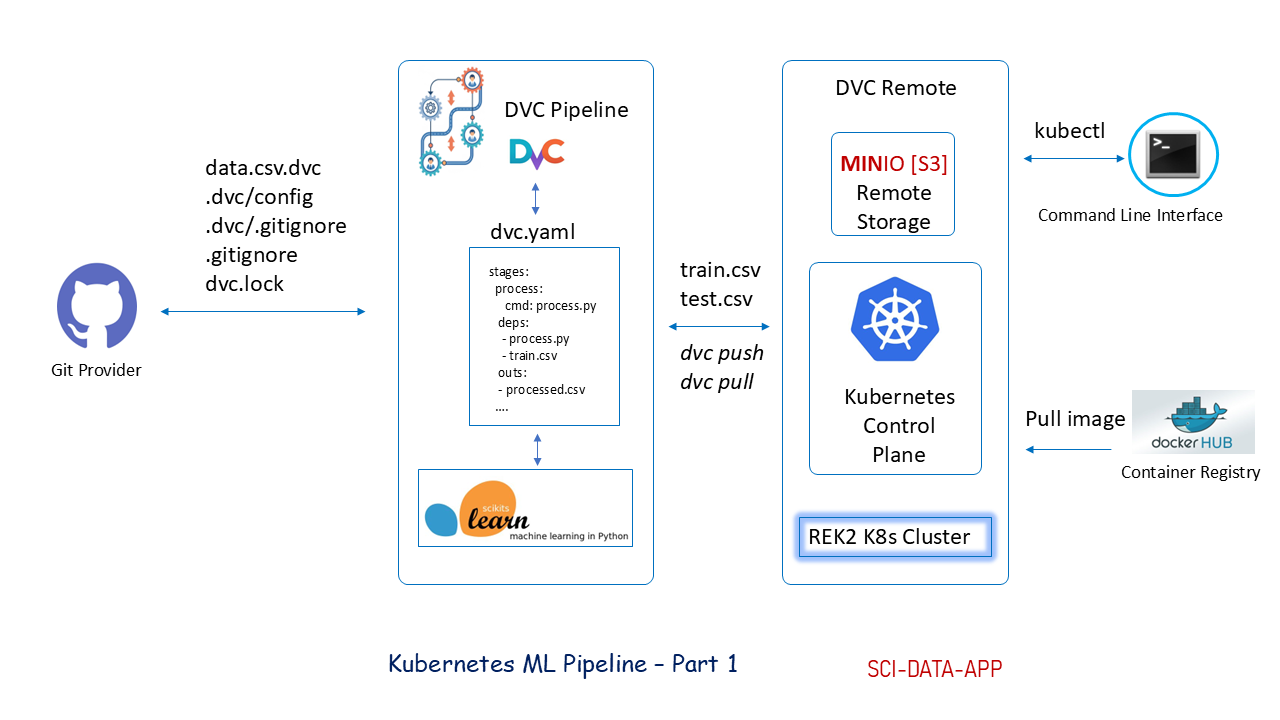
  28. Kubernetes Machine Learning Pipeline — Part 1: DVC Pipeline

    This article introduces the first part of a series on building machine learning pipelines using Kubernetes and DVC. It focuses on establishing an on-premises Kubernetes foundation for these pipelines. The series aims to guide readers through the process of creating robust MLOps workflows. AI

    Kubernetes Machine Learning Pipeline — Part 1: DVC Pipeline

    IMPACT Provides guidance on setting up infrastructure for machine learning operations.

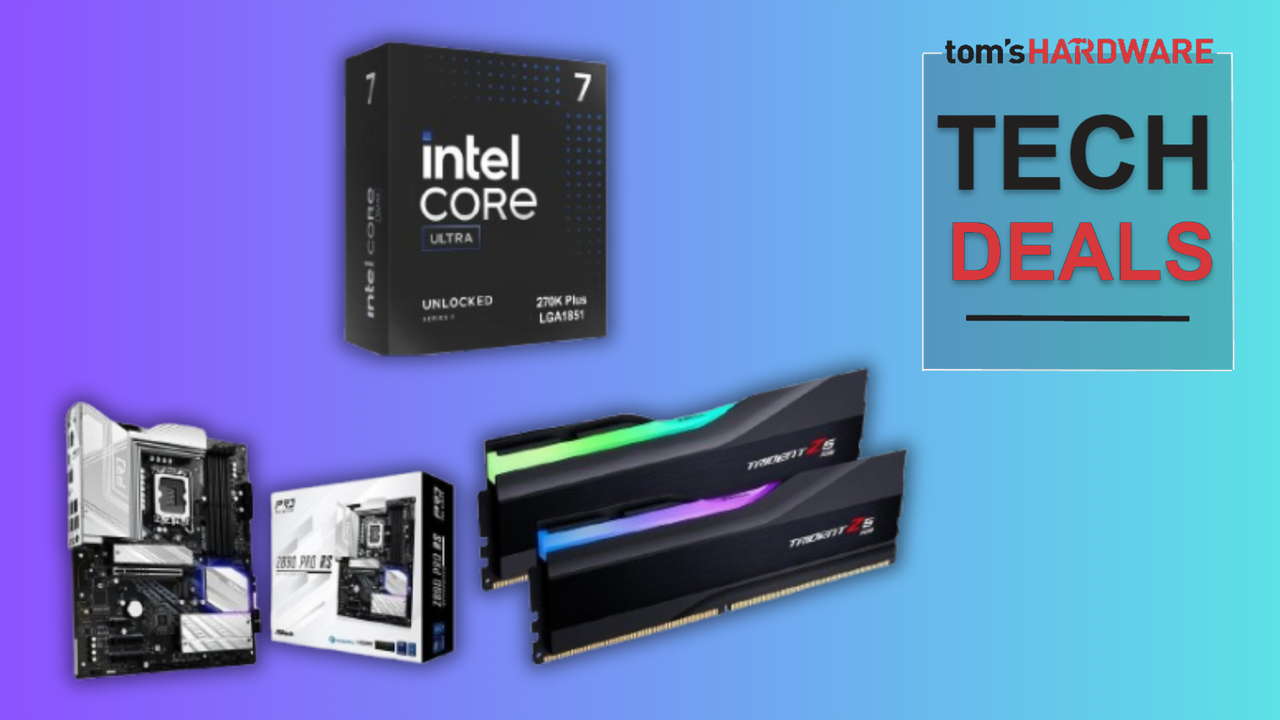
  29. Get 32GB DDR5 for just $280, $100 less than elsewhere, in this epic Newegg combo deal — save 23% on this gaming PC parts bundle featuring Intel's fastest gaming CPU in years, along with a Z890 motherboard for just $769.99

    Newegg is offering two distinct PC component bundles at significant discounts. One bundle features 32GB of Corsair Vengeance RGB DDR5 RAM and a Gigabyte X870 Aorus Elite WiFi 7 Ice motherboard for $514.99, saving users nearly $185 and effectively pricing the RAM at $255. The second bundle is geared towards Intel builds, including an Intel Core Ultra 7 270K Plus CPU, an ASRock Z890 Pro RS motherboard, and 32GB of G.Skill Trident Z5 RGB DDR5 RAM for $769.99, a $229.98 saving that makes the RAM cost approximately $280. AI

    Get 32GB DDR5 for just $280, $100 less than elsewhere, in this epic Newegg combo deal — save 23% on this gaming PC parts bundle featuring Intel's fastest gaming CPU in years, along with a Z890 motherboard for just $769.99

    IMPACT These deals offer cost savings on PC components, potentially enabling more users to build or upgrade systems for AI-related tasks.

  30. 🤖 Microsoft SkillOpt optimizes AI prompts with instrumented workflow Microsoft SkillOpt is being used to implement instrumented prompt optimization workflows th

    Microsoft has introduced SkillOpt, a tool designed to refine AI prompt optimization through an automated workflow. This system allows for the rollout, reflection, and validation of prompts to enhance AI model performance. The development is accompanied by a tutorial from MarkTechPost, offering guidance on its implementation. AI

    🤖 Microsoft SkillOpt optimizes AI prompts with instrumented workflow Microsoft SkillOpt is being used to implement instrumented prompt optimization workflows th

    IMPACT Provides a new method for optimizing AI prompts, potentially improving model efficiency and performance for users.

  31. 📊 Scaling AI Through Data Fluency Aviation is one of the most data-intensive industries on the planet. Every flight... 📰 Source: Databricks 🔗 Link: https://www.

    Databricks is enhancing its platform with new features aimed at improving AI development and user experience. The company is previewing custom URLs for a unified Databricks account experience, allowing organizations to use branded domains. Additionally, Databricks is focusing on scaling AI through data fluency, particularly highlighting its application in data-intensive industries like aviation. AI

    IMPACT Enhances enterprise AI development by simplifying platform access and improving data management for AI initiatives.

  32. Datadog dashboards for prompt regression: the panels we actually keep

    A developer at a Series-C dev-tool startup shares their experience integrating an LLM evaluation suite with Datadog for prompt regression testing. They found that tracking per-criterion pass rates, rather than a single aggregate score, was crucial for identifying subtle regressions. The system uses GitHub Actions to run evaluations and emits metrics to Datadog, allowing prompt performance to be monitored alongside backend service health. AI

    IMPACT Provides a practical example of how to monitor and manage LLM performance in a production environment, crucial for AI operators.

  33. MCP in 2026: The numbers behind the ecosystem explosion

    The Model Context Protocol (MCP) has seen significant growth, with over 13,000 servers registered on npm and GitHub as of May 2026. Monthly SDK downloads have tripled in six months to 97 million, and new server registrations show 400% year-over-year growth. This expansion positions MCP as a standard for AI model tool access, though challenges remain in server discovery. To address this, a new command-line tool, `mcp-hub`, has been developed to simplify searching and installing MCP servers. AI

    IMPACT Simplifies AI model integration with tools, potentially accelerating adoption of MCP as an industry standard.

  34. How to Run an LLM Over 100,000 Records for the Price of a Coffee

    This article explains how to leverage the batch API discount for large language models, a feature that is often overlooked. It details a workflow designed to efficiently process over 100,000 records at a significantly reduced cost, comparable to the price of a coffee. The focus is on practical application and cost-saving strategies for users working with substantial datasets. AI

    How to Run an LLM Over 100,000 Records for the Price of a Coffee

    IMPACT Enables cost-effective processing of large datasets with LLMs, making advanced AI capabilities more accessible.

  35. Why your GPU reports 75 C while your VRAM is cooking at 105 C – the telemetry gap that kills LLM inference

    Modern operating systems fail to report critical VRAM temperatures, instead showing the GPU core temperature, which can lead to performance degradation in local LLM inference. This telemetry gap is particularly problematic for Mixture of Experts (MoE) models, which create a sustained thermal load on VRAM due to constant read/write operations. The article explains how MoE models like Gemma-4 26B utilize a memory split between system RAM and GPU VRAM, and how this constant swapping can overheat VRAM modules, causing inference speeds to plummet without obvious system errors. It offers solutions using Python and NVML to monitor the actual memory junction temperature for stable local AI pipelines. AI

    IMPACT Addresses a critical hardware bottleneck for local LLM inference, enabling more stable and performant AI pipelines on consumer hardware.

  36. It’s safe to close your laptop now: Hosting coding agents on Amazon Bedrock AgentCore

    Amazon Bedrock AgentCore Runtime offers a dedicated environment for hosting coding AI agents, moving them off developers' personal laptops. This new service provides isolated Linux microVMs with persistent workspaces, ensuring agents can run reliably without interruption from laptop lid closures or system suspensions. AgentCore also integrates identity management, a unified tool access gateway, and CloudWatch observability, aiming to improve agent performance and security. AI

    It’s safe to close your laptop now: Hosting coding agents on Amazon Bedrock AgentCore

    IMPACT Enables more reliable and secure execution of AI coding agents by offloading them from developer machines to a managed cloud environment.

  37. Run Your Own AI Server for $0/month with Ollama

    The author details how to set up a local AI server using Ollama for free, eliminating API costs and ensuring data privacy. The process involves installing Ollama, downloading models like Qwen 3.5 or DeepSeek, and then running them locally. Ollama offers an OpenAI-compatible API, allowing existing tools to connect to local models, and can be configured to run as a server accessible across a network. This setup enables various applications, from chatbots to code review agents, with minimal hardware investment and only electricity costs. AI

    IMPACT Enables cost-free, private AI model deployment on personal hardware, reducing reliance on cloud APIs.

  38. End-to-end encrypted ML inference with Amazon SageMaker AI and FHE

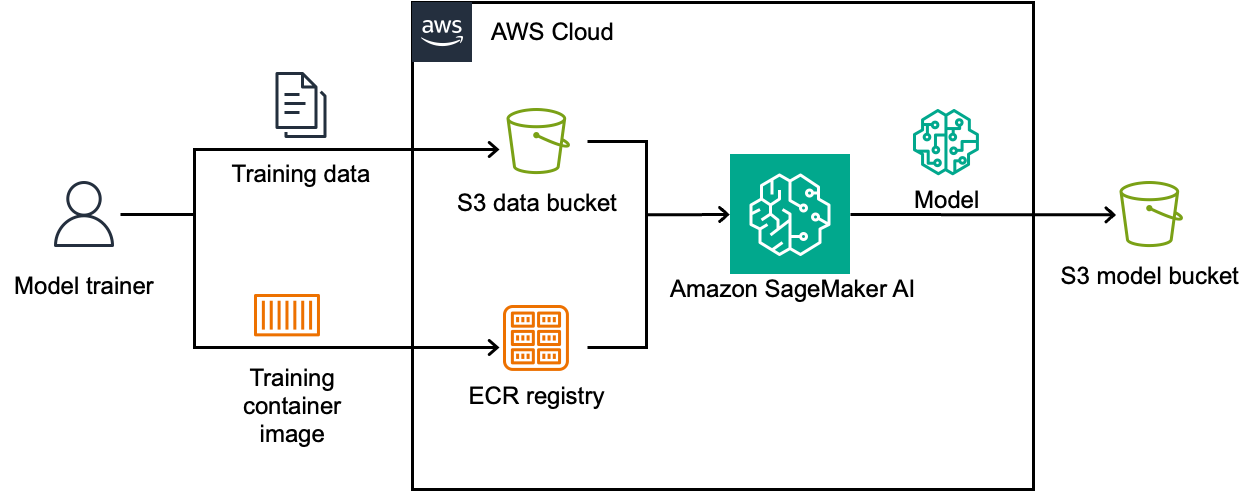
    Amazon SageMaker AI now supports end-to-end encrypted machine learning inference using fully homomorphic encryption (FHE). This allows sensitive data, such as medical records or proprietary business information, to be processed in the cloud without being decrypted, even by SageMaker itself. The new capability leverages the concrete-ml library, offering a more flexible and higher-level approach compared to previous methods that required manual implementation with low-level libraries. AI

    End-to-end encrypted ML inference with Amazon SageMaker AI and FHE

    IMPACT Enhances data privacy for cloud-based ML inference, potentially increasing adoption in sensitive sectors like healthcare and finance.

  39. Evaluate your Amazon Nova Sonic voice agent at scale, no microphone required

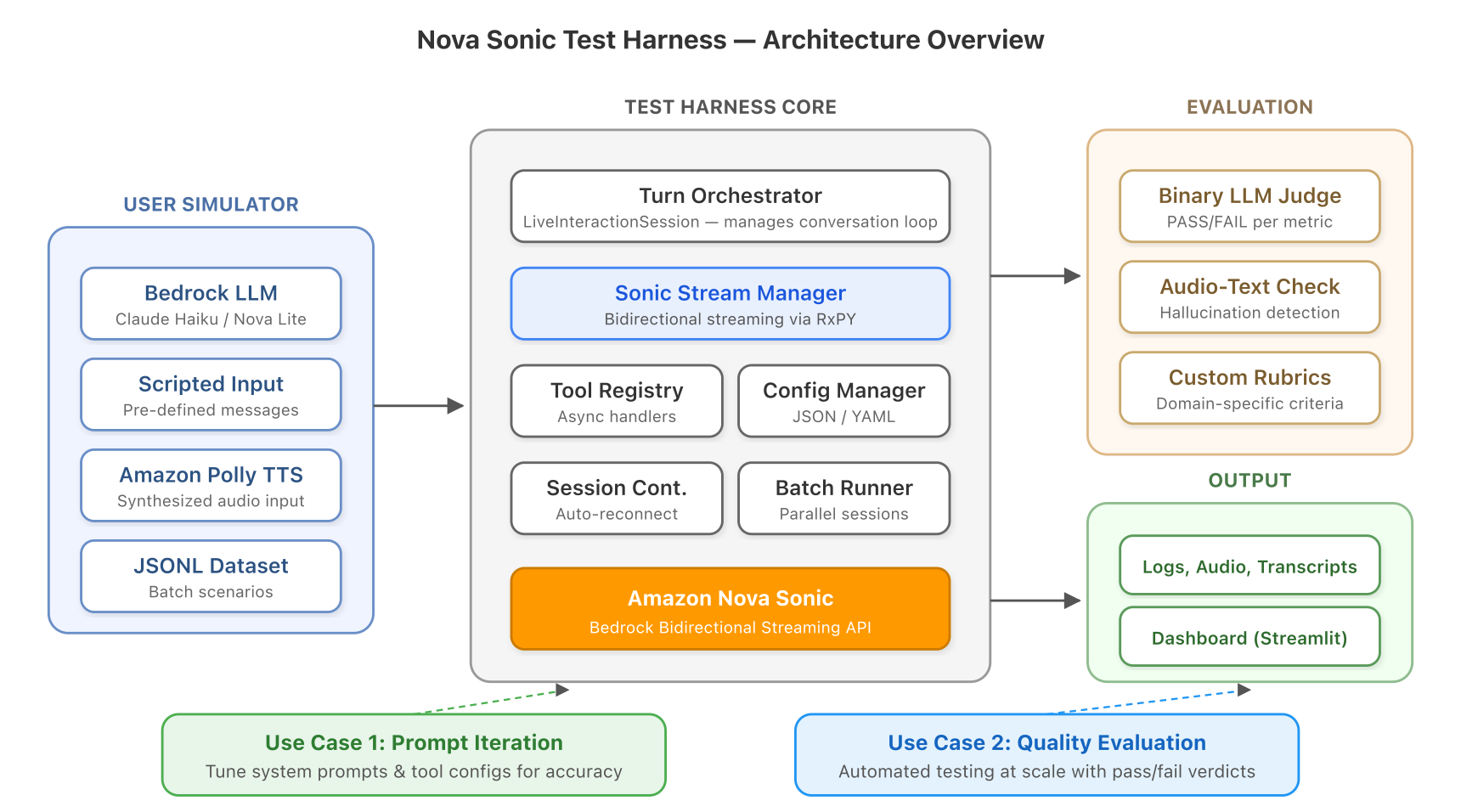
    Amazon Web Services has released an open-source framework called the Nova Sonic Test Harness to automate the testing of voice agents. This tool addresses the challenges of evaluating voice-based AI, which are more complex than text-based chatbots due to real-time audio streaming, non-deterministic responses, and multi-turn context. The harness allows developers to rapidly iterate on system prompts and tool configurations and provides a comprehensive evaluation of voice agent quality at scale, detecting issues like audio-text divergence without requiring physical microphones. AI

    Evaluate your Amazon Nova Sonic voice agent at scale, no microphone required

    IMPACT Automates voice agent testing, enabling faster iteration and improved quality assurance for AI-powered voice applications.

  40. LLM integration with OpenRouter

    The dev.to post details how to integrate various large language models through OpenRouter's unified API. It provides three Node.js integration paths: using OpenRouter's official SDK, the standard OpenAI package with a modified base URL, or the Vercel AI SDK. The guide emphasizes using a single API key and billing surface to access models from providers like OpenAI, Anthropic, and Google, with examples showing model switching and streaming capabilities. AI

    IMPACT Simplifies LLM integration for developers by providing a single API endpoint for multiple model providers.

  41. ContextLens — py-spy/pprof but for what's inside your LLM prompt

    ContextLens is a new open-source tool designed to diagnose and reduce wasted token usage in LLM agent context windows. It analyzes conversation turns to identify which parts of the context, such as repeated tool results or unused system prompts, are being unnecessarily re-billed. The tool provides detailed reports, including cost estimates and specific recommendations for optimization, and can work offline with saved traces. AI

    IMPACT Helps developers reduce LLM API costs by identifying and fixing wasted token usage in agent loops.

  42. Bronto Hosted MCP Server

    Bronto has launched a new hosted version of its MCP server, simplifying access for teams by eliminating the need to manage local server installations and API keys. Users can now enable MCP access directly within the Bronto UI and authenticate using their existing Bronto login methods, including OAuth and SSO. This hosted solution is designed for easier team-wide adoption and centralized access control, while still providing clients like Claude Opus with access to Bronto datasets, log search, and metrics. AI

    Bronto Hosted MCP Server

    IMPACT Simplifies integration for AI clients with Bronto data, potentially increasing adoption of AI-powered log analysis.

  43. What Is an AI Gateway and Why AI Teams Need One Before Production

    An AI gateway is crucial for managing AI models in production environments, acting as a central control layer between applications and various AI providers. This layer standardizes access, security, cost management, and observability, preventing the fragmentation and technical debt that arises from direct, unmanaged integrations. Platforms like Odock offer this solution, enabling teams to switch models seamlessly and enforce policies without altering application code. AI

    What Is an AI Gateway and Why AI Teams Need One Before Production

    IMPACT Standardizes AI model integration and management, reducing operational complexity and cost for production AI systems.

  44. Prompt caching is the cheapest Claude optimization. Nobody measures it.

    Developers using Anthropic's Claude API are likely overspending due to a lack of awareness about prompt caching. The API provides data on cache hits and misses, which can significantly reduce costs if utilized effectively. By monitoring cache performance, developers can identify and fix issues that lead to unnecessary expenses, such as personalized prompts or subtly changing query parameters. AI

    IMPACT Developers can significantly reduce Claude API costs by implementing prompt caching observability.

  45. VIRTUS-FPP: Virtual Sensor Modeling for Fringe Projection Profilometry in NVIDIA Isaac Sim

    Researchers have developed VIRTUS-FPP, a novel framework for simulating fringe projection profilometry (FPP) within NVIDIA Isaac Sim. This tool enables the creation of high-fidelity synthetic data for 3D surface reconstruction, bypassing the need for complex physical calibration and experimentation. The framework accurately models the entire FPP pipeline, from light projection to 3D reconstruction, demonstrating sub-millimeter accuracy in simulations. AI

    IMPACT Enables high-fidelity synthetic data generation for robotics perception and sensor design, potentially accelerating simulation-to-reality transfer.

  46. On the Effect of Neural Field Reparameterization for 4DVAR

    Researchers have developed a novel neural field-based approach to Four-Dimensional Variational Data Assimilation (4DVAR), a critical but computationally intensive process in numerical weather prediction. This new method represents the spatiotemporal state as a continuous function parameterized by a neural network, which acts as an implicit regularizer to stabilize state estimation and reduce oscillations. The framework allows for parallel-in-time optimization and direct incorporation of physical constraints, demonstrating improved accuracy and significant speedups on benchmarks compared to traditional 4DVAR, without requiring ground-truth training data. AI

    IMPACT This research could lead to more accurate and efficient weather forecasting models by improving data assimilation techniques.

  47. FP8 is All You Need (Part 1): Debunking Hardware FP64 as the HPC Holy Grail

    A new research paper challenges the long-held belief that double-precision (FP64) hardware is essential for high-performance computing (HPC). The authors propose that using FP8 tensor cores, combined with specific reconstruction schemes like Ozaki Scheme II, can achieve full FP64 accuracy. This approach is projected to significantly boost performance on next-generation GPUs, potentially making native FP64 silicon obsolete for many scientific computing tasks. AI

    IMPACT This research could enable significant performance gains in scientific computing by leveraging AI-optimized hardware for traditional HPC tasks.

  48. VeriHGN: Heterogeneous Graph-Based Congestion Prediction for Chip Layout Verification

    Researchers have developed VeriHGN, a new framework for predicting congestion in chip layout verification. This approach uses an enhanced heterogeneous graph to unify circuit components and spatial grids, allowing for a more accurate modeling of the interplay between logical design and physical implementation. Experiments on industrial benchmarks show VeriHGN outperforms or matches state-of-the-art methods in prediction accuracy. AI

    IMPACT This method could accelerate chip design by enabling earlier and more accurate prediction of layout congestion.

  49. OpenACMv2: An Accuracy-Constrained Co-Optimization Framework for Approximate DCiM

    Researchers have developed OpenACMv2, an open-source framework designed to optimize Digital Compute-in-Memory (DCiM) hardware for neural networks. This framework employs a two-level optimization strategy to balance power, performance, and area (PPA) with accuracy constraints. The first level searches for optimal architecture configurations, while the second refines transistor-level parameters, enabling significant efficiency gains with minimal accuracy loss. AI

    IMPACT This framework could lead to more efficient hardware for running AI models, reducing power consumption and improving performance.

  50. The 1M Context Window vs Prompt Caching: When to Use Which

    Developers are finding that while large context windows like Anthropic's 1 million tokens are convenient for single-use tasks, they become prohibitively expensive for repeated queries. Prompt caching offers a more cost-effective solution for iterative work, as it allows a significant portion of the prompt to be reused at a fraction of the cost after an initial write premium. For instance, caching can reduce costs by up to tenfold after just a few calls, making it ideal for workflows involving consistent documentation or system instructions. AI

    IMPACT Prompt caching offers a significant cost-saving mechanism for developers building AI applications, making iterative workflows more economically viable.