PulseAugur
实时 06:40:36

Google DeepMind's AI aids liver disease research, identifies new drug targets

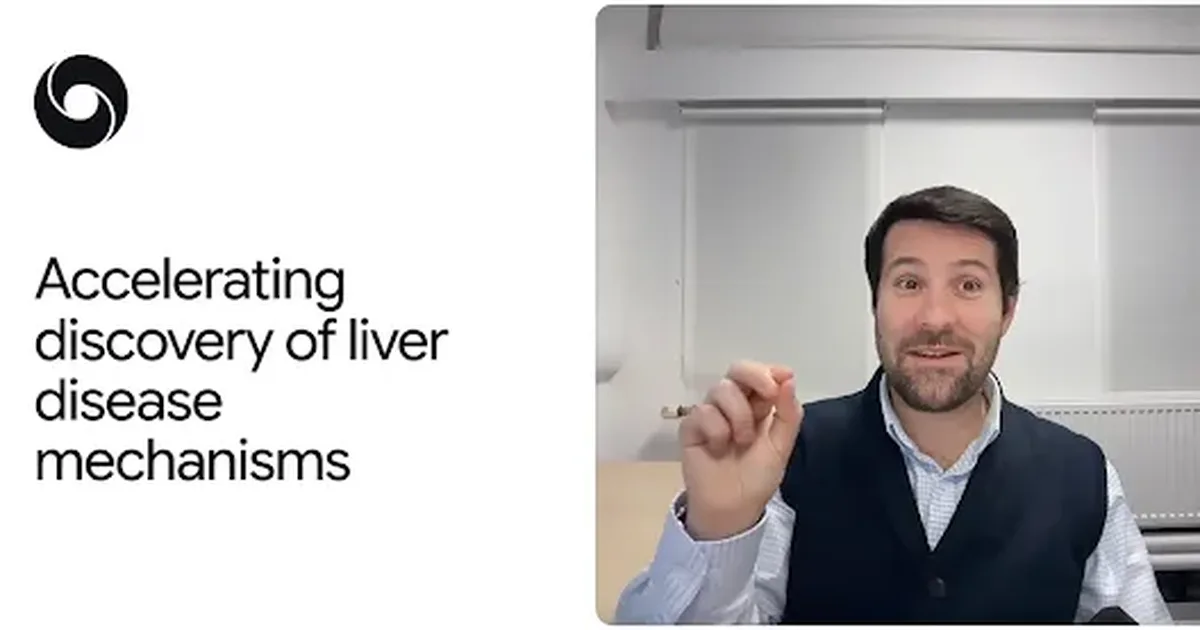
Google DeepMind's Co-Scientist platform is accelerating biomedical research by helping scientists sift through vast amounts of literature to identify novel hypotheses and potential drug combinations. A bioengineer at the University of Edinburgh used Co-Scientist to investigate metabolic dysfunction-associated steatohepatitis (MASH), a complex liver disease. The system helped pinpoint the NLRP3 inflammasome as a key molecular link in MASH, a hypothesis that was later experimentally verified and could lead to new targeted therapies. AI

影响 AI tools like Co-Scientist can significantly accelerate scientific discovery by synthesizing complex data and generating novel hypotheses, potentially leading to faster development of treatments for diseases.

排序理由 The cluster describes the application of an AI tool to advance biomedical research and generate a verifiable scientific hypothesis. [lever_c_demoted from research: ic=1 ai=1.0]

在 Google DeepMind 阅读 →

AI 生成摘要 · Google Gemini · 来自 1 个来源。 我们如何撰写摘要 →
Google DeepMind's AI aids liver disease research, identifies new drug targets

报道来源 [1]

  1. Google DeepMind TIER_1 English(EN) ·

    Accelerating discovery of liver disease mechanisms

    Filippo Menolascina uses Co-Scientist to identify new liver disease treatments and explain why existing drugs only help certain patients.