PulseAugur
实时 06:02:04

Dust accumulation poses risks to electrical devices by trapping heat and creating conductive paths

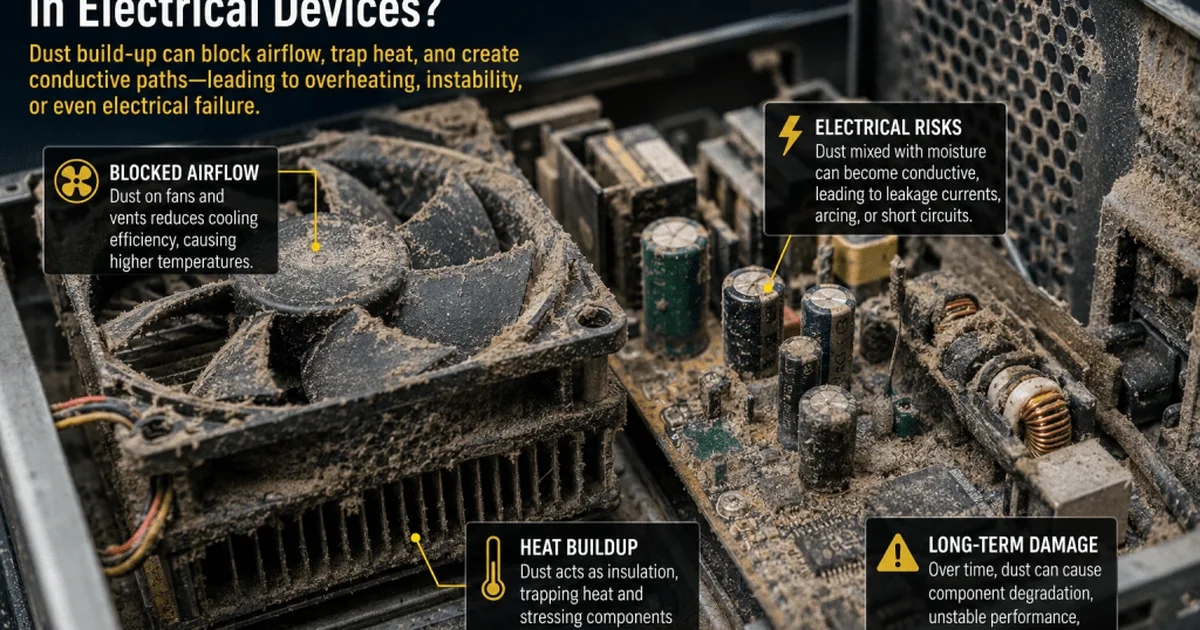
Dust accumulation in electrical devices becomes problematic when it impedes airflow, traps heat, or forms conductive paths on energized components. Initially, light dust layers are harmless, but compacted or moisture-laden dust can alter electrical behavior, leading to gradual overheating, instability, or eventual failure. Critical areas affected include cooling fans, heat sinks, and high-voltage zones on PCBs, where dust can degrade performance and accelerate component wear. AI

排序理由 The article discusses a common physical phenomenon and its impact on electronics, not a novel AI development or industry event.

在 Mastodon — mastodon.social 阅读 →

AI 生成摘要 · Google Gemini · 来自 1 个来源。 我们如何撰写摘要 →
Dust accumulation poses risks to electrical devices by trapping heat and creating conductive paths

报道来源 [1]

  1. Mastodon — mastodon.social TIER_1 English(EN) · [email protected] ·

    When Does Dust Become a Problem in Electrical Devices? Dust starts causing trouble in electrical devices when it builds up enough to block airflow, trap heat, o

    When Does Dust Become a Problem in Electrical Devices? Dust starts causing trouble in electrical devices when it builds up enough to block airflow, trap heat, or create conductive paths on energized components. In most cases, light surface dust is harmless, but once it becomes co…