PulseAugur
实时 23:23:07

LLM prompt evaluation needs statistical significance and effect size

A recent article on dev.to proposes a more rigorous method for evaluating large language model (LLM) prompts, moving beyond simple average score comparisons. The author argues that small datasets commonly used for LLM evaluations are insufficient for reliable average scores, and that statistical significance is crucial. The piece advocates for the Mann-Whitney U test over the t-test due to its non-parametric nature, and also emphasizes the importance of effect size metrics like Cohen's d to ensure practical meaningfulness alongside statistical significance. AI

影响 Introduces a statistically sound framework for prompt evaluation, potentially improving LLM performance and reliability.

排序理由 The article presents a novel methodology and implementation for evaluating LLM prompts, akin to a research paper. [lever_c_demoted from research: ic=1 ai=1.0]

在 dev.to — LLM tag 阅读 →

AI 生成摘要 · Google Gemini · 来自 1 个来源。 我们如何撰写摘要 →
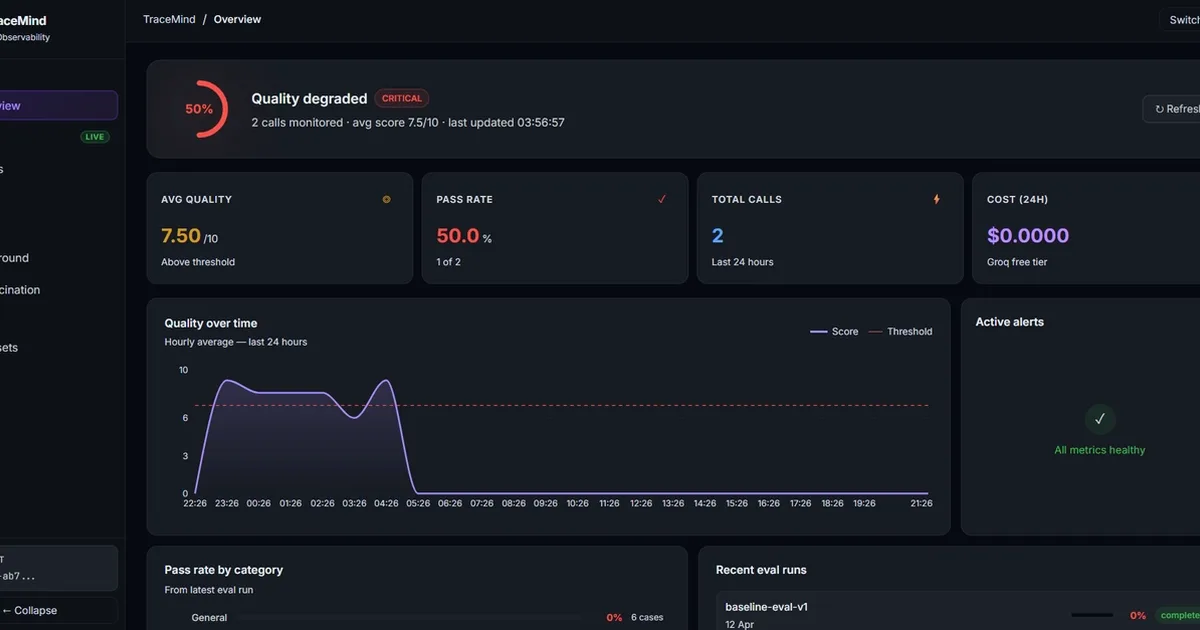
LLM prompt evaluation needs statistical significance and effect size

报道来源 [1]

  1. dev.to — LLM tag TIER_1 English(EN) · Aayush kumarsingh ·

    Why comparing average scores is the wrong way to evaluate LLM prompts (and what to do instead)

    <p>Most teams compare prompts like this:</p> <p>Prompt A average score: 6.8<br /> Prompt B average score: 7.4</p> <p>"B is better, ship it."</p> <p>I used to do this too. Then I ran the numbers properly and realized I'd been making deployment decisions on statistical noise.</p> <…