Overall, with the reduction in layers, Amazon is claiming up to 45% cost saving compared to fat trees on a similar oversubscription ratio. As of now, RNG is the first network based on random graphs concept deployed at scale. Amazon has currently deployed only 2 version of RNG:
In RNG, the ToRs are not directly connected to each other, but via shuffle boxes, which are passive optical components. On the standard design, the datacenter is composed of 10 rooms, with 96 ToRs and 192 shuffle boxes per room, and 64 servers per ToR (6,144 total). (5/7) https:/…
This implies major changes on the software stack as the infrastructure is fundamentally different from traditional networks. For RNG, Amazon introduced Spraypoint, their own routing protocol that maps all the routes from a source to a destination. Spraypoint also split packets ht…
As its name suggests, random graphs networks are based on random cabling. This allows for a flat topology where the Top of Rack (ToR) switches are used as waypoints to route packets within the network. (3/7)
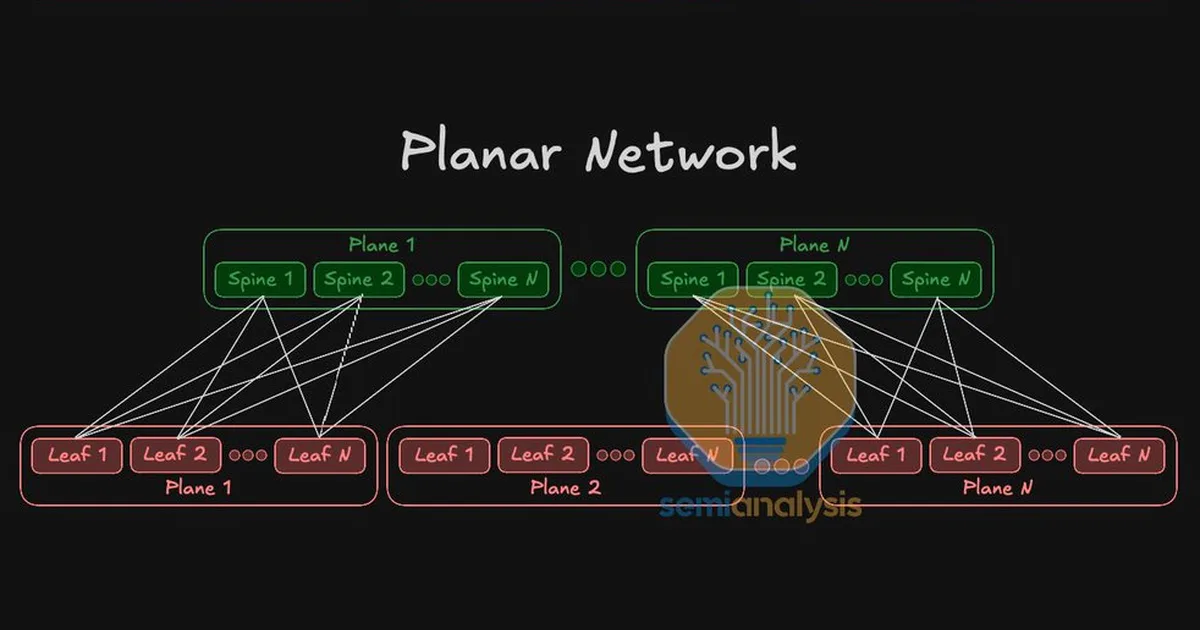
Fat trees are hierarchy-like network topologies and various cabling strategies are applied (full mesh, rail-based or planar) depending on the network design to balance between cost, radix and latency. (2/7) https://t.co/glvC29Kbzh
In May, Amazon unveiled its latest network topology called RNG for Resilient Network Graphs. Unlike traditional fat trees, RNG relies on random graphs concept. (1/7)🧵 https://t.co/q44sc2ukhl