PulseAugur
实时 06:18:50

Optimizing Transformer Inference: Techniques for Faster, Cheaper Large Models

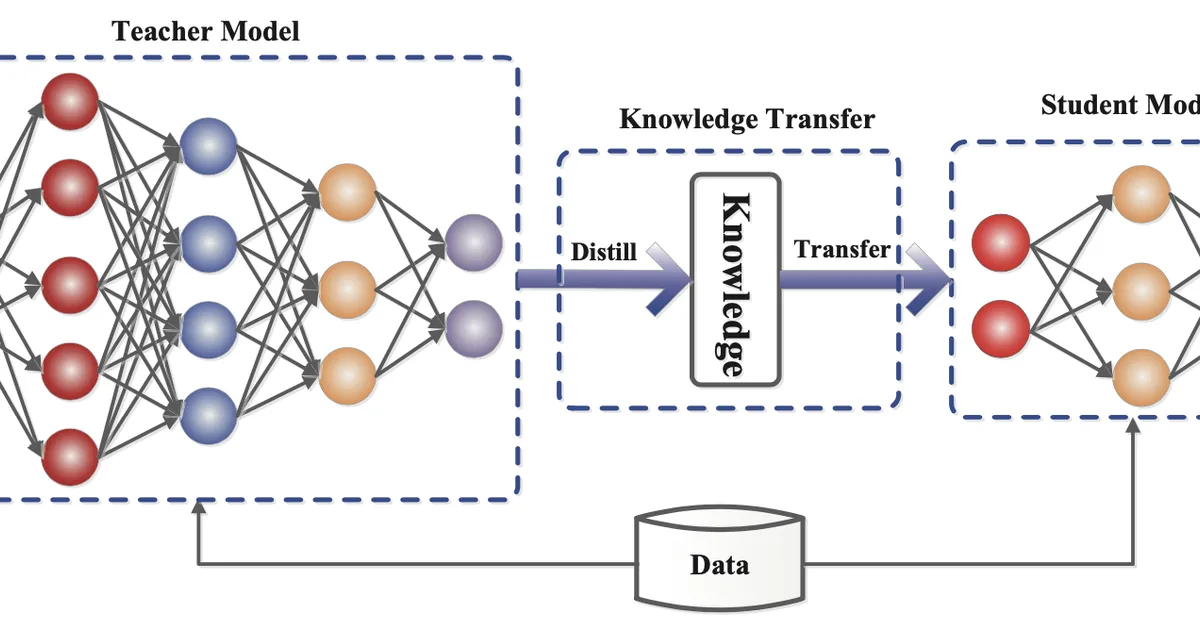
Large transformer models present significant inference challenges due to their substantial memory footprint and computation costs, which scale quadratically with input length. Researchers and practitioners are exploring various optimization techniques to mitigate these issues. These methods include network compression strategies like pruning, quantization, and knowledge distillation, as well as architectural improvements and efficient parallelism. The goal is to reduce memory usage, computation complexity, and inference latency for practical, large-scale deployment. AI

排序理由 The cluster focuses on a technical blog post and a Reddit discussion detailing methods for optimizing transformer model inference, which falls under research and development rather than a new release or significant industry event.

在 Lil'Log (Lilian Weng) 阅读 →

AI 生成摘要 · Google Gemini · 来自 4 个来源。 我们如何撰写摘要 →
Optimizing Transformer Inference: Techniques for Faster, Cheaper Large Models

报道来源 [4]

  1. Lil'Log (Lilian Weng) TIER_1 English(EN) ·

    大型Transformer模型推理优化

    <p><span class="update">[Updated on 2023-01-24: add a small section on <a href="#distillation">Distillation</a>.]</span><br /></p> <p>Large transformer models are mainstream nowadays, creating SoTA results for a variety of tasks. They are powerful but very expensive to train and …

  2. Hugging Face Blog TIER_1 English(EN) ·

    使用 Optimum 和 Transformers Pipelines 加速推理

  3. Hugging Face Blog TIER_1 English(EN) ·

    我们如何为 🤗 API 客户将 Transformer 推理速度提升 100 倍

  4. r/MachineLearning TIER_1 English(EN) · /u/Fragrant_Rate_2583 ·

    优化 Transformer 模型大小与推理,超越 FP16 + ONNX(剪枝/图优化帮助不大)[P]

    <!-- SC_OFF --><div class="md"><p>Hi everyone, I’ve been working on optimizing a transformer-based neural network for both inference speed and model size, but I feel like I’ve hit a plateau and would appreciate some guidance. So far I’ve converted weights to FP16 (about 2× size r…