PulseAugur
EN
LIVE 19:13:04

AI datacenters build own power as grid capacity lags solar/storage growth · 3 sources tracked

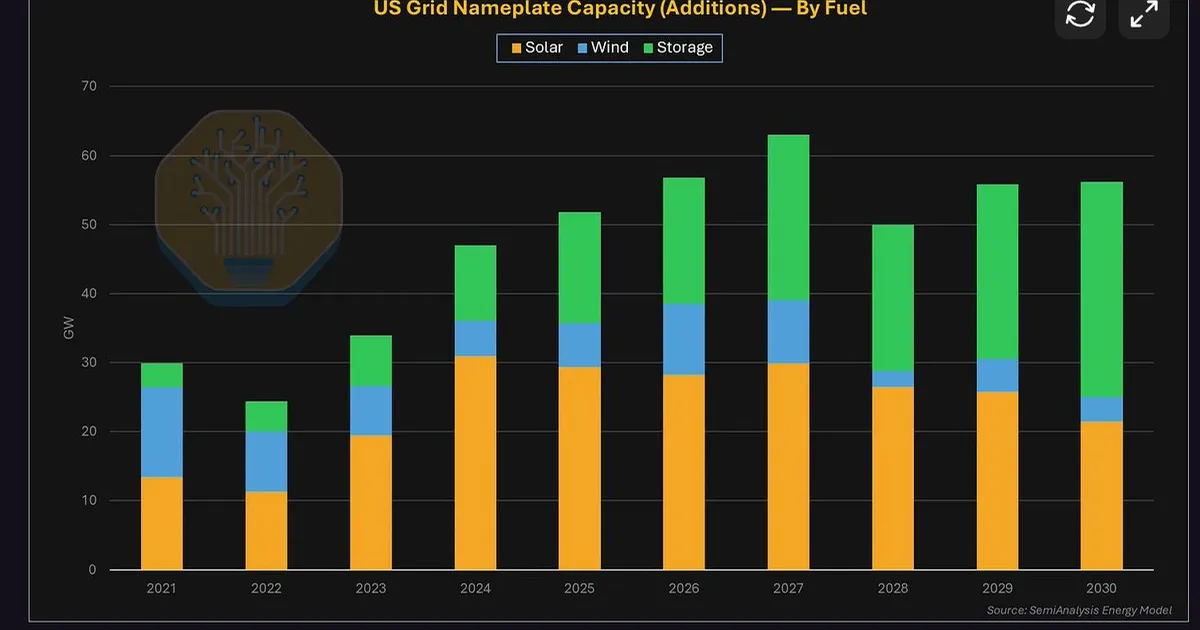
The grid's capacity to reliably meet peak demand is not keeping pace with the addition of solar and storage power, according to SemiAnalysis. While both solar and storage are adding over 20GW annually, their contribution to firm capacity has stagnated. This is because solar output is concentrated during specific times, and batteries only address short-term gaps, leading some regions like Texas's ERCOT to count new solar as effectively zero for planning purposes. Consequently, AI datacenter operators are increasingly opting to build their own power generation rather than rely on the grid, a trend expected to accelerate by 2027. AI

IMPACT AI datacenters are increasingly building their own power infrastructure due to grid limitations, potentially impacting future AI development and deployment.

RANK_REASON Analysis of grid capacity limitations and their impact on AI datacenters, not a direct release or event.

Read on X — SemiAnalysis →

AI-generated summary · Google Gemini · from 3 sources. How we write summaries →
AI datacenters build own power as grid capacity lags solar/storage growth · 3 sources tracked

COVERAGE [3]

  1. X — SemiAnalysis TIER_1 English(EN) · SemiAnalysis_ ·

    You can keep adding renewables and still watch the usable headroom crumble away…GONE by 2027  as we point out in our latest newsletter. But now that represents

    You can keep adding renewables and still watch the usable headroom crumble away…GONE by 2027  as we point out in our latest newsletter. But now that represents the point when datacenter operators stop waiting around, and crank up onsite gas.🔥 (3/3) https://t.co/MsQ485wK5F

  2. X — SemiAnalysis TIER_1 English(EN) · SemiAnalysis_ ·

    Here's why…. All solar capacity produces at the same time of day, so once you have a lot of it, the next batch adds almost nothing when you need it. Batteries h

    Here's why…. All solar capacity produces at the same time of day, so once you have a lot of it, the next batch adds almost nothing when you need it. Batteries hit the same issue : a 4-hour battery covers a 4-hour shortfall, but when the gap is covered, the next battery is fixing …

  3. X — SemiAnalysis TIER_1 English(EN) · SemiAnalysis_ ·

    Solar and storage are each adding more than 20GW a year. Sounds like a LOT of new power. But the amount the grid can actually count on when demand peaks has bar

    Solar and storage are each adding more than 20GW a year. Sounds like a LOT of new power. But the amount the grid can actually count on when demand peaks has barely moved. That gap is why AI datacenters are starting to build their own power capacity instead of waiting in line to