PulseAugur
EN
LIVE 00:07:27

AI inference costs slashed via three hardware optimization strategies · 2 sources tracked

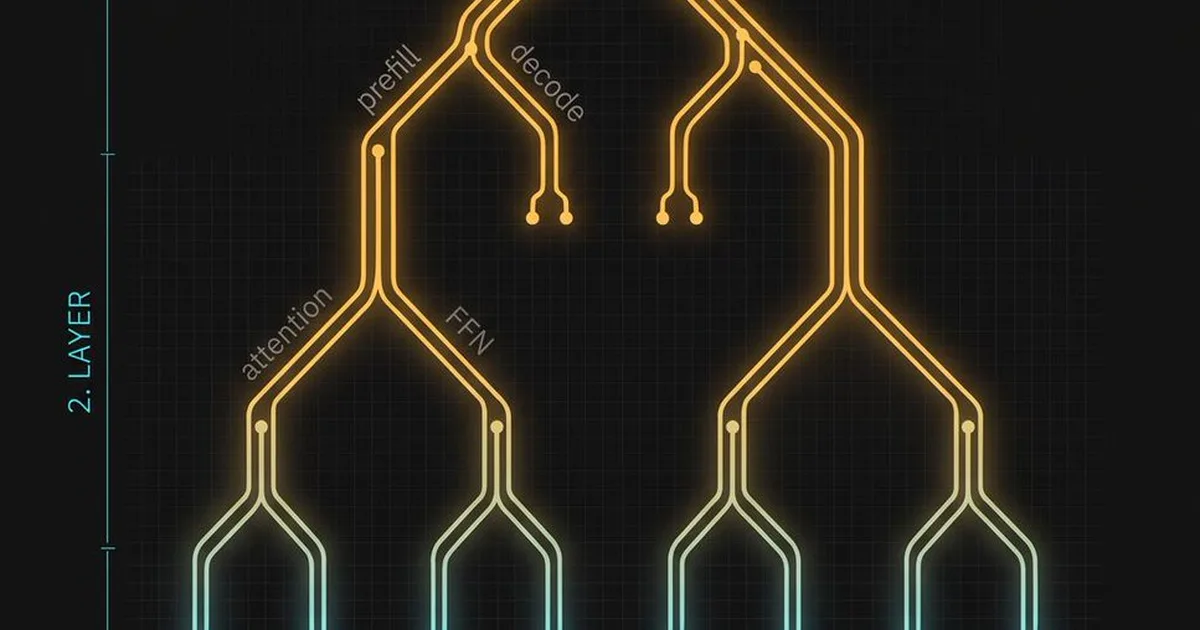
SemiAnalysis detailed three methods for optimizing AI inference costs, focusing on maximizing hardware utilization. These methods include splitting workloads by phase (prefill and decode), by layer (attention and feed-forward networks), and by time (interleaving execution windows). The core principle across these strategies is to identify and fill idle compute resources, which ultimately reduces the cost per token and is expected to drive increased demand for AI services. AI

IMPACT These optimization strategies aim to significantly reduce the cost of AI inference, potentially leading to wider adoption and new applications.

RANK_REASON Analysis of AI inference optimization techniques from a third-party source.

Read on X — SemiAnalysis →

AI-generated summary · Google Gemini · from 2 sources. How we write summaries →
AI inference costs slashed via three hardware optimization strategies · 2 sources tracked

COVERAGE [2]

  1. X — SemiAnalysis TIER_1 English(EN) · SemiAnalysis_ ·

    A quick map of the three cuts.

    A quick map of the three cuts. 🟠 Phase. Every request does two jobs. Prefill reads your prompt; decode writes the answer one token at a time. The two stress hardware differently, so each gets its own chips instead of sharing. 🟠 Layer. Attention lets tokens share context, which

  2. X — SemiAnalysis TIER_1 English(EN) · SemiAnalysis_ ·

    Inference keeps getting carved up, and every cut makes intelligence cheaper.

    Inference keeps getting carved up, and every cut makes intelligence cheaper. First we split by phase: prefill on one set of chips, decode on another. Then by layer: attention on HBM-rich GPUs, the feed-forward network on SRAM-based silicon. Now by time itself: workloads sliced h…