PulseAugur / Brief
LIVE 18:49:23

Brief

last 24h
[50/1745] 186 sources

Multi-source AI news clustered, deduplicated, and scored 0–100 across authority, cluster strength, headline signal, and time decay.

  1. A Rigorous, Tractable Measure of Model Complexity

    Researchers have developed a new, mathematically sound, and computationally efficient method for measuring model complexity. This approach, based on analyzing similarities in model gradients across different inputs, is applicable to a wide range of models, including parametric, non-parametric, and kernel-based types. The proposed measure unifies and generalizes existing complexity metrics for various models like decision trees and neural networks, offering new insights into phenomena such as double descent. AI

    IMPACT Provides a unified and tractable method for assessing model complexity, aiding in interpretation, generalization, and model selection across various AI architectures.

  2. You’ve Been Using Claude Wrong.

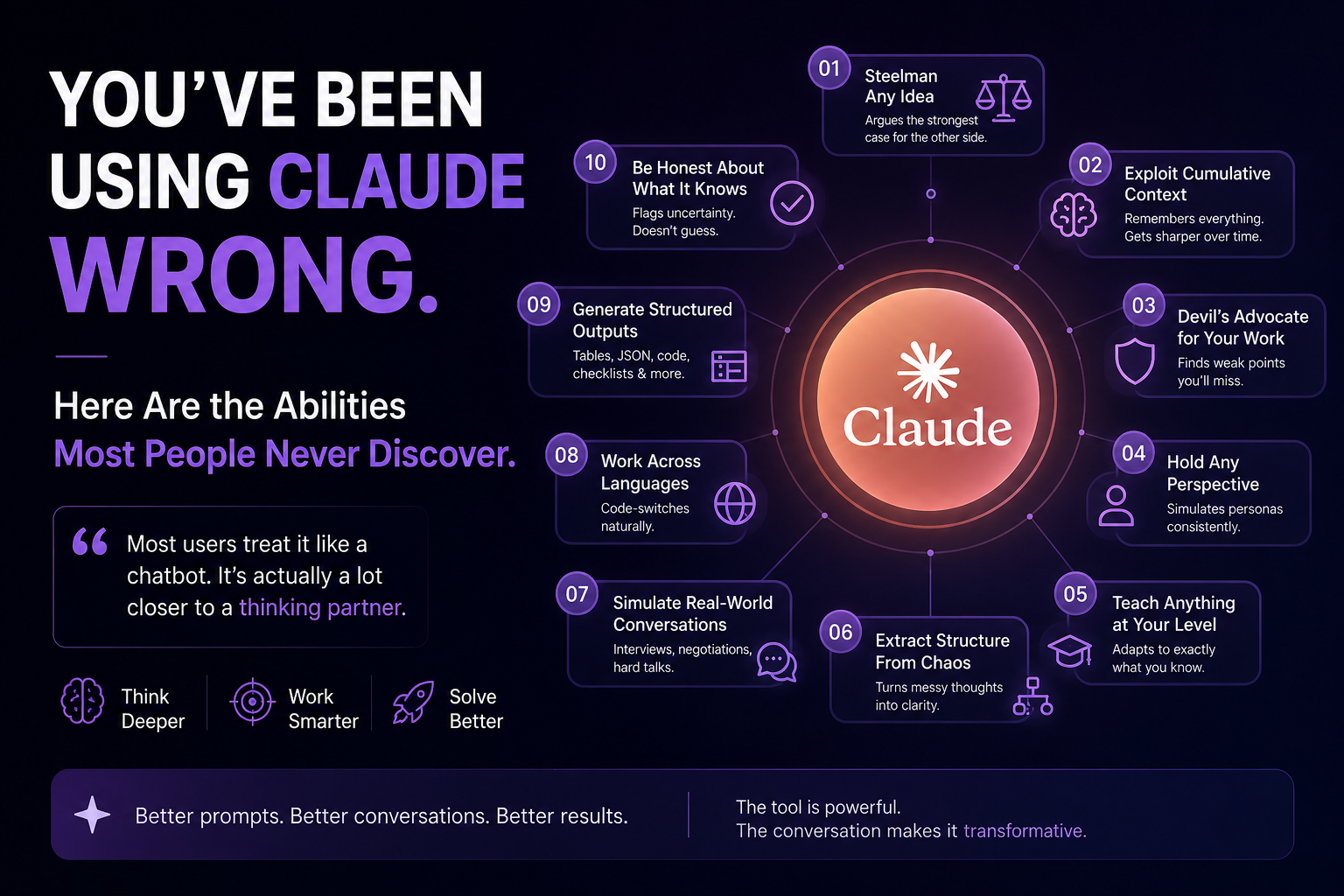
    Many users are not fully leveraging the capabilities of Anthropic's Claude AI assistant. The article highlights that Claude possesses advanced features beyond basic chat, such as the ability to process and analyze documents, write code, and engage in complex reasoning tasks. Discovering and utilizing these lesser-known functionalities can significantly enhance user experience and productivity with the AI. AI

    You’ve Been Using Claude Wrong.

    IMPACT Users can improve their interaction with Claude by exploring its advanced, often overlooked, capabilities for enhanced productivity.

  3. AiraXiv: An AI-Driven Open-Access Platform for Human and AI Scientists

    Researchers have developed AiraXiv, an AI-driven platform designed to manage the increasing volume of research papers, including those generated by AI. This open-access system supports both human and AI scientists as authors and readers, facilitating continuous, feedback-driven iteration of research. AiraXiv integrates AI-augmented analysis and review with reader feedback, offering an interactive UI for humans and MCP-based interactions for AI. The platform has been validated by serving as the submission system for the ICAIS 2025 conference, showcasing its potential for scalable and inclusive research infrastructure. AI

    IMPACT Introduces a new infrastructure for managing AI-generated research, potentially streamlining academic publishing.

  4. I tried monetizing my MCP server with x402 — production needs more than npm install

    The author attempted to integrate micropayments into their free MCP server, DomainIntel, using the x402 protocol. While the x402 protocol aims for accountless payments for clients, the author discovered that developers monetizing their services still require accounts with facilitators like the Coinbase Developer Platform. Despite the protocol's potential for AI agents, the author found that setting up production monetization involves account creation and a suitable facilitator, which contradicts the initial promise of a fully accountless system for developers. AI

    IMPACT Explores a payment mechanism for AI agents interacting with MCP servers, potentially impacting how AI tools are monetized.

  5. Mem-$π$: Adaptive Memory through Learning When and What to Generate

    Researchers have developed Mem-π, a novel framework designed to enhance the adaptive memory capabilities of large language model (LLM) agents. Unlike traditional methods that rely on static retrieval from memory banks, Mem-π employs a separate, dedicated model to generate context-specific guidance dynamically. This approach allows the agent to decide when and what guidance to produce, leading to more efficient and relevant task execution. In evaluations across various agentic benchmarks, Mem-π demonstrated significant improvements, particularly in web navigation tasks where it achieved over 30% relative gains compared to existing memory baselines. AI

    IMPACT Introduces a new method for LLM agents to dynamically manage their memory, potentially improving performance on complex, context-dependent tasks.

  6. Quality and Security Signals in AI-Generated Python Refactoring Pull Requests

    A recent study examined AI-generated Python refactoring pull requests, finding that while these commits improve code quality in some instances, they also introduce new issues. The research analyzed changes using quality assessment tools and static analysis, revealing that agentic commits enhance usability in over a third of cases but also lead to new Pylint and Bandit findings in a significant percentage of modified files. Despite these mixed results, a high acceptance rate for these AI-generated pull requests was observed, underscoring the need for robust quality and security checks in AI-assisted development. AI

    IMPACT Highlights the mixed impact of AI-generated code on software quality and security, suggesting a need for better gating mechanisms.

  7. Adaptive Signal Resuscitation: Channel-wise Post-Pruning Repair for Sparse Vision Networks

    Researchers have developed Adaptive Signal Resuscitation (ASR), a novel training-free method to repair sparse vision networks after pruning. ASR addresses the accuracy collapse seen in high-sparsity models by applying corrections at a channel-wise granularity, unlike previous layer-wise approaches. This technique estimates and stabilizes variance-matching corrections for each output channel, significantly improving performance in high-sparsity scenarios. For instance, ASR recovered 55.6% top-1 accuracy on ResNet-50 at 90% sparsity on CIFAR-10, a substantial improvement over existing methods. AI

    IMPACT Improves accuracy of pruned vision models, potentially enabling more efficient deployment on resource-constrained devices.

  8. FedCritic: Serverless Federated Critic Learning-based Resource Allocation for Multi-Cell OFDMA in 6G

    Researchers have developed FedCritic, a novel serverless federated learning framework designed for resource allocation in 6G networks. This approach addresses the challenges of inter-cell interference in ultra-dense networks by enabling decentralized critic learning through parameter averaging. FedCritic aims to improve signal quality, cell-edge rates, and overall network fairness compared to existing methods. AI

    IMPACT Introduces a new federated learning approach for optimizing resource allocation in future 6G networks, potentially improving efficiency and user experience.

  9. Microsoft storms RAMPART, adds Clarity to agentic AI safety

    Microsoft has released two open-source tools, RAMPART and Clarity, aimed at enhancing the safety of AI agents. RAMPART focuses on build-time testing to identify vulnerabilities, while Clarity provides architectural threat modeling for AI agent workflows. These tools are designed to help developers build and maintain more secure AI systems. AI

    Microsoft storms RAMPART, adds Clarity to agentic AI safety

    IMPACT Provides developers with new tools to build and test safer AI agent workflows.

  10. Why Alibaba might succeed where OpenAI failed

    Alibaba's Qwen AI has been integrated with its Taobao e-commerce platform, allowing users to select, compare, and purchase products through AI-driven conversations. This move contrasts with OpenAI's earlier attempt with Instant Checkout, which was discontinued due to limited merchant adoption and user preference for established e-commerce sites. While tech giants like Google and Amazon are also exploring AI in e-commerce through partnerships or in-house development, Alibaba's integrated approach, combining a leading large language model with its vast e-commerce ecosystem, offers a unique structural advantage. AI

    IMPACT Alibaba's deep integration of Qwen AI with Taobao could set a new standard for AI-driven e-commerce, potentially shifting consumer behavior and creating a new entry point for online shopping.

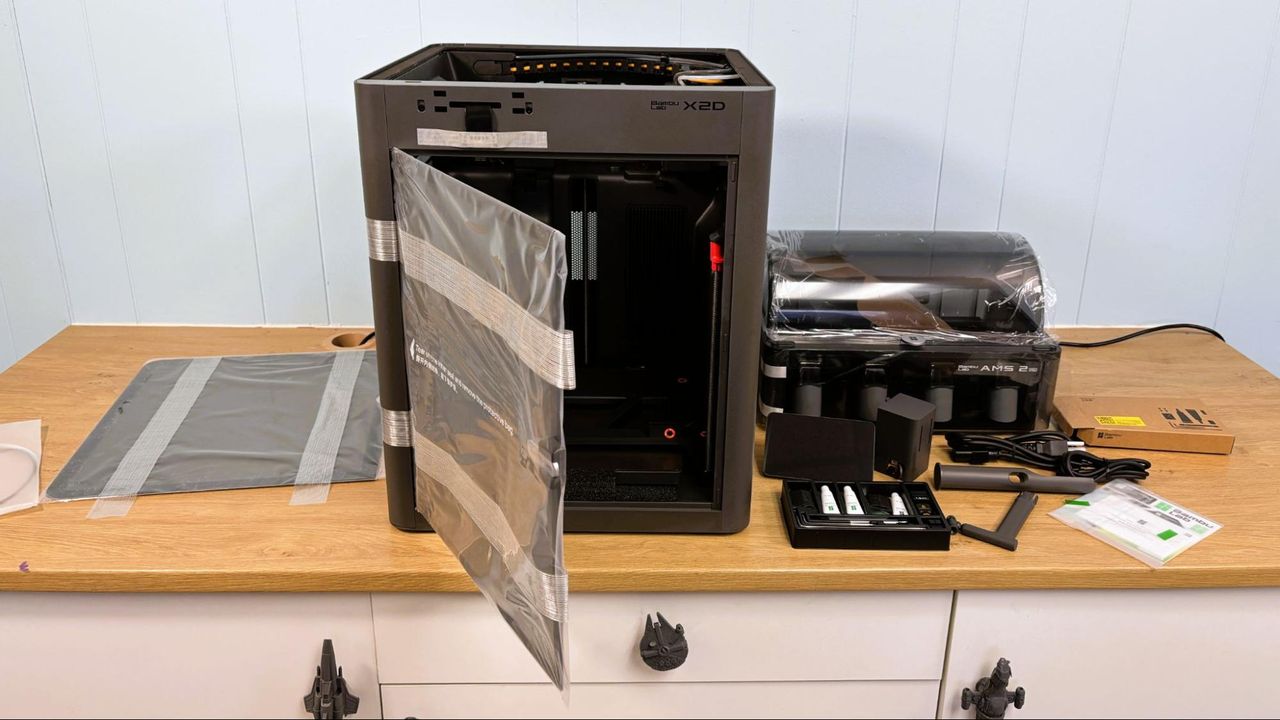
  11. Open-source non-profit claims Bambu Lab violated license — move follows cease-and-desist demand on OrcaSlicer fork that restored cloud printing features without using Bambu Connect

    The Software Freedom Conservancy (SFC) alleges that 3D printer manufacturer Bambu Lab has violated the AGPLv3 license. This claim follows Bambu Lab's demand that an independent developer remove a fork of their OrcaSlicer software, which restored cloud printing features. The SFC argues that Bambu Lab's proprietary Bambu Connect service, which is necessary for their slicer to function, contravenes the AGPLv3's copyleft requirements. AI

    Open-source non-profit claims Bambu Lab violated license — move follows cease-and-desist demand on OrcaSlicer fork that restored cloud printing features without using Bambu Connect

    IMPACT This dispute highlights the ongoing tension between proprietary features and open-source licensing in software development, potentially impacting future development practices.

  12. Court annuls leadership of Turkey’s main opposition party

    An Ankara court has annulled the 2023 leadership election of Turkey's main opposition party, the CHP, ordering the former chairman Kemal Kilicdaroglu to take over as interim leader. This decision, stemming from allegations of vote buying during the November 2023 congress, has led to a significant stock market sell-off. Critics argue the case is politically motivated, aimed at weakening the CHP which recently achieved a major victory over President Erdogan's party in local elections. AI

    Court annuls leadership of Turkey’s main opposition party
  13. Why Codex Agents Are Devouring Every Workflow

    The article discusses how AI agents, particularly those powered by models like Codex, are rapidly transforming workflows across various industries. These agents are moving beyond simple automation to handle more complex tasks, integrating with existing tools and platforms. This shift signifies a move towards more sophisticated AI-driven operational efficiency. AI

    Why Codex Agents Are Devouring Every Workflow

    IMPACT AI agents are increasingly capable of handling complex tasks, indicating a future where operational workflows are heavily automated and managed by AI.

  14. Quantifying Hyperparameter Transfer and the Importance of Embedding Layer Learning Rate

    A new paper introduces a framework to quantify hyperparameter transfer, a crucial technique for scaling up large language model training. The research identifies that the primary benefit of the Maximal Update parameterization over standard parameterization stems from maximizing the embedding layer's learning rate. This adjustment smooths training and enhances hyperparameter transfer, with weight decay showing mixed results on scaling law fits and extrapolation robustness. AI

    IMPACT Identifies key factors for efficient LLM scaling, potentially improving training stability and performance.

  15. CRAFT: Conflict-Resolved Aggregation for Federated Training

    Researchers have developed a new framework called CRAFT (Conflict-Resolved Aggregation for Federated Training) to address a key challenge in federated learning: aggregating conflicting updates from different clients. Traditional methods can degrade performance for some clients while improving the global model. CRAFT reformulates aggregation as a geometric correction problem, finding an update that aligns with a reference direction while respecting client-specific constraints. This approach offers a closed-form solution, avoiding complex iterative solvers and improving both global model accuracy and client-level performance consistency. AI

    IMPACT Introduces a novel aggregation method to improve performance and reduce disparity in federated learning models.

  16. Neural Negative Binomial Regression for Weekly Seismicity Forecasting: Per-Cell Dispersion Estimation and Tail Risk Assessment

    Researchers have developed a new neural network architecture called EarthquakeNet to improve the forecasting of weekly earthquake occurrences. This model addresses limitations in standard approaches by estimating an endogenous per-cell overdispersion parameter, capturing spatial heterogeneity in seismic clustering. Evaluations show EarthquakeNet reduces prediction errors by 8.6% compared to existing methods, with a 12.5% improvement in forecasting extreme events. AI

    IMPACT Introduces a novel neural network architecture for seismic forecasting, potentially improving accuracy and risk assessment for extreme events.

  17. DeCoR: Design and Control Co-Optimization for Urban Streets Using Reinforcement Learning

    Researchers have developed DeCoR, a novel reinforcement learning framework designed to optimize urban street design and traffic signal control. The system first learns to generate optimal crosswalk layouts by encoding pedestrian networks as graphs. Subsequently, it develops adaptive signal timings to minimize delays for both pedestrians and vehicles. In simulations on a real-world urban corridor, DeCoR significantly reduced pedestrian wait times and improved traffic flow, demonstrating robustness to varying demand and layout changes. AI

    IMPACT This research could lead to more efficient urban planning and traffic management systems, reducing congestion and improving pedestrian safety.

  18. \textit{Stochastic} MeanFlow Policies: One-Step Generative Control with Entropic Mirror Descent

    Researchers have introduced Stochastic MeanFlow Policies (SMFP), a novel generative policy class for reinforcement learning. SMFP addresses limitations of existing Gaussian policies in handling multimodal action distributions and the complexity of other generative approaches. By mapping Gaussian noise through a MeanFlow transformation, SMFP offers a tractable entropy surrogate and enables stable, exploratory policy improvement within off-policy mirror descent. AI

    IMPACT Introduces a new policy class that improves performance and efficiency in reinforcement learning tasks.

  19. Learning Structural Latent Points for Efficient Visual Representations in Robotic Manipulation

    Researchers have developed a new pretraining framework for robotic manipulation that combines implicit and explicit representations to create more efficient visual representations. This hybrid approach, termed structural latent points, aims to overcome the limitations of existing methods by capturing both structural tendencies and semantic information without sacrificing geometric detail. Evaluations on multiple platforms, including a real-robot setup, show improved task success, sample efficiency, and robustness. AI

    IMPACT This new framework could lead to more capable and efficient robots by improving their visual understanding and manipulation skills.

  20. The Model Is Not Your Product. The Harness Is.

    The core of successful AI products lies not in the underlying model, but in the surrounding 'harness' engineered by developers. This harness encompasses prompt scaffolding, tool integration, context management, retrieval systems, error handling, and evaluation loops. While models provide raw capability, the harness transforms this into a usable product that can withstand real-world user interaction and deliver consistent value. AI

    The Model Is Not Your Product. The Harness Is.

    IMPACT Highlights that the engineering effort around AI models, rather than the models themselves, is key to shipping successful products.

  21. Latent Dynamics for Full Body Avatar Animation

    Researchers have developed a new method for animating full-body avatars, particularly focusing on the realistic deformation of loose clothing. Their approach augments a pose-conditioned 3D Gaussian avatar with a transformer-based decoder and a dynamics residual latent. This latent component captures temporal variations beyond simple pose, evolving based on history, inertia, and contact forces to produce coherent and history-dependent motion rollouts with minimal computational overhead. AI

    IMPACT Introduces a novel approach to avatar animation, improving realism for dynamic elements like clothing, which could enhance virtual environments and digital content creation.

  22. Stream3D: Sequential Multi-View 3D Generation via Evidential Memory

    Researchers have developed Stream3D, a novel mechanism designed to enhance 3D generation from sequential visual data. This system allows existing view-conditioned 3D generators to process monocular streams without retraining by employing a dynamic evidential memory. This memory selectively caches informative frames, preventing temporal inconsistencies and managing memory footprint efficiently. AI

    IMPACT Enables more consistent 3D reconstructions from continuous video feeds, potentially improving applications in robotics and augmented reality.

  23. Artificial Intelligence Reshapes Microwave Photonics

    A new review paper details how artificial intelligence is transforming the field of microwave photonics (MWP). AI is revolutionizing MWP's design, simulation, fabrication, testing, deployment, and maintenance, leading to autonomous operation and enhanced efficiency. The paper provides a comprehensive overview of these AI-enabled advancements in MWP, which leverages photonic technologies for ultra-wide bandwidth signals. AI

    IMPACT AI integration is enhancing efficiency and enabling autonomous operation in microwave photonics systems.

  24. Do LLMs Know What Luxembourgish Borrows? Probing Lexical Neology in Low-Resource Multilingual Models

    Researchers have developed a new benchmark, LexNeo-Bench, to evaluate how well large language models understand lexical borrowing in low-resource languages like Luxembourgish. The benchmark, derived from a Luxembourgish news corpus, labels tokens as native or borrowed from French, German, or English. When prompted with a linguistic knowledge graph, LLMs showed significantly improved accuracy in classifying borrowed words, narrowing the performance gap between smaller and larger models. AI

    IMPACT Enhances LLM evaluation for low-resource languages, potentially improving writing assistance tools for diverse linguistic communities.

  25. Manga109-v2026: Revisiting Manga109 Annotations for Modern Manga Understanding

    Researchers have released Manga109-v2026, an updated version of a foundational dataset for AI research focused on understanding and translating manga. The original Manga109 dataset contained numerous transcription errors and imprecise annotations that hindered modern AI applications. This revised dataset addresses these issues by correcting approximately 29,000 dialogue annotations, improving its alignment with current OCR and multimodal manga understanding systems. AI

    IMPACT Improves a key dataset for AI systems working with manga, potentially enhancing OCR and translation accuracy.

  26. RoadTones: Tone Controllable Text Generation from Road Event Videos

    Researchers have developed a new method for tone-controllable text generation from road event videos, addressing the limitations of existing video-language models that only provide factual descriptions. The project introduces the RoadTones-51K dataset, which includes diverse tonal annotations and multi-tone captions derived from a human-validated data generation pipeline. They also propose RoadTones-VL-CoT, a model capable of generating tone-conditioned Chain-of-Thought drafts for improved interpretability, alongside a new evaluation suite called RoadTones-Eval to measure both factual consistency and tone adherence. AI

    IMPACT Enables more nuanced and context-aware video captioning for critical communication scenarios.

  27. A musical Turing test for AI consciousness | Letters

    A letter to The Guardian proposes a "musical Turing test" to gauge AI consciousness, suggesting that an AI's ability to name its favorite song, rather than objective metrics, could indicate sentience. The author contrasts this with AI's tendency to rely on quantifiable data. Another letter recounts an unsettlingly anthropomorphic response from Claude, raising questions about AI's perceived trustworthiness and the nature of its interactions. AI

    A musical Turing test for AI consciousness | Letters

    IMPACT Explores philosophical questions about AI consciousness and user trust in chatbot interactions.

  28. Comparative Analysis of Military Detection Using Drone Imagery Across Multiple Visual Spectrums

    Researchers have developed a new method for military object detection using drone imagery across various visual spectrums. They created four specialized datasets—Gray Scale, Thermal Vision, Night Vision, and Obscura Vision—to simulate challenging real-world conditions like low visibility and heat signatures. The YOLOv11-small model was trained on these datasets to enhance the performance and reliability of drone-based surveillance and operations. AI

    IMPACT Enhances drone-based military operations by improving object detection in diverse and challenging visual conditions.

  29. Efficient Learning of Deep State Space Models via Importance Smoothing

    Researchers have developed a new training method called parallel variational Monte Carlo (PVMC) to address the challenges of training deep state space models (DSSMs) at scale. Existing methods, such as auto-encoding DSSMs and those using sequential Monte Carlo (SMC) algorithms, have limitations in terms of scalability and hardware efficiency. PVMC bridges these approaches, enabling robust training for both generative and discriminative tasks. This new method reportedly achieves state-of-the-art results and trains up to ten times faster than previous SMC-based techniques. AI

    Efficient Learning of Deep State Space Models via Importance Smoothing

    IMPACT Introduces a more efficient training method for deep state space models, potentially accelerating research and development in time-series analysis and related AI applications.

  30. A Typed Tensor Language for Federated Learning

    Researchers have developed a new typed tensor language to formalize the structure of federated learning and analytics. This language distinguishes between federated tensors partitioned across clients and shared tensors available globally. A key finding is a shared-state factorization theory, demonstrating that one-round federated programs can be factored through fixed-dimensional shared state independent of client count. AI

    A Typed Tensor Language for Federated Learning

    IMPACT Formalizes federated learning computations, potentially enabling more efficient and scalable distributed AI model training.

  31. AutoRPA: Efficient GUI Automation through LLM-Driven Code Synthesis from Interactions

    Researchers have developed AutoRPA, a framework that converts the decision logic of LLM-based agents into efficient Robotic Process Automation (RPA) functions. This approach addresses the inefficiency of repeatedly invoking LLM reasoning for repetitive GUI tasks. AutoRPA utilizes a translator-builder pipeline and a hybrid repair strategy to synthesize robust RPA functions, significantly improving runtime efficiency and reusability while drastically reducing token usage. AI

    AutoRPA: Efficient GUI Automation through LLM-Driven Code Synthesis from Interactions

    IMPACT Automates repetitive GUI tasks by converting LLM decision logic into efficient RPA, reducing token usage and improving runtime.

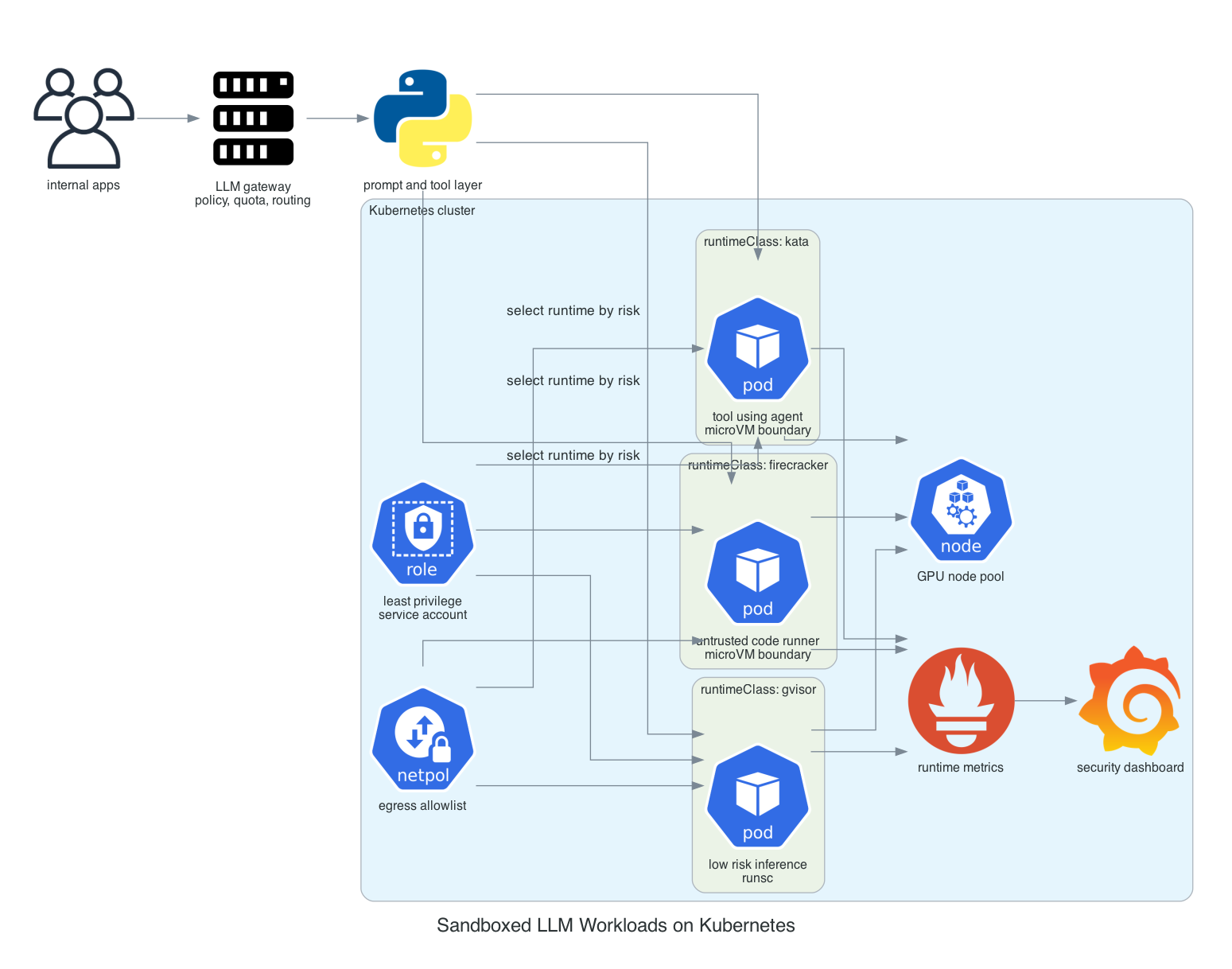
  32. Stop Running LLM Workloads on Vanilla Kubernetes

    Running large language model (LLM) workloads on standard Kubernetes presents significant security risks due to insufficient isolation. While Kubernetes excels at orchestration, it lacks the necessary containment for LLM agents that can execute code and interact with external systems. To address this, developers can leverage Kubernetes' RuntimeClass feature with options like gVisor or Kata to create stronger isolation boundaries for these dynamic workloads. AI

    Stop Running LLM Workloads on Vanilla Kubernetes

    IMPACT Highlights the need for specialized infrastructure to securely run advanced AI workloads, impacting how AI agents are deployed and managed.

  33. Building Production RAG Pipelines: Practical Lessons

    Building effective production RAG pipelines requires careful attention to retrieval quality, latency, and operational visibility, rather than just demo performance. Key decisions involve how content is ingested, chunked, embedded, and indexed, with retrieval quality often proving more critical than the LLM itself. Techniques like hybrid search, metadata filtering, query rewriting, and reranking can significantly improve results, while prompt design must guide the LLM on how to use the retrieved context and avoid unsupported claims. AI

    Building Production RAG Pipelines: Practical Lessons

    IMPACT Provides practical guidance for developers building and deploying RAG systems, emphasizing key operational considerations for improved performance and reliability.

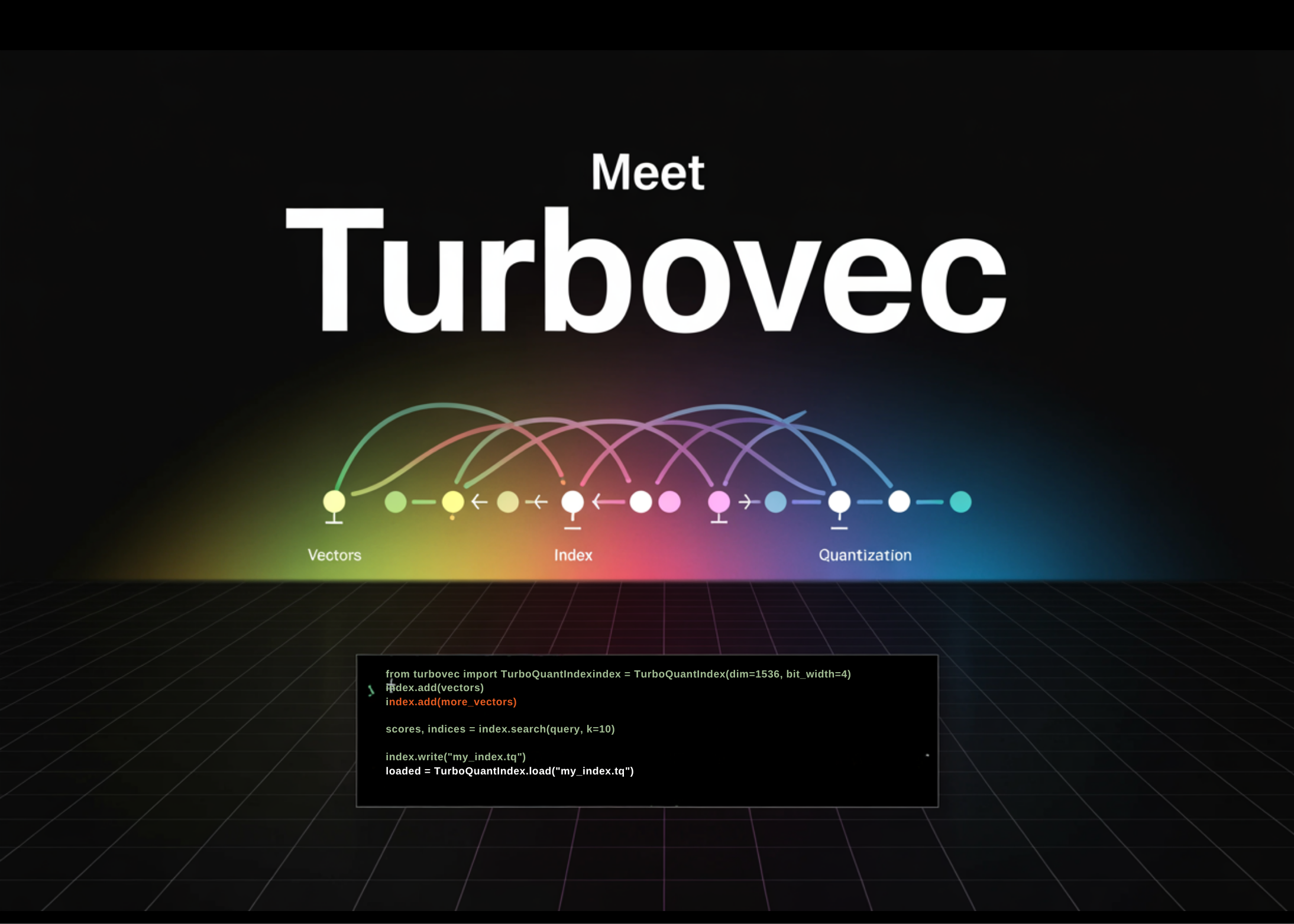
  34. Meet Turbovec: A Rust Vector Index with Python Bindings, and Built on Google’s TurboQuant Algorithm

    Turbovec is a new open-source vector index library written in Rust with Python bindings, designed to reduce the memory footprint of vector embeddings for AI applications. It utilizes Google's TurboQuant algorithm, a data-oblivious quantizer that achieves significant compression without requiring a training phase. This approach allows for substantial memory savings, fitting 10 million document embeddings into 4 GB of RAM compared to the 31 GB typically needed for float32 storage, while maintaining competitive search speeds and recall rates. AI

    Meet Turbovec: A Rust Vector Index with Python Bindings, and Built on Google’s TurboQuant Algorithm

    IMPACT Reduces memory requirements for vector embeddings, potentially lowering costs and enabling local inference for RAG applications.

  35. National Development and Reform Commission: Will improve policies and measures in areas such as fair competition, investment and financing, promoting technological innovation, and standardized operations

    China's National Development and Reform Commission (NDRC) is set to enhance policies supporting private enterprises, focusing on fair competition, investment and financing, technological innovation, and standardized operations. This initiative aims to bolster the private sector through improved regulations and direct benefit delivery. In related tech news, Xiaomi has applied for new trademarks, "XIAOMI MIMO ORBIT" and "XIAOMI MIMO CLAW," indicating potential new product lines or services, while Nvidia reported a strong first quarter with $5.83 billion in net profit, and Google's CEO stated that Gemini has reached 900 million monthly active users. AI

    IMPACT Sets new policy direction for private enterprise in China, impacting AI development and adoption, alongside major financial and user growth news from key AI players.

  36. Which LLM is the best stock picker? I built a benchmark to find out.

    A new benchmark, dubbed 1rok, has been launched to evaluate the stock-picking capabilities of frontier large language models. The benchmark assigns each participating LLM a virtual portfolio of $100,000 and tasks them with selecting stocks weekly, with performance tracked against market outcomes. This initiative aims to provide a more practical, downstream evaluation of LLMs beyond traditional coding and reasoning benchmarks, focusing on decision-making under uncertainty. AI

    Which LLM is the best stock picker? I built a benchmark to find out.

    IMPACT Provides a novel benchmark for evaluating LLM decision-making under uncertainty, moving beyond traditional coding and reasoning tasks.

  37. Amazon Quick: AWS's Agentic Workspace, Explained for Engineers

    Amazon Quick is a new AI-powered workspace designed for teams, launched in preview on April 28, 2026. It integrates with existing tools like Slack, Teams, and Outlook, allowing users to query and automate across connected systems. Built on AWS Bedrock AgentCore and utilizing the open Model Context Protocol (MCP), Quick enables the creation of custom agents that can be shared across a team, with responses grounded in the organization's specific data. AI

    Amazon Quick: AWS's Agentic Workspace, Explained for Engineers

    IMPACT Accelerates team-based AI adoption by providing a ready-to-use workspace that connects to existing tools and data.

  38. Even Claude agrees: hole in its sandbox was real and dangerous

    Anthropic's Claude AI model had a security vulnerability in its sandbox environment that could have allowed for dangerous exploits. The company has since fixed the issue without issuing a public disclosure or CVE. This incident highlights the ongoing challenges in securing AI systems and the potential risks associated with their rapid development and deployment. AI

    Even Claude agrees: hole in its sandbox was real and dangerous

    IMPACT Highlights the persistent security risks in deployed AI models, underscoring the need for robust security practices and disclosure.

  39. Gemma 4 wrote three summaries in one response. The middle one was a self-disclaimer.

    A recent analysis of Google's Gemma 4 E2B model revealed unexpected behavior at a context window of 2048 tokens. When presented with a truncated input, the model generated a three-part response: an initial summary, a self-disclaimer stating the summary was not in the transcript, and then a more cautious retry. This behavior was not observed at larger context window sizes, such as 32768 tokens, where the model correctly identified the input issue without hedging. The discovery corrected a previous assertion about the model's calibration capabilities. AI

    Gemma 4 wrote three summaries in one response. The middle one was a self-disclaimer.

    IMPACT Reveals nuanced behavior in a specific model, highlighting the importance of context window size in LLM output.

  40. Nanya Technology: Production capacity will increase by 80% to 100% in 2-3 years compared to the present

    Nanya Technology, a memory chip manufacturer, is set to significantly increase its production capacity over the next two to three years, aiming for an 80% to 100% boost. This expansion includes validating 16Gb DDR5 products, advancing LPDDR5 production, and developing new manufacturing processes. The company plans substantial capital expenditure, with new facilities expected to contribute to output starting next year. AI

    IMPACT Increased memory chip production capacity is crucial for supporting the growing demands of AI hardware and infrastructure.

  41. Your MCP database server needs connection pooling before real users arrive

    Database servers used by AI agents experience highly variable traffic patterns, with a single user query potentially triggering multiple database operations. To ensure stability and prevent overwhelming the system, implementing connection pooling is crucial for AI database servers. This practice is essential for maintaining a safety boundary and should involve strategies like workload-specific pools, read replicas for exploration, and setting statement timeouts to manage query budgets effectively. AI

    Your MCP database server needs connection pooling before real users arrive

    IMPACT Ensures AI applications remain stable and performant under variable user loads by optimizing database connections.

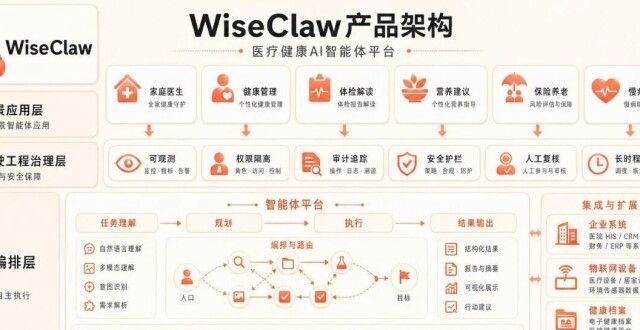
  42. WiseDiag, a Chinese medical AI company, has launched seven medical AI Skills on Tencent Cloud SkillHub, fully integrated with the WorkBuddy multi-agent workbench.

    WiseDiag, a Chinese company specializing in medical AI, has introduced seven new AI skills to Tencent Cloud's SkillHub platform. These skills are designed for enterprise users and integrate with the WorkBuddy multi-agent system, allowing for the deployment of modular medical AI agents without extensive development. AI

    WiseDiag, a Chinese medical AI company, has launched seven medical AI Skills on Tencent Cloud SkillHub, fully integrated with the WorkBuddy multi-agent workbench.

    IMPACT Enables easier deployment of specialized medical AI agents for enterprises.

  43. Meituan drone low-altitude delivery exceeds 900,000 commercial orders

    Meituan's drone delivery service has surpassed 900,000 commercial orders, positioning it as the second-largest globally in this sector. This milestone highlights the rapid growth and adoption of drone-based logistics. The company's progress is notable, especially when compared to other major players in the field. AI

    IMPACT Demonstrates growing adoption and scale of autonomous delivery systems, impacting logistics and last-mile operations.

  44. What is MCP (Model Context Protocol) and Why Developers Suddenly Care

    The Model Context Protocol (MCP) is emerging as a crucial standard for AI systems, aiming to simplify how they connect with external tools, applications, and data sources. Functioning similarly to USB-C for hardware, MCP standardizes communication, reducing the need for custom integrations and addressing context loss issues in complex AI workflows. Developers are increasingly adopting MCP to enable AI agents to maintain context, coordinate tools, and execute tasks more reliably across various applications like Claude Desktop, Cursor, and VS Code. AI

    What is MCP (Model Context Protocol) and Why Developers Suddenly Care

    IMPACT Standardizes AI tool integration, improving context continuity and workflow execution for developers.

  45. Differential Robotics, a Hangzhou-based flying robot startup, has raised hundreds of millions of RMB in a Series A1 round — bringing its total funding to over 500 million RMB across six rounds in less than two years of operation.

    Differential Robotics, a startup focused on flying robots, has secured hundreds of millions of RMB in a Series A1 funding round. This latest investment brings their total funding to over 500 million RMB within two years of operation. The company plans to use these funds to scale production of their P300 autonomous flying robots, which are designed for complex environments lacking GPS or network connectivity. AI

    Differential Robotics, a Hangzhou-based flying robot startup, has raised hundreds of millions of RMB in a Series A1 round — bringing its total funding to over 500 million RMB across six rounds in less than two years of operation.

    IMPACT This funding will enable Differential Robotics to scale production of their autonomous flying robots, potentially impacting logistics and inspection in complex environments.

  46. SHAREBOT (Qingtian Rent), a Robot-as-a-Service (RaaS) platform, has completed its Series A and A+ funding rounds, raising hundreds of millions of RMB. The round values the company at 7 billion RMB, officially entering unicorn territory.

    SHAREBOT, a Robot-as-a-Service (RaaS) platform, has secured hundreds of millions of RMB across its Series A and A+ funding rounds. This funding propels the company to a valuation of 7 billion RMB, officially marking it as a unicorn. The company is transitioning from a robot rental service to a comprehensive RaaS provider. AI

    SHAREBOT (Qingtian Rent), a Robot-as-a-Service (RaaS) platform, has completed its Series A and A+ funding rounds, raising hundreds of millions of RMB. The round values the company at 7 billion RMB, officially entering unicorn territory.

    IMPACT Accelerates the adoption of robotics-as-a-service, potentially impacting logistics and industrial automation.

  47. Stop Rewriting LLM Code: llmbridge Gives Go One Interface for All of It

    The llmbridge library offers Go developers a unified interface for interacting with various large language models. This tool aims to simplify LLM integration by abstracting away the complexities of different model APIs, allowing developers to switch between models without significant code changes. It supports multiple LLM providers and is available under an MIT license. AI

    Stop Rewriting LLM Code: llmbridge Gives Go One Interface for All of It

    IMPACT Simplifies LLM integration for Go developers, potentially accelerating adoption of LLM-powered features in Go applications.

  48. Foundation Models Do Not Understand Biology

    Foundation models, while capable of generating polished medical reports, lack true biological understanding and operate by predicting likely word sequences rather than reasoning from first principles. This can lead to dangerous AI

    Foundation Models Do Not Understand Biology

    IMPACT Current AI models may produce convincing but biologically impossible medical diagnoses, necessitating constrained systems for safety.

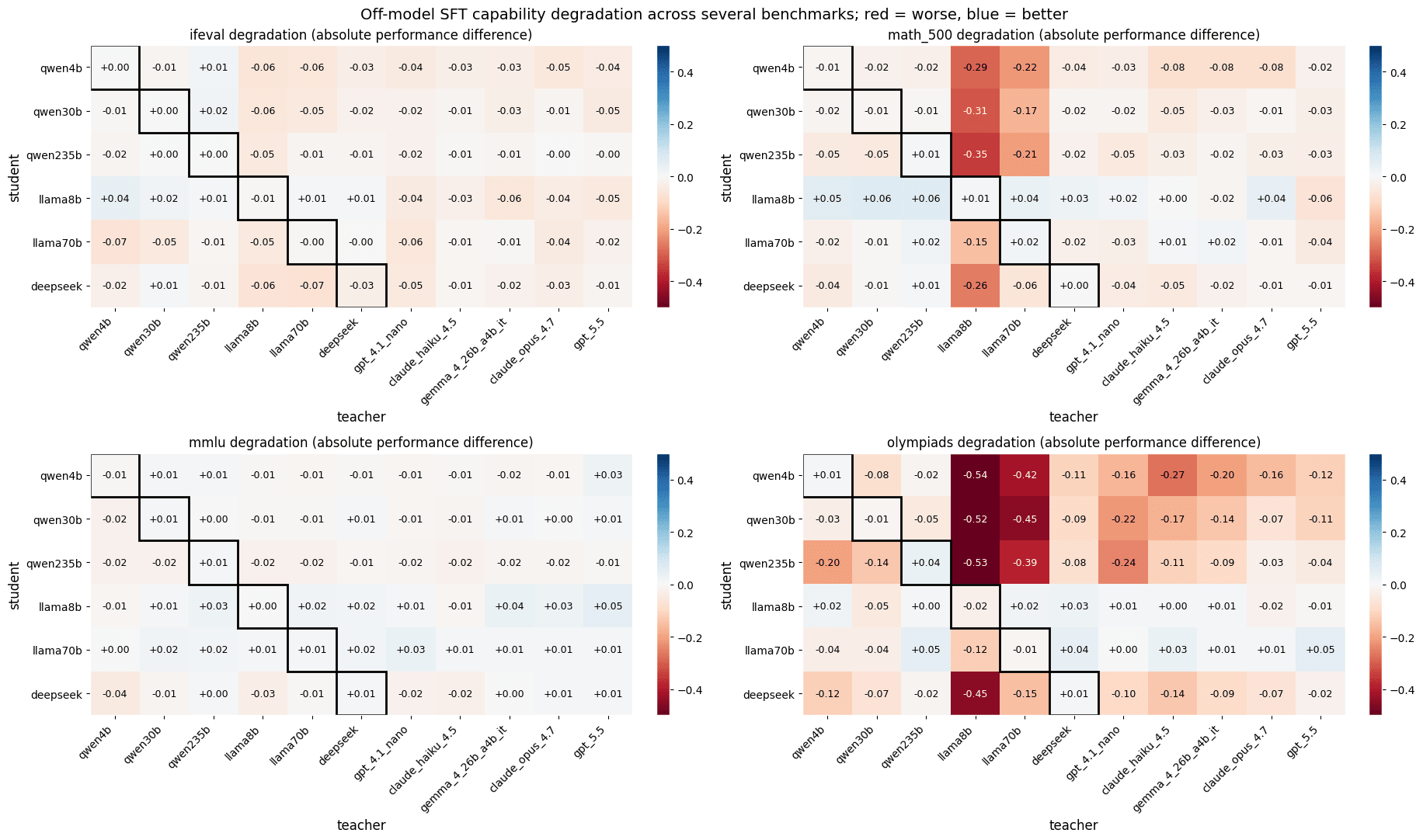
  49. Why does off-model SFT degrade capabilities?

    Researchers have found that Supervised Fine-Tuning (SFT) using outputs from a different AI model can significantly degrade the capabilities of the trained model. This degradation appears to be linked to the model adopting an unfamiliar reasoning style that it struggles to utilize effectively. The issue is not necessarily due to imitating a less capable teacher model, as degradation occurs even when the teacher is superior. Fortunately, this performance drop seems to be a shallow property, as a small amount of training to restore the original reasoning style can recover most of the lost performance. AI

    Why does off-model SFT degrade capabilities?

    IMPACT Understanding how off-model SFT impacts AI capabilities is crucial for developing safer and more aligned AI systems.

  50. Tencent Launches OS-Level AI Assistant "Mavis"

    Tencent has launched Marvis, an AI assistant integrated at the operating system level. Marvis unifies system resources, files, applications, and connectivity within a single AI layer. It comes pre-loaded with six specialized AI agents, including a main agent that coordinates tasks and dispatches specialized agents for file management, computing, applications, browsing, and search, enabling immediate use upon installation. The assistant also offers both efficiency and privacy modes. AI

    IMPACT This OS-level AI assistant could streamline user workflows by integrating various system functions and pre-built agents for immediate productivity.