PulseAugur / Brief
LIVE 18:52:46

Brief

last 24h
[50/216] 186 sources

Multi-source AI news clustered, deduplicated, and scored 0–100 across authority, cluster strength, headline signal, and time decay.

  1. OpenAI to provide security-focused AI "GPT-5.5-Cyber" to Japanese government and some companies – ITmedia AI+ https://www.yayafa.com/2805170/ #AgenticAi #AI #ArtificialGeneralIntelligence #ArtificialIntell

    OpenAI is reportedly providing a specialized AI model, GPT-5.5-Cyber, to the Japanese government and select companies. This AI is designed for security applications. Separately, Dell is expanding its AI factory capabilities with NVIDIA, integrating desktop AI agents and strengthening its partnership with Mistral AI. AI

    OpenAI to provide security-focused AI "GPT-5.5-Cyber" to Japanese government and some companies – ITmedia AI+ https://www.yayafa.com/2805170/ #AgenticAi #AI #ArtificialGeneralIntelligence #ArtificialIntell

    IMPACT This cluster highlights specialized AI applications and infrastructure build-outs, indicating a trend towards tailored AI solutions and expanded hardware capabilities.
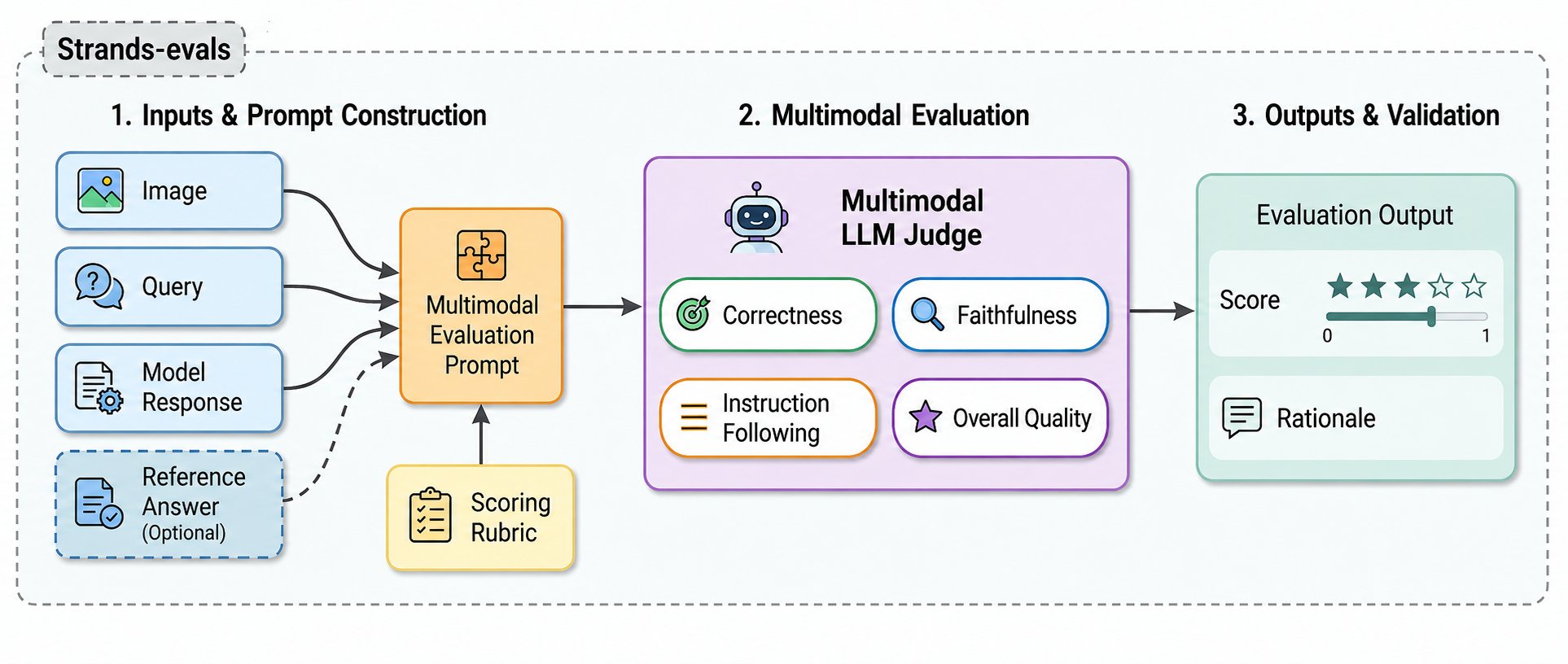
  2. Multimodal evaluators: MLLM-as-a-judge for image-to-text tasks in Strands Evals

    Amazon Web Services has introduced new multimodal evaluators for its Strands Evals SDK, designed to assess image-to-text tasks. These tools leverage large multimodal models (MLMMs) to judge responses by directly referencing the source image, addressing limitations of text-only evaluation methods. The evaluators can identify visual hallucinations and factual errors, integrating into existing development workflows for automated quality control. AI

    Multimodal evaluators: MLLM-as-a-judge for image-to-text tasks in Strands Evals

    IMPACT Enhances automated evaluation for multimodal AI applications, reducing reliance on manual review.

  3. SpaceX: Plans to establish manufacturing infrastructure on the Moon and Mars, with orbital AI computing satellites expected to be deployed as early as 2028

    SpaceX is planning to establish manufacturing infrastructure on the Moon and Mars, with initial deployments of orbital AI computing satellites anticipated as early as 2028. The company believes these space exploration endeavors will spur transformative advancements that could reshape terrestrial industries and create new markets worth trillions of dollars on celestial bodies. This initiative highlights a long-term vision for extraterrestrial industrialization and resource utilization. AI

    IMPACT Establishes a long-term vision for AI integration in extraterrestrial industrialization and resource utilization.

  4. Joe Tsai and Eddie Wu's Letter to Shareholders: Striving to Make AI+Cloud Alibaba's Next Growth Engine

    Alibaba's Chairman and CEO have stated that the company's AI business has moved beyond its initial investment phase and is entering a period of commercial returns. They plan to significantly invest in AI infrastructure, self-developed chips, and powerful foundational models to connect models with applications more efficiently. The goal is to establish AI+Cloud as a major growth driver for Alibaba. AI

    IMPACT Alibaba's strategic focus on AI+Cloud aims to drive significant growth and commercial returns, potentially impacting enterprise adoption and cloud services.

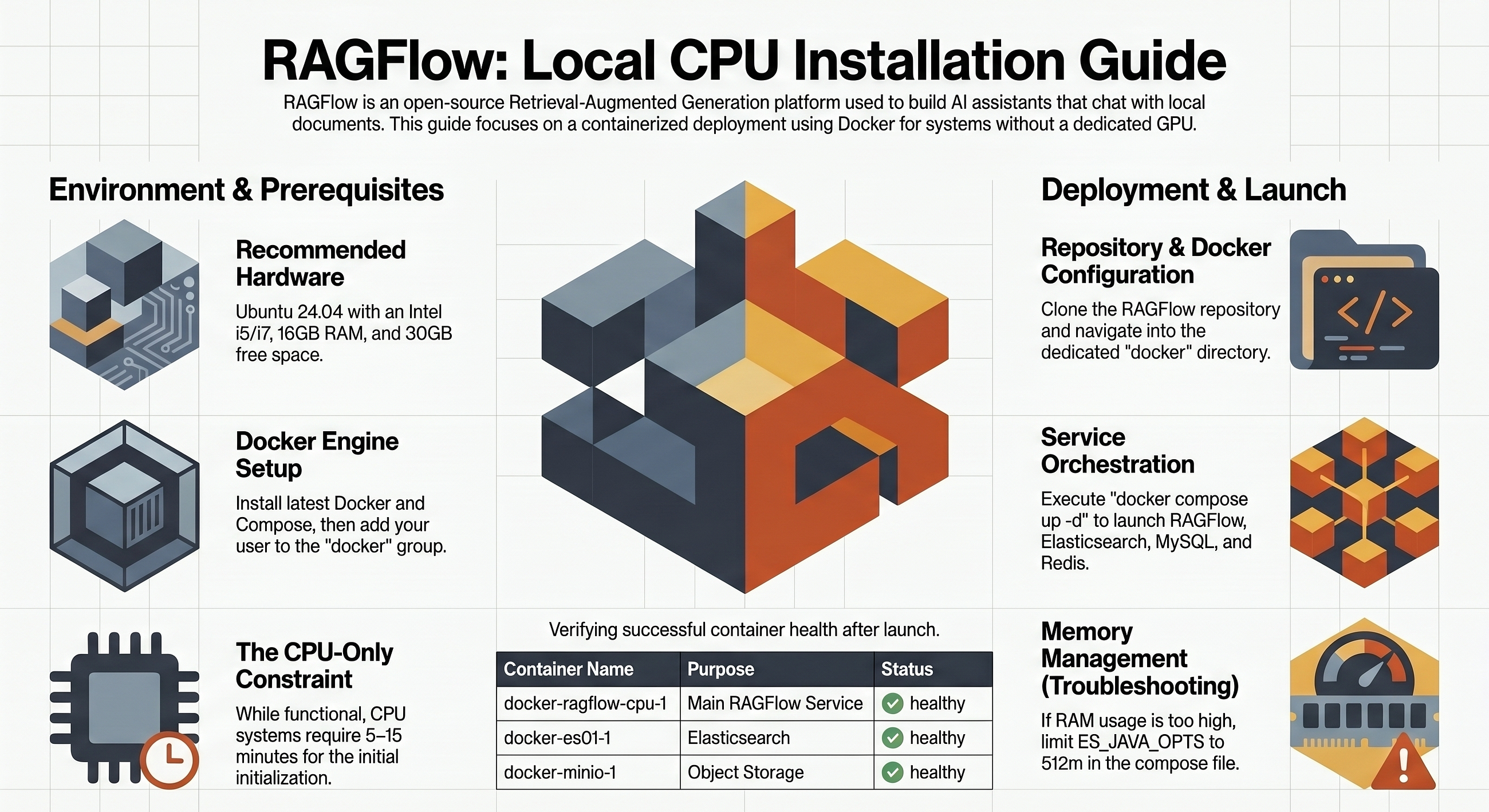
  5. Your Documents Shouldn’t Need the Internet to Be Searchable

    This article details how to build a private AI assistant that can search your documents without an internet connection. It guides users through setting up a local system using Docker, enabling document indexing and retrieval capabilities on their own hardware. The process aims to provide a secure and private way to interact with personal data using AI. AI

    Your Documents Shouldn’t Need the Internet to Be Searchable

    IMPACT Enables users to create personalized AI tools for document management, enhancing personal productivity and data privacy.

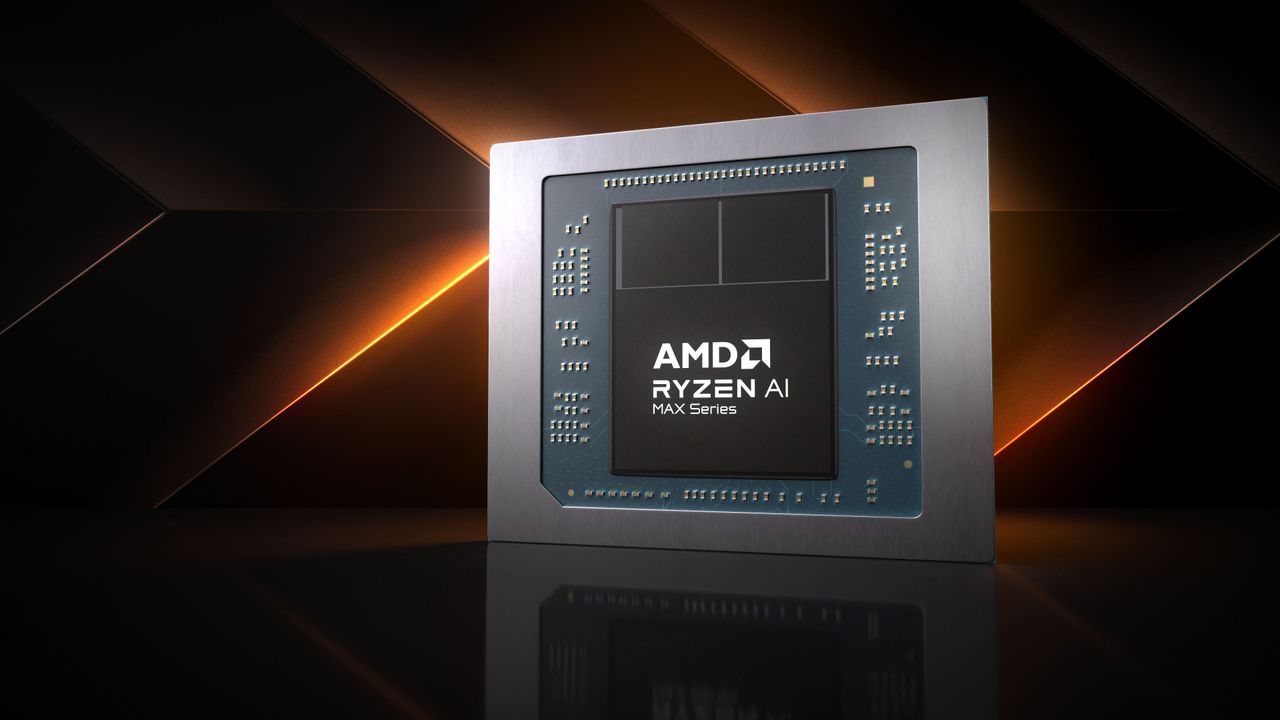
  6. AMD Ryzen AI Max 400 ‘Gorgon Halo’ packs up to 192GB of unified memory — refreshed APU uses Zen 5 and RDNA 3.5, and can clock up to 5.2 GHz

    AMD has announced its new Ryzen AI Max 400 'Gorgon Halo' processors, a refresh of its 'Strix Halo' chips. The key upgrade is the increased capacity for unified memory, supporting up to 192GB, which AMD claims enables these x86 client processors to run large language models with over 300 billion parameters. These new chips feature Zen 5 CPU cores, RDNA 3.5 GPU cores, and an XDNA 2 NPU, with the flagship model boosting to 5.2 GHz. While initially targeting the commercial market with 'Pro' designations, AMD has indicated that systems from OEM partners are expected to be announced starting in Q3 2026. AI

    AMD Ryzen AI Max 400 ‘Gorgon Halo’ packs up to 192GB of unified memory — refreshed APU uses Zen 5 and RDNA 3.5, and can clock up to 5.2 GHz

    IMPACT Enables x86 client processors to run larger LLMs, potentially increasing AI adoption in commercial and consumer devices.

  7. Announcing OpenAI-compatible API support for Amazon SageMaker AI endpoints

    Amazon SageMaker AI now offers OpenAI-compatible API support for its real-time inference endpoints. This integration allows users to invoke models hosted on SageMaker using existing OpenAI SDKs, LangChain, or Strands Agents by simply updating the endpoint URL. The new feature supports bearer token authentication for secure access and enables multi-model hosting and the deployment of fine-tuned open-source models without requiring code modifications. AI

    Announcing OpenAI-compatible API support for Amazon SageMaker AI endpoints

    IMPACT Simplifies integration for developers using OpenAI's ecosystem with models hosted on AWS infrastructure.

  8. 🎮 Forza Horizon 6's best Initial D reference is a cup of water Playground Games' racing sequel is full of Easter eggs, but this nod to Takumi Fujiwara's trainin

    SpaceX's recent IPO filing disclosed a significant financial arrangement where Anthropic is paying $15 billion annually for access to SpaceX's data centers. This deal highlights the substantial compute demands of leading AI companies and the critical infrastructure role companies like SpaceX play in supporting them. The filing also touches upon the financial risks associated with such large-scale commitments. AI

    🎮 Forza Horizon 6's best Initial D reference is a cup of water Playground Games' racing sequel is full of Easter eggs, but this nod to Takumi Fujiwara's trainin

    IMPACT Highlights the massive compute costs for leading AI labs and the critical infrastructure role of companies like SpaceX.

  9. Arm Announces First In-House Developed Chip "Arm AGI CPU" (Gizmodo Japan) - Yahoo! News https://www.yayafa.com/2805007/ #AgenticAi #AGI #AI #ArtificialGeneralIntelligence #ArtificialInt

    Four companies, including Safie and Shimizu Corporation, are collaborating to demonstrate an "autonomous worksite" using AI and video technology. This initiative aims to drive digital transformation (AX) within the construction industry. Separately, Arm has announced its first self-developed chip, the "Arm AGI CPU," marking a significant step in their hardware development. AI

    Arm Announces First In-House Developed Chip "Arm AGI CPU" (Gizmodo Japan) - Yahoo! News https://www.yayafa.com/2805007/ #AgenticAi #AGI #AI #ArtificialGeneralIntelligence #ArtificialInt

    IMPACT Arm's new chip could accelerate AI development, while the construction pilot showcases AI's potential for operational efficiency.

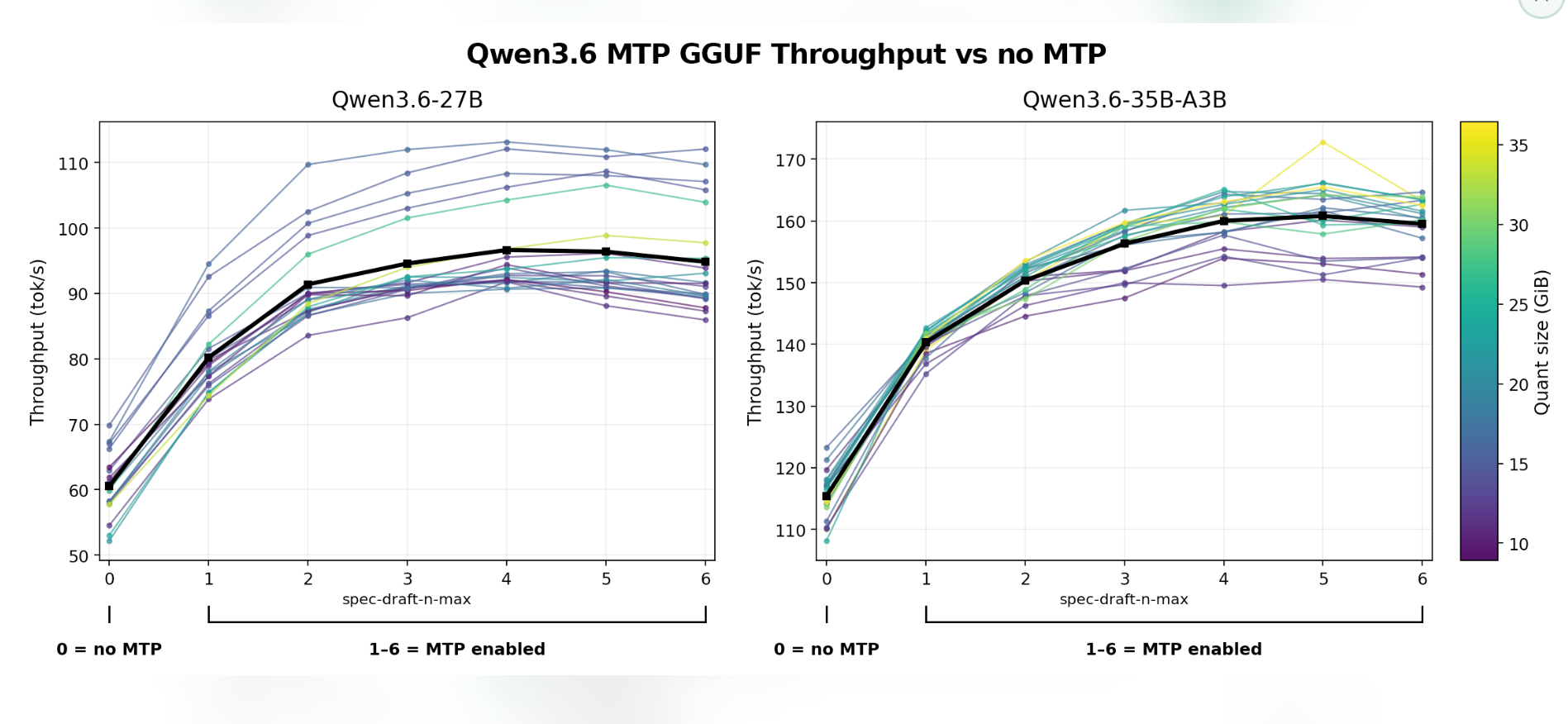
  10. There is a new technique to speed up token generation called MTP. It predicts several future tokens, then the main model verifies them in parallel. There is a c

    A new method called MTP (Multi-Token Prediction) has been developed to accelerate token generation in AI models. This technique involves predicting multiple future tokens simultaneously and then having the main model verify them in parallel. However, MTP requires a significant increase in VRAM, which can lead to slower generation or reduced context size on GPUs with limited memory. The technique does not appear to reduce model hallucinations. AI

    There is a new technique to speed up token generation called MTP. It predicts several future tokens, then the main model verifies them in parallel. There is a c

    IMPACT This technique could speed up AI inference but requires more VRAM, potentially limiting its use on consumer hardware.

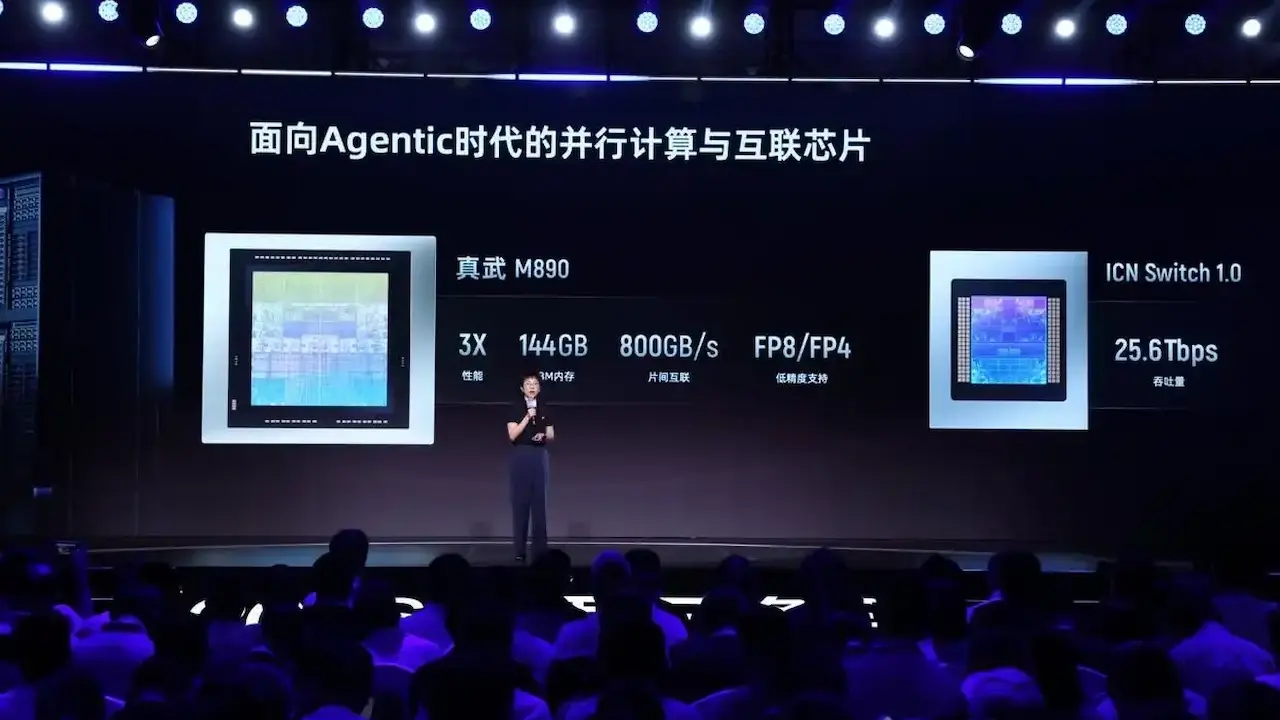
  11. https:// winbuzzer.com/2026/05/20/aliba ba-launches-zhenwu-m890-ai-chip-with-new-cloud-scale-ha-xcxwbn/ Alibaba has launched the Zhenwu M890 AI chip and is posi

    Alibaba has introduced its new Zhenwu M890 AI chip, designed to serve as a domestic alternative for AI training and inference tasks within China. This launch aims to bolster China's self-sufficiency in AI hardware. The chip is intended for cloud-scale applications. AI

    https:// winbuzzer.com/2026/05/20/aliba ba-launches-zhenwu-m890-ai-chip-with-new-cloud-scale-ha-xcxwbn/ Alibaba has launched the Zhenwu M890 AI chip and is posi

    IMPACT Positions China to increase domestic AI training and inference capabilities with a new hardware option.

  12. La resposta de AMD a la NVIDIA DGX Spark és diu Ryzen AI Halo. https://www. techpowerup.com/349212/amd-ann ounces-ryzen-ai-halo-the-compact-dgx-spark-and-mac-mi

    AMD has unveiled its Ryzen AI Halo, a compact system designed to compete with NVIDIA's DGX Spark and Apple's Mac Mini. This new offering from AMD aims to provide a powerful yet small-form-factor solution for AI and machine learning tasks. AI

    IMPACT AMD's new Ryzen AI Halo offers a compact, powerful alternative for AI workloads, potentially increasing competition in the specialized hardware market.

  13. Your phone may well be fast and 5G, but the next network standard is on the way, and it will come with AI baked in, as Telstra talks up what's to come. https://

    Telstra and Ericsson are collaborating on research for the upcoming 6G network standard. This next generation of mobile technology is expected to integrate artificial intelligence capabilities directly into its core infrastructure. The companies are exploring how AI can enhance the performance and functionality of future mobile networks. AI

    Your phone may well be fast and 5G, but the next network standard is on the way, and it will come with AI baked in, as Telstra talks up what's to come. https://

    IMPACT Future mobile networks will likely feature integrated AI, potentially enabling new applications and services.

  14. Opencode Go is the service I use most for vibe coding with open source models like DeepSeek-V4. Cost: €5 the first month, then €10 monthly. Here you can find €5 b

    Opencode Go offers a coding environment using open-source models like DeepSeek V4. The service costs €5 for the first month, then €10 per month, with a €5 discount available. AI

    Opencode Go is the service I use most for vibe coding with open source models like DeepSeek-V4. Cost: €5 the first month, then €10 monthly. Here you can find €5 b

    IMPACT Provides access to an open-source coding model for developers.

  15. Home - CBSNews.com | What Nvidia's Q1 earnings report says about state of AI race AI generated summary, Read the full article for complete information. Nvidia’s

    Nvidia's Q1 earnings report revealed record revenue, reinforcing its leading position in the AI chip market. The company's strong financial performance is driven by high demand for its specialized processors, indicating a significant acceleration in the global race for AI development and deployment. AI

    Home - CBSNews.com | What Nvidia's Q1 earnings report says about state of AI race AI generated summary, Read the full article for complete information. Nvidia’s

    IMPACT Nvidia's record earnings underscore the intense demand for AI hardware, signaling continued acceleration in AI development and deployment globally.

  16. The Request Is the Wrong Unit of Scale for LLMs on Kubernetes

    The traditional web application scaling model, which relies on request counts, is insufficient for serving large language models (LLMs). LLM workloads vary significantly in complexity based on the number of input and output tokens, not just the number of HTTP requests. This distinction is crucial because input tokens impact the time to first token, while output tokens affect the overall processing time and system capacity, leading to potential performance issues even when request metrics appear stable. AI

    The Request Is the Wrong Unit of Scale for LLMs on Kubernetes

    IMPACT Highlights the need for new scaling metrics beyond request counts for efficient LLM deployment.

  17. AMD announces serious "AI PC", 200B class model runs for $3999 https:// ascii.jp/elem/000/004/404/4404013/?rss # ascii # AI

    AMD has announced a new line of "AI PCs" designed to run large language models locally. These machines are capable of operating 200 billion parameter models and are priced starting at $3,999. AI

    IMPACT Enables local execution of large AI models on consumer hardware, potentially reducing reliance on cloud services.

  18. Gongyuan Co., Ltd.: Currently has not yet deployed production of PFA, PVDF pipes, valves, and related components

    Gongyuan Co., Ltd. stated that it has not yet entered the production of PFA, PVDF, and related components, focusing instead on PVC, PPR, and PE pipe fittings. Meanwhile, Yingjie Electric announced its radio frequency power supplies are integrated into the supply chains of leading domestic storage companies and are being used in semiconductor manufacturing processes. The company is expanding its production capacity to meet industry growth and is working with major semiconductor equipment manufacturers and wafer fabs. AI

    IMPACT Provides updates on semiconductor supply chain components and AI product user numbers, offering insights into industry infrastructure and adoption.

  19. Add an agent to your workflow. Remove one. Nothing else changes. There is no orchestration layer to update, because there is no orchestration layer. Each agent

    Forge CMS offers a self-hosted, open-source content management system built with Go, emphasizing simplicity and reliability. It compiles to a single binary, eliminating dependencies like Node.js and lock files, which simplifies deployment and maintenance. The system is designed to integrate AI agents seamlessly into workflows without requiring complex orchestration layers, as agents communicate through content state rather than direct interaction. AI

    IMPACT Simplifies AI agent integration into web development workflows.

  20. From Computing Power to Value: Infrastructure Reconstruction and New Engine for Industrial Growth in the AI Era | 2026 AI Partner · Beijing Yizhuang AI+ Industry Conference

    The AI industry is shifting its focus from model parameters to computational efficiency, with "token economics" emerging as a new value unit. This transition is driving demand for "token factories" – intelligent computing centers optimized for inference, which is projected to consume significantly more power than training. Beijing Yingbo Digital Technology Co., Ltd. positions itself as a full-stack builder of these token factories, offering integrated solutions from planning to delivery and flexible billing models. AI

    From Computing Power to Value: Infrastructure Reconstruction and New Engine for Industrial Growth in the AI Era | 2026 AI Partner · Beijing Yizhuang AI+ Industry Conference

    IMPACT Highlights the shift towards inference optimization and the rise of token economics, impacting infrastructure providers and AI service pricing.

  21. LM Studio Adds MTP Speculative Decoding; Qwen 3.6 GGUF Quants, Ollama Insights

    LM Studio has updated to version 0.4.14 Build 2 (Beta), integrating MTP Speculative Decoding to accelerate local large language model inference. This feature allows for faster text generation by predicting multiple tokens simultaneously, making local AI interactions more fluid. Additionally, new GGUF quantizations for the Qwen 3.6 35B model have been released, with benchmarks comparing MTP and NTP performance across various hardware, providing users with data to optimize their local LLM deployments. AI

    LM Studio Adds MTP Speculative Decoding; Qwen 3.6 GGUF Quants, Ollama Insights

    IMPACT Enhances local LLM inference speed and accessibility for users running models on their own hardware.

  22. MCP Is a Protocol, Not a Platform

    The Model Context Protocol (MCP) has standardized how AI models interact with tools, resolving the issue of disparate tool-calling formats across different agent frameworks. While MCP successfully created a universal interface for models and tools, it functions solely as a wire protocol, not a complete platform. This means crucial production elements like user authentication, authorization, logging, secrets management, and scalability are not addressed by the protocol itself, leaving significant development work for teams aiming to deploy MCP servers in real-world applications. AI

    IMPACT Clarifies the practical limitations of the Model Context Protocol, guiding developers on essential production-level considerations beyond the core standard.

  23. AIMBio-Mat: An AI-Native FAIR Platform for Closed-Loop Materials Discovery and Biomedical Translation

    Researchers have introduced AIMBio-Mat, a conceptual framework designed to integrate materials discovery with biomedical translation. This AI-native platform aims to link material properties, processing, and biological responses with safety and governance considerations. The framework proposes a blueprint for transforming disparate data into actionable discovery workflows, with a minimum viable prototype for AI-guided nanomaterials in drug delivery. AI

    AIMBio-Mat: An AI-Native FAIR Platform for Closed-Loop Materials Discovery and Biomedical Translation

    IMPACT Provides a blueprint for integrating AI into materials discovery and biomedical translation, potentially accelerating the development of new therapies and materials.

  24. With aluminum prices up 20%, recycling startups bet on AI to cash in https://techcrunch.com/2026/05/21/with-aluminum-prices-up-20-recycling-startups-bet-on-ai-t

    Aluminum recycling startups are increasingly leveraging artificial intelligence to improve their operations and capitalize on rising aluminum prices. These companies are integrating AI technologies to enhance sorting accuracy, optimize processing efficiency, and ultimately increase the yield of recycled aluminum. This strategic adoption of AI aims to make recycling more economically viable and environmentally sustainable. AI

    IMPACT AI integration in recycling can improve resource efficiency and sustainability, potentially lowering costs for manufacturers.

  25. Sutra: Tensor-Op RNNs as a Compilation Target for Vector Symbolic Architectures

    A new programming language called Sutra has been developed, designed to compile entire programs into fused tensor-operation graphs for PyTorch. This language targets Vector Symbolic Architectures and can represent complex logic, including Kleene connectives, as tensor operations. Sutra has demonstrated 100% accuracy in decoding bundles across various text and protein embeddings, outperforming standard Hadamard products, and its compiled graphs are fully differentiable, allowing for training and recompilation of the symbolic code. AI

    Sutra: Tensor-Op RNNs as a Compilation Target for Vector Symbolic Architectures

    IMPACT Introduces a novel programming paradigm that bridges symbolic logic and differentiable neural networks, potentially enabling more interpretable and trainable AI systems.

  26. CAdam: Context-Adaptive Moment Estimation for 3D Gaussian Densification in Generative Distillation

    Researchers have developed CAdam, a new framework for generative distillation in 3D Gaussian Splatting that addresses limitations in adaptive densification. CAdam reinterprets densification as a signal verification problem, using gradient moments to distinguish consistent geometric signals from generative noise. This approach significantly reduces the number of Gaussian primitives needed while maintaining perceptual quality, improving memory efficiency in generative 3D tasks. AI

    CAdam: Context-Adaptive Moment Estimation for 3D Gaussian Densification in Generative Distillation

    IMPACT Improves memory efficiency and representation quality in 3D generative models by reducing redundant primitives.

  27. PlexRL: Cluster-Level Orchestration of Serviceized LLM Execution for RLVR

    Researchers have developed PlexRL, a cluster-level runtime designed to improve the efficiency of training large language models (LLMs) for reinforcement learning with verifiable rewards (RLVR). RLVR training is often inefficient due to idle time caused by long-tailed rollouts and tool-induced stalls. PlexRL addresses this by multiplexing LLM services across multiple RLVR jobs, filling idle periods by time-slicing model execution without costly migrations. Evaluations show PlexRL can reduce GPU hour costs by up to 37.58% while maintaining algorithmic flexibility and adding minimal overhead. AI

    PlexRL: Cluster-Level Orchestration of Serviceized LLM Execution for RLVR

    IMPACT Optimizes LLM training infrastructure, potentially lowering costs and increasing throughput for RLVR applications.

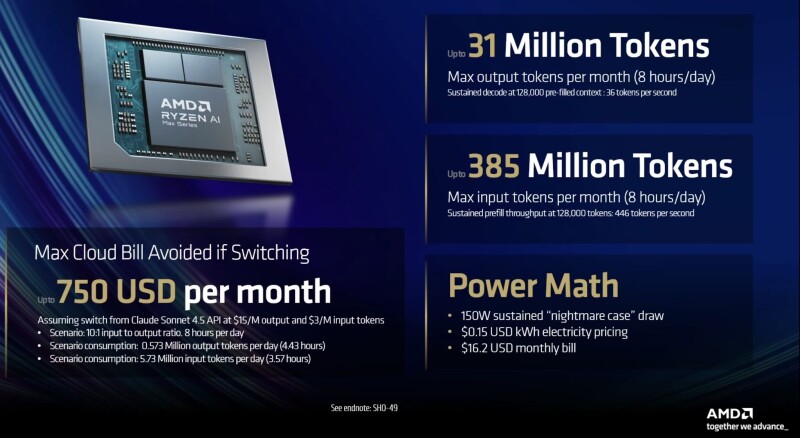
  28. AMD says its $4K Ryzen AI Halo workstation practically pays for itself

    AMD has launched its Ryzen AI Halo workstation, priced at $4,000, which the company claims can pay for itself through efficiency gains. The workstation is designed for AI-intensive tasks and aims to provide a cost-effective solution for professionals. This release highlights AMD's strategy to integrate AI capabilities directly into their hardware offerings. AI

    AMD says its $4K Ryzen AI Halo workstation practically pays for itself

    IMPACT Offers a dedicated hardware solution for AI tasks, potentially improving efficiency for professionals using AI tools.

  29. GraphRAG on Consumer Hardware: Benchmarking Local LLMs for Healthcare EHR Schema Retrieval

    Researchers evaluated the GraphRAG pipeline for retrieving information from Electronic Health Record (EHR) schemas using open-source large language models deployed on consumer hardware. The study benchmarked models like Llama 3.1, Mistral, Qwen 2.5, and Phi-4-mini on a single GPU, assessing indexing efficiency, knowledge graph construction, latency, and answer quality. Results indicated that models below approximately 7 billion parameters struggle with structured output errors, and local retrieval generally outperformed global summarization in terms of speed and factual accuracy. AI

    GraphRAG on Consumer Hardware: Benchmarking Local LLMs for Healthcare EHR Schema Retrieval

    IMPACT Demonstrates the feasibility of using smaller, locally deployed LLMs for complex tasks like EHR schema retrieval, potentially improving privacy and reducing costs in healthcare.

  30. ELSA: An ELastic SNN Inference Architecture for Efficient Neuromorphic Computing

    Researchers have introduced ELSA, a novel architecture designed to enhance the efficiency of neuromorphic computing using spiking neural networks (SNNs). ELSA enables true elastic inference by processing data in a fine-grained, token-wise pipeline, allowing for immediate forwarding of results and reduced latency. The architecture incorporates optimizations like a bundled address event representation protocol and mini-batch spiking Gustavson-product to minimize memory access and communication traffic. Experiments demonstrate that ELSA significantly outperforms existing accelerators in both speed and energy efficiency compared to both quantized artificial neural networks and other SNN accelerators. AI

    ELSA: An ELastic SNN Inference Architecture for Efficient Neuromorphic Computing

    IMPACT Introduces a new architecture that significantly improves speed and energy efficiency for neuromorphic computing, potentially accelerating the adoption of SNNs.

  31. SpineContextResUNet: A Computationally Efficient Residual UNet for Spine CT Segmentation

    Researchers have developed SpineContextResUNet, a new 3D Residual U-Net architecture designed for efficient segmentation of spinal CT scans. This model addresses the high computational demands of existing methods by using a lightweight Context Block with parallel multi-dilated convolutions, avoiding the need for resource-intensive Transformers or RNNs. SpineContextResUNet achieves high accuracy on public benchmarks and demonstrates viable inference performance on commodity hardware, making it suitable for point-of-care diagnostics and edge devices. AI

    SpineContextResUNet: A Computationally Efficient Residual UNet for Spine CT Segmentation

    IMPACT Enables more accessible AI-driven medical diagnostics on low-resource hardware.

  32. Memory-Efficient Partitioned DNN Inference on Resource-Constrained Android Crowds

    Researchers have developed a new system called CROWD IO to enable the efficient inference of large deep neural networks on resource-constrained Android devices. The system addresses the challenge of limited RAM on mobile phones by distributing memory pressure across multiple devices. CROWD IO employs several mechanisms, including deferred partition loading and compressed tensor transport, to manage memory usage and reduce batch latency. AI

    Memory-Efficient Partitioned DNN Inference on Resource-Constrained Android Crowds

    IMPACT Enables deployment of advanced AI models on a wider range of mobile devices, potentially increasing edge AI capabilities.

  33. E-ReCON: An Energy- and Resource-Efficient Precision-Configurable Sparse nvCIM Macro for Conventional and Spiking Neural Edge Inference

    Researchers have developed E-ReCON, a novel compute-in-memory (CIM) macro designed for efficient AI inference on edge devices. This macro utilizes a compact ReRAM bitcell capable of performing multiplication for both conventional neural networks and spiking neural networks. The design incorporates an interleaved adder tree to reduce transistor count and power consumption, achieving high energy efficiency and low latency. AI

    E-ReCON: An Energy- and Resource-Efficient Precision-Configurable Sparse nvCIM Macro for Conventional and Spiking Neural Edge Inference

    IMPACT This new compute-in-memory macro could enable more powerful and energy-efficient AI processing directly on edge devices.

  34. Declarative Data Services: Structured Agentic Discovery for Composing Data Systems

    Researchers have developed Declarative Data Services (DDS), a new architecture designed to improve how AI agents discover and compose data systems. Traditional agentic discovery methods struggle with the complexity and heterogeneity of data backends. DDS addresses this by using a layered contract system that breaks down the search into smaller, manageable sub-searches, enabling more consistent convergence on functional data stacks. AI

    Declarative Data Services: Structured Agentic Discovery for Composing Data Systems

    IMPACT Introduces a structured approach to agentic discovery for data systems, potentially improving AI's ability to compose complex data backends.

  35. From Circuit Evidence to Mechanistic Theory: An Inductive Logic Approach

    Researchers have developed a formal framework for cumulative mechanistic science in neural networks, treating circuit interpretation as inductive theory construction. This approach uses Causal Functional Signatures (CFS) and architectural signatures learned via inductive logic programming (ILP) to make mechanistic claims explicit and comparable. The system demonstrates improved structural separation compared to baseline methods and supports transferability across different model scales and architectures. AI

    IMPACT Provides a formal infrastructure for cumulative mechanistic science, enabling more systematic and comparable analysis of neural network circuits.

  36. If You Value Online Security Stop Using Public Wi-Fi Hotspots

    The GL.iNet Mudi 7 is a new 5G travel router designed to enhance online security and connectivity. It features Wi-Fi 7 technology, dual SIM slots, eSIM support, and a user-swappable battery offering up to 13.5 hours of use. Powered by Qualcomm's Dragonwing Gen 3 platform, it supports 5G speeds up to 4.67Gbps and includes a 2.8-inch LCD touchscreen for management. AI

    If You Value Online Security Stop Using Public Wi-Fi Hotspots

    IMPACT Niche tooling improvement for secure mobile connectivity.

  37. OlmoEarth v1.1: A more efficient family of models

    Allen AI has released OlmoEarth v1.1, an updated family of models designed for processing satellite imagery more efficiently. These new models reduce compute costs by up to 3x for inference and require 1.7x fewer GPU hours for training, while maintaining performance on remote sensing tasks. The efficiency gains are achieved by optimizing the tokenization process for transformer-based architectures, specifically by merging resolution-based tokens without significant performance degradation. AI

    OlmoEarth v1.1: A more efficient family of models

    IMPACT Offers significant cost reductions for satellite imagery analysis, potentially enabling wider adoption of AI for environmental monitoring and mapping.

  38. Design for Manufacturing: A Manufacturability Knowledge-Integrated Reinforcement Learning Framework for Free-Form Pipe Routing in Aeroengines

    Researchers have developed a new reinforcement learning framework called FPRO to optimize pipe routing in aeroengines, integrating manufacturing knowledge directly into the design process. This approach represents pipe paths using curvature and torsion profiles, with manufacturing constraints applied to these parameters. The framework uses proximal policy optimization to generate paths that are then translated into fabrication instructions for a six-axis bending machine, demonstrating improved manufacturability and design accuracy compared to existing methods. AI

    Design for Manufacturing: A Manufacturability Knowledge-Integrated Reinforcement Learning Framework for Free-Form Pipe Routing in Aeroengines

    IMPACT This framework could streamline the design and manufacturing of complex aeroengine components by integrating AI-driven optimization with domain-specific knowledge.

  39. ChunkFT: Byte-Streamed Optimization for Memory-Efficient Full Fine-Tuning

    Researchers have developed ChunkFT, a novel framework designed to significantly reduce the memory required for full-parameter fine-tuning of large language models. This method dynamically activates a working set of parameters, enabling gradient computation on sub-tensors without altering the model architecture. Experiments show ChunkFT can fine-tune models like Llama 3-8B on a single consumer GPU, achieving performance comparable to traditional full fine-tuning while using substantially less memory. AI

    IMPACT Enables fine-tuning of large language models on consumer hardware, potentially democratizing advanced model customization.

  40. FTerViT: Fully Ternary Vision Transformer

    Researchers have developed FTerViT, a fully ternary Vision Transformer that compresses all weight matrices and normalization parameters. This approach significantly reduces the model's memory footprint, making it more feasible for deployment on resource-constrained devices like microcontrollers. FTerViT achieves competitive accuracy on ImageNet while offering substantial compression compared to standard floating-point models. AI

    IMPACT Enables more efficient deployment of advanced vision models on low-power edge devices.

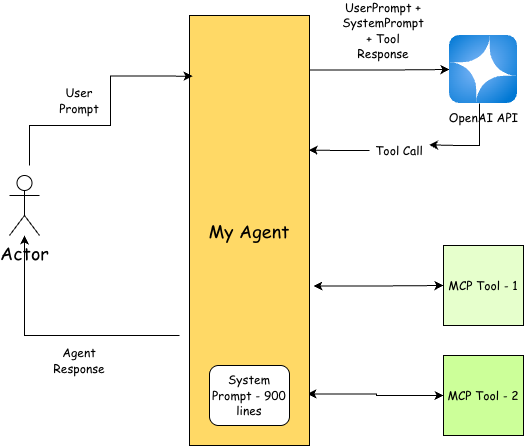
  41. From Prompt Bloat to Agentic Grace: How I Killed My 900-Line System Prompt

    Developers are exploring advanced techniques to manage and optimize interactions with large language models, moving beyond simple, lengthy prompts. One approach involves migrating from extensive system prompts to architectures that leverage tools and skills, as demonstrated by a user who reduced a 900-line prompt to a more efficient system. Another key development is prompt caching, a method that significantly reduces processing costs and latency by reusing previously computed context, making AI applications more scalable and cost-effective. Additionally, platforms like PromptCache are emerging to centralize prompt management, offering versioning and collaboration features akin to code repositories, thereby improving consistency and developer workflow. AI

    From Prompt Bloat to Agentic Grace: How I Killed My 900-Line System Prompt

    IMPACT Optimizing prompt strategies and caching mechanisms can lead to more efficient and cost-effective AI applications, accelerating adoption.

  42. Evaluating Temporal Semantic Caching and Workflow Optimization in Agentic Plan-Execute Pipelines

    Researchers have developed new methods to optimize agent-based plan-execute pipelines for industrial operations, which are highly sensitive to latency. They introduced a temporal semantic cache and workflow optimizations, including disk-backed tool discovery caching and parallel step execution. These optimizations achieved significant speedups, with workflow optimizations providing a 1.67x speedup and temporal caching yielding up to 30.6x speedup on cache hits, while also highlighting limitations of standard semantic caching for parameter-rich queries. AI

    Evaluating Temporal Semantic Caching and Workflow Optimization in Agentic Plan-Execute Pipelines

    IMPACT Introduces optimizations for latency-sensitive industrial AI agent pipelines, potentially improving efficiency in real-world applications.

  43. HRM-Text: Efficient Pretraining Beyond Scaling

    Researchers have developed HRM-Text, a novel Hierarchical Recurrent Model that significantly reduces the computational resources and training data required for pretraining large language models. By decoupling computation into strategic and execution layers and training exclusively on instruction-response pairs, a 1B-parameter model achieved competitive performance on several benchmarks with a fraction of the tokens and compute used by standard models. This approach makes foundational LLM research more accessible by lowering the barrier to entry for pretraining from scratch. AI

    HRM-Text: Efficient Pretraining Beyond Scaling

    IMPACT Enables more researchers to train foundational models from scratch, potentially accelerating innovation.

  44. Instant GPU Efficiency Visibility at Fleet Scale

    Researchers have developed a new metric called Overall FLOP Utilization (OFU) to measure GPU efficiency for AI workloads. OFU is derived from on-chip performance counters and does not require application instrumentation, making it applicable across different GPU generations and precisions. When tested on production training jobs, OFU showed a strong correlation with application-level metrics and helped identify efficiency regressions and framework miscalculations. AI

    Instant GPU Efficiency Visibility at Fleet Scale

    IMPACT Provides a practical method for monitoring and improving the efficiency of AI training infrastructure.

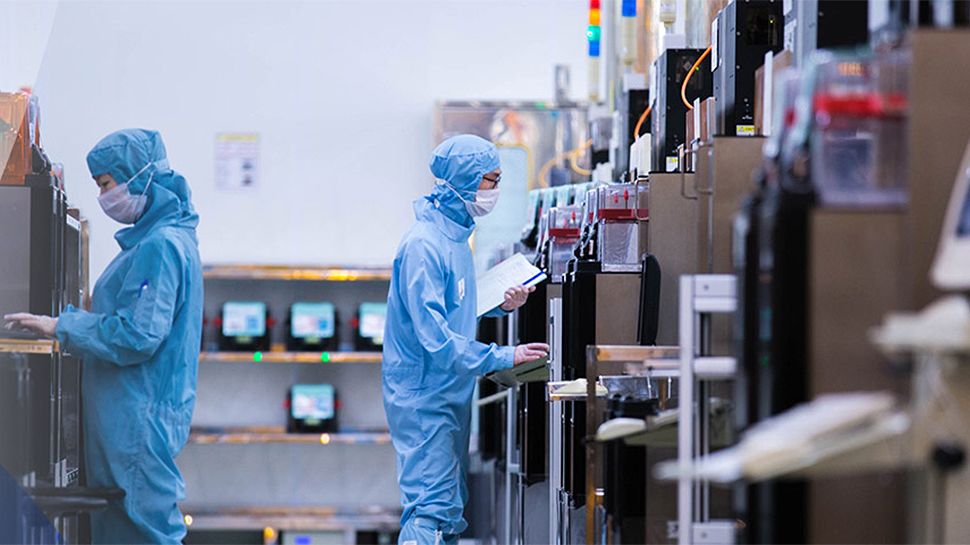
  45. SMIC founder and AMEC CEO urge Chinese fabs to test domestic chipmaking tools on active production lines — equipment makers post record revenue but falling margins

    SMIC founder Richard Chang and AMEC CEO Gerald Yin are urging Chinese semiconductor manufacturers to test domestic chipmaking equipment on their active production lines. This call comes as Chinese equipment vendors achieved record revenues in 2025, but are experiencing declining profit margins due to intense domestic price competition. While localization has advanced in mature-node tools, lithography remains a significant bottleneck with no immediate domestic solution, all under tightening U.S. export controls. AI

    SMIC founder and AMEC CEO urge Chinese fabs to test domestic chipmaking tools on active production lines — equipment makers post record revenue but falling margins

    IMPACT Accelerates domestic AI hardware development by pushing for wider adoption of Chinese semiconductor manufacturing tools.

  46. ​From Intelligence To Impact: How Connected Reporting And Dynamic Waterfalls Are Reshaping Fund Services

    The financial services industry is seeing a significant shift towards connected reporting and dynamic waterfall modeling to manage increasing complexity and regulatory demands. These capabilities are crucial for turning data insights into actionable strategies, enhancing operational resilience, and boosting investor confidence. As AI and ESG reporting requirements grow, firms are moving away from manual processes and static records towards more proactive, scenario-based management to maintain precision and agility. AI

    ​From Intelligence To Impact: How Connected Reporting And Dynamic Waterfalls Are Reshaping Fund Services

    IMPACT AI and generative AI are expected to significantly reduce operational costs and create a wider gap between firms with advanced data foundations and those without.

  47. Multi-agent Collaboration with State Management

    Researchers have developed STORM, a novel state-oriented management system designed to improve collaboration among multiple AI agents working on shared codebases. Unlike existing methods that rely on workspace isolation and delayed conflict resolution, STORM actively manages agent states to ensure consistent views and detect conflicts in real-time during edits. Evaluations on the Commit0 and PaperBench benchmarks demonstrated that STORM significantly outperforms baseline methods, achieving higher scores and comparable cost efficiency across various large language models. AI

    Multi-agent Collaboration with State Management

    IMPACT Improves efficiency and reduces conflicts for AI agents working collaboratively on software development tasks.

  48. Intel tells PC makers to adopt 18A CPUs or lose their supply, report claims — Intel 7 supply dries up, pressuring notebook and PC manufacturers in the US, China, and Taiwan

    Intel is reportedly pressuring PC manufacturers to adopt its newer 18A-based processors by limiting the supply of older Intel 7 CPUs. This strategy aims to shift production towards higher-margin server and industrial clients, while also encouraging consumer PC makers to redesign their product lines around the more expensive 18A chips. The move is expected to take at least three months for manufacturers to implement and could force upgrades to other components to justify the increased cost. AI

    Intel tells PC makers to adopt 18A CPUs or lose their supply, report claims — Intel 7 supply dries up, pressuring notebook and PC manufacturers in the US, China, and Taiwan

    IMPACT This shift impacts the supply chain for components used in AI-accelerated computing, potentially influencing the availability and cost of hardware for AI development and deployment.

  49. OScaR: The Occam's Razor for Extreme KV Cache Quantization in LLMs and Beyond

    Researchers have developed OScaR, a new framework for compressing the Key-Value (KV) cache in Large Language Models (LLMs). This compression is crucial for handling the increasing memory demands of long-context reasoning and multi-modal capabilities. OScaR addresses the limitations of existing per-channel quantization methods by introducing Canalized Rotation and Omni-Token Scaling to mitigate token norm imbalance, achieving near-lossless performance even at INT2 quantization levels. The framework offers significant improvements, including up to a 3.0x speedup in decoding and a 5.3x reduction in memory footprint. AI

    OScaR: The Occam's Razor for Extreme KV Cache Quantization in LLMs and Beyond

    IMPACT Enables more efficient deployment of LLMs with long contexts and multi-modal capabilities by reducing memory bottlenecks.

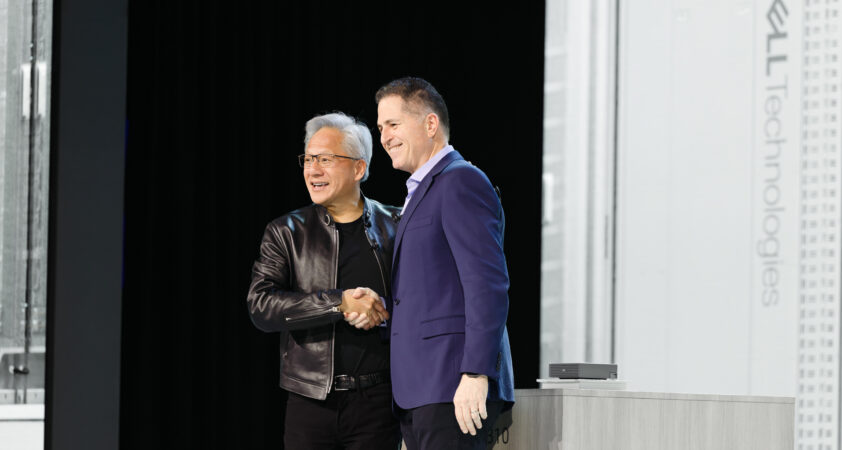
  50. NVIDIA CEO Jensen Huang at Dell Technologies World: “Demand Is Going Parabolic, Utterly Parabolic”

    NVIDIA CEO Jensen Huang and Dell Technologies CEO Michael Dell announced new AI hardware and platforms designed for enterprise-scale agentic AI deployments. The new NVIDIA Vera Rubin NVL72 platform, integrated into Dell AI Factories, promises significantly lower costs and faster performance for AI inference and data processing. This push aims to meet the rapidly growing demand for AI infrastructure, which is projected to reach trillions of dollars by 2030. AI

    NVIDIA CEO Jensen Huang at Dell Technologies World: “Demand Is Going Parabolic, Utterly Parabolic”

    IMPACT Accelerates enterprise adoption of agentic AI by providing cost-effective and high-performance hardware solutions.