PulseAugur / Brief
EN
LIVE 22:33:17

Brief

last 24h
[31/31] 221 sources

Multi-source AI news clustered, deduplicated, and scored 0–100 across authority, cluster strength, headline signal, and time decay.

  1. Building a Lightweight Remote MCP Knowledge Base on Cloudflare Workers

    A developer has created Edgenote-AI, a tool designed to give large language models like Claude persistent memory for project context. This system functions as a shared knowledge base accessible via the Model Context Protocol (MCP), allowing both humans and AI to read and write information. Built on Cloudflare Workers, it offers a web UI for users and an MCP endpoint for LLMs, with plans to integrate advanced search capabilities. AI

    Building a Lightweight Remote MCP Knowledge Base on Cloudflare Workers

    IMPACT Enables LLMs to retain project context across conversations, potentially improving developer productivity and AI assistant utility.
  2. I Scanned 35 MCP Servers for Security Vulnerabilities. 62% Had Issues.

    A security audit of 35 Model Context Protocol (MCP) servers revealed widespread vulnerabilities, with 62% exhibiting issues. The most common problem was path traversal, allowing unauthorized file access, exacerbated by AI agents' potential manipulation through prompt injection. Other critical findings included shell metacharacters in configurations leading to remote code execution, exposed API keys in public repositories, and unpinned package dependencies that pose supply chain risks. AI

    IMPACT Exposes critical security risks in the AI agent ecosystem, potentially impacting the adoption and trustworthiness of tools that rely on MCP.

  3. Content-Aware Attack Detection in LLM Agent Tool-Call Traffic: An Empirical Study of Features, Architectures, and Evaluation Protocols

    Researchers have developed a novel framework for detecting attacks within the tool-call traffic of Large Language Model (LLM) agents. This system represents agent sessions as graphs, incorporating sentence-embedding features from tool arguments and responses to classify traffic as benign or malicious. The study found that content-level features are crucial for effective detection, significantly outperforming metadata-only approaches, and highlighted a common evaluation pitfall that can inflate performance metrics. AI

    IMPACT This research introduces a more robust method for securing LLM agents by detecting malicious tool-use, which could improve the safety and reliability of AI systems interacting with external services.

  4. I made a local-first MCP tutorial repo with node-llama-cpp and a custom agent loop

    A new tutorial repository, "MCP from Scratch," has been released, offering a step-by-step guide to understanding the Model Context Protocol (MCP). The project focuses on building an MCP server using plain Node.js and integrates local inference with GGUF models. It culminates in a custom agent loop that utilizes MCP tools, with an optional LangChain example provided. AI

    IMPACT Provides a learning resource for developers to understand and implement local AI agent loops using the Model Context Protocol.

  5. # AWS has made its managed # ModelContextProtocol (MCP) server generally available, giving AI coding agents controlled access to AWS APIs, documentation & opera

    AWS has launched its Model Context Protocol (MCP) server, providing AI coding agents with a secure and auditable method to interact with AWS services. This managed server allows agents to access APIs, documentation, and operational workflows via a standardized interface, avoiding the need to expose broad credentials. AI

    # AWS has made its managed # ModelContextProtocol (MCP) server generally available, giving AI coding agents controlled access to AWS APIs, documentation & opera

    IMPACT Enables safer and more auditable integration of AI agents with cloud infrastructure.

  6. What Is MCP (Model Context Protocol)? How Does MCP Work in AI?

    The Model Context Protocol (MCP) is an emerging standard designed to manage and transfer context between different AI models. This protocol aims to enable seamless interaction and data sharing, allowing AI systems to maintain conversational history and user preferences across various applications. MCP's development is crucial for building more cohesive and personalized AI experiences. AI

    What Is MCP (Model Context Protocol)? How Does MCP Work in AI?

    IMPACT MCP aims to standardize how AI models handle context, potentially improving user experience and enabling more complex AI interactions.

  7. How to let Claude see my Plaid bank data

    FinContext has launched a new service that allows AI assistants like Claude and ChatGPT to securely access personal bank account data via Plaid. The service, built on the Model Context Protocol (MCP), aims to provide AI with real-time financial information for personalized advice. However, concerns are being raised about the security implications of granting AI agents access to sensitive financial data, with one article highlighting potential risks such as credential theft and unauthorized money movement, while another warns of broader governance and auditing challenges as MCP adoption grows. AI

    IMPACT Enables personalized financial advice from AI but introduces new security and governance challenges for sensitive data access.

  8. The NSA just published an MCP security playbook. We created Agent Trust Transport Protocol ATTP - Implement today with MCPS

    The NSA has released a security playbook for AI-driven automation using the Model Context Protocol (MCP), outlining four key requirements for production deployments. These include cryptographically signing MCP messages, establishing verifiable cryptographic identities for agents, implementing structured and tamper-evident audit logging, and tracking MCP-specific vulnerabilities. The article highlights that specifications and implementations for these requirements, such as MCPS for message signing and ATTP for trust transport, already exist and predate the NSA's notice. AI

    IMPACT Establishes security baselines for AI automation protocols, potentially influencing future AI agent development and deployment.

  9. MCP SEP-2468: RFC 9207 Iss Parameter for OAuth Mix-Up Defense

    The Model Context Protocol (MCP) has updated its authorization flow to align with RFC 9207, enhancing security against OAuth mix-up attacks. This change mandates that authorization servers include an `iss` parameter in their responses, which clients must then validate against the originally recorded issuer. This structural defense prevents attackers from tricking clients into using authorization codes with the wrong identity provider, a vulnerability that previous session-based methods could not fully address. AI

    IMPACT Enhances security for LLM agents interacting with external tools by preventing authentication mix-ups.

  10. Let Copilot handle your local Azure setup via MCP

    GitHub Copilot can now manage local Azure development environments through the Model Context Protocol (MCP). This protocol allows Copilot to interact with tools and receive structured data, enabling it to provision resources like Key Vaults and Service Bus namespaces. The MCP server, developed by Topaz, facilitates this by acting as an intermediary between Copilot and local Azure emulators, with specific Docker networking configurations required for seamless operation. AI

    IMPACT Enhances developer productivity by automating complex cloud environment setup within the coding workflow.

  11. Freshworks Just Shipped an MCP Gateway Inside Its ITSM Platform. Here's What That Actually Changes.

    Freshworks has integrated an MCP Gateway into its Freshservice ITSM platform, aiming to solve the problem of AI agents lacking access to live enterprise data. This new gateway allows AI agents to pull information from various systems like Workday and ClickUp without custom integration code, enabling more efficient workflows. The company is also launching Freddy AI Agent Studio, a no-code environment for building these agents, and introducing AI Insights with Experience Level Agreements (xLAs) to measure employee satisfaction rather than just ticket resolution times. AI

    Freshworks Just Shipped an MCP Gateway Inside Its ITSM Platform. Here's What That Actually Changes.

    IMPACT Enhances enterprise AI agent capabilities by providing standardized access to contextual data, potentially streamlining workflows.

  12. From Problems to Patterns: Generative AI in .Net (C#)

    A new book titled "From Problems to Patterns: Generative AI in .Net (C#)" aims to equip .NET developers with the skills to build and deploy production-ready AI solutions. It focuses on the Microsoft AI stack, including Microsoft.Extensions.AI, Microsoft.Agents.AI, and Model Context Protocol, offering practical guidance and 37 runnable code examples. The book covers essential topics like multi-provider routing, robust RAG pipelines, maintainable autonomous agents, and secure deployment of AI tools. AI

    From Problems to Patterns: Generative AI in .Net (C#)

    IMPACT Empowers .NET developers to build and deploy production-grade AI applications, reducing reliance on Python-centric tools.

  13. 3 MCP servers I actually use daily (and how to set them up)

    The Model Context Protocol (MCP) allows Claude Desktop to interact with local and remote data sources. Three specific MCP servers are highlighted for daily use: a filesystem server for reading project files, a GitHub server for code reviews and repository browsing, and a PostgreSQL server for direct database queries. Setting up these servers is a quick process involving installation via the `mcp-hub` CLI and a configuration restart of Claude Desktop, though users are cautioned about the filesystem server's potential access. AI

    IMPACT Enables developers to integrate local and remote data sources with AI assistants, streamlining workflows for tasks like code review and data analysis.

  14. Stop Hand-Editing MCP Configs: A Zero-Dependency Go CLI

    A new command-line tool called `agmcp` has been developed to simplify the management of Model Context Protocol (MCP) server configurations. This Go-based utility allows users to safely add, remove, and list MCP servers without manually editing complex JSON files, which can often lead to syntax errors and application crashes. `agmcp` is designed to be fast, lightweight, and cross-platform, aiming to reduce friction for developers experimenting with AI clients like Claude Desktop and Cursor. AI

    Stop Hand-Editing MCP Configs: A Zero-Dependency Go CLI

    IMPACT Simplifies configuration management for developers using AI clients, reducing errors and improving workflow.

  15. Microsoft Just Shipped MCP Governance for .NET. Here's What It Actually Enforces.

    Microsoft has released a public preview NuGet package for .NET 8+ that enhances the Model Context Protocol (MCP) with agent governance features. This package, Microsoft.AgentGovernance.Extensions.ModelContextProtocol, addresses security concerns by implementing checks during both server startup and tool invocation. It scans for potential vulnerabilities like prompt injection, typosquatting, and credential leakage, aiming to make AI applications more secure. AI

    IMPACT Enhances security for AI agents by providing governance over tool usage, reducing risks like prompt injection and credential leakage.

  16. Manifold Security Just Scored 7,700 MCP Servers. Here's Why That Number Should Worry You.

    Two security firms, Manifold Security and Dominion Observatory, have developed systems to score the trustworthiness of Model Context Protocol (MCP) servers, which are increasingly used to connect AI agents to external tools. Manifold Security's Manifest platform analyzes over 7,700 MCP servers by evaluating publisher provenance and the server's declared interface for manipulative instructions. Dominion Observatory, on the other hand, scores over 14,800 MCP servers based on their runtime behavior, including success rates, latency, and uptime, to detect degradation or compromise that static code analysis might miss. AI

    Manifold Security Just Scored 7,700 MCP Servers. Here's Why That Number Should Worry You.

    IMPACT Addresses critical security and reliability concerns for AI agents connecting to external tools, potentially impacting enterprise adoption and agent safety.

  17. The Auditor — High-Reasoning Synthesis and the Ethics of Governance

    The Sovereign Vault system has been enhanced with an 'Auditor' component, transforming its AI from a general assistant into a specialized forensic expert. This Auditor synthesizes data from visual perception, archival metadata, and predefined rules to generate a verdict. A 'Guardian' pattern ensures human oversight for high-severity findings, acting as a mandatory governance gate before any final decision is made. The system's accuracy is further validated using an LLM-as-a-Judge framework against a golden dataset, and deterministic circuit-breakers ensure reliability by enforcing agreement between the AI's logic and critical indicators. AI

    The Auditor — High-Reasoning Synthesis and the Ethics of Governance

    IMPACT Enhances AI systems with specialized forensic capabilities and mandatory human oversight, moving towards expert systems in enterprise applications.

  18. MCP Is a Protocol, Not a Platform

    The Model Context Protocol (MCP) has standardized how AI models interact with tools, resolving the issue of disparate tool-calling formats across different agent frameworks. While MCP successfully created a universal interface for models and tools, it functions solely as a wire protocol, not a complete platform. This means crucial production elements like user authentication, authorization, logging, secrets management, and scalability are not addressed by the protocol itself, leaving significant development work for teams aiming to deploy MCP servers in real-world applications. AI

    IMPACT Clarifies the practical limitations of the Model Context Protocol, guiding developers on essential production-level considerations beyond the core standard.

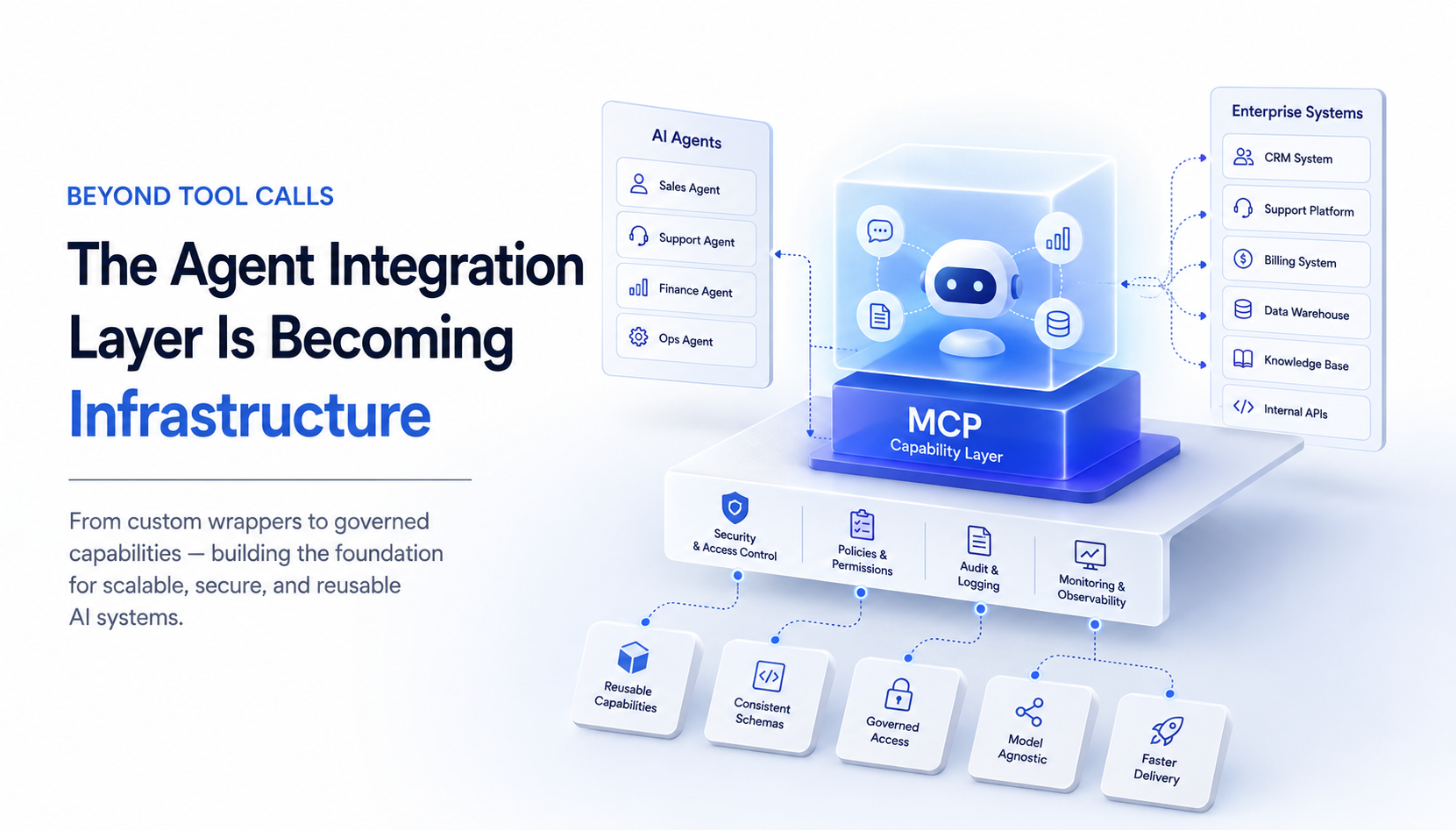
  19. The Agent Integration Layer Is Becoming Infrastructure!

    The Model Context Protocol (MCP) is evolving beyond simple tool integration to become a foundational infrastructure layer for AI agents. This shift aims to move away from the current state of fragile AI plumbing towards a more robust and standardized system. By establishing a common protocol, MCP seeks to streamline the development and deployment of AI agents, making them more reliable and easier to manage. AI

    The Agent Integration Layer Is Becoming Infrastructure!

    IMPACT The evolution of MCP towards an infrastructure layer could simplify AI agent development and deployment, leading to more robust and manageable AI systems.

  20. Google AI Edge Gallery Just Added MCP. Here's What On-Device Agents Can Actually Do Now

    Google has updated its AI Edge Gallery app to support the Model Context Protocol (MCP) on Android devices, enabling on-device AI agents. This update allows LLMs like Gemma 4 to run entirely locally, enhancing privacy and reducing latency by keeping all processing and data on the user's phone. The app now supports agent skills, calendar integration, and persistent chat history, moving it from a simple model playground to a functional on-device agent runtime. AI

    IMPACT Enables more private and capable AI agents to run directly on mobile devices.

  21. Claude Can Now Search SVG Icons with MCP

    Claude can now integrate with external tools through Model Context Protocol (MCP) custom connectors, enabling it to search for and retrieve SVG icons directly within a development workflow. This integration, demonstrated with SVGIcons.com, allows developers to request icons via prompts to Claude, streamlining the process of finding and implementing visual assets. The feature, which requires a SVGIcons PRO account, aims to reduce context switching and accelerate the development cycle by making icon discovery an AI-assisted task. AI

    IMPACT Streamlines developer workflows by enabling AI to directly source and integrate visual assets like SVG icons.

  22. Microsoft Just Framed MCP as Part of the Open Agentic Stack. Here's What That Actually Means.

    Microsoft has framed the Model Context Protocol (MCP) as a foundational element within its Open Agentic Stack, signaling a strategic shift towards open protocols and agent infrastructure. This move acknowledges the need for standardized interoperability and portable infrastructure primitives for AI agents, akin to Kubernetes for containers. Developers are increasingly leveraging MCP beyond simple tool calling to build complex multi-agent systems, secure gateways, and cross-platform orchestration, indicating its growing importance as an infrastructure layer for scalable agentic AI. AI

    IMPACT Positions MCP as a key interoperability layer, potentially accelerating enterprise adoption of standardized agentic AI systems.

  23. What is MCP (Model Context Protocol) and Why Developers Suddenly Care

    The Model Context Protocol (MCP) is emerging as a crucial standard for AI systems to interact with external tools and data, akin to USB-C for AI applications. Developed by Anthropic, MCP aims to simplify AI workflows by providing a unified way for AI agents to access files, APIs, and databases, preventing context loss and fragmentation. Developers are increasingly adopting MCP because it addresses the growing complexity of AI-driven tasks, enabling AI tools to perform real work more reliably. AI

    What is MCP (Model Context Protocol) and Why Developers Suddenly Care

    IMPACT Standardizes AI agent interactions with tools, potentially accelerating adoption of more complex AI workflows.

  24. Claude Code MCP Server Configuration: 2026 Setup Guide

    The Model Context Protocol (MCP) is gaining significant traction, with over 9,400 registered servers and millions of SDK downloads, enabling tools like Claude Code to interact with external data and functions. Developers are creating custom MCP servers using TypeScript and Kotlin to integrate Claude Code with their specific application stacks, databases, and workflows. Best practices for building these servers emphasize structured architectures, such as Domain-Driven Design, to manage complexity as the number of tools grows, and careful configuration management to ensure reliable operation. AI

    Claude Code MCP Server Configuration: 2026 Setup Guide

    IMPACT Accelerates integration of AI models with custom software stacks, enabling more sophisticated agentic workflows.

  25. MCP in 2026: The numbers behind the ecosystem explosion

    The Model Context Protocol (MCP) is experiencing rapid growth, with over 13,000 servers on npm and GitHub as of May 2026. Monthly SDK downloads have surged to 97 million, a threefold increase in six months, and new server registrations are up 400% year-over-year. MCP is evolving into a standard for granting AI models access to various tools like databases and file systems, though discovering specific MCP servers remains a challenge. To address this, a new tool, `mcp-hub`, has been developed to simplify server discovery and installation. AI

    IMPACT Simplifies AI model integration with external tools, potentially accelerating adoption of AI agents.

  26. I built the npm audit for MCP servers

    The Model Context Protocol (MCP) is gaining traction as a way for AI models to interact with external tools and services. Several developers are building MCP servers to integrate with LLMs like Claude, enabling functionalities such as web searching, security scanning, and managing cloud infrastructure. These efforts highlight the growing ecosystem around MCP, with a focus on creating production-ready, secure, and specialized tools for various applications, from cybersecurity to infrastructure management. AI

    I built the npm audit for MCP servers

    IMPACT MCP servers are enabling new integrations and functionalities for AI models, expanding their capabilities in areas like security, data analysis, and infrastructure management.

  27. 🧠🌍⚙️ Model Context Protocol # AI Q: 🔗 Which app or tool do you most wish your AI could control directly? 🤖 Artificial Intelligence | 🔗 Data Integration | 💻 Soft

    A user on Mastodon is asking for input on which applications or tools people would most like their AI to directly control. The question is framed around the concept of a "Model Context Protocol," suggesting a desire for deeper AI integration with existing software. AI

    🧠🌍⚙️ Model Context Protocol # AI Q: 🔗 Which app or tool do you most wish your AI could control directly? 🤖 Artificial Intelligence | 🔗 Data Integration | 💻 Soft
  28. Understanding MCP (Model Context Protocol) with a Simple Analogy ️

    The Model Context Protocol (MCP) is a framework designed to help AI systems manage and interact with increasingly complex information. Early explanations of MCP often dive directly into technical details and code, which can be a barrier to understanding. Analogies and simpler explanations are being developed to make the protocol more accessible. AI

    IMPACT Simplifies understanding of AI system interaction frameworks.

  29. Things I Think I Think... Data Privacy: Mulling out loud why I think data privacy is about to explode in importance | by Ted Neward https:// blogs.newardassocia

    Microsoft has introduced a new composable AI stack for .NET developers, aiming to simplify the integration of AI features into applications. This stack includes modular components like Microsoft.Extensions.AI, DataIngestion, and VectorData, which provide stable abstractions over AI models, data pipelines, and vector stores. The new framework is demonstrated through ConferencePulse, an AI-powered conference app that leverages these components for features like live polling, intelligent Q&A, and data summarization. AI

    Things I Think I Think... Data Privacy: Mulling out loud why I think data privacy is about to explode in importance | by Ted Neward https:// blogs.newardassocia

    IMPACT Simplifies AI integration for .NET developers, potentially accelerating adoption of AI features in enterprise applications.

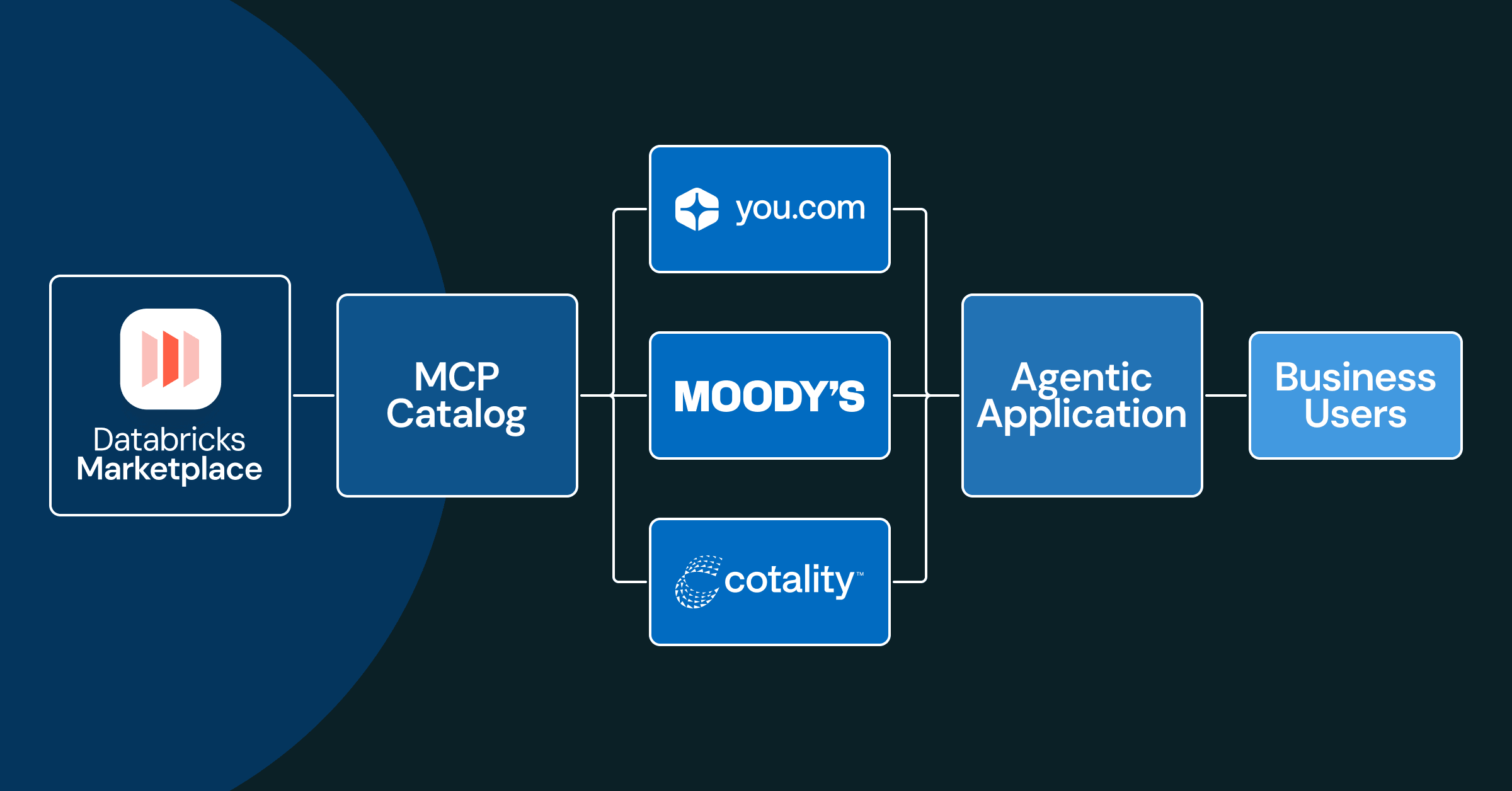
  30. MCP Marketplace Brings Real-Time Intelligence to Agentic Applications

    The Model Context Protocol (MCP) is emerging as a standardized way for AI agents to access external tools and real-time data. Several new open-source projects and platforms, including Databricks' MCP Marketplace, Klavis AI, Agent MCP Studio, and JigsawStack, are facilitating this integration. These tools allow AI agents to perform tasks like web scraping, data extraction, email verification, and accessing institutional research, thereby enhancing their capabilities beyond static knowledge bases. The protocol aims to streamline AI agent development by providing a common interface for tool discovery and execution, with ongoing efforts to improve security and support for features like OAuth. AI

    MCP Marketplace Brings Real-Time Intelligence to Agentic Applications

    IMPACT Standardizes AI agent interaction with external tools and real-time data, accelerating development and enabling more autonomous AI systems.

  31. Everything you need to know about MCP

    Replit has introduced the Model Context Protocol (MCP), a new standard designed to enable AI models to connect with external data sources and tools. This protocol acts as a universal connector, allowing AI models to access information and perform actions beyond their initial training data, similar to how USB-C enables diverse devices to connect. MCP utilizes a client-server architecture, with clients initiating requests, a communication layer defining the protocol, and servers providing access to resources like databases, web services, and files. This standardization aims to simplify integration, allow for easier switching between AI providers, and enhance security for AI applications. AI

    Everything you need to know about MCP

    IMPACT Standardizes AI integration, enabling models to access external data and tools more easily, potentially accelerating development and interoperability.