PulseAugur / Brief
EN
LIVE 22:04:11

Brief

last 24h
[33/33] 221 sources

Multi-source AI news clustered, deduplicated, and scored 0–100 across authority, cluster strength, headline signal, and time decay.

  1. California moves to exempt Linux from its upcoming age-verification law after backlash over forcing operating systems to collect users’ ages — amendment proposed by the same lawmaker who wrote the original law

    California lawmakers have proposed an amendment to the Digital Age Assurance Act that would exempt most open-source operating systems from its age-verification requirements. This change follows significant backlash from privacy advocates and the open-source community, who argued the original law was too broad and could force projects like Linux to implement user age tracking. While most Linux distributions are expected to be exempt, the amendment's language suggests that platforms with proprietary app ecosystems, such as SteamOS, may still be subject to the law. AI
    California moves to exempt Linux from its upcoming age-verification law after backlash over forcing operating systems to collect users’ ages —  amendment proposed by the same lawmaker who wrote the original law

    IMPACT Narrows scope of age-verification laws for open-source software, potentially impacting how AI models distributed via these platforms are regulated.


  2. 35B LLM auf nur 6GB VRAM? So geht's lokal! URL https://www. youtube.com/watch?v=WrSZ7_KIGjs # ollama # ram # gpu # KI # ai # ubuntu # linux

    A YouTube video demonstrates how to run a 35 billion parameter large language model on a system with only 6GB of VRAM. The tutorial focuses on local execution using tools like Ollama on Ubuntu Linux. AI

    IMPACT Enables running large language models on consumer-grade hardware, lowering the barrier to entry for local AI experimentation.

  3. Old Mac Pro still proving its worth

    An old Mac Pro, originally costing nearly £10,000, is being repurposed for local LLM work thanks to new Linux drivers that enable its D700 GPUs. The machine, equipped with 64GB of RAM and 24 cores, can now run models via llama.cpp, achieving usable speeds for tasks like planning. Notably, the user found that Qwen 3.5 9B provided superior planning output compared to Anthropic's Claude Sonnet 4.6. AI

    Old Mac Pro still proving its worth

    IMPACT Demonstrates that older, specialized hardware can still be viable for local LLM inference with software updates.

  4. Dirty Frag, Copy Fail, Fragnesia: The start of a worrisome Linux security trend

    New security vulnerabilities dubbed "Dirty Frag," "Copy Fail," and "Fragnesia" have emerged in Linux, potentially signaling a broader trend in software security. These flaws are particularly concerning as AI tools are increasingly used to probe code repositories for weaknesses. The article suggests that AI's ability to find vulnerabilities, even in closed-source software, poses a significant challenge, as it can identify issues that are then difficult to fix. AI

    Dirty Frag, Copy Fail, Fragnesia: The start of a worrisome Linux security trend

    IMPACT AI's growing capability to find vulnerabilities in code, including closed-source software, presents a new challenge for software security and development.

  5. What Happens When You Teach Old Scripting Languages New Runtime Tricks?

    A new platform called AxonASP is enabling legacy scripting languages like Classic ASP and VBScript to run on modern operating systems including Linux, Windows, and macOS. The project utilizes a custom execution engine built in Go, featuring a virtual machine for VBScript and an internal JavaScript engine, to execute code without relying on external interpreters. AI-assisted development has been instrumental in accelerating compatibility work, identifying edge cases, and generating test scenarios, ultimately allowing for the incremental modernization of old applications rather than complete rewrites. AI

    IMPACT Enables modernization of legacy applications, potentially reducing costs and extending the life of existing software infrastructure.

  6. Perplexity Open-Sources Bumblebee: A Read-Only Supply-Chain Scanner for Developer Endpoints

    Perplexity has open-sourced Bumblebee, a new tool designed to scan developer endpoints for potential supply-chain attack vectors. This read-only scanner inventories installed packages, AI agent configurations, and editor/browser extensions on macOS and Linux systems. Bumblebee aims to fill a gap left by existing security tools by directly inspecting local developer machine states, which are increasingly targeted by attackers. AI

    Perplexity Open-Sources Bumblebee: A Read-Only Supply-Chain Scanner for Developer Endpoints

    IMPACT Enhances security for developers using AI tools and agents by identifying potential supply-chain vulnerabilities on their machines.

  7. CCSnapshot — A Claude Code Configs Transfer Tool

    CCSnapshot is a new tool designed to help users transfer their Claude AI configurations across different operating systems. This utility allows for the seamless movement of plugins, custom commands, and code snippets between macOS, Linux, and Windows environments. The goal is to provide a consistent and efficient workflow for developers and users who leverage Claude AI across multiple platforms. AI

    CCSnapshot — A Claude Code Configs Transfer Tool

    IMPACT Enables more consistent use of Claude AI across development environments.

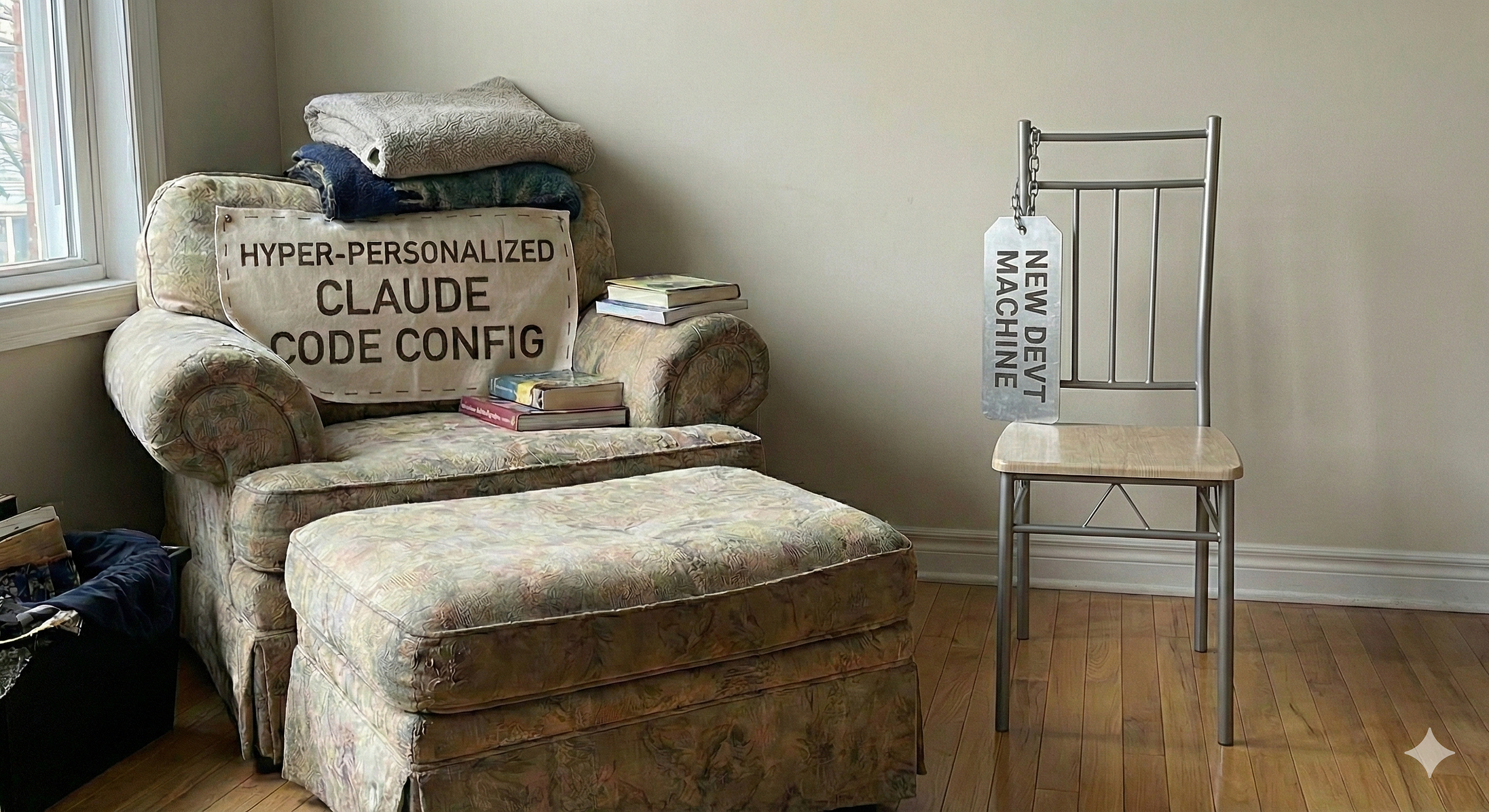
  8. I got tired of losing Claude Code context between sessions, so I built a daemon

    A developer has created a local daemon called eideticd to address the issue of losing context in Claude Code sessions. This tool runs on macOS and Linux, capturing every message as an 'engram' in a local SQLite database with minimal latency. A companion Python package allows users to query this historical data, enabling AI models to recall past conversations and debugging efforts without sending data to the cloud. AI

    I got tired of losing Claude Code context between sessions, so I built a daemon

    IMPACT Enables persistent memory for AI chat interactions, improving user experience and workflow efficiency.

  9. Learn more about Flowise AI on Linux and start self-hosting to create chatflows, AI workflows, and early experiments with open-source tools (RAG with O

    Flowise AI is an open-source tool that allows users to build AI chatflows and workflows. It can be self-hosted on Linux, offering a way to experiment with AI tools and Retrieval-Augmented Generation (RAG). The interface is accessible via a web UI, with native apps also available. AI

    Learn more about Flowise AI on Linux and start self-hosting to create chatflows, AI workflows, and early experiments with open-source tools (RAG with O

    IMPACT Enables developers to self-host and experiment with AI chatflows and RAG, fostering open-source AI development.

  10. Flowise AI Locally on Linux: A Practical Step-by-Step Guide https://www.risposteinformatiche.it/flowise-ai-locale-linux-guida-pratica/

    Flowise AI has emerged as a user-friendly, open-source platform for building AI applications with a visual interface. It allows users to construct chatbots, AI workflows, and RAG systems by connecting nodes, eliminating the need for extensive coding. The platform supports local installation via NPM or Docker Compose, offering greater control over data and configuration for self-hosted deployments. AI

    Flowise AI Locally on Linux: A Practical Step-by-Step Guide https://www.risposteinformatiche.it/flowise-ai-locale-linux-guida-pratica/

    IMPACT Provides a no-code interface for building AI workflows, potentially lowering the barrier to entry for AI application development.

  11. Google Gemini (@GeminiApp) Introduces Gemini's New Design Language 'Neural Expressive'. It appears to be a UI/UX improvement tailored for the AI era, including fluid animations, vibrant colors, updated typography, haptic feedback, and visual responses. The model itself

    Jinjing Liang has introduced Orca, an 'all-in-one AI orchestrator' designed to support multiple platforms including Android, iOS, Mac, Linux, and Windows. This tool aims to integrate agent and workflow execution for developers. Separately, Google Gemini has unveiled a new design language called 'Neural Expressive,' focusing on UI/UX enhancements like fluid animations, vibrant colors, and updated typography to better suit the AI era. AI

    IMPACT New tools and design languages emerge for AI development and user experience.

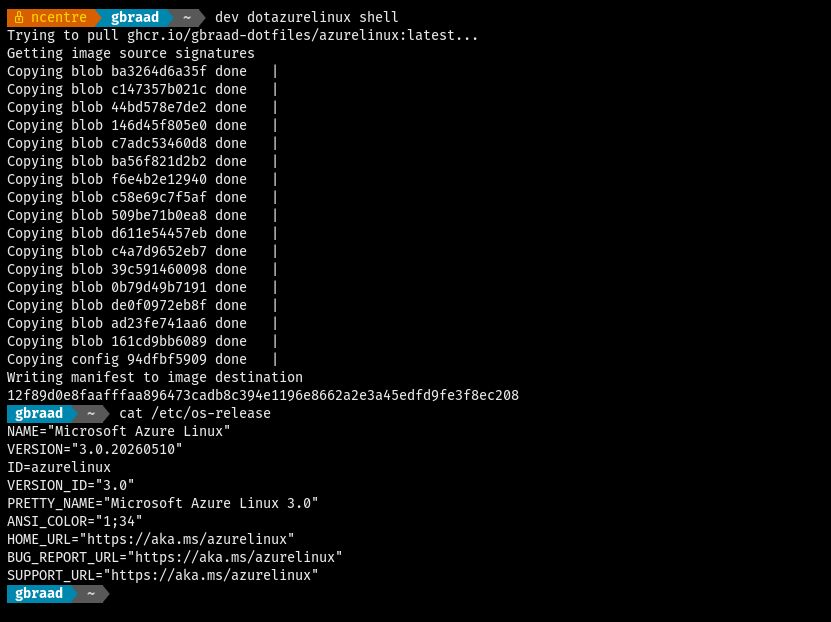
  12. Did an evaluation of Azure Linux Went ahead and created a developer shell environment based on my dotfiles to see what challenges lay ahead; like expected tools

    An evaluation of Azure Linux has been conducted, focusing on creating a developer shell environment using personal dotfiles. This process revealed potential challenges and the need for expected tools and external packages. The assessment suggests that Azure Linux is a capable platform suitable for various workloads, including application servers, containers, and potentially AI models. AI

    Did an evaluation of Azure Linux Went ahead and created a developer shell environment based on my dotfiles to see what challenges lay ahead; like expected tools

    IMPACT This evaluation indicates Azure Linux's potential as a platform for AI models, suggesting future infrastructure developments.

  13. MacBooks Can Now Drive Two Screens Without Drivers With This New Dock

    StarTech has launched a new driverless USB4 docking station that supports dual 4K displays on MacBooks with M3 processors or higher. This innovation eliminates the need for third-party drivers, simplifying deployment for IT professionals across various operating systems. The dock offers high-bandwidth connectivity, including multiple USB ports, 2.5Gbps Ethernet, and 100W power delivery, at a more affordable price point than previous Thunderbolt solutions. AI

    MacBooks Can Now Drive Two Screens Without Drivers With This New Dock

    IMPACT Niche tooling improvement; minimal industry-wide impact.

  14. Someone "ported" Lightroom agentically to Linux with Claude. But it turned out to be more of a documentation guide. What is more exciting about it: 55M tokens probably cost 550

    An attempt to port Adobe Lightroom to Linux using Anthropic's Claude AI resulted in a documentation guide rather than a functional application. The process highlighted the significant cost of processing large token volumes, with 55 million tokens estimated to cost around €550, suggesting potential token dumping by providers. This expense, equivalent to roughly one person-day of work, raises questions about the current cost-effectiveness and practical advantages of AI agents for such complex tasks. AI

    Someone "ported" Lightroom agentically to Linux with Claude. But it turned out to be more of a documentation guide. What is more exciting about it: 55M tokens probably cost 550

    IMPACT Highlights the current limitations and high costs of using AI agents for complex software porting tasks, questioning their practical advantage over manual methods.

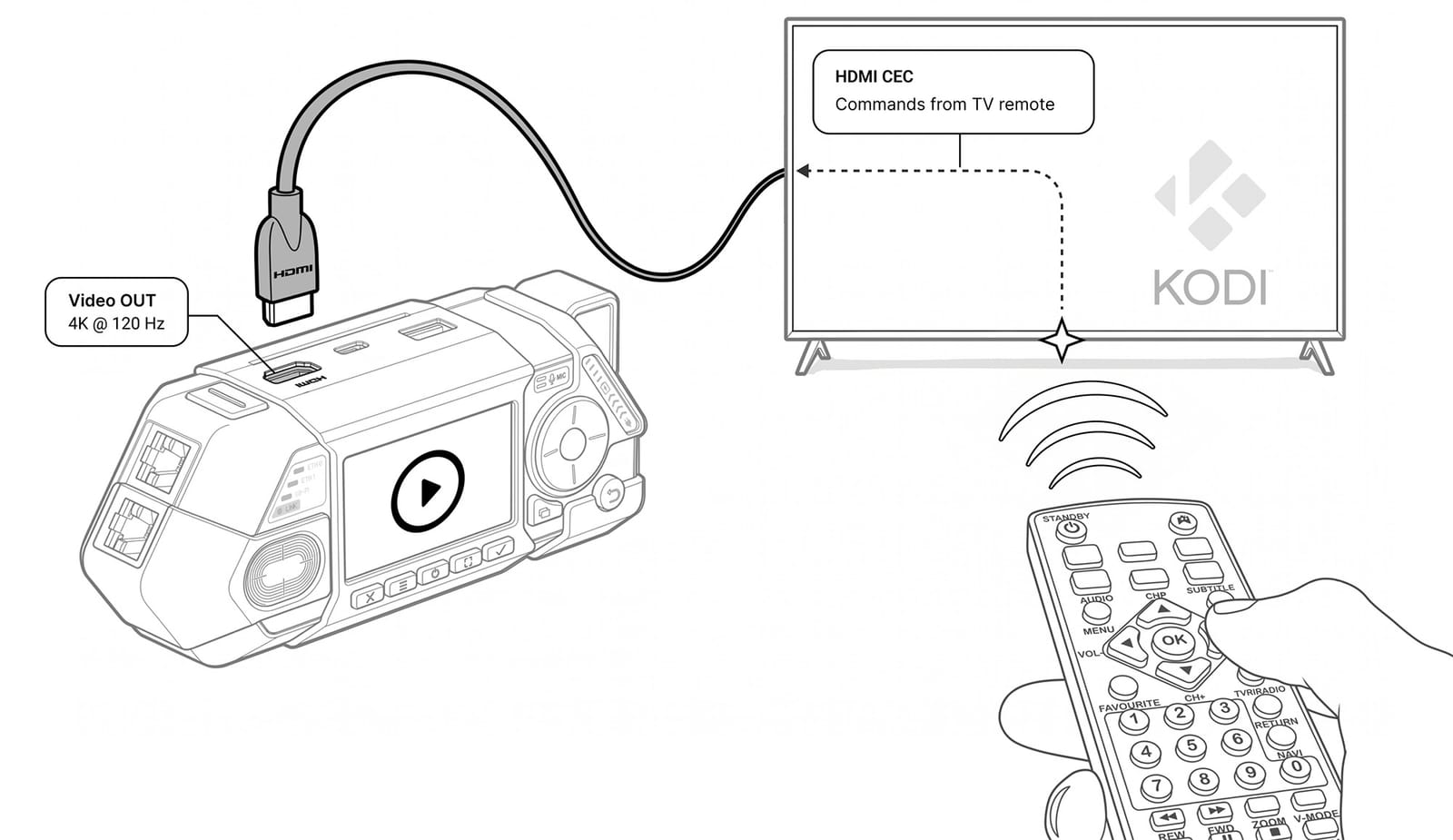
  15. What a nice, handy little # device — and it runs entirely on free # software . source: blog.flipper.net/flipper-one-w… You should skip over the first part—it’s

    The Flipper One is a new Linux-based cyberdeck designed to be a highly customizable and open-source hardware device. Developed by Pavel Zhovner, the project emphasizes community involvement and allows users to run their own programs and build extensions. Unlike proprietary devices from Big Tech, the Flipper One aims to provide users with full control over their hardware and software. AI

    What a nice, handy little # device — and it runs entirely on free # software . source: blog.flipper.net/flipper-one-w… You should skip over the first part—it’s

    IMPACT Niche hardware product with open-source focus; minimal direct AI industry impact.

  16. I tested KDE Plasma 6.7 beta, and it's easily my new Linux desktop of choice I took a look at how KDE Plasma 6.7 is coming along, I have to admit: I was blown a

    The beta version of KDE Plasma 6.7 is showing significant promise, with one tester declaring it their preferred Linux desktop. Early impressions suggest a highly impressive and advanced user experience. AI

    I tested KDE Plasma 6.7 beta, and it's easily my new Linux desktop of choice I took a look at how KDE Plasma 6.7 is coming along, I have to admit: I was blown a

    IMPACT This is a software update for a Linux desktop environment and has minimal direct impact on AI operations.

  17. ⚠️ I had posted this not knowing that the Nvidia drivers for # Linux are still not as good as the ones for Windows OS: namely they don't offload # VRAM excess t

    Nvidia's Linux drivers reportedly do not offload excess VRAM to RAM, unlike their Windows counterparts. This limitation necessitates substantial VRAM for AI tasks, potentially driving companies to purchase higher-capacity GPUs. The issue raises environmental concerns and impacts the Linux ecosystem, particularly for AI workloads typically run on Linux servers. AI

    ⚠️ I had posted this not knowing that the Nvidia drivers for # Linux are still not as good as the ones for Windows OS: namely they don't offload # VRAM excess t

    IMPACT Nvidia's driver limitations on Linux may increase hardware costs for AI development and raise environmental concerns due to potentially unnecessary hardware purchases.

  18. 🤖 Nobel laureates and human rights abuses | Brief letters Abiy Ahmed | AI job losses | Deer ruminations | Harry Belafonte | Stephen Yaxley‑LennonIn reference to

    Patients are increasingly seeking health advice from AI chatbots due to a perceived decline in general practice accessibility. This trend is highlighted in letters to the editor, with one piece specifically mentioning AI job losses. Separately, HP has released new drivers for its Linux Imaging and Printing software, adding support for additional printers. AI

    🤖 Nobel laureates and human rights abuses | Brief letters Abiy Ahmed | AI job losses | Deer ruminations | Harry Belafonte | Stephen Yaxley‑LennonIn reference to

    IMPACT Patients are increasingly turning to AI for health advice due to accessibility issues with general practitioners.

  19. Flipper Zero’s makers are cooking up a wildly customizable Linux computer Flipper "One" is basically a hacker's Lego set. https://www. androidauthority.com/flip

    The creators of the Flipper Zero are developing a new, highly customizable Linux computer called Flipper One. This device is designed to be a versatile tool for hackers and tech enthusiasts, akin to a "Lego set" for building and experimenting with technology. It aims to provide extensive flexibility for users to modify and adapt it to their specific needs. AI

    IMPACT This is a hardware product announcement with minimal direct impact on AI operations.

  20. 🐧 Tails 7.8 Anonymous Linux OS Patches Recent Kernel Flaws, Removes Thunderbird Tails 7.8 anonymous Linux distribution is now available for download with an upd

    The Tails 7.8 anonymous Linux distribution has been released, featuring an updated kernel with patches for recent security vulnerabilities. This version also includes the latest Tor Browser 15.0.14 and has removed the Thunderbird email client. The update aims to enhance user privacy and security. AI

  21. 🐧 Biwin Black Opal NV7400 1TB M.2 PCIe 4.0 NVMe SSD Review Biwin Black Opal NV7400 1TB review: Linux benchmarks, real-world file tests, thermals, and sustained

    The Biwin Black Opal NV7400 1TB SSD has been reviewed, focusing on its performance in Linux benchmarks and real-world file transfer tests. The review also examined the drive's thermal performance and its sustained write capabilities. This analysis provides insights into the SSD's capabilities for users, particularly within a Linux environment. AI

  22. b9301

    The llama.cpp project has released several updates, including versions b9315, b9313, b9311, b9310, b9305, and b9301. These releases introduce various improvements and bug fixes, such as parallelizing quantization look-up table initialization and fixing checkpoint creation in the server component. The updates also provide pre-compiled binaries for a wide range of operating systems and hardware architectures, including macOS, iOS, Linux, Android, and Windows, with support for different compute backends like Vulkan, ROCm, OpenVINO, SYCL, and CUDA. AI

    b9301

    IMPACT Provides updated tooling for running LLMs on diverse hardware, improving accessibility and performance for developers and users.

  23. Microsoft Just Framed MCP as Part of the Open Agentic Stack. Here's What That Actually Means.

    Microsoft has framed the Model Context Protocol (MCP) as a foundational element within its Open Agentic Stack, signaling a strategic shift towards open protocols and agent infrastructure. This move acknowledges the need for standardized interoperability and portable infrastructure primitives for AI agents, akin to Kubernetes for containers. Developers are increasingly leveraging MCP beyond simple tool calling to build complex multi-agent systems, secure gateways, and cross-platform orchestration, indicating its growing importance as an infrastructure layer for scalable agentic AI. AI

    IMPACT Positions MCP as a key interoperability layer, potentially accelerating enterprise adoption of standardized agentic AI systems.

  24. This Week in Security: AI Generated Reports, More AI Generated Reports, GitHub Chaos, and More Linux Vulnerabilities https:// fed.brid.gy/r/https://hackaday .co

    This Week in Security covers several topics including a new zero-click exploit on Pixel 10 phones and a discussion on AI-generated security reports. Linus Torvalds stated that AI-reported bugs are public and require verification, while GitHub is implementing stricter guidelines for AI-generated bug bounty submissions to ensure quality and prevent fabricated reports. The segment also details a breach of GitHub's internal repositories, which was attributed to a compromised VSCode extension. AI

    IMPACT AI-generated reports are being scrutinized by major platforms, leading to stricter policies and debates on their validity and use in security.

  25. Hot To Run LLMs Locally

    This series of guides provides comprehensive instructions for setting up and running large language models (LLMs) locally on Linux systems. It details hardware and software prerequisites, recommends using llama.cpp for its balance of performance and ease of use, and covers model selection, quantization, and API integration. The guides also include steps for setting up systemd services for 24/7 operation, monitoring performance, and optimizing for various hardware constraints. AI

    IMPACT Enables developers to run and experiment with LLMs locally, reducing reliance on cloud services and facilitating custom application development.

  26. Is it possible to use # Nightshade on Linux? My gpu seems like it should work, but I don't touch Windows. I would love to poison the images of websites that I a

    A user on Mastodon is inquiring about the possibility of using the Nightshade tool on a Linux operating system. They believe their GPU should be compatible but are hesitant to use Windows. The user expresses a desire to apply Nightshade to poison images from websites they manage. AI

  27. #Europe accelerates on #AI sovereignty, seeking a balance between ethics and competitiveness against #USA and #China. In #Germany, the alliance between #Thales and

    Thales and Google Cloud are launching a sovereign cloud solution in Germany, aiming for a late 2026 release to meet local regulatory demands. Separately, Linus Torvalds expressed frustration with AI-generated pull requests in Linux development, citing their potential to introduce unnecessary issues. This comes as Europe endeavors to balance AI ethics with competitiveness against the US and China, with initiatives like the Thales-Google Cloud partnership focusing on data protection for public services and critical infrastructure. AI

    IMPACT Highlights European efforts in AI sovereignty and critiques AI's current impact on open-source development workflows.

  28. Kubuntu vs. Fedora KDE: Which KDE Plasma distro is right for you? These two Linux distributions take different approaches to the desktop. One may have an edge f

    This article compares Kubuntu and Fedora KDE, two Linux distributions that utilize the KDE Plasma desktop environment. It examines their distinct approaches to user experience and suggests one might be more suitable for newcomers to the Linux ecosystem. AI

    Kubuntu vs. Fedora KDE: Which KDE Plasma distro is right for you? These two Linux distributions take different approaches to the desktop. One may have an edge f
  29. Thanks to AI, hackers quickly discovered new vulnerabilities such as CopyFail, DirtyFrag, and Fragnesia. They use LLMs to analyse Linux, finding and exploiting

    AI and LLMs are increasingly being used to both find and exploit vulnerabilities in the Linux kernel. While AI tools are accelerating the discovery of security flaws like CopyFail, DirtyFrag, and Fragnesia, they are also being employed to develop fixes more rapidly. The Fedora Project is implementing precautions to mitigate these AI-driven security threats. AI

    Thanks to AI, hackers quickly discovered new vulnerabilities such as CopyFail, DirtyFrag, and Fragnesia. They use LLMs to analyse Linux, finding and exploiting

    IMPACT AI is enabling faster discovery and patching of security flaws in open-source software like Linux, lowering the barrier to entry for exploitation.

  30. > Open Source Makes Bugs Shallow, Linus Torvalds Says AI Makes Them Public. https:// techstrong.ai/articles/open-so urce-makes-bugs-shallow-linus-torvalds-says-

    Linus Torvalds, the creator of Linux, has observed a significant increase in code commits attributed to AI tools. While he acknowledges these tools are beneficial for developers, Torvalds expressed concern that they are making the security review process for the Linux kernel nearly unmanageable. This influx of AI-generated code, though potentially improving bug detection in some ways, is overwhelming the system for human oversight. AI

    IMPACT AI-generated code is increasing the burden on security review processes for major open-source projects like Linux.

  31. 🐧 I stopped dual-booting Linux once Windows finally got the command line right I'm mainly a Windows user, but I've always kept one foot in Linux 📰 Source: Tux M

    The author has transitioned from dual-booting Linux and Windows to primarily using Windows. This shift occurred because Windows has significantly improved its command-line interface, making it a more viable option for the user's needs. While Windows is now the main operating system, the user still maintains some connection to Linux. AI

  32. I joyfully reunited with my first Linux distro at the Virtual OS Museum Feeling nostalgic? From Amiga Unix to XVM/RSX, anyone can run over 570 extinct OSes. Try

    The Virtual OS Museum allows users to run over 570 extinct operating systems, including early Linux distributions, on modern devices. Separately, the Wave terminal application is highlighted as a powerful tool that enhances the functionality of Linux, macOS, and Windows terminals beyond simple command execution. AI

    IMPACT These articles focus on operating systems and terminal applications, with no direct relevance to AI advancements or industry impact.

  33. Escaping Dirty Pipe (a.k.a. CVE-2022-0847), mostly unscathed

    Replit has detailed its experience with the critical Dirty Pipe (CVE-2022-0847) Linux kernel vulnerability. While the exploit's most severe aspect, privilege escalation, was mitigated by Replit's security configurations, it was still possible to overwrite shared files within containers. This could have allowed a malicious user to modify system binaries, impacting other users on the same machine. Replit successfully patched the issue by updating its kernel, narrowly avoiding a significant security incident. AI

    Escaping Dirty Pipe (a.k.a. CVE-2022-0847), mostly unscathed

    IMPACT Mitigation of a critical Linux kernel vulnerability prevented potential disruption to a platform used by software creators.