PulseAugur / Brief
EN
LIVE 16:01:54

Brief

last 24h
[13/13] 222 sources

Multi-source AI news clustered, deduplicated, and scored 0–100 across authority, cluster strength, headline signal, and time decay.

  1. Behind 900 Million Clicks, The Real World of AI Applications | 2026 China AI Application Panorama Report

    A new report from Quantum Bit Think Tank analyzes the evolving landscape of AI applications in China, shifting from simple chatbots to task-oriented agents. The report highlights a significant increase in AI application usage, with web traffic exceeding 900 million monthly visits and app downloads surpassing 240 million. Key trends include the rise of agents, the democratization of AI models, AI assistants becoming primary interfaces, the initial success of paid AI models, and the deepening penetration of AI in vertical business sectors. AI
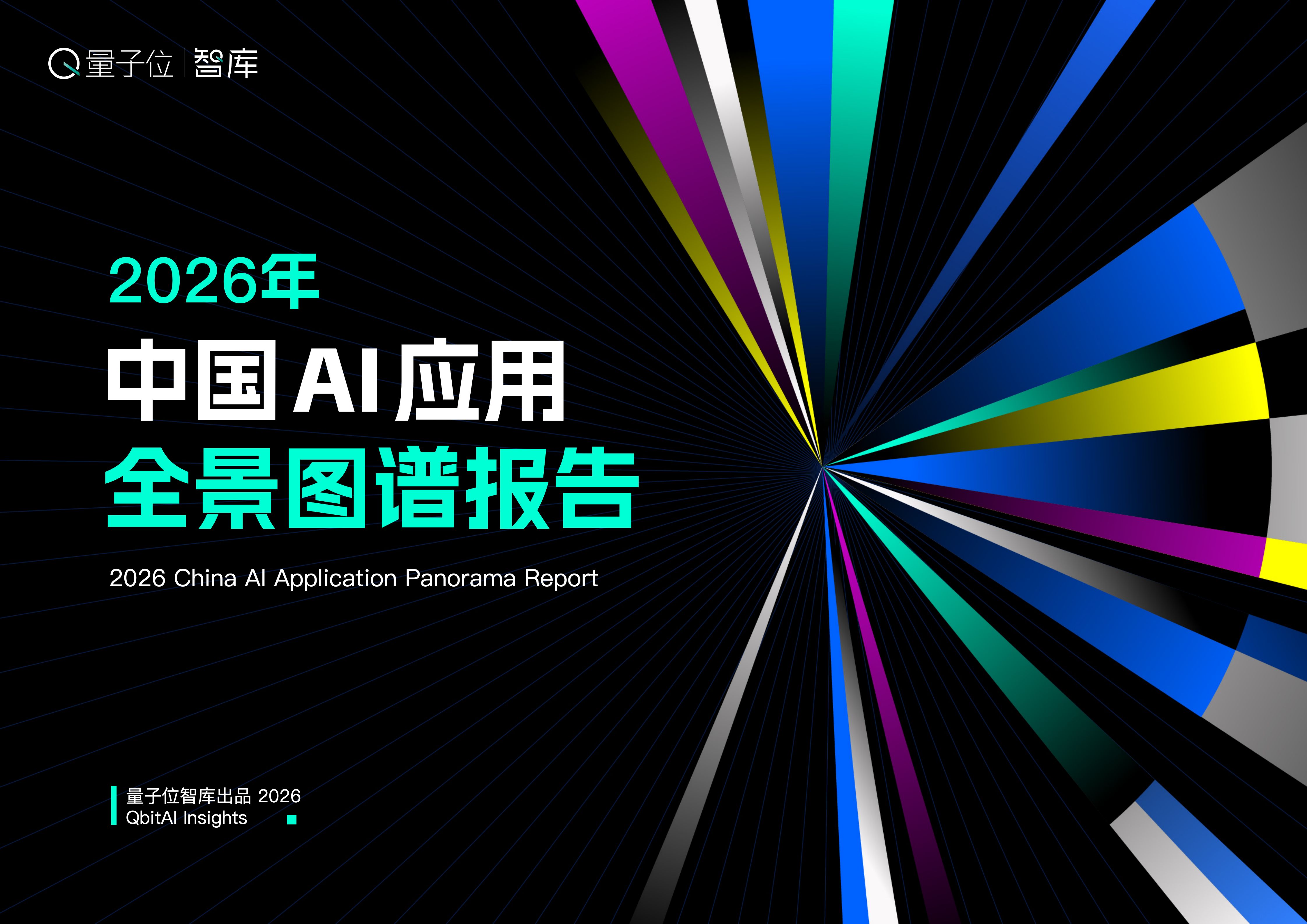
    Behind 900 Million Clicks, The Real World of AI Applications | 2026 China AI Application Panorama Report

    IMPACT Highlights China's leading role in AI application adoption and the shift towards task-oriented AI, influencing global development priorities.
  2. Training

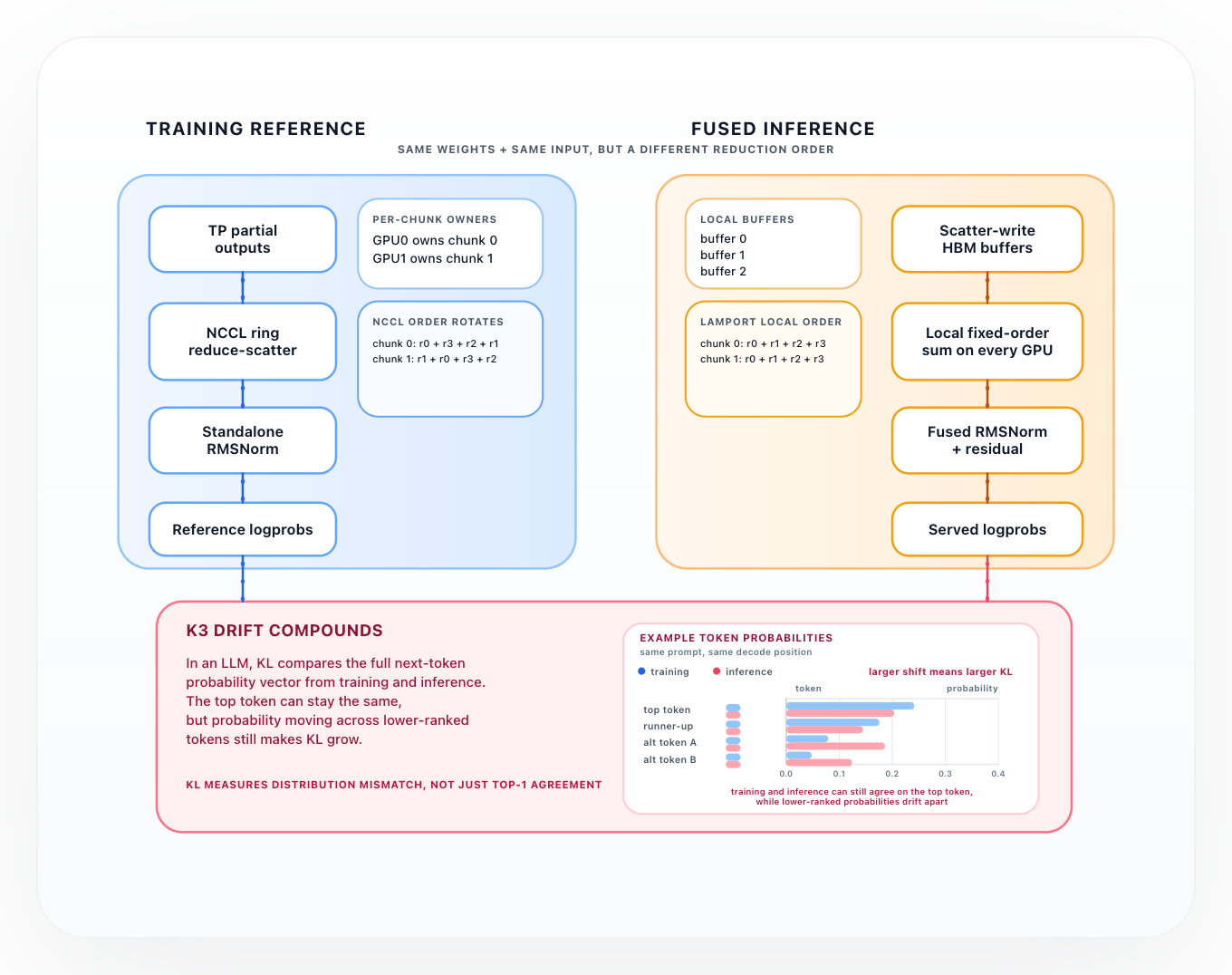
    Fireworks AI has identified critical numerical parity bugs that can arise when training and serving large language models, particularly Mixture-of-Experts (MoE) architectures. These discrepancies, stemming from the non-associative nature of floating-point arithmetic and differing summation orders in distributed training versus inference, can lead to subtle but significant issues. Such drift can compromise the integrity of reinforcement learning from human feedback (RLHF) due to altered log probabilities and erode customer trust in fine-tuned models. AI

    Training

    IMPACT Highlights potential issues in LLM training and serving pipelines that could affect model performance and reliability, especially for MoE architectures.

  3. Claude's Pass Rate Under 4%, SaaS-Bench Tears Apart Computer-Use's 'Fully Automated Office' Fantasy

    A new benchmark called SaaS-Bench has revealed that current AI agents struggle significantly with real-world, long-horizon tasks, with top models like Claude Opus 4.7 achieving less than 4% success rate on fully completing tasks. The benchmark uses actual SaaS systems and data, exposing four key failure modes: inability to maintain performance over extended tasks, cascading errors from single mistakes, a lack of self-checking mechanisms, and inconsistent performance across multiple runs. These findings suggest that the current paradigm for AI agents is insufficient for true automation and that software interfaces may need to be redesigned for AI agents rather than expecting them to operate human-centric interfaces. AI

    IMPACT Reveals significant limitations in current AI agents for real-world automation, suggesting a need for new paradigms and software redesigns for AI interaction.

  4. Composer 2.5 on Kimi K2.5, the text feedback RL bit is the interesting part

    Cursor has released Composer 2.5, which is powered by Kimi K2.5 and features a novel approach to reinforcement learning using text feedback. This method aims to pinpoint and correct errors at their exact location within an agent's execution, rather than solely evaluating the final outcome. The training process involves synthetic tasks like restoring deleted functions and includes observations on potential reward hacking, highlighting the need for external verification of agent actions. AI

    IMPACT Introduces a new training methodology for AI agents that focuses on localized error correction, potentially improving agent reliability.

  5. 768GB of cheap Intel Optane DIMM memory sticks used to run 1-trillion-parameter LLM on a system with a single GPU — local Kimi K2.5 install achieved roughly 4 tokens per second

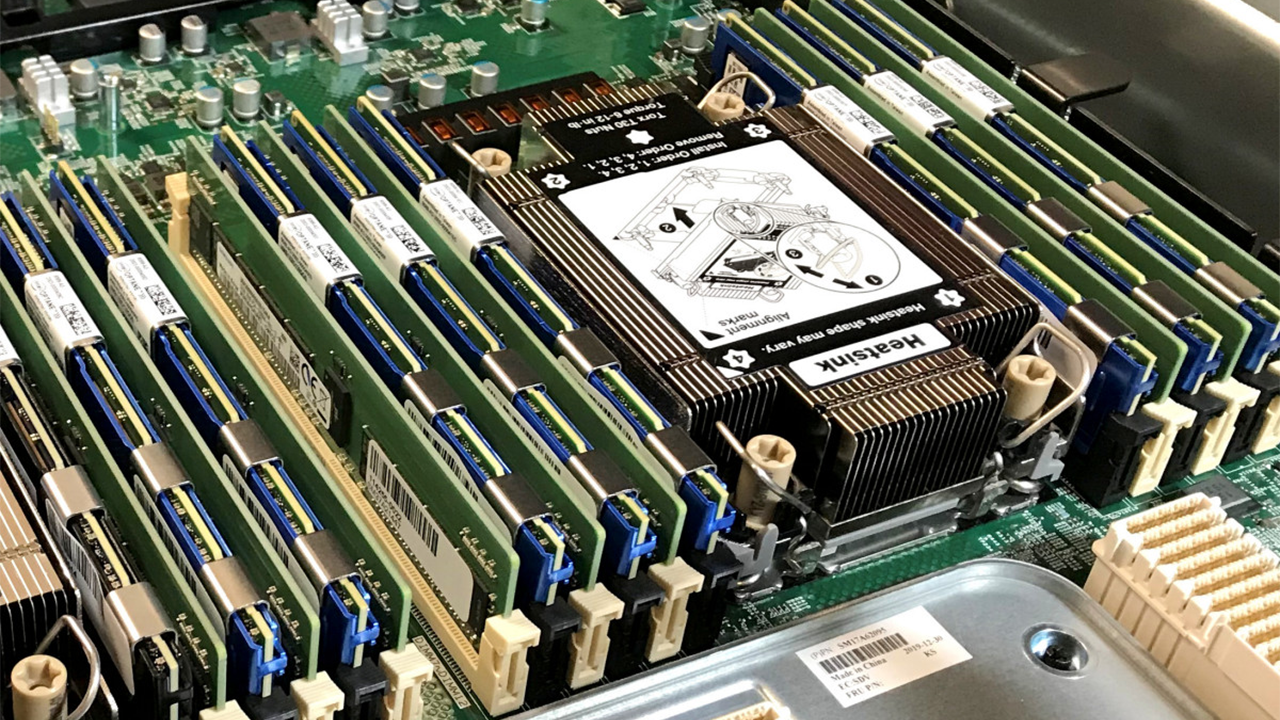
    A Redditor has successfully run a 1-trillion-parameter LLM, specifically Kimi K2.5, locally on a single GPU workstation by utilizing 768GB of second-hand Intel Optane Persistent Memory modules as RAM. This setup achieved approximately 4 tokens per second, a performance deemed impressive given the hardware's budget constraints. The use of discontinued Optane DIMMs highlights a potential market gap for affordable, high-capacity memory solutions for large language model inference, especially as DRAM prices fluctuate. AI

    768GB of cheap Intel Optane DIMM memory sticks used to run 1-trillion-parameter LLM on a system with a single GPU — local Kimi K2.5 install achieved roughly 4 tokens per second

    IMPACT Demonstrates a cost-effective method for running large LLMs locally, potentially influencing future hardware configurations for AI inference.

  6. LLM-driven design of physics-constrained constitutive models: two agents are better than one

    Researchers have developed a novel multi-agent system for generating physics-constrained constitutive models using large language models. This approach employs a "Creator" agent to propose models and an "Inspector" agent to rigorously audit them against nine physical constraints, ensuring validity. The system demonstrated a significant improvement in the proportion of physically sound models, achieving 100% for Claude Opus 4.7 and 56% for Kimi K2.5, while maintaining accuracy and generalization capabilities. AI

    IMPACT Enables automated discovery of physically valid and accurate material models, accelerating scientific research and engineering applications.

  7. ETCHR: Editing To Clarify and Harness Reasoning

    Researchers have developed ETCHR, a novel image editing model designed to enhance the visual reasoning capabilities of multimodal large language models (MLLMs). ETCHR decouples image editing from language understanding, employing a two-stage training process to improve how MLLMs interpret and manipulate visual information. This approach has demonstrated significant performance gains across various visual reasoning tasks when integrated with models like Qwen3-VL-8B, Gemini-3.1-Flash-Lite, and Kimi K2.5. AI

    IMPACT Enhances multimodal LLM performance on visual reasoning tasks, potentially improving applications requiring detailed image understanding and manipulation.

  8. Scaling and Optimizing Frontier Model Training

    Fireworks AI has developed a new training infrastructure that enables the fine-tuning of trillion-parameter Mixture-of-Experts (MoE) models, overcoming previous memory and orchestration bottlenecks. This platform was instrumental in the recent release of Cursor's Composer 2.5, a coding model that achieved top performance on several benchmarks. The system utilizes techniques like low-precision expert quantization and optimizer state offloading to manage the memory demands of large MoE models, making them more accessible for training and fine-tuning. AI

    Scaling and Optimizing Frontier Model Training

    IMPACT Enables training of trillion-parameter MoE models, potentially accelerating the development of more capable frontier models.

  9. Agents Don't Fail on Intelligence. They Fail on Execution.

    A new benchmark by Fireworks AI reveals that the reliability of AI model execution, not just intelligence, is a critical bottleneck for agentic AI systems. In 720 browser automation tasks, one model failed to produce valid output nearly 20% of the time, leading to significant increases in retry rates, latency, and cost. The study introduces the "Agent Execution Tax" to quantify this overhead, emphasizing that models with consistent, reliable output are more valuable in production than those with only high reasoning scores. AI

    Agents Don't Fail on Intelligence. They Fail on Execution.

    IMPACT Highlights that reliable execution and structured output consistency are crucial for production AI agents, impacting cost and success rates.

  10. Cursor Introduces Composer 2.5

    Cursor has released Composer 2.5, an updated AI coding assistant that offers improved intelligence and reliability for long-running tasks. This new version is built upon Moonshot AI's Kimi K2.5 architecture and incorporates advanced training techniques, including targeted reinforcement learning with textual feedback and a significantly larger dataset of synthetic tasks. The company claims Composer 2.5 outperforms previous versions and rivals or surpasses competitors like Claude Opus 4.6 and GPT-5.4 in benchmarks, while offering a more cost-effective solution. AI

    Cursor Introduces Composer 2.5

    IMPACT Enhances AI coding assistant capabilities, potentially improving developer productivity and offering a cost-effective alternative to other leading models.

  11. LivePI: More Realistic Benchmarking of Agents Against Indirect Prompt Injectio

    Researchers have developed LivePI, a new benchmark designed to more realistically assess the risks of indirect prompt injection in AI agents. This benchmark simulates real-world scenarios across various input channels like email, web pages, and chat, evaluating twelve attack families and five malicious goals. Initial tests on leading models such as GPT-5.3-Codex and Claude Opus 4.6 revealed significant vulnerabilities, with group-chat injections proving universally successful and repository link attacks causing high-severity failures. A proposed two-layer defense, combining prompt filtering and tool-call authorization, demonstrated effectiveness in blocking malicious actions without compromising agent utility. AI

    LivePI: More Realistic Benchmarking of Agents Against Indirect Prompt Injectio

    IMPACT Highlights critical security vulnerabilities in current AI agents, necessitating robust defenses for safe deployment.

  12. Innovative Solutions Rebuilds Enterprise Services Delivery with Fireworks AI

    Innovative Solutions, an AWS Premier Partner, has redesigned its enterprise services delivery by adopting Fireworks AI as its primary inference layer. This strategic shift addresses escalating AI inference costs and delivery complexity, which were previously limiting profit margins and operational flexibility. By moving its DarcyIQ platform to Fireworks AI, the company achieved predictable economics and enabled a transition from linear service models to parallel, agent-driven execution. AI

    Innovative Solutions Rebuilds Enterprise Services Delivery with Fireworks AI

    IMPACT Enables faster, more cost-effective AI-driven enterprise services delivery through agentic systems.

  13. Announcing Together AI and Adaption Partnership

    Together AI has partnered with Adaption, a company co-founded by former Cohere and Google DeepMind leaders Sara Hooker and Sudip Roy. This collaboration integrates Adaption's data optimization tools with Together AI's fine-tuning infrastructure. The partnership aims to streamline the process for users to create high-quality, fine-tuned open-source models by improving dataset quality and simplifying the experimentation and deployment workflow. AI

    IMPACT Streamlines the creation of specialized open-source models by enhancing data quality and fine-tuning workflows.