PulseAugur / Brief
EN
LIVE 04:22:18

Brief

last 24h
[23/23] 221 sources

Multi-source AI news clustered, deduplicated, and scored 0–100 across authority, cluster strength, headline signal, and time decay.

  1. Fortune Brainstorm Tech 2026 will be brilliant

    Fortune is hosting its 25th anniversary Brainstorm Tech conference from June 8-10 in Aspen, returning to its original venue. The event will feature discussions on the digital attention economy, AI governance, defense tech, and the pace of change. Notable speakers include leaders from Anthropic, Mistral, XBOX, NVIDIA, and Warner Music, alongside artists and athletes, covering topics from AI pilots and trust to spatial intelligence and health outcomes. AI

    Fortune Brainstorm Tech 2026 will be brilliant

    IMPACT Provides a platform for discussing AI trends and challenges with industry leaders.
  2. 80% of companies have an immigrant in a top leadership role—Trump’s visa crackdown is forcing them to make a ‘plan C,’ warns immigration expert

    Companies are developing contingency plans due to stricter U.S. visa policies that risk stranding foreign workers overseas. These new H-1B visa application criteria, including social media reviews, have caused significant processing delays and separations. Experts advise businesses to create 'plan C' strategies to retain skilled immigrant talent, who hold critical leadership roles in many organizations. AI

    80% of companies have an immigrant in a top leadership role—Trump’s visa crackdown is forcing them to make a ‘plan C,’ warns immigration expert

    IMPACT This policy impacts the tech industry's ability to retain specialized talent, which is crucial for AI development and deployment.

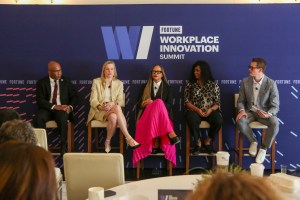
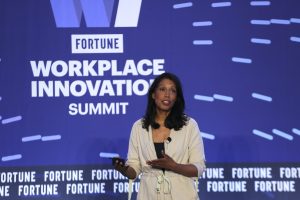
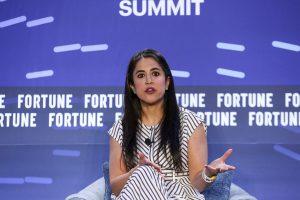
  3. Pay transparency is exposing a bigger problem: Most companies can’t explain why they pay what they pay

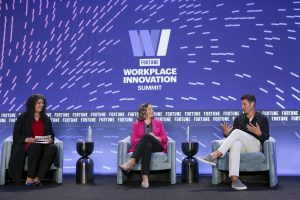
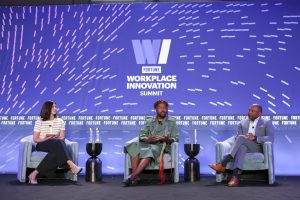
    Despite the rise of pay transparency laws, many companies struggle to justify their salary decisions, leading to persistent pay gaps. Experts at a Fortune summit highlighted that the core issue is not a lack of shared pay information, but an inability to explain the rationale behind compensation. This inconsistency, often stemming from daily hiring and retention decisions that override strategic pay philosophies, results in employees not understanding their pay, and a widening gender pay gap. AI

    Pay transparency is exposing a bigger problem: Most companies can’t explain why they pay what they pay

    IMPACT Companies are facing new regulatory requirements and internal challenges in justifying salary decisions, impacting HR and compensation strategies.

  4. U.S. national debt officially hits $39 trillion—adding approximately $5 billion a day since October

    The U.S. national debt has surpassed $39 trillion, with approximately $5 billion added daily since October. This milestone raises concerns about the debt-to-GDP ratio, which currently stands at 123%. Financial leaders like Ray Dalio and Jamie Dimon have warned of potential economic crises due to escalating interest payments, while Maya MacGuineas emphasizes the urgent need for deficit reduction. AI

    U.S. national debt officially hits $39 trillion—adding approximately $5 billion a day since October
  5. Beyond the diploma: Skills that actually get graduates hired

    The current job market is presenting significant challenges for recent graduates, with AI and a reduction in entry-level positions altering traditional career pathways. Experts at Fortune's Workplace Innovation Summit highlighted that entry-level roles now often require skills previously expected at mid-career levels, largely due to AI's impact on eliminating certain tasks. This shift necessitates a focus on developing critical soft skills like problem-solving and communication, alongside technical abilities, as employers re-evaluate hiring criteria beyond traditional diplomas. AI

    Beyond the diploma: Skills that actually get graduates hired

    IMPACT Discusses how AI is changing hiring requirements and the skills needed for new graduates.

  6. A senior comms exec says your AI notetaker could be your company’s biggest liability

    AI notetaking tools, while offering efficiency benefits, pose significant risks to organizations by potentially compromising confidential information and legal privilege. Experts warn that employees may inadvertently share sensitive meeting details or that inaccuracies in the AI's transcriptions could lead to unforeseen issues. The rapid growth of this market, projected to reach $2.5 billion by 2033, highlights the need for robust governance and employee education on the responsible use of such AI technologies. AI

    A senior comms exec says your AI notetaker could be your company’s biggest liability

    IMPACT Highlights potential legal and data governance challenges for businesses adopting AI tools.

  7. ‘We’ve given them the short end of the stick’: Business school dean says AI could eliminate many jobs for young people—even as they lead innovation

    A business school dean warns that artificial intelligence, primarily deployed for efficiency, could eliminate many entry-level jobs, hindering young people's career progression. Despite young innovators creating new forms of meaning and progress outside traditional structures, society has not adequately prepared them for this AI-driven transition. Experts suggest that young people may need to seek opportunities in innovative startups and focus on deep problem-solving rather than rapid ideation to find success in the evolving job market. AI

    ‘We’ve given them the short end of the stick’: Business school dean says AI could eliminate many jobs for young people—even as they lead innovation

    IMPACT AI's efficiency focus may eliminate entry-level roles, requiring young innovators to adapt their job search and problem-solving strategies.

  8. A dating expert says ghosting and quiet quitting are the same problem at their core, and corporate life has more to learn from romance than it admits

    A dating expert suggests that workplace issues like ghosting and quiet quitting stem from a similar core problem as in modern dating: a lack of communication skills. Lakshmi Rengarajan, formerly of Match.com and WeWork, argues that companies can learn from the dating world to foster better employee connections. She emphasizes the need for a "connection strategy" to navigate rapid workplace changes, including remote work and the integration of AI, while prioritizing human relationships. AI

    A dating expert says ghosting and quiet quitting are the same problem at their core, and corporate life has more to learn from romance than it admits

    IMPACT The integration of AI tools in the workplace is mentioned as a factor contributing to employee uncertainty and the need for better connection strategies.

  9. CEO of AI-powered performance review firm says annual evaluations weren’t designed for the AI era: ‘The practice just hasn’t kept up’

    David Hassell, CEO of 15Five, argues that traditional annual performance reviews are outdated and ill-suited for the current era of rapid technological change. He suggests that the annual cadence is too slow to foster employee development and that most reviews are backward-looking. Hassell advocates for more frequent, continuous feedback integrated with AI tools to streamline the process and make it more forward-looking, ultimately reducing manager workload and employee anxiety. AI

    CEO of AI-powered performance review firm says annual evaluations weren’t designed for the AI era: ‘The practice just hasn’t kept up’

    IMPACT Suggests AI can streamline HR processes, making performance reviews more frequent and effective for employee development.

  10. CEOs are handing out AI tokens like paychecks—and figuring out how to justify the spend

    CEOs are increasingly distributing AI tokens to employees, akin to bonuses, to encourage adoption and track usage. This practice, termed 'tokenomics,' is prompting leaders to evaluate AI spend against human capital and productivity gains. Some executives are using token consumption as a metric for AI fluency, while others express concerns about cost efficiency and the need for responsible AI deployment. AI

    CEOs are handing out AI tokens like paychecks—and figuring out how to justify the spend

    IMPACT Discusses how companies are managing AI compute costs and measuring AI adoption through token usage, impacting operational strategies.

  11. Wall Street has pretty much written off the idea of a Fed rate cut at Kevin Warsh’s first meeting

    Economist Tyler Cowen suggests that the primary societal impact of AI will be a redistribution of status rather than a widespread job loss. He posits that elite professionals, such as lawyers and consultants, may be the biggest losers as their specialized knowledge becomes less valuable. Conversely, individuals adept at initiative and adapting to AI technologies, including those in developing nations, are poised to benefit. AI

    Wall Street has pretty much written off the idea of a Fed rate cut at Kevin Warsh’s first meeting

    IMPACT Discusses the potential societal impact of AI, focusing on status redistribution among professionals.

  12. ThredUp’s CEO has a warning for five-day companies: You’re going to lose the talent war

    ThredUp CEO James Reinhart advocates for a permanent four-day workweek, citing increased employee satisfaction, retention, and creativity. He argues this policy provides a competitive advantage in attracting top talent, especially as AI reshapes the job market. Research supports these claims, showing improved well-being, reduced burnout, and even increased revenue for companies adopting shorter workweeks. AI

    ThredUp’s CEO has a warning for five-day companies: You’re going to lose the talent war

    IMPACT Companies adopting a four-day workweek may gain an edge in attracting talent amidst AI-driven industry shifts.

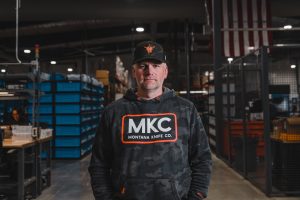
  13. This 39-year-old quit his lineman job during the pandemic and built a $50 million company in his backyard

    Josh Smith transformed his lifelong passion for knife making into a successful business, Montana Knife Company. After years of honing his craft and working as a lineman, he launched his company in 2020 during the pandemic. Four years later, Montana Knife Company achieved $50 million in revenue by offering high-quality, American-made knives at an accessible price point, filling a gap in the market. AI

    This 39-year-old quit his lineman job during the pandemic and built a $50 million company in his backyard

    IMPACT Niche tooling improvement; minimal industry-wide impact.

  14. A ‘proudly autistic’ workplace expert says putting neurodivergent employees in a typical office is like dropping a polar bear in Austin, Texas

    Workplace expert Daniel Wendler argues that most companies fail neurodivergent employees not out of malice, but by designing environments suited for neurotypical needs. He uses the analogy of a polar bear in Austin, Texas, to illustrate how these individuals are placed in unsuitable conditions, hindering their potential. Wendler highlights that a significant portion of neurodivergent employees feel excluded and plan to leave their jobs, while companies with strong disability inclusion practices see better financial and productivity outcomes. He advocates for universal design principles to create more inclusive workplaces, noting that companies like JP Morgan and Microsoft are already implementing such strategies. AI

    A ‘proudly autistic’ workplace expert says putting neurodivergent employees in a typical office is like dropping a polar bear in Austin, Texas
  15. $30 billion Twilio CEO wakes at 4:30 a.m., works Sundays and runs laps around his house between meetings to blow off steam

    Twilio CEO Khozema Shipchandler adheres to an intense work schedule, waking at 4:30 a.m. and working until 9 p.m. He believes this demanding routine, which includes running laps around his house for stress relief, is crucial for leadership success. Shipchandler's disciplined approach, influenced by his immigrant parents' work ethic, has led him to executive roles at a young age. He acknowledges this lifestyle requires significant sacrifice, impacting personal time and family commitments. AI

    $30 billion Twilio CEO wakes at 4:30 a.m., works Sundays and runs laps around his house between meetings to blow off steam
  16. Trump Accounts have a bigger problem than billionaire stock donations

    The Trump Accounts program, designed to provide investment accounts for American children, faces a significant enrollment gap, with only 6.6 million of the 73 million eligible children having accounts. This low participation is attributed to the current opt-in system, which requires parents to navigate government websites or file tax forms. Research from Washington University in St. Louis suggests that automatic enrollment, as seen in the SEED for Oklahoma Kids experiment where participation reached 99.9%, is far more effective. The article argues that the government has the authority for automatic enrollment using Social Security numbers but lacks the will to implement it, and proposes channeling donor contributions into a pooled fund for equitable distribution. AI

    Trump Accounts have a bigger problem than billionaire stock donations
  17. DEI experts say the acronym may be radioactive, but the underlying business case is stronger than ever

    Experts at the Fortune Workplace Innovation Summit argue that despite a recent pullback in corporate diversity, equity, and inclusion (DEI) initiatives, the underlying business case for these programs remains strong. They contend that the acronym has become politically charged, but the core principles of DEI are essential for business value and innovation. While the number of chief diversity officers hired has decreased, companies that maintain their commitment to DEI are expected to gain a competitive advantage. AI

    DEI experts say the acronym may be radioactive, but the underlying business case is stronger than ever
  18. Dr. Bernice King on why companies that walked back DEI were never truly committed: ‘If you retreat that quick…that reveals who you really are’

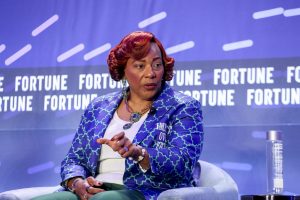
    Dr. Bernice King stated that companies quickly retreating from Diversity, Equity, and Inclusion (DEI) initiatives reveal a lack of genuine commitment. She argued that true adherence to values means maintaining them even under pressure, citing Delta Air Lines and Costco as examples of companies that have publicly defended their DEI efforts. King and other panelists suggested that many organizations treated DEI as a marketing tactic rather than an embedded principle, leading to a loss of trust among employees and consumers. AI

    Dr. Bernice King on why companies that walked back DEI were never truly committed: ‘If you retreat that quick…that reveals who you really are’
  19. Forget quiet quitting—4 in 10 millennials are taking ‘quiet vacations’ and checking out of work (and the country) on company dime instead

    A growing trend known as "quiet vacationing" sees nearly 40% of millennials taking time off work without formal approval, often while traveling abroad. This behavior stems from a fear of appearing lazy or jeopardizing job security, leading employees to maintain a semblance of online presence. Experts suggest this trend highlights underlying workplace cultural issues, such as a lack of psychological safety, and recommend clear communication of expectations from employers. AI

    Forget quiet quitting—4 in 10 millennials are taking ‘quiet vacations’ and checking out of work (and the country) on company dime instead
  20. Microsoft reports AI is more expensive than paying human employees https:// fortune.com/2026/05/22/microso ft-ai-cost-problem-tokens-agents/ # HackerNews # Micr

    Recent reports from Microsoft indicate that employing AI technologies can be more costly than hiring human workers. This finding challenges the prevailing narrative that AI adoption invariably leads to cost savings. The increased expense is attributed to factors such as token usage and agent operations, suggesting a potential re-evaluation of AI implementation strategies within companies. AI

    IMPACT AI adoption may face scrutiny as reports suggest it can be more expensive than human labor, potentially impacting future investment and implementation strategies.

  21. CNN analyst and ‘The Morning Show’ producer says Stephen Colbert is a role model for his ‘positive’ outlook on his show ending

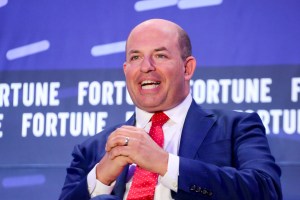
    Stephen Colbert is being lauded as a role model for his positive attitude as his 11-year run as host of The Late Show concludes. CNN analyst Brian Stelter highlighted Colbert's gratitude and grace during this transition, contrasting it with fear-based reactions. Colbert's tenure, which saw him become the top-rated late-night host and win an Emmy, is ending due to financial pressures and declining ad revenue in the late-night television landscape. AI

    CNN analyst and ‘The Morning Show’ producer says Stephen Colbert is a role model for his ‘positive’ outlook on his show ending
  22. Current price of oil as of May 5, 2026

    Oil prices have fluctuated in early May 2026, with Brent crude trading around $100-$112 per barrel. The price is significantly higher than a year ago, reflecting global supply and demand dynamics, geopolitical events, and economic conditions. The article also details how crude oil prices influence gasoline prices at the pump, the role of the U.S. Strategic Petroleum Reserve in stabilizing markets, and the interconnectedness of oil and natural gas pricing. AI

    Current price of oil as of May 5, 2026
  23. Milestones like marriage and parenthood are so delayed for millennials and Gen Z many of them are skipping out on life insurance, report finds

    A recent Capgemini report indicates that millennials and Gen Z are delaying major life milestones like homeownership and starting families due to economic pressures. This delay impacts their financial planning, with many forgoing life insurance despite recognizing its importance. The report suggests that younger generations would be more inclined to purchase life insurance if policies were more affordable and clearly explained, particularly highlighting the value of 'living benefits' that can be accessed during their lifetime. AI

    Milestones like marriage and parenthood are so delayed for millennials and Gen Z many of them are skipping out on life insurance, report finds

    IMPACT This article discusses financial planning and consumer behavior related to life insurance, with no direct impact on AI operators.