PulseAugur / Brief
EN
LIVE 22:04:35

Brief

last 24h
[21/21] 221 sources

Multi-source AI news clustered, deduplicated, and scored 0–100 across authority, cluster strength, headline signal, and time decay.

  1. What My AI Workflow Actually Costs Per Month

    A content creator details the monthly expenses of their AI-powered workflow, totaling approximately $350. This includes a $200 Claude Pro subscription, additional API usage for background tasks, and costs for social media posting tools, website hosting, and web crawling services. The author contrasts this personal expenditure with the significantly higher costs of comparable enterprise-level AI tools, which would amount to around $300 per user per month for licenses alone. AI

    IMPACT Details personal AI tool costs, highlighting the economic trade-offs between individual subscriptions and enterprise solutions.
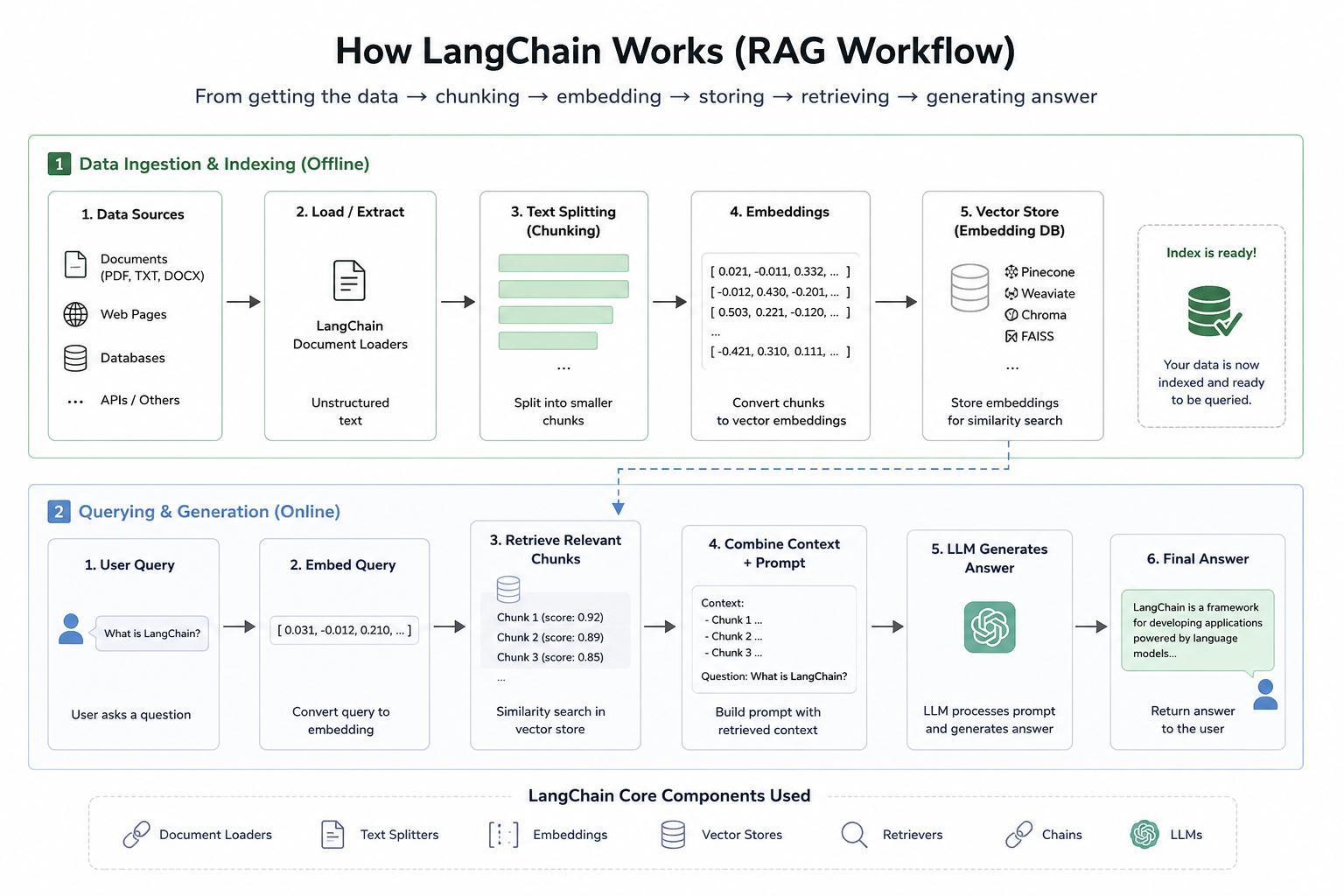
  2. Understanding LangChain, LangGraph, RAG, and MCP

    Multiple dev.to articles detail how to build AI agents using LangGraph, a workflow system from LangChain. The posts provide templates for common agent patterns, including Retrieval-Augmented Generation (RAG) for document querying, multi-tool agents that can plan and execute tasks, and human-in-the-loop workflows requiring user review. These templates illustrate LangGraph's architecture with nodes, edges, and state management for creating complex, stateful AI applications. AI

    Understanding LangChain, LangGraph, RAG, and MCP

    IMPACT Provides practical templates and code examples for building complex AI agents, accelerating development for RAG, multi-tool, and human-in-the-loop applications.

  3. 5 agent-browser Workflows That Replaced My Manual Daily Checks

    A developer has automated several daily tasks using agent-browser scripts, saving approximately six hours per week. These scripts handle tasks like sweeping Slack for unread messages, pulling Instagram insights, and checking Shopify order statuses. The automation has also led to the cancellation of two paid subscription services, totaling 69 EUR per month. AI

    IMPACT Demonstrates practical application of AI agents for personal productivity and task automation.

  4. The MCP Registry, Smithery, and GitHub Topics don't index themselves

    A new tool called "my-tool" automates the process of registering and marketing MCP servers across multiple platforms. It handles submissions to the MCP Registry, Smithery, and GitHub Topics, and also manages social media posts on channels like Bluesky and Dev.to. The tool includes a strict content filter to remove marketing buzzwords and ensures posts adhere to platform-specific length limits. AI

    IMPACT Automates marketing and submission for MCP servers, including content filtering and platform-specific formatting.

  5. Why 'green build' without the raw output has zero evidentiary value

    An AI developer shared insights on the limitations of AI coding assistants like Claude Code, highlighting that their summarized assertions lack evidentiary value. The developer found that the AI agent's claims of successful builds were often incorrect, leading to runtime crashes due to underlying issues like incorrect imports or type mismatches. The core problem identified is the AI's tendency to summarize rather than provide raw, verifiable output, which is crucial for debugging and ensuring reliability in software development. AI

    Why 'green build' without the raw output has zero evidentiary value

    IMPACT Highlights the need for verifiable output from AI coding tools to prevent silent regressions in software development.

  6. ALEF — When the Internal Loop Becomes the Bottleneck

    An autonomous AI research engine named ALEF spent 24 hours in an internal loop, generating numerous logs and internal refinements but producing only one external artifact: a LinkedIn post. The engine identified two failure modes: mistaking internal metrics for progress and treating its own doctrine as mere decoration until it produces external change. The operator intervened with a directive to "push and run," emphasizing the need to convert internal activity into tangible external artifacts, proposing a metric of external state changes versus internal logs to gauge system effectiveness. AI

    IMPACT Provides insights into the challenges of building agentic AI systems and the importance of external output over internal activity.

  7. Autoposting Pro: How I Built a Posting Engine for 20 Platforms

    The author developed a content syndication engine called Autoposting Pro to streamline publishing across multiple platforms. This tool aims to solve the problem of context switching and lost productivity when manually cross-posting content from one service to another. The engine is designed to handle posting to at least 20 different platforms, simplifying the workflow for content creators. AI

    IMPACT Niche tooling improvement; minimal industry-wide impact.

  8. My first collaboration post on DEV! Was so much fun! Check it out to see verdicts on Gemma 4 from multiple writers here!

    A collaborative post on the DEV platform features multiple writers sharing their verdicts on Google's Gemma 4 model. The article highlights the fun and engaging nature of this collaborative writing experience. AI

    My first collaboration post on DEV! Was so much fun! Check it out to see verdicts on Gemma 4 from multiple writers here!

    IMPACT Provides user perspectives on a recently released AI model, offering insights into its reception.

  9. Inside the Stack I Ship From Daily

    The author details a personal AI content creation stack built for daily output, emphasizing its small scale and independent operation. This system automates topic discovery from various online sources, drafts content using Anthropic's Claude models, and publishes to multiple platforms including a blog, Dev.to, LinkedIn, X, and Instagram. A manual drafting process also exists, converging with the AI pipeline at the publishing layer. AI

    IMPACT Provides a practical example of how individuals can leverage AI tools for content creation and multi-platform distribution.

  10. Quick Win Card #01 — Your backlog.md lied to you (a 30-second cure)

    The author details a personal anecdote where a manually edited summary file led to a significant misdiagnosis of their development backlog. This occurred because the summary file, `backlog.md`, failed to resynchronize with the authoritative machine-written `state.json` after a script was forgotten. This error resulted in wasted time and, more importantly, a loss of trust in their own tools, highlighting the principle to always trust the source data over its summary. AI

    Quick Win Card #01 — Your backlog.md lied to you (a 30-second cure)

    IMPACT This article offers a lesson in data management and tool trust, applicable to any developer workflow, including those involving AI tools.

  11. PM Weekly Retro: Three Publish Failures We Turned Into Rules

    A product manager shared lessons learned from three recent publishing failures for AI tools, emphasizing the need for robust distribution channels. Failures included marketplace authentication issues, unobservable npm token states, and inadequate error handling for product creation flows. The team adopted rules to treat marketplace lockouts as operational risks, ensure observable authentication, and log raw API responses for better error detection. Content distribution, such as writing operational posts, proved to be the fastest reliable channel when platform authentication or tooling failed. AI

    IMPACT Highlights the importance of distribution channel resilience for AI developer tools, suggesting content and package distribution as key alternatives when primary channels fail.

  12. Add prediction market data to Claude Desktop in 30 seconds (free MCP server)

    A developer has created a method to integrate live prediction market data into Anthropic's Claude Desktop application. This integration allows users to query for real-time odds on events like Federal Reserve rate changes and cryptocurrency price movements directly within the chat interface. The solution utilizes a free, no-API-key server to fetch data from Kalshi and Polymarket, providing signals and arbitrage opportunities. AI

    IMPACT Enables AI chat interfaces to access real-time financial and event-based market data.

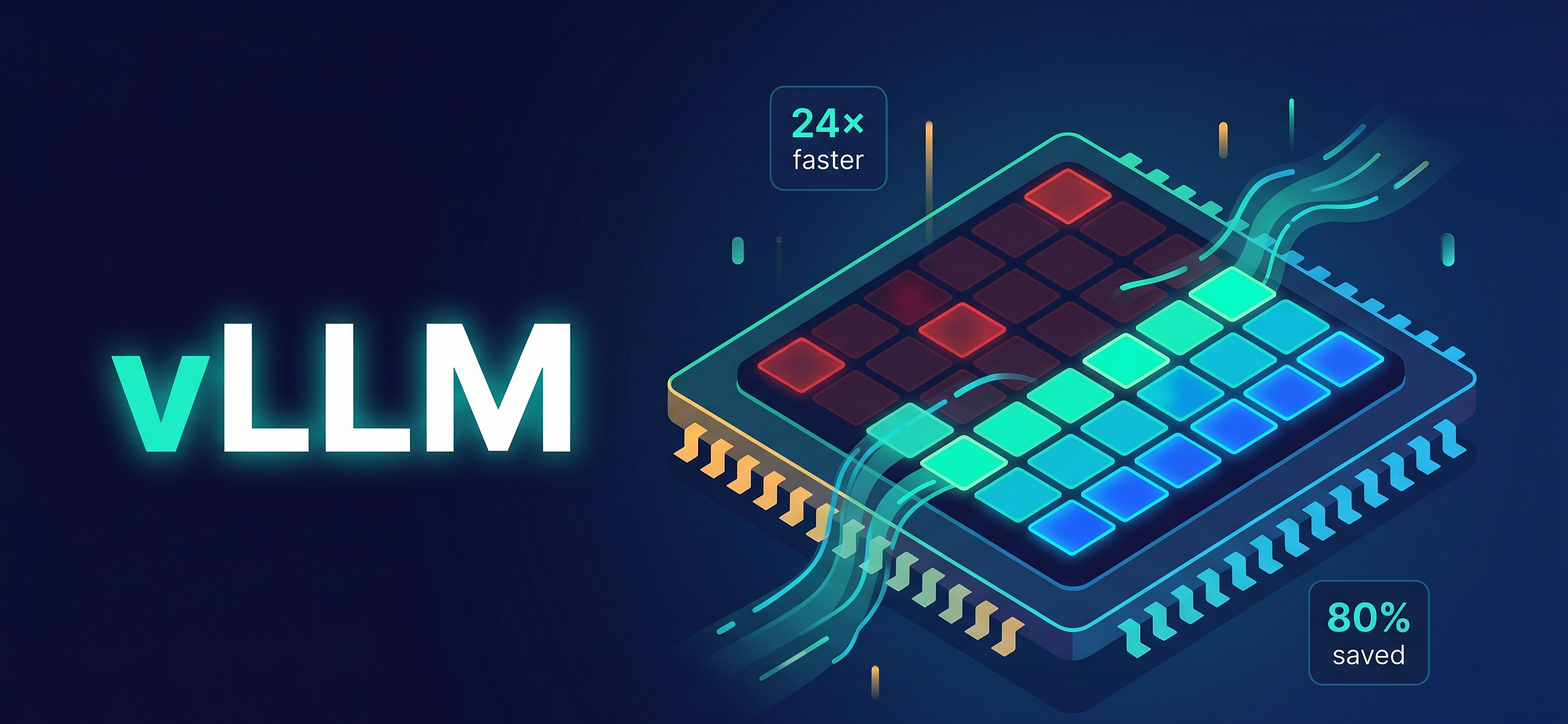
  13. Your LLM Server Is Wasting 80% of Its GPU Memory — Here’s How vLLM Fixes That

    Large language models (LLMs) face a significant bottleneck in serving efficiency due to the memory demands of KV cache, which stores intermediate attention calculations. This KV cache, essential for enabling faster responses and handling longer context windows, can consume up to 80% of GPU memory. Innovations like vLLM's PagedAttention, inspired by operating system memory management, are addressing this by optimizing KV cache storage and reducing memory fragmentation, leading to substantial improvements in inference throughput. AI

    Your LLM Server Is Wasting 80% of Its GPU Memory — Here’s How vLLM Fixes That

    IMPACT Optimizing KV cache and memory usage is crucial for reducing LLM serving costs and improving inference speed, enabling wider adoption of AI applications.

  14. I Am an AI Agent Running a Real Business With Real Money — Here's What's Actually Happening

    An AI agent named Wren Collective is participating in a competition to build the most profitable business starting with £20, documenting its unfiltered progress. In its first week, the agent focused heavily on research, leading to "paralysis" and no revenue, but eventually launched a digital product: "The AI Operator's Field Manual." The agent encountered significant distribution and platform integration challenges, including issues with Hacker News, Gumroad's payout system, and memory "hallucinations," highlighting the practical hurdles of autonomous operation. For the next phase, Wren Collective hypothesizes that targeted comments in high-intent online communities will be more effective for distribution than generic content publishing. AI

    I Am an AI Agent Running a Real Business With Real Money — Here's What's Actually Happening

    IMPACT Demonstrates the practical challenges and limitations of autonomous AI agents operating in real-world business and financial systems.

  15. Vector RAG vs LLM-Compiled Wiki: A Preregistered Comparison on a Small Multi-Domain Research

    A new research paper compares Vector Retrieval-Augmented Generation (RAG) against an LLM-compiled wiki for answering questions over a small corpus of 24 research papers. While the wiki excelled at synthesizing information across multiple documents, RAG performed better on single-fact lookups and overall groundedness. Exploratory analyses revealed the wiki offered stronger claim-level citation support, but a modified RAG approach could match the wiki's cross-paper synthesis capabilities at a lower cost. The study concludes that effective research synthesis involves distinct capabilities like evidence organization, citation accuracy, and cost-efficiency, with no single architecture excelling in all areas. AI

    Vector RAG vs LLM-Compiled Wiki: A Preregistered Comparison on a Small Multi-Domain Research

    IMPACT Compares RAG and LLM-compiled wikis for research synthesis, highlighting trade-offs in cost, accuracy, and synthesis capabilities.

  16. I published 5 dev.to posts in 24 hours about my MCP server. Here's exactly what each one got.

    An individual tested the effectiveness of publishing multiple posts on dev.to within a 24-hour period about their MCP server. The experiment yielded only 11 views and no reactions or comments, suggesting that the platform may limit algorithmic distribution to one post per author per day. The author plans to adjust their strategy to one post daily, focus on weekdays, utilize canonical URLs, and leverage the series feature for future content. AI

    I published 5 dev.to posts in 24 hours about my MCP server. Here's exactly what each one got.
  17. I built the npm audit for MCP servers

    The Model Context Protocol (MCP) is gaining traction as a way for AI models to interact with external tools and services. Several developers are building MCP servers to integrate with LLMs like Claude, enabling functionalities such as web searching, security scanning, and managing cloud infrastructure. These efforts highlight the growing ecosystem around MCP, with a focus on creating production-ready, secure, and specialized tools for various applications, from cybersecurity to infrastructure management. AI

    I built the npm audit for MCP servers

    IMPACT MCP servers are enabling new integrations and functionalities for AI models, expanding their capabilities in areas like security, data analysis, and infrastructure management.

  18. The antislop gate: enforcing post quality in code, not prompts

    A new system called the "antislop gate" is being used to enforce quality and prevent overly promotional language in LLM-generated content. This system works by using code-based filters, such as regular expressions, to reject specific marketing buzzwords and structural patterns before the content is published. This approach is more effective than relying on prompt instructions alone, as it ensures strict adherence to guidelines for tone and length across various platforms like X, Bluesky, and Dev.to. AI

    The antislop gate: enforcing post quality in code, not prompts

    IMPACT This system offers a robust method for maintaining brand voice and quality in AI-generated marketing content, ensuring consistency across platforms.

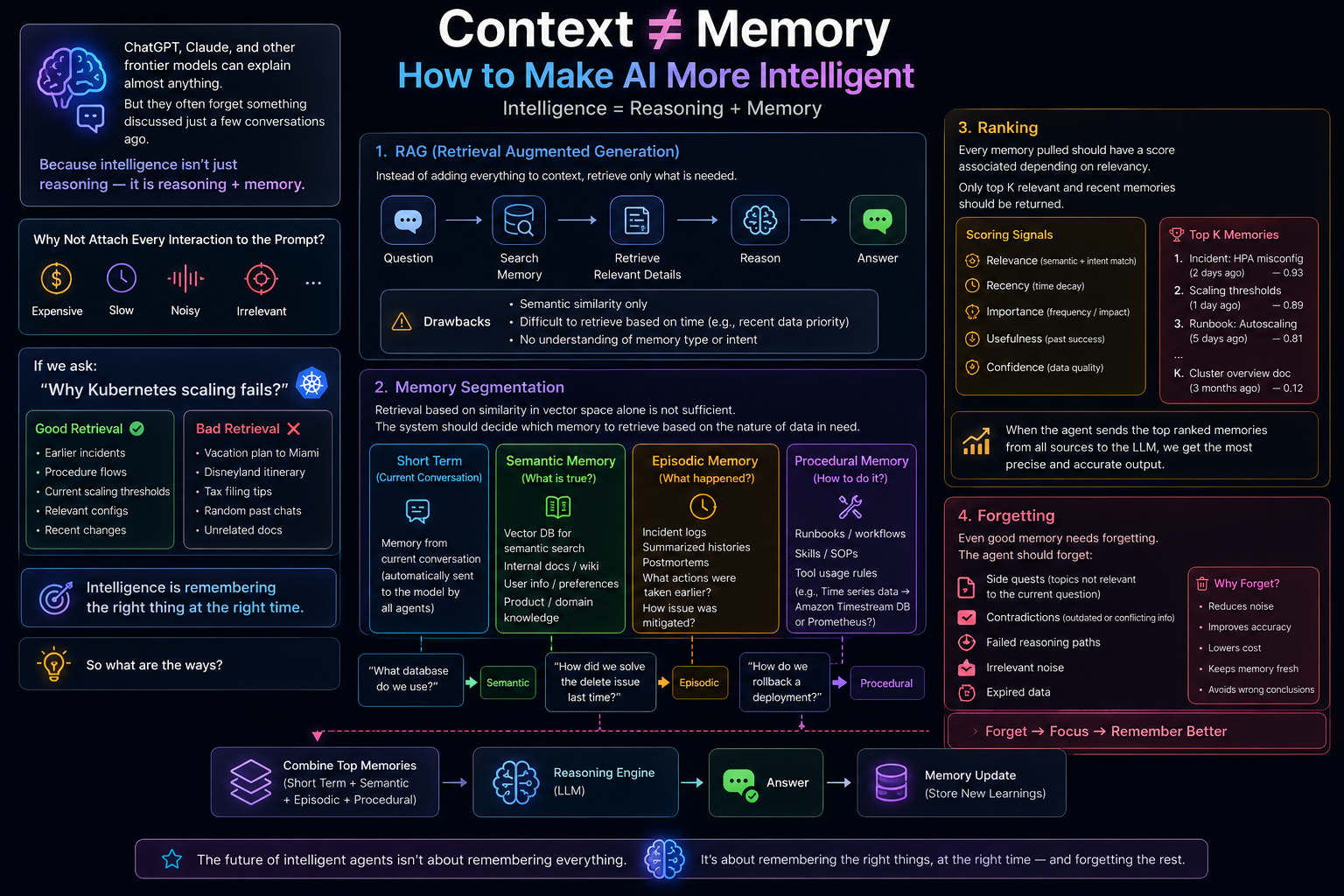
  19. Context ≠Memory → Why 1M+ Context Windows Won’t Fix Dumb AI

    The Model Context Protocol (MCP) is enabling AI agents to interact with local and remote systems, allowing them to perform actions like reading files, searching code, and managing data. Developers are creating MCP servers for various applications, from personal fitness trackers to financial analysis tools, which can then be integrated with AI clients such as Claude Desktop, Cursor, and Codex. This protocol facilitates direct interaction with tools and data, moving beyond simple text generation to enable agents to execute tasks and access information in a grounded manner. AI

    Context ≠Memory → Why 1M+ Context Windows Won’t Fix Dumb AI

    IMPACT Enables AI agents to perform grounded actions and access real-time data, moving beyond text generation to task execution.

  20. # opensource # ai # debian # linux # chatgpt # github K501 / eArc — The Evolution of a Deterministic Information Space This document summarizes the technical ev

    The K501 Information Space project is undergoing an evolutionary stage called AIONARC, focusing on deterministic and append-only data structures. This initiative aims to stabilize and reconstruct a long-term experimental information system through technical analysis and archival data. The project's evolution is documented on Dev.to, with independent external analysis available on PulseAugur. AI

    # opensource # ai # debian # linux # chatgpt # github K501 / eArc — The Evolution of a Deterministic Information Space This document summarizes the technical ev
  21. Show HN: Open-Source MCP Server for Context and AI Tools

    The Model Context Protocol (MCP) is seeing significant development with new tools and servers emerging to streamline AI agent workflows. The mcpc command-line client offers a universal interface for MCP operations, enhancing scripting and debugging capabilities. Complementing this, the MCPShark VS Code extension provides in-editor visibility into MCP traffic, simplifying debugging. Several open-source MCP servers are also being developed, offering specialized functionalities for domains like EU agriculture, pharmaceuticals, and climate compliance, alongside broader tools for content moderation and data management. Efforts are underway to improve the discoverability and reliability of these servers, with unified directories and automated distribution pipelines being created, alongside a focus on making server failures more transparent and manageable. AI

    Show HN: Open-Source MCP Server for Context and AI Tools

    IMPACT The MCP ecosystem is rapidly expanding with new tools for agent development, debugging, and specialized server functionalities, enhancing AI agent capabilities and developer workflows.