PulseAugur / Brief
LIVE 18:08:27

Brief

last 24h
[50/93] 186 sources

Multi-source AI news clustered, deduplicated, and scored 0–100 across authority, cluster strength, headline signal, and time decay.

  1. Krypton Evening News | Musk's SpaceX Launches Largest IPO Plan in History; First Comprehensive Driver Service Map Launched Nationwide; General Administration of Customs Releases Several Measures to Support the Construction of the Guangdong-Hong Kong-Macao Greater Bay Area in Guangdong

    Alibaba's flagship Qwen3.7-Max model has achieved the top spot among Chinese large language models and ranks fifth globally, demonstrating performance comparable to leading models like GPT and Claude. This advancement is part of Alibaba's broader strategy to integrate AI into its e-commerce platforms for user acquisition and engagement. Meanwhile, AMD has begun mass production of its next-generation EPYC processors using TSMC's 2nm process, marking a significant step in high-performance computing. AI

    IMPACT Sets a new benchmark for Chinese LLMs, potentially driving further competition and development in the domestic AI sector.
  2. End-to-End Observability for vLLM and TGI: from DCGM to Tokens

    This article details how to achieve end-to-end observability for large language model inference servers like vLLM and TGI. It highlights that standard observability tools fall short due to unique LLM serving characteristics such as variable latency, dynamic batching, and the critical role of the KV cache. The author proposes a layered approach, correlating user-facing token rendering with underlying GPU silicon metrics, and provides specific signals to monitor at each layer, from business costs down to GPU hardware. AI

    IMPACT Provides engineers with a framework to monitor and optimize LLM inference performance, crucial for production deployments.

  3. Notebooks for the Whole Team: Deploy JupyterHub on Kubernetes in Minutes

    This article provides a guide for deploying JupyterHub on Kubernetes, aiming to centralize data science environments and eliminate the chaos of individual laptops. It offers a streamlined approach that avoids the need for users to learn complex tools like Helm. AI

    Notebooks for the Whole Team: Deploy JupyterHub on Kubernetes in Minutes

    IMPACT Simplifies MLOps infrastructure for data science teams, enabling more efficient collaboration and deployment of machine learning models.

  4. Optimal Query Allocation in Extractive QA with LLMs: A Learning-to-Defer Framework with Theoretical Guarantees

    Researchers have developed a Learning-to-Defer framework to improve the efficiency of extractive question answering (EQA) using large language models. This method intelligently allocates queries to specialized models, ensuring high-confidence predictions while minimizing computational costs. Tested on datasets like SQuADv1 and TriviaQA, the framework demonstrated enhanced answer reliability and significant reductions in computational overhead, making it suitable for scalable EQA deployments. AI

    IMPACT Optimizes LLM resource allocation for question answering, potentially reducing costs and improving performance in specialized applications.

  5. Stop your AI trading agent from hallucinating technical analysis

    A new tool called Chart Library has been released to address hallucinations in AI trading agents by providing grounded historical data. This library exposes a base-rate engine via the Model Context Protocol (MCP), allowing agents to query historical market data and receive verified statistics instead of fabricated information. The tool aims to improve the reliability of AI agents operating in financial markets by offering factual insights into past market behaviors. AI

    IMPACT Provides AI agents with factual historical market data, reducing reliance on potentially fabricated information for trading decisions.

  6. COROS thinks ChatGPT should analyze your training data COROS is opening athlete training data to LLMs through a new MCP integration. https://www. androidauthori

    COROS, a wearable technology company, is integrating its platform with large language models (LLMs) to analyze athlete training data. This new integration, called the COROS Training Hub (CTH), aims to provide deeper insights into performance and recovery by leveraging AI. The company is making this data available to LLMs like ChatGPT, allowing for more sophisticated analysis than previously possible. AI

    IMPACT Enables more sophisticated analysis of athlete performance data through AI integration.

  7. Google addressed over 200 internal Chrome vulnerabilities from March to May 2026, a surge coinciding with its adoption of AI security tools. # Cybersecurity # A

    Google has seen a significant increase in internal Chrome vulnerability reports, with over 200 identified between March and May 2026. This surge appears to coincide with the company's integration of AI-powered security tools into its development process. The adoption of these AI tools may be contributing to the higher detection rate of security flaws within the Chrome browser. AI

    IMPACT Increased AI adoption in security tools may lead to faster vulnerability detection and patching in software development.

  8. torchtune: PyTorch native post-training library

    A new PyTorch-native library called torchtune has been introduced to simplify the post-training phase for large language models. This library focuses on modularity and direct access to PyTorch components, aiming to facilitate efficient fine-tuning, experimentation, and deployment. Torchtune is designed to be highly flexible for research iteration and has demonstrated competitive performance and memory efficiency compared to existing frameworks like Axolotl and Unsloth. AI

    IMPACT Provides a flexible, PyTorch-native framework for LLM fine-tuning, potentially accelerating research and reproducible LLM development.

  9. OpenAI floats buy-before-your-try AI availability guarantee

    OpenAI is considering a new model for accessing its AI services, which would require customers to purchase capacity in advance. This approach aims to ensure guaranteed availability for AI workloads, addressing concerns about potential stockouts. The company is exploring this strategy as demand for AI computing resources continues to surge. AI

    OpenAI floats buy-before-your-try AI availability guarantee

    IMPACT This potential shift could influence how enterprises plan and budget for AI compute resources, prioritizing guaranteed access over flexible pay-as-you-go models.

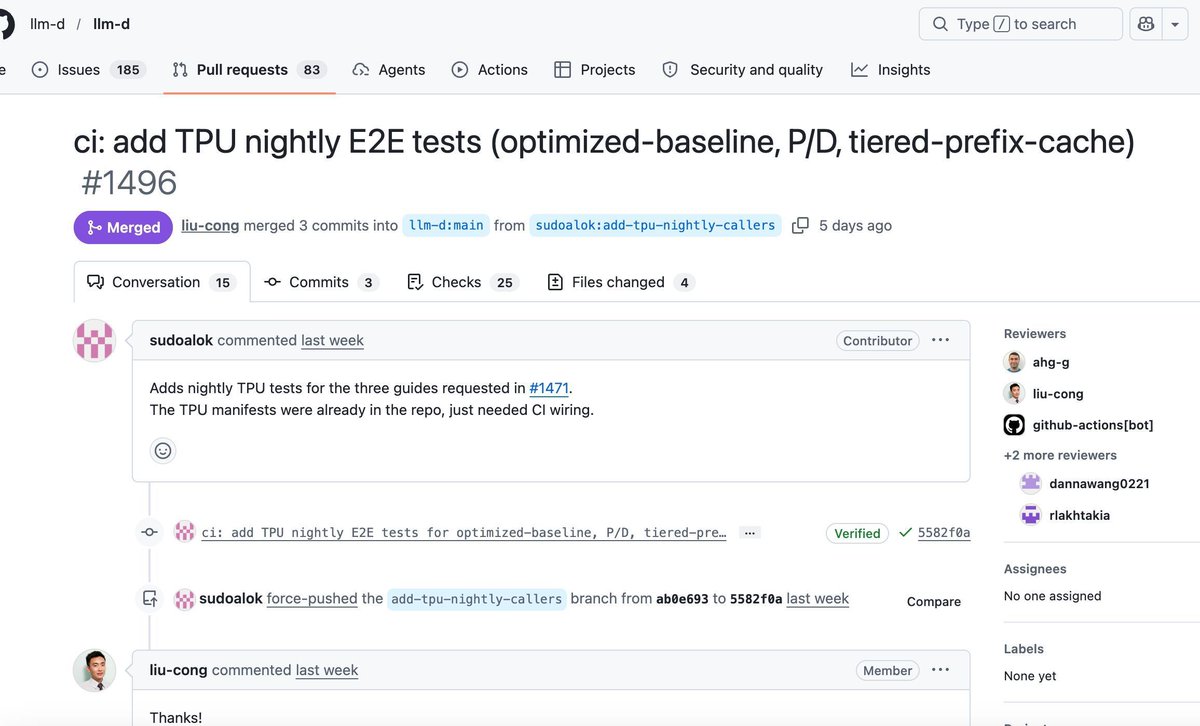
  10. TPU ALERT: For OSS production Kubernetes distributed inferencing, Google just added nightly CI for llm-d. Great step by Google to start enabling the wider ML co

    Google has enhanced its open-source production Kubernetes inferencing capabilities by adding nightly CI for llm-d. This development is seen as a significant step towards enabling broader adoption of large language models in production environments. AI

    TPU ALERT: For OSS production Kubernetes distributed inferencing, Google just added nightly CI for llm-d. Great step by Google to start enabling the wider ML co

    IMPACT Enhances tooling for deploying and managing large language models in production Kubernetes environments.

  11. langchain-fireworks==1.4.0

    LangChain has released updates for its Fireworks integration, with version 1.4.1 addressing API connection errors and retries. Version 1.4.0 introduced a migration to the 1.x SDK for Fireworks AI and included fixes for context overflow errors. These updates aim to improve the stability and reliability of using Fireworks models through the LangChain framework. AI

    langchain-fireworks==1.4.0

    IMPACT Minor improvements to the integration layer for using AI models via the LangChain framework.

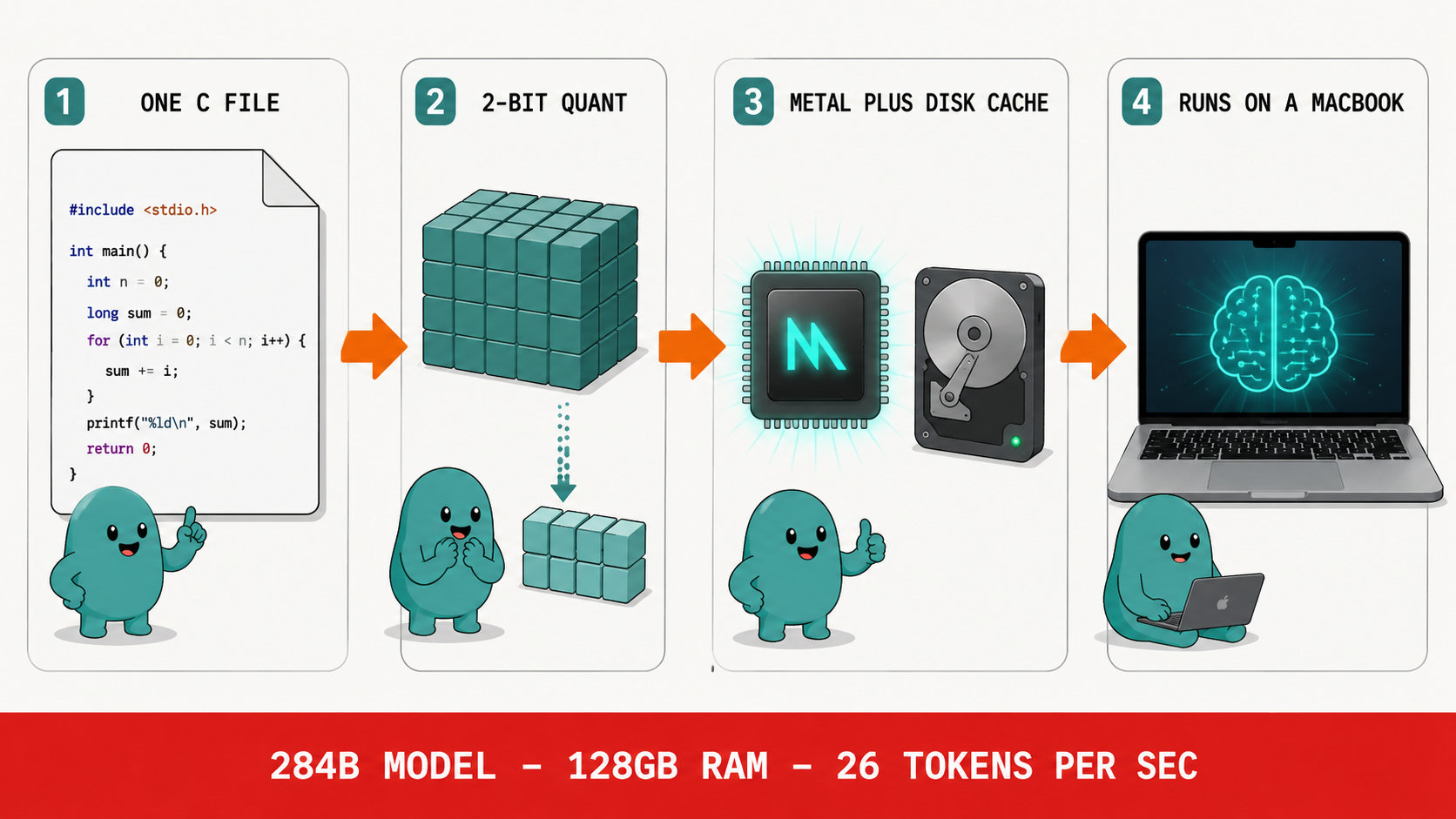
  12. I Tested antirez's ds4 on 18 Tasks — His One-File C Engine Runs a 284B Model on a MacBook and…

    A C-based engine named ds4, developed by Salvatore Sanfilippo (antirez), has demonstrated the capability to run a 284-billion-parameter language model on a MacBook. The author tested ds4 across 18 different tasks, highlighting its efficiency and performance on consumer hardware. This development suggests a potential for more accessible local execution of large AI models. AI

    I Tested antirez's ds4 on 18 Tasks — His One-File C Engine Runs a 284B Model on a MacBook and…

    IMPACT Demonstrates efficient local execution of large AI models on consumer hardware, potentially lowering barriers to entry for researchers and developers.

  13. How to Build a Local LLM Agent to Automate Work List Generation from Monthly Reports (With Jira Integration)

    A developer created a local LLM agent to automate the extraction of work items from monthly reports, addressing issues of manual effort, data inconsistency, and security risks associated with cloud-based AI tools. The agent runs entirely on-premise using a CPU-only setup with Ollama and the Gemma 4 E2B model, processing raw reports, normalizing data, and enriching descriptions with Jira information to generate a clean list of accomplishments. This approach prioritizes data privacy for enterprise clients by keeping all operations within their own servers. AI

    How to Build a Local LLM Agent to Automate Work List Generation from Monthly Reports (With Jira Integration)

    IMPACT Enables secure, automated task extraction from internal reports, improving efficiency and data privacy for businesses.

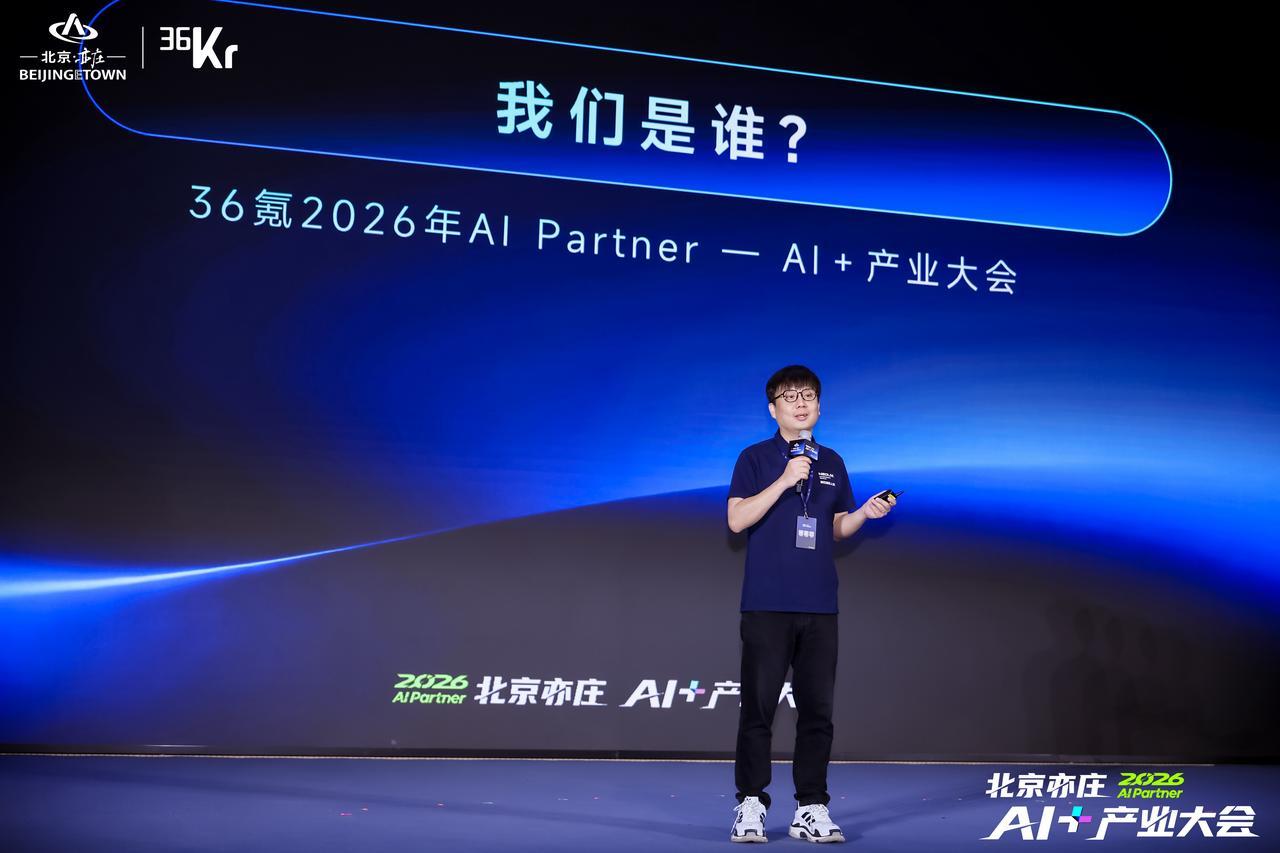
  14. Neolithic New Claw: AI Integrated Solution, Zero Threshold to Become an Autonomous Vehicle Commander | 2026 AI Partner · Beijing Yizhuang AI+ Industry Conference

    Neosilicates has launched NeoClaw, an AI agent designed to manage large fleets of autonomous delivery vehicles. This new solution allows a single operator to manage over 100 vehicles through natural language commands, significantly increasing efficiency from previous levels of around 10 vehicles per person. NeoClaw aims to bridge the gap between autonomous driving technology and scalable operational management, moving towards a future where human-robot interaction is seamless and requires no specialized training. AI

    Neolithic New Claw: AI Integrated Solution, Zero Threshold to Become an Autonomous Vehicle Commander | 2026 AI Partner · Beijing Yizhuang AI+ Industry Conference

    IMPACT Accelerates the operational scaling of autonomous vehicle fleets by enabling single-person management of over 100 vehicles.

  15. You’ve built the media products, now make them personalized

    Databricks has introduced Genie, an AI agent designed to help media companies personalize their digital products. Genie allows Chief Digital Officers and product teams to ask complex questions about audience behavior in natural language, receiving instant answers without needing to wait for data analysts. This capability aims to remove the "Digital Product Intelligence Gap" and accelerate product iteration, with Genie's accuracy improving to over 90% through advanced LLM orchestration. AI

    IMPACT Enables media companies to accelerate product personalization and iteration using natural language queries on audience data.

  16. The Future of Physical AI Isn’t Smarter Robots, It’s Smarter Interfaces

    Wetour Robotics is developing a new approach to human-machine interaction for physical AI, focusing on the interface rather than just robot capabilities. Their Spatial Intent Fusion technology aims to create a more natural and intuitive way for humans to control existing machines by fusing spatial position, visual context, and gestural intent. This system, running on an NVIDIA Jetson Orin Nano Super, processes information at the edge to ensure low-latency control, effectively making the human body the primary interface. AI

    The Future of Physical AI Isn’t Smarter Robots, It’s Smarter Interfaces

    IMPACT This development could lead to more intuitive control systems for physical robots and machinery, improving human-robot collaboration in industrial and assistive settings.

  17. We Connected an LLM to a 12-Year-Old Codebase. Here's What Broke.

    Integrating LLMs into existing, complex software systems presents significant challenges beyond simple API calls. A key issue is managing the probabilistic and network-dependent nature of LLMs, which can cause system instability if treated as deterministic, in-process functions, leading to failures like extended checkout times. Furthermore, the quality of data fed into LLMs is crucial; historical data with inconsistencies and drift can lead to inaccurate outputs, turning AI integration into a data cleaning project. Finally, the cost of LLM usage can escalate rapidly without proper telemetry, necessitating the implementation of a gateway service to handle timeouts, fallbacks, and cost monitoring. AI

    IMPACT Provides practical guidance on integrating LLMs into legacy systems, highlighting common pitfalls and architectural patterns for reliable and cost-effective deployment.

  18. Turn ~800M Free AI Tokens Into a Single OpenAI API with FreeLLMAPI

    FreeLLMAPI is a self-hosted proxy designed to aggregate free API tokens from various AI providers into a single, unified endpoint. This tool allows users to leverage approximately 800 million free tokens per month across 14 different services, simplifying development by presenting a single OpenAI-compatible API. It offers features like automatic failover, sticky sessions for multi-turn conversations, and an admin dashboard, though it is intended for personal use and prototyping rather than production workloads. AI

    IMPACT Simplifies prototyping for AI agents and researchers by consolidating free token access across multiple providers.

  19. Let Copilot handle your local Azure setup via MCP

    GitHub Copilot can now manage local Azure development environments through the Model Context Protocol (MCP). This protocol allows Copilot to interact with tools and receive structured data, enabling it to provision resources like Key Vaults and Service Bus namespaces. The MCP server, developed by Topaz, facilitates this by acting as an intermediary between Copilot and local Azure emulators, with specific Docker networking configurations required for seamless operation. AI

    IMPACT Enhances developer productivity by automating complex cloud environment setup within the coding workflow.

  20. Zhixing Technology's iDC700 L4 Autonomous Driving Controller Enters Mass Production

    Zhixing Technology has begun mass production of its iDC700 L4 autonomous driving controller. The first autonomous logistics vehicles equipped with this controller are now operational on roads. This marks a significant step towards wider deployment of L4 autonomous driving capabilities in logistics. AI

    IMPACT Enables wider deployment of L4 autonomous driving in logistics vehicles.

  21. Vietnamese automaker VinFast restructures, spins off nearly $7 billion in debt

    Alibaba Cloud has launched a new financial-grade intelligent agent platform called Dianjin at its 2026 Cloud Summit. This platform directly connects to market data and Alibaba's assets, supporting various data sources like Wind and East Money. Dianjin is designed for financial institutions, offering features such as zero-code configuration, millisecond response times, and robust compliance measures to ensure accurate and transparent decision-making. AI

    IMPACT Enhances financial institutions' data processing and decision-making capabilities with AI-driven insights.

  22. Behind 900 Million Clicks, The Real World of AI Applications | 2026 China AI Application Panorama Report

    A new report from Quantum Bit Think Tank analyzes the evolving landscape of AI applications in China, shifting from simple chatbots to task-oriented agents. The report highlights a significant increase in AI application usage, with web traffic exceeding 900 million monthly visits and app downloads surpassing 240 million. Key trends include the rise of agents, the democratization of AI models, AI assistants becoming primary interfaces, the initial success of paid AI models, and the deepening penetration of AI in vertical business sectors. AI

    Behind 900 Million Clicks, The Real World of AI Applications | 2026 China AI Application Panorama Report

    IMPACT Highlights China's leading role in AI application adoption and the shift towards task-oriented AI, influencing global development priorities.

  23. A 3-step agent cost me $4.20. agenttrace showed me the O(n ) tool call hiding in plain sight.

    A developer discovered a significant cost overrun in an AI agent, escalating from an estimated $0.12 to $4.20 for a three-step process. The issue stemmed from an unbounded loop in the agent's cite-check step, causing input tokens to grow quadratically with each iteration due to re-attaching the full prior history. The developer implemented a fix using a sliding window approach, reducing the cost to $0.14 and highlighting the utility of the agenttrace-rs crate for diagnosing such performance and cost issues by providing detailed breakdowns of LLM calls. AI

    A 3-step agent cost me $4.20. agenttrace showed me the O(n ) tool call hiding in plain sight.

    IMPACT Provides developers with a tool to diagnose and fix costly LLM agent behavior, potentially reducing operational expenses.

  24. Chat With Your Documents Using Garudust Agent — No Vector Database Required

    Garudust Agent has launched a new feature that allows users to chat with their documents without needing a separate vector database. The system utilizes SQLite's FTS5 with a trigram tokenizer for efficient full-text search, enabling quick ingestion and querying of PDFs, text files, and other document types. This approach simplifies the process of building a knowledge base or analyzing documents by integrating RAG capabilities directly into the agent. AI

    IMPACT Simplifies document interaction by removing the need for complex vector database setups.

  25. Stop Using Raw Vector Search: Implement GraphRAG with Spring AI and Neo4j

    Developers can enhance AI retrieval systems by implementing GraphRAG, which combines vector search with graph database capabilities. This approach, demonstrated using Spring AI and Neo4j, addresses limitations of raw vector search by preserving relational context and generating structured queries. By integrating Neo4j as both a vector index and graph database, and using Spring AI's ChatClient for deterministic Cypher generation, developers can create more robust and less hallucination-prone AI applications. AI

    IMPACT Improves enterprise AI retrieval by preserving relational context and reducing hallucinations.

  26. Building Production RAG Pipelines: Practical Lessons

    Building effective production RAG pipelines requires careful attention to retrieval quality, latency, and operational visibility, rather than just demo performance. Key decisions involve how content is ingested, chunked, embedded, and indexed, with retrieval quality often proving more critical than the LLM itself. Techniques like hybrid search, metadata filtering, query rewriting, and reranking can significantly improve results, while prompt design must guide the LLM on how to use the retrieved context and avoid unsupported claims. AI

    Building Production RAG Pipelines: Practical Lessons

    IMPACT Provides practical guidance for developers building and deploying RAG systems, emphasizing key operational considerations for improved performance and reliability.

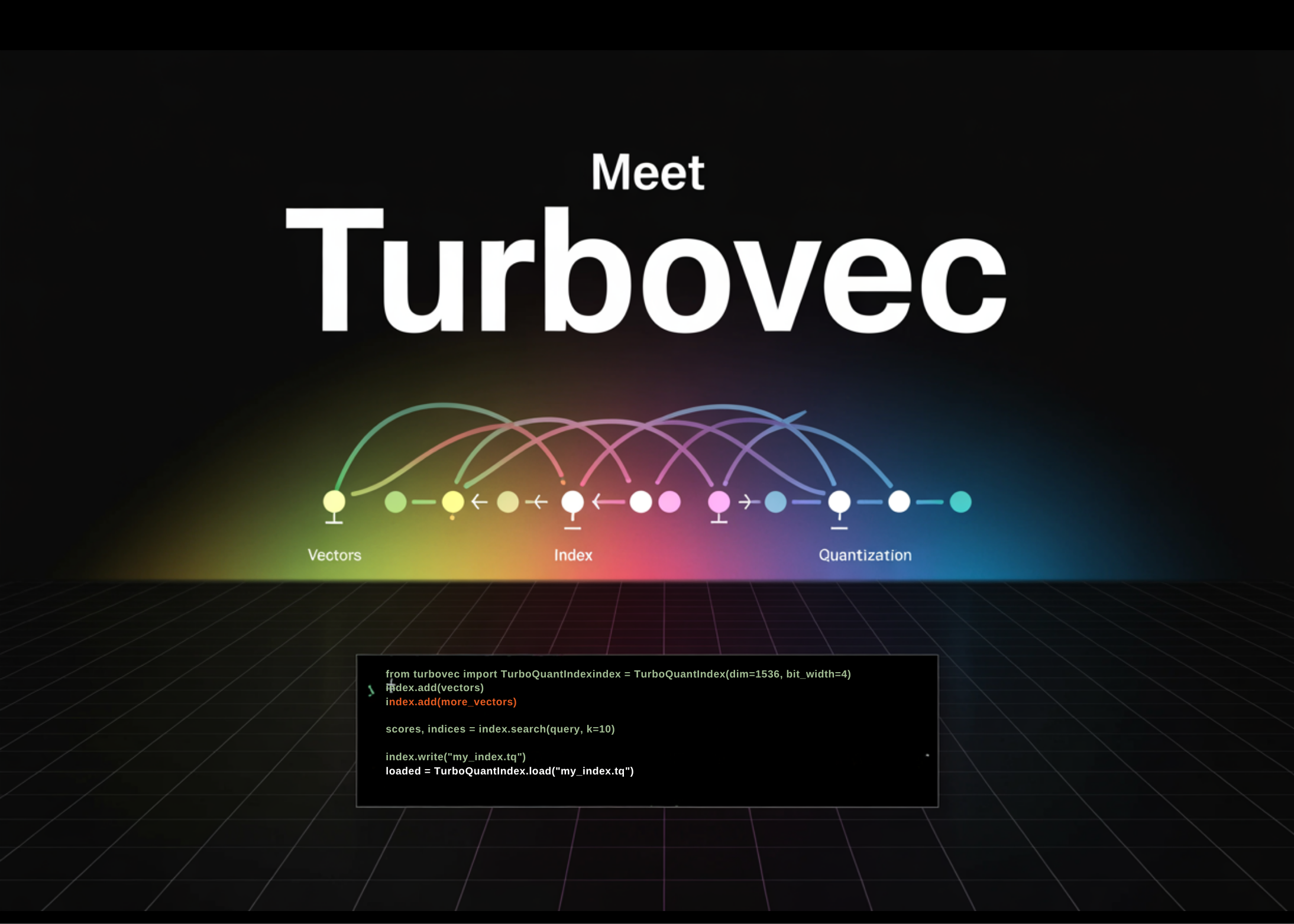
  27. Meet Turbovec: A Rust Vector Index with Python Bindings, and Built on Google’s TurboQuant Algorithm

    Turbovec is a new open-source vector index library written in Rust with Python bindings, designed to reduce the memory footprint of vector embeddings for AI applications. It utilizes Google's TurboQuant algorithm, a data-oblivious quantizer that achieves significant compression without requiring a training phase. This approach allows for substantial memory savings, fitting 10 million document embeddings into 4 GB of RAM compared to the 31 GB typically needed for float32 storage, while maintaining competitive search speeds and recall rates. AI

    Meet Turbovec: A Rust Vector Index with Python Bindings, and Built on Google’s TurboQuant Algorithm

    IMPACT Reduces memory requirements for vector embeddings, potentially lowering costs and enabling local inference for RAG applications.

  28. Amazon Quick: AWS's Agentic Workspace, Explained for Engineers

    Amazon Quick is a new AI-powered workspace designed for teams, launched in preview on April 28, 2026. It integrates with existing tools like Slack, Teams, and Outlook, allowing users to query and automate across connected systems. Built on AWS Bedrock AgentCore and utilizing the open Model Context Protocol (MCP), Quick enables the creation of custom agents that can be shared across a team, with responses grounded in the organization's specific data. AI

    Amazon Quick: AWS's Agentic Workspace, Explained for Engineers

    IMPACT Accelerates team-based AI adoption by providing a ready-to-use workspace that connects to existing tools and data.

  29. Your MCP database server needs connection pooling before real users arrive

    Database servers used by AI agents experience highly variable traffic patterns, with a single user query potentially triggering multiple database operations. To ensure stability and prevent overwhelming the system, implementing connection pooling is crucial for AI database servers. This practice is essential for maintaining a safety boundary and should involve strategies like workload-specific pools, read replicas for exploration, and setting statement timeouts to manage query budgets effectively. AI

    Your MCP database server needs connection pooling before real users arrive

    IMPACT Ensures AI applications remain stable and performant under variable user loads by optimizing database connections.

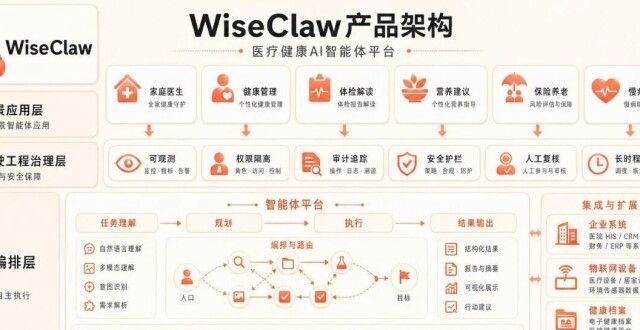
  30. WiseDiag, a Chinese medical AI company, has launched seven medical AI Skills on Tencent Cloud SkillHub, fully integrated with the WorkBuddy multi-agent workbench.

    WiseDiag, a Chinese company specializing in medical AI, has introduced seven new AI skills to Tencent Cloud's SkillHub platform. These skills are designed for enterprise users and integrate with the WorkBuddy multi-agent system, allowing for the deployment of modular medical AI agents without extensive development. AI

    WiseDiag, a Chinese medical AI company, has launched seven medical AI Skills on Tencent Cloud SkillHub, fully integrated with the WorkBuddy multi-agent workbench.

    IMPACT Enables easier deployment of specialized medical AI agents for enterprises.

  31. Announcing OpenAI-compatible API support for Amazon SageMaker AI endpoints

    Amazon SageMaker AI now offers OpenAI-compatible API support for its real-time inference endpoints. This integration allows users to invoke models hosted on SageMaker using existing OpenAI SDKs, LangChain, or Strands Agents by simply updating the endpoint URL. The new feature supports bearer token authentication for secure access and enables multi-model hosting and the deployment of fine-tuned open-source models without requiring code modifications. AI

    Announcing OpenAI-compatible API support for Amazon SageMaker AI endpoints

    IMPACT Simplifies integration for developers using OpenAI's ecosystem with models hosted on AWS infrastructure.

  32. Our retry loop made an outage worse. The circuit breaker stopped the cascade.

    A software engineer detailed how a retry loop exacerbated an outage with Anthropic's API, leading to significant wasted calls and extended recovery time. To prevent future incidents, they developed a Rust-based circuit breaker library called `llm-circuit-breaker`. This library implements a simple state machine to halt requests when an upstream service becomes degraded, protecting against cascading failures when combined with retry logic. AI

    Our retry loop made an outage worse. The circuit breaker stopped the cascade.

    IMPACT Provides a robust solution for managing API failures in AI-powered applications, preventing cascading outages and improving system resilience.

  33. I burned my Anthropic org cap and waited 3 days. Then I built llmfleet.

    A developer built a tool called llmfleet after experiencing a three-day outage due to hitting Anthropic's API token limits. The tool acts as a pooled dispatcher for API calls, managing backpressure based on real-time rate limit headers rather than relying on default SDK retry mechanisms. llmfleet aims to prevent the frantic retry loops that can exacerbate rate limiting issues and provides sustained throughput by intelligently holding requests when token limits are approached. AI

    I burned my Anthropic org cap and waited 3 days. Then I built llmfleet.

    IMPACT Provides a solution for developers to better manage API rate limits, potentially improving efficiency and reducing downtime when using large language models.

  34. Lenovo's AI Host P7: 190 TOPS, 30W, 122B Models — Too Good to Be True?

    Lenovo has announced a new AI mini PC, the P7, which claims impressive performance metrics including 190 TOPS of AI compute and the ability to run large language models at high speeds while consuming only 30W. However, the article expresses skepticism about these claims, particularly regarding the 190 TOPS figure which appears to rely on an unspecified "AI accelerator card" in addition to the CiXing P1 SoC's native 45 TOPS. The author suggests that achieving the claimed performance on 122-billion-parameter models at 50 tokens/second within a 30W power envelope is highly improbable without significant compromises in model quality or undisclosed power usage. While the "Agent Mode" for autonomous task execution and "Model Mode" for serving local LLMs to other devices are noted as interesting features, the author advises waiting for independent benchmarks before considering a purchase, as the current specifications are likely marketing-driven. AI

    Lenovo's AI Host P7: 190 TOPS, 30W, 122B Models — Too Good to Be True?

    IMPACT This AI PC could enable more powerful local AI processing on edge devices if claims hold true, but current specifications are likely aspirational.

  35. How I built projectmem — an MCP server that gives Claude, Cursor, and Codex persistent memory

    A developer has created ProjectMem, an open-source Python package designed to give AI coding agents persistent memory. ProjectMem captures development events like bugs and fixes in plain-text JSONL files, which are version-controlled with Git. It exposes these events to AI clients such as Claude, Cursor, and Codex, enabling them to recall past failures and decisions, thus preventing developers from repeating mistakes. AI

    How I built projectmem — an MCP server that gives Claude, Cursor, and Codex persistent memory

    IMPACT Provides AI coding agents with persistent memory, preventing repetitive errors and saving development time.

  36. How LI.FI Added Enterprise Auth to Apache Superset’s MCP Server

    LI.FI has successfully integrated enterprise authentication into Apache Superset's MCP server, enabling support for Okta SSO and multi-user role-based access control. This enhancement allows for seamless integration with AI models like Claude.ai, deployed on AWS EKS. The update focuses on improving security and user management for Superset deployments. AI

    How LI.FI Added Enterprise Auth to Apache Superset’s MCP Server

    IMPACT Enhances enterprise adoption of AI tools by improving security and user management for data visualization platforms.

  37. Other World Computing Announces OWC Stack AI™, the World's First* Thunderbolt™ 5 Compatible AI Accelerator and Storage Hub, Offering a New Choice: "AI at Your Fingertips" https://www.yayafa.com/2805173/ # AgenticAi # AI # Artifici

    Other World Computing (OWC) has launched the OWC Stack AI, a new storage hub and AI accelerator. This device is notable for being the first to support Thunderbolt 5 technology. It aims to bring AI capabilities directly to users' workstations. AI

    Other World Computing Announces OWC Stack AI™, the World's First* Thunderbolt™ 5 Compatible AI Accelerator and Storage Hub, Offering a New Choice: "AI at Your Fingertips" https://www.yayafa.com/2805173/ # AgenticAi # AI # Artifici

    IMPACT Provides localized AI acceleration and storage for workstations, potentially improving performance for AI tasks on personal machines.

  38. With aluminum prices up 20%, recycling startups bet on AI to cash in https://techcrunch.com/2026/05/21/with-aluminum-prices-up-20-recycling-startups-bet-on-ai-t

    Aluminum recycling startups are increasingly leveraging artificial intelligence to improve their operations and capitalize on rising aluminum prices. These companies are integrating AI technologies to enhance sorting accuracy, optimize processing efficiency, and ultimately increase the yield of recycled aluminum. This strategic adoption of AI aims to make recycling more economically viable and environmentally sustainable. AI

    IMPACT AI integration in recycling can improve resource efficiency and sustainability, potentially lowering costs for manufacturers.

  39. FedCritic: Serverless Federated Critic Learning-based Resource Allocation for Multi-Cell OFDMA in 6G

    Researchers have developed FedCritic, a novel serverless federated learning framework for resource allocation in 6G networks. This approach addresses the challenges of inter-cell interference in ultra-dense networks by enabling decentralized critic learning through parameter averaging. FedCritic aims to improve signal quality, cell-edge rates, and overall network throughput and fairness compared to existing methods. AI

    IMPACT Introduces a new federated learning approach for optimizing resource allocation in future 6G networks, potentially improving efficiency and user experience.

  40. AIGaitor: Privacy-preserving and cloud-free motion analysis for everyone, using edge computing

    Researchers have developed AIGaitor, a novel system for motion analysis that operates entirely on a smartphone, eliminating the need for cloud processing. This approach addresses key barriers in clinical motion capture, such as cost, complexity, and privacy concerns, as identified by rehabilitation clinicians. AIGaitor utilizes on-device neural accelerators to perform markerless monocular motion capture and deep-learning analysis, achieving processing times comparable to cloud-based systems. AI

    IMPACT Enables accessible, private, and low-cost motion analysis for clinical and personal use via consumer smartphones.

  41. Closed Loop Dynamic Driving Data Mixture for Real-Synthetic Co-Training

    Researchers have developed AutoScale, a novel closed-loop system designed to optimize the mixture of real and synthetic data for training autonomous driving models. This system dynamically adjusts the data mixture based on performance feedback, addressing the challenges of scene bias and inefficient data utilization in current co-training methods. AutoScale employs Graph Regularized AutoEncoder for scene representation and Cluster-aware Gradient Ascent for reweighting, demonstrating improved performance with fewer synthetic samples under budget constraints. AI

    IMPACT This approach could lead to more efficient and effective training of autonomous driving systems by optimizing data usage.

  42. Fast and Stable Triangular Inversion for Delta-Rule Linear Transformers

    Researchers have developed a new method for triangular inversion, a crucial operation in linear attention mechanisms used by advanced models like Qwen3.5/3.6 and Kimi Linear. This technique significantly improves the speed and numerical stability of this sub-routine, which is often a performance bottleneck. Experiments show up to a 4.3x speed-up on NPUs compared to existing implementations, leading to overall layer performance gains without sacrificing accuracy. AI

    IMPACT Improves efficiency of linear attention mechanisms, potentially enabling faster and more accurate long-context models.

  43. Optimized Federated Knowledge Distillation with Distributed Neural Architecture Search

    Researchers have developed FedKDNAS, a novel federated learning framework that optimizes model selection and knowledge distillation for heterogeneous client devices. This approach allows each client to autonomously choose a lightweight model tailored to its specific accuracy and resource constraints. The framework then uses a hybrid objective for training, incorporating both supervised learning and knowledge distillation, and shares only predictions on a public reference set. Evaluations show FedKDNAS significantly improves accuracy under non-IID conditions, reduces CPU usage, and drastically cuts communication overhead compared to existing baselines. AI

    IMPACT Enhances federated learning efficiency and accuracy on heterogeneous devices, potentially accelerating collaborative AI development.

  44. From Circuit Evidence to Mechanistic Theory: An Inductive Logic Approach

    Researchers have developed a formal framework for cumulative mechanistic science in neural networks, treating circuit interpretation as inductive theory construction. This approach uses Causal Functional Signatures (CFS) and architectural signatures learned via inductive logic programming (ILP) to make mechanistic claims explicit and comparable. The system demonstrates improved structural separation compared to baseline methods and supports transferability across different model scales and architectures. AI

    IMPACT Provides a formal infrastructure for cumulative mechanistic science, enabling more systematic and comparable analysis of neural network circuits.

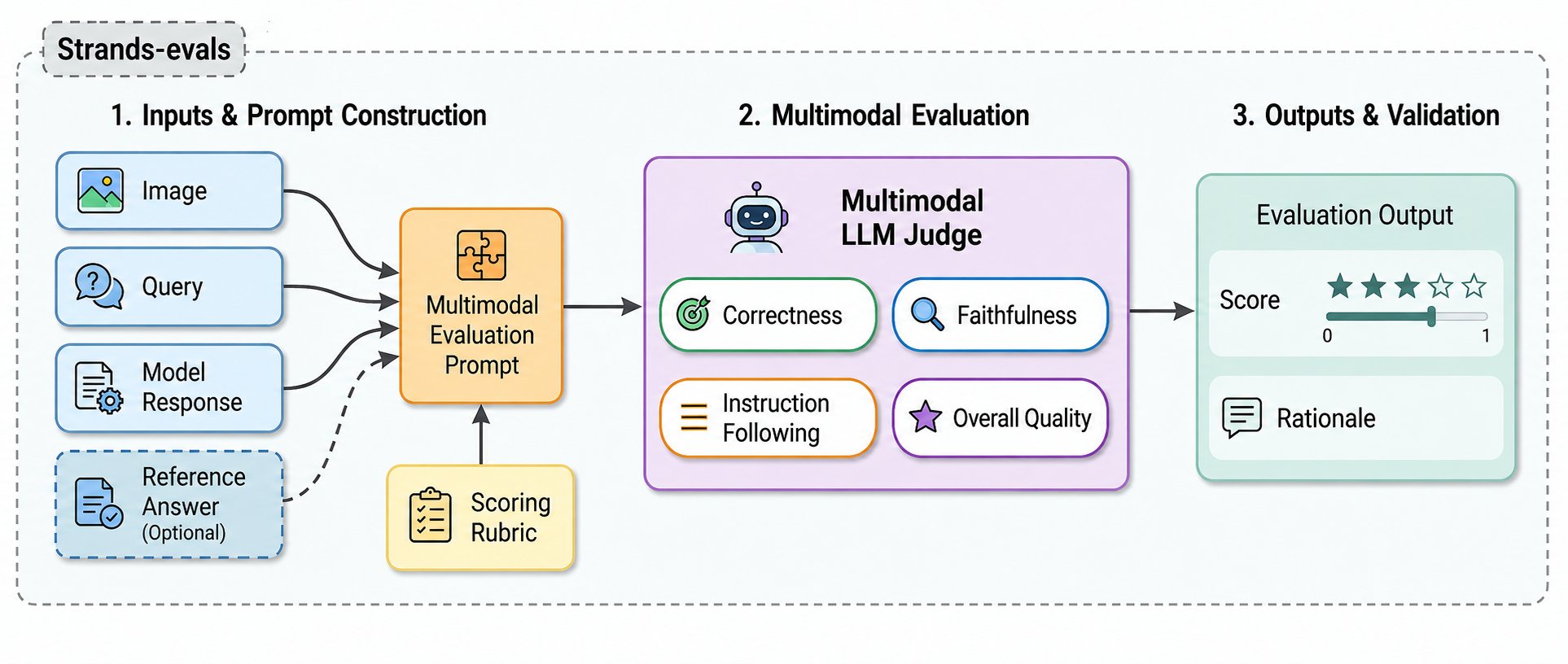
  45. Multimodal evaluators: MLLM-as-a-judge for image-to-text tasks in Strands Evals

    Amazon Web Services has introduced new multimodal evaluators for its Strands Evals SDK, designed to assess image-to-text tasks. These tools leverage large multimodal models (MLMMs) to judge responses by directly referencing the source image, addressing limitations of text-only evaluation methods. The evaluators can identify visual hallucinations and factual errors, integrating into existing development workflows for automated quality control. AI

    Multimodal evaluators: MLLM-as-a-judge for image-to-text tasks in Strands Evals

    IMPACT Enhances automated evaluation for multimodal AI applications, reducing reliance on manual review.

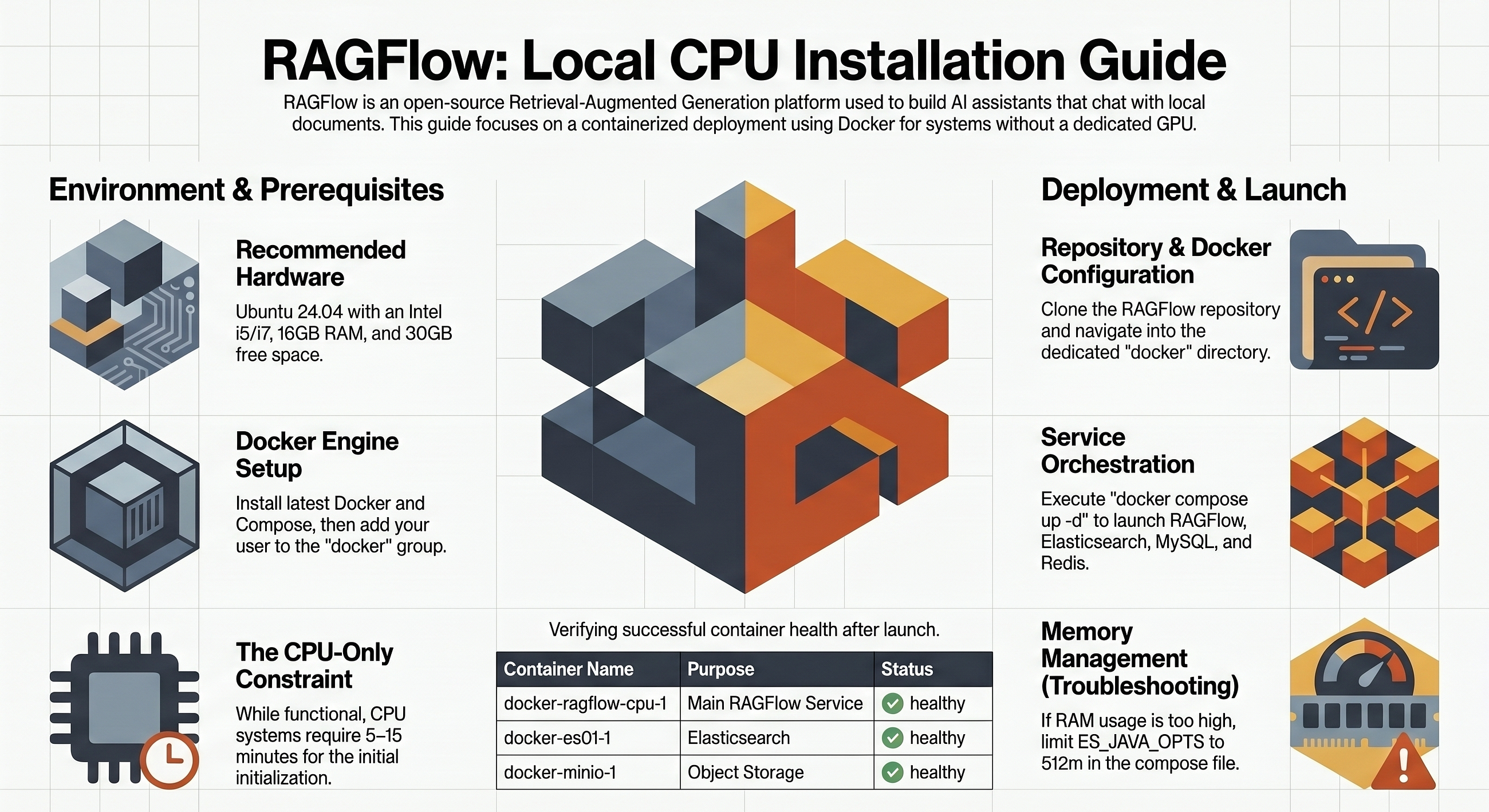
  46. Your Documents Shouldn’t Need the Internet to Be Searchable

    This article details how to build a private AI assistant that can search your documents without an internet connection. It guides users through setting up a local system using Docker, enabling document indexing and retrieval capabilities on their own hardware. The process aims to provide a secure and private way to interact with personal data using AI. AI

    Your Documents Shouldn’t Need the Internet to Be Searchable

    IMPACT Enables users to create personalized AI tools for document management, enhancing personal productivity and data privacy.

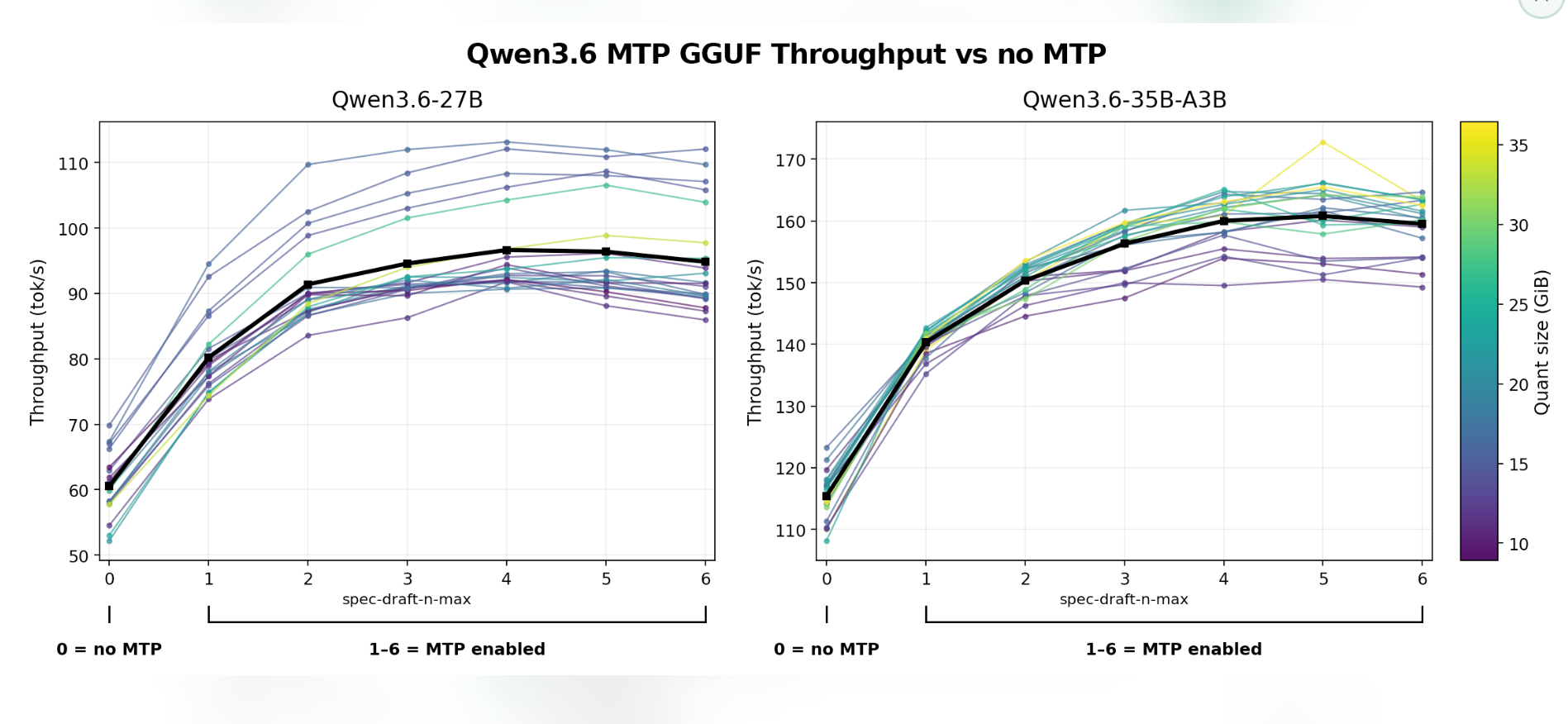
  47. There is a new technique to speed up token generation called MTP. It predicts several future tokens, then the main model verifies them in parallel. There is a c

    A new method called MTP (Multi-Token Prediction) has been developed to accelerate token generation in AI models. This technique involves predicting multiple future tokens simultaneously and then having the main model verify them in parallel. However, MTP requires a significant increase in VRAM, which can lead to slower generation or reduced context size on GPUs with limited memory. The technique does not appear to reduce model hallucinations. AI

    There is a new technique to speed up token generation called MTP. It predicts several future tokens, then the main model verifies them in parallel. There is a c

    IMPACT This technique could speed up AI inference but requires more VRAM, potentially limiting its use on consumer hardware.

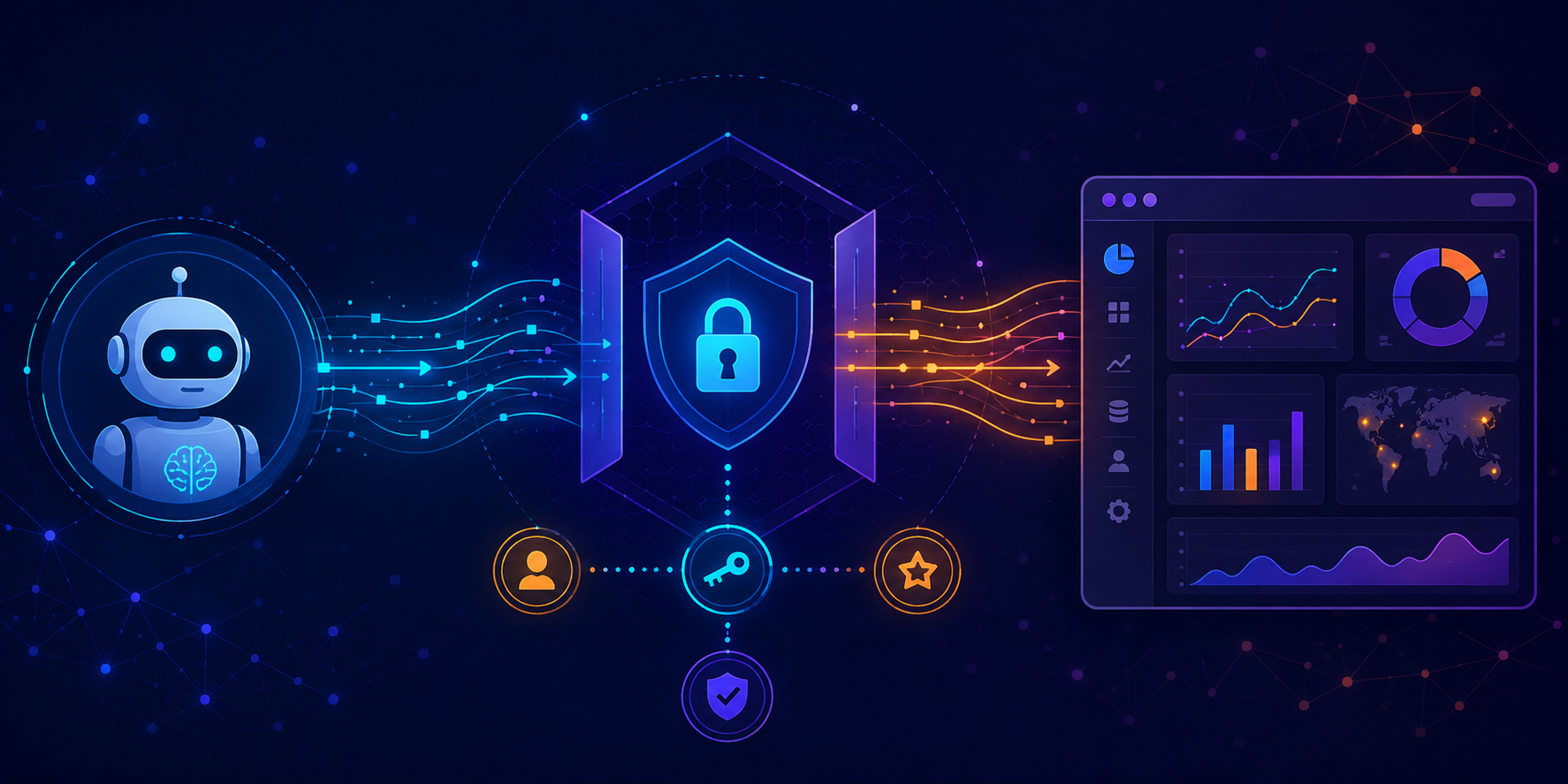
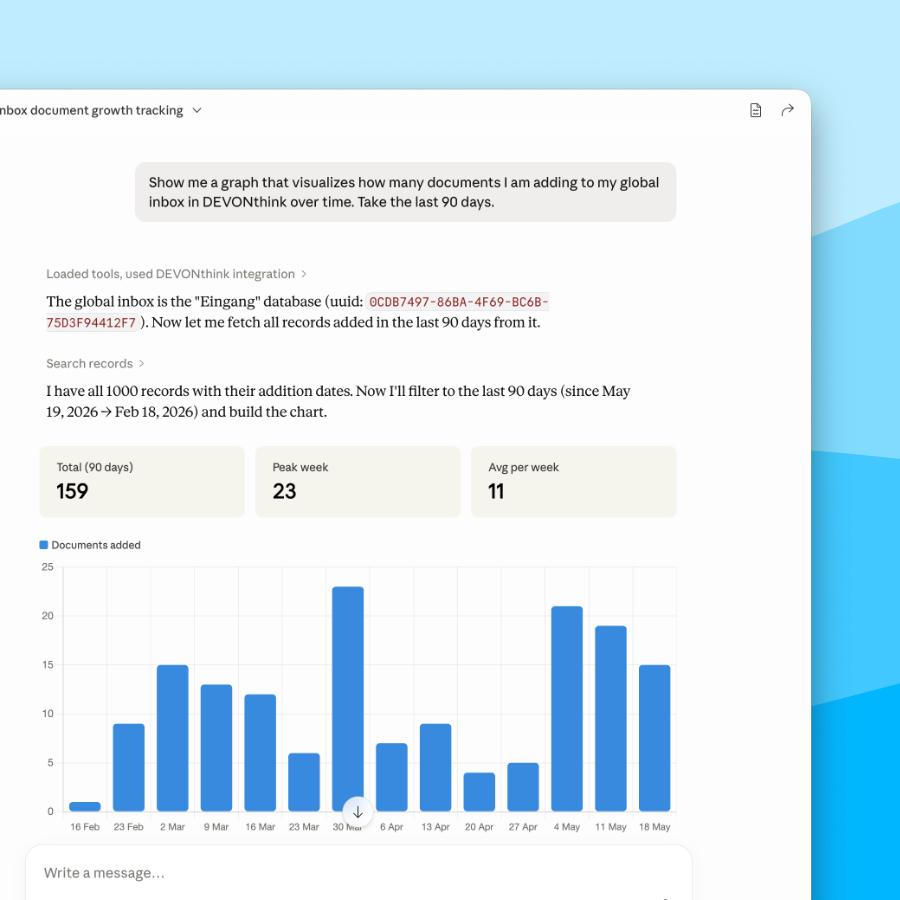
  48. This feature release brings our own MCP server, a bridge from your databases to AI applications like Claude or Codex, built with privacy and security at its cor

    Devon Technologies has released version 4.3 of its productivity software, DevonThink, which includes a new MCP server designed to securely connect databases to AI applications. This update also features enhanced AI capabilities, a new Markdown parser, and desktop widgets. The MCP server aims to facilitate the use of AI models like Claude, Codex, ChatGPT, Gemini, and Mistral with user data while prioritizing privacy and security. AI

    This feature release brings our own MCP server, a bridge from your databases to AI applications like Claude or Codex, built with privacy and security at its cor

    IMPACT Enhances integration of existing AI models with user databases, potentially improving productivity for AI-assisted workflows.

  49. Your phone may well be fast and 5G, but the next network standard is on the way, and it will come with AI baked in, as Telstra talks up what's to come. https://

    Telstra and Ericsson are collaborating on research for the upcoming 6G network standard. This next generation of mobile technology is expected to integrate artificial intelligence capabilities directly into its core infrastructure. The companies are exploring how AI can enhance the performance and functionality of future mobile networks. AI

    Your phone may well be fast and 5G, but the next network standard is on the way, and it will come with AI baked in, as Telstra talks up what's to come. https://

    IMPACT Future mobile networks will likely feature integrated AI, potentially enabling new applications and services.

  50. Opencode Go is the service I use most for vibe coding with open source models like DeepSeek-V4. Cost: €5 the first month, then €10 monthly. Here you can find €5 b

    Opencode Go offers a coding environment using open-source models like DeepSeek V4. The service costs €5 for the first month, then €10 per month, with a €5 discount available. AI

    Opencode Go is the service I use most for vibe coding with open source models like DeepSeek-V4. Cost: €5 the first month, then €10 monthly. Here you can find €5 b

    IMPACT Provides access to an open-source coding model for developers.