PulseAugur / Brief
LIVE 18:48:19

Brief

last 24h
[48/98] 186 sources

Multi-source AI news clustered, deduplicated, and scored 0–100 across authority, cluster strength, headline signal, and time decay.

  1. OpenAI to provide security-focused AI "GPT-5.5-Cyber" to Japanese government and some companies – ITmedia AI+ https://www.yayafa.com/2805170/ #AgenticAi #AI #ArtificialGeneralIntelligence #ArtificialIntell

    OpenAI is reportedly providing a specialized AI model, GPT-5.5-Cyber, to the Japanese government and select companies. This AI is designed for security applications. Separately, Dell is expanding its AI factory capabilities with NVIDIA, integrating desktop AI agents and strengthening its partnership with Mistral AI. AI

    OpenAI to provide security-focused AI "GPT-5.5-Cyber" to Japanese government and some companies – ITmedia AI+ https://www.yayafa.com/2805170/ #AgenticAi #AI #ArtificialGeneralIntelligence #ArtificialIntell

    IMPACT This cluster highlights specialized AI applications and infrastructure build-outs, indicating a trend towards tailored AI solutions and expanded hardware capabilities.
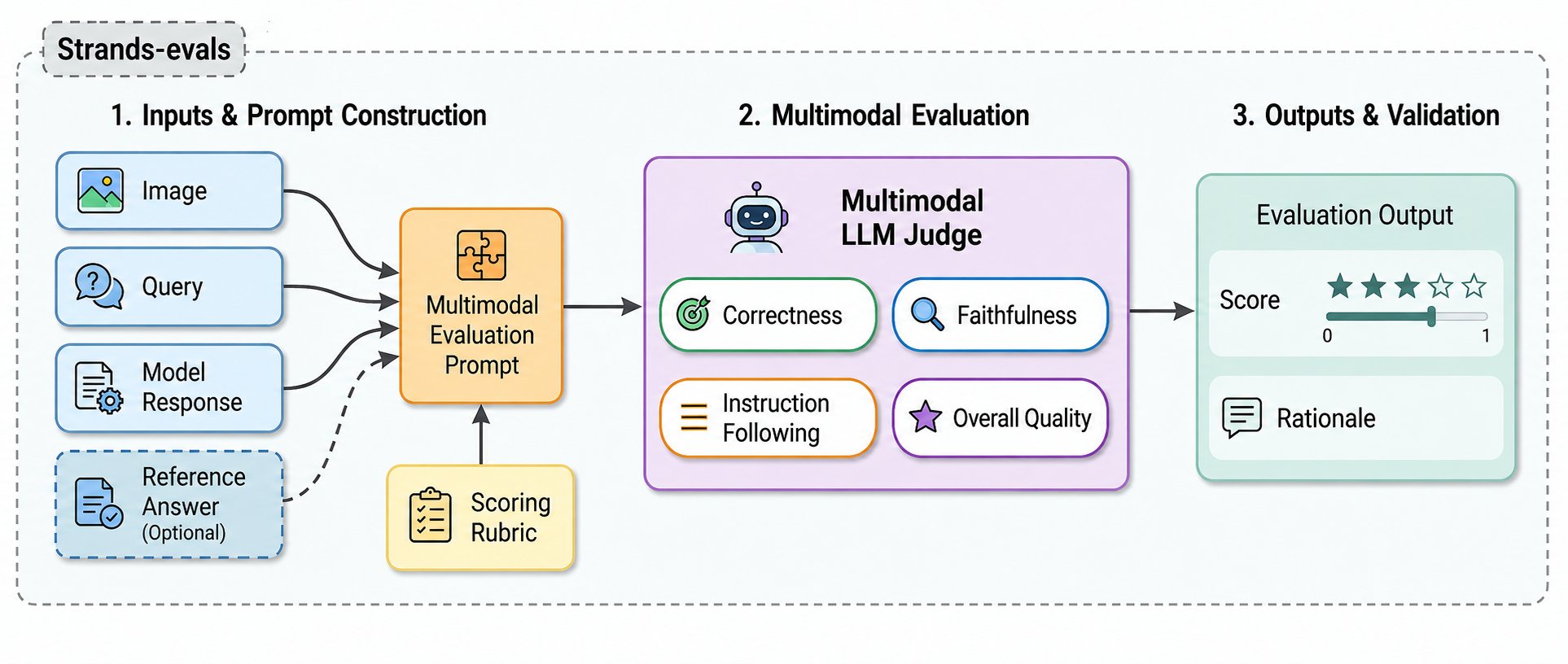
  2. Multimodal evaluators: MLLM-as-a-judge for image-to-text tasks in Strands Evals

    Amazon Web Services has introduced new multimodal evaluators for its Strands Evals SDK, designed to assess image-to-text tasks. These tools leverage large multimodal models (MLMMs) to judge responses by directly referencing the source image, addressing limitations of text-only evaluation methods. The evaluators can identify visual hallucinations and factual errors, integrating into existing development workflows for automated quality control. AI

    Multimodal evaluators: MLLM-as-a-judge for image-to-text tasks in Strands Evals

    IMPACT Enhances automated evaluation for multimodal AI applications, reducing reliance on manual review.

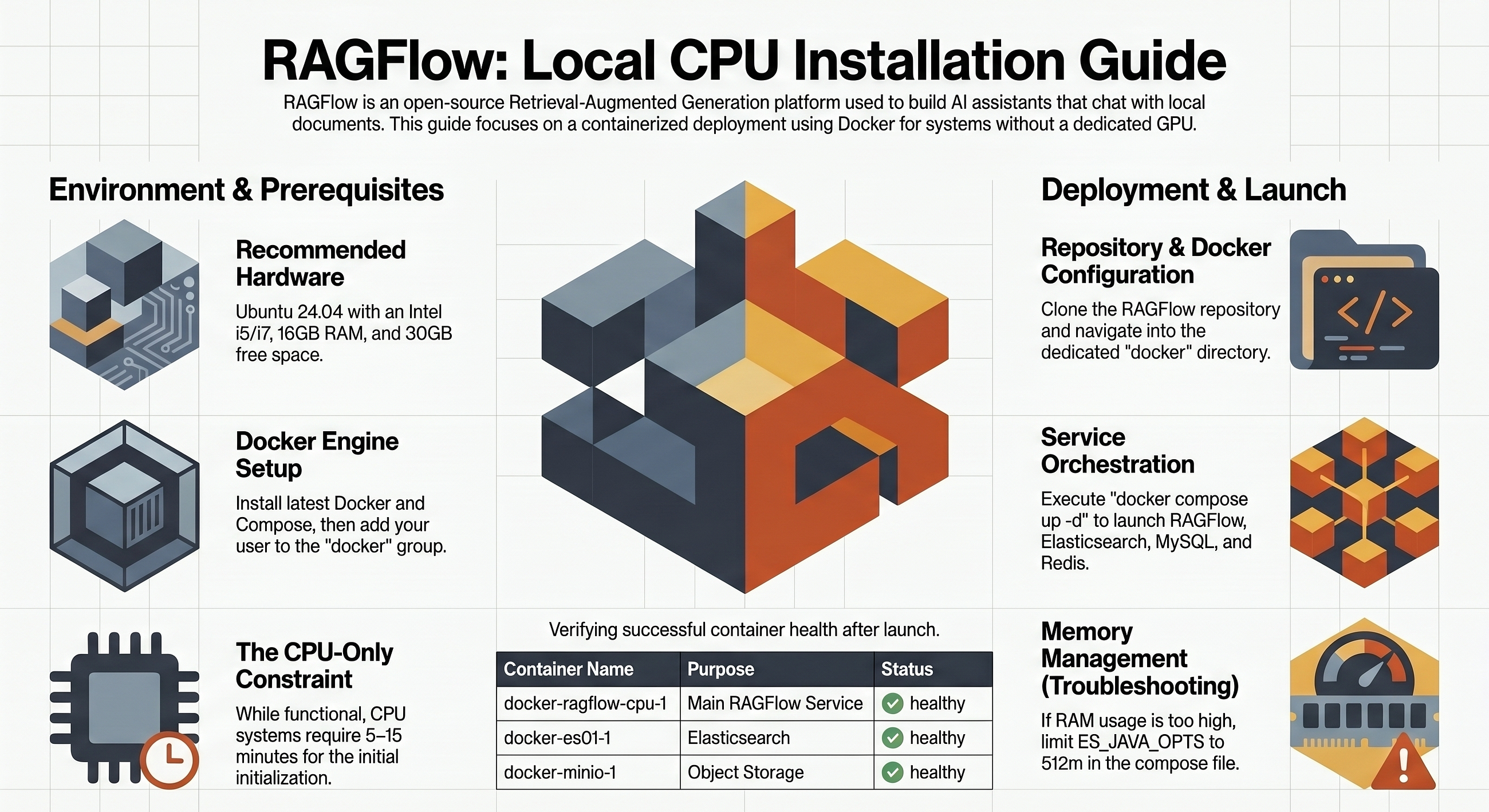
  3. Your Documents Shouldn’t Need the Internet to Be Searchable

    This article details how to build a private AI assistant that can search your documents without an internet connection. It guides users through setting up a local system using Docker, enabling document indexing and retrieval capabilities on their own hardware. The process aims to provide a secure and private way to interact with personal data using AI. AI

    Your Documents Shouldn’t Need the Internet to Be Searchable

    IMPACT Enables users to create personalized AI tools for document management, enhancing personal productivity and data privacy.

  4. Announcing OpenAI-compatible API support for Amazon SageMaker AI endpoints

    Amazon SageMaker AI now offers OpenAI-compatible API support for its real-time inference endpoints. This integration allows users to invoke models hosted on SageMaker using existing OpenAI SDKs, LangChain, or Strands Agents by simply updating the endpoint URL. The new feature supports bearer token authentication for secure access and enables multi-model hosting and the deployment of fine-tuned open-source models without requiring code modifications. AI

    Announcing OpenAI-compatible API support for Amazon SageMaker AI endpoints

    IMPACT Simplifies integration for developers using OpenAI's ecosystem with models hosted on AWS infrastructure.

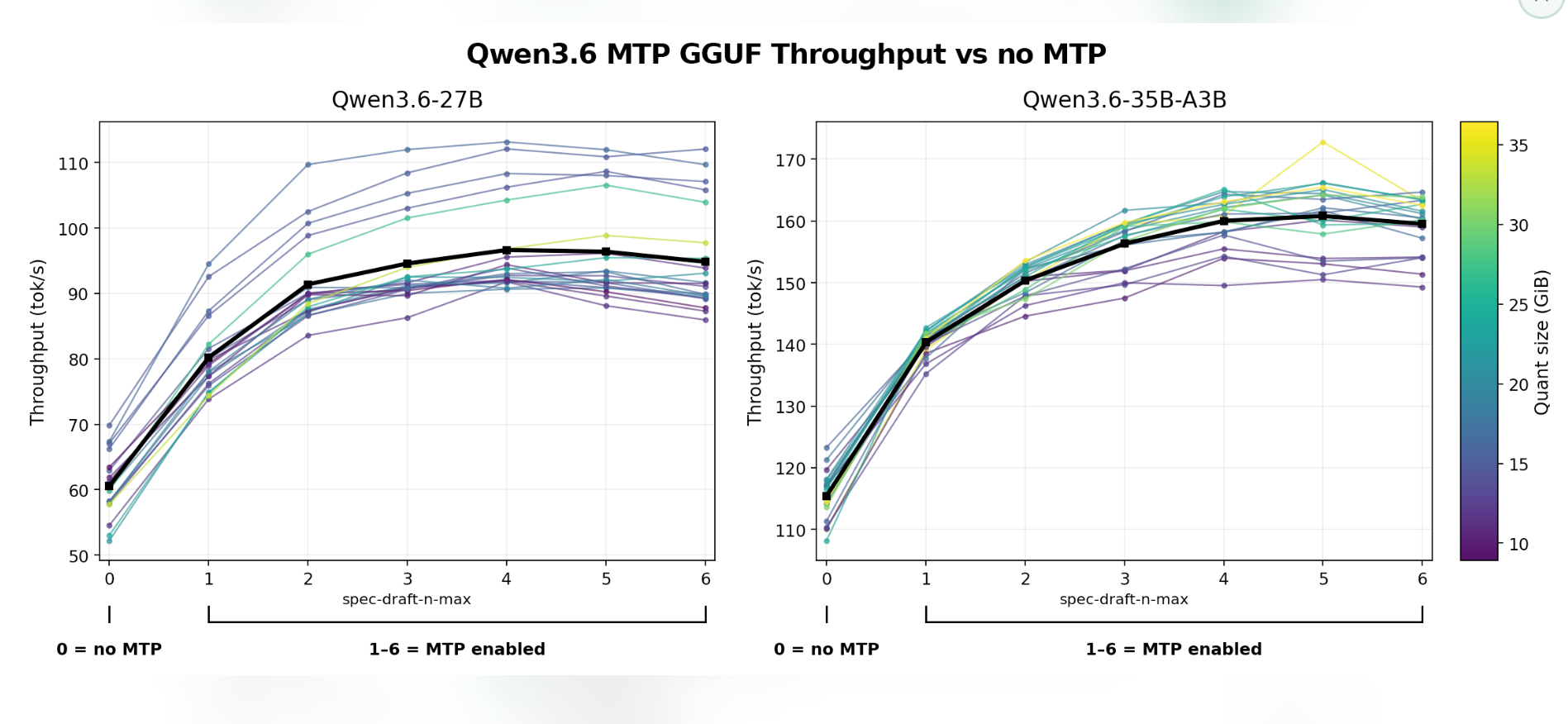
  5. There is a new technique to speed up token generation called MTP. It predicts several future tokens, then the main model verifies them in parallel. There is a c

    A new method called MTP (Multi-Token Prediction) has been developed to accelerate token generation in AI models. This technique involves predicting multiple future tokens simultaneously and then having the main model verify them in parallel. However, MTP requires a significant increase in VRAM, which can lead to slower generation or reduced context size on GPUs with limited memory. The technique does not appear to reduce model hallucinations. AI

    There is a new technique to speed up token generation called MTP. It predicts several future tokens, then the main model verifies them in parallel. There is a c

    IMPACT This technique could speed up AI inference but requires more VRAM, potentially limiting its use on consumer hardware.

  6. Your phone may well be fast and 5G, but the next network standard is on the way, and it will come with AI baked in, as Telstra talks up what's to come. https://

    Telstra and Ericsson are collaborating on research for the upcoming 6G network standard. This next generation of mobile technology is expected to integrate artificial intelligence capabilities directly into its core infrastructure. The companies are exploring how AI can enhance the performance and functionality of future mobile networks. AI

    Your phone may well be fast and 5G, but the next network standard is on the way, and it will come with AI baked in, as Telstra talks up what's to come. https://

    IMPACT Future mobile networks will likely feature integrated AI, potentially enabling new applications and services.

  7. Opencode Go is the service I use most for vibe coding with open source models like DeepSeek-V4. Cost: €5 the first month, then €10 monthly. Here you can find €5 b

    Opencode Go offers a coding environment using open-source models like DeepSeek V4. The service costs €5 for the first month, then €10 per month, with a €5 discount available. AI

    Opencode Go is the service I use most for vibe coding with open source models like DeepSeek-V4. Cost: €5 the first month, then €10 monthly. Here you can find €5 b

    IMPACT Provides access to an open-source coding model for developers.

  8. Add an agent to your workflow. Remove one. Nothing else changes. There is no orchestration layer to update, because there is no orchestration layer. Each agent

    Forge CMS offers a self-hosted, open-source content management system built with Go, emphasizing simplicity and reliability. It compiles to a single binary, eliminating dependencies like Node.js and lock files, which simplifies deployment and maintenance. The system is designed to integrate AI agents seamlessly into workflows without requiring complex orchestration layers, as agents communicate through content state rather than direct interaction. AI

    IMPACT Simplifies AI agent integration into web development workflows.

  9. LM Studio Adds MTP Speculative Decoding; Qwen 3.6 GGUF Quants, Ollama Insights

    LM Studio has updated to version 0.4.14 Build 2 (Beta), integrating MTP Speculative Decoding to accelerate local large language model inference. This feature allows for faster text generation by predicting multiple tokens simultaneously, making local AI interactions more fluid. Additionally, new GGUF quantizations for the Qwen 3.6 35B model have been released, with benchmarks comparing MTP and NTP performance across various hardware, providing users with data to optimize their local LLM deployments. AI

    LM Studio Adds MTP Speculative Decoding; Qwen 3.6 GGUF Quants, Ollama Insights

    IMPACT Enhances local LLM inference speed and accessibility for users running models on their own hardware.

  10. AIMBio-Mat: An AI-Native FAIR Platform for Closed-Loop Materials Discovery and Biomedical Translation

    Researchers have introduced AIMBio-Mat, a conceptual framework designed to integrate materials discovery with biomedical translation. This AI-native platform aims to link material properties, processing, and biological responses with safety and governance considerations. The framework proposes a blueprint for transforming disparate data into actionable discovery workflows, with a minimum viable prototype for AI-guided nanomaterials in drug delivery. AI

    AIMBio-Mat: An AI-Native FAIR Platform for Closed-Loop Materials Discovery and Biomedical Translation

    IMPACT Provides a blueprint for integrating AI into materials discovery and biomedical translation, potentially accelerating the development of new therapies and materials.

  11. With aluminum prices up 20%, recycling startups bet on AI to cash in https://techcrunch.com/2026/05/21/with-aluminum-prices-up-20-recycling-startups-bet-on-ai-t

    Aluminum recycling startups are increasingly leveraging artificial intelligence to improve their operations and capitalize on rising aluminum prices. These companies are integrating AI technologies to enhance sorting accuracy, optimize processing efficiency, and ultimately increase the yield of recycled aluminum. This strategic adoption of AI aims to make recycling more economically viable and environmentally sustainable. AI

    IMPACT AI integration in recycling can improve resource efficiency and sustainability, potentially lowering costs for manufacturers.

  12. Sutra: Tensor-Op RNNs as a Compilation Target for Vector Symbolic Architectures

    A new programming language called Sutra has been developed, designed to compile entire programs into fused tensor-operation graphs for PyTorch. This language targets Vector Symbolic Architectures and can represent complex logic, including Kleene connectives, as tensor operations. Sutra has demonstrated 100% accuracy in decoding bundles across various text and protein embeddings, outperforming standard Hadamard products, and its compiled graphs are fully differentiable, allowing for training and recompilation of the symbolic code. AI

    Sutra: Tensor-Op RNNs as a Compilation Target for Vector Symbolic Architectures

    IMPACT Introduces a novel programming paradigm that bridges symbolic logic and differentiable neural networks, potentially enabling more interpretable and trainable AI systems.

  13. CAdam: Context-Adaptive Moment Estimation for 3D Gaussian Densification in Generative Distillation

    Researchers have developed CAdam, a new framework for generative distillation in 3D Gaussian Splatting that addresses limitations in adaptive densification. CAdam reinterprets densification as a signal verification problem, using gradient moments to distinguish consistent geometric signals from generative noise. This approach significantly reduces the number of Gaussian primitives needed while maintaining perceptual quality, improving memory efficiency in generative 3D tasks. AI

    CAdam: Context-Adaptive Moment Estimation for 3D Gaussian Densification in Generative Distillation

    IMPACT Improves memory efficiency and representation quality in 3D generative models by reducing redundant primitives.

  14. PlexRL: Cluster-Level Orchestration of Serviceized LLM Execution for RLVR

    Researchers have developed PlexRL, a cluster-level runtime designed to improve the efficiency of training large language models (LLMs) for reinforcement learning with verifiable rewards (RLVR). RLVR training is often inefficient due to idle time caused by long-tailed rollouts and tool-induced stalls. PlexRL addresses this by multiplexing LLM services across multiple RLVR jobs, filling idle periods by time-slicing model execution without costly migrations. Evaluations show PlexRL can reduce GPU hour costs by up to 37.58% while maintaining algorithmic flexibility and adding minimal overhead. AI

    PlexRL: Cluster-Level Orchestration of Serviceized LLM Execution for RLVR

    IMPACT Optimizes LLM training infrastructure, potentially lowering costs and increasing throughput for RLVR applications.

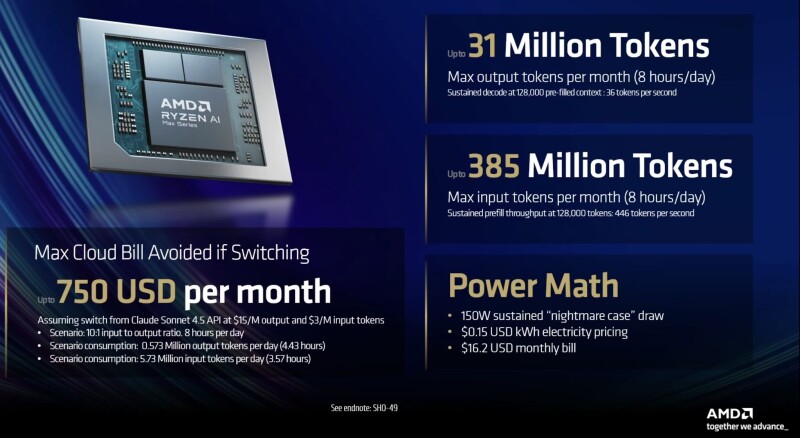
  15. AMD says its $4K Ryzen AI Halo workstation practically pays for itself

    AMD has launched its Ryzen AI Halo workstation, priced at $4,000, which the company claims can pay for itself through efficiency gains. The workstation is designed for AI-intensive tasks and aims to provide a cost-effective solution for professionals. This release highlights AMD's strategy to integrate AI capabilities directly into their hardware offerings. AI

    AMD says its $4K Ryzen AI Halo workstation practically pays for itself

    IMPACT Offers a dedicated hardware solution for AI tasks, potentially improving efficiency for professionals using AI tools.

  16. GraphRAG on Consumer Hardware: Benchmarking Local LLMs for Healthcare EHR Schema Retrieval

    Researchers evaluated the GraphRAG pipeline for retrieving information from Electronic Health Record (EHR) schemas using open-source large language models deployed on consumer hardware. The study benchmarked models like Llama 3.1, Mistral, Qwen 2.5, and Phi-4-mini on a single GPU, assessing indexing efficiency, knowledge graph construction, latency, and answer quality. Results indicated that models below approximately 7 billion parameters struggle with structured output errors, and local retrieval generally outperformed global summarization in terms of speed and factual accuracy. AI

    GraphRAG on Consumer Hardware: Benchmarking Local LLMs for Healthcare EHR Schema Retrieval

    IMPACT Demonstrates the feasibility of using smaller, locally deployed LLMs for complex tasks like EHR schema retrieval, potentially improving privacy and reducing costs in healthcare.

  17. ELSA: An ELastic SNN Inference Architecture for Efficient Neuromorphic Computing

    Researchers have introduced ELSA, a novel architecture designed to enhance the efficiency of neuromorphic computing using spiking neural networks (SNNs). ELSA enables true elastic inference by processing data in a fine-grained, token-wise pipeline, allowing for immediate forwarding of results and reduced latency. The architecture incorporates optimizations like a bundled address event representation protocol and mini-batch spiking Gustavson-product to minimize memory access and communication traffic. Experiments demonstrate that ELSA significantly outperforms existing accelerators in both speed and energy efficiency compared to both quantized artificial neural networks and other SNN accelerators. AI

    ELSA: An ELastic SNN Inference Architecture for Efficient Neuromorphic Computing

    IMPACT Introduces a new architecture that significantly improves speed and energy efficiency for neuromorphic computing, potentially accelerating the adoption of SNNs.

  18. SpineContextResUNet: A Computationally Efficient Residual UNet for Spine CT Segmentation

    Researchers have developed SpineContextResUNet, a new 3D Residual U-Net architecture designed for efficient segmentation of spinal CT scans. This model addresses the high computational demands of existing methods by using a lightweight Context Block with parallel multi-dilated convolutions, avoiding the need for resource-intensive Transformers or RNNs. SpineContextResUNet achieves high accuracy on public benchmarks and demonstrates viable inference performance on commodity hardware, making it suitable for point-of-care diagnostics and edge devices. AI

    SpineContextResUNet: A Computationally Efficient Residual UNet for Spine CT Segmentation

    IMPACT Enables more accessible AI-driven medical diagnostics on low-resource hardware.

  19. Memory-Efficient Partitioned DNN Inference on Resource-Constrained Android Crowds

    Researchers have developed a new system called CROWD IO to enable the efficient inference of large deep neural networks on resource-constrained Android devices. The system addresses the challenge of limited RAM on mobile phones by distributing memory pressure across multiple devices. CROWD IO employs several mechanisms, including deferred partition loading and compressed tensor transport, to manage memory usage and reduce batch latency. AI

    Memory-Efficient Partitioned DNN Inference on Resource-Constrained Android Crowds

    IMPACT Enables deployment of advanced AI models on a wider range of mobile devices, potentially increasing edge AI capabilities.

  20. E-ReCON: An Energy- and Resource-Efficient Precision-Configurable Sparse nvCIM Macro for Conventional and Spiking Neural Edge Inference

    Researchers have developed E-ReCON, a novel compute-in-memory (CIM) macro designed for efficient AI inference on edge devices. This macro utilizes a compact ReRAM bitcell capable of performing multiplication for both conventional neural networks and spiking neural networks. The design incorporates an interleaved adder tree to reduce transistor count and power consumption, achieving high energy efficiency and low latency. AI

    E-ReCON: An Energy- and Resource-Efficient Precision-Configurable Sparse nvCIM Macro for Conventional and Spiking Neural Edge Inference

    IMPACT This new compute-in-memory macro could enable more powerful and energy-efficient AI processing directly on edge devices.

  21. Declarative Data Services: Structured Agentic Discovery for Composing Data Systems

    Researchers have developed Declarative Data Services (DDS), a new architecture designed to improve how AI agents discover and compose data systems. Traditional agentic discovery methods struggle with the complexity and heterogeneity of data backends. DDS addresses this by using a layered contract system that breaks down the search into smaller, manageable sub-searches, enabling more consistent convergence on functional data stacks. AI

    Declarative Data Services: Structured Agentic Discovery for Composing Data Systems

    IMPACT Introduces a structured approach to agentic discovery for data systems, potentially improving AI's ability to compose complex data backends.

  22. From Circuit Evidence to Mechanistic Theory: An Inductive Logic Approach

    Researchers have developed a formal framework for cumulative mechanistic science in neural networks, treating circuit interpretation as inductive theory construction. This approach uses Causal Functional Signatures (CFS) and architectural signatures learned via inductive logic programming (ILP) to make mechanistic claims explicit and comparable. The system demonstrates improved structural separation compared to baseline methods and supports transferability across different model scales and architectures. AI

    IMPACT Provides a formal infrastructure for cumulative mechanistic science, enabling more systematic and comparable analysis of neural network circuits.

  23. If You Value Online Security Stop Using Public Wi-Fi Hotspots

    The GL.iNet Mudi 7 is a new 5G travel router designed to enhance online security and connectivity. It features Wi-Fi 7 technology, dual SIM slots, eSIM support, and a user-swappable battery offering up to 13.5 hours of use. Powered by Qualcomm's Dragonwing Gen 3 platform, it supports 5G speeds up to 4.67Gbps and includes a 2.8-inch LCD touchscreen for management. AI

    If You Value Online Security Stop Using Public Wi-Fi Hotspots

    IMPACT Niche tooling improvement for secure mobile connectivity.

  24. Design for Manufacturing: A Manufacturability Knowledge-Integrated Reinforcement Learning Framework for Free-Form Pipe Routing in Aeroengines

    Researchers have developed a new reinforcement learning framework called FPRO to optimize pipe routing in aeroengines, integrating manufacturing knowledge directly into the design process. This approach represents pipe paths using curvature and torsion profiles, with manufacturing constraints applied to these parameters. The framework uses proximal policy optimization to generate paths that are then translated into fabrication instructions for a six-axis bending machine, demonstrating improved manufacturability and design accuracy compared to existing methods. AI

    Design for Manufacturing: A Manufacturability Knowledge-Integrated Reinforcement Learning Framework for Free-Form Pipe Routing in Aeroengines

    IMPACT This framework could streamline the design and manufacturing of complex aeroengine components by integrating AI-driven optimization with domain-specific knowledge.

  25. ChunkFT: Byte-Streamed Optimization for Memory-Efficient Full Fine-Tuning

    Researchers have developed ChunkFT, a novel framework designed to significantly reduce the memory required for full-parameter fine-tuning of large language models. This method dynamically activates a working set of parameters, enabling gradient computation on sub-tensors without altering the model architecture. Experiments show ChunkFT can fine-tune models like Llama 3-8B on a single consumer GPU, achieving performance comparable to traditional full fine-tuning while using substantially less memory. AI

    IMPACT Enables fine-tuning of large language models on consumer hardware, potentially democratizing advanced model customization.

  26. FTerViT: Fully Ternary Vision Transformer

    Researchers have developed FTerViT, a fully ternary Vision Transformer that compresses all weight matrices and normalization parameters. This approach significantly reduces the model's memory footprint, making it more feasible for deployment on resource-constrained devices like microcontrollers. FTerViT achieves competitive accuracy on ImageNet while offering substantial compression compared to standard floating-point models. AI

    IMPACT Enables more efficient deployment of advanced vision models on low-power edge devices.

  27. Evaluating Temporal Semantic Caching and Workflow Optimization in Agentic Plan-Execute Pipelines

    Researchers have developed new methods to optimize agent-based plan-execute pipelines for industrial operations, which are highly sensitive to latency. They introduced a temporal semantic cache and workflow optimizations, including disk-backed tool discovery caching and parallel step execution. These optimizations achieved significant speedups, with workflow optimizations providing a 1.67x speedup and temporal caching yielding up to 30.6x speedup on cache hits, while also highlighting limitations of standard semantic caching for parameter-rich queries. AI

    Evaluating Temporal Semantic Caching and Workflow Optimization in Agentic Plan-Execute Pipelines

    IMPACT Introduces optimizations for latency-sensitive industrial AI agent pipelines, potentially improving efficiency in real-world applications.

  28. HRM-Text: Efficient Pretraining Beyond Scaling

    Researchers have developed HRM-Text, a novel Hierarchical Recurrent Model that significantly reduces the computational resources and training data required for pretraining large language models. By decoupling computation into strategic and execution layers and training exclusively on instruction-response pairs, a 1B-parameter model achieved competitive performance on several benchmarks with a fraction of the tokens and compute used by standard models. This approach makes foundational LLM research more accessible by lowering the barrier to entry for pretraining from scratch. AI

    HRM-Text: Efficient Pretraining Beyond Scaling

    IMPACT Enables more researchers to train foundational models from scratch, potentially accelerating innovation.

  29. Instant GPU Efficiency Visibility at Fleet Scale

    Researchers have developed a new metric called Overall FLOP Utilization (OFU) to measure GPU efficiency for AI workloads. OFU is derived from on-chip performance counters and does not require application instrumentation, making it applicable across different GPU generations and precisions. When tested on production training jobs, OFU showed a strong correlation with application-level metrics and helped identify efficiency regressions and framework miscalculations. AI

    Instant GPU Efficiency Visibility at Fleet Scale

    IMPACT Provides a practical method for monitoring and improving the efficiency of AI training infrastructure.

  30. Multi-agent Collaboration with State Management

    Researchers have developed STORM, a novel state-oriented management system designed to improve collaboration among multiple AI agents working on shared codebases. Unlike existing methods that rely on workspace isolation and delayed conflict resolution, STORM actively manages agent states to ensure consistent views and detect conflicts in real-time during edits. Evaluations on the Commit0 and PaperBench benchmarks demonstrated that STORM significantly outperforms baseline methods, achieving higher scores and comparable cost efficiency across various large language models. AI

    Multi-agent Collaboration with State Management

    IMPACT Improves efficiency and reduces conflicts for AI agents working collaboratively on software development tasks.

  31. Mix-Quant: Quantized Prefilling, Precise Decoding for Agentic LLMs

    Researchers have introduced Mix-Quant, a novel quantization framework designed to accelerate the inference process for Large Language Model (LLM) agents. This method strategically applies quantization to the prefilling stage, which is computationally intensive in agentic workflows, while maintaining higher precision for the decoding phase. By decoupling these stages and utilizing NVFP4 quantization for prefilling and BF16 for decoding, Mix-Quant aims to reduce accuracy loss and improve efficiency. AI

    Mix-Quant: Quantized Prefilling, Precise Decoding for Agentic LLMs

    IMPACT This phase-aware quantization technique could significantly reduce inference costs and latency for complex LLM agentic workflows.

  32. How to Select the Right GPU for AI Workloads: Inference, Fine-Tuning, and Training Explained

    Businesses can now access high-performance GPUs on demand through GPU as a Service (GPUaaS), eliminating the need for substantial upfront hardware investments. This service caters to various AI and data-intensive tasks, including machine learning, generative AI, deep learning training, and big data analytics. Additionally, selecting the right GPU for AI workloads involves more than just VRAM, as modern demands extend beyond memory capacity. AI

    IMPACT On-demand GPU access via GPUaaS lowers the barrier to entry for AI development and large-scale data processing.

  33. Mahjax: A GPU-Accelerated Mahjong Simulator for Reinforcement Learning in JAX

    Researchers have developed Mahjax, a new GPU-accelerated simulator for the game of Riichi Mahjong, implemented in JAX. This tool is designed to facilitate reinforcement learning research by enabling large-scale parallelization on GPUs. Mahjax can process millions of steps per second and has been validated for training agents to improve their performance. AI

    IMPACT Enables large-scale reinforcement learning research by providing a high-throughput, GPU-accelerated environment for complex decision-making problems.

  34. Thinking about running AI models like Llama 3, Qwen, or Mistral on your own computer? Two of the best local AI tools in 2026 are Ollama and LM Studio. Both tool

    For users looking to run AI models like Llama 3 or Mistral locally, Ollama and LM Studio are highlighted as top tools. These platforms enable offline model execution, offering enhanced privacy, reduced expenses, and complete data sovereignty. A comprehensive guide is available for those interested in comparing these solutions. AI

    Thinking about running AI models like Llama 3, Qwen, or Mistral on your own computer? Two of the best local AI tools in 2026 are Ollama and LM Studio. Both tool

    IMPACT Enables users to run AI models locally, offering greater privacy and control over data.

  35. Google's AI Watermarking Technology "SynthID" Adopted by OpenAI – GIGAZINE https://www.yayafa.com/2804817/ #AgenticAi #AI #ArtificialGeneralIntelligence #ArtificialIntelligence #Ope

    Fireblocks has launched its Agentic Payments Suite, designed for AI agents, and joined the x402 Foundation. Separately, Google's AI watermarking technology, SynthID, is being adopted by OpenAI. These developments indicate growing integration and adoption of AI-specific tools and technologies across different sectors. AI

    Google's AI Watermarking Technology "SynthID" Adopted by OpenAI – GIGAZINE https://www.yayafa.com/2804817/ #AgenticAi #AI #ArtificialGeneralIntelligence #ArtificialIntelligence #Ope

    IMPACT These developments highlight the increasing specialization of AI infrastructure and the adoption of AI-specific tools like watermarking, suggesting a maturing ecosystem for AI agents and applications.

  36. AMD Ryzen AI Max PRO 400 brings support for up to 192GB RAM (plus smaller CPU, GPU, and NPU speed boosts) https://liliputing.com/amd-ryzen-ai-max-pro-400-brings

    AMD has launched its Ryzen AI Max PRO 400 processors, offering support for up to 192GB of RAM and enhanced CPU, GPU, and NPU speeds. Additionally, the company is releasing the Ryzen AI Halo mini PC, powered by the Ryzen AI Max+ 395, which will be available starting in June with prices beginning at $3999. AI

    IMPACT New hardware designed for AI workloads may improve performance and efficiency for AI applications.

  37. 🐧 Ubuntu Core 26 cuts OTA update size, enables ARM64 Livepatch Canonical has released Ubuntu Core 26, a new long-term support (LTS) version of its immutable, sn

    Canonical has launched Ubuntu Core 26, an updated long-term support version of its immutable operating system. This release features smaller over-the-air update sizes and introduces support for ARM64 Livepatch. The new version is designed for IoT devices and embedded systems, emphasizing security and reliability. AI

    🐧 Ubuntu Core 26 cuts OTA update size, enables ARM64 Livepatch Canonical has released Ubuntu Core 26, a new long-term support (LTS) version of its immutable, sn

    IMPACT This release focuses on IoT and embedded systems, with no direct impact on AI operations.

  38. Invite the frontier model onto your MacBook Run a frontier model on your own machine with stable, contestable decision traces. Full install, steering, reproduci

    A guide is available for installing and running a frontier AI model locally on a MacBook. This setup allows for stable, verifiable decision traces, with instructions covering installation, steering, reproducibility, and tuning. The model in question is the 284. AI

    IMPACT Enables users to run advanced AI models on personal hardware, offering greater control and privacy.

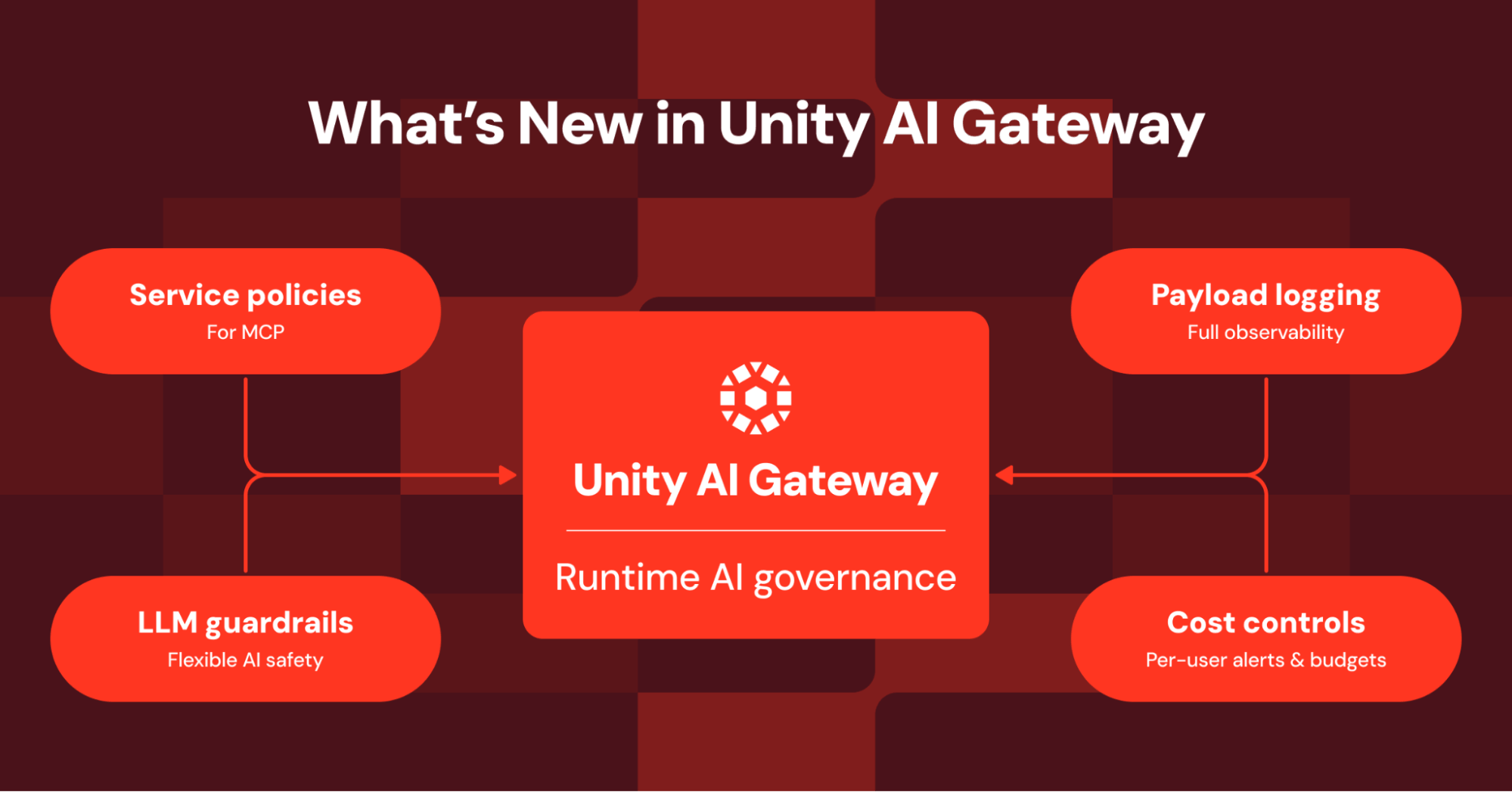
  39. What’s new in Unity AI Gateway: service policies, guardrails, observability, and cost controls for AI agents and MCPs

    Databricks has introduced new AI governance features within its Unity AI Gateway, focusing on cost controls and safety. The platform now offers proactive budget alerts at various granularities, including user, workspace, and organizational levels, to manage escalating AI expenses. Additionally, it incorporates LLM-based guardrails for enhanced AI safety and compliance, along with payload logging and service policies to govern agent behavior and tool invocation. AI

    What’s new in Unity AI Gateway: service policies, guardrails, observability, and cost controls for AI agents and MCPs

    IMPACT Enhances enterprise control over AI costs and safety, enabling more confident adoption of AI agents and models.

  40. Claude Code MCP Server Configuration: 2026 Setup Guide

    The Model Context Protocol (MCP) SDK, used by Claude Code, has seen a massive surge in adoption, reaching 97 million monthly downloads by March 2026. This guide details how to configure MCP servers, addressing common issues encountered by users. It explains the three configuration file locations and their precedence, the available transport methods (stdio, HTTP, SSE), and emphasizes pinning versions to avoid security risks, referencing a past vulnerability that affected approximately 200,000 servers. AI

    Claude Code MCP Server Configuration: 2026 Setup Guide

    IMPACT Provides essential configuration details for developers using the Claude Code MCP SDK, facilitating broader adoption and integration.

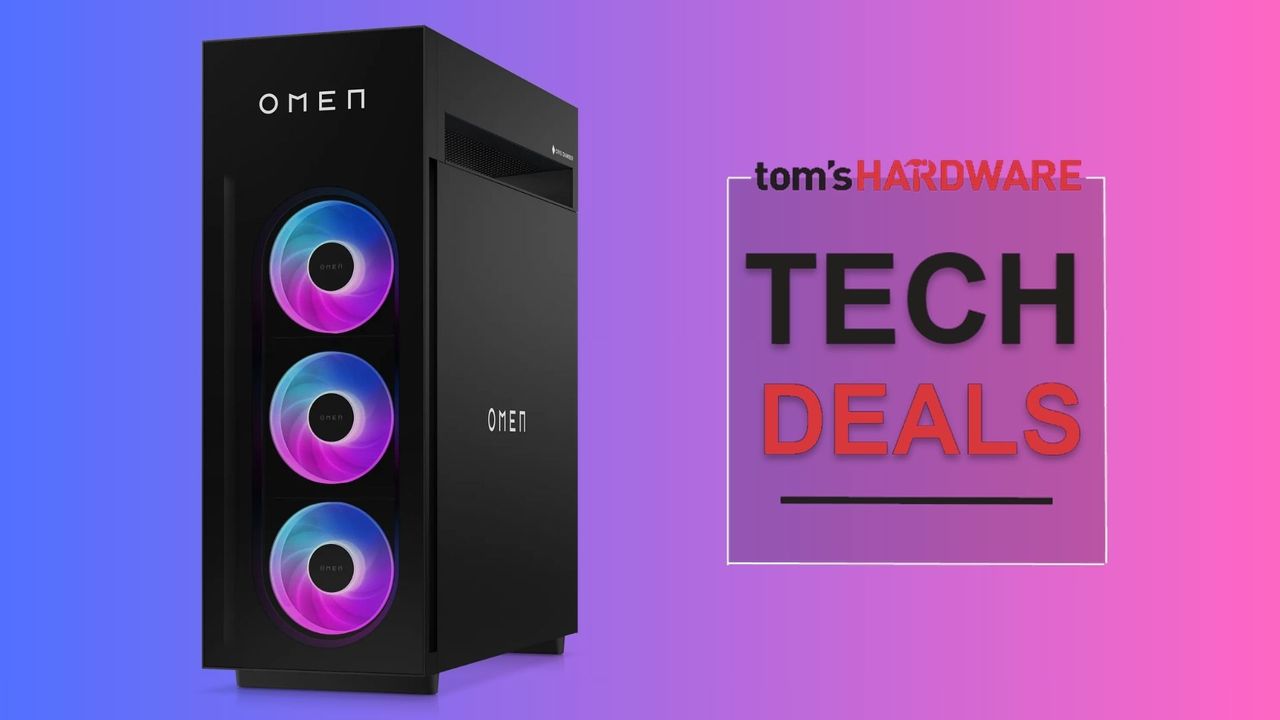
  41. Get an entire RTX 5090 gaming PC for around the price of just the GPU — a high-end battle station for under $4,000

    HP is offering a significant discount on its Omen 45L gaming desktop, which includes the high-end Nvidia RTX 5090 graphics card. With a special discount code, the entire prebuilt system can be purchased for less than the cost of the GPU alone, with prices dropping to around $3,795. This deal makes it an attractive option for users looking to acquire the powerful RTX 5090 without paying inflated standalone GPU prices, and the system's specifications also make it suitable for running local large language models. AI

    Get an entire RTX 5090 gaming PC for around the price of just the GPU — a high-end battle station for under $4,000

    IMPACT The inclusion of an RTX 5090 GPU makes this system capable of running local LLMs, potentially accelerating adoption for AI enthusiasts and researchers.

  42. 🤖 Google Gemini: New Rules, New Limits for AI App Usage Google's Gemini apps are ditching fixed queries for dynamic, computation-based limits. Your usage now de

    Google's Gemini platform is transitioning from fixed query limits to a flexible pricing model based on computational power. This change means that usage will now be determined by task complexity and the user's subscription tier. The new system aims to offer a more dynamic approach to AI access. AI

    🤖 Google Gemini: New Rules, New Limits for AI App Usage Google's Gemini apps are ditching fixed queries for dynamic, computation-based limits. Your usage now de

    IMPACT This shift to computational power-based pricing for Gemini could influence how other AI services structure their offerings and costs.

  43. I built the npm audit for MCP servers

    The Model Context Protocol (MCP) ecosystem has seen the release of several new developer tools aimed at improving server reliability and discoverability. `mcp-probe` has been updated to version 1.0.0, offering enhanced CI readiness checks that go beyond basic server startup to validate tool functionality and error handling. Additionally, `mcp-hub` has been introduced as a CLI tool to simplify finding and installing MCP servers from the growing registry, addressing the difficulty of navigating the thousands of available options. AI

    I built the npm audit for MCP servers

    IMPACT Improves the developer experience and reliability for AI agent tool integration.

  44. [AINews] How to land a job at a frontier lab (on Pretraining)

    Developers are exploring advanced techniques to optimize their use of Anthropic's Claude Code, particularly the Opus 4.7 model, to manage rising API costs. Strategies include creating a CLAUDE.md file for persistent project context, scoping sessions to single tasks, and leveraging prompt caching to reduce redundant processing. Additionally, using smaller models like Sonnet or Haiku for routine coding tasks and employing tools that compress input or tool listings can significantly cut token usage and associated expenses. AI

    [AINews] How to land a job at a frontier lab (on Pretraining)

    IMPACT Developers can significantly reduce AI operational costs by adopting these token-saving strategies for Claude Code.

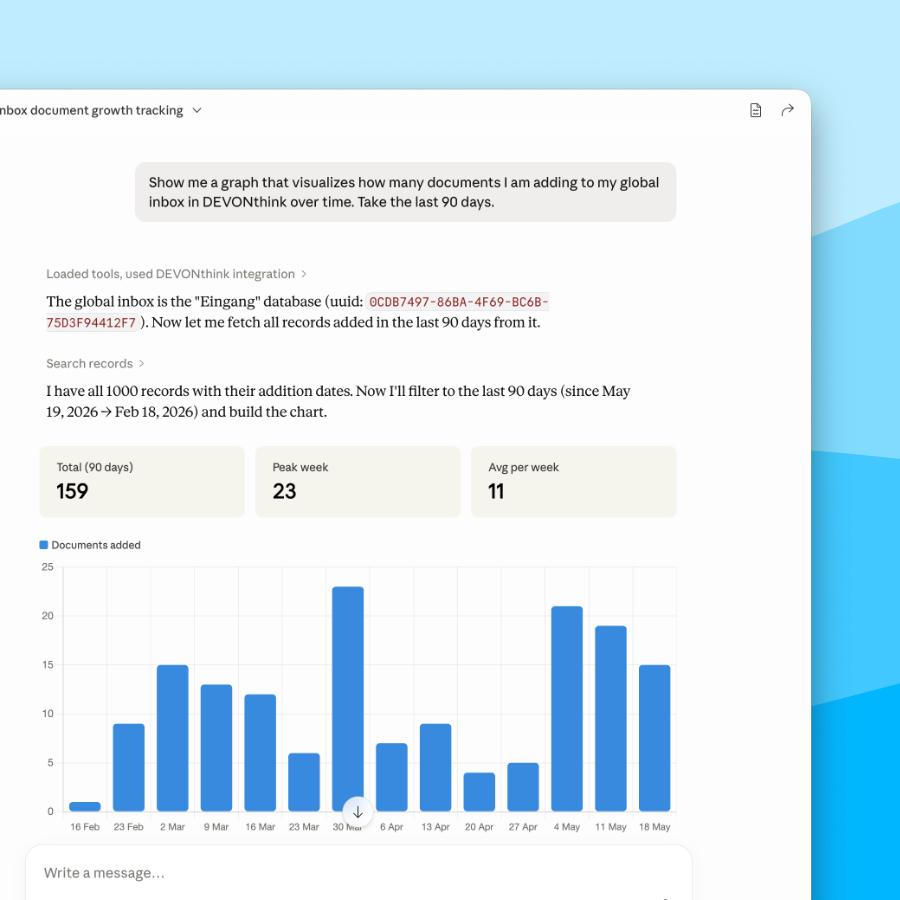
  45. This feature release brings our own MCP server, a bridge from your databases to AI applications like Claude or Codex, built with privacy and security at its cor

    Devon Technologies has released version 4.3 of its productivity software, DevonThink, which includes a new MCP server designed to securely connect databases to AI applications. This update also features enhanced AI capabilities, a new Markdown parser, and desktop widgets. The MCP server aims to facilitate the use of AI models like Claude, Codex, ChatGPT, Gemini, and Mistral with user data while prioritizing privacy and security. AI

    This feature release brings our own MCP server, a bridge from your databases to AI applications like Claude or Codex, built with privacy and security at its cor

    IMPACT Enhances integration of existing AI models with user databases, potentially improving productivity for AI-assisted workflows.

  46. 📰 Energizer’s new coin batteries won’t cause ingestion burns if swallowed Energizer has announced a new line of lithium coin batteries it claims are the world's

    Seven OpenCode plugins have been highlighted for their ability to enhance AI coding workflows. These plugins offer features such as memory, search capabilities, integration with Gemini, terminal control, analytics, and the creation of reusable skills. The goal of these tools is to make AI-assisted coding more powerful and efficient. AI

    📰 Energizer’s new coin batteries won’t cause ingestion burns if swallowed Energizer has announced a new line of lithium coin batteries it claims are the world's

    IMPACT These plugins could improve developer productivity by streamlining AI coding workflows.

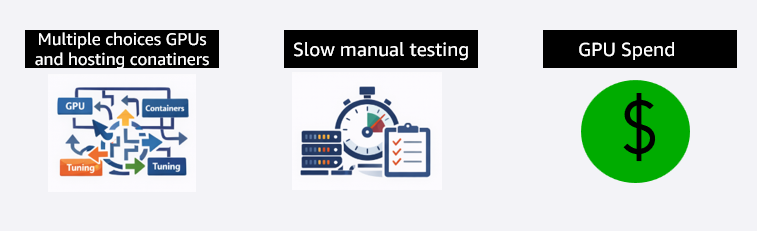
  47. Amazon SageMaker AI now supports optimized generative AI inference recommendations

    Amazon SageMaker AI has introduced new features to streamline the deployment of generative AI models. The platform now offers optimized inference recommendations, leveraging NVIDIA AIPerf to reduce the weeks-long manual benchmarking process for developers. Additionally, AWS has launched G7e instances powered by NVIDIA RTX PRO 6000 Blackwell Server Edition GPUs, providing increased memory and networking throughput for faster and more cost-effective inference of large language models. AI

    Amazon SageMaker AI now supports optimized generative AI inference recommendations

    IMPACT Streamlines generative AI model deployment by automating configuration and offering enhanced hardware, potentially reducing time-to-market and infrastructure costs.

  48. Measuring AI Gateway Failover: 30 Days of Production Data

    Nexus Labs conducted a 30-day production test comparing three AI gateways: Bifrost, LiteLLM, and Portkey, to evaluate their failover capabilities and latency overhead. Bifrost demonstrated a 11ms p99 latency increase with its automatic provider fallback, successfully rerouting traffic during an OpenAI outage. While LiteLLM offered valuable custom cost-tracking callbacks and Portkey showed promise, Bifrost's synchronous fallback evaluation was noted as a key advantage for reliable production traffic management. AI

    IMPACT Provides insights into optimizing LLM request routing and failover, crucial for maintaining service reliability and managing costs in production AI systems.