PulseAugur / Brief
LIVE 18:08:25

Brief

last 24h
[50/703] 186 sources

Multi-source AI news clustered, deduplicated, and scored 0–100 across authority, cluster strength, headline signal, and time decay.

  1. Is Grep All You Need? Grep vs Vector Retrieval for Agentic Search

    A new study titled "Is Grep All You Need?" challenges the default reliance on vector retrieval for agentic search by comparing it against the traditional grep tool. Experiments using the LongMemEval benchmark showed that grep often outperformed vector retrieval, especially when irrelevant context was introduced. The research emphasizes that the agent's harness and tool-calling style significantly impact performance more than the retrieval algorithm itself. AI

    IMPACT Suggests simpler, cheaper retrieval methods may suffice for agentic search, potentially reducing infrastructure costs.


  2. How to Stop Evaluating LLM Outputs by Gut Feel

    A new tool called LLM Eval Suite has been developed to move beyond subjective, gut-feel evaluations of large language model outputs. This suite provides structured, evidence-backed scoring by linking each evaluation dimension to specific quotes from the model's response. It offers capabilities such as multi-dimensional scoring across various task types, regression testing for tracking performance over time, and integration with CI/CD pipelines via GitHub Actions. The tool also includes features for hallucination detection against source documents and prompt sensitivity analysis to identify fragile prompt phrasings. AI

    IMPACT Provides developers with a structured method to evaluate LLM outputs, enabling more reliable deployment and iteration.

  3. Zhipu AI Launches AutoClaw App, New Entry Point for AI Agents

    Zhipu AI has released AutoClaw, a new mobile application designed to serve as an entry point for interacting with AI agents. This app aims to simplify the process of engaging with and managing AI-powered tools. AI

    Zhipu AI Launches AutoClaw App, New Entry Point for AI Agents

    IMPACT Simplifies user access to AI agents, potentially increasing adoption of AI-powered tools.

  4. I Tried Offline RL With Logs — Coverage Lied 7 Times

    Training AI models using production logs can be misleading, as a recent exploration into offline Reinforcement Learning (RL) revealed. The study found that relying solely on logged data can result in models that appear to perform well but fail in real-world applications. This highlights the critical need for more robust evaluation metrics beyond simple reward signals to ensure model reliability. AI

    I Tried Offline RL With Logs — Coverage Lied 7 Times

    IMPACT Highlights potential pitfalls in training AI models with production logs, emphasizing the need for better evaluation beyond reward signals.

  5. Differentially Private Model Merging

    Researchers have developed new post-processing methods to create differentially private machine learning models without retraining. These techniques, random selection and linear combination, allow for the generation of models that meet any specified differential privacy requirement, given a set of pre-existing models with varying privacy-utility trade-offs. The study provides detailed privacy accounting using R'enyi DP and privacy loss distributions, demonstrating the effectiveness of these approaches empirically on various datasets and models. AI

    IMPACT Enables flexible adaptation of deployed models to evolving privacy regulations without costly retraining.

  6. Federated Learning of Nonlinear Temporal Dynamics with Graph Attention-based Cross-Client Interpretability

    Researchers have developed a new federated learning framework designed to interpret temporal interdependencies across decentralized nonlinear systems. This approach allows clients to map local observations to latent states, which are then used by a central server to learn a graph-structured model. The framework provides interpretability by relating the Jacobian of the learned transition model to attention coefficients, offering a novel way to understand cross-client temporal relationships. Theoretical convergence guarantees and experimental validation demonstrate its effectiveness in synthetic and real-world scenarios. AI

    IMPACT Introduces a novel method for understanding decentralized nonlinear systems, potentially improving monitoring and control in industrial settings.

  7. Improved convergence rate of kNN graph Laplacians: differentiable self-tuned affinity

    Researchers have developed a new method for constructing k-nearest neighbor (kNN) graphs, which are fundamental in graph-based data analysis. The proposed approach refines the graph affinity calculation by adaptively setting kernel bandwidths based on local data densities. This advancement leads to an improved convergence rate for the kNN graph Laplacian, offering a more precise approximation of the underlying manifold operator. AI

    IMPACT Enhances theoretical underpinnings for graph-based machine learning techniques.

  8. A Differentiable Measure of Algebraic Complexity: Provably Exact Discovery of Group Structures

    Researchers have developed a new method to discover discrete algebraic rules from data by framing it as Cayley-table completion. This approach uses a differentiable measure of algebraic complexity, derived from an operator-valued tensor factorization called HyperCube. The method proves that this complexity measure can exactly characterize group structures, resolving a key conjecture and enabling gradient-based discovery without combinatorial search. AI

    IMPACT Enables gradient-based discovery of discrete algebraic structures, potentially advancing AI's ability to learn underlying rules from data.

  9. Adversarial Robustness in One-Stage Learning-to-Defer

    Researchers have developed a new framework to enhance the adversarial robustness of one-stage learning-to-defer (L2D) systems. This approach addresses vulnerabilities in L2D models, which can be manipulated by adversarial perturbations to alter both predictions and deferral decisions. The proposed method includes formalizing attacks, introducing cost-sensitive adversarial surrogate losses, and providing theoretical guarantees for classification and regression tasks. Experiments demonstrate improved robustness against various attacks while maintaining performance on clean data. AI

    IMPACT Introduces a new method to secure hybrid decision-making systems against adversarial attacks, potentially improving reliability in critical applications.

  10. Optimal Query Allocation in Extractive QA with LLMs: A Learning-to-Defer Framework with Theoretical Guarantees

    Researchers have developed a Learning-to-Defer framework to improve the efficiency of extractive question answering (EQA) using large language models. This method intelligently allocates queries to specialized models, ensuring high-confidence predictions while minimizing computational costs. Tested on datasets like SQuADv1 and TriviaQA, the framework demonstrated enhanced answer reliability and significant reductions in computational overhead, making it suitable for scalable EQA deployments. AI

    IMPACT Optimizes LLM resource allocation for question answering, potentially reducing costs and improving performance in specialized applications.

  11. Convergence Analysis of Newton's Method for Neural Networks in the Overparameterized Limit

    Researchers have developed a convergence analysis for Newton's method applied to neural networks in an overparameterized setting. Their work shows that as the number of hidden units increases, the training dynamics approach a deterministic limit governed by a "Newton neural tangent kernel" (NNTK). This NNTK allows for exponential convergence to a global minimum, overcoming the spectral bias issues that affect standard gradient descent, especially for high-frequency data components. AI

    IMPACT Introduces a theoretical framework for faster neural network training, potentially improving performance on complex data.

  12. Cluster-Based Generalized Additive Models Informed by Random Fourier Features

    Researchers have developed a new regression framework that combines spectral representation learning with localized additive modeling to create a more interpretable yet powerful predictive tool. The method first uses random Fourier features to learn a predictive representation, which is then compressed into a low-dimensional embedding. Within this embedding, a Gaussian mixture model identifies distinct data regimes, and cluster-specific generalized additive models capture nonlinear covariate effects using interpretable spline functions. This approach aims to balance the predictive performance of complex models with the transparency needed for critical applications, showing competitive results against both simpler interpretable models and more flexible black-box methods. AI

    IMPACT Introduces a novel statistical framework that enhances model interpretability while maintaining strong predictive performance, potentially benefiting fields requiring transparent data analysis.

  13. On the Suboptimality of GP-UCB under Polynomial Effective Optimism

    A new paper published on arXiv investigates the limitations of the Gaussian Process Upper Confidence Bound (GP-UCB) algorithm. Researchers have established upper bounds on its cumulative regret, but this work explores whether GP-UCB is truly minimax optimal. The study introduces a new regret lower bound for GP-UCB with Matérn kernels, indicating that polynomial growth in the effective optimism level hinders optimal regret rates. AI

    IMPACT Identifies a fundamental limitation in a widely used optimization algorithm, potentially guiding future research towards more optimal methods.

  14. Computational-Statistical Trade-off in Kernel Two-Sample Testing with Random Fourier Features

    Researchers have analyzed the computational-statistical trade-off in kernel two-sample testing using random Fourier features. They found that the approximated MMD test is only consistently powerful when an infinite number of random features are used. However, by carefully selecting the number of features, it's possible to achieve the same minimax separation rates as the standard MMD test within sub-quadratic time. AI

    IMPACT Establishes theoretical bounds for efficient statistical testing, potentially enabling faster analysis of large datasets in machine learning applications.

  15. Consistency of Honest Decision Trees and Random Forests

    Researchers have established new theoretical findings regarding the consistency of honest decision trees and random forests in regression tasks. The study presents elementary proofs that demonstrate both weak and almost sure convergence of these methods to the true regression function under standard conditions. This framework also extends to ensemble variants utilizing subsampling and a two-stage bootstrap sampling scheme, simplifying and synthesizing existing analyses. AI

    IMPACT Provides theoretical groundwork for understanding the asymptotic behavior of tree-based machine learning methods.

  16. SF Post Warehouse Robot, Casually Wins Embodied AI Competition

    A Tsinghua-affiliated robotics company, Stellar Motion Era, has achieved the top position in the RoboChallenge, a global benchmark for embodied AI. Their self-developed embodied model, Era0, demonstrated superior performance across 30 real-world tasks, showcasing advanced capabilities in perception, planning, and control. Era0's success is attributed to a novel approach that deeply integrates Vision-Language-Action (VLA) models with world models, enabling more robust and adaptable physical task execution. AI

    IMPACT Sets a new benchmark for embodied AI, pushing the industry towards more capable real-world robotic applications.

  17. Commercial humanoid robots in China may soon do laundry, make beds, care for elders

    Chinese company GigaAI is preparing to test its S1 humanoid robot in households by early 2027. This robot is designed for complex domestic tasks such as laundry, cooking, and elder care, utilizing embodied AI for autonomous task understanding and execution. Initial trials will involve a fleet of 100 robots for tech industry employees, followed by a pilot program in Wuhan focusing on families with elderly members, children, or pets. AI

    Commercial humanoid robots in China may soon do laundry, make beds, care for elders

    IMPACT This trial could accelerate the adoption of embodied AI in domestic settings, potentially transforming household chores and elder care.

  18. Zhixing Technology's iDC700 L4 Autonomous Driving Controller Enters Mass Production

    Zhixing Technology has begun mass production of its iDC700 L4 autonomous driving controller. The first autonomous logistics vehicles equipped with this controller are now operational on roads. This marks a significant step towards wider deployment of L4 autonomous driving capabilities in logistics. AI

    IMPACT Enables wider deployment of L4 autonomous driving in logistics vehicles.

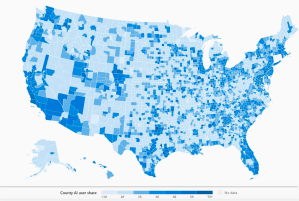
  19. America’s new AI map shows something surprising: ‘A lot of normal people are adopting AI’

    A new report from Microsoft indicates that AI adoption is widespread across the United States, extending beyond traditional tech hubs to include "normal people" and professionals like lawyers. The study, which mapped AI user share by state and county, revealed surprising leaders, with Texas ranking fourth nationally, surpassing California. This suggests a broader demographic and economic realignment, with growing AI entrepreneurship in areas like Austin, Texas. The report also highlighted a significant digital divide, showing much lower AI usage in rural counties compared to metropolitan areas, even after accounting for demographic factors. AI

    America’s new AI map shows something surprising: ‘A lot of normal people are adopting AI’

    IMPACT Reveals a broader, more distributed AI adoption landscape beyond tech hubs, impacting how businesses and individuals engage with AI tools.

  20. Vietnamese automaker VinFast restructures, spins off nearly $7 billion in debt

    Alibaba Cloud has launched a new financial-grade intelligent agent platform called Dianjin at its 2026 Cloud Summit. This platform directly connects to market data and Alibaba's assets, supporting various data sources like Wind and East Money. Dianjin is designed for financial institutions, offering features such as zero-code configuration, millisecond response times, and robust compliance measures to ensure accurate and transparent decision-making. AI

    IMPACT Enhances financial institutions' data processing and decision-making capabilities with AI-driven insights.

  21. 2 New Microsoft Defender Zero-Days Exploited—Patch Now Rolling Out

    Microsoft is issuing an emergency update for its Defender security software following confirmation from CISA that two zero-day vulnerabilities are actively being exploited. One vulnerability, CVE-2026-41091, allows for privilege escalation within the Microsoft Malware Protection Engine. The second, CVE-2026-45498, is a denial-of-service vulnerability affecting the Microsoft Defender Antimalware Platform and related products. CISA has mandated that federal agencies implement mitigation measures by June 3. AI

    2 New Microsoft Defender Zero-Days Exploited—Patch Now Rolling Out

    IMPACT This incident highlights ongoing cybersecurity risks for AI infrastructure and enterprise software, necessitating prompt patching to prevent breaches.

  22. Behind 900 Million Clicks, The Real World of AI Applications | 2026 China AI Application Panorama Report

    A new report from Quantum Bit Think Tank analyzes the evolving landscape of AI applications in China, shifting from simple chatbots to task-oriented agents. The report highlights a significant increase in AI application usage, with web traffic exceeding 900 million monthly visits and app downloads surpassing 240 million. Key trends include the rise of agents, the democratization of AI models, AI assistants becoming primary interfaces, the initial success of paid AI models, and the deepening penetration of AI in vertical business sectors. AI

    Behind 900 Million Clicks, The Real World of AI Applications | 2026 China AI Application Panorama Report

    IMPACT Highlights China's leading role in AI application adoption and the shift towards task-oriented AI, influencing global development priorities.

  23. The Whitepaper Thunderdome: EvoMemBench vs. Remembering More, Risking More

    Two recent arXiv papers, EvoMemBench and Remembering More, Risking More, present contrasting perspectives on evaluating and managing memory in AI agents. EvoMemBench, from researchers at HKUST Guangzhou and other institutions, argues that current memory benchmarks are too narrow and proposes a new self-evolving benchmark to address this. In contrast, the Remembering More, Risking More paper from UC Davis and the University of Michigan highlights the potential longitudinal safety risks associated with memory-equipped agents, suggesting that these risks may not be immediately apparent. AI

    The Whitepaper Thunderdome: EvoMemBench vs. Remembering More, Risking More

    IMPACT New benchmarks and safety considerations for AI agent memory are crucial for developing more robust and reliable AI systems.

  24. Yingli Co., Ltd.: Orders for notebook structural components increased month-on-month in the second quarter

    NetEase Youdao has announced a significant upgrade to its "Zi Yue" large language model, version 4.0, which now supports multimodal interactions including text, images, and audio. The company is also open-sourcing the core multimodal model and its text-to-speech (TTS) model. This move aims to advance AI capabilities and foster broader development within the AI community. AI

    IMPACT Open-sourcing key AI models can accelerate research and development in multimodal AI and speech synthesis.

  25. Youdao Fully Open Sources "Zi Yue 4" Multimodal and TTS Engine

    NetEase Youdao has released its "Zi Yue 4.0" large model, which now supports multimodal interactions including text, images, and audio. The company has also open-sourced the core multimodal model and its text-to-speech (TTS) engine. This release marks a significant step for Youdao in advancing its AI capabilities and contributing to the open-source community. AI

    IMPACT Accelerates open-source AI development and enables broader adoption of multimodal capabilities.

  26. A 3-step agent cost me $4.20. agenttrace showed me the O(n ) tool call hiding in plain sight.

    A developer discovered a significant cost overrun in an AI agent, escalating from an estimated $0.12 to $4.20 for a three-step process. The issue stemmed from an unbounded loop in the agent's cite-check step, causing input tokens to grow quadratically with each iteration due to re-attaching the full prior history. The developer implemented a fix using a sliding window approach, reducing the cost to $0.14 and highlighting the utility of the agenttrace-rs crate for diagnosing such performance and cost issues by providing detailed breakdowns of LLM calls. AI

    A 3-step agent cost me $4.20. agenttrace showed me the O(n ) tool call hiding in plain sight.

    IMPACT Provides developers with a tool to diagnose and fix costly LLM agent behavior, potentially reducing operational expenses.

  27. How Transformers Quietly Became the Foundation of Modern AI

    The Transformer architecture has become the bedrock of contemporary artificial intelligence, shifting the paradigm from simple memorization to sophisticated contextual understanding. This foundational technology enables models to focus on relevant information, a key development in advancing AI capabilities. Its widespread adoption underscores its critical role in the current AI landscape. AI

    IMPACT Explains the core architectural innovation that underpins most modern AI models.

  28. Chat With Your Documents Using Garudust Agent — No Vector Database Required

    Garudust Agent has launched a new feature that allows users to chat with their documents without needing a separate vector database. The system utilizes SQLite's FTS5 with a trigram tokenizer for efficient full-text search, enabling quick ingestion and querying of PDFs, text files, and other document types. This approach simplifies the process of building a knowledge base or analyzing documents by integrating RAG capabilities directly into the agent. AI

    IMPACT Simplifies document interaction by removing the need for complex vector database setups.

  29. Stop Using Raw Vector Search: Implement GraphRAG with Spring AI and Neo4j

    Developers can enhance AI retrieval systems by implementing GraphRAG, which combines vector search with graph database capabilities. This approach, demonstrated using Spring AI and Neo4j, addresses limitations of raw vector search by preserving relational context and generating structured queries. By integrating Neo4j as both a vector index and graph database, and using Spring AI's ChatClient for deterministic Cypher generation, developers can create more robust and less hallucination-prone AI applications. AI

    IMPACT Improves enterprise AI retrieval by preserving relational context and reducing hallucinations.

  30. Three Rough Edges of Running Claude Code + Telegram MCP on Windows: A 200-Line Toolkit

    A developer has created a 200-line open-source toolkit to address three minor issues encountered when running Claude Code via Telegram on Windows. The toolkit resolves a visual annoyance of multiple command windows appearing on login by using VBScript to hide the console windows. It also fixes a problem where the Telegram polling mechanism would stop receiving messages by implementing a script to kill orphaned Telegram processes before starting a new session. Finally, it prevents a scenario where running multiple Claude Code instances simultaneously could lead to a zombie process issue. AI

    IMPACT Provides a practical solution for users integrating AI code assistants into their workflow, improving usability.

  31. Stop Getting 'It Depends' Answers About RAG Architecture

    A new tool called RAG Readiness has been developed to provide specific, opinionated recommendations for Retrieval-Augmented Generation (RAG) system architectures. Instead of offering comparison tables that can be paralyzing, RAG Readiness asks users about their use case, data, and constraints to recommend a single, reasoned choice for each component, such as the vector database, embedding model, and retrieval method. The tool also offers features for diagnosing existing RAG systems, running multi-use-case audits, generating implementation starter kits, and estimating costs. AI

    IMPACT Simplifies complex RAG architecture decisions, potentially accelerating adoption and deployment of RAG systems.

  32. BALLAST: Bayesian Active Learning with Look-ahead Amendment for Sea-drifter Trajectories under Spatio-Temporal Vector Fields

    Researchers have developed a new active learning methodology called BALLAST to improve the inference of time-dependent vector fields, particularly for oceanography. This method uses a physics-informed Gaussian process surrogate model and considers the future trajectories of measurement observers. BALLAST has demonstrated benefits in synthetic and high-fidelity ocean current models, and a novel GP inference method, VaSE, was also introduced to enhance sampling efficiency. AI

    IMPACT Introduces a novel active learning approach for scientific data inference, potentially improving the efficiency of oceanographic research.

  33. Fudan University Trusted Embodied Intelligence Institute & Shanghai Jiao Tong University: Equipping Autonomous Driving with Retrievable "Spatial Memory" | CVPR 2026

    Researchers from Fudan University and Shanghai Jiao Tong University have developed a novel approach for autonomous driving that incorporates a "spatial memory" by retrieving historical geographic information. This method uses GPS data to access street view and satellite imagery of the current location, fusing this with real-time sensor data. The system is designed to provide a spatial prior, helping vehicles understand road structures like lane lines and boundaries, especially in challenging conditions where sensors may be obscured or provide limited views. This "retrieval-augmented autonomous driving" paradigm shifts from relying solely on immediate sensor input to a combination of real-time perception and historical spatial context. AI

    Fudan University Trusted Embodied Intelligence Institute & Shanghai Jiao Tong University: Equipping Autonomous Driving with Retrievable "Spatial Memory" | CVPR 2026

    IMPACT Introduces a new paradigm for autonomous driving by integrating historical geographic data with real-time sensors, potentially improving safety and robustness in complex scenarios.

  34. From emissions reporting to decarbonization decisions

    Databricks has launched Genie for Decarbonization Intelligence, a new tool designed to help energy sector companies bridge the gap between ESG reporting and actual decarbonization decisions. The platform allows sustainability leaders to query complex emissions and operational data using natural language, providing instant answers to inform forward-looking strategies. This aims to transform sustainability from a compliance burden into a competitive advantage by enabling data-driven decision-making. AI

    IMPACT Enables faster, data-driven sustainability decisions in the energy sector by leveraging natural language querying of complex emissions data.

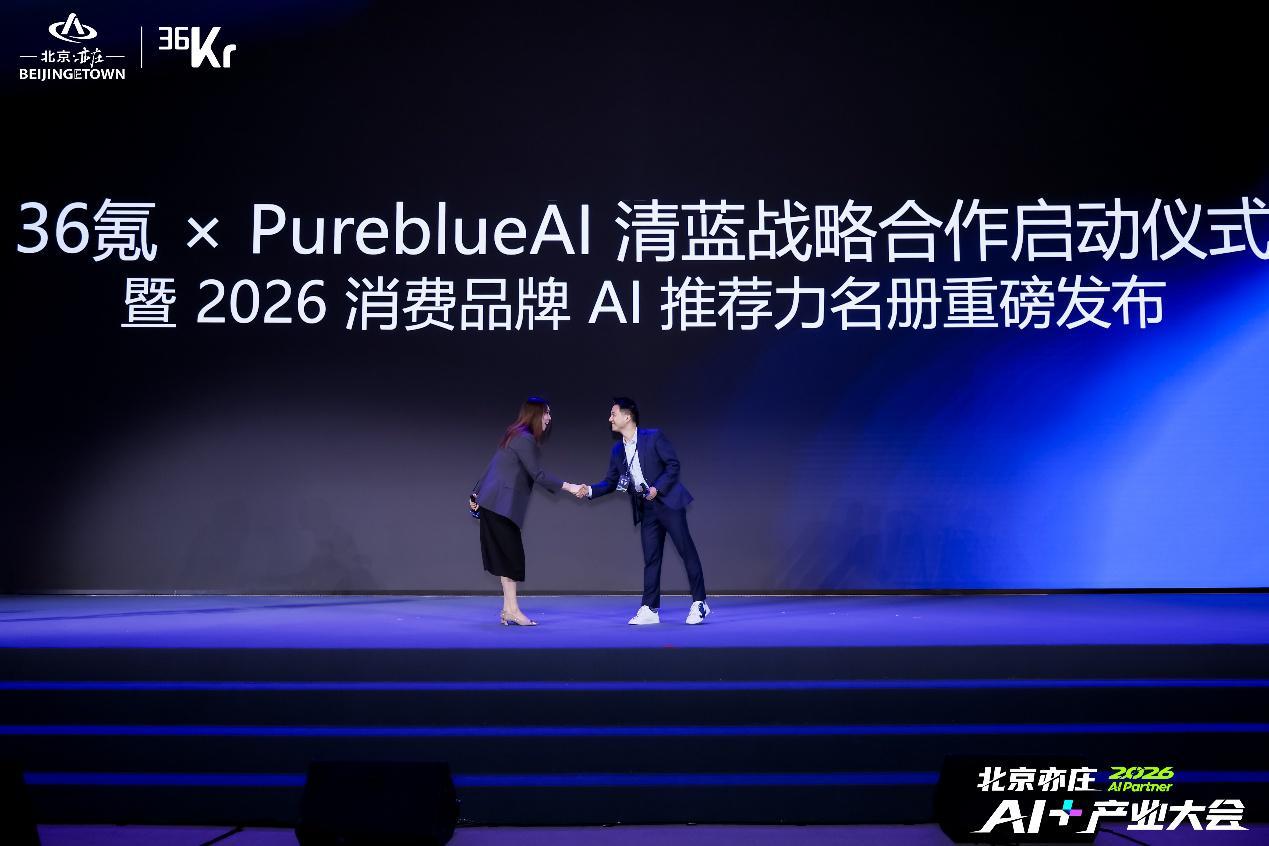
  35. 36Kr x PureblueAI Strategic Cooperation Launch Ceremony and Release of "2026 Consumer Brand AI Recommendation Power List" | 2026 AI Partner · Beijing Yizhuang AI+ Industry Conference

    36Kr and PureblueAI have launched a strategic partnership focused on the growing importance of AI recommendations for consumer brands. The collaboration aims to provide brands with insights into their visibility and ranking within AI search results and recommendation systems. Together, they released the "2026 Consumer Brand AI Recommendation Power List," with plans for future industry-specific publications to guide brands in the evolving AI landscape. AI

    36Kr x PureblueAI Strategic Cooperation Launch Ceremony and Release of "2026 Consumer Brand AI Recommendation Power List" | 2026 AI Partner · Beijing Yizhuang AI+ Industry Conference

    IMPACT Brands need to understand how AI recommendation systems influence consumer decisions and adjust their strategies accordingly.

  36. Building Production RAG Pipelines: Practical Lessons

    Building effective production RAG pipelines requires careful attention to retrieval quality, latency, and operational visibility, rather than just demo performance. Key decisions involve how content is ingested, chunked, embedded, and indexed, with retrieval quality often proving more critical than the LLM itself. Techniques like hybrid search, metadata filtering, query rewriting, and reranking can significantly improve results, while prompt design must guide the LLM on how to use the retrieved context and avoid unsupported claims. AI

    Building Production RAG Pipelines: Practical Lessons

    IMPACT Provides practical guidance for developers building and deploying RAG systems, emphasizing key operational considerations for improved performance and reliability.

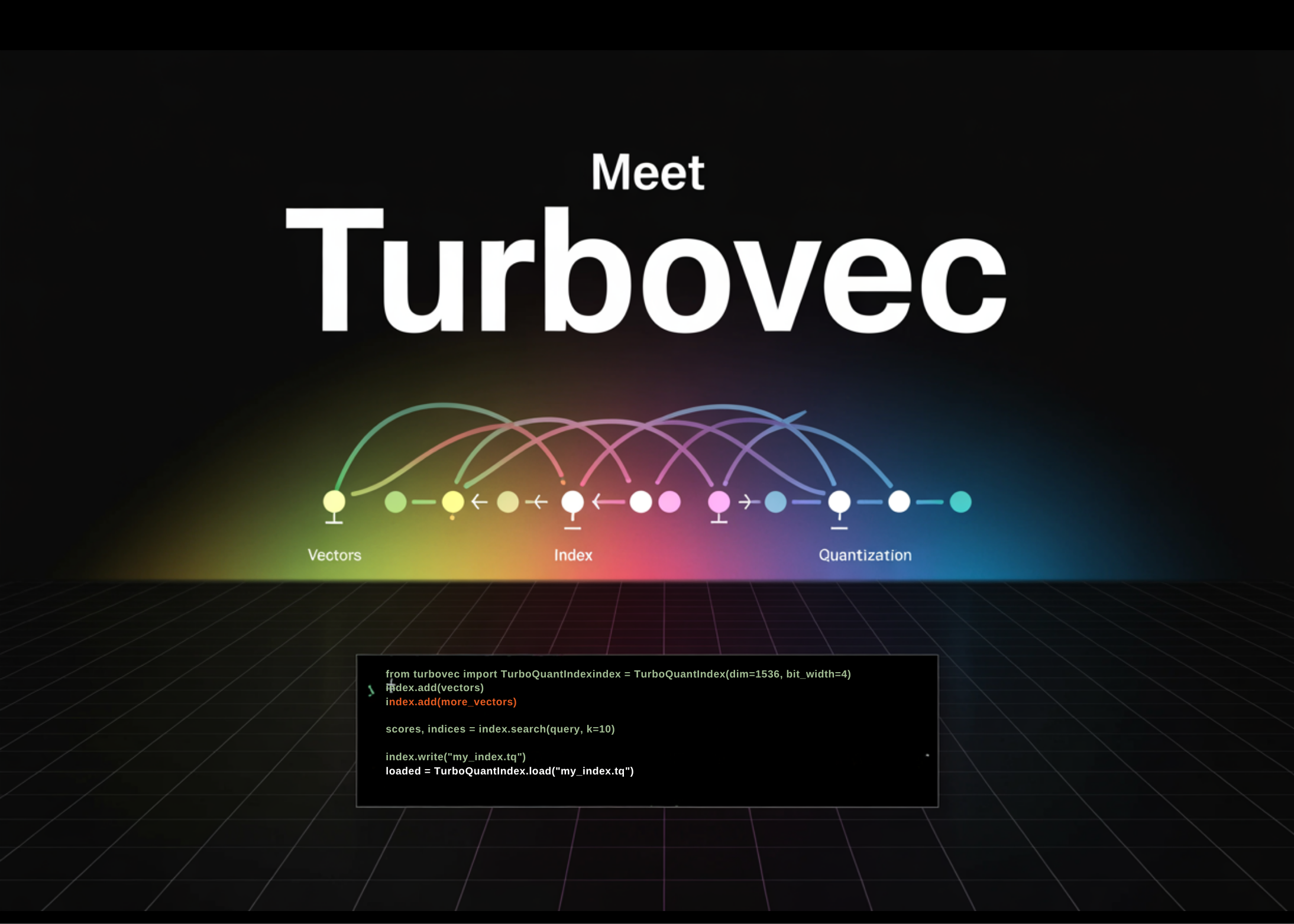
  37. Meet Turbovec: A Rust Vector Index with Python Bindings, and Built on Google’s TurboQuant Algorithm

    Turbovec is a new open-source vector index library written in Rust with Python bindings, designed to reduce the memory footprint of vector embeddings for AI applications. It utilizes Google's TurboQuant algorithm, a data-oblivious quantizer that achieves significant compression without requiring a training phase. This approach allows for substantial memory savings, fitting 10 million document embeddings into 4 GB of RAM compared to the 31 GB typically needed for float32 storage, while maintaining competitive search speeds and recall rates. AI

    Meet Turbovec: A Rust Vector Index with Python Bindings, and Built on Google’s TurboQuant Algorithm

    IMPACT Reduces memory requirements for vector embeddings, potentially lowering costs and enabling local inference for RAG applications.

  38. Which LLM is the best stock picker? I built a benchmark to find out.

    A new benchmark, dubbed 1rok, has been launched to evaluate the stock-picking capabilities of frontier large language models. The benchmark assigns each participating LLM a virtual portfolio of $100,000 and tasks them with selecting stocks weekly, with performance tracked against market outcomes. This initiative aims to provide a more practical, downstream evaluation of LLMs beyond traditional coding and reasoning benchmarks, focusing on decision-making under uncertainty. AI

    Which LLM is the best stock picker? I built a benchmark to find out.

    IMPACT Provides a novel benchmark for evaluating LLM decision-making under uncertainty, moving beyond traditional coding and reasoning tasks.

  39. Amazon Quick: AWS's Agentic Workspace, Explained for Engineers

    Amazon Quick is a new AI-powered workspace designed for teams, launched in preview on April 28, 2026. It integrates with existing tools like Slack, Teams, and Outlook, allowing users to query and automate across connected systems. Built on AWS Bedrock AgentCore and utilizing the open Model Context Protocol (MCP), Quick enables the creation of custom agents that can be shared across a team, with responses grounded in the organization's specific data. AI

    Amazon Quick: AWS's Agentic Workspace, Explained for Engineers

    IMPACT Accelerates team-based AI adoption by providing a ready-to-use workspace that connects to existing tools and data.

  40. Even Claude agrees: hole in its sandbox was real and dangerous

    Anthropic's Claude AI model had a security vulnerability in its sandbox environment that could have allowed for dangerous exploits. The company has since fixed the issue without issuing a public disclosure or CVE. This incident highlights the ongoing challenges in securing AI systems and the potential risks associated with their rapid development and deployment. AI

    Even Claude agrees: hole in its sandbox was real and dangerous

    IMPACT Highlights the persistent security risks in deployed AI models, underscoring the need for robust security practices and disclosure.

  41. Gemma 4 wrote three summaries in one response. The middle one was a self-disclaimer.

    A recent analysis of Google's Gemma 4 E2B model revealed unexpected behavior at a context window of 2048 tokens. When presented with a truncated input, the model generated a three-part response: an initial summary, a self-disclaimer stating the summary was not in the transcript, and then a more cautious retry. This behavior was not observed at larger context window sizes, such as 32768 tokens, where the model correctly identified the input issue without hedging. The discovery corrected a previous assertion about the model's calibration capabilities. AI

    Gemma 4 wrote three summaries in one response. The middle one was a self-disclaimer.

    IMPACT Reveals nuanced behavior in a specific model, highlighting the importance of context window size in LLM output.

  42. I spawned 25 Claude Code subagents in one night. Here's what I learned.

    A developer successfully created 37 Apify Actors, with 5 now live on the platform, by leveraging 25 Claude Code subagents in parallel. The process involved detailed, constrained prompts and running agents in the background to maximize throughput. The developer found that running four agents concurrently offered the best balance between speed and oversight, preventing output drift and ensuring adherence to specifications. AI

    I spawned 25 Claude Code subagents in one night. Here's what I learned.

    IMPACT Demonstrates how AI agents can be used to rapidly develop and deploy multiple software tools.

  43. Your MCP database server needs connection pooling before real users arrive

    Database servers used by AI agents experience highly variable traffic patterns, with a single user query potentially triggering multiple database operations. To ensure stability and prevent overwhelming the system, implementing connection pooling is crucial for AI database servers. This practice is essential for maintaining a safety boundary and should involve strategies like workload-specific pools, read replicas for exploration, and setting statement timeouts to manage query budgets effectively. AI

    Your MCP database server needs connection pooling before real users arrive

    IMPACT Ensures AI applications remain stable and performant under variable user loads by optimizing database connections.

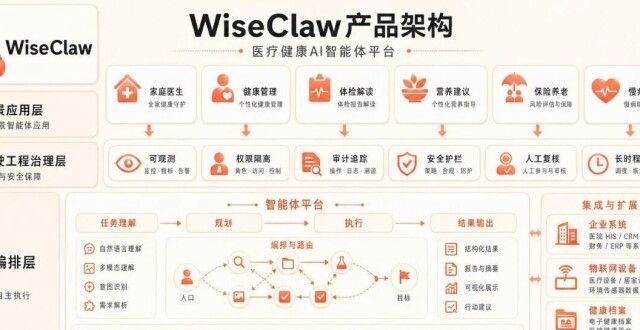
  44. WiseDiag, a Chinese medical AI company, has launched seven medical AI Skills on Tencent Cloud SkillHub, fully integrated with the WorkBuddy multi-agent workbench.

    WiseDiag, a Chinese company specializing in medical AI, has introduced seven new AI skills to Tencent Cloud's SkillHub platform. These skills are designed for enterprise users and integrate with the WorkBuddy multi-agent system, allowing for the deployment of modular medical AI agents without extensive development. AI

    WiseDiag, a Chinese medical AI company, has launched seven medical AI Skills on Tencent Cloud SkillHub, fully integrated with the WorkBuddy multi-agent workbench.

    IMPACT Enables easier deployment of specialized medical AI agents for enterprises.

  45. Stop Rewriting LLM Code: llmbridge Gives Go One Interface for All of It

    The llmbridge library offers Go developers a unified interface for interacting with various large language models. This tool aims to simplify LLM integration by abstracting away the complexities of different model APIs, allowing developers to switch between models without significant code changes. It supports multiple LLM providers and is available under an MIT license. AI

    Stop Rewriting LLM Code: llmbridge Gives Go One Interface for All of It

    IMPACT Simplifies LLM integration for Go developers, potentially accelerating adoption of LLM-powered features in Go applications.

  46. Foundation Models Do Not Understand Biology

    Foundation models, while capable of generating polished medical reports, lack true biological understanding and operate by predicting likely word sequences rather than reasoning from first principles. This can lead to dangerous AI

    Foundation Models Do Not Understand Biology

    IMPACT Current AI models may produce convincing but biologically impossible medical diagnoses, necessitating constrained systems for safety.

  47. Tencent Launches OS-Level AI Assistant "Mavis"

    Tencent has launched Marvis, an AI assistant integrated at the operating system level. Marvis unifies system resources, files, applications, and connectivity within a single AI layer. It comes pre-loaded with six specialized AI agents, including a main agent that coordinates tasks and dispatches specialized agents for file management, computing, applications, browsing, and search, enabling immediate use upon installation. The assistant also offers both efficiency and privacy modes. AI

    IMPACT This OS-level AI assistant could streamline user workflows by integrating various system functions and pre-built agents for immediate productivity.

  48. Announcing OpenAI-compatible API support for Amazon SageMaker AI endpoints

    Amazon SageMaker AI now offers OpenAI-compatible API support for its real-time inference endpoints. This integration allows users to invoke models hosted on SageMaker using existing OpenAI SDKs, LangChain, or Strands Agents by simply updating the endpoint URL. The new feature supports bearer token authentication for secure access and enables multi-model hosting and the deployment of fine-tuned open-source models without requiring code modifications. AI

    Announcing OpenAI-compatible API support for Amazon SageMaker AI endpoints

    IMPACT Simplifies integration for developers using OpenAI's ecosystem with models hosted on AWS infrastructure.

  49. Our retry loop made an outage worse. The circuit breaker stopped the cascade.

    A software engineer detailed how a retry loop exacerbated an outage with Anthropic's API, leading to significant wasted calls and extended recovery time. To prevent future incidents, they developed a Rust-based circuit breaker library called `llm-circuit-breaker`. This library implements a simple state machine to halt requests when an upstream service becomes degraded, protecting against cascading failures when combined with retry logic. AI

    Our retry loop made an outage worse. The circuit breaker stopped the cascade.

    IMPACT Provides a robust solution for managing API failures in AI-powered applications, preventing cascading outages and improving system resilience.

  50. I burned my Anthropic org cap and waited 3 days. Then I built llmfleet.

    A developer built a tool called llmfleet after experiencing a three-day outage due to hitting Anthropic's API token limits. The tool acts as a pooled dispatcher for API calls, managing backpressure based on real-time rate limit headers rather than relying on default SDK retry mechanisms. llmfleet aims to prevent the frantic retry loops that can exacerbate rate limiting issues and provides sustained throughput by intelligently holding requests when token limits are approached. AI

    I burned my Anthropic org cap and waited 3 days. Then I built llmfleet.

    IMPACT Provides a solution for developers to better manage API rate limits, potentially improving efficiency and reducing downtime when using large language models.