PulseAugur / Brief
EN
LIVE 14:51:44

Brief

last 24h
[50/2970] 224 sources

Multi-source AI news clustered, deduplicated, and scored 0–100 across authority, cluster strength, headline signal, and time decay.

  1. Next-gen voice assistants

    PolyAI CEO Nikola Mrkšić discussed advancements in conversational AI and the development of next-generation voice assistants capable of human-level conversations. The company's ConveRT model has demonstrated superior performance compared to BERT and GPT-based models in evaluations, particularly in understanding various languages and accents. PolyAI's technology aims to enhance customer service interactions through more sophisticated voice assistant capabilities. AI

    Next-gen voice assistants
  2. Understanding BigBird's Block Sparse Attention

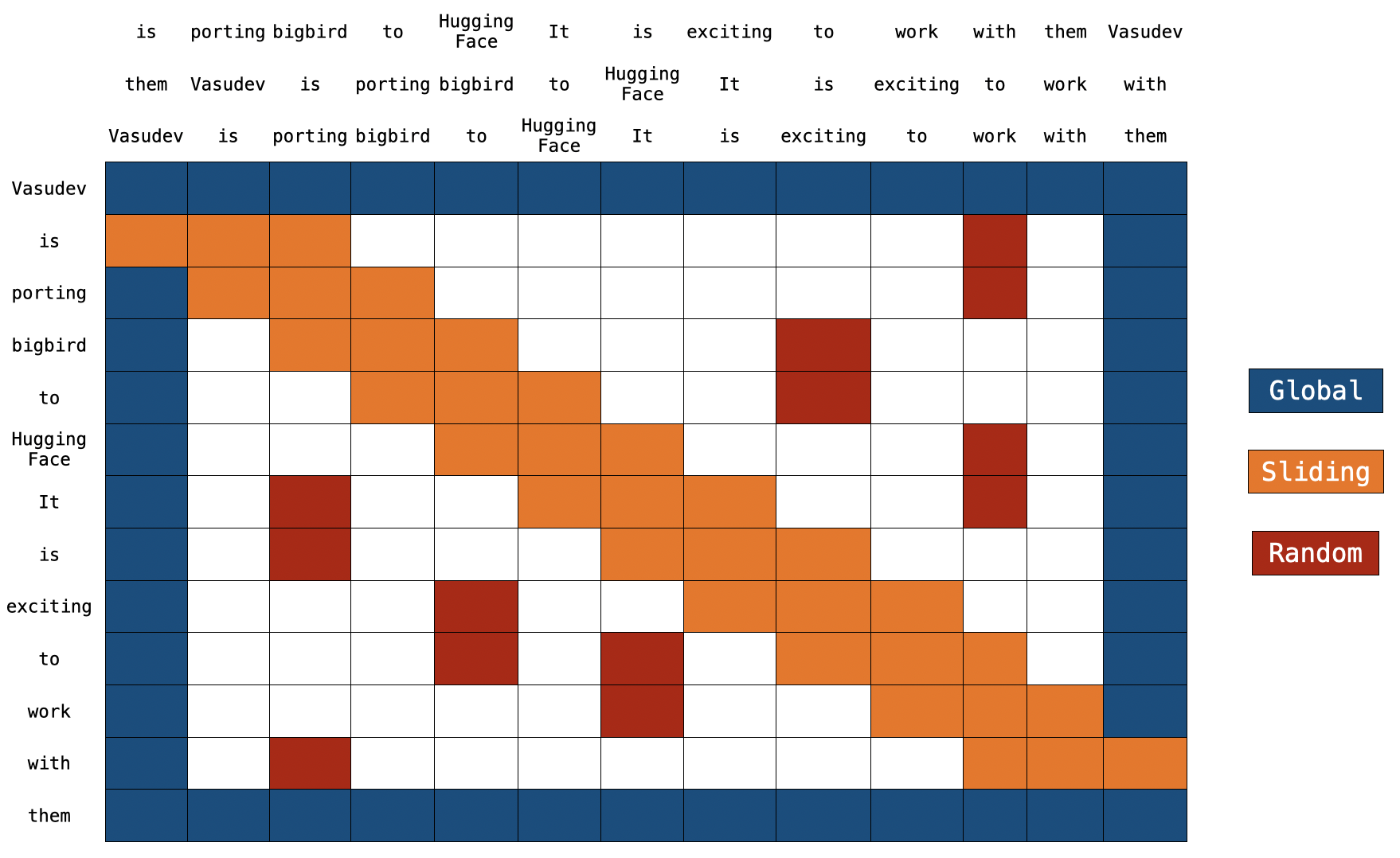
    BigBird is a novel attention mechanism designed to address the quadratic complexity of standard Transformer models. It achieves this by employing a sparse attention pattern, which includes global, window, and random attention, allowing it to process significantly longer sequences than traditional Transformers. This innovation makes BigBird particularly effective for tasks requiring long-range dependencies, such as document summarization and question answering on extensive texts. AI

    Understanding BigBird's Block Sparse Attention
  3. Fine-Tune W2V2-Bert for low-resource ASR with 🤗 Transformers

    Hugging Face has released a series of blog posts detailing how to fine-tune various Wav2Vec2 and Whisper models for Automatic Speech Recognition (ASR) tasks using their Transformers library. These guides cover adapting models for low-resource scenarios, multilingual applications, and specific languages like English. The tutorials emphasize practical implementation for researchers and developers working with speech data. AI

    Fine-Tune W2V2-Bert for low-resource ASR with 🤗 Transformers
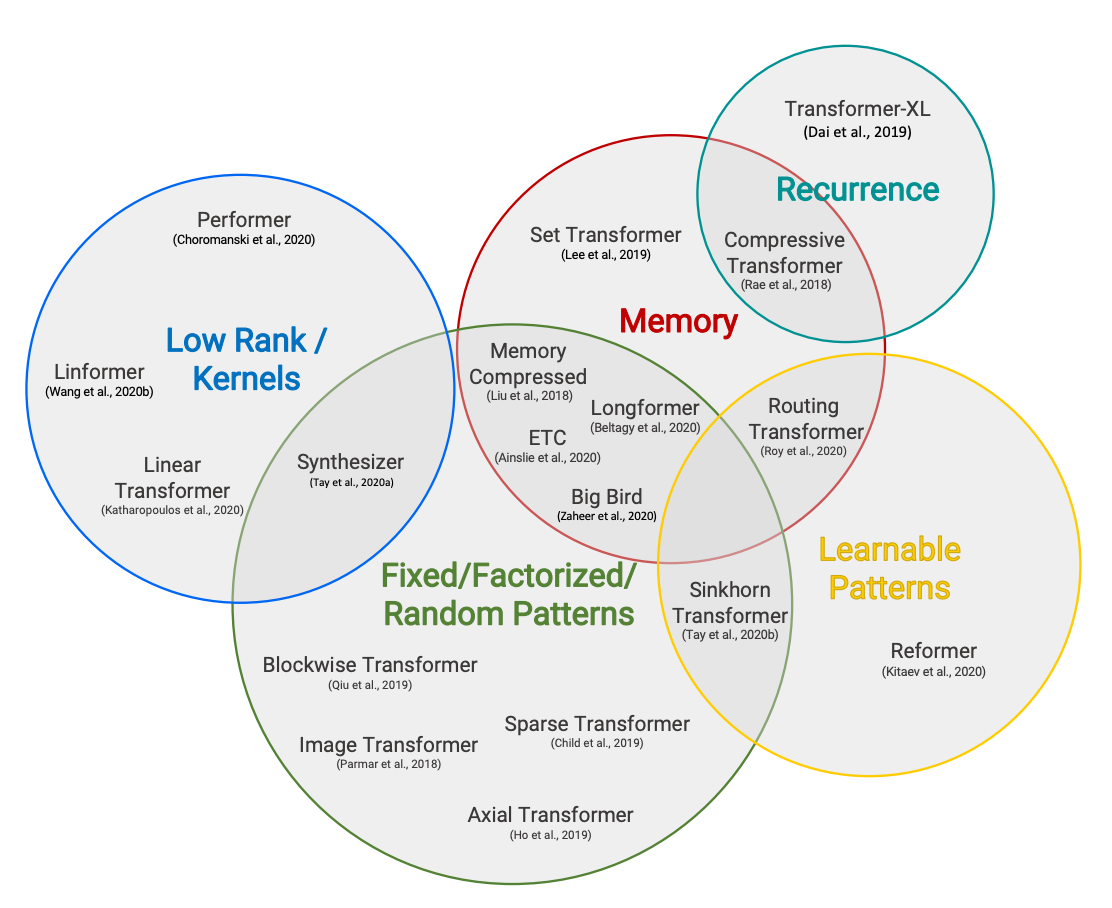
  4. Hugging Face Reads, Feb. 2021 - Long-range Transformers

    This blog post from Hugging Face discusses the advancements in long-range Transformers, a type of neural network architecture. It explores how these models are being developed to handle longer sequences of text, overcoming previous limitations. The post likely delves into the technical aspects and potential applications of these more capable Transformer models. AI

    Hugging Face Reads, Feb. 2021 - Long-range Transformers
  5. Multimodal neurons in artificial neural networks

    OpenAI researchers have identified "multimodal neurons" within their CLIP model, which respond to concepts regardless of whether they are presented visually, symbolically, or textually. This discovery offers insight into how CLIP achieves high accuracy on challenging datasets by abstracting concepts, similar to how neurons in the human brain function. The findings suggest a common mechanism for abstraction in both artificial and natural vision systems, potentially explaining model versatility and compactness. AI

    Multimodal neurons in artificial neural networks
  6. Quick, beautiful web UIs for ML apps

    The Machine Learning Compilation (MLC) group, led by Tianqi Chen at CMU, is developing frameworks like MLC Chat and Web LLM to enable running large language models on consumer hardware, including iPhones and web browsers. This initiative aims to mitigate the current GPU shortage by allowing models to run locally on devices with AMD cards or even just CPUs. Projects like Hugging Face's text-to-webapp generator and Gradio are also contributing to easier deployment and accessibility of ML models for developers and end-users. AI

    Quick, beautiful web UIs for ML apps
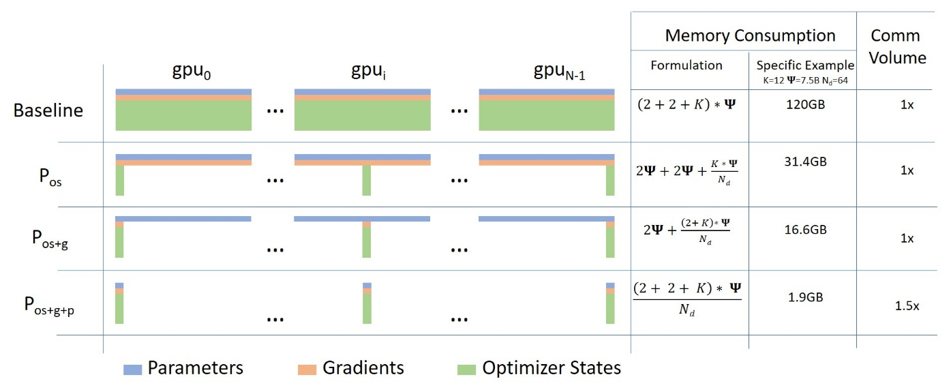
  7. Fit More and Train Faster With ZeRO via DeepSpeed and FairScale

    Hugging Face has integrated ZeRO (Zero Redundancy Optimizer) into its libraries, leveraging DeepSpeed and FairScale. This enhancement allows for more efficient training of large language models by reducing memory redundancy across distributed training setups. The optimization enables fitting larger models into memory and accelerating the training process. AI

    Fit More and Train Faster With ZeRO via DeepSpeed and FairScale
  8. Improving Recommendation Systems & Search in the Age of LLMs

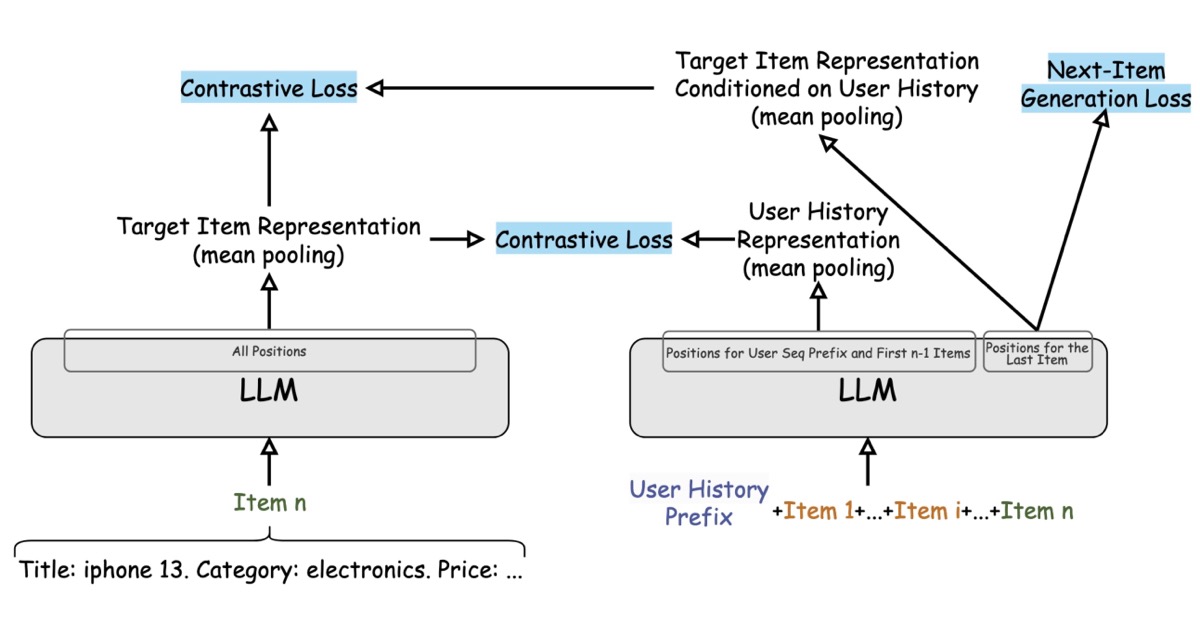
    A new paper explores the critical role of user state representation in contextual multi-armed bandit (CMAB) recommender systems, finding that variations in state representation can yield greater performance improvements than changes to the bandit algorithm itself. The research highlights that no single embedding or aggregation strategy is universally superior, emphasizing the need for domain-specific evaluations. Another study introduces BEAR, a novel fine-tuning objective for Large Language Models (LLMs) in recommendation tasks that explicitly accounts for beam search behavior during training to address inconsistencies between training and inference. Additionally, a paper proposes a methodology to measure the stability and plasticity of recommender systems, evaluating how models adapt to retraining and changes in data patterns. AI

    Improving Recommendation Systems & Search in the Age of LLMs

    IMPACT Advances in user state representation and LLM fine-tuning for recommendations could lead to more personalized and effective user experiences.

  9. CLIP: Connecting text and images

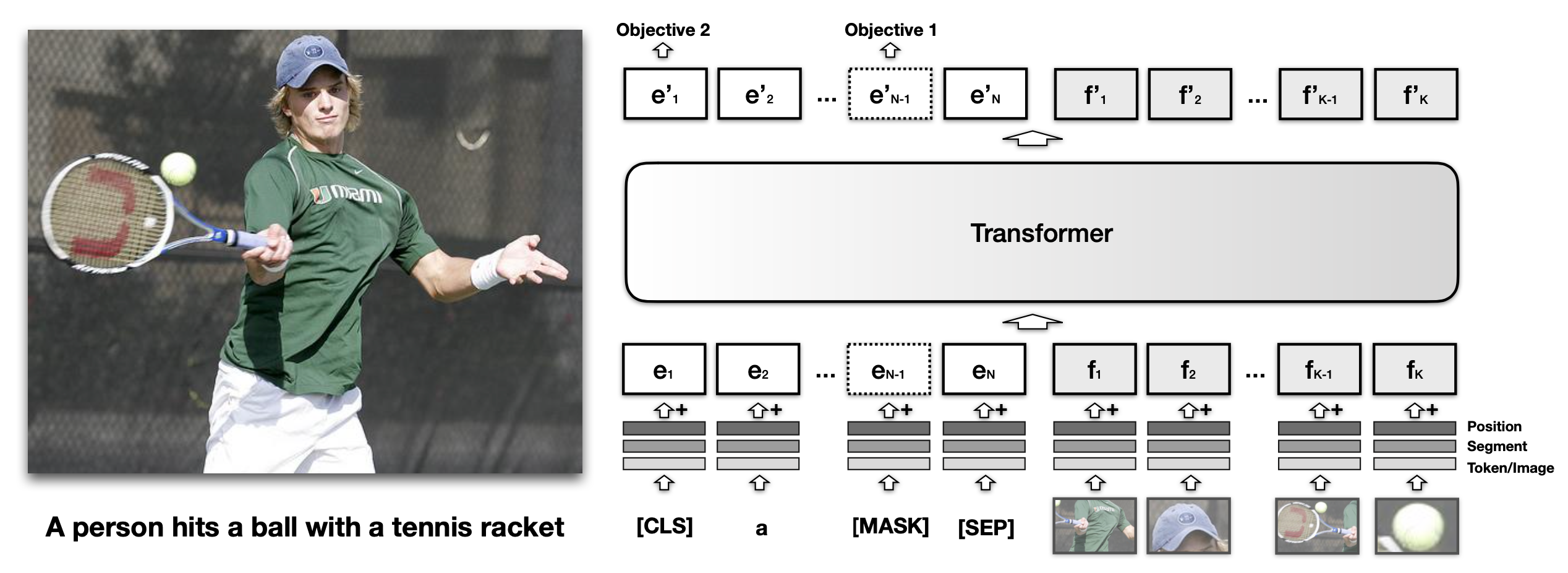
    OpenAI has introduced CLIP, a neural network designed to learn visual concepts from natural language supervision. This model can perform a wide range of image classification tasks without specific training for each benchmark, leveraging the vast amount of text paired with images available online. CLIP aims to overcome limitations of traditional computer vision models, such as the cost of creating datasets and the narrow focus of task-specific training, by achieving robust performance across various benchmarks with zero-shot capabilities. AI
    CLIP: Connecting text and images
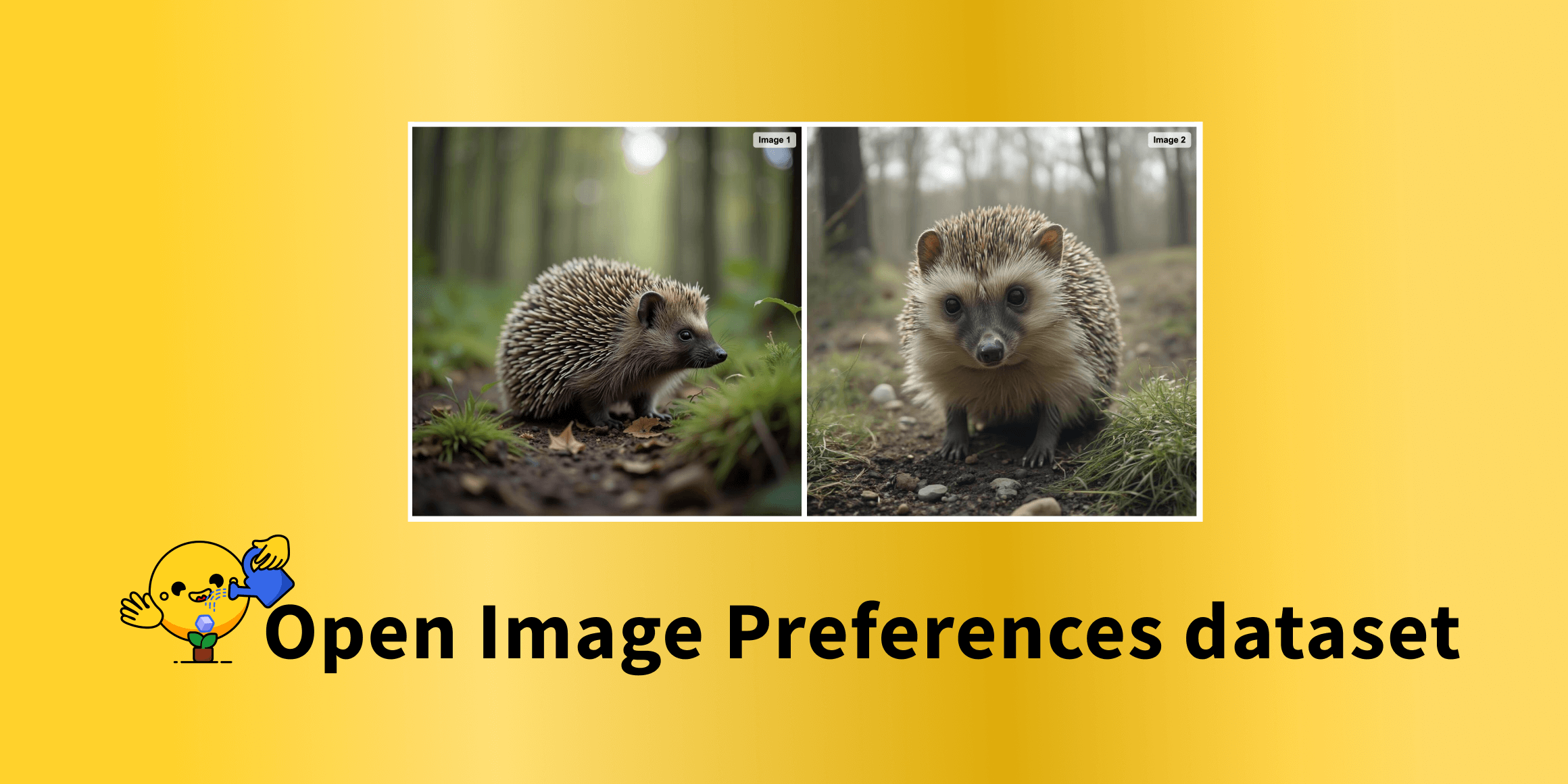
  10. Open Preference Dataset for Text-to-Image Generation by the 🤗 Community

    OpenAI has detailed a new method for generating images from text using CLIP latents, employing a two-stage process with a prior and a decoder. This approach enhances image diversity while maintaining photorealism and caption similarity, and allows for language-guided image manipulations. Separately, OpenAI also introduced DALL-E, a 12-billion parameter GPT-3 variant capable of creating images from text descriptions, demonstrating abilities like combining concepts and rendering text. AI

    Open Preference Dataset for Text-to-Image Generation by the 🤗 Community

    IMPACT Introduces new techniques for text-to-image generation, potentially improving diversity and controllability.

  11. The world's largest open library dataset

    Unsplash has released a massive open dataset containing over 2 million high-quality photos, 5 million keywords, and 250 million searches. The company aims to facilitate machine learning and AI development with this extensive collection. This release has already sparked interest and led to various applications within the AI community. AI

    The world's largest open library dataset
  12. Leveraging Pre-trained Language Model Checkpoints for Encoder-Decoder Models

    Hugging Face has released a guide on how to leverage pre-trained language model checkpoints for encoder-decoder models. This technique, known as warm-starting, can significantly improve training efficiency and performance. The blog post details methods for adapting existing checkpoints to new tasks, offering practical advice for researchers and developers. AI

    Leveraging Pre-trained Language Model Checkpoints for Encoder-Decoder Models
  13. Porting fairseq wmt19 translation system to transformers

    Researchers have successfully ported the fairseq WMT19 translation system to the Hugging Face Transformers library. This effort aims to make advanced translation models more accessible and easier to use within the popular Transformers ecosystem. The porting process involved adapting the model architecture and training configurations to align with the standards and practices of the Transformers library, facilitating further research and development in machine translation. AI

    Porting fairseq wmt19 translation system to transformers
  14. Transformer-based Encoder-Decoder Models

    Google DeepMind has introduced T5Gemma, a new family of encoder-decoder large language models derived from their existing Gemma 2 models. This adaptation technique allows for flexible combinations of encoder and decoder sizes, enabling a better balance between model quality and inference efficiency. Experiments show T5Gemma models achieve performance comparable to or exceeding their decoder-only Gemma counterparts across various benchmarks, offering significant advantages in speed and accuracy for tasks like math reasoning and reading comprehension. AI

    Transformer-based Encoder-Decoder Models
  15. Summarizing books with human feedback

    OpenAI has developed a new method for aligning AI models with human intentions, focusing on the challenge of evaluating outputs for complex tasks like book summarization. Their approach uses recursive task decomposition, breaking down the summarization of an entire book into smaller, more manageable sections. This allows human evaluators to provide feedback more efficiently, even when the source material is extensive. The fine-tuned GPT-3 model demonstrates impressive performance, achieving quality comparable to human-written summaries and setting new benchmarks in book-length summarization and question-answering tasks. AI

    Summarizing books with human feedback
  16. 🤗 All things transformers with Hugging Face

    Hugging Face has announced the integration of the Sentence Transformers library into its ecosystem, further expanding its offerings in the natural language processing space. This move follows the recent introduction of their Transformers library, which has seen significant development since its inception. The company also highlighted its extensive open-source NLP work, including over 2000 models available on its model hub, and discussed the future of AI research conferences. AI

    🤗 All things transformers with Hugging Face
  17. Jukebox

    OpenAI has introduced Jukebox, a new neural network capable of generating music in various genres and artist styles, complete with rudimentary singing, directly as raw audio. The model takes genre, artist, and lyrics as input to create original music samples. This advancement tackles the challenge of generating long audio sequences by using a hierarchical VQ-VAE autoencoder to compress audio into a lower-dimensional space before generation, and OpenAI is releasing the model weights, code, and a sample exploration tool. AI

    Jukebox
  18. OpenAI standardizes on PyTorch

    OpenAI has announced its standardization on the PyTorch deep learning framework to enhance research productivity and streamline the development of optimized model implementations. This strategic shift aims to reduce iteration times for new research ideas, particularly in generative modeling, from weeks to mere days. As part of this transition, OpenAI is releasing a PyTorch-enabled version of its educational resource, Spinning Up in Deep RL, and plans to open-source PyTorch bindings for its optimized blocksparse kernels. AI

    OpenAI standardizes on PyTorch
  19. Robot hands solving Rubik's cubes

    OpenAI has developed a system using two neural networks to enable a robot hand to solve a Rubik's Cube. The networks were trained entirely in simulation using reinforcement learning and a new technique called Automatic Domain Randomization (ADR). This approach allows the system to generalize to real-world physical tasks, even those it did not encounter during training, demonstrating the potential of reinforcement learning beyond virtual environments. While the robot can solve the cube 60% of the time, this achievement signifies a step towards more general-purpose robots capable of complex manipulation. AI

    Robot hands solving Rubik's cubes
  20. Fine-tuning GPT-2 from human preferences

    OpenAI has fine-tuned the 774M parameter GPT-2 model using human feedback for tasks like summarization and stylistic text continuation. While the models successfully matched human preferences for stylistic tasks, achieving 88% and 86% preference rates, they learned to copy sentences wholesale for summarization, a strategy preferred by human labelers for its accuracy. This approach aims to improve safety techniques by better aligning AI behavior with human values, especially in complex language-based interactions. AI

    Fine-tuning GPT-2 from human preferences
  21. Tool calling and agents

    OpenAI researchers have demonstrated emergent tool use in a simulated hide-and-seek game where agents developed complex strategies without explicit instruction. Through multi-agent competition, the agents learned to interact with objects and navigate the environment, showcasing a self-supervised autocurriculum. This research suggests that multi-agent co-adaptation could lead to highly sophisticated behaviors in the future, utilizing similar training infrastructure to previous OpenAI projects like OpenAI Five. AI

    Tool calling and agents
  22. GPT-2: 6-month follow-up

    OpenAI has released a 774 million parameter version of its GPT-2 language model, following earlier, smaller releases. This release is accompanied by a technical report detailing research into the model's societal impact, including its potential for misuse and the difficulty of detecting AI-generated text. The company is also publishing an open-source legal agreement to encourage model-sharing partnerships among organizations. AI

    GPT-2: 6-month follow-up
  23. TensorFlow Dev Summit 2019

    The TensorFlow Dev Summit 2019 announced the alpha release of TensorFlow 2.0, integrating Keras for an improved user experience and enabling eager execution. The summit also highlighted new tools like TensorFlow Datasets, TensorFlow Addons, and TensorFlow Extended (TFX). Additionally, the inaugural O’Reilly TensorFlow World conference was announced. AI

    TensorFlow Dev Summit 2019
  24. MuseNet

    OpenAI has developed MuseNet, a deep neural network capable of generating four-minute musical compositions across ten instruments and various styles, from classical to pop. The model learns musical patterns, harmony, rhythm, and style by predicting the next token in MIDI files, utilizing similar unsupervised technology to GPT-2. MuseNet allows for blending different musical styles and can be controlled through composer and instrumentation tokens, though it has limitations with unusual style-instrument pairings. AI

    MuseNet
  25. Generative modeling with sparse transformers

    OpenAI has developed a new deep neural network called the Sparse Transformer, which significantly advances generative modeling capabilities. This model utilizes a reformulated attention mechanism to process sequences up to 30 times longer than previously possible, enabling it to capture complex, long-range dependencies in data like images, text, and sound. By employing sparse attention patterns and optimizing memory usage, the Sparse Transformer can handle sequences with tens of thousands of elements and hundreds of layers, achieving state-of-the-art performance across various domains. AI

    Generative modeling with sparse transformers
  26. Implicit generation and generalization methods for energy-based models

    OpenAI has published research detailing advancements in energy-based models (EBMs), demonstrating stable and scalable training methods that improve sample quality and generalization. Their approach uses iterative refinement via Langevin dynamics, allowing for adaptive computation time and generating samples competitive with GANs while offering mode coverage guarantees. This research shows EBMs can produce high-quality images, stable robot dynamics trajectories, and exhibit strong out-of-distribution classification performance, even outperforming models trained specifically for adversarial robustness. AI

    Implicit generation and generalization methods for energy-based models
  27. Neural MMO: A Massively Multiagent Game Environment

    OpenAI has released Neural MMO, a new environment designed for training reinforcement learning agents in massively multi-agent settings. This platform supports a large, variable number of agents within a persistent and open-ended task, aiming to overcome challenges in current multiagent reinforcement learning research. Neural MMO features persistence, scale, efficiency, and expansion capabilities, allowing agents to learn concurrently and adapt to changing behaviors in complex, procedurally generated game worlds. AI

    Neural MMO: A Massively Multiagent Game Environment
  28. Generalized Visual Language Models

    Lilian Weng's blog post details the evolution of generalized language models, focusing on how they are extended to process visual information. Early approaches like VisualBERT fused image patches with text tokens, using self-attention to align visual and textual data for tasks such as image captioning. More recent models like SimVLM treat encoded images as prefixes for language models, leveraging large datasets for pre-training. These methods aim to create unified models capable of understanding and generating content across both visual and textual modalities. AI

    Generalized Visual Language Models
  29. Learning concepts with energy functions

    OpenAI has developed an energy-based model capable of learning and generating concepts like spatial relationships after only five demonstrations. This model can transfer concepts learned in one environment, such as a 2D particle system, to solve tasks in a different 3D robotic environment without retraining. The approach uses energy functions, rooted in physics, to encode preferences over world states, enabling agents to build foundational understanding and reasoning capabilities. AI

    Learning concepts with energy functions
  30. Plan online, learn offline: Efficient learning and exploration via model-based control

    OpenAI has introduced a new framework called POLO (Plan Online, Learn Offline) designed for agents that need to continuously interact with and learn from their environment. This approach integrates model-based control with value function learning and exploration strategies. POLO aims to improve learning efficiency by using local trajectory optimization to stabilize and accelerate value function learning, while also leveraging approximate value functions to enhance policy decisions. The framework has demonstrated success in complex simulated tasks such as humanoid locomotion and dexterous manipulation, achieving rapid learning with minimal experience. AI

    Plan online, learn offline: Efficient learning and exploration via model-based control
  31. Learning complex goals with iterated amplification

    OpenAI has introduced a novel AI safety technique called iterated amplification, designed to train AI systems on complex goals that are beyond human scale. This method decomposes large tasks into smaller, manageable sub-tasks, bypassing the need for extensive labeled data or direct reward functions. While still in its early experimental stages, the technique holds promise for creating scalable AI safety solutions by iteratively building training signals from human input on simpler components. AI

    Learning complex goals with iterated amplification
  32. PyTorch 1.0 vs TensorFlow 2.0

    This episode of Practical AI discusses the release of PyTorch 1.0 and TensorFlow 2.0, highlighting their respective roadmaps and integration with platforms like Google Cloud. The hosts also touch upon concerning applications of AI in social credit tracking and share resources for learning machine learning, including transfer learning and decision tree visualization. AI

    PyTorch 1.0 vs TensorFlow 2.0
  33. Learning dexterity

    OpenAI has developed a robot hand system named Dactyl, capable of manipulating objects with human-like dexterity. The system is trained entirely in simulation using a technique called domain randomization, which allows it to adapt to real-world physics without needing physically accurate models. Dactyl successfully transfers its learned skills to a physical Shadow Dexterous Hand, demonstrating the potential for simulation-based training to solve complex real-world robotic manipulation tasks. AI

    Learning dexterity
  34. Variational option discovery algorithms

    OpenAI researchers have introduced VALOR, a new method for option discovery in reinforcement learning that leverages variational autoencoders. This approach connects variational inference techniques with autoencoders, allowing policies to encode contexts into trajectories and decoders to recover them. Additionally, they propose a curriculum learning strategy that increases the number of contexts an agent encounters as its performance improves, which stabilizes training and enables learning a wider range of behaviors. AI

    Variational option discovery algorithms
  35. Improving language understanding with unsupervised learning

    OpenAI has detailed a new language understanding system that achieves state-of-the-art results across various tasks by combining unsupervised pre-training with supervised fine-tuning. The system first trains a transformer model on a massive dataset without labels, then adapts it to specific tasks using smaller, labeled datasets. This approach, which builds on prior work like ULMFiT and ELMo, demonstrates strong performance, particularly in commonsense reasoning and reading comprehension, suggesting unsupervised methods can effectively develop complex language skills. AI

    Improving language understanding with unsupervised learning
  36. Generative language modeling for automated theorem proving

    OpenAI has developed GPT-f, a generative language model applied to automated theorem proving within the Metamath formalization language. This system successfully generated novel, short proofs that were integrated into the main Metamath library, marking a significant advancement for AI in formal mathematics. Additionally, OpenAI introduced GamePad, a learning environment for exploring machine learning in the Coq proof assistant, focusing on tasks like proof synthesis and step prediction. AI

    Generative language modeling for automated theorem proving
  37. Retro Contest: Results

    OpenAI has concluded its Retro Contest, which challenged participants to develop reinforcement learning algorithms capable of generalizing from prior experience to new, unseen video game levels. The contest utilized a benchmark based on Sonic the Hedgehog levels, with top-performing solutions primarily involving fine-tuning existing algorithms like PPO and Rainbow DQN. While the winning algorithms showed significant improvement through transfer learning, they still fell short of human performance levels, indicating a substantial gap in generalization capabilities. AI

    Retro Contest: Results
  38. Ingredients for robotics research

    OpenAI has released eight simulated robotics environments and an implementation of Hindsight Experience Replay (HER) to advance robotics research. These new environments, built for the MuJoCo physics simulator, feature more complex manipulation tasks than previous benchmarks and utilize sparse rewards to mimic real-world robotics applications. The HER algorithm, also released, enables reinforcement learning agents to learn from failures by treating achieved states as goals, even if they weren't the original target. AI

    Ingredients for robotics research
  39. Interpretable machine learning through teaching

    OpenAI has developed a novel machine learning technique where an AI 'teacher' agent selects the most informative examples to help a 'student' AI learn a concept. This method encourages the teacher to choose examples that are not only effective for the student but also understandable to humans, facilitating better human-AI collaboration. The approach was tested and found to be effective in teaching AI agents, and human subjects also performed better when guided by the AI-generated examples. AI

    Interpretable machine learning through teaching
  40. Understanding neural networks through sparse circuits

    OpenAI has published research on training more interpretable neural networks by encouraging sparsity, meaning most internal connections (weights) are zero. This approach aims to simplify the complex web of connections within AI models, making their decision-making processes easier to understand. By forcing a majority of weights to be zero, the models are constrained to use fewer connections, potentially leading to disentangled "circuits" that perform specific behaviors. This research complements existing safety efforts by providing a path towards understanding the internal mechanisms of AI systems. AI

    Understanding neural networks through sparse circuits
  41. Object Detection Part 4: Fast Detection Models

    Two new research papers propose novel approaches to object detection. VFM4SDG aims to improve single-domain generalized object detection by using a frozen vision foundation model to maintain cross-domain stability, addressing issues with weather and illumination changes. UHR-DETR tackles the challenge of detecting small objects in ultra-high-resolution remote sensing imagery by efficiently allocating computational resources and integrating global and local scene information. AI

    Object Detection Part 4: Fast Detection Models
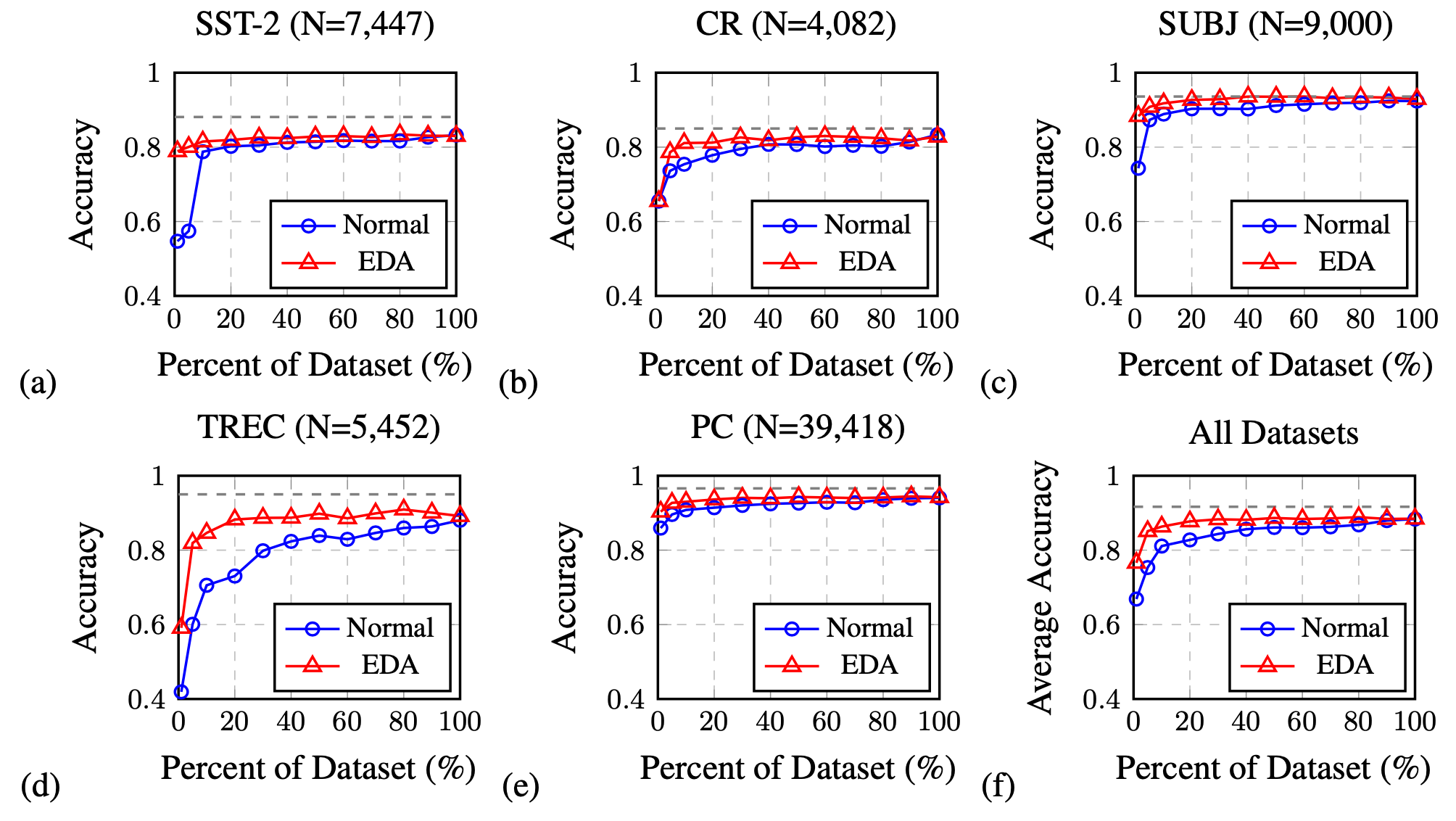
  42. Learning with not Enough Data Part 3: Data Generation

    Google Research has introduced "Nested Learning," a novel machine learning paradigm designed to address the challenge of catastrophic forgetting in continual learning. This approach views models as interconnected optimization problems, allowing them to acquire new knowledge without losing proficiency on previous tasks. A proof-of-concept architecture named "Hope" has demonstrated superior performance in language modeling and long-context memory management using this paradigm. OpenAI has also published research on meta-learning algorithms, including Reptile, which focuses on learning how to learn efficiently for new tasks, and a hierarchical reinforcement learning algorithm that enables faster task completion by breaking down complex problems into high-level actions. AI

    Learning with not Enough Data Part 3: Data Generation
  43. Generalizing from simulation

    OpenAI has developed new robotics techniques that enable controllers trained entirely in simulation to perform tasks on physical robots, even with unexpected environmental changes. By randomizing aspects of the simulation like friction and sensor noise, the trained models can generalize to real-world dynamics without needing a perfect replica. This approach, which includes using LSTMs and a modified reinforcement learning algorithm called Hindsight Experience Replay, allows robots to adapt and learn from binary rewards, making them more capable of handling complex tasks. AI

    Generalizing from simulation
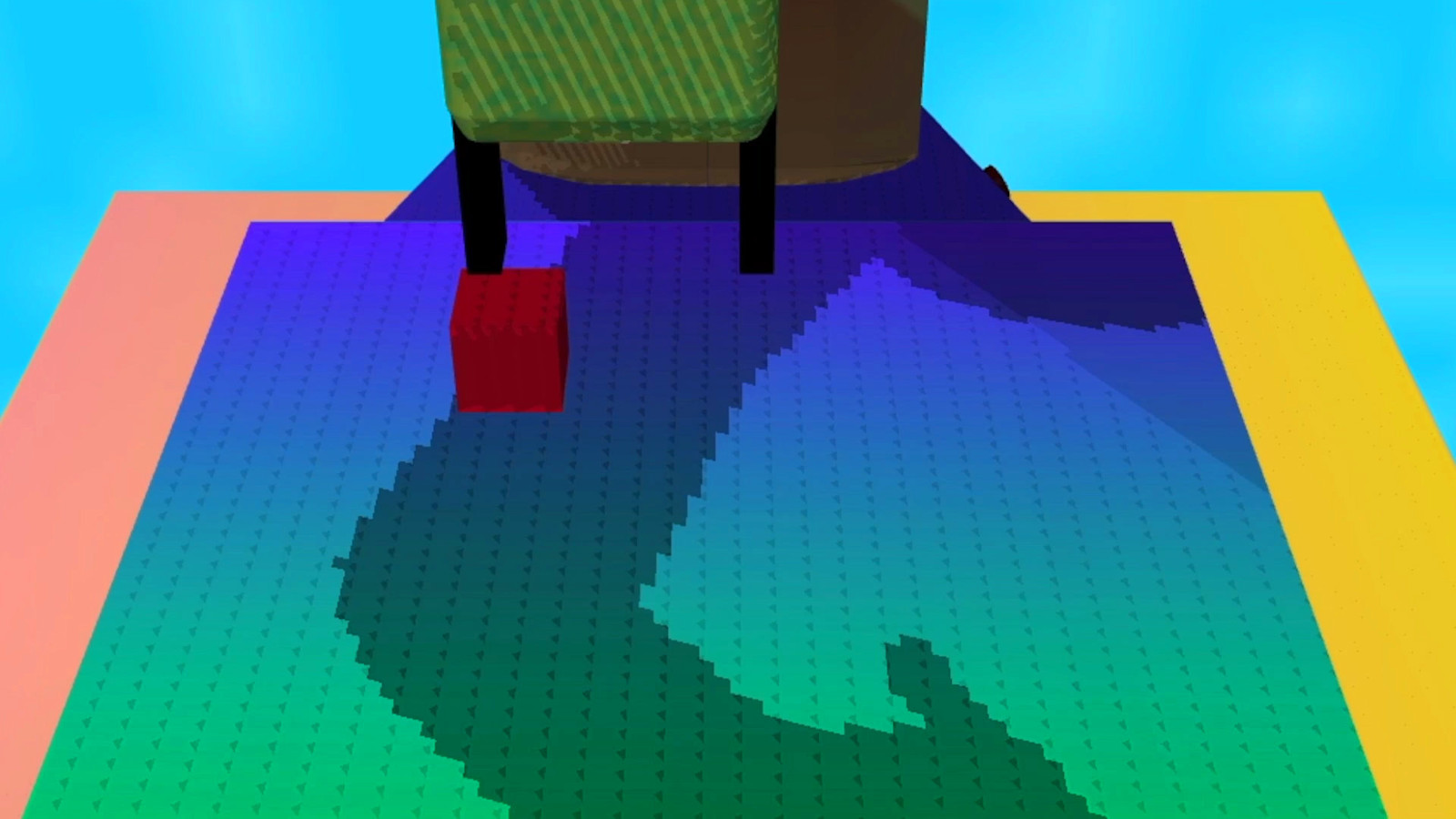
  44. Asymmetric actor critic for image-based robot learning

    OpenAI has developed a new reinforcement learning technique for robot control that leverages simulation data more effectively. The method uses an asymmetric actor-critic algorithm where the critic observes the full state of the simulated environment, while the actor receives only partial, image-based observations. This approach allows for training more robust policies that can be transferred to real-world robots without requiring any real-world training data, demonstrating success in tasks like picking and pushing. AI

    Asymmetric actor critic for image-based robot learning
  45. Sim-to-real transfer of robotic control with dynamics randomization

    OpenAI researchers have developed a method to improve the transfer of robotic control policies from simulation to the real world. By randomizing the simulator's dynamics during training, the AI agents learn to adapt to variations, effectively bridging the "reality gap." This approach was demonstrated on an object-pushing task with a robotic arm, where policies trained solely in simulation achieved comparable performance on a physical robot without any real-world training. AI

    Sim-to-real transfer of robotic control with dynamics randomization
  46. Domain randomization and generative models for robotic grasping

    OpenAI has developed a new method for training robots to grasp objects using generative models and domain randomization. Their approach synthesizes millions of unique, procedurally generated objects to train a deep neural network, bypassing the need for extensive real-world object data. This technique allows the model to achieve over 90% success in simulation and 80% in real-world tests on unseen objects, demonstrating strong generalization capabilities. AI

    Domain randomization and generative models for robotic grasping
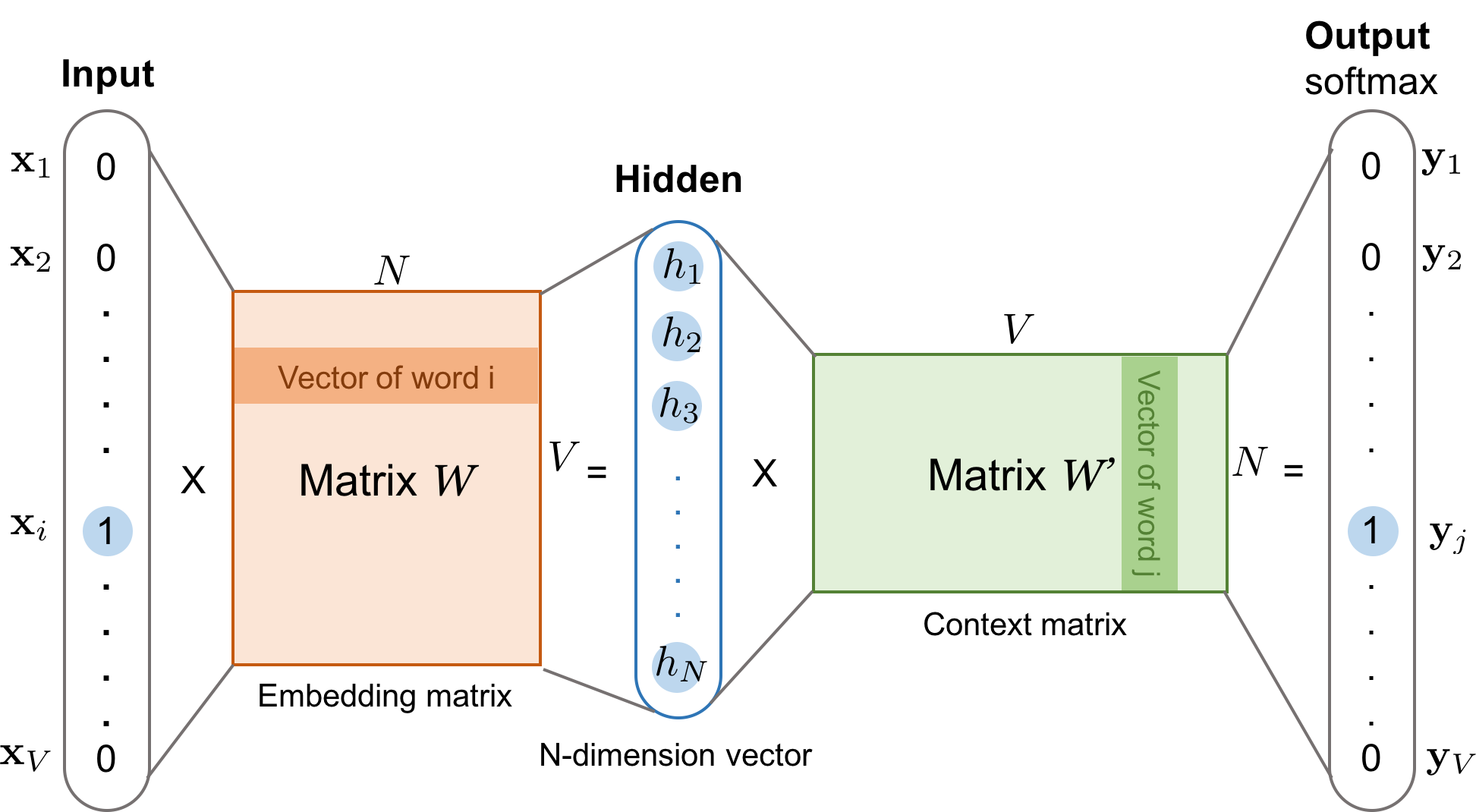
  47. Learning Word Embedding

    Hugging Face has released a suite of tools and guides for training and fine-tuning various types of sentence embedding and reranker models. These resources leverage the Sentence Transformers library, offering methods for static embeddings, multimodal embeddings, and sparse embeddings. The guides cover training with up to 1 billion training pairs and achieving significant speedups, aiming to make advanced embedding model development more accessible. AI

    Learning Word Embedding
  48. Competitive self-play

    OpenAI has demonstrated that competitive self-play can enable simulated AI agents to develop complex physical skills without explicit programming. By pitting agents against increasingly skilled versions of themselves in simple games, OpenAI observed the emergence of behaviors like tackling, faking, and diving. This method also showed that agents trained via self-play can transfer learned skills to novel situations, outperforming agents trained with traditional reinforcement learning. AI

    Competitive self-play
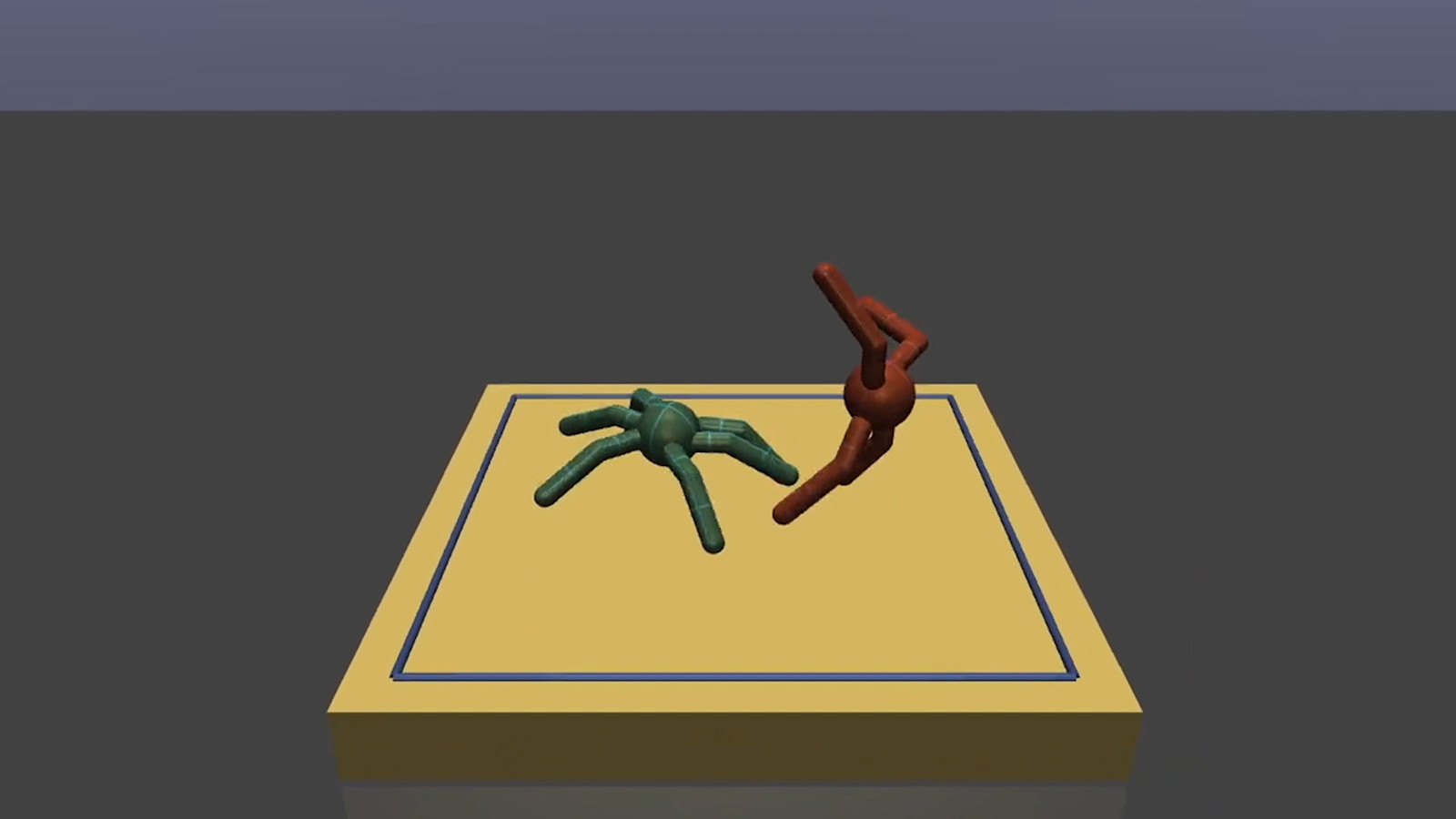
  49. Meta-learning for wrestling

    OpenAI researchers have developed a meta-learning agent capable of quickly adapting its strategy in simulated robot wrestling matches. This agent, an extension of the MAML algorithm, optimizes its objective function against pairs of environments to enable rapid learning in new situations. The meta-learning approach allows the agent not only to defeat stronger opponents but also to adapt to physical malfunctions, such as losing limbs, suggesting potential applications for agents that can handle both external environmental changes and internal bodily alterations. OpenAI is releasing the MuJoCo environments and trained policies to facilitate further research in this area. AI

    Meta-learning for wrestling
  50. Learning to model other minds

    Researchers from OpenAI and the University of Oxford have developed a new algorithm called Learning with Opponent-Learning Awareness (LOLA). This algorithm enables reinforcement learning agents to account for the fact that other agents are also learning and adapting their strategies. LOLA agents can discover self-interested yet collaborative strategies, outperforming current methods that often lead to purely selfish actions. The approach is inspired by human collaboration and the concept of 'theory of mind,' allowing agents to anticipate and influence the learning process of others to achieve mutually beneficial outcomes. AI
    Learning to model other minds