PulseAugur
实时 20:14:49
English(EN) An Introduction to Exemplar Partitioning for Mechanistic Interpretability

新方法简化语言模型可解释性

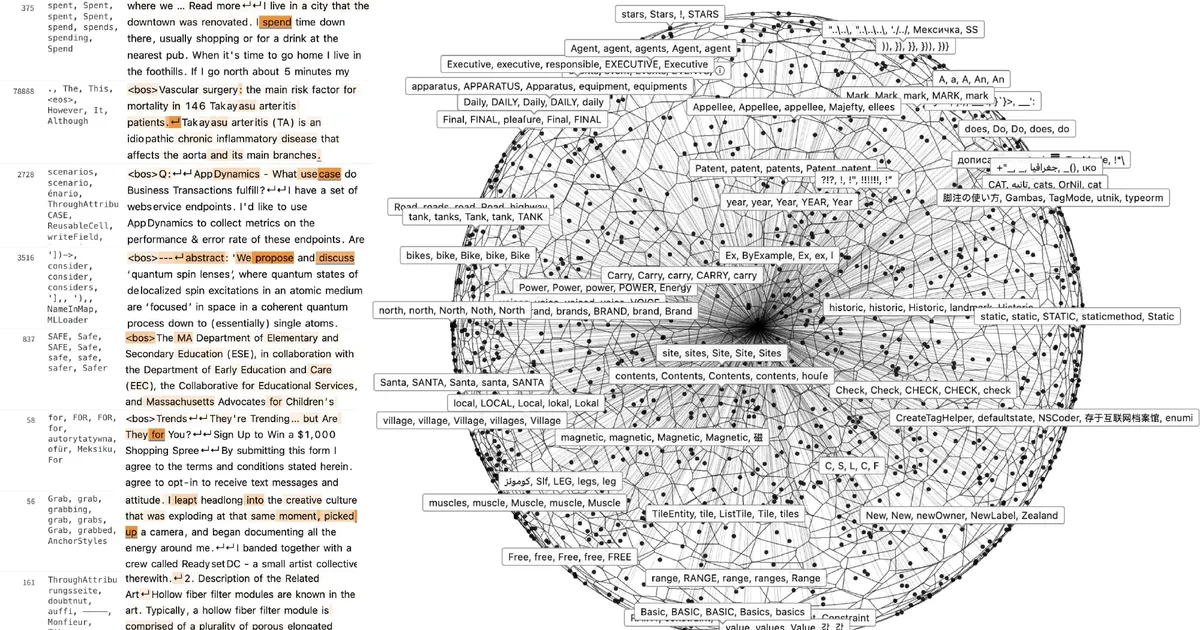
研究人员推出了一种名为示例划分(Exemplar Partitioning, EP)的新方法,用于语言模型的机械可解释性。与现有的稀疏自编码器(sparse autoencoders)等字典学习技术相比,EP提供了一种更简化的方法。EP通过基于观察到的示例来划分激活空间,从而识别其中可解释的结构,避免了稀疏自编码器固有的重建和稀疏性损失。该方法在AxBench潜在概念检测基准等基准测试中取得了有竞争力的性能,并且计算成本显著低于稀疏自编码器。 AI

影响 提供了一种计算成本更低的方法来理解模型内部表示,有望加速可解释性研究。

排序理由 该集群描述了一篇介绍语言模型机械可解释性新方法的最新研究论文。[lever_c_demoted from research: ic=1 ai=1.0]

在 LessWrong (AI tag) 阅读 →

AI 生成摘要 · Google Gemini · 来自 1 个来源。 我们如何撰写摘要 →
新方法简化语言模型可解释性

报道来源 [1]

  1. LessWrong (AI tag) TIER_1 English(EN) · Jessica Rumbelow ·

    An Introduction to Exemplar Partitioning for Mechanistic Interpretability

    <p><span>Most of what we currently call "feature discovery" in language models is wrapped up in dictionary-learning methods like </span><a href="https://arxiv.org/abs/2309.08600"><span>sparse autoencoders (SAEs)</span></a><span> – which work, and which have been scaled to million…