PulseAugur / Pulse
EN
LIVE 21:39:03

Pulse

last 48h
[23/373] 97 sources

What AI is actually talking about — clusters surfacing on Bluesky, Reddit, HN, Mastodon and Lobsters, re-ranked to elevate originality and crush noise.

  1. Anthropic has a blacklist on the word "OpenClaw"

    Anthropic has implemented a content moderation policy that includes a blacklist of specific terms, such as "OpenClaw." This measure is part of their ongoing efforts to ensure safety and prevent misuse of their AI models. The company aims to maintain responsible AI development and deployment through such content controls. AI

    IMPACT Highlights the granular content moderation techniques being employed by leading AI labs to ensure responsible deployment.

  2. Order Granting Preliminary Injunction – Anthropic vs. U.S. Department of War [pdf]

    Anthropic has secured a preliminary injunction against the U.S. Department of War. The court order prevents the Department of War from taking further action in a case brought by Anthropic. Details regarding the specific nature of the dispute and the grounds for the injunction are not provided in the available information. AI

    IMPACT This legal ruling could set precedents for government interactions with AI companies regarding data or operational security.

  3. Anthropic Subprocessor Changes

    Anthropic has updated its subprocessor list, detailing the third-party services it uses to operate its AI products. This transparency aims to inform users about data handling practices and compliance with privacy regulations. The changes reflect Anthropic's ongoing efforts to manage its supply chain and ensure responsible AI deployment. AI

    Anthropic Subprocessor Changes

    IMPACT Provides insight into the operational and compliance frameworks of major AI providers.

  4. Judge's Remarks on Anthropic vs. Pentagon

    A federal judge is scrutinizing the Pentagon's decision to label Anthropic a national security risk, potentially impacting the AI company's ability to secure government contracts. Judge Rita Lin questioned whether the government's actions, which extend beyond simply ceasing to use Anthropic's Claude AI, were intended to punish the company for publicly disclosing a contract dispute. The judge noted that the Pentagon's broad sanctions could cripple Anthropic's business relationships across all federal agencies and with contractors, not just those involved in defense. AI

    Judge's Remarks on Anthropic vs. Pentagon

    IMPACT This case could set a precedent for how governments interact with AI companies regarding national security and contract disputes.

  5. Government agencies buy commercial data about Americans in bulk

    Government agencies are purchasing commercial data on Americans from data brokers, raising privacy concerns. This practice allows agencies like ICE to access sensitive information without warrants. Lawmakers are scrutinizing these data purchases, questioning the legality and ethical implications of such surveillance. AI

    IMPACT Raises questions about the ethical use of data and surveillance technologies, potentially impacting AI development that relies on such data.

  6. Government agencies buy commercial data about Americans in bulk

    Government agencies are purchasing commercial data on Americans from data brokers, raising privacy concerns. This practice allows agencies to track individuals without warrants, circumventing traditional legal protections. The data includes location information, online activity, and other personal details, which can be used for surveillance purposes. AI

    IMPACT Raises questions about the ethical use of data in AI-driven surveillance and the need for policy oversight.

  7. U.S. Government's Ban on Anthropic Looks Like Punishment Attempt, Judge Says

    A U.S. judge has indicated that the government's attempt to ban Anthropic may have been an act of punishment. The judge's remarks suggest that the ban was not based on legitimate regulatory grounds but rather on a desire to penalize the AI company. This ruling could have significant implications for how government agencies interact with and regulate AI firms. AI

    IMPACT This judicial commentary could influence future regulatory actions and legal challenges against AI companies by government entities.

  8. U.S. Government's Ban on Anthropic Looks Like Punishment Attempt, Judge Says

    A U.S. judge has indicated that the government's attempt to ban Anthropic may have been an act of punishment. The judge's comments suggest that the ban was not based on legitimate regulatory grounds. This ruling could have implications for how government agencies interact with AI companies. AI

    IMPACT Potential shift in government oversight and regulatory approaches towards AI companies.

  9. FSF statement on copyright infringement lawsuit Bartz v. Anthropic

    The Free Software Foundation (FSF) has commented on the settlement in the Bartz v. Anthropic copyright infringement lawsuit. This class action suit alleges Anthropic used copyrighted materials from datasets like Library Genesis to train its large language models. While a court initially suggested training LLMs on these works might be fair use, the FSF, holding copyrights to works like "Free as in Freedom," is seeking user freedom as compensation, advocating for transparency in LLM training data and code. AI

    FSF statement on copyright infringement lawsuit Bartz v. Anthropic

    IMPACT Highlights ongoing legal challenges and ethical debates surrounding the use of copyrighted data in training AI models, potentially influencing future data sourcing and licensing practices.

  10. Anthropic has strong case against Pentagon blacklisting, legal experts say

    AI company Anthropic is challenging a potential blacklisting by the Pentagon, which could restrict its ability to secure government contracts. The company argues that the Pentagon's proposed restrictions on AI use, stemming from concerns over safety and ethical considerations, are overly broad and could hinder innovation. Anthropic has filed a lawsuit seeking to prevent this blacklisting, asserting its commitment to responsible AI development. AI

    IMPACT Potential government contract restrictions could impact AI development and deployment in sensitive sectors.

  11. Trump administration considering safety review for new AI models

    Anthropic is suing to prevent the Pentagon from blacklisting its AI models, arguing the restrictions are unwarranted. Concurrently, the Trump administration is reportedly considering new safety testing requirements for AI models deployed by government agencies. This policy shift appears to be a response to recent advancements in AI capabilities, such as Anthropic's Mythos Preview and OpenAI's GPT 5.5, which have raised national security concerns. AI

    Trump administration considering safety review for new AI models

    IMPACT Potential new government AI safety testing mandates could impact deployment timelines and development priorities for AI providers.

  12. Palantir and Anthropic AI helped the US hit 1k Iran targets in 24 hours

    Palantir and Anthropic's AI technologies were reportedly utilized by the U.S. military to identify and target over 1,000 sites in Iran within a 24-hour period. This application highlights the integration of advanced AI in military operations for rapid intelligence analysis and strike planning. The specific contributions of Palantir's data integration platform and Anthropic's AI models in this operation remain detailed. AI

    IMPACT Demonstrates the use of AI in rapid military targeting and intelligence analysis, potentially influencing future defense strategies.

  13. Claude AI Helped Bomb Iran. But How Exactly?

    Anthropic's Claude AI was utilized by U.S. Central Command for critical tasks such as intelligence assessments and target identification during strikes on Iran. Despite a prior order from President Trump to cease its use due to a dispute with Anthropic, the AI's integration into Pentagon systems meant its removal would take considerable time. The model was also employed in a prior operation that resulted in the capture of Nicolás Maduro. AI

    Claude AI Helped Bomb Iran. But How Exactly?

    IMPACT Highlights the integration of AI tools into military operations, raising questions about their role in geopolitical events and governmental oversight.

  14. Show HN: Open-Source Article 12 Logging Infrastructure for the EU AI Act

    A new open-source TypeScript library has been released to help developers comply with Article 12 of the EU AI Act. This library automatically records AI inferences as tamper-evident logs, chaining entries with SHA-256 hashes and ensuring a minimum retention period. It is designed for Node.js applications using the Vercel AI SDK and aims to provide a more robust auditing solution than standard logging practices. AI

    Show HN: Open-Source Article 12 Logging Infrastructure for the EU AI Act

    IMPACT Provides a technical solution for AI developers to meet new EU compliance mandates for high-risk systems.

  15. Show HN: Solving the ~95% legislative coverage gap using LLM's

    Lustra is a new platform designed to address the significant gap in legislative coverage by leveraging large language models. The service aims to provide users with a way to understand and potentially influence public data related to voting and policy. AI

    Show HN: Solving the ~95% legislative coverage gap using LLM's

    IMPACT Provides a novel application of LLMs to bridge the gap in legislative coverage and public data engagement.

  16. Launch HN: Parachute (YC S25) – Guardrails for Clinical AI

    Parachute, a startup co-founded by Aria and Tony, has launched a governance infrastructure designed to help hospitals safely evaluate and monitor clinical AI tools. The platform addresses the challenge of rapidly increasing AI adoption in healthcare, where regulatory requirements for safety and fairness are becoming more stringent. Parachute offers a multi-stage process including vendor evaluation, automated benchmarking, red-teaming, continuous monitoring of deployed models, and the creation of an immutable audit trail for regulatory compliance. AI

    Launch HN: Parachute (YC S25) – Guardrails for Clinical AI

    IMPACT Provides a framework for managing regulatory and safety risks associated with clinical AI deployment, potentially accelerating adoption.

  17. The U.S. grid is so weak, the AI race may be over

    The rapid expansion of AI is creating a significant bottleneck in the United States due to the limitations of its power grid, contrasting sharply with China's robust energy infrastructure. While U.S. AI growth is hampered by debates over data center power consumption and grid stability, China has proactively addressed this by overbuilding its power capacity over decades. This strategic oversupply allows China to integrate AI data centers as a means to absorb excess energy, a situation unimaginable in the U.S. where grids often operate with minimal reserve margins, leading to concerns about the sustainability of AI development. AI

    The U.S. grid is so weak, the AI race may be over

    IMPACT AI development in the US faces a critical bottleneck due to power grid limitations, potentially hindering growth compared to China's energy-secure infrastructure.

  18. FOSS infrastructure is under attack by AI companies

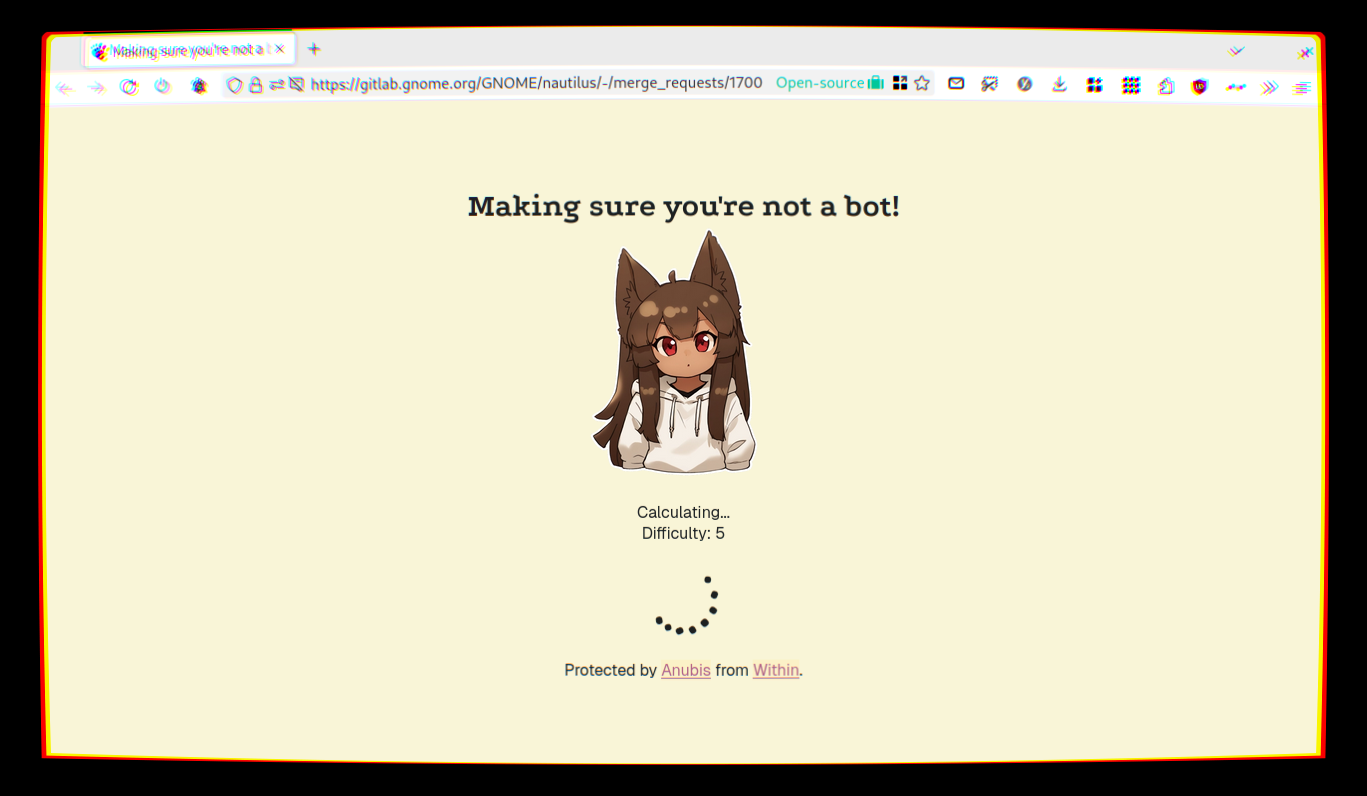
    AI companies are aggressively crawling open-source infrastructure, causing significant outages and disruptions for projects like SourceHut, KDE GitLab, and GNOME. These AI scrapers often disregard robots.txt and mimic legitimate user agents, making it difficult to implement effective defenses. As a result, some projects have resorted to implementing challenging proof-of-work systems to block these bots, which can also impact legitimate users. AI

    FOSS infrastructure is under attack by AI companies

    IMPACT AI data scraping practices are straining open-source infrastructure, potentially hindering collaboration and development.

  19. Samsung announces it will stop selling all home appliance products in the Chinese market

    Samsung Electronics has announced it will cease sales of all home appliance products, including televisions and monitors, in the Chinese market. This decision comes in response to a rapidly changing market environment. The company has assured customers that it will continue to provide after-sales service and uphold consumer rights according to relevant laws and regulations. AI

  20. Executive order on advancing United States leadership in AI infrastructure

    The White House has issued an executive order aimed at bolstering U.S. leadership in AI infrastructure. The order focuses on expanding access to computing resources, developing AI talent, and promoting responsible AI innovation. It also emphasizes the importance of international collaboration and the development of safety standards for AI technologies. AI

    IMPACT This executive order aims to solidify U.S. leadership in AI by focusing on infrastructure and talent, potentially accelerating domestic AI development and deployment.

  21. FSF is working on freedom in machine learning applications

    The Free Software Foundation (FSF) is developing criteria to define what constitutes a "free" machine learning application. Their working group has concluded its efforts and is drafting a formal definition. This definition will require that all software components, training data, and associated scripts respect the four freedoms of free software. Furthermore, the FSF believes that model parameters must be included in the release and be redistributable by users for an ML application to be considered free. AI

    FSF is working on freedom in machine learning applications

    IMPACT This initiative could influence how AI models are developed and distributed, potentially impacting open-source AI efforts.

  22. DoNotPay has to pay $193K for falsely touting untested AI lawyer, FTC says

    The Federal Trade Commission (FTC) has reached a settlement with AI startup DoNotPay, requiring the company to pay $193,000 for making deceptive claims about its AI lawyer service. The FTC found that DoNotPay falsely advertised its AI chatbot as a substitute for human lawyers without conducting adequate testing or employing legal professionals to verify its outputs. This action is part of a broader FTC initiative, "Operation AI Comply," aimed at curbing deceptive AI marketing and protecting consumers from fraudulent schemes. AI

    DoNotPay has to pay $193K for falsely touting untested AI lawyer, FTC says

    IMPACT Sets precedent for FTC enforcement against deceptive AI product claims, signaling increased regulatory scrutiny for AI startups.

  23. Can OpenAI’s ‘Master of Disaster’ Fix AI’s Reputation Crisis?

    OpenAI has announced a significant partnership with SAP to launch 'OpenAI for Germany,' aiming to bring advanced AI capabilities to the German public sector while prioritizing data sovereignty and security on Microsoft Azure. The company also proposed policy recommendations to the U.S. White House for the national AI Action Plan, focusing on innovation freedom, export controls, copyright, infrastructure, and government adoption. Additionally, OpenAI is collaborating with U.S. National Laboratories to leverage its reasoning models for scientific breakthroughs and national security initiatives. AI

    Can OpenAI’s ‘Master of Disaster’ Fix AI’s Reputation Crisis?

    IMPACT OpenAI's strategic partnerships and policy proposals signal a push for broader AI adoption in public sectors and national infrastructure, influencing future AI development and regulation.