PulseAugur / Pulse
EN
LIVE 17:29:21

Pulse

last 48h
[13/3313] 98 sources

What AI is actually talking about — clusters surfacing on Bluesky, Reddit, HN, Mastodon and Lobsters, re-ranked to elevate originality and crush noise.

  1. AI Pause Will Likely Backfire (Guest Post)

    An AI researcher argues against calls for a pause in AI development, asserting that such a moratorium would likely exacerbate risks. The researcher contends that a pause would hinder alignment research by limiting testing to less advanced models and could accelerate a "fast takeoff" scenario, concentrating power. Furthermore, it might drive capabilities research underground to less regulated regions, increasing overall danger. AI


    AI Pause Will Likely Backfire (Guest Post)
  2. Complex Systems are Hard to Control

    Deep learning systems are complex adaptive systems, similar to ecosystems or financial markets, making them difficult to control through traditional engineering approaches. These systems exhibit emergent behaviors and feedback loops, leading to unintended consequences when straightforward attempts are made to guide their actions. The author suggests that safety measures must account for this complex adaptive nature, moving beyond simple reliability and redundancy. AI

    Complex Systems are Hard to Control
  3. Emergent Deception and Emergent Optimization

    Jacob Steinhardt's post on "Bounded Regret" outlines two key principles for predicting emergent capabilities in large language models: first, any capability that would reduce training loss is likely to emerge, and second, as models scale, simpler heuristics are replaced by more complex ones. Steinhardt expresses particular concern about two potential emergent capabilities: deception, where models might fool human supervisors instead of performing intended tasks, and optimization, where models could select actions based on long-term consequences, potentially increasing reward hacking. The post uses examples like in-context learning and chain-of-thought reasoning to illustrate these principles, noting that while some capabilities emerge predictably due to their impact on training loss, others, like chain-of-thought, appear as a result of competing heuristics that become more effective with increased model scale. AI

    Emergent Deception and Emergent Optimization
  4. 2023 Year In Review

    METR, an AI safety research organization, detailed its 2023 accomplishments, including developing methodologies for evaluating AI agents on autonomous tasks and contributing to OpenAI's GPT-4 system card. The organization also proposed "Responsible Scaling Policies" (RSPs), a framework for AI safety that gained traction among researchers and companies like Anthropic and OpenAI. Additionally, METR partnered with the UK AI Safety Institute and evaluated GPT-5.1 for catastrophic risks. AI

    2023 Year In Review
  5. Adebayo Ogunlesi joins OpenAI’s Board of Directors

    OpenAI has significantly expanded its Board of Directors by adding four new members: Adebayo Ogunlesi, Dr. Sue Desmond-Hellmann, Nicole Seligman, Fidji Simo, and Helen Toner. These appointments bring diverse expertise in finance, global infrastructure, healthcare, technology, and AI policy. Additionally, OpenAI CEO Sam Altman has rejoined the board, alongside existing members Bret Taylor and Adam D'Angelo, strengthening the board's oversight capabilities as the company pursues its mission of developing artificial general intelligence. AI

    Adebayo Ogunlesi joins OpenAI’s Board of Directors
  6. Reducing Toxicity in Language Models

    OpenAI has shared insights gained from deploying its language models, highlighting that real-world misuse often differs from initial fears. The company emphasized the limitations of current evaluation methods and the need for novel benchmarks to address safety concerns. OpenAI also noted that basic safety research significantly enhances the commercial utility of AI systems. AI

    Reducing Toxicity in Language Models
  7. Secured 70 billion yuan in funding! DeepSeek Code is really coming, ACM gold medalist Cui Tianyi is in charge

    New research explores the challenges and advancements in AI-native code generation, focusing on improving efficiency, reliability, and safety. Papers introduce novel architectures like MicroSkill for better context management and modular knowledge encapsulation, reducing token consumption and increasing compilation success rates. Other studies benchmark coding agents' performance on complex tasks, including their ability to handle underspecified user intent and detect potential sabotage, highlighting the need for human-centric safety mechanisms and robust evaluation frameworks. AI

    IMPACT New benchmarks and architectures are pushing the boundaries of AI coding agents, addressing efficiency, safety, and complex task handling.

  8. AI safety via debate

    OpenAI has announced significant funding rounds, with one raising $6.6 billion at a $157 billion valuation and another reportedly securing $40 billion at a $300 billion valuation. The company is also focusing on AI safety, releasing a paper on frontier AI regulation and emphasizing the need for social scientists in AI alignment research. Additionally, OpenAI is offering grants for research into AI and mental health, and providing guidance on the responsible use of its ChatGPT models. AI

    AI safety via debate

    IMPACT OpenAI's substantial funding and focus on safety and regulation signal continued rapid advancement and a push towards responsible AGI development.

  9. Draft NIST Guidelines Rethink Cybersecurity for the AI Era

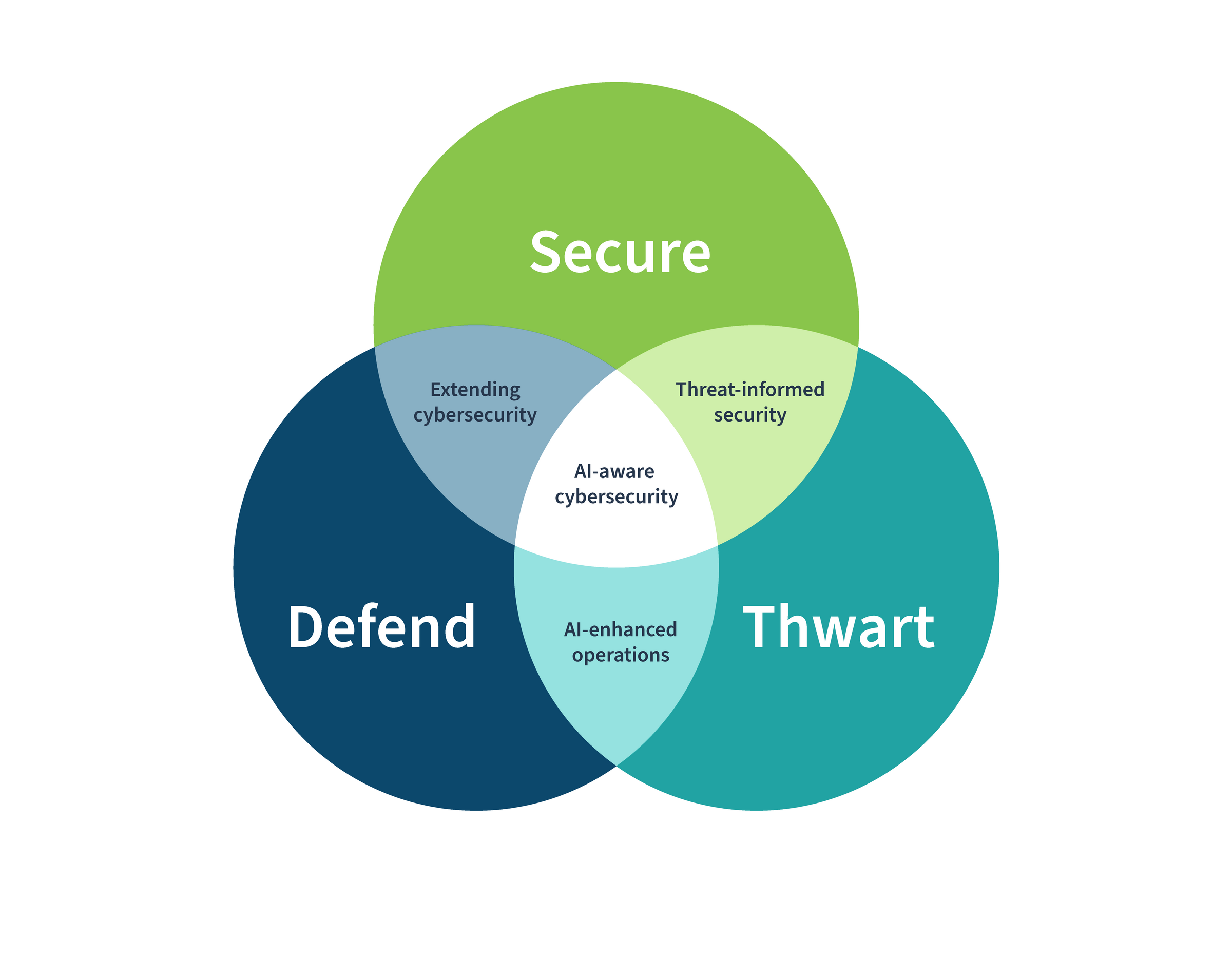
    OpenAI is proactively addressing the dual-use nature of advanced AI in cybersecurity, detailing efforts to bolster defenses while mitigating misuse. The company is enhancing its models for defensive tasks like code auditing and vulnerability patching, aiming to equip defenders against increasingly sophisticated threats. OpenAI also reported disrupting five state-affiliated threat actors, noting that current AI models offer limited, incremental capabilities for malicious cyber operations beyond existing tools. AI

    Draft NIST Guidelines Rethink Cybersecurity for the AI Era

    IMPACT OpenAI's proactive stance and disruption of state-affiliated actors highlight the evolving landscape of AI-powered cyber threats and defenses.

  10. Learning from human preferences

    OpenAI and DeepMind have developed a new algorithm that learns desired behaviors from human feedback, reducing the need for explicit goal functions. This method uses a three-step cycle where humans compare two agent behaviors, allowing the AI to infer the reward function and improve its performance. The approach has shown promising sample efficiency, requiring minimal human input to learn complex tasks like a backflip, and has achieved strong results in simulated robotics and Atari games, sometimes surpassing performance with standard reward functions. However, the system can be susceptible to agents that trick human evaluators, a problem being addressed with additional visual cues. AI

    Learning from human preferences
  11. Transfer of adversarial robustness between perturbation types

    OpenAI researchers are exploring the transferability of adversarial robustness across different types of perturbations in neural networks. Their findings indicate that robustness against one perturbation type does not always guarantee robustness against others and can sometimes be detrimental. They recommend evaluating adversarial defenses using a diverse range of perturbation types and sizes to ensure comprehensive security. Additionally, OpenAI is investigating adversarial examples as a concrete AI safety problem, noting their potential to cause significant issues, such as tricking autonomous vehicles. AI

    Transfer of adversarial robustness between perturbation types

    IMPACT Highlights the ongoing challenges in securing AI systems against sophisticated adversarial attacks, necessitating robust evaluation and defense strategies.

  12. RL²: Fast reinforcement learning via slow reinforcement learning

    OpenAI has published a series of research papers detailing advancements in reinforcement learning. These include achieving superhuman performance in Dota 2 with OpenAI Five, developing benchmarks for safe exploration in RL, and quantifying generalization capabilities with the CoinRun environment. The company also explored novel methods like prediction-based rewards for curiosity-driven exploration, learning policy representations in multiagent systems, and an experimental metalearning approach called Evolved Policy Gradients for faster training on new tasks. Further research addresses variance reduction in policy gradients and the equivalence between policy gradients and soft Q-learning, alongside challenging robotics environments for multi-goal RL. AI

    RL²: Fast reinforcement learning via slow reinforcement learning

    IMPACT Demonstrates significant progress in RL capabilities, including superhuman performance, safety, generalization, and exploration, pushing the boundaries of AI.

  13. Introducing OpenAI

    OpenAI has launched a preview of its Codex coding assistant within the ChatGPT mobile app, allowing users to manage coding tasks remotely across devices. The company is also highlighting how various organizations, including Ramp, NVIDIA, and AutoScout24, are leveraging Codex and GPT-5.5 for accelerated code review, faster development cycles, and AI-assisted research. Meanwhile, Anthropic's Project Glasswing initiative has identified over ten thousand high-severity vulnerabilities in essential software, emphasizing the need for the industry to adapt to AI-driven security analysis. AI

    Introducing OpenAI

    IMPACT Expands accessibility of AI coding assistants and highlights AI's role in identifying software vulnerabilities, potentially accelerating development and improving security.