PulseAugur / Pulse
EN
LIVE 20:10:47

Pulse

last 48h
[27/277] 97 sources

What AI is actually talking about — clusters surfacing on Bluesky, Reddit, HN, Mastodon and Lobsters, re-ranked to elevate originality and crush noise.

  1. Launch HN: Fortress (YC S24) – Database platform for multi-tenant SaaS

    Fortress, a YC S24 startup, has launched a database platform designed for multi-tenant SaaS applications, focusing on simplifying tenant data isolation. The platform offers a Bring Your Own Cloud (BYOC) backend-as-a-service, allowing developers to manage tenant data across shared and dedicated database instances. Fortress aims to provide the ease of a managed DBaaS with native isolation and programmatic provisioning on any cloud, supporting developers in meeting increasing data sensitivity and compliance demands. AI

    Launch HN: Fortress (YC S24) – Database platform for multi-tenant SaaS

    IMPACT Provides infrastructure tooling that may indirectly support AI application development by simplifying data management for SaaS platforms.


  2. Micrograd.jl

    This article introduces Micrograd.jl, a new automatic differentiation package for the Julia programming language. It aims to fill a gap in comprehensive tutorials for AD in Julia, requiring a solid understanding of both Julia and Calculus. The package is built upon Zygote.jl and ChainRules.jl, offering a different approach to AD compared to Python frameworks like PyTorch by leveraging Julia's functional programming and metaprogramming capabilities. AI

    Micrograd.jl

    IMPACT Provides a new tool for Julia developers to build and train machine learning models, potentially improving efficiency and understanding of backpropagation.

  3. Leveraging AI for efficient incident response

    Meta has developed an AI-assisted system to accelerate incident response by identifying the root cause of system failures. This system combines heuristic-based retrieval to narrow down potential issues with a Llama 2 model for ranking the most likely causes. In backtesting, the system demonstrated 42% accuracy in pinpointing the root cause for investigations related to Meta's web monorepo. AI

    Leveraging AI for efficient incident response

    IMPACT Enhances internal system reliability and incident response efficiency through AI-driven root cause analysis.

  4. Launch HN: AnswerGrid (YC S24) – Web research tool for lead generation

    AnswerGrid, a Y Combinator S24 startup, has launched a web research tool designed to help B2B founders identify high-potential leads for early-stage sales. The tool functions as a spreadsheet, allowing users to input basic company profiles and then utilize AI-powered features like web scraping and web searching to apply nuanced qualification heuristics. This approach aims to move beyond simple keyword searches, enabling founders to discover companies that are a strong fit for their product and warrant personalized outreach. AI

    Launch HN: AnswerGrid (YC S24) – Web research tool for lead generation

    IMPACT Aims to streamline early-stage B2B sales qualification by leveraging AI for deeper lead analysis.

  5. Launch HN: Sorcerer (YC S24) – Weather balloons that collect more data

    Sorcerer, a startup founded by Max, Alex, and Austin, has developed weather balloons capable of collecting atmospheric data for over six months. These balloons are designed to gather significantly more data per dollar compared to existing methods and can reach previously inaccessible regions. The technology aims to address the critical gap in weather data, particularly in areas like oceans and developing continents, which hinders accurate global weather forecasting. AI

    IMPACT Improved weather data collection could enhance the accuracy of AI-driven climate modeling and forecasting.

  6. Launch HN: Cekura (YC F24) – Testing and monitoring for voice and chat AI agents

    Cekura and Hamming have launched platforms designed to automate the testing and monitoring of AI voice and chat agents. These services address the challenge of manually verifying agent performance across numerous conversational paths and complex scenarios. By simulating real user interactions and employing LLM-based judges, the platforms aim to catch regressions and ensure agent reliability before deployment, offering solutions for both development and live traffic monitoring. AI

    Launch HN: Cekura (YC F24) – Testing and monitoring for voice and chat AI agents

    IMPACT Automates crucial testing for AI agents, potentially speeding up development cycles and improving reliability.

  7. ONNX: The Open Standard for Seamless Machine Learning Interoperability

    The Open Neural Network Exchange (ONNX) is an open-source format designed to facilitate interoperability between different machine learning frameworks. It defines a computation graph model and standard operators, primarily focusing on inferencing capabilities. ONNX aims to accelerate innovation by enabling developers to choose the best tools for their projects and streamline the path from research to production, with a community-driven governance model for its evolution. AI

    ONNX: The Open Standard for Seamless Machine Learning Interoperability

    IMPACT Enhances AI development by enabling greater flexibility and efficiency in model deployment across different frameworks.

  8. Launch HN: Sentrial (YC W26) – Catch AI agent failures before your users do

    Several startups are launching AI-powered tools aimed at improving infrastructure and developer productivity. Trigger.dev offers an open-source platform for building reliable AI agents and workflows, utilizing snapshotting technology for execution. Datafruit provides an AI DevOps agent that can audit cloud spend, check security policies, and modify Infrastructure as Code. Gecko Security uses LLMs to find complex vulnerabilities in code that traditional static analysis tools miss. AI

    IMPACT These launches indicate a growing trend of AI agents and specialized tools being developed to automate complex tasks in software development, operations, and security.

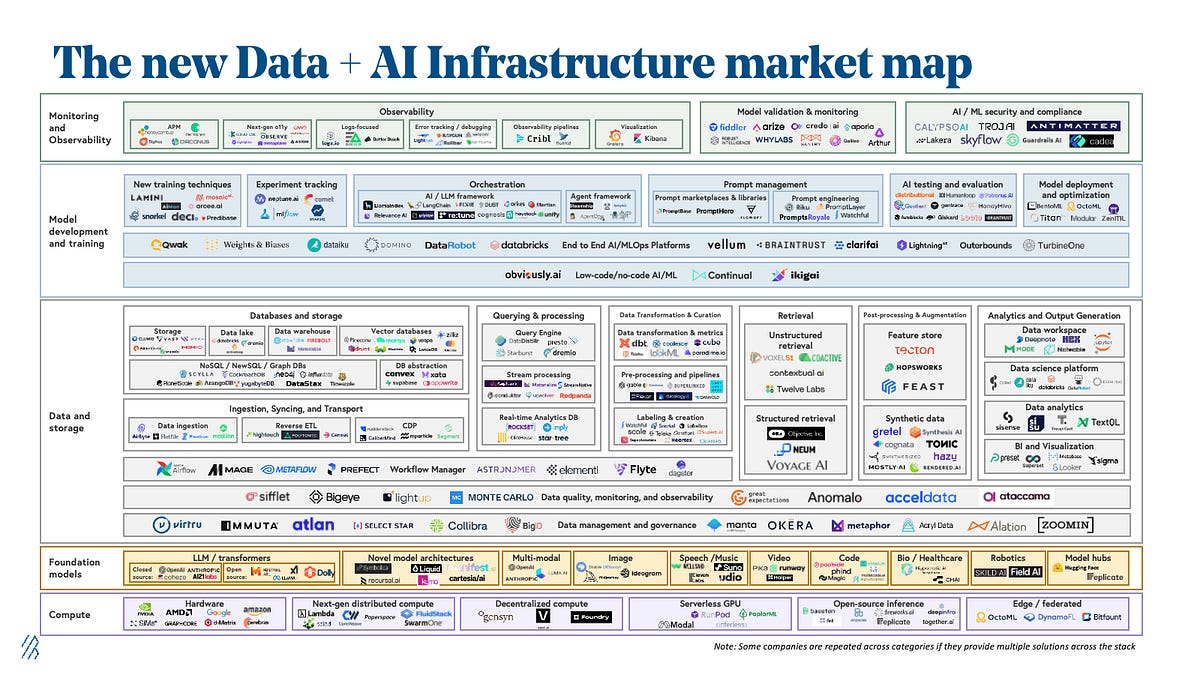
  9. Why AI Infrastructure Startups Are Insanely Hard to Build

    Building AI infrastructure startups is exceptionally difficult due to intense competition and a lack of sustainable differentiation. These companies struggle to capture enterprise clients because major cloud providers and established tech firms rapidly replicate innovations. Furthermore, the fast-evolving AI landscape causes enterprise customers to delay onboarding new vendors, lengthening sales cycles and increasing churn for startups. AI

    Why AI Infrastructure Startups Are Insanely Hard to Build

    IMPACT Highlights the significant challenges for AI infrastructure startups in achieving venture-scale success due to competitive pressures and rapid commoditization.

  10. OpenAI Selects Oracle Cloud Infrastructure to Extend Microsoft Azure AI Platform

    OpenAI has entered into a new agreement to utilize Oracle Cloud Infrastructure (OCI) for its artificial intelligence workloads. This partnership aims to expand OpenAI's existing AI platform, which is primarily hosted on Microsoft Azure. The collaboration will leverage OCI's high-performance computing capabilities to support OpenAI's growing demand for AI training and inference. AI

    IMPACT Expands AI training and inference capacity by diversifying cloud infrastructure providers.

  11. Elixir and Machine Learning in 2024 so far: MLIR, Arrow, structured LLM, etc.

    The Elixir programming language community is expanding its machine learning capabilities with several key project updates. Numerical Elixir (Nx) now supports MLIR, enabling broader hardware compatibility and quantization, while Explorer, an Elixir data manipulation library, has achieved full compatibility with Apache Arrow numeric types. Additionally, the Scholar project, focused on traditional machine learning, has introduced new algorithms for visualization, classification, and dimensionality reduction, enhancing the ecosystem's ability to handle diverse ML tasks. AI

    Elixir and Machine Learning in 2024 so far: MLIR, Arrow, structured LLM, etc.

    IMPACT Enhances the Elixir ecosystem's tooling for data analysis and traditional machine learning, potentially broadening its adoption for ML tasks.

  12. Show HN: Spin up populated test databases in seconds

    Tonic.ai has released a new feature that allows developers to quickly create populated test databases. This tool aims to streamline the development process by providing realistic data for testing purposes. The feature is accessible through their documentation and is designed for integration into existing workflows. AI

    IMPACT Streamlines database testing for AI development workflows.

  13. Launch HN: Baselit (YC W23) – Automatically Reduce Snowflake Costs

    Baselit, a Y Combinator-backed startup, has launched a tool designed to automatically reduce costs associated with using Snowflake, a popular data warehouse. The platform focuses on optimizing Snowflake's compute resources, specifically by minimizing warehouse idle time and offering custom scaling policies. This aims to address a growing concern among users about escalating data processing expenses. AI

    IMPACT Offers a solution for optimizing cloud data warehousing costs, a common challenge for organizations leveraging AI/ML workloads.

  14. The AI industry spent 17x more on Nvidia chips than it brought in in revenue

    The AI sector's expenditure on Nvidia chips significantly outpaced its revenue generation, with a reported 17x difference. This highlights a substantial investment phase in AI infrastructure, potentially indicating a focus on future growth and capability development over immediate profitability. The data suggests a considerable capital outlay is being made to acquire the necessary hardware for training and deploying advanced AI models. AI

    IMPACT Indicates a heavy investment phase in AI infrastructure, potentially signaling future capability advancements.

  15. Show HN: Spice.ai – materialize, accelerate, and query SQL data from any source

    Spice.ai has released version 1.0-stable, an open-source engine designed to simplify the creation of data-driven AI applications and agents. The engine allows developers to query, federate, and accelerate data from various sources using SQL, while also providing OpenAI-compatible APIs for local model serving and inference. Key features include data federation across different databases, enterprise search capabilities with vector similarity search, and an AI-native runtime that combines data query with AI inference. AI

    Show HN: Spice.ai – materialize, accelerate, and query SQL data from any source

    IMPACT Simplifies building data-grounded AI applications and agents by unifying data querying and AI inference.

  16. 1-Bit AI Infrastructure

    Researchers have developed a software stack called 'this http URL' to enable fast and lossless inference of 1-bit Large Language Models (LLMs) like BitNet b1.58 on CPUs. This new infrastructure achieves significant speedups, ranging from 2.37x to 6.17x on x86 CPUs and 1.37x to 5.07x on ARM CPUs, depending on model size. The goal is to make LLMs more efficient and deployable on a wider range of devices. AI

    1-Bit AI Infrastructure

    IMPACT Enables more efficient and widespread deployment of LLMs on consumer hardware.

  17. Show HN: Richard – A CNN written in C++ and Vulkan (no ML or math libs)

    Richard is a new command-line application for performing classification using a neural network, written entirely in C++ and Vulkan. It supports dense and convolutional layers, with GPU acceleration via Vulkan compute shaders. The project also includes profiling tools for performance analysis. AI

    Show HN: Richard – A CNN written in C++ and Vulkan (no ML or math libs)

    IMPACT Provides a low-level, custom implementation for ML classification, potentially useful for developers seeking fine-grained control or learning purposes.

  18. Show HN: Running LLMs in one line of Python without Docker

    Lepton.ai has launched a new platform designed to connect developers with a global network of GPU compute resources. The service aims to simplify the process of running large language models by offering a one-line Python command, eliminating the need for Docker. This infrastructure solution is built on NVIDIA DGX Cloud and is intended to optimize AI workload performance and facilitate the deployment of various AI applications. AI

    IMPACT Streamlines access to GPU compute for AI development and deployment.

  19. Launch HN: Tiptap (YC S23) – Toolkit for developing collaborative editors

    Tiptap, an open-source toolkit for building collaborative editors, has launched its cloud services and AI integration. The toolkit, built on ProseMirror and Yjs, aims to simplify the development of complex editing features like real-time collaboration and version history. Tiptap's headless and framework-agnostic design allows integration into various frontend applications, with notable users including Substack and Y Combinator. The new cloud offerings provide managed backend services and an AI integration beta that connects to OpenAI's API for enhanced writing experiences. AI

    IMPACT Simplifies AI integration into web-based content editors, potentially accelerating adoption of AI writing assistance.

  20. Launch HN: OpenMeter (YC W23) – Real-Time, Open Source Usage Metering

    OpenMeter, a new open-source usage metering platform, has been launched by Y Combinator W23 batch members. The platform is designed for real-time tracking of customer usage, enabling businesses to implement flexible billing models. It aims to provide developers with a robust and transparent solution for managing and monetizing their services. AI

    IMPACT Provides developers with tools to meter usage for AI services, potentially impacting monetization strategies.

  21. Launch HN: Vellum (YC W23) – Dev Platform for LLM Apps

    Two new platforms, Baseplate and Vellum, have launched to support the development of applications powered by large language models. Baseplate offers a backend-as-a-service specifically designed for LLM applications, while Vellum provides a comprehensive development platform for LLM apps. Both companies are part of the Y Combinator W23 batch, indicating a trend towards specialized infrastructure for the rapidly growing LLM ecosystem. AI

    IMPACT These platforms aim to streamline LLM application development, potentially accelerating adoption and innovation in the field.

  22. Computer-Using Agent

    OpenAI and Google DeepMind are advancing AI agents for software development and security. OpenAI's Codex is being leveraged to write entire codebases with minimal human intervention, as demonstrated by Harness Engineering's internal beta product. Google DeepMind has introduced CodeMender, an AI agent designed to automatically identify and fix software vulnerabilities, and AlphaEvolve, which uses Gemini models to discover and optimize algorithms for applications like data center efficiency and chip design. Meta is also investing heavily in its own AI infrastructure with the development of its MTIA chip family, aiming to power AI experiences for billions of users. AI

    Computer-Using Agent

    IMPACT These advancements signal a rapid evolution in AI agent capabilities and infrastructure, potentially accelerating software development, improving code security, and optimizing complex computational tasks.

  23. Launch HN: Activeloop (YC S18) – Data lake for deep learning

    Activeloop has launched a new data lake specifically designed for deep learning workflows. This platform aims to streamline the process of managing and accessing large datasets crucial for AI model training. The company, a Y Combinator S18 batch graduate, seeks to simplify data infrastructure for AI developers. AI

    IMPACT Simplifies data management for AI developers, potentially accelerating model training cycles.

  24. Show HN: Integrate.ai – Machine learning and analytics on hard-to-access data

    Integrate.ai has launched a platform designed to enable machine learning and analytics on sensitive or hard-to-access data without requiring data centralization. The tool leverages federated learning and differential privacy, allowing models to be trained locally on distributed data sources. This approach addresses challenges in sectors like healthcare, finance, and manufacturing where data privacy, confidentiality, or technical hurdles prevent traditional data aggregation. AI

    IMPACT Enables new ML applications in sensitive data domains by removing data access barriers.

  25. Launch HN: Dioptra (YC W22) – Improve ML models by improving their training data

    UpTrain, a Y Combinator W23 startup, has launched an open-source platform for monitoring the performance of machine learning models. Separately, Dioptra, a Y Combinator W22 company, offers tools to enhance ML models by improving their training data. AI

    IMPACT New tools emerge for ML practitioners to monitor model performance and refine training data quality.

  26. AI in the browser

    Libretto is a new open-source toolkit designed to enhance AI-powered browser automations, making them more deterministic and efficient. It provides coding agents with live browser access to inspect pages, reverse-engineer APIs, and record/replay user actions. The tool aims to simplify the maintenance of web integrations, particularly for complex healthcare software, and can also be used from the command line for tasks like opening URLs or executing scripts. AI

    AI in the browser
  27. Can OpenAI’s ‘Master of Disaster’ Fix AI’s Reputation Crisis?

    OpenAI has announced a significant partnership with SAP to launch 'OpenAI for Germany,' aiming to bring advanced AI capabilities to the German public sector while prioritizing data sovereignty and security on Microsoft Azure. The company also proposed policy recommendations to the U.S. White House for the national AI Action Plan, focusing on innovation freedom, export controls, copyright, infrastructure, and government adoption. Additionally, OpenAI is collaborating with U.S. National Laboratories to leverage its reasoning models for scientific breakthroughs and national security initiatives. AI

    Can OpenAI’s ‘Master of Disaster’ Fix AI’s Reputation Crisis?

    IMPACT OpenAI's strategic partnerships and policy proposals signal a push for broader AI adoption in public sectors and national infrastructure, influencing future AI development and regulation.