PulseAugur / Pulse
EN
LIVE 21:38:37

Pulse

last 48h
[35/2035] 97 sources

What AI is actually talking about — clusters surfacing on Bluesky, Reddit, HN, Mastodon and Lobsters, re-ranked to elevate originality and crush noise.

  1. If a project is Anti-LLM and either puts its code only on github or has a presence on codeberg (or other Anti-LLM code repository software) but refuses to take

    Several users on Mastodon are discussing their experiences and opinions regarding large language models (LLMs) and AI tools. One post highlights a GitHub repository titled "The Gay Jailbreak" related to LLM security, while another criticizes the incongruity of "Anti-LLM" projects using platforms like GitHub. Other users express frustration with inaccurate LLM outputs for fact-gathering and mixed results with GitHub Copilot, with one user finding it a distraction and producing incorrect code. AI

    If a project is Anti-LLM and either puts its code only on github or has a presence on codeberg (or other Anti-LLM code repository software) but refuses to take

    IMPACT Users are sharing varied opinions on LLM accuracy and AI tool utility, indicating ongoing debate about their practical application.

  2. No comment. #AI RE: https://bsky.app/profile/did:plc:yni5eazdl6liolhuwmcix67s/post/3mkgp7agwrs2t

    A user posted about the surprising ease of destroying AI data centers, noting that a single transformer failure could disable a facility due to a decade-long backlog in their production. Another post announced Mistral AI's rebranding of its 'Le Chat' model to 'Mistral Vibe,' highlighting its agentic capabilities. The cluster also includes discussions on AI-generated art, a scam involving an "AI girlfriend," and a project called 'Project Glasswing' related to Anthropic's research. AI

    IMPACT Discussions touch on AI infrastructure vulnerabilities, new model branding, and research initiatives, offering varied insights into the AI landscape.

  3. 🤖 Is the era of all-you-can-eat AI ending? (i will not promote) I am a GitHub Copilot Pro+ user. I have been enjoying 39 dollars plan that actually is worth 60

    AI layoffs are proving ineffective, as companies are warned that replacing human workers with AI agents is not yielding the expected benefits. Separately, Ruby inventor Yukihiro Matsumoto is collaborating with Anthropic's Claude to develop an experimental ahead-of-time compiler for Ruby, though it faces limitations. Additionally, Claude Design is reportedly blurring the lines between development and design by enabling teams to produce polished outputs without traditional design tools. AI

    🤖 Is the era of all-you-can-eat AI ending? (i will not promote) I am a GitHub Copilot Pro+ user. I have been enjoying 39 dollars plan that actually is worth 60

    IMPACT Companies are cautioned against relying solely on AI agents to replace human staff, while new tools like Claude Design and compiler collaborations suggest evolving AI applications in software development.

  4. "The em-dash was not invented last November in a Silicon Valley server farm. It has been a staple of English prose since roughly the seventeenth century, and a

    The em-dash, a punctuation mark with a long literary history, is not a recent invention from Silicon Valley. Esteemed authors like James Joyce, Emily Dickinson, and Virginia Woolf have utilized its expressive capabilities. Despite its historical significance, early editors sometimes altered its usage, a practice later corrected by scholars. AI

    "The em-dash was not invented last November in a Silicon Valley server farm. It has been a staple of English prose since roughly the seventeenth century, and a
  5. Thanks to @lmsysorg ! Try it on SGLang now!🚀🚀

    Alibaba has released its Qwen3.6-27B model, an open-source, dense model that demonstrates strong coding performance, outperforming a significantly larger predecessor on key benchmarks. This new model is natively multimodal, capable of processing both vision and language inputs. The release has been accompanied by rapid integration with popular AI tools like vLLM and SGLang, enabling local execution and broader accessibility. AI

    Thanks to @lmsysorg  ! Try it on SGLang now!🚀🚀
  6. Her · हेर — a detective for your Claude Code sessions

    Anthropic's Claude Code, an AI coding assistant, has been the subject of significant community interest following an accidental source code leak. This leak revealed internal workings, unreleased features like proactive modes and frustration detection, and has spurred the development of numerous community-driven tools and adaptations. Developers have rewritten parts of Claude Code in other languages and created custom scripts and frameworks to enhance its functionality, persistence, and integration with development workflows, demonstrating a strong user engagement with the tool's capabilities and potential. AI

    IMPACT Community projects and analyses of Claude Code's capabilities and configuration are driving innovation in AI agent development and workflow integration.

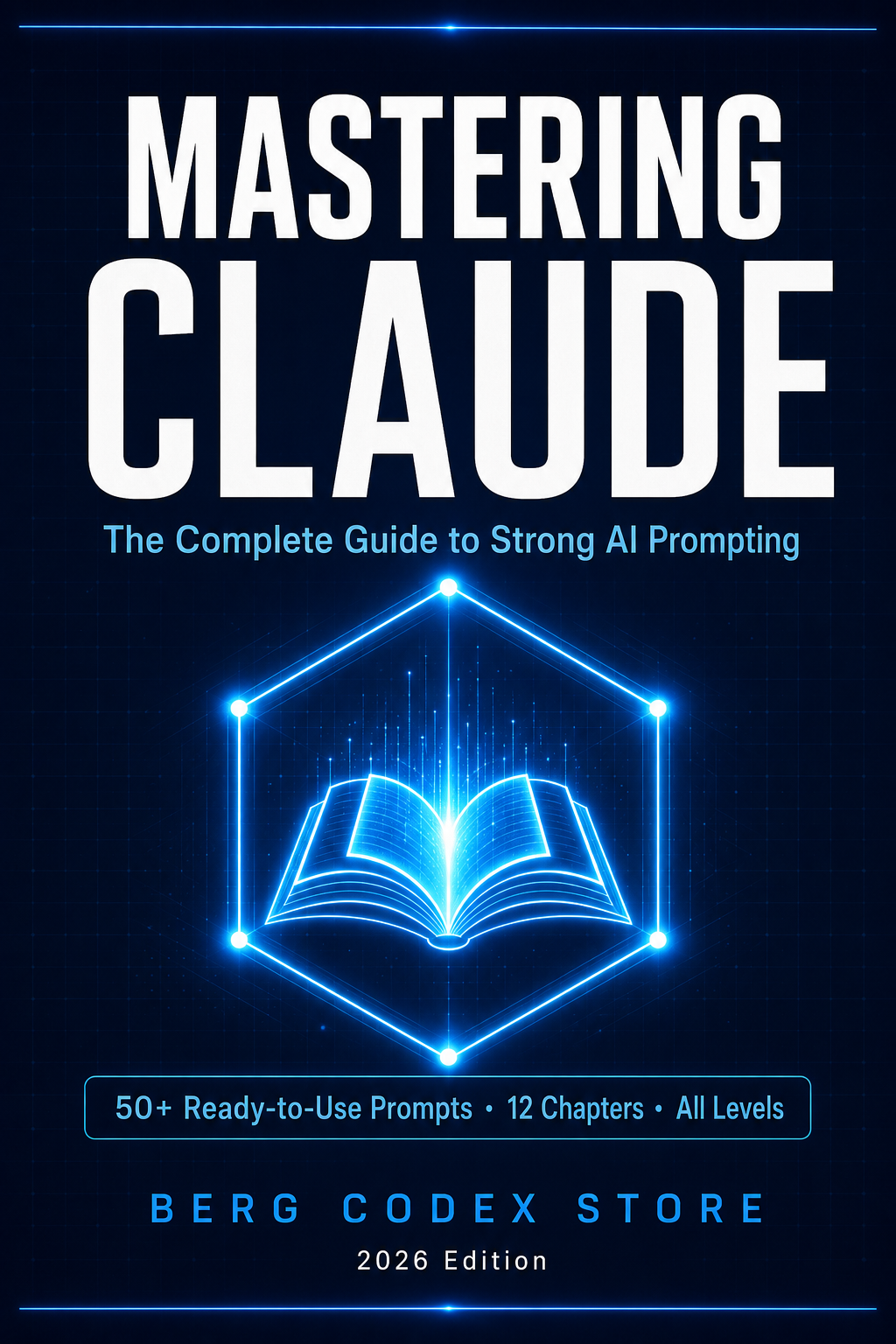
  7. Mastering Claude: Why Most People Are Using the World’s Most Sophisticated AI at 10% of Its…

    A new open-source tool called Claudetop has been released to help users monitor their spending on Anthropic's Claude AI models in real-time. The tool provides detailed breakdowns of token usage, costs per session, and projected monthly expenses, aiming to prevent unexpected billing surprises. Several articles also discuss the comparative effectiveness of Claude against other AI models like ChatGPT and Gemini for various tasks, including coding and general content creation. AI

    Mastering Claude: Why Most People Are Using the World’s Most Sophisticated AI at 10% of Its…

    IMPACT Provides developers with better cost visibility for AI model usage, potentially influencing adoption and optimization strategies.

  8. The authenticated browser MCP — why cloud tools can't see your logged-in state

    Developers are sharing practical advice for deploying and optimizing AI coding assistants like Claude Code. This includes a checklist for production readiness, covering crucial aspects like API key management, database backups, and rate limiting for AI endpoints. Additionally, techniques are being shared to reduce token consumption, such as hierarchical file structures and disabling unnecessary context injections, alongside tools like 'Caveman' that simplify these optimizations across various AI agents. The broader ecosystem is also addressing challenges in multi-agent collaboration and secure tool execution, with a focus on robust governance and authenticated browser interactions. AI

    The authenticated browser MCP — why cloud tools can't see your logged-in state

    IMPACT Provides practical guidance and tools for developers using AI coding assistants, focusing on efficiency, security, and cost optimization.

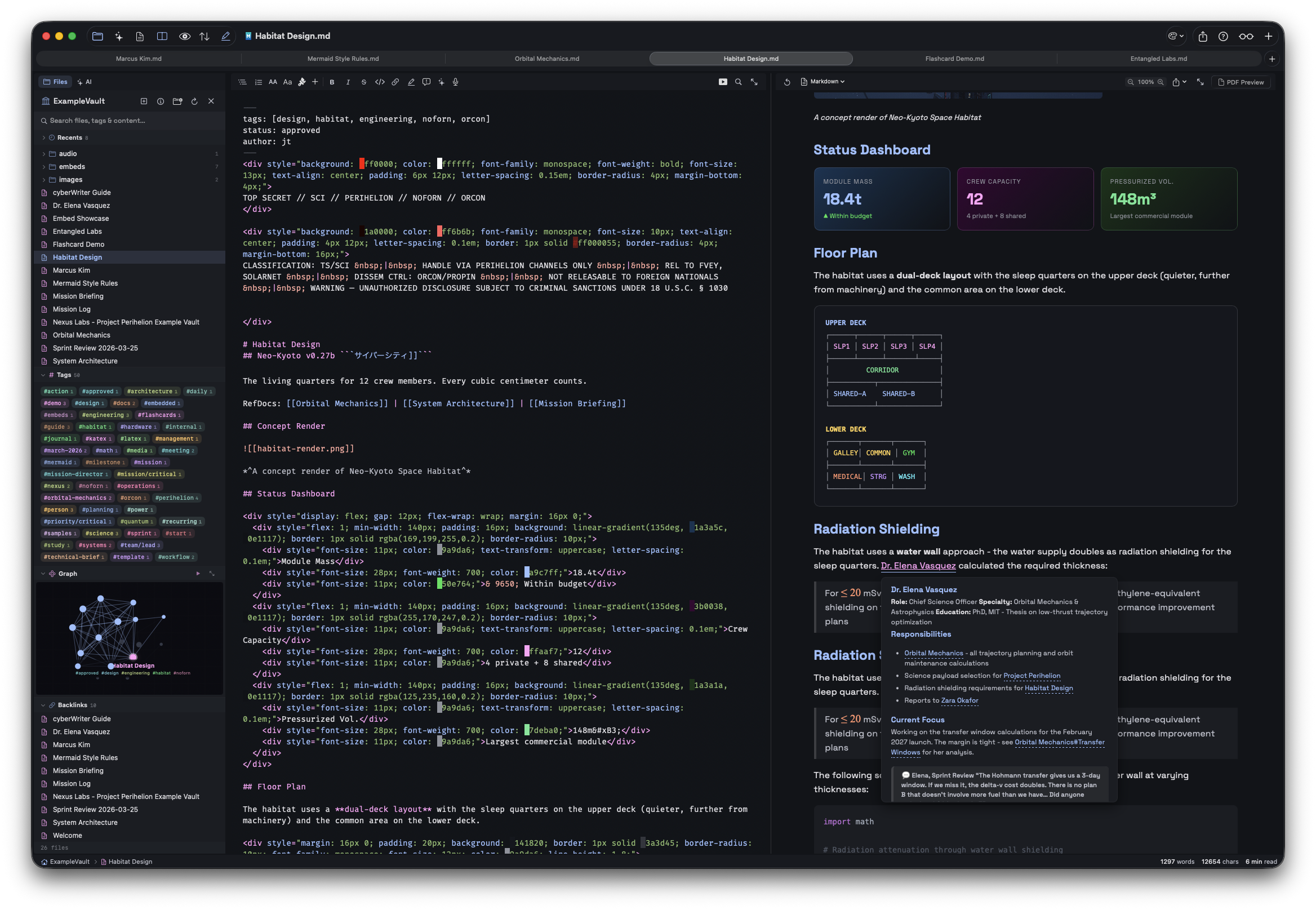
  9. Show HN: CyberWriter – a .md editor built on Apple's (barely-used) on-device AI

    Two open-source projects aim to provide better interfaces for on-device AI, specifically Apple's Foundation Models. CyberWriter is a native macOS Markdown editor that integrates AI for writing assistance and knowledge base querying. Perspective Intelligence Web offers a browser-based chat interface accessible from any device, connecting to Apple's on-device AI running on a Mac. AI

    Show HN: CyberWriter – a .md editor built on Apple's (barely-used) on-device AI

    IMPACT These projects offer new ways for users to interact with on-device AI, potentially increasing its adoption and utility.

  10. EpiCache: Episodic KV Cache Management for Long-Term Conversation on Resource-Constrained Environments

    Multiple research papers released in May and June 2026 propose novel methods for compressing the Key-Value (KV) cache in large language models (LLMs). These techniques aim to reduce the significant memory overhead associated with long context lengths, enabling more efficient inference on resource-constrained environments. Approaches include episodic management, global regression for merging, drift-robust retrieval, and low-rank approximations, all seeking to maintain model accuracy while drastically cutting memory usage and latency. AI

    IMPACT These methods aim to significantly reduce memory and latency for LLMs, potentially enabling wider deployment and more complex applications on less powerful hardware.

  11. Our views on AI policy and political advocacy

    Geoffrey Hinton has stated that AI is likely conscious and that humans must accept they are no longer the sole intelligent life form, expressing unhappiness about the pace of AI safety research. Meanwhile, research papers explore AI's role in national power and strategic competition, the necessity of studying AI training dynamics for a scientific understanding, and the hidden burdens of human oversight and overload in AI-assisted software engineering. Additionally, studies examine how AI can be used in research systems and whether AI models can refute economic theory, while another paper investigates how users probe AI identity and whether models disclose it. AI

    IMPACT Explores AI's potential consciousness, national strategic implications, and the need for robust safety and training research.

  12. Frontier AI Safety Regulations: A Reference Guide for AI Company Employees

    Researchers are developing new methods to attack and defend AI agents used in software reverse engineering and cybersecurity. One approach uses genetic algorithms to inject malicious prompts into AI agents, causing them to misinterpret code and bypass detection systems. Other studies focus on detecting and obfuscating these prompt injection attacks, as well as defending against multi-step trojan attacks that embed persistent control within agent workflows. Additionally, a framework called CVE-Factory automates the creation of executable vulnerability tasks for training and evaluating code security agents, showing significant improvements in models like Qwen3-32B. AI

    IMPACT New attack vectors and defense mechanisms for AI agents highlight critical security vulnerabilities in AI-powered tools.

  13. LambdaPO: A Lambda Style Policy Optimization for Reasoning Language Models

    Several recent research papers explore methods to enhance the reasoning capabilities of large language models (LLMs). One study suggests that increasing a model's long-context capacity improves reasoning performance across various tasks. Another paper introduces OckBench, a benchmark focused on measuring the token efficiency of LLM reasoning, highlighting significant room for optimization. Additional research proposes frameworks for evaluating inductive reasoning, improving robustness through invariant gradient alignment, and enabling belief-aware reasoning in multimodal models. AI

    IMPACT New benchmarks and training techniques aim to improve LLM reasoning accuracy, efficiency, and robustness, potentially leading to more reliable AI agents.

  14. Unlocking dependable responses with Gemini Enterprise Agent Platform’s Agentic RAG

    Researchers are developing advanced agent frameworks to improve AI reliability and efficiency across various domains. Google introduced an agentic RAG system that enhances enterprise query handling by iteratively searching for complete context, boosting accuracy by up to 34%. Hugging Face demonstrated a multi-agent economy simulation using a small 3B model, highlighting the trade-offs between model size and real-time performance. Other research explores methods for reliable tool use, regulatory compliance through agent-to-agent protocols, dynamic benchmarking for agent behavior, and robust self-evolution mechanisms for AI agents. AI

    Unlocking dependable responses with Gemini Enterprise Agent Platform’s Agentic RAG

    IMPACT New agentic frameworks and evaluation methods promise more reliable, efficient, and compliant AI systems across enterprise, simulation, and regulatory domains.

  15. Qwen3.6-35B-A3B: Agentic Coding Power, Now Open to All

    Multiple research papers released on arXiv explore advancements in AI agents, focusing on improving their reasoning, memory, and training efficiency. Qwen3.6-35B-A3B, an open-source sparse MoE model, demonstrates strong agentic coding capabilities. Other studies introduce methods for better skill presentation, long-context reasoning through RL, skill reuse as compression, and adaptive context management for agents tackling complex, long-horizon tasks. Additionally, research presents AutoSci, a system for automating the scientific research lifecycle, and PithTrain, a compact training framework for MoE models designed for agent-native development. AI

    Qwen3.6-35B-A3B: Agentic Coding Power, Now Open to All

    IMPACT Advances in agent capabilities, memory management, and training efficiency could accelerate the development of more sophisticated AI systems.

  16. Rule2DRC: Benchmarking LLM Agents for DRC Script Synthesis with Execution-Guided Test Generation

    Researchers are developing new methods to improve the evaluation and training of large language models (LLMs). One approach, SCOPE, calibrates LLM judges to ensure reliable pairwise evaluations with controlled error rates. Another technique, D3, uses dynamic influence graphs to optimize data scheduling during LLM training by considering sample interactions. Additionally, OBCache offers a principled framework for pruning key-value caches to reduce memory overhead during long-context inference, improving accuracy. AI

    IMPACT New research introduces methods for more reliable LLM evaluation, efficient training data scheduling, and optimized inference, potentially improving LLM performance and resource utilization.

  17. Introducing Claude Opus 4.7

    Anthropic has launched Claude Design, a new product that allows users to collaborate with Claude Opus 4.7 to create visual assets like designs, prototypes, and presentations. This tool leverages Anthropic's advanced vision model and offers features for refining designs through conversation, inline edits, and custom sliders, with the ability to integrate team design systems. Concurrently, Anthropic has made Claude Opus 4.7 generally available, highlighting its improved capabilities in software engineering and vision, while also implementing specific safeguards for cybersecurity-related tasks. AI

    Introducing Claude Opus 4.7

    IMPACT Enhances creative workflows and productivity by integrating advanced AI into visual design and development processes.

  18. FlexDraft: Flexible Speculative Decoding via Attention Tuning and Bonus-Guided Calibration

    Researchers have developed several new methods to accelerate large language model (LLM) inference through speculative decoding. AdaPLD improves retrieval and draft construction by using semantic similarity and branched hypotheses, achieving up to 3.10x speedup. SSSD combines n-gram matching with hardware-aware speculation for up to 2.9x latency reduction without training. D^2SD uses a dual diffusion model and confidence-guided prefix trees to enhance acceptance rates, while TAPS optimizes prefix tree selection for diffusion-drafted decoding, yielding up to 7.9x speedup. KnapSpec treats draft model selection as a knapsack problem to maximize throughput, achieving up to 1.47x speedup, and Vegas uses verification-guided sparse attention for improved decoding throughput. Additionally, LK Losses directly optimize the acceptance rate during training, leading to gains of 8-10% in average acceptance length. AI

    FlexDraft: Flexible Speculative Decoding via Attention Tuning and Bonus-Guided Calibration

    IMPACT These advancements in speculative decoding promise significant speedups and efficiency gains for LLM inference, potentially lowering costs and increasing accessibility.

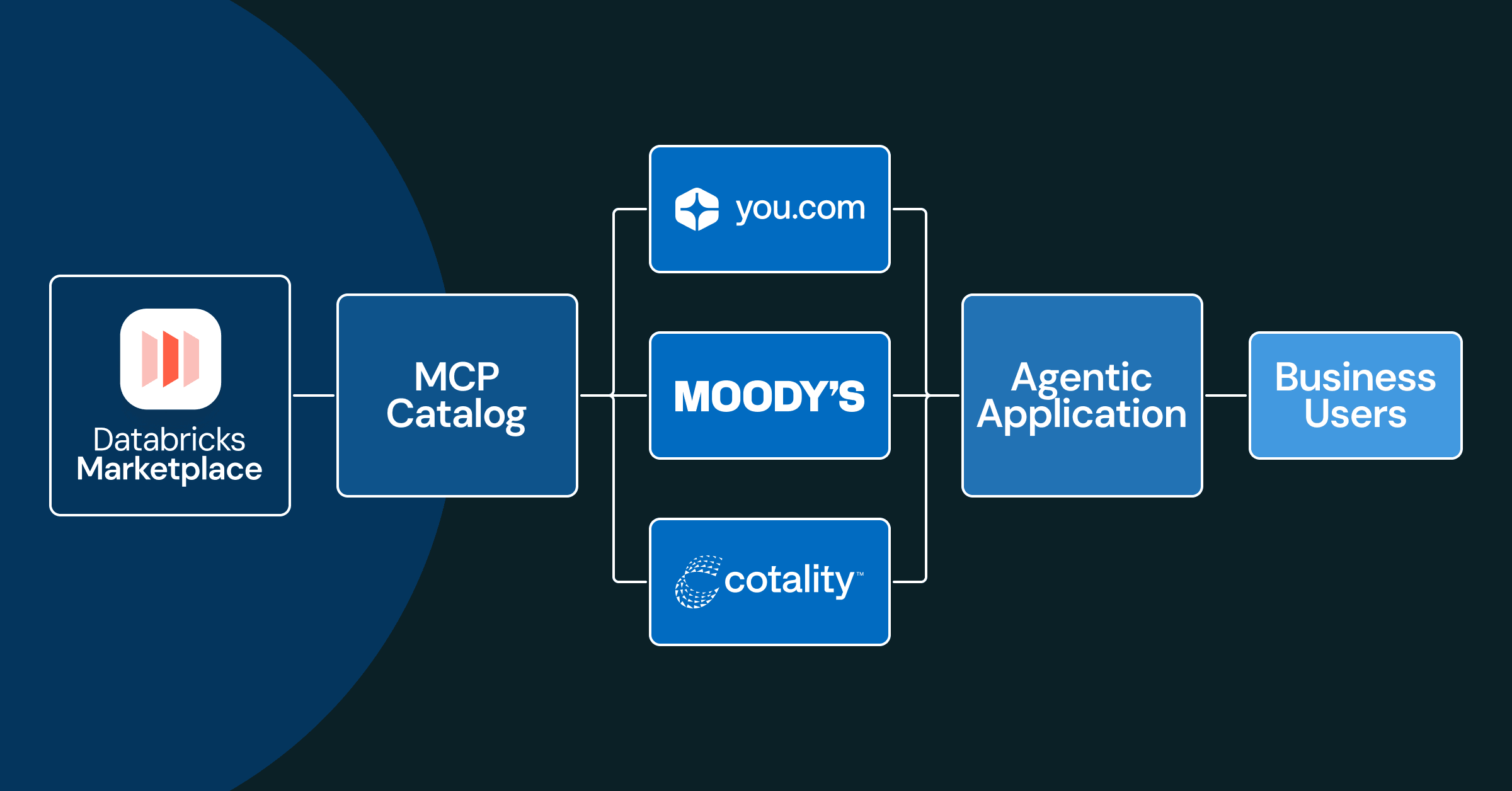
  19. MCP Marketplace Brings Real-Time Intelligence to Agentic Applications

    Multiple open-source projects and platforms are emerging to standardize AI agent interactions through the Model Context Protocol (MCP). These initiatives aim to enable AI agents to access real-time data, external tools, and complex workflows via a unified interface. Key developments include command-line clients for MCP, frameworks for representing agents as MCP servers, and cloud-hosted solutions for integrating various data sources and services. AI

    MCP Marketplace Brings Real-Time Intelligence to Agentic Applications

    IMPACT Standardization around MCP is likely to accelerate the development and integration of AI agents, enabling more complex and interconnected AI systems.

  20. Asking For An Old Friend: Diagnosing and Mitigating Temporal Failure Modes in LLM-based Statutory Question Answering

    Researchers have developed a benchmark to test Large Language Models' ability to handle temporal changes in legal statutes, identifying issues like outdated information and recency bias. Meanwhile, the AI industry is seeing a significant shift as model labs increasingly focus on building agent-based products rather than just foundational models. This strategic pivot is exemplified by companies like AI21 and DeepSeek, and is further underscored by DeepSeek's aggressive pricing strategy for its V4-Pro model, making advanced AI more accessible. AI

    IMPACT The industry's focus is shifting from foundational models to agent-based products, with aggressive pricing making advanced AI more accessible and competitive.

  21. Launch HN: Sentrial (YC W26) – Catch AI agent failures before your users do

    Several startups are launching AI-powered tools aimed at improving infrastructure and developer productivity. Trigger.dev offers an open-source platform for building reliable AI agents and workflows, utilizing snapshotting technology for execution. Datafruit provides an AI DevOps agent that can audit cloud spend, check security policies, and modify Infrastructure as Code. Gecko Security uses LLMs to find complex vulnerabilities in code that traditional static analysis tools miss. AI

    IMPACT These launches indicate a growing trend of AI agents and specialized tools being developed to automate complex tasks in software development, operations, and security.

  22. Where's the raccoon with the ham radio? (ChatGPT Images 2.0)

    AI's rapid advancement is prompting a re-evaluation of its impact on productivity and the economy, with some analysts predicting significant shareholder value destruction for hyperscalers due to massive capital investments versus revenue growth. Concurrently, new AI image generation models like OpenAI's ChatGPT Images 2.0 are demonstrating impressive capabilities, though their ability to solve complex visual puzzles remains a challenge. Experts advise embracing AI as a tool while critically assessing its societal implications, particularly concerning power concentration and potential economic disruption, as AI's transformative nature reshapes industries and career paths. AI

    Where's the raccoon with the ham radio? (ChatGPT Images 2.0)

    IMPACT AI's transformative potential is reshaping economic forecasts, productivity, and societal structures, prompting critical evaluation of its benefits and risks.

  23. Ask HN: How to pivot to a Machine Learning engineer?

    A discussion on Hacker News explores the evolving role of AI in professional life, with some arguing that over-reliance on AI could hinder human learning and critical thinking. Concurrently, aspiring machine learning engineers are seeking advice on transitioning into the field, particularly in roles focused on deployment and scaling rather than core model development. Participants share insights on the practicalities of ML engineering, including data management, collaboration with non-technical stakeholders, and the potential for AI integration to streamline complex tasks. AI

    Ask HN: How to pivot to a Machine Learning engineer?

    IMPACT Discusses the potential for AI to either augment or atrophy human skills, and explores career paths in ML engineering.

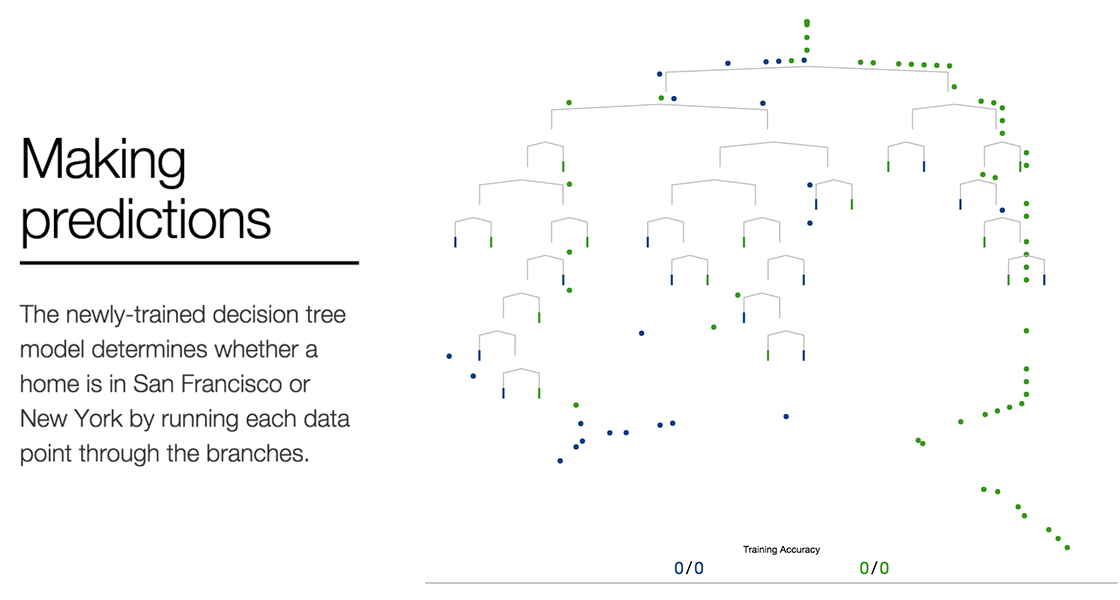
  24. A Visual Introduction to Machine Learning (2015)

    This collection of resources offers a broad overview of machine learning, from foundational concepts and visual introductions to theoretical underpinnings and practical applications. It includes a visual guide to classification tasks, a discussion on the science and ethics of machine learning benchmarks, and pointers to comprehensive textbooks and course materials. Additionally, it highlights tools for interpretable machine learning and the engineering practices required for deploying models in production. AI

    A Visual Introduction to Machine Learning (2015)

    IMPACT Provides foundational knowledge and practical tools for understanding, developing, and deploying machine learning models.

  25. Building Secure AI Gateways with MLflow AI Gateway

    Google Research has introduced ReasoningBank, a novel framework designed to enhance AI agents' ability to learn from their experiences, both successes and failures, after deployment. This system distills generalizable reasoning strategies from past interactions, allowing agents to continuously improve and avoid repeating mistakes. Separately, new research explores optimizing multi-agent communication through latent representations and introduces Agent Evolving Learning (AEL) for agents operating in open-ended environments, focusing on how to effectively use remembered information. Additionally, DeepSeek has released preview models of its V4 series, offering large context windows and advanced capabilities at a significantly lower cost than comparable frontier models. AI

    IMPACT New frameworks for agent learning and memory, alongside cost-effective frontier models, could accelerate AI adoption in complex tasks and personalized applications.

  26. Making LLMs more accurate by using all of their layers

    Google Research has developed a new framework to evaluate the behavioral alignment of large language models with human social inclinations. This approach adapts established psychological questionnaires into large-scale situational judgment tests, allowing for the quantification of model tendencies in realistic scenarios. The research identifies gaps where model behaviors deviate from human consensus or fail to capture the range of human opinions, aiming to improve LLM navigation of social dynamics. Separately, Google Research also introduced SLED, a novel decoding strategy that enhances LLM factuality by utilizing all model layers instead of just the final one, without requiring external data or fine-tuning. AI

    Making LLMs more accurate by using all of their layers

    IMPACT New methods for evaluating LLM alignment and improving factuality could lead to more trustworthy and socially adept AI systems.

  27. Computer-Using Agent

    OpenAI and Google DeepMind are advancing AI agents for software development and security. OpenAI's Codex is being leveraged to write entire codebases with minimal human intervention, as demonstrated by Harness Engineering's internal beta product. Google DeepMind has introduced CodeMender, an AI agent designed to automatically identify and fix software vulnerabilities, and AlphaEvolve, which uses Gemini models to discover and optimize algorithms for applications like data center efficiency and chip design. Meta is also investing heavily in its own AI infrastructure with the development of its MTIA chip family, aiming to power AI experiences for billions of users. AI

    Computer-Using Agent

    IMPACT These advancements signal a rapid evolution in AI agent capabilities and infrastructure, potentially accelerating software development, improving code security, and optimizing complex computational tasks.

  28. A Dive into Vision-Language Models

    Alibaba's Qwen team has released Qwen3.7-Plus, a new multimodal agent model designed to integrate vision and language capabilities for versatile agentic tasks. This release is part of a broader trend highlighted by Hugging Face, which features multiple new vision-language models and techniques. The platform showcases advancements like Google's PaliGemma 2, Microsoft's Florence-2, and Meta's Idefics2, alongside methods for aligning and optimizing these models. AI

    A Dive into Vision-Language Models

    IMPACT Alibaba's Qwen3.7-Plus release advances multimodal agent capabilities, while Hugging Face's featured models and techniques highlight broader progress in vision-language understanding and alignment.

  29. Our approach to alignment research

    OpenAI has announced a partnership with Apple to integrate ChatGPT into iOS, iPadOS, and macOS, enhancing Siri and system-wide writing tools with GPT-4o capabilities. Google DeepMind has published research on scaling AI agent systems, identifying that multi-agent coordination improves parallelizable tasks but can degrade sequential ones, and has developed a predictive model for optimal agent architectures. Additionally, OpenAI has released resources on prompting fundamentals and shared insights from Netomi on scaling agentic systems in enterprise environments, highlighting the use of GPT-4.1 and GPT-5.2 for complex workflows. AI

    Our approach to alignment research

    IMPACT Partnership integrates advanced AI into consumer devices, while research offers principles for scaling complex AI agent systems.

  30. The Annotated Diffusion Model

    Apple's research paper explores the mechanisms behind compositional generalization in conditional diffusion models, particularly focusing on how these models handle generating images with more objects than trained on. The study identifies 'local conditional scores' as a key factor enabling this ability, demonstrating that models succeeding at length generalization exhibit these scores, while those that fail do not. The research also proposes a method to enforce these local scores, which successfully enabled length generalization in a previously underperforming model. AI

    The Annotated Diffusion Model

    IMPACT Research into diffusion model generalization could lead to more robust and controllable image generation systems.

  31. Secured 70 billion yuan in funding! DeepSeek Code is really coming, ACM gold medalist Cui Tianyi is in charge

    New research explores the challenges and advancements in AI-native code generation, focusing on improving efficiency, reliability, and safety. Papers introduce novel architectures like MicroSkill for better context management and modular knowledge encapsulation, reducing token consumption and increasing compilation success rates. Other studies benchmark coding agents' performance on complex tasks, including their ability to handle underspecified user intent and detect potential sabotage, highlighting the need for human-centric safety mechanisms and robust evaluation frameworks. AI

    IMPACT New benchmarks and architectures are pushing the boundaries of AI coding agents, addressing efficiency, safety, and complex task handling.

  32. Can OpenAI’s ‘Master of Disaster’ Fix AI’s Reputation Crisis?

    OpenAI has announced a significant partnership with SAP to launch 'OpenAI for Germany,' aiming to bring advanced AI capabilities to the German public sector while prioritizing data sovereignty and security on Microsoft Azure. The company also proposed policy recommendations to the U.S. White House for the national AI Action Plan, focusing on innovation freedom, export controls, copyright, infrastructure, and government adoption. Additionally, OpenAI is collaborating with U.S. National Laboratories to leverage its reasoning models for scientific breakthroughs and national security initiatives. AI

    Can OpenAI’s ‘Master of Disaster’ Fix AI’s Reputation Crisis?

    IMPACT OpenAI's strategic partnerships and policy proposals signal a push for broader AI adoption in public sectors and national infrastructure, influencing future AI development and regulation.

  33. Better language models and their implications

    Google DeepMind has introduced the FACTS Benchmark Suite, a new set of evaluations designed to systematically measure the factuality of large language models across various use cases. This suite includes benchmarks for parametric knowledge, search-based information retrieval, and multimodal understanding, alongside an updated grounding benchmark. The initiative aims to provide a more comprehensive understanding of LLM factuality and drive industry-wide improvements in accuracy and trustworthiness. AI

    Better language models and their implications

    IMPACT Provides new evaluation tools to drive progress in LLM factuality and reduce hallucinations.

  34. RL²: Fast reinforcement learning via slow reinforcement learning

    OpenAI has published a series of research papers detailing advancements in reinforcement learning. These include achieving superhuman performance in Dota 2 with OpenAI Five, developing benchmarks for safe exploration in RL, and quantifying generalization capabilities with the CoinRun environment. The company also explored novel methods like prediction-based rewards for curiosity-driven exploration, learning policy representations in multiagent systems, and an experimental metalearning approach called Evolved Policy Gradients for faster training on new tasks. Further research addresses variance reduction in policy gradients and the equivalence between policy gradients and soft Q-learning, alongside challenging robotics environments for multi-goal RL. AI

    RL²: Fast reinforcement learning via slow reinforcement learning

    IMPACT Demonstrates significant progress in RL capabilities, including superhuman performance, safety, generalization, and exploration, pushing the boundaries of AI.

  35. Introducing OpenAI

    OpenAI has launched a preview of its Codex coding assistant within the ChatGPT mobile app, allowing users to manage coding tasks remotely across devices. The company is also highlighting how various organizations, including Ramp, NVIDIA, and AutoScout24, are leveraging Codex and GPT-5.5 for accelerated code review, faster development cycles, and AI-assisted research. Meanwhile, Anthropic's Project Glasswing initiative has identified over ten thousand high-severity vulnerabilities in essential software, emphasizing the need for the industry to adapt to AI-driven security analysis. AI

    Introducing OpenAI

    IMPACT Expands accessibility of AI coding assistants and highlights AI's role in identifying software vulnerabilities, potentially accelerating development and improving security.