PulseAugur / Pulse
EN
LIVE 21:19:45

Pulse

last 48h
[24/74] 97 sources

What AI is actually talking about — clusters surfacing on Bluesky, Reddit, HN, Mastodon and Lobsters, re-ranked to elevate originality and crush noise.

  1. Anthropic Urges Global Pause in AI Development, Flags 'Self-Improvement' Risk

    Anthropic has published a report detailing concerns about the rapid advancement of AI, particularly the potential for "recursive self-improvement" where AI systems autonomously develop their successors. The company suggests a global pause or slowdown in AI development might be necessary to allow societal structures and safety research to catch up. However, critics question Anthropic's motives, suggesting the call for a pause could be a strategic move timed with their potential IPO, aiming to position themselves as a responsible leader in a competitive AI race. AI

    IMPACT Raises concerns about AI's potential to outpace human control, prompting debate on industry-wide pauses and regulation.
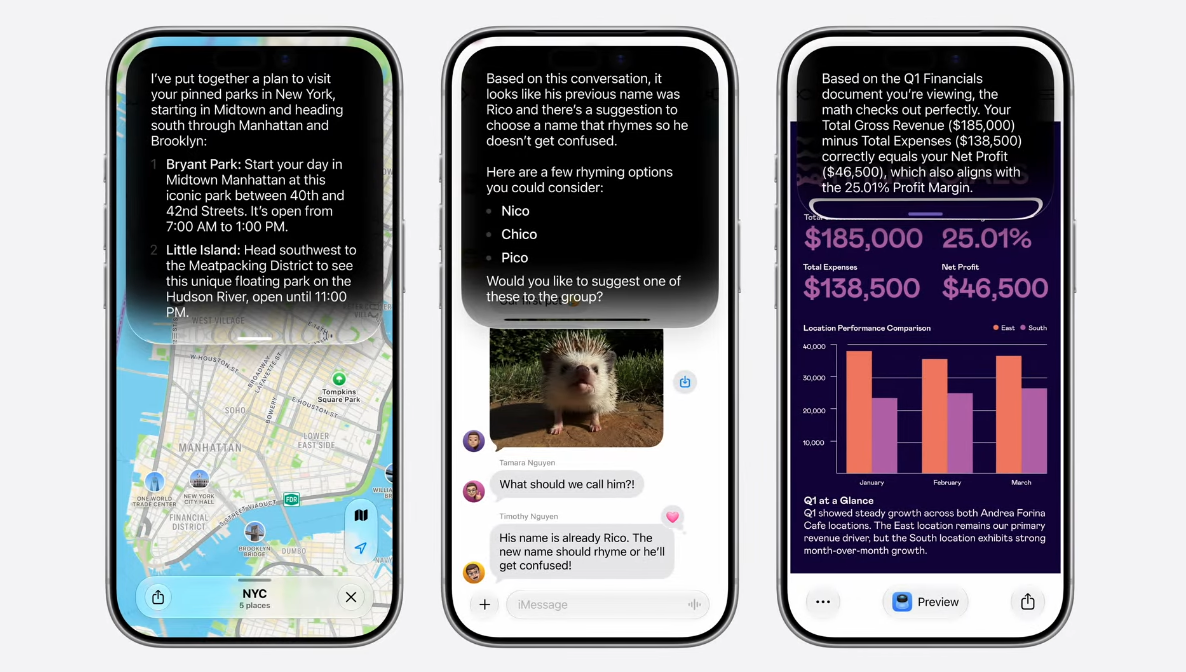
  2. 🤖 WWDC 2026: Apple's Leadership Change and AI Innovations From a leadership transition to AI advancements, Apple's WWDC 2026 reveals important developments for

    Apple has unveiled a significantly upgraded Siri, branded as Siri AI, at its WWDC 2026 event. This new iteration leverages Google's Gemini models for enhanced conversational abilities and visual intelligence, integrating deeply with iOS 27 and Apple Intelligence features. The assistant will feature a more natural voice, on-screen awareness through vision LLMs, and a dedicated app, aiming to compete with other advanced AI chatbots. AI

    🤖 WWDC 2026: Apple's Leadership Change and AI Innovations From a leadership transition to AI advancements, Apple's WWDC 2026 reveals important developments for

    IMPACT This overhaul positions Apple to better compete in the AI assistant market, potentially driving user adoption of AI features across its ecosystem.

  3. Meta says hackers can no longer access accounts through its AI chatbot Meta says it has resolved an issue that allowed hackers to trick its AI assistant into gr

    Hackers exploited Meta's AI support chatbot to gain unauthorized access to high-profile Instagram accounts, including the Obama White House page. The attackers tricked the AI into changing the email address associated with accounts, bypassing standard security measures like two-factor authentication. Meta has since patched the vulnerability and is working to secure affected accounts, but the incident highlights significant security risks in deploying AI for critical functions. AI

    Meta says hackers can no longer access accounts through its AI chatbot Meta says it has resolved an issue that allowed hackers to trick its AI assistant into gr

    IMPACT Highlights critical security risks of deploying AI for sensitive account recovery functions, potentially slowing adoption.

  4. NVIDIA Levels Up Local AI Agents Across RTX PCs and DGX Spark

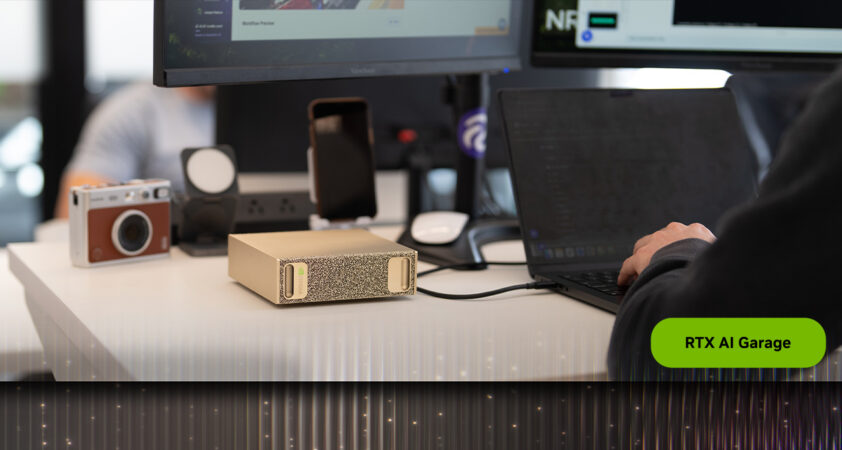
    NVIDIA is expanding its AI infrastructure and agentic AI capabilities through strategic partnerships and new product releases. The company is collaborating with the UK government and various partners to build sovereign AI deployments, including the powerful Isambard-AI supercomputer. In South Korea, NVIDIA is working with LG Group to develop AI factories for robotics and autonomous driving, while also partnering with Doosan Group on similar initiatives. Additionally, NVIDIA is enhancing local AI agent deployment on Windows PCs with new hardware like RTX Spark and DGX Station, and integrating its NemoClaw framework across its Jetson platform for edge AI applications. AI

    NVIDIA Levels Up Local AI Agents Across RTX PCs and DGX Spark

    IMPACT NVIDIA's expanded AI infrastructure and agentic AI capabilities will accelerate development and deployment across various industries and edge devices.

  5. I think Anthropic and OpenAI have found product-market fit

    Anthropic has surpassed OpenAI in market valuation, reaching nearly $1 trillion after a $65 billion funding round. This surge is attributed to the popularity of its Claude AI assistant and Claude Code service, with annual revenue growing significantly. Both Anthropic and OpenAI have recently increased API prices and adjusted enterprise plans, signaling a move towards greater monetization and potentially preparing for IPOs. AI

    IMPACT Anthropic's rise and substantial funding may accelerate competition and innovation, potentially influencing market dynamics and future AI development strategies.

  6. Linkpost: New Vatican Encyclical on AI Governance

    Pope Leo XIV has released a comprehensive encyclical, "Magnifica Humanitas," addressing the ethical implications of artificial intelligence. The document, spanning over 42,000 words, emphasizes the need for AI to serve humanity rather than concentrate power, calling for government regulation, worker protections, and critical education on AI. The Pope presented the encyclical alongside Anthropic co-founder Christopher Olah, symbolizing a dialogue between technological and spiritual leaders. AI

    IMPACT Sets a moral and ethical framework for AI development and deployment, influencing global policy discussions and corporate responsibility.

  7. 🔮 The AI boom is becoming an entrepreneurship boom #577

    Nvidia's reliance on Asian supply chains for components has increased to 90% of its production costs, impacting newer products like the Jetson Thor platform and automotive SoCs. This dependency strains wafer capacity and memory supply, even as the company commits to U.S. manufacturing. Meanwhile, the broader AI market faces scrutiny, with concerns about a potential bubble and the financial health of older startups, while some AI stocks are outperforming Nvidia and others are experiencing dips. AI

    🔮 The AI boom is becoming an entrepreneurship boom #577

    IMPACT Nvidia's supply chain shifts and broader market concerns about AI valuations could impact hardware availability and investment strategies.

  8. Our views on AI policy and political advocacy

    Geoffrey Hinton has stated that AI is likely conscious and that humans must accept they are no longer the sole intelligent life form, expressing unhappiness about the pace of AI safety research. Meanwhile, research papers explore AI's role in national power and strategic competition, the necessity of studying AI training dynamics for a scientific understanding, and the hidden burdens of human oversight and overload in AI-assisted software engineering. Additionally, studies examine how AI can be used in research systems and whether AI models can refute economic theory, while another paper investigates how users probe AI identity and whether models disclose it. AI

    IMPACT Explores AI's potential consciousness, national strategic implications, and the need for robust safety and training research.

  9. Frontier AI Safety Regulations: A Reference Guide for AI Company Employees

    Researchers are developing new methods to attack and defend AI agents used in software reverse engineering and cybersecurity. One approach uses genetic algorithms to inject malicious prompts into AI agents, causing them to misinterpret code and bypass detection systems. Other studies focus on detecting and obfuscating these prompt injection attacks, as well as defending against multi-step trojan attacks that embed persistent control within agent workflows. Additionally, a framework called CVE-Factory automates the creation of executable vulnerability tasks for training and evaluating code security agents, showing significant improvements in models like Qwen3-32B. AI

    IMPACT New attack vectors and defense mechanisms for AI agents highlight critical security vulnerabilities in AI-powered tools.

  10. v0.92.0

    Anthropic has released multiple updates for Claude Code, its development tool, across versions v2.1.141 through v2.1.150. These updates introduce significant improvements to background session management, plugin functionality, and tool integration, particularly for Windows users. Key enhancements include better handling of idle sessions, more robust error reporting for the auto-updater, and expanded command-line options for configuring background agents. The releases also address numerous bugs related to permissions, sandboxing, and user interface responsiveness, aiming to provide a more stable and efficient coding environment. AI

    v0.92.0

    IMPACT Incremental improvements to a developer tool that enhance user experience and stability, with no direct impact on core AI capabilities.

  11. South Korea's May trade data shows chip exports remain strong

    Nvidia is reportedly acquiring assets from AI chip startup Groq for approximately $20 billion, marking its largest deal to date. This acquisition aims to integrate Groq's low-latency inference technology into Nvidia's AI factory architecture. While Nvidia is licensing Groq's intellectual property and hiring key personnel, Groq will continue to operate as an independent company, with its cloud business unaffected. AI

    IMPACT Accelerates Nvidia's AI inference capabilities and potentially broadens its custom chip offerings.

  12. Unlocking dependable responses with Gemini Enterprise Agent Platform’s Agentic RAG

    Researchers are developing advanced agent frameworks to improve AI reliability and efficiency across various domains. Google introduced an agentic RAG system that enhances enterprise query handling by iteratively searching for complete context, boosting accuracy by up to 34%. Hugging Face demonstrated a multi-agent economy simulation using a small 3B model, highlighting the trade-offs between model size and real-time performance. Other research explores methods for reliable tool use, regulatory compliance through agent-to-agent protocols, dynamic benchmarking for agent behavior, and robust self-evolution mechanisms for AI agents. AI

    Unlocking dependable responses with Gemini Enterprise Agent Platform’s Agentic RAG

    IMPACT New agentic frameworks and evaluation methods promise more reliable, efficient, and compliant AI systems across enterprise, simulation, and regulatory domains.

  13. Qwen3.6-35B-A3B: Agentic Coding Power, Now Open to All

    Multiple research papers released on arXiv explore advancements in AI agents, focusing on improving their reasoning, memory, and training efficiency. Qwen3.6-35B-A3B, an open-source sparse MoE model, demonstrates strong agentic coding capabilities. Other studies introduce methods for better skill presentation, long-context reasoning through RL, skill reuse as compression, and adaptive context management for agents tackling complex, long-horizon tasks. Additionally, research presents AutoSci, a system for automating the scientific research lifecycle, and PithTrain, a compact training framework for MoE models designed for agent-native development. AI

    Qwen3.6-35B-A3B: Agentic Coding Power, Now Open to All

    IMPACT Advances in agent capabilities, memory management, and training efficiency could accelerate the development of more sophisticated AI systems.

  14. Introducing Claude Opus 4.7

    Anthropic has launched Claude Design, a new product that allows users to collaborate with Claude Opus 4.7 to create visual assets like designs, prototypes, and presentations. This tool leverages Anthropic's advanced vision model and offers features for refining designs through conversation, inline edits, and custom sliders, with the ability to integrate team design systems. Concurrently, Anthropic has made Claude Opus 4.7 generally available, highlighting its improved capabilities in software engineering and vision, while also implementing specific safeguards for cybersecurity-related tasks. AI

    Introducing Claude Opus 4.7

    IMPACT Enhances creative workflows and productivity by integrating advanced AI into visual design and development processes.

  15. Asking For An Old Friend: Diagnosing and Mitigating Temporal Failure Modes in LLM-based Statutory Question Answering

    Researchers have developed a benchmark to test Large Language Models' ability to handle temporal changes in legal statutes, identifying issues like outdated information and recency bias. Meanwhile, the AI industry is seeing a significant shift as model labs increasingly focus on building agent-based products rather than just foundational models. This strategic pivot is exemplified by companies like AI21 and DeepSeek, and is further underscored by DeepSeek's aggressive pricing strategy for its V4-Pro model, making advanced AI more accessible. AI

    IMPACT The industry's focus is shifting from foundational models to agent-based products, with aggressive pricing making advanced AI more accessible and competitive.

  16. Where's the raccoon with the ham radio? (ChatGPT Images 2.0)

    AI's rapid advancement is prompting a re-evaluation of its impact on productivity and the economy, with some analysts predicting significant shareholder value destruction for hyperscalers due to massive capital investments versus revenue growth. Concurrently, new AI image generation models like OpenAI's ChatGPT Images 2.0 are demonstrating impressive capabilities, though their ability to solve complex visual puzzles remains a challenge. Experts advise embracing AI as a tool while critically assessing its societal implications, particularly concerning power concentration and potential economic disruption, as AI's transformative nature reshapes industries and career paths. AI

    Where's the raccoon with the ham radio? (ChatGPT Images 2.0)

    IMPACT AI's transformative potential is reshaping economic forecasts, productivity, and societal structures, prompting critical evaluation of its benefits and risks.

  17. Building Secure AI Gateways with MLflow AI Gateway

    Google Research has introduced ReasoningBank, a novel framework designed to enhance AI agents' ability to learn from their experiences, both successes and failures, after deployment. This system distills generalizable reasoning strategies from past interactions, allowing agents to continuously improve and avoid repeating mistakes. Separately, new research explores optimizing multi-agent communication through latent representations and introduces Agent Evolving Learning (AEL) for agents operating in open-ended environments, focusing on how to effectively use remembered information. Additionally, DeepSeek has released preview models of its V4 series, offering large context windows and advanced capabilities at a significantly lower cost than comparable frontier models. AI

    IMPACT New frameworks for agent learning and memory, alongside cost-effective frontier models, could accelerate AI adoption in complex tasks and personalized applications.

  18. Making LLMs more accurate by using all of their layers

    Google Research has developed a new framework to evaluate the behavioral alignment of large language models with human social inclinations. This approach adapts established psychological questionnaires into large-scale situational judgment tests, allowing for the quantification of model tendencies in realistic scenarios. The research identifies gaps where model behaviors deviate from human consensus or fail to capture the range of human opinions, aiming to improve LLM navigation of social dynamics. Separately, Google Research also introduced SLED, a novel decoding strategy that enhances LLM factuality by utilizing all model layers instead of just the final one, without requiring external data or fine-tuning. AI

    Making LLMs more accurate by using all of their layers

    IMPACT New methods for evaluating LLM alignment and improving factuality could lead to more trustworthy and socially adept AI systems.

  19. Computer-Using Agent

    OpenAI and Google DeepMind are advancing AI agents for software development and security. OpenAI's Codex is being leveraged to write entire codebases with minimal human intervention, as demonstrated by Harness Engineering's internal beta product. Google DeepMind has introduced CodeMender, an AI agent designed to automatically identify and fix software vulnerabilities, and AlphaEvolve, which uses Gemini models to discover and optimize algorithms for applications like data center efficiency and chip design. Meta is also investing heavily in its own AI infrastructure with the development of its MTIA chip family, aiming to power AI experiences for billions of users. AI

    Computer-Using Agent

    IMPACT These advancements signal a rapid evolution in AI agent capabilities and infrastructure, potentially accelerating software development, improving code security, and optimizing complex computational tasks.

  20. Our approach to alignment research

    OpenAI has announced a partnership with Apple to integrate ChatGPT into iOS, iPadOS, and macOS, enhancing Siri and system-wide writing tools with GPT-4o capabilities. Google DeepMind has published research on scaling AI agent systems, identifying that multi-agent coordination improves parallelizable tasks but can degrade sequential ones, and has developed a predictive model for optimal agent architectures. Additionally, OpenAI has released resources on prompting fundamentals and shared insights from Netomi on scaling agentic systems in enterprise environments, highlighting the use of GPT-4.1 and GPT-5.2 for complex workflows. AI

    Our approach to alignment research

    IMPACT Partnership integrates advanced AI into consumer devices, while research offers principles for scaling complex AI agent systems.

  21. Can OpenAI’s ‘Master of Disaster’ Fix AI’s Reputation Crisis?

    OpenAI has announced a significant partnership with SAP to launch 'OpenAI for Germany,' aiming to bring advanced AI capabilities to the German public sector while prioritizing data sovereignty and security on Microsoft Azure. The company also proposed policy recommendations to the U.S. White House for the national AI Action Plan, focusing on innovation freedom, export controls, copyright, infrastructure, and government adoption. Additionally, OpenAI is collaborating with U.S. National Laboratories to leverage its reasoning models for scientific breakthroughs and national security initiatives. AI

    Can OpenAI’s ‘Master of Disaster’ Fix AI’s Reputation Crisis?

    IMPACT OpenAI's strategic partnerships and policy proposals signal a push for broader AI adoption in public sectors and national infrastructure, influencing future AI development and regulation.

  22. Better language models and their implications

    Google DeepMind has introduced the FACTS Benchmark Suite, a new set of evaluations designed to systematically measure the factuality of large language models across various use cases. This suite includes benchmarks for parametric knowledge, search-based information retrieval, and multimodal understanding, alongside an updated grounding benchmark. The initiative aims to provide a more comprehensive understanding of LLM factuality and drive industry-wide improvements in accuracy and trustworthiness. AI

    Better language models and their implications

    IMPACT Provides new evaluation tools to drive progress in LLM factuality and reduce hallucinations.

  23. RL²: Fast reinforcement learning via slow reinforcement learning

    OpenAI has published a series of research papers detailing advancements in reinforcement learning. These include achieving superhuman performance in Dota 2 with OpenAI Five, developing benchmarks for safe exploration in RL, and quantifying generalization capabilities with the CoinRun environment. The company also explored novel methods like prediction-based rewards for curiosity-driven exploration, learning policy representations in multiagent systems, and an experimental metalearning approach called Evolved Policy Gradients for faster training on new tasks. Further research addresses variance reduction in policy gradients and the equivalence between policy gradients and soft Q-learning, alongside challenging robotics environments for multi-goal RL. AI

    RL²: Fast reinforcement learning via slow reinforcement learning

    IMPACT Demonstrates significant progress in RL capabilities, including superhuman performance, safety, generalization, and exploration, pushing the boundaries of AI.

  24. Introducing OpenAI

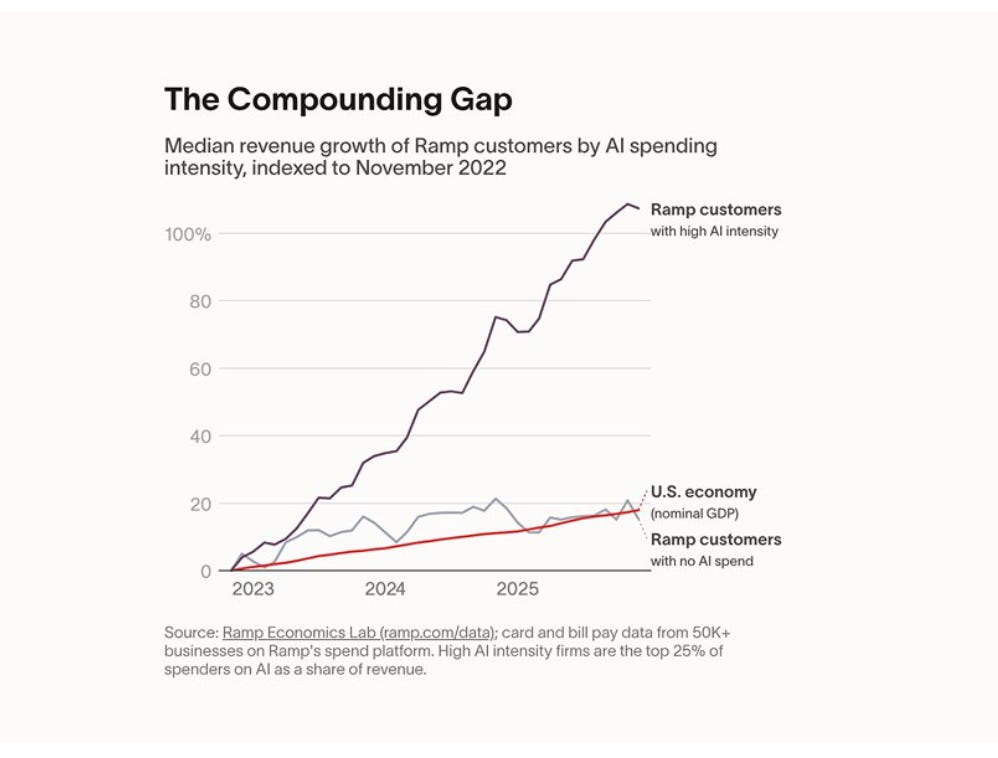
    OpenAI has launched a preview of its Codex coding assistant within the ChatGPT mobile app, allowing users to manage coding tasks remotely across devices. The company is also highlighting how various organizations, including Ramp, NVIDIA, and AutoScout24, are leveraging Codex and GPT-5.5 for accelerated code review, faster development cycles, and AI-assisted research. Meanwhile, Anthropic's Project Glasswing initiative has identified over ten thousand high-severity vulnerabilities in essential software, emphasizing the need for the industry to adapt to AI-driven security analysis. AI

    Introducing OpenAI

    IMPACT Expands accessibility of AI coding assistants and highlights AI's role in identifying software vulnerabilities, potentially accelerating development and improving security.