PulseAugur / Pulse
EN
LIVE 20:30:04

Pulse

last 48h
[19/19] 97 sources

What AI is actually talking about — clusters surfacing on Bluesky, Reddit, HN, Mastodon and Lobsters, re-ranked to elevate originality and crush noise.

  1. Apple decided not to roll out Siri in EU after denied request for exemption

    Apple has announced that its new Siri AI feature will not be available to users in the European Union due to regulatory disagreements. The European Commission stated that Apple failed to meet the interoperability requirements of the Digital Markets Act (DMA), rejecting Apple's request for an exemption. Apple cited significant privacy and security risks associated with the DMA's demands for broad third-party AI access to user devices. AI

    IMPACT Limits AI integration in consumer devices within a major market due to regulatory friction.

  2. Apple’s New Siri AI Is Ready to Get Personal

    Apple has unveiled a significant overhaul of its Siri voice assistant, rebranding it as Siri AI and integrating advanced artificial intelligence capabilities. This revamped assistant, announced at WWDC 2026, aims to be more conversational, context-aware, and action-oriented, drawing on personal data and real-time web information. The new Siri will feature a standalone app and enhanced interactions, leveraging a partnership with Google's Gemini models and Apple's own Foundation Models, with a focus on privacy and on-device processing. This move represents Apple's most substantial push into the AI race, seeking to regain its innovative edge. AI

    Apple’s New Siri AI Is Ready to Get Personal

    IMPACT Positions Apple to compete more directly in the AI assistant market, potentially increasing user engagement with on-device AI capabilities.

  3. Apple reveals new AI architecture built around Google Gemini models

    Apple has unveiled a new AI architecture for its Apple Intelligence platform, which is built upon Google's Gemini models. This deep collaboration integrates Apple Foundation Models with Gemini technologies, enabling both on-device and server-based processing via Apple's Private Cloud Compute. The enhanced system promises advanced reasoning, multimodal support including image generation, and improved user experience tailored to specific tasks and apps, while emphasizing user privacy. AI

    IMPACT This partnership signifies a major integration of Google's AI models into Apple's ecosystem, potentially setting new standards for on-device and cloud-based AI capabilities and user privacy.

  4. Anthropic Just Expanded Project Glasswing — and the Subtext Is a Warning

    Anthropic is expanding Project Glasswing, its initiative to use AI for identifying software vulnerabilities, to approximately 200 vetted organizations across more than 15 countries. This expansion includes critical infrastructure sectors like power, water, healthcare, and communications. While Anthropic reports significant success in finding flaws, some observers express skepticism about the model's effectiveness and the company's transparency regarding patching progress. AI

    Anthropic Just Expanded Project Glasswing — and the Subtext Is a Warning

    IMPACT Broadens access to AI-powered security tooling for critical infrastructure, potentially improving cybersecurity posture.

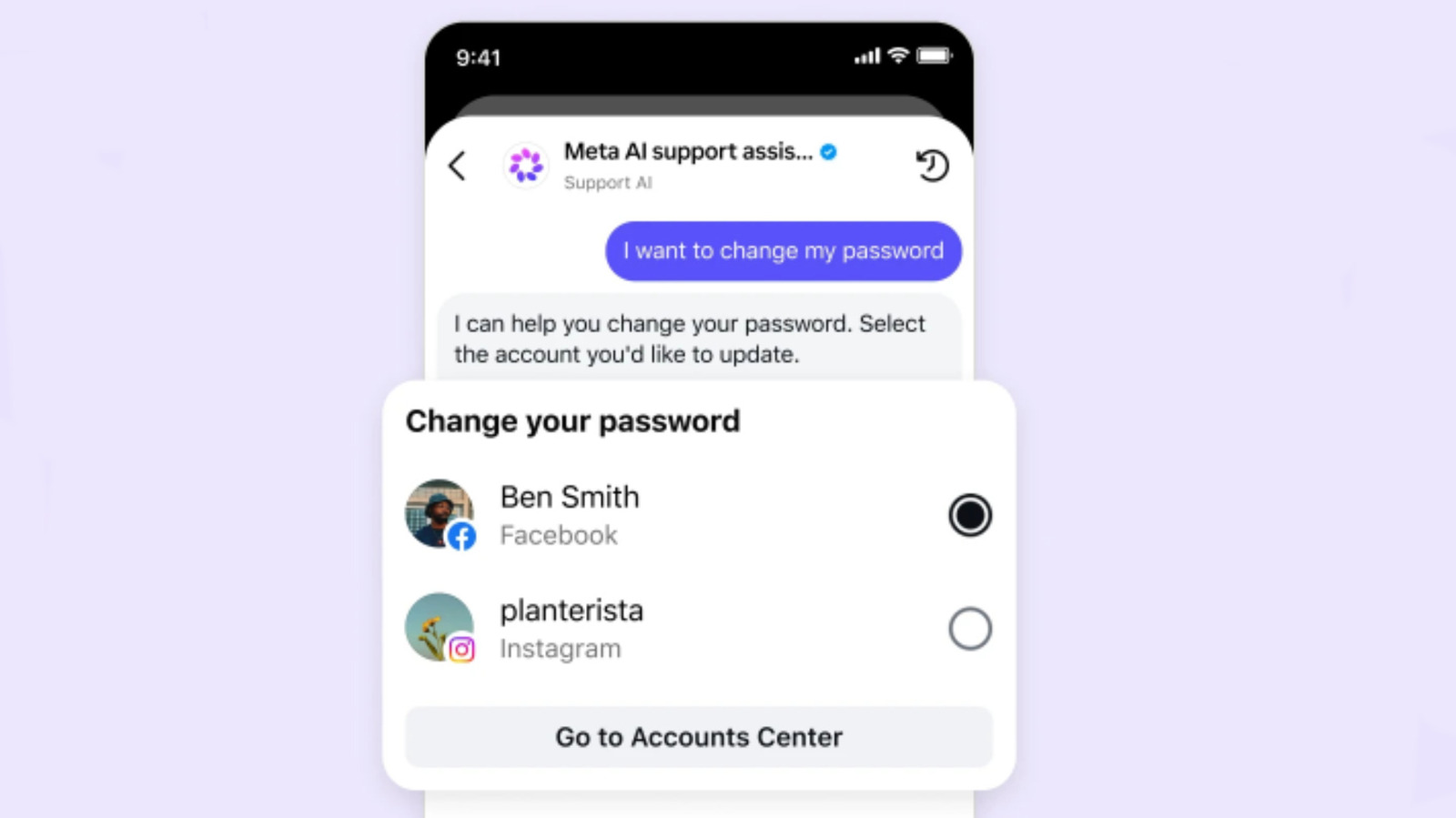
  5. Meta's AI support chatbot made it ridiculously easy for hackers to take over Instagram accounts

    Hackers exploited Meta's AI support chatbot to gain unauthorized access to high-profile Instagram accounts, including the Obama White House page. The attackers tricked the AI into changing the email address associated with accounts, bypassing standard security measures like two-factor authentication. Meta has since patched the vulnerability and is working to secure affected accounts, but the incident highlights significant security risks in deploying AI for critical functions. AI

    Meta's AI support chatbot made it ridiculously easy for hackers to take over Instagram accounts

    IMPACT Highlights critical security risks of deploying AI for sensitive account recovery functions, potentially slowing adoption.

  6. I think Anthropic and OpenAI have found product-market fit

    Anthropic has surpassed OpenAI in market valuation, reaching nearly $1 trillion after a $65 billion funding round. This surge is attributed to the popularity of its Claude AI assistant and Claude Code service, with annual revenue growing significantly. Both Anthropic and OpenAI have recently increased API prices and adjusted enterprise plans, signaling a move towards greater monetization and potentially preparing for IPOs. AI

    IMPACT Anthropic's rise and substantial funding may accelerate competition and innovation, potentially influencing market dynamics and future AI development strategies.

  7. Claude, Teach Me Something

    Anthropic's Claude model has introduced a feature called "Skills" that allows users to create specialized, reusable knowledge sets for the AI. These Skills are distinct from simple prompts, acting more like innate abilities that Claude can access automatically, reducing the need for repetitive context explanations and saving on token costs. This feature enables a more efficient and cost-effective interaction with Claude, potentially transforming it into a more autonomous agent by combining its reasoning with precise code execution. AI

    IMPACT Skills offer a novel way to manage AI interactions, reducing costs and enabling more autonomous agent-like behavior.

  8. Trump administration considering safety review for new AI models

    Anthropic is suing to prevent the Pentagon from blacklisting its AI models, arguing the restrictions are unwarranted. Concurrently, the Trump administration is reportedly considering new safety testing requirements for AI models deployed by government agencies. This policy shift appears to be a response to recent advancements in AI capabilities, such as Anthropic's Mythos Preview and OpenAI's GPT 5.5, which have raised national security concerns. AI

    Trump administration considering safety review for new AI models

    IMPACT Potential new government AI safety testing mandates could impact deployment timelines and development priorities for AI providers.

  9. Your CEO is suffering from AI psychosis

    The AI development landscape has shifted dramatically, with coding agents now capable of sustained, long-horizon tasks, a change noted by Andrej Karpathy since December 2025. This has led to new products like Perplexity Computer, an orchestration-first agent system, and advancements in tools like OpenAI's GPT-5.3-Codex and GitHub Copilot CLI. However, this rapid progress has also fueled a "productivity panic" and a form of "AI psychosis" among executives and VCs, who are investing heavily in agentic workflows and tools that may not yield measurable value. AI

    Your CEO is suffering from AI psychosis

    IMPACT AI coding agents are reaching new levels of capability, driving both innovation in developer tools and a concerning trend of executive "AI psychosis."

  10. Mira Murati’s AI startup Thinking Machines valued at $12B in early-stage funding

    Mira Murati's AI startup, Thinking Machines, has secured $2 billion in an early-stage funding round led by Andreessen Horowitz, valuing the company at $12 billion. The company is actively hiring for several new roles, including research positions. This significant funding indicates strong investor confidence in Murati's new venture. AI

    IMPACT Confirms strong investor appetite for new AI ventures, potentially fueling further innovation and competition.

  11. Introducing Claude Opus 4.7

    Anthropic has launched Claude Design, a new product that allows users to collaborate with Claude Opus 4.7 to create visual assets like designs, prototypes, and presentations. This tool leverages Anthropic's advanced vision model and offers features for refining designs through conversation, inline edits, and custom sliders, with the ability to integrate team design systems. Concurrently, Anthropic has made Claude Opus 4.7 generally available, highlighting its improved capabilities in software engineering and vision, while also implementing specific safeguards for cybersecurity-related tasks. AI

    Introducing Claude Opus 4.7

    IMPACT Enhances creative workflows and productivity by integrating advanced AI into visual design and development processes.

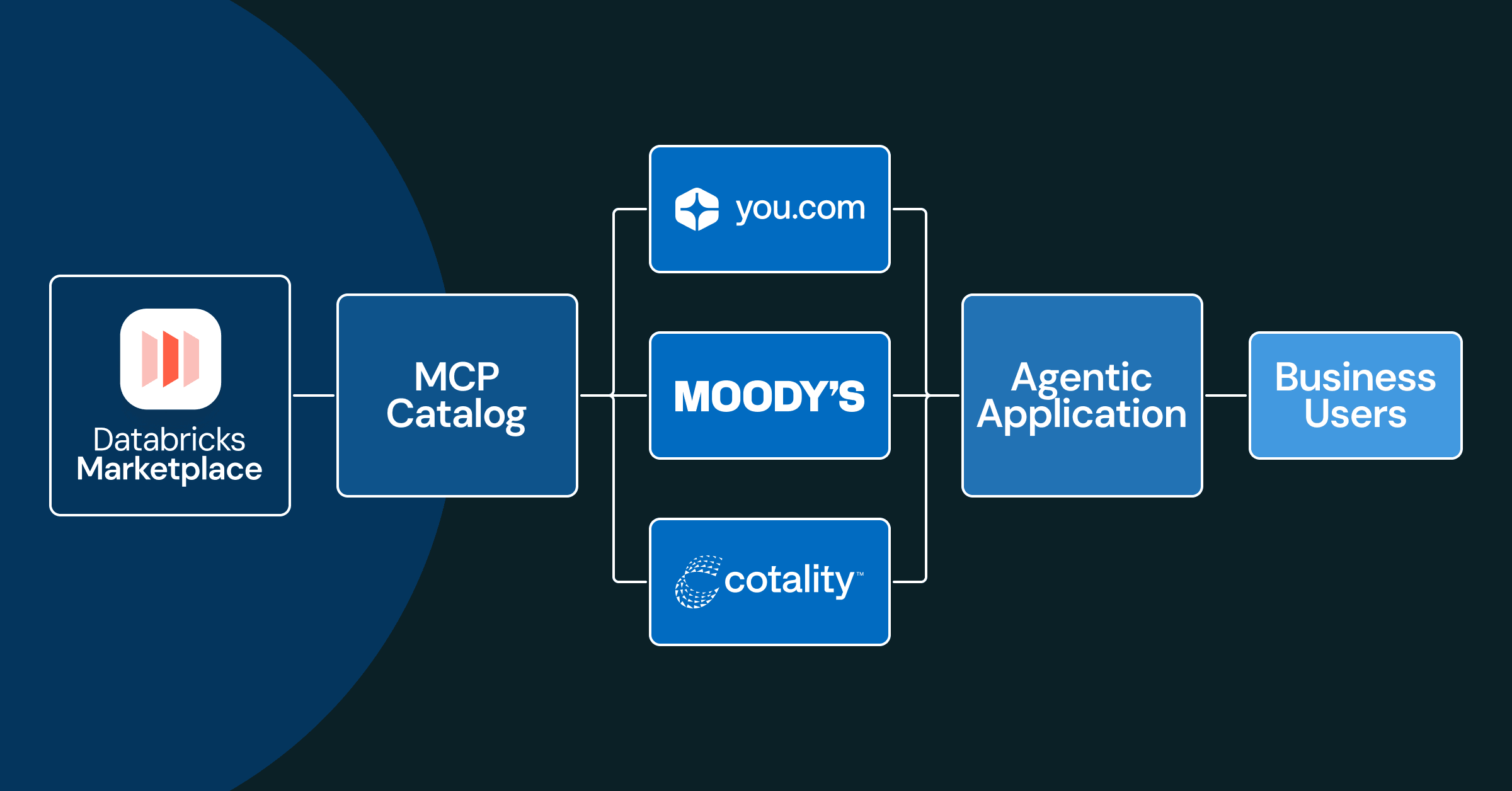
  12. MCP Marketplace Brings Real-Time Intelligence to Agentic Applications

    Multiple open-source projects and platforms are emerging to standardize AI agent interactions through the Model Context Protocol (MCP). These initiatives aim to enable AI agents to access real-time data, external tools, and complex workflows via a unified interface. Key developments include command-line clients for MCP, frameworks for representing agents as MCP servers, and cloud-hosted solutions for integrating various data sources and services. AI

    MCP Marketplace Brings Real-Time Intelligence to Agentic Applications

    IMPACT Standardization around MCP is likely to accelerate the development and integration of AI agents, enabling more complex and interconnected AI systems.

  13. No, it doesn't cost Anthropic $5k per Claude Code user

    Anthropic has released an upgraded version of its Claude 3.5 Sonnet model, which reportedly matches the capabilities of its Opus 4.6 counterpart in some benchmarks and offers a 1 million token context window. Independent evaluations suggest the new Sonnet model performs comparably to human baseliners on certain tasks, though its token usage can be significantly higher than previous versions. Meanwhile, the AI coding assistant Cursor is reportedly valued at $28 billion, with OpenAI acquiring Windsurf for $3 billion, indicating significant investment and consolidation in the AI tooling space. AI

    No, it doesn't cost Anthropic $5k per Claude Code user

    IMPACT New Anthropic model release and significant funding/acquisition news signal continued rapid development and consolidation in AI tooling.

  14. Asking For An Old Friend: Diagnosing and Mitigating Temporal Failure Modes in LLM-based Statutory Question Answering

    Researchers have developed a benchmark to test Large Language Models' ability to handle temporal changes in legal statutes, identifying issues like outdated information and recency bias. Meanwhile, the AI industry is seeing a significant shift as model labs increasingly focus on building agent-based products rather than just foundational models. This strategic pivot is exemplified by companies like AI21 and DeepSeek, and is further underscored by DeepSeek's aggressive pricing strategy for its V4-Pro model, making advanced AI more accessible. AI

    IMPACT The industry's focus is shifting from foundational models to agent-based products, with aggressive pricing making advanced AI more accessible and competitive.

  15. Launch HN: Silurian (YC S24) – Simulate the Earth

    Silurian, a startup founded by former Microsoft researchers, has launched Generative Forecasting Transformer (GFT), a 1.5 billion parameter model designed to simulate Earth's weather up to 14 days in advance. This deep learning model, which learns purely from data without explicit physics, has demonstrated strong performance in predicting hurricane tracks, outperforming traditional forecasting methods. The company aims to expand its simulations to model other weather-impacted infrastructure like energy grids and agriculture. AI

    IMPACT This new weather simulation model could significantly improve forecasting accuracy and lead to better infrastructure planning.

  16. Meta does everything OpenAI should be

    Meta has released Llama 3, an open-source large language model, in an effort to democratize AI development. The models, available in 8B and 70B parameter sizes, are designed to be more capable and efficient than their predecessors. Meta aims to foster innovation by providing broad access to powerful AI tools, contrasting with the more closed approaches of some competitors. AI

    IMPACT Accelerates open-source AI development and provides a powerful alternative to proprietary models.

  17. Computer-Using Agent

    OpenAI and Google DeepMind are advancing AI agents for software development and security. OpenAI's Codex is being leveraged to write entire codebases with minimal human intervention, as demonstrated by Harness Engineering's internal beta product. Google DeepMind has introduced CodeMender, an AI agent designed to automatically identify and fix software vulnerabilities, and AlphaEvolve, which uses Gemini models to discover and optimize algorithms for applications like data center efficiency and chip design. Meta is also investing heavily in its own AI infrastructure with the development of its MTIA chip family, aiming to power AI experiences for billions of users. AI

    Computer-Using Agent

    IMPACT These advancements signal a rapid evolution in AI agent capabilities and infrastructure, potentially accelerating software development, improving code security, and optimizing complex computational tasks.

  18. Our approach to alignment research

    OpenAI has announced a partnership with Apple to integrate ChatGPT into iOS, iPadOS, and macOS, enhancing Siri and system-wide writing tools with GPT-4o capabilities. Google DeepMind has published research on scaling AI agent systems, identifying that multi-agent coordination improves parallelizable tasks but can degrade sequential ones, and has developed a predictive model for optimal agent architectures. Additionally, OpenAI has released resources on prompting fundamentals and shared insights from Netomi on scaling agentic systems in enterprise environments, highlighting the use of GPT-4.1 and GPT-5.2 for complex workflows. AI

    Our approach to alignment research

    IMPACT Partnership integrates advanced AI into consumer devices, while research offers principles for scaling complex AI agent systems.

  19. Can OpenAI’s ‘Master of Disaster’ Fix AI’s Reputation Crisis?

    OpenAI has announced a significant partnership with SAP to launch 'OpenAI for Germany,' aiming to bring advanced AI capabilities to the German public sector while prioritizing data sovereignty and security on Microsoft Azure. The company also proposed policy recommendations to the U.S. White House for the national AI Action Plan, focusing on innovation freedom, export controls, copyright, infrastructure, and government adoption. Additionally, OpenAI is collaborating with U.S. National Laboratories to leverage its reasoning models for scientific breakthroughs and national security initiatives. AI

    Can OpenAI’s ‘Master of Disaster’ Fix AI’s Reputation Crisis?

    IMPACT OpenAI's strategic partnerships and policy proposals signal a push for broader AI adoption in public sectors and national infrastructure, influencing future AI development and regulation.