PulseAugur / Pulse
LIVE 07:37:59

Pulse

last 48h
[10/10] 89 sources

What AI is actually talking about — clusters surfacing on Bluesky, Reddit, HN, Mastodon and Lobsters, re-ranked to elevate originality and crush noise.

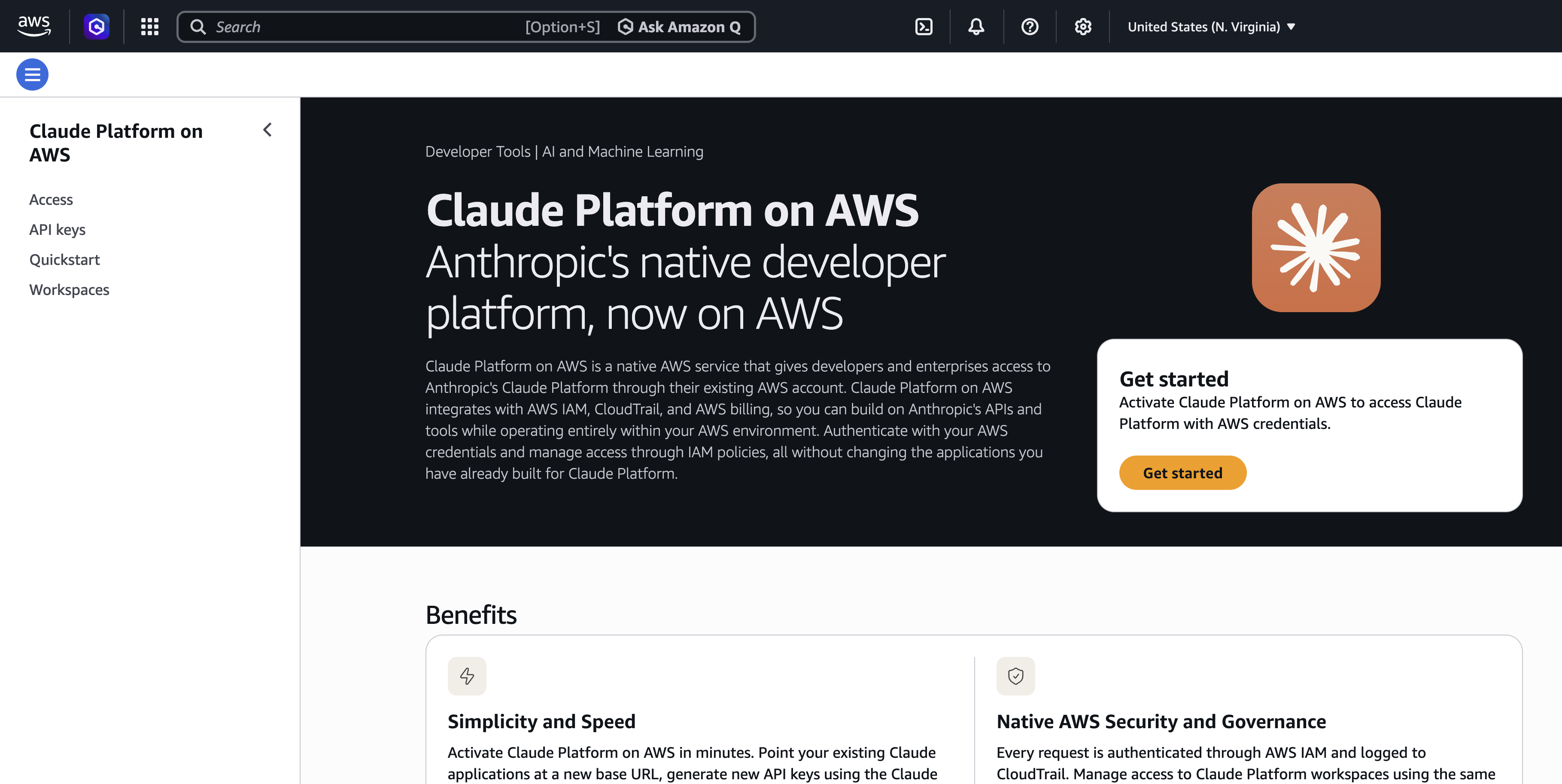
  1. Introducing Claude Platform on AWS: Anthropic’s native platform, through your AWS account

    Anthropic has launched the Claude Platform on AWS, allowing customers to access its native Claude Platform experience directly through their AWS accounts. This integration provides unified billing, authentication via AWS IAM, and audit logging through CloudTrail, simplifying cost management and security for AWS users. While Claude models are also available on Amazon Bedrock with AWS as the data processor, the new platform is operated by Anthropic, with data processed outside the AWS boundary, making it suitable for users without strict regional data residency requirements. AI
    Introducing Claude Platform on AWS: Anthropic’s native platform, through your AWS account

    IMPACT Simplifies AI integration for AWS customers by consolidating billing and authentication, while offering direct access to Anthropic's latest features.

  2. GPT-5.5 costs 49 to 92 percent more than its predecessor, depending on the input length

    OpenAI has significantly increased the pricing for its GPT-5.5 model, with real-world costs rising by 49% to 92% depending on input length, despite claims of shorter responses offsetting the hike. This price increase, mirroring Anthropic's earlier adjustments to Claude Opus 4.7, is attributed to both companies preparing for potential IPOs. In response, developers are exploring multi-model routing strategies to manage costs by directing simpler tasks to cheaper models like Kimi K2.6 or DeepSeek V4-Pro, while reserving premium models for complex or critical operations. AI

    GPT-5.5 costs 49 to 92 percent more than its predecessor, depending on the input length

    IMPACT Frontier model price hikes are driving adoption of cost-optimization strategies like multi-model routing, potentially lowering overall AI operational expenses.

  3. Musk sells 220,000 GPUs to Claude for use: 5-hour quota doubles, cooperation to build space computing power

    Anthropic has secured a significant compute deal with SpaceX, taking over the entire capacity of the Colossus 1 data center, which houses over 220,000 NVIDIA GPUs. This partnership immediately doubles the rate limits for paid Claude Code users and removes peak-hour restrictions, addressing user complaints about service strain. The agreement also includes Anthropic's interest in developing orbital AI compute capacity with SpaceX, signaling a strategic move to secure infrastructure amidst rapid growth and intense competition. AI

    IMPACT Secures critical compute resources for Anthropic, potentially enabling faster model development and wider user access, while also highlighting the growing importance of strategic infrastructure partnerships.

  4. An Interview with Google Cloud CEO Thomas Kurian About the Agentic Moment

    Anthropic has committed to spending approximately $200 billion over the next five years with Google Cloud, securing 5 gigawatts of next-generation TPU compute capacity starting in 2027. This deal, which represents over 40% of Google Cloud's current backlog, also includes a potential additional investment of up to $40 billion from Google. The agreement positions Google's custom TPUs as a significant competitor to NVIDIA's GPUs and highlights Anthropic's rapid revenue growth, which has surged to an annualized $30 billion. AI

    An Interview with Google Cloud CEO Thomas Kurian About the Agentic Moment

    IMPACT This deal reshapes the AI infrastructure race, potentially breaking NVIDIA's GPU monopoly and solidifying Google Cloud's position.

  5. Is Amazon crazy for giving more money to 'competitors' than to 'allies'?

    Amazon is significantly deepening its partnership with Anthropic through a substantial investment and a long-term cloud computing commitment. This move, totaling up to $33 billion in investment and $100 billion in AWS spending over 10 years, positions Anthropic as a primary infrastructure user for Amazon's custom AI chips like Trainium. The deal contrasts with Amazon's conditional investment in OpenAI, highlighting a strategic focus on Anthropic for its core AI ecosystem while using OpenAI as a hedge against Microsoft's dominance. AI

    Is Amazon crazy for giving more money to 'competitors' than to 'allies'?

    IMPACT This deepens Anthropic's reliance on AWS infrastructure, potentially accelerating custom chip adoption and solidifying cloud provider alliances in the AI race.

  6. Nscale Gets $790M in Financing for Norway AI Buildout

    Nscale, a UK-based AI infrastructure startup, has secured $790 million in debt financing to build an AI data center in Narvik, Norway. This facility was previously intended for OpenAI's Stargate Norway project. Microsoft is set to rent Nvidia chips at this new data center. Nscale's latest valuation stands at $14.6 billion following a $2 billion Series C funding round. AI

    Nscale Gets $790M in Financing for Norway AI Buildout

    IMPACT Accelerates AI infrastructure buildout, potentially impacting compute availability and pricing for major tech players.

  7. MCP Marketplace Brings Real-Time Intelligence to Agentic Applications

    The Model Context Protocol (MCP) is emerging as a standardized interface for AI agents to interact with external tools and data. Several open-source projects and platforms are facilitating this, including Databricks' MCP Marketplace for real-time intelligence, Apify's `mcpc` CLI for universal MCP access, and Klavis AI's SDKs for integrating MCP servers. These developments aim to enable agents to access live data, perform complex tasks, and even engage in inter-agent communication and payments, moving towards a more robust and interconnected AI ecosystem. AI

    IMPACT The widespread adoption of MCP is poised to standardize how AI agents interact with external tools and data, fostering interoperability and enabling more sophisticated agentic applications.

  8. New Compute Partnership with Anthropic

    Anthropic has launched ten specialized AI agents designed for financial services, aiming to automate tasks like financial statement auditing and client presentation drafting. This move coincides with a significant shift in investor sentiment, with demand for Anthropic's equity surging while interest in OpenAI's shares wanes. Anthropic is also making substantial investments in AI infrastructure, including a $50 billion commitment to U.S. data centers and a partnership with SpaceX for orbital compute capacity. AI

    New Compute Partnership with Anthropic

    IMPACT Anthropic's expansion into specialized financial AI agents and infrastructure investments signal a move towards deeper enterprise integration and potentially increased competition with OpenAI for lucrative enterprise contracts.

  9. Companies Can Win With AI

    Meta is undergoing significant workforce reductions, with approximately 8,000 employees being laid off and 6,000 open positions eliminated. CEO Mark Zuckerberg has framed these layoffs as a necessary reallocation of resources, with the cost savings directly funding the company's substantial investments in AI infrastructure and development. This strategic shift prioritizes capital expenditure on AI, particularly GPUs and power, over personnel costs, a trend also observed at other major tech companies like Amazon, Microsoft, and Google. AI

    Companies Can Win With AI

    IMPACT Meta's strategic shift highlights the growing trend of prioritizing AI compute resources over personnel, potentially signaling a broader industry move towards capital-intensive AI development.

  10. Computer-Using Agent

    OpenAI has introduced AgentKit, a suite of tools designed to streamline the development, deployment, and optimization of AI agents. This toolkit includes an Agent Builder for visual workflow creation, a Connector Registry for managing data sources, and ChatKit for embedding agentic UIs. Google DeepMind has also unveiled two AI agents: CodeMender, which automatically patches software vulnerabilities, and AlphaEvolve, an agent that uses Gemini models to discover and optimize algorithms for applications in mathematics and computing. Additionally, OpenAI's Computer-Using Agent (CUA) demonstrates advanced capabilities in interacting with digital interfaces, setting new benchmark results for computer use tasks. AI

    Computer-Using Agent

    IMPACT These advancements in AI agents, coding tools, and security patches signal a shift towards more autonomous AI systems capable of complex tasks and software development, potentially accelerating innovation and improving software reliability.