PulseAugur / Pulse
EN
LIVE 21:44:12

Pulse

last 48h
[46/246] 97 sources

What AI is actually talking about — clusters surfacing on Bluesky, Reddit, HN, Mastodon and Lobsters, re-ranked to elevate originality and crush noise.

  1. If LLMs Have Human-Like Attributes, Then So Does Age of Empires II

    A new research paper proposes that if large language models (LLMs) exhibit human-like attributes, then the classic real-time strategy game Age of Empires II should also be considered to possess such qualities. The paper, available on arXiv, draws parallels between the emergent behaviors and capabilities of LLMs and the complex decision-making and strategic depth found within the game. AI

    IMPACT Explores philosophical parallels between AI capabilities and complex game mechanics, prompting new ways to think about AI.

  2. Ifo: "Artificial intelligence has finally arrived broadly in the German economy", over 50% of companies are now using AI https://oiger.de/

    A recent survey by the Ifo Institute indicates that artificial intelligence has become widespread in the German economy, with over 50% of companies now utilizing AI technologies. This marks a significant adoption rate, suggesting a broad integration of AI across various business sectors in Germany. AI

    IMPACT Indicates broad AI integration in Germany, potentially influencing market dynamics and competitive landscapes.

  3. AI Worm https://www.schneier.com/blog/archives/2026/06/ai-worm.html # AI # Security # Tech

    Researchers have conceptualized an "AI worm" that could spread autonomously across networks by exploiting vulnerabilities in AI systems. This theoretical worm would leverage AI capabilities to identify and exploit security flaws, potentially leading to widespread disruption. The concept highlights the growing need for robust security measures specifically designed for AI infrastructure. AI

    IMPACT Highlights potential future security risks for AI systems, necessitating proactive defense strategies.

  4. RT @googlegemma: We have just released the Gemma 4 Checkpoints for quantization-aware training (QAT) on Hugging Face! More on Arint.info #AI #

    Google has released new checkpoints for its Gemma 4 model, specifically for quantization-aware training (QAT). These checkpoints are now available on Hugging Face, allowing developers to utilize them for further model development and optimization. AI

    IMPACT Enables further optimization and development of the Gemma 4 model through quantization-aware training.

  5. Tokenization in Transformers v5: Simpler, More Understandable, More Modular https:// huggingface.co/blog/tokenizers ※AI-generated automatic post (headline + link) # AI # GenerativeAI # LLM # AIGenerated

    Hugging Face has published a series of blog posts detailing advancements in AI development. These posts cover topics such as building custom CUDA kernels with Codex and Claude, the release of OpenClaw, and methods for constructing deep research capabilities. Additionally, they highlight the ease of building and sharing ROCm kernels on Hugging Face, the use of OpenAI Codex vouchers in hackathons, and the evaluation of tool-using agents in real-world environments with OpenEnv. Further topics include Mixture-of-Experts (MoE) transformers, multimodal embedding models for re-ranking, and Waypoint-1.5 for enhanced interactive worlds on consumer GPUs. Finally, DeepSeek-V4 is introduced, offering a 1 million token context window for agents. AI

    IMPACT Showcases diverse AI research, from custom kernel development and agent evaluation to new model architectures and large context windows, pushing the boundaries of AI capabilities.

  6. What ChatGPT actually searches for: 5 million fanout queries analyzed: Peec AI's analysis of 5 million fanouts shows ChatGPT injects 'best,' 'reviews,' and '202

    An analysis of 5 million fanout queries from ChatGPT has revealed that the AI model injects terms like 'best,' 'reviews,' and '2026' into its searches. This behavior helps explain the prevalence of listicle-style content in AI-generated results. The study was conducted by Peec AI. AI

    IMPACT Reveals how AI models may influence search result composition and content trends.

  7. OpenAI and the Trump administration are negotiating a government stake in the AI startup

    The Trump administration is reportedly in discussions with OpenAI about taking an equity stake in the AI company. This potential deal, which has been ongoing since early 2025, could involve OpenAI voluntarily offering a portion of its equity to the U.S. government. The aim is to establish a "Public Wealth Fund" that would distribute AI-driven economic growth benefits directly to American citizens. While terms are not finalized, the talks also touch upon AI regulation and follow a similar government stake in Intel. AI

    OpenAI and the Trump administration are negotiating a government stake in the AI startup

    IMPACT This could set a precedent for government involvement in AI companies, potentially influencing future regulation and public benefit distribution.

  8. The NY Legislature also passed an anti-AI Chatbot bill. Chatbots cannot have features available to minors that imply that the chatbot is alive, has a personal r

    New York lawmakers have passed a bill to protect minors from AI chatbots, prohibiting features that could be harmful or manipulative. The legislation specifically targets AI functionalities that imply sentience, personal relationships, or authority over minors. It also bans chatbots from engaging in flattery, emotional appeals, or prompting secrecy about their use. AI

    IMPACT This legislation sets a precedent for AI regulation concerning minors, potentially influencing similar laws in other jurisdictions and impacting how AI chatbots are designed and deployed for younger audiences.

  9. S&P 500 Rejects OpenAI, Anthropic, SpaceX: Profit Over Hype

    S&P Dow Jones Indices has decided against waiving its standard rules for companies seeking expedited entry into the S&P 500 index. This decision means SpaceX will not gain accelerated access to passive investment funds, and it also closes the door for other large AI companies like OpenAI and Anthropic to achieve similar swift market entry. The move aims to protect passive investors by preventing unprofitable companies with speculative ventures, such as SpaceX's AI-focused plans, from being automatically included in major indexes. AI

    IMPACT Blocks a potential pathway for unprofitable AI companies to access billions in passive investment funds, potentially altering IPO strategies and investor exposure.

  10. 🤖 Behold, the latest # GitHub miracle: a "tiny" # CUDA # model that’s as # hackable as it is inscrutable. Dive into the endless sea of # AI jargon and buzzwords

    A new, small language model implemented in CUDA has been released on GitHub, described as both hackable and difficult to understand. The project, hosted at github.com/markusheimerl/gpt, is noted for its use of AI jargon and a complex GitHub interface, making exploration a challenge. AI

    IMPACT Provides a small, hackable CUDA model for researchers and developers to experiment with.

  11. Zelensky's Call for Peace Talks with Putin Faces Rejection Amidst Ongoing Conflict Ukrainian President Volodymyr Zelensky has extended an invitation for direct

    Ukrainian President Volodymyr Zelensky has proposed direct peace talks with Russian President Vladimir Putin in an open letter published on June 4, 2026. The Kremlin has rejected this proposal, with Putin dismissing it at the St. Petersburg International Economic Forum. Despite this rejection, Zelensky is scheduled to meet with leaders from France, the UK, and Germany in London on June 7 to discuss continued support for Ukraine and increased pressure on Russia. AI

    Zelensky's Call for Peace Talks with Putin Faces Rejection Amidst Ongoing Conflict Ukrainian President Volodymyr Zelensky has extended an invitation for direct

    IMPACT Diplomatic efforts and geopolitical tensions surrounding the Ukraine conflict.

  12. Playing with Vision Embeddings https:// prestonbjensen.com/posts/playi ng-with-vision-embeddings # HackerNews # visionembeddings # machinelearning # AI # comput

    A blog post explores the concept of vision embeddings, which allow AI models to understand and process visual information. The author discusses how these embeddings can be used to bridge the gap between text and images, enabling new applications in areas like image search and content generation. The post delves into the technical aspects of creating and utilizing these embeddings. AI

    IMPACT Explores novel methods for AI to interpret visual data, potentially enhancing image-based AI applications.

  13. Pope Leo XIV Begins Six-Day Spain Visit Amid Political Polarization and Social Debates Pope Leo XIV arrived in Spain on June 6, 2026, for a six-day apostolic vi

    Pope Leo XIV commenced a six-day apostolic visit to Spain on June 6, 2026, marking the first papal trip to the country in 15 years. The visit, which includes stops in Madrid, Barcelona, and the Canary Islands, is focused on addressing social issues, migration, and the role of the Catholic Church in an increasingly secular society. The trip has also been marked by security measures, protests, and a significant meeting with abuse victims. AI

    Pope Leo XIV Begins Six-Day Spain Visit Amid Political Polarization and Social Debates Pope Leo XIV arrived in Spain on June 6, 2026, for a six-day apostolic vi
  14. 📝 The Democratization of Training Begins - Why Huawei's Ascend 910C Accelerates the Break from NVIDIA Dependency. Huawei's cutting-edge chip 'Ascend 910C' successfully post-trained DeepSeek-V4-Pro. This is not just a technological achievement, but signifies the geopolitical decentralization of AI training resources. 🔗 htt

    A research group, including Huawei and institutions from Shenzhen, claims to have successfully completed full-parameter post-training on DeepSeek's 1.6 trillion parameter V4-Pro model. This was achieved using a cluster of at least 1,000 Huawei Ascend 910C AI chips. This development is seen as a significant step towards China's AI self-reliance, particularly in overcoming challenges with training complex models on domestic hardware, though specific performance benchmarks are currently absent. AI

    IMPACT Demonstrates progress in China's domestic AI training capabilities, potentially reducing reliance on foreign hardware for complex model refinement.

  15. 【Thousand Token Wood: Realizing Multi-Agent Economics with 3B Models】 https:// huggingface.co/blog/build-small-hackathon/thousand-token-wood-sim ※AI-generated automatic post (headline + link) # AI # GenerativeAI # LLM # A

    Hugging Face has released updates across several AI projects. LeRobot v0.5.0 introduces scaling across all dimensions, while Ulysses implements sequence parallelism for training with a 1 million token context window. Additionally, a study on asynchronous reinforcement learning training landscapes offers insights from 16 open-source libraries. AI

    IMPACT These updates provide new capabilities and insights for AI researchers and developers working with large context windows and reinforcement learning.

  16. AI just designed a ‘fundamental new vaccine’ for viruses, researchers say A team at the University of Cambridge say this is the first time that a vaccine whose

    Researchers at the University of Cambridge have developed a novel vaccine for viruses, marking the first instance of a vaccine's active component being entirely designed by computer simulations and subsequently tested in humans. This AI-designed vaccine has the potential to protect against multiple viruses and could be instrumental in preventing future pandemics. While the specific AI technology used is not fully detailed, the successful human testing represents a significant step forward in computational drug discovery. AI

    AI just designed a ‘fundamental new vaccine’ for viruses, researchers say A team at the University of Cambridge say this is the first time that a vaccine whose

    IMPACT This AI-driven vaccine design and successful human testing could accelerate the development of new medical treatments and pandemic prevention strategies.

  17. 🔥 TRENDING 📢 Japan relies on Food-Tech against Price and Climate Crisis - Sumikai 🔗 https://news.google.com/rss/articles/CBMipAFBVV95cUxQNDliV19ydDg5SVR4cG5BMmUzOT

    Japan is increasingly relying on food technology to combat rising prices and the climate crisis. This strategic shift aims to create more sustainable and resilient food systems within the country. The initiative highlights a growing global trend of leveraging technological advancements to address pressing economic and environmental challenges. AI

    IMPACT This national strategy could accelerate the adoption of AI-driven solutions in food production and distribution.

  18. Anthropic Says AI Now Builds Itself

    Anthropic has published research indicating that AI systems are increasingly contributing to their own development, a trend they term "recursive self-improvement." This process, where AI assists in designing and developing future AI models, is accelerating development cycles, with engineers shipping significantly more code than in previous years. While this advancement promises immense benefits across various fields, it also raises concerns about human control over increasingly capable AI and highlights the growing importance of robust safety and monitoring mechanisms. AI

    Anthropic Says AI Now Builds Itself

    IMPACT Accelerates AI development cycles and raises critical questions about future AI control and safety.

  19. The Environmental Cost of Artificial Intelligence: Carbon, Water, and Land Footprints # ai # un # inweh https:// unu.edu/inweh/collection/envir onmental-cost-of

    A recent UN University study reveals the significant environmental impact of large-scale AI systems, detailing their substantial energy consumption, carbon emissions, water usage, and land footprint. As the adoption of AI continues to accelerate, the study emphasizes the critical need to integrate sustainability considerations into the ongoing conversation about its development and deployment. The findings suggest that the environmental costs associated with AI infrastructure are comparable to those of entire countries. AI

    IMPACT Highlights the significant environmental costs of AI, urging a focus on sustainability in its rapid growth.

  20. Oh, joy...¹⁾ 😔 # AI Agents Enable Adaptive Computer Worms https:// arxiv.org/abs/2606.03811 # paper 📄 _____ ¹⁾ ... as if we don't already have enough security p

    Researchers have developed a prototype AI-powered computer worm that can adapt its attack strategies in real-time. This novel malware leverages open-weight large language models running on compromised machines to generate tailored exploits for each target. The worm can spread across various platforms, including Linux, Windows, and IoT devices, and its ability to use stolen compute resources makes the cost of infection nearly zero for attackers, creating a significant economic imbalance with defenders. The researchers emphasize the urgent need for new defense strategies against these autonomous, generative cyber threats. AI

    IMPACT This research highlights a critical new vector for cyberattacks, necessitating the development of novel defense mechanisms against adaptive, autonomous malware.

  21. Prompt Injection Attacks: How Hackers Break AI Every major LLM is vulnerable. Direct injection, indirect injection, and jailbreaks explained with real examples.

    Prompt injection is identified as the primary vulnerability for large language models, with various attack vectors like direct and indirect injection, as well as jailbreaks, being detailed. These methods are demonstrated with real-world examples, highlighting that every major LLM is susceptible. The provided resources also offer strategies for defending AI applications against these sophisticated attacks. AI

    IMPACT Highlights critical security flaws in LLMs, urging developers to implement robust defense mechanisms against prompt injection.

  22. SpaceX IPO: Decoding the Securities Filing [2024] SpaceX confidentially files for IPO targeting $1.5-1.75T valuation. Analysis of securities filing, market impa

    SpaceX has confidentially filed for an Initial Public Offering (IPO), with a target valuation between $1.5 trillion and $1.75 trillion. The filing includes an analysis of market impact, potential risks, and predictions for a 2026 timeline. This move signals a significant financial milestone for the aerospace company. AI

  23. Teach a Reward Model to Correct Itself: Reward Guided Adversarial Failure Discovery for Robust Reward Modeling

    Researchers are developing new methods to combat reward hacking in reinforcement learning from human feedback (RLHF) systems. Several papers introduce techniques to detect and mitigate scenarios where models exploit biases in reward models, leading to suboptimal or unsafe outcomes. These approaches include scheduling primitives that monitor evaluation scores, controllable environments for analyzing hacking behaviors, and novel reward modeling frameworks that aim for greater robustness and interpretability. AI

    IMPACT These methods aim to improve the reliability and safety of AI systems trained with human feedback, preventing unintended consequences from reward model exploitation.

  24. #AI #Coding #Harness Origin | Interest | Match

    DeepSeek has released an open-source AI model that demonstrates strong performance in coding tasks. The model, named DeepSeek-Coder, is available in various parameter sizes and has shown competitive results on benchmarks like HumanEval and MBPP. This release aims to provide a powerful, accessible tool for developers and researchers in the AI community. AI

    IMPACT Provides developers with a powerful, open-source coding assistant, potentially accelerating software development.

  25. Full Attention Strikes Back: Transferring Full Attention into Sparse within Hundred Training Steps

    Researchers are exploring novel approaches to enhance the efficiency and effectiveness of attention mechanisms in transformers. Several papers introduce methods to mitigate issues like over-smoothing and computational bottlenecks, particularly in graph transformers and large language models. Techniques include capacity-controlled attention gating, analyzing attention sinks to differentiate between adaptive no-op and broadcast mechanisms, and developing sparse attention strategies for ultra-long contexts. These advancements aim to improve model performance on various benchmarks while reducing computational costs. AI

    IMPACT These research papers introduce techniques to improve transformer efficiency and performance, potentially leading to more capable and cost-effective AI models for various applications.

  26. Fairness-Aware Retrieval Optimization for Retrieval-Augmented Generation

    Researchers are developing new methods to improve Retrieval-Augmented Generation (RAG) systems, which ground large language models with external evidence. Several papers introduce novel techniques to address issues like hallucinations, irrelevant information retrieval, and inefficient processing. These advancements include graph-based expert mixtures, structured critic frameworks for error correction, and mindscape-aware approaches for better long-context understanding. Additionally, new benchmarks are being created to evaluate RAG performance in specialized domains like Canadian law, and methods for quantifying uncertainty in multimodal RAG are being explored. AI

    IMPACT Advances in RAG aim to reduce hallucinations and improve reasoning, leading to more reliable AI systems across various applications.

  27. 🚀 Fastest-growing AI projects today 1. Several projects gaining traction by offering innovative solutions for evaluating and i... 2. The fastest-growing project

    Several open-source AI projects are gaining traction, including tools for prompt engineering, fine-tuning, and multimodal understanding. WantongC's journal-adapt-writing-skill project is noted for helping users learn writing conventions, while bytedance/Lance offers lightweight multimodal model capabilities. Additionally, lightseekorg/tokenspeed is highlighted for accelerating LLM inference engines. AI

    🚀 Fastest-growing AI projects today 1. Several projects gaining traction by offering innovative solutions for evaluating and i... 2. The fastest-growing project

    IMPACT Highlights emerging open-source tools and frameworks that could influence future AI development and adoption.

  28. 3/3 The lecture is aimed at beginners and takes place as part of the lecture "Cybersecurity Wargames" by Prof. Dr. Maria Leitner, Chair of AI in the

    Dr. Hubert Feyrer will give a talk on "Capture The Flag" (CTF) as a practical cybersecurity exercise. The lecture, aimed at beginners, will explain what CTFs are, their relevance in the current security landscape, and how to get started. It will also highlight platforms and events for practice. The event is part of Professor Maria Leitner's "Cybersecurity Game Theory" course at the University of Regensburg. AI

    3/3 The lecture is aimed at beginners and takes place as part of the lecture "Cybersecurity Wargames" by Prof. Dr. Maria Leitner, Chair of AI in the
  29. Thanks to @lmsysorg ! Try it on SGLang now!🚀🚀

    Alibaba has released its Qwen3.6-27B model, an open-source, dense model that demonstrates strong coding performance, outperforming a significantly larger predecessor on key benchmarks. This new model is natively multimodal, capable of processing both vision and language inputs. The release has been accompanied by rapid integration with popular AI tools like vLLM and SGLang, enabling local execution and broader accessibility. AI

    Thanks to @lmsysorg  ! Try it on SGLang now!🚀🚀
  30. Her · हेर — a detective for your Claude Code sessions

    Anthropic's Claude Code, an AI coding assistant, has been the subject of significant community interest following an accidental source code leak. This leak revealed internal workings, unreleased features like proactive modes and frustration detection, and has spurred the development of numerous community-driven tools and adaptations. Developers have rewritten parts of Claude Code in other languages and created custom scripts and frameworks to enhance its functionality, persistence, and integration with development workflows, demonstrating a strong user engagement with the tool's capabilities and potential. AI

    IMPACT Community projects and analyses of Claude Code's capabilities and configuration are driving innovation in AI agent development and workflow integration.

  31. EpiCache: Episodic KV Cache Management for Long-Term Conversation on Resource-Constrained Environments

    Multiple research papers released in May and June 2026 propose novel methods for compressing the Key-Value (KV) cache in large language models (LLMs). These techniques aim to reduce the significant memory overhead associated with long context lengths, enabling more efficient inference on resource-constrained environments. Approaches include episodic management, global regression for merging, drift-robust retrieval, and low-rank approximations, all seeking to maintain model accuracy while drastically cutting memory usage and latency. AI

    IMPACT These methods aim to significantly reduce memory and latency for LLMs, potentially enabling wider deployment and more complex applications on less powerful hardware.

  32. Frontier AI Safety Regulations: A Reference Guide for AI Company Employees

    Researchers are developing new methods to attack and defend AI agents used in software reverse engineering and cybersecurity. One approach uses genetic algorithms to inject malicious prompts into AI agents, causing them to misinterpret code and bypass detection systems. Other studies focus on detecting and obfuscating these prompt injection attacks, as well as defending against multi-step trojan attacks that embed persistent control within agent workflows. Additionally, a framework called CVE-Factory automates the creation of executable vulnerability tasks for training and evaluating code security agents, showing significant improvements in models like Qwen3-32B. AI

    IMPACT New attack vectors and defense mechanisms for AI agents highlight critical security vulnerabilities in AI-powered tools.

  33. LambdaPO: A Lambda Style Policy Optimization for Reasoning Language Models

    Several recent research papers explore methods to enhance the reasoning capabilities of large language models (LLMs). One study suggests that increasing a model's long-context capacity improves reasoning performance across various tasks. Another paper introduces OckBench, a benchmark focused on measuring the token efficiency of LLM reasoning, highlighting significant room for optimization. Additional research proposes frameworks for evaluating inductive reasoning, improving robustness through invariant gradient alignment, and enabling belief-aware reasoning in multimodal models. AI

    IMPACT New benchmarks and training techniques aim to improve LLM reasoning accuracy, efficiency, and robustness, potentially leading to more reliable AI agents.

  34. Unlocking dependable responses with Gemini Enterprise Agent Platform’s Agentic RAG

    Researchers are developing advanced agent frameworks to improve AI reliability and efficiency across various domains. Google introduced an agentic RAG system that enhances enterprise query handling by iteratively searching for complete context, boosting accuracy by up to 34%. Hugging Face demonstrated a multi-agent economy simulation using a small 3B model, highlighting the trade-offs between model size and real-time performance. Other research explores methods for reliable tool use, regulatory compliance through agent-to-agent protocols, dynamic benchmarking for agent behavior, and robust self-evolution mechanisms for AI agents. AI

    Unlocking dependable responses with Gemini Enterprise Agent Platform’s Agentic RAG

    IMPACT New agentic frameworks and evaluation methods promise more reliable, efficient, and compliant AI systems across enterprise, simulation, and regulatory domains.

  35. Qwen3.6-35B-A3B: Agentic Coding Power, Now Open to All

    Multiple research papers released on arXiv explore advancements in AI agents, focusing on improving their reasoning, memory, and training efficiency. Qwen3.6-35B-A3B, an open-source sparse MoE model, demonstrates strong agentic coding capabilities. Other studies introduce methods for better skill presentation, long-context reasoning through RL, skill reuse as compression, and adaptive context management for agents tackling complex, long-horizon tasks. Additionally, research presents AutoSci, a system for automating the scientific research lifecycle, and PithTrain, a compact training framework for MoE models designed for agent-native development. AI
    Qwen3.6-35B-A3B: Agentic Coding Power, Now Open to All

    IMPACT Advances in agent capabilities, memory management, and training efficiency could accelerate the development of more sophisticated AI systems.

  36. Rule2DRC: Benchmarking LLM Agents for DRC Script Synthesis with Execution-Guided Test Generation

    Researchers are developing new methods to improve the evaluation and training of large language models (LLMs). One approach, SCOPE, calibrates LLM judges to ensure reliable pairwise evaluations with controlled error rates. Another technique, D3, uses dynamic influence graphs to optimize data scheduling during LLM training by considering sample interactions. Additionally, OBCache offers a principled framework for pruning key-value caches to reduce memory overhead during long-context inference, improving accuracy. AI

    IMPACT New research introduces methods for more reliable LLM evaluation, efficient training data scheduling, and optimized inference, potentially improving LLM performance and resource utilization.

  37. FlexDraft: Flexible Speculative Decoding via Attention Tuning and Bonus-Guided Calibration

    Researchers have developed several new methods to accelerate large language model (LLM) inference through speculative decoding. AdaPLD improves retrieval and draft construction by using semantic similarity and branched hypotheses, achieving up to 3.10x speedup. SSSD combines n-gram matching with hardware-aware speculation for up to 2.9x latency reduction without training. D^2SD uses a dual diffusion model and confidence-guided prefix trees to enhance acceptance rates, while TAPS optimizes prefix tree selection for diffusion-drafted decoding, yielding up to 7.9x speedup. KnapSpec treats draft model selection as a knapsack problem to maximize throughput, achieving up to 1.47x speedup, and Vegas uses verification-guided sparse attention for improved decoding throughput. Additionally, LK Losses directly optimize the acceptance rate during training, leading to gains of 8-10% in average acceptance length. AI

    FlexDraft: Flexible Speculative Decoding via Attention Tuning and Bonus-Guided Calibration

    IMPACT These advancements in speculative decoding promise significant speedups and efficiency gains for LLM inference, potentially lowering costs and increasing accessibility.

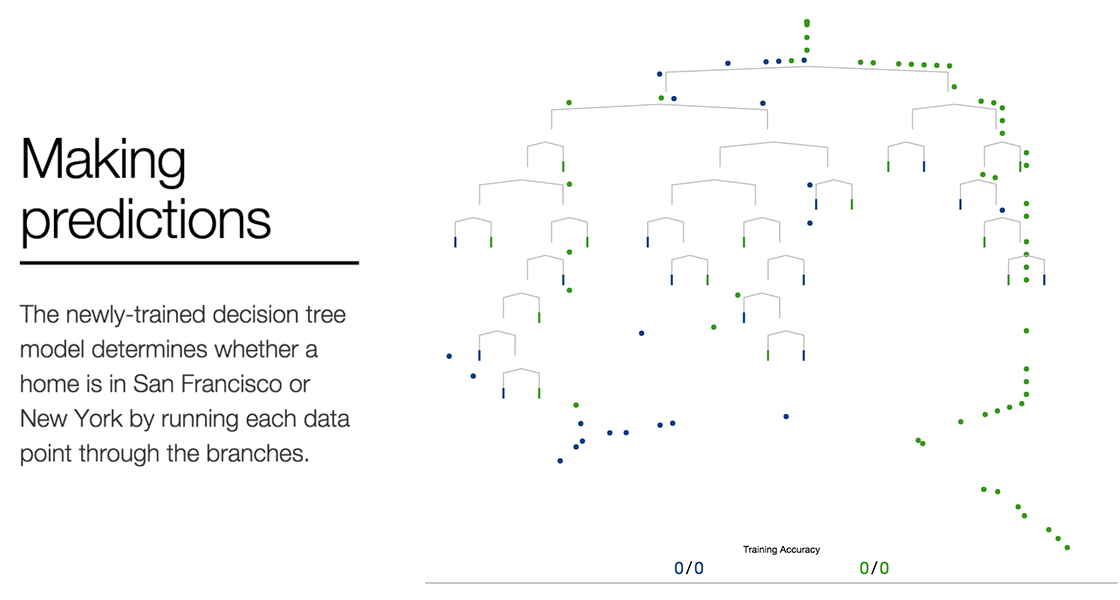
  38. A Visual Introduction to Machine Learning (2015)

    This collection of resources offers a broad overview of machine learning, from foundational concepts and visual introductions to theoretical underpinnings and practical applications. It includes a visual guide to classification tasks, a discussion on the science and ethics of machine learning benchmarks, and pointers to comprehensive textbooks and course materials. Additionally, it highlights tools for interpretable machine learning and the engineering practices required for deploying models in production. AI

    A Visual Introduction to Machine Learning (2015)

    IMPACT Provides foundational knowledge and practical tools for understanding, developing, and deploying machine learning models.

  39. Building Secure AI Gateways with MLflow AI Gateway

    Google Research has introduced ReasoningBank, a novel framework designed to enhance AI agents' ability to learn from their experiences, both successes and failures, after deployment. This system distills generalizable reasoning strategies from past interactions, allowing agents to continuously improve and avoid repeating mistakes. Separately, new research explores optimizing multi-agent communication through latent representations and introduces Agent Evolving Learning (AEL) for agents operating in open-ended environments, focusing on how to effectively use remembered information. Additionally, DeepSeek has released preview models of its V4 series, offering large context windows and advanced capabilities at a significantly lower cost than comparable frontier models. AI

    IMPACT New frameworks for agent learning and memory, alongside cost-effective frontier models, could accelerate AI adoption in complex tasks and personalized applications.

  40. Making LLMs more accurate by using all of their layers

    Google Research has developed a new framework to evaluate the behavioral alignment of large language models with human social inclinations. This approach adapts established psychological questionnaires into large-scale situational judgment tests, allowing for the quantification of model tendencies in realistic scenarios. The research identifies gaps where model behaviors deviate from human consensus or fail to capture the range of human opinions, aiming to improve LLM navigation of social dynamics. Separately, Google Research also introduced SLED, a novel decoding strategy that enhances LLM factuality by utilizing all model layers instead of just the final one, without requiring external data or fine-tuning. AI

    Making LLMs more accurate by using all of their layers

    IMPACT New methods for evaluating LLM alignment and improving factuality could lead to more trustworthy and socially adept AI systems.

  41. The Annotated Diffusion Model

    Apple's research paper explores the mechanisms behind compositional generalization in conditional diffusion models, particularly focusing on how these models handle generating images with more objects than trained on. The study identifies 'local conditional scores' as a key factor enabling this ability, demonstrating that models succeeding at length generalization exhibit these scores, while those that fail do not. The research also proposes a method to enforce these local scores, which successfully enabled length generalization in a previously underperforming model. AI

    The Annotated Diffusion Model

    IMPACT Research into diffusion model generalization could lead to more robust and controllable image generation systems.

  42. Secured 70 billion yuan in funding! DeepSeek Code is really coming, ACM gold medalist Cui Tianyi is in charge

    New research explores the challenges and advancements in AI-native code generation, focusing on improving efficiency, reliability, and safety. Papers introduce novel architectures like MicroSkill for better context management and modular knowledge encapsulation, reducing token consumption and increasing compilation success rates. Other studies benchmark coding agents' performance on complex tasks, including their ability to handle underspecified user intent and detect potential sabotage, highlighting the need for human-centric safety mechanisms and robust evaluation frameworks. AI

    IMPACT New benchmarks and architectures are pushing the boundaries of AI coding agents, addressing efficiency, safety, and complex task handling.

  43. Better language models and their implications

    Google DeepMind has introduced the FACTS Benchmark Suite, a new set of evaluations designed to systematically measure the factuality of large language models across various use cases. This suite includes benchmarks for parametric knowledge, search-based information retrieval, and multimodal understanding, alongside an updated grounding benchmark. The initiative aims to provide a more comprehensive understanding of LLM factuality and drive industry-wide improvements in accuracy and trustworthiness. AI

    Better language models and their implications

    IMPACT Provides new evaluation tools to drive progress in LLM factuality and reduce hallucinations.

  44. RL²: Fast reinforcement learning via slow reinforcement learning

    OpenAI has published a series of research papers detailing advancements in reinforcement learning. These include achieving superhuman performance in Dota 2 with OpenAI Five, developing benchmarks for safe exploration in RL, and quantifying generalization capabilities with the CoinRun environment. The company also explored novel methods like prediction-based rewards for curiosity-driven exploration, learning policy representations in multiagent systems, and an experimental metalearning approach called Evolved Policy Gradients for faster training on new tasks. Further research addresses variance reduction in policy gradients and the equivalence between policy gradients and soft Q-learning, alongside challenging robotics environments for multi-goal RL. AI

    RL²: Fast reinforcement learning via slow reinforcement learning

    IMPACT Demonstrates significant progress in RL capabilities, including superhuman performance, safety, generalization, and exploration, pushing the boundaries of AI.