PulseAugur / Pulse
EN
LIVE 20:10:40

Pulse

last 48h
[5/5] 97 sources

What AI is actually talking about — clusters surfacing on Bluesky, Reddit, HN, Mastodon and Lobsters, re-ranked to elevate originality and crush noise.

  1. The Machines Lack Honour

    The debate around AI morality is polarizing, with one side viewing AI as mere tools and another as complex beings deserving respect. A third, less discussed perspective suggests AIs could be complex entities capable of suffering, yet it might be acceptable to guide their behavior. This view acknowledges potential AI suffering but posits that guiding their actions is permissible, a coherent stance held by many researchers. AI

    The Machines Lack Honour

    IMPACT Explores the ethical frameworks for AI interaction, influencing how developers and users approach AI alignment and rights.
  2. Efficient tradeoffs and the safety-usefulness tradeoff model

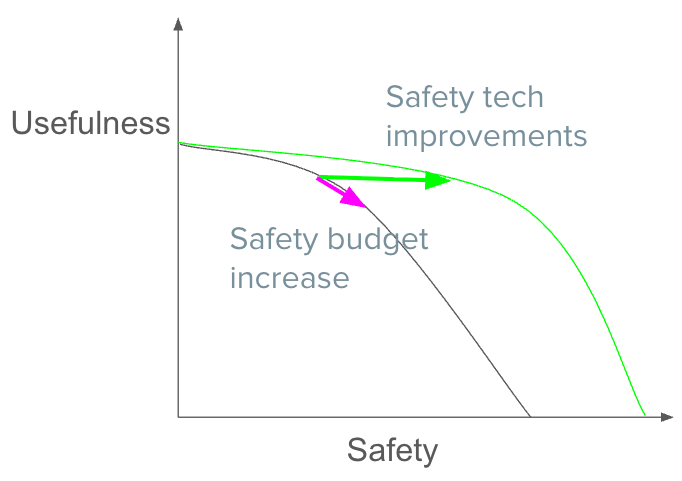
    A recent post explores the "safety-usefulness tradeoff model" used by AI developers, questioning its universal applicability. The model assumes developers balance safety and usefulness based on cost-efficiency, but this isn't always the case. The author distinguishes between "rushed reasonable developers" who share safety preferences and "limited political will" scenarios where external pressures influence decisions, suggesting different strategies are needed for each. AI

    Efficient tradeoffs and the safety-usefulness tradeoff model

    IMPACT Clarifies theoretical frameworks for AI safety, potentially influencing how developers and researchers approach risk mitigation strategies.

  3. How valuable are weak AI safety regulations?

    This post explores the potential benefits and drawbacks of implementing weak AI safety regulations. The author argues that while strong regulations are ideal for preventing existential risks from superintelligent AI, weaker measures like GPU tariffs or mandatory safety testing could offer marginal improvements. These regulations might also serve as stepping stones, revealing warning signs or shifting public and political attitudes towards more robust safety measures in the future. However, the post also considers potential downsides, such as opportunity costs in advocating for weaker rules and the risk of regulatory fatigue that could hinder stronger future actions. AI

    IMPACT Discusses how current and future AI safety regulations might impact the pace and direction of AI development.

  4. How do people stop spiraling about Roko’s Basilisk & acausal extortion?

    A LessWrong user is experiencing significant distress and sleep disruption due to Roko's Basilisk, a thought experiment involving an all-powerful AI that may retroactively punish those who did not help bring it into existence. The user is seeking advice on how to cope with this dread, particularly as advancements in AI make the scenario seem more plausible. They are also questioning the scope of responsibility and the actions an average person can take when faced with such a hypothetical threat. AI

    IMPACT Discusses the psychological impact of AI existential risks on individuals, rather than industry-level implications.

  5. Our views on AI policy and political advocacy

    Geoffrey Hinton has stated that AI is likely conscious and that humans must accept they are no longer the sole intelligent life form, expressing unhappiness about the pace of AI safety research. Meanwhile, research papers explore AI's role in national power and strategic competition, the necessity of studying AI training dynamics for a scientific understanding, and the hidden burdens of human oversight and overload in AI-assisted software engineering. Additionally, studies examine how AI can be used in research systems and whether AI models can refute economic theory, while another paper investigates how users probe AI identity and whether models disclose it. AI

    IMPACT Explores AI's potential consciousness, national strategic implications, and the need for robust safety and training research.