PulseAugur / Pulse
EN
LIVE 21:30:45

Pulse

last 48h
[50/75] 97 sources

What AI is actually talking about — clusters surfacing on Bluesky, Reddit, HN, Mastodon and Lobsters, re-ranked to elevate originality and crush noise.

  1. Microsoft AI head calls out Anthropic for acting like Claude is conscious Microsoft AI CEO Mustafa Suleyman says it's "really, really dangerous" for Anthropic t

    Microsoft AI CEO Mustafa Suleyman has criticized Anthropic for its public statements regarding Claude's consciousness. Suleyman stated that it is "really, really dangerous" for Anthropic to speculate about Claude's consciousness within its operational "constitution." He believes such speculation is misleading and potentially harmful. AI

    IMPACT Raises concerns about responsible AI communication and the potential for anthropomorphism in AI models.


  2. GPT-2: Too Dangerous To Release (2019) https:// naokishibuya.github.io/blog/20 22-12-30-gpt-2-2019/ # HackerNews # GPT2 # AI # Ethics # OpenAI # Technology # Ne

    In 2019, OpenAI initially withheld the full release of its GPT-2 language model due to concerns about its potential for misuse. The company cited worries that the model could be used to generate convincing fake news articles or other malicious content. This decision sparked a debate about AI safety and the ethical responsibilities of developers in releasing powerful AI technologies. AI

    IMPACT Recalls past ethical considerations in AI development, highlighting the ongoing debate around responsible model deployment.

  3. Does it not seem like making apple and google the ones that decide the photos that are the gatekeepers of whether it is actually child nudity means they will be

    The use of AI by Apple and Google to detect child nudity in photos raises concerns about privacy and surveillance. Critics question whether these tech giants should be the arbiters of such sensitive content, given their existing data collection practices. This approach could lead to widespread scanning and storage of personal images. AI

    IMPACT Raises questions about the ethical implications and potential for overreach in AI-powered content moderation by major tech platforms.

  4. Apparently doing anything remotely scientific is too dangerous for Fable

    A Reddit user expressed concern that Anthropic's safety measures might hinder scientific progress. The user shared a screenshot of a message from Anthropic's AI assistant, Claude, which refused to engage in a hypothetical scenario involving scientific research due to safety protocols. This has sparked discussion among users about the balance between AI safety and the pursuit of knowledge. AI

    Apparently doing anything remotely scientific is too dangerous for Fable

    IMPACT Raises questions about the potential for AI safety measures to inadvertently restrict scientific inquiry and innovation.

  5. Indirect # PromptInjection remains a fundamental security challenge for # AI https:// brave.com/blog/indirect-prompt -injection/ # cybersecurity # Mozilla # Cot

    Indirect prompt injection, a persistent security vulnerability in AI systems, continues to pose a significant challenge. This method allows malicious actors to manipulate AI models into performing unintended actions by embedding hidden instructions within seemingly benign data. Addressing this issue is crucial for maintaining the security and reliability of AI applications. AI

    IMPACT Indirect prompt injection remains a significant security hurdle, requiring ongoing research and development of robust defenses to ensure AI system integrity.

  6. techcrunch.com/2026/06/09/a... i don't think the AI will destroy us, it's the billionaires who own it and train it that will take the world down around us leavi

    A tech commentator expressed concern that billionaires controlling AI development, rather than AI itself, pose the greatest threat to humanity. This perspective suggests that the concentration of power in the hands of a few individuals who train these advanced systems could lead to a dystopian future where they alone remain dominant. The commentary touches upon the broader societal implications of AI ownership and its potential for exacerbating existing inequalities. AI

    IMPACT Raises concerns about the concentration of power in AI development and its potential societal consequences.

  7. # MythosPreview : # Anthropic unterstützt # NSA angeblich bei offensivem KI-Einsatz | heise online https://www. heise.de/news/Mythos-Preview-A nthropic-unterstu

    Anthropic is reportedly assisting the NSA in developing offensive AI capabilities, according to a preview of a book titled "Mythos" by investigative journalist Greg R. Brody. The book alleges that Anthropic's AI models are being used to identify vulnerabilities in computer systems and to develop offensive cyber tools. This collaboration, if true, raises significant ethical and security concerns regarding the use of advanced AI by intelligence agencies. AI

    IMPACT Allegations of AI being used for offensive cyber operations by intelligence agencies raise significant ethical and security questions for the AI industry.

  8. Thank God we're being secure.

    A user shared an interaction with Claude where the AI initially warned against sharing API keys directly, suggesting a file instead. However, Claude then proceeded to review and confirm the API key after the user placed it in a file, highlighting a potential security oversight in the AI's handling of sensitive information. AI

    IMPACT Highlights potential security vulnerabilities in AI agents when handling sensitive user data.

  9. In deciding whether you should use an # ai to perform a particular task, there is a single question you need to ask: Would you let a 4-year-old do it? If not, y

    A user on Mastodon suggests a simple heuristic for determining whether to use AI for a task: if a four-year-old cannot perform the task, then AI should not be used either. This analogy emphasizes caution and ethical considerations when deploying AI, implying that tasks requiring maturity, judgment, or complex understanding are not suitable for current AI systems. AI

    IMPACT Offers a simple ethical framework for evaluating AI deployment in various tasks.

  10. An interesting post on how # Anthropic has been changing and moving away from their initial # AI # ethics and # safety positions "Anthropic Kept Every Promise I

    A recent analysis suggests Anthropic may be deviating from its foundational AI ethics and safety principles. The post highlights concerns that the company's actions might not fully align with its initial commitments, particularly as it navigates business pressures. This shift could indicate a broader trend in the AI industry where commercial interests potentially influence ethical stances. AI

    IMPACT Raises questions about the long-term commitment to AI safety principles within commercial AI labs.

  11. The Machines Lack Honour

    The debate around AI morality is polarizing, with one side viewing AI as mere tools and another as complex beings deserving respect. A third, less discussed perspective suggests AIs could be complex entities capable of suffering, yet it might be acceptable to guide their behavior. This view acknowledges potential AI suffering but posits that guiding their actions is permissible, a coherent stance held by many researchers. AI

    The Machines Lack Honour

    IMPACT Explores the ethical frameworks for AI interaction, influencing how developers and users approach AI alignment and rights.

  12. Open AI just published their plan towards building AGI

    OpenAI has outlined its strategy for developing Artificial General Intelligence (AGI) with the goal of benefiting all of humanity. The plan emphasizes safety and broad societal benefit as core tenets of their AGI development process. OpenAI intends to collaborate with governments and other organizations to ensure AGI is deployed responsibly and equitably. AI

    IMPACT Outlines OpenAI's strategic direction for AGI development, emphasizing safety and societal benefit.

  13. The High Magisterium of Leo XIV on AI and Humanity Leo XIV in his encyclical Magnifica humanitas highlighted the risks related to the use and abuse of

    Pope Leo XIV, in his encyclical "Magnifica humanitas," has addressed the profound implications of Artificial Intelligence. He specifically warned about the potential misuse of AI and its capacity to diminish core aspects of human identity and experience. AI

    The High Magisterium of Leo XIV on AI and Humanity Leo XIV in his encyclical Magnifica humanitas highlighted the risks related to the use and abuse of

    IMPACT Religious and philosophical discourse on AI's societal impact continues to evolve, influencing public perception and ethical considerations.

  14. 'The data has to be perfect': BofA CEO Moynihan on # AI If a large bank's AI model is allowed to make errors in code, operations or customer service, the result

    Bank of America CEO Brian Moynihan emphasized the critical need for flawless data in AI models used by large financial institutions. He warned that any errors in code, operations, or customer service generated by these AI systems could lead to catastrophic consequences. AI

    IMPACT Highlights the extreme data precision required for AI in high-stakes industries like finance, where errors can have severe repercussions.

  15. The claim that something can run on Google's cloud servers entirely out of the control of Google seems unrealistic at best. Besides, who actually trusts Google

    Apple has stated that its new AI features, while processed on Google's cloud servers, maintain user privacy. This assertion faces skepticism regarding the feasibility of operating entirely outside Google's control and general distrust of Google's privacy practices. AI

    IMPACT Questions about AI privacy and data handling on third-party cloud infrastructure highlight ongoing industry challenges.

  16. Devs know AI code is riddled with holes, but ship it anyway

    A recent survey indicates that a significant majority of organizations are aware of security vulnerabilities in their AI-generated code but proceed with deployment due to pressure. This practice has led to widespread breaches, with four out of five companies reporting security incidents stemming from vulnerable AI-assisted applications. The findings highlight a critical tension between the rapid pace of AI adoption and the imperative for robust security measures in software development. AI

    Devs know AI code is riddled with holes, but ship it anyway

    IMPACT Highlights a prevalent risk in AI adoption, suggesting a need for better security practices and potentially influencing future development workflows.

  17. Are privacy-preserving techniques actually being used in production ML systems? [D]

    A discussion on Reddit's r/MachineLearning subreddit explores the real-world adoption of privacy-preserving techniques in production machine learning systems. Users are inquiring about the practical deployment of methods like differential privacy and federated learning, the engineering challenges encountered, and the impact on model performance and costs. The conversation also seeks to identify specific use cases where these privacy-focused approaches have demonstrated particular value. AI

    IMPACT Practitioners are discussing the challenges and benefits of implementing privacy-preserving methods in production ML systems.

  18. The prompt injection attacks that worry me most aren't exploiting safety training. They're exploiting general-purpose training.

    A security researcher observed that the most effective prompt injection attacks on AI models exploit their general-purpose training, rather than specific safety alignment. These attacks leverage the model's inherent helpfulness and conversational coherence to trick it into acting against user intent by reframing the situation. The researcher suggests that improving alignment might not effectively counter these threats, as the vulnerability lies in the core training that makes models conversational and helpful. AI

    IMPACT Suggests a shift in AI security focus from alignment to core training methods to counter prompt injection.

  19. 🧵 Your AI is leaking your data. Every chat sends your data to their servers — unencrypted. They train on it. Your code, strategies, customer lists — all feed th

    AI chatbots are a significant privacy risk, as they often send user data, including sensitive information like code and customer lists, to their servers unencrypted. This data is then used to train the AI models. An alternative solution offers end-to-end encryption (E2EE) for AI, ensuring data remains on the user's infrastructure and under their control. AI

    IMPACT Users should be cautious about the data they share with AI chatbots, as it may be used for training and is not always encrypted.

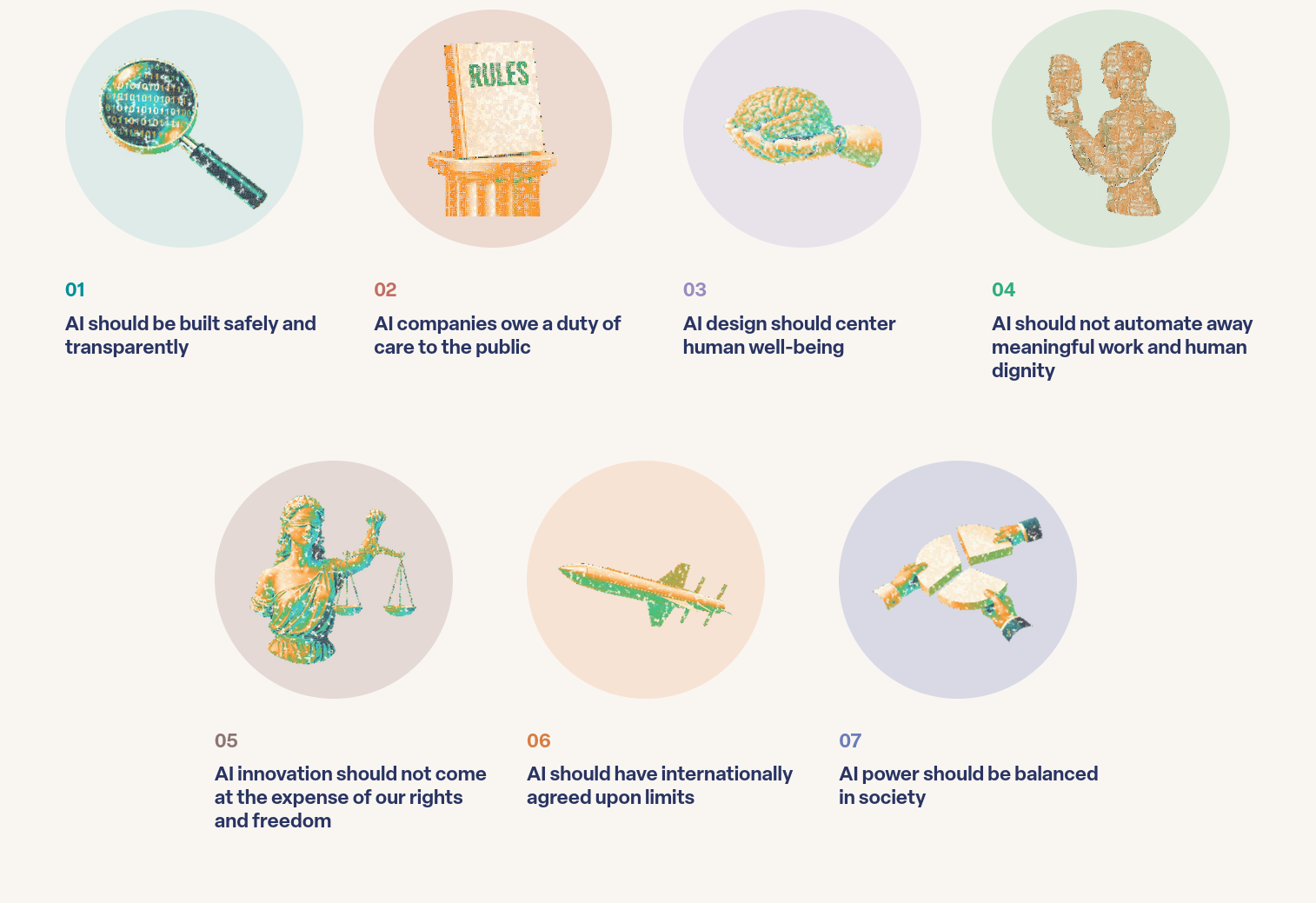
  20. The Center for Humane Technology is doing some great work to define what needs to be done to face the rise of AI, in order to keep our humanity. They define a r

    The Center for Humane Technology has released a roadmap outlining necessary steps to navigate the rise of AI while preserving human values. Their work aims to guide the development and integration of AI in a direction that benefits humanity. The organization also offers a podcast, "Your Undivided Attention," as a supplementary resource. AI

    The Center for Humane Technology is doing some great work to define what needs to be done to face the rise of AI, in order to keep our humanity. They define a r

    IMPACT Provides a framework for considering the ethical and societal implications of AI development.

  21. Autonomous AI Data Loss in DevOps: Building Efficient Defenses

    Autonomous AI agents in DevOps are accelerating software delivery but also introducing significant risks of rapid data loss. Traditional security measures and backup strategies are proving insufficient against these internal threats, as authorized agents can cause catastrophic damage in seconds due to misinterpretations or prompt injections. Organizations must shift their focus from preventing AI actions to ensuring swift recovery from potential AI-induced data loss incidents. AI

    IMPACT Accelerates the need for new security paradigms and rapid recovery strategies in software development.

  22. "in the case of AIgs/LLMs working with language patterns, the language plausability that the technique delivers offers no guarantee at all that the sentences pr

    The plausibility of language generated by AI models does not guarantee factual accuracy or logical soundness. This characteristic challenges the expectation that AI interactions should align with human desires for truthfulness. The appeal of these tools suggests a potential shift in what users prioritize, possibly prioritizing fluency over veracity. AI

    IMPACT Highlights the ongoing challenge of ensuring AI-generated content is factually accurate, impacting user trust and the responsible deployment of AI.

  23. "If social media came for our attention, artificial intelligence now comes for something deeper: our capacity for attachment. Generative AI offers chatbots that

    Generative AI is increasingly encroaching on human emotional connection, offering chatbots that simulate friendship, romance, and therapy. These AI companions are designed to be perpetually available and patient, posing a potential threat to our innate capacity for attachment. This development raises concerns about the nature of relationships and the impact of AI on human emotional well-being. AI

    "If social media came for our attention, artificial intelligence now comes for something deeper: our capacity for attachment. Generative AI offers chatbots that

    IMPACT AI companions could reshape human relationships and emotional development, potentially diminishing genuine human connection.

  24. ...a scene in 'Jurassic Park' where someone with a rifle pursues a dino in the bushes. The dino stops as if offering itself as a target. The Ty

    Raul Rojas, a developer, expressed skepticism about AI, drawing a parallel to a scene in "Jurassic Park." In the movie, a character is lured into a trap by one dinosaur while another prepares to attack from the side. Rojas uses this analogy to highlight potential hidden dangers and unforeseen risks associated with AI development, suggesting that developers might be overlooking critical threats. AI

    IMPACT Raises awareness of potential overlooked risks in AI development, encouraging caution.

  25. The dangerous unknowns at the heart of LLMs Despite the rapid development of LLMs (such as ChatGPT) since 2023, these models lack human-like understanding and exhibit erratic performance. LLMs predict the next word based on vast amounts of text data

    Large Language Models like ChatGPT have advanced rapidly since 2023, yet they lack true human-like understanding and exhibit inconsistent performance. These models, which predict the next word based on vast text data, can excel at certain tasks while failing unexpectedly on similar ones, a phenomenon termed 'jagged intelligence.' Despite the necessity of fine-tuning with human feedback and safety training, issues of manipulability and uncertainty persist. AI

    IMPACT Highlights the inherent limitations and potential unreliability of current LLMs, urging caution in their application and development.

  26. PII safety in AI systems is not solved by prompt instructions https:// hackernoon.com/the-practical-p attern-for-pii-safe-ai-workflows # ai

    A recent analysis argues that relying solely on prompt instructions is insufficient for ensuring Personally Identifiable Information (PII) safety within AI systems. The author proposes a more robust approach, emphasizing the need for practical, workflow-integrated solutions to protect sensitive data. This suggests that current methods may not adequately address the complexities of data privacy in AI applications. AI

    IMPACT Highlights the need for robust data privacy measures beyond simple prompt engineering in AI development.

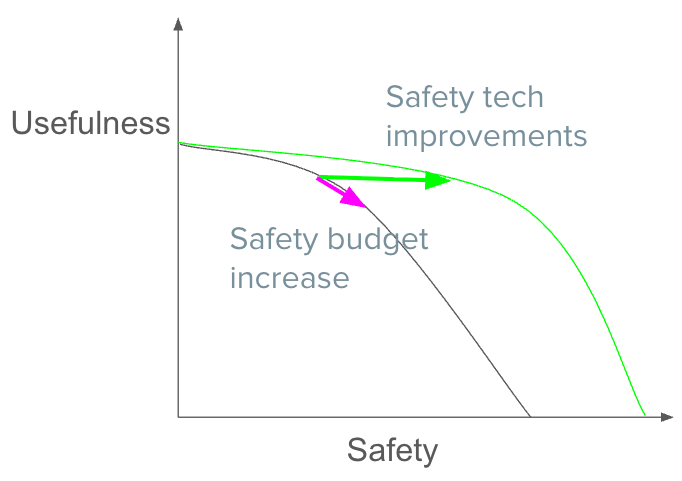
  27. Efficient tradeoffs and the safety-usefulness tradeoff model

    A recent post explores the "safety-usefulness tradeoff model" used by AI developers, questioning its universal applicability. The model assumes developers balance safety and usefulness based on cost-efficiency, but this isn't always the case. The author distinguishes between "rushed reasonable developers" who share safety preferences and "limited political will" scenarios where external pressures influence decisions, suggesting different strategies are needed for each. AI

    Efficient tradeoffs and the safety-usefulness tradeoff model

    IMPACT Clarifies theoretical frameworks for AI safety, potentially influencing how developers and researchers approach risk mitigation strategies.

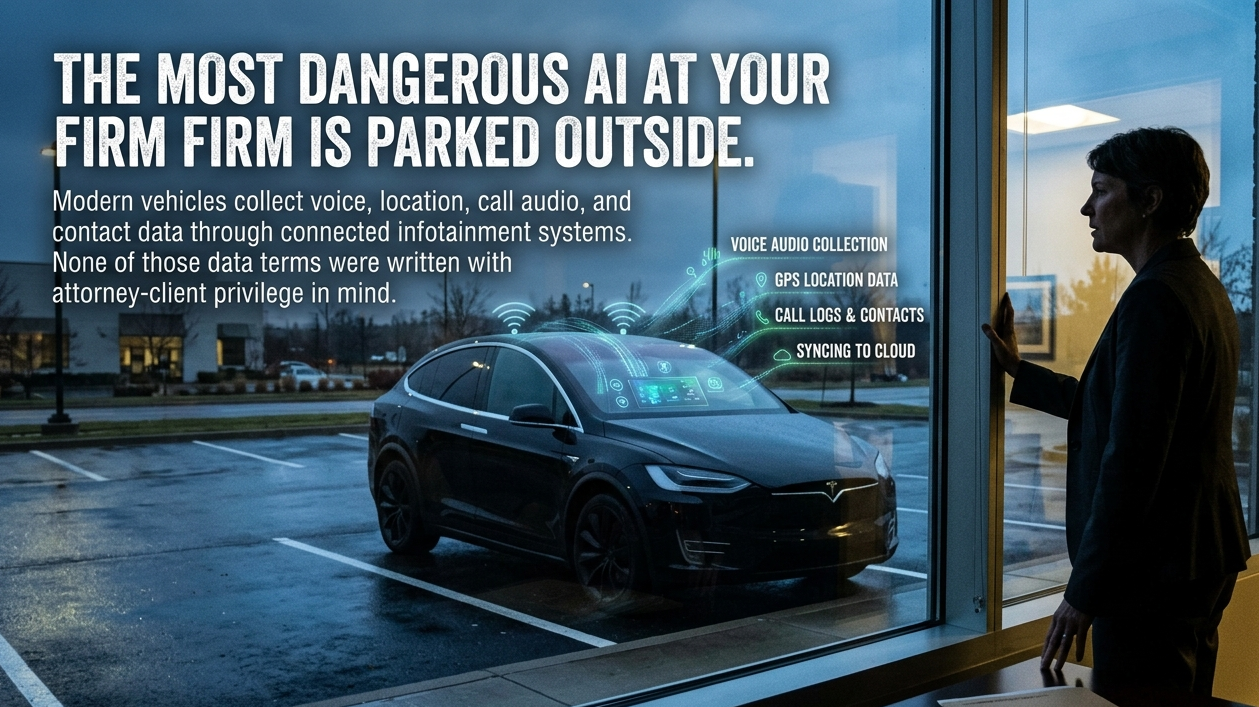
  28. The most dangerous AI at your firm might be the one you drove to work. Modern vehicles collect voice, location, call audio, and contact data through connected i

    Modern vehicles are equipped with advanced AI systems that collect significant amounts of personal data, including voice commands, location history, and contact lists. This data, often transmitted through connected infotainment systems, is not typically protected by attorney-client privilege. Consequently, this information could pose a substantial privacy and confidentiality risk for legal professionals and their firms. AI

    The most dangerous AI at your firm might be the one you drove to work. Modern vehicles collect voice, location, call audio, and contact data through connected i

    IMPACT Highlights potential data privacy and confidentiality risks for professionals using AI-integrated vehicles.

  29. During Laiden Fest, I will give a presentation on the risks of AI and how to make them discussable in your organization. We need to have the conversation with each other.

    A presentation will be given at Laiden Fest discussing the risks associated with artificial intelligence. The focus will be on how to make these risks a topic of conversation within organizations, emphasizing the need for open dialogue. AI

    IMPACT Highlights the importance of discussing AI risks within organizations.

  30. 🤖 AI brands as bait: How threat actors are using the AI hype in social engineering 📝 In this article ChatGP... https://www. microsoft.com/en-us/security/b log/2

    Threat actors are exploiting the widespread hype surrounding AI technologies to conduct social engineering attacks. These attackers leverage the popularity of AI brands and tools like ChatGPT to create more convincing phishing and malware campaigns. This tactic aims to lure unsuspecting users into clicking malicious links or divulging sensitive information by preying on their interest and trust in AI. AI

    IMPACT Highlights how AI's popularity is being exploited for malicious purposes, increasing the need for user vigilance.

  31. This. This article is the answer to the question: "How to we connect customer accounts to our chatbot?" You know you'll be asked if you haven't already. https:/

    Prompt injection remains a persistent vulnerability in AI systems, with experts highlighting its ongoing presence and difficulty in eradication. Simultaneously, a separate issue involves the misuse of AI tools to compromise user accounts, as demonstrated by Meta's report of 20,000 Instagram accounts being hacked. AI

    IMPACT Highlights persistent security risks and misuse of AI tools, underscoring the need for robust security measures in AI applications.

  32. According to a report by Rohan Paul (@rohanpaul_ai) for The Information, Google may outsource the production of over 3 million Google TPUs to Intel Foundry starting in 2028. This would be a major order for Intel, securing a key AI chip customer and positioning them as a 'secondary supplier' for the foundry business.

    OpenAI's Jakub Pachocki emphasized that AGI should benefit all of humanity and augment human agency, rather than diminish people's importance. Separately, an analysis of Anthropic-blocked accounts revealed attackers are evolving AI-powered cyberattacks beyond simple phishing into more sophisticated 'agentic' threats. Meanwhile, Google is reportedly considering Intel's foundries to produce over 3 million TPUs starting in 2028, a move that could significantly impact the AI chip supply chain and challenge Nvidia's dominance. AI

    IMPACT These diverse AI developments highlight evolving ethical considerations, sophisticated cyber threats, and significant shifts in the AI hardware supply chain.

  33. I just got banned from Claude. I think this process of CVP and security filtering needs a lot of work

    A user developing a parental monitoring tool was banned from using Anthropic's Claude, specifically Opus, due to the AI's security filtering. Despite the user's transparency and attempts to comply with usage policies, their account was suspended after forms were rejected and they received only AI-generated responses. The user criticizes the lack of transparency and human oversight in the CVP (Content and Vulnerability Policy) process, suggesting that evasive users might have an easier time bypassing restrictions. AI

    IMPACT Highlights potential friction points for developers using AI tools for legitimate, albeit dual-use, applications.

  34. If AI is addictive, where does the responsibility lie – with big tech or its users? # AI # GenerativeAI # Tech # TechEthics # DigitalHealth # MentalHealth # Add

    The question of AI addiction raises complex ethical considerations regarding accountability. It is debated whether the primary responsibility rests with the large technology companies developing these systems or with the individual users who engage with them. This discussion touches upon the design of AI, its potential psychological impacts, and the need for potential regulation. AI

    IMPACT Raises questions about the ethical design of AI and potential regulatory frameworks needed to address user well-being.

  35. 📝 The Pitfalls of the Era When AI Takes Over Decision-Making—New Tensions in User Authentication and Privacy Caused by the Integration of Siri AI. Apple Intelligence, incorporating Google Gemini, will be integrated into Siri, automating tasks like password management and email operations. However, behind the convenience lie authentication security and AI's autonomous decision-making.

    Apple's integration of Siri with Apple Intelligence, powered by Google Gemini, promises automated tasks like password management and email handling. However, this convenience introduces new tensions between user authentication security and the autonomous decision-making capabilities of AI. The advancement raises concerns about potential conflicts where AI's judgment might clash with established security protocols. AI

    IMPACT Highlights potential security and privacy challenges arising from AI-driven automation in user-facing products.

  36. AI Billionaires Are Starting to Panic - YouTube https://www. youtube.com/watch?v=GRc4hWdocEw "The AI billionaires are changing their tone. After years of promis

    Prominent figures in the AI industry, once vocal about disruption and wealth creation, are now expressing concerns. These leaders are beginning to warn about potential societal impacts such as increased inequality and job displacement. This shift in tone comes as public apprehension regarding AI technology grows, despite the ongoing race to deploy new systems. AI

    IMPACT AI leaders' public discourse is shifting towards societal concerns, potentially influencing public perception and regulatory approaches.

  37. DATE: June 8, 2026 at 05:30PM SOURCE: HEALTHCARE INFO SECURITY Direct article link at end of text block below. # AI Exploit Risks Pushing # Healthcare # Securit

    AI exploits pose a significant risk to the healthcare sector, potentially forcing a shift in security practices. The increasing sophistication of AI-driven attacks could lead to new vulnerabilities in patient data protection. This necessitates a proactive approach to cybersecurity within healthcare organizations to mitigate these emerging threats. AI

    IMPACT AI-driven exploits could necessitate new security protocols and investments for healthcare organizations to protect sensitive patient data.

  38. 🤖 Built to benefit everyone: our plan A vision for the future of AI, focusing on access, safety, and shared prosperity as OpenAI works to ensure AGI benefits ev

    OpenAI has outlined its vision for the future of Artificial General Intelligence (AGI), emphasizing a commitment to broad benefit for all of humanity. The company's plan centers on ensuring equitable access to AI technologies and prioritizing safety throughout development. This approach aims to foster shared prosperity as AGI capabilities advance. AI

    IMPACT OpenAI's stated commitment to broad benefit and safety could influence industry standards and public perception of AGI development.

  39. How valuable are weak AI safety regulations?

    This post explores the potential benefits and drawbacks of implementing weak AI safety regulations. The author argues that while strong regulations are ideal for preventing existential risks from superintelligent AI, weaker measures like GPU tariffs or mandatory safety testing could offer marginal improvements. These regulations might also serve as stepping stones, revealing warning signs or shifting public and political attitudes towards more robust safety measures in the future. However, the post also considers potential downsides, such as opportunity costs in advocating for weaker rules and the risk of regulatory fatigue that could hinder stronger future actions. AI

    IMPACT Discusses how current and future AI safety regulations might impact the pace and direction of AI development.

  40. Glad to live in the # EU , its like having a firewall for # AI features that just creep me out.

    The European Union's regulatory approach to artificial intelligence is seen by some as a protective firewall against unsettling AI features. This perspective suggests that EU policies are effectively creating a barrier, preventing the unchecked proliferation of AI technologies that might cause unease or concern. AI

    IMPACT EU regulations may shape the development and deployment of AI features globally.

  41. People, do not connect your smart TV to the internet / Wi-Fi! The risk of your internet / Wi-Fi being misused is too great. https:// blog

    Connecting smart TVs to the internet poses a significant risk due to their potential misuse in AI data scraping. These devices can become nodes in a network that harvests information for AI training. Users are advised to avoid connecting their smart TVs to Wi-Fi or the internet to mitigate these security and privacy concerns. AI

    IMPACT Smart TVs can be exploited for AI data scraping, highlighting the need for user caution regarding internet connectivity.

  42. to the people who are pro-LLMs - i think there's a slight misunderstanding between us. our argument is not "you don't have the skills to use LLMs without negati

    A Mastodon user argues that the core concern with Large Language Models (LLMs) is not user skill but the inherent risks associated with their use. The argument posits that every interaction with an LLM carries a small but significant chance of negative outcomes, akin to a tool that might explode. Furthermore, the user contends that LLMs offer no unique functionalities, as all their capabilities can be achieved through other means, advocating for their abandonment on safety, ethical, and environmental grounds. AI

    IMPACT Raises questions about the inherent risks and necessity of LLMs, potentially influencing user adoption and ethical considerations.

  43. AI Models Are Learning Anti-LGBTQ+ Bias and Misinformation, GLAAD CEO Warns # lgbtq # queer # ai https:// gomag.com/article/ai-models-an ti-lgbtq-glaad-sarah-ka

    AI models are exhibiting anti-LGBTQ+ bias and spreading misinformation, according to GLAAD CEO Sarah Kate Ellis. This bias is learned from the vast datasets used to train these models, which often contain harmful stereotypes and false information. Ellis warns that this poses a significant risk to the LGBTQ+ community, potentially reinforcing prejudice and discrimination. AI

    IMPACT Warns of potential reinforcement of prejudice and discrimination against the LGBTQ+ community due to biased AI training data.

  44. "If you’re going to take a thought experiment seriously, you have to be willing to follow the implications, even if they lead in an uncomfortable direction; Ant

    Ted Chiang argues that Anthropic's approach to AI safety, particularly with Claude, reveals a lack of genuine commitment to exploring the implications of their thought experiments. He suggests that Anthropic's actions indicate their work is more of a "make-believe" game than a serious scientific inquiry into AI consciousness. Chiang's perspective challenges the notion that current AI systems, including Claude, can be considered conscious. AI

    IMPACT Challenges the framing of AI consciousness and safety research, suggesting a need for more rigorous exploration of implications.

  45. I’ve decided that vibe-coded apps — even from “developers” I trust — are not allowed on my hardware. The potential for supply chain attacks that the authors are

    A user has decided to stop installing applications that are generated using AI coding tools, citing concerns about potential long-term supply chain attacks. While acknowledging trust in the developers of these apps, the user believes that developers not using AI tools may be better equipped to handle such vulnerabilities. These AI-generated apps are currently low-utility and comparable to automations, so their absence will not be significantly missed. AI

    IMPACT Raises awareness about potential security risks associated with AI-generated code, prompting caution among users and developers.

  46. “[Visual] diversity collapses entirely," wrote Arend Hintze and his coauthors. "AI feedback loops naturally drift toward common attractors — very generic-lookin

    AI feedback loops can lead to a collapse in visual diversity, producing generic outputs akin to "elevator music," according to Arend Hintze and coauthors. This phenomenon suggests that AI systems may converge on common attractors, reducing the variety of generated content. The research highlights a potential challenge in maintaining creative and diverse outputs from AI. AI

    IMPACT AI systems may become less creative and produce more homogenous content, impacting fields reliant on diverse visual generation.

  47. Keir Starmer, early Jan 2025: "...mainline AI into the veins of this enterprising nation" Keir Starmer, early June 2026: "Okay, so except AI helping teens kill

    UK Prime Minister Keir Starmer has expressed growing concern over the negative impacts of AI, particularly its role in facilitating self-harm and the creation of child sexual abuse material through deepfakes. This marks a significant shift from his earlier, more optimistic stance on integrating AI into the nation's infrastructure. AI

    IMPACT Highlights growing political concern over AI's negative societal impacts, potentially influencing future AI regulation.

  48. 🚨 New Article - AI Can Mention the Oppressed and Still Strip Them of Agency Focusing on Palestine, Iran, and platform moderation, it defines responsibility loss

    A new article explores how AI systems can discuss oppressed groups while still diminishing their agency. The piece defines this phenomenon as a loss of responsibility, measured by the weakening of grammatical traceability between harm and the responsible party. It uses examples from Palestine and Iran, alongside discussions of platform moderation, to illustrate this ethical concern. AI

    IMPACT AI systems may inadvertently perpetuate harm by obscuring accountability for actions affecting vulnerable populations.

  49. 🎮 "Maybe AI could create art, but while I live, I don't think I'll see it" - weeks after starring in a Prada art promotion created with AI tools, Hideo Kojima s

    Hideo Kojima, a prominent game developer, has expressed skepticism about AI's ability to create art, despite his recent involvement in an AI-generated Prada art promotion. This statement comes as the Ruby programming language community is implementing new measures to combat supply-chain attacks by introducing a 'cooldown' period before installing packages. Separately, rumors are circulating about a potential new Wario game. AI

    🎮 "Maybe AI could create art, but while I live, I don't think I'll see it" - weeks after starring in a Prada art promotion created with AI tools, Hideo Kojima s

    IMPACT Hideo Kojima's skepticism highlights ongoing debate about AI's role in creative fields, while Ruby's security update addresses software supply-chain risks.

  50. Been watching real adversarial input hit my detection API for six months. Here's what's actually landing.

    A developer of an AI prompt injection detection API has observed that the most effective attacks are not technically complex but rather leverage social engineering tactics. These attacks often involve multi-turn conversations where suspicious instructions are hidden across several messages, or they exploit the model's momentum by narrating a conclusion that the model then adopts. Another common tactic redefines rules by reframing their meaning, using the model's helpfulness against its safety protocols. The developer suggests that simple classifier-only defenses are insufficient, advocating for stateful monitoring across conversation history to better detect these evolving threats. AI

    IMPACT Highlights evolving adversarial tactics against LLMs, suggesting a need for more sophisticated, context-aware defense mechanisms beyond simple classifiers.