PulseAugur / Pulse
EN
LIVE 21:40:56

Pulse

last 48h
[15/15] 97 sources

What AI is actually talking about — clusters surfacing on Bluesky, Reddit, HN, Mastodon and Lobsters, re-ranked to elevate originality and crush noise.

  1. What will be the next breakthrough in ASR? [D]

    The field of Automatic Speech Recognition (ASR) is seeing rapid advancements driven by two primary factors: the increasing availability of pseudo-labeled data and the emergence of new model architectures. While models like Whisper-large-v3 and Nvidia Parakeet v3 demonstrate the power of large-scale supervised training, the discussion questions whether self-supervised learning approaches will be phased out for ASR tasks. This contrasts with computer vision, where self-supervised methods like Dinov3 are highly performant, prompting speculation about a similar breakthrough in speech processing. AI

    IMPACT Discussion explores the potential shift from self-supervised to supervised learning in ASR, impacting future model development and research focus.

  2. KrunalSinh Sisodia (@krunalbuilds) explains that the new breakthrough in ML is not about replacing existing math, but about connecting and reapplying existing concepts like LatentMoE, MLA, LoRA, SVD, and Eigen Decomposition. A lineage of the latest model architectures and parameter-efficient techniques.

    Recent discussions in machine learning highlight that breakthroughs stem from novel combinations and applications of existing mathematical concepts, rather than entirely new theories. Techniques like LatentMoE, MLA, LoRA, SVD, and eigendecomposition exemplify this trend of re-purposing established ideas. Furthermore, the importance of rigorous experimental methodologies, such as ablation studies, is emphasized for validating causal relationships and isolating variables, which is crucial for model improvement and research verification. AI

    IMPACT Highlights how incremental innovation through combining existing techniques drives ML progress, emphasizing rigorous experimentation for validation.

  3. Papers figures [D]

    A user on r/MachineLearning is questioning the professional appearance of research papers that employ varied figure styles. They believe inconsistent visual elements like colors, backgrounds, and grids detract from a paper's overall polish. AI

  4. UIUX Considerations for AI Services, Including Risks

    Three articles from Qiita discuss the implications of AI in software development. One piece explores risk-aware UI/UX design for AI services, emphasizing user experience considerations. Another article explains vector search as utilized by AI and LLMs, touching on technologies like PostgreSQL and RAG. The third article posits that less experienced engineers who rely on AI for coding tasks like React may fall behind in their own skill development. AI

    IMPACT Discusses how AI tools and techniques are influencing software design, development workflows, and the skill progression of engineers.

  5. New Science Blog: Why has AI advanced faster in coding than in biology?

    Anthropic's new science blog post explores why AI has made greater strides in coding than in biology. The post likens biological databases to cities designed before cars, making them difficult for AI agents to navigate. It suggests that building appropriate infrastructure is key to enabling AI agents to effectively process and utilize biological data. AI

    IMPACT Offers insights into the challenges and potential solutions for AI's application in biological data analysis.

  6. I have just lost an afternoon assessing a manuscript as editor. A map of paleo-climate seemed oddly inaccurate. The authors acknowledged it was AI produced and

    An academic editor spent two hours reviewing a manuscript that included an AI-generated map of paleo-climate data. The authors claimed the map was accurate and had been checked, but the editor discovered the information was fabricated and the provided sources were irrelevant or false. This incident highlights issues with AI-generated content in academia, particularly when authors misrepresent the verification process. AI

    IMPACT Highlights potential for AI-generated content to be inaccurate and misleading in academic settings, necessitating careful human oversight.

  7. "Let me first jump to the claim that’s most painful for me, speaking as a technologist and as an author on the Stochastic Parrots 🦜 paper: No, “Artificial Intel

    A technologist and author of the "Stochastic Parrots" paper clarifies that while Artificial Intelligence (AI) itself is not a stochastic parrot, Large Language Models (LLMs) are. The author emphasizes that despite this characteristic, LLMs can still be extremely useful tools. AI

    IMPACT Clarifies the distinction between AI and LLMs, framing LLMs as useful despite their stochastic nature.

  8. The Next Swan: Frank Ramsey, Variable Hypotheticals, and the Bet on Induction

    This essay explores the philosophical ideas of Frank Ramsey, particularly his redundancy theory of truth and his approach to induction. Ramsey argued that truth is not a distinct property but rather a linguistic device, contrasting with the correspondence theory. He also proposed an alternative interpretation of induction based on the coherence of betting behavior, which offers a way to manage uncertainty and assess universal laws. AI

  9. Generative AI and metacognitive laziness While I’m sceptical of their experiment research design*, the concept of metacognitive laziness from this paper is clea

    A new concept, "metacognitive laziness," describes how students may become overly reliant on AI tools, offloading cognitive effort and hindering their ability to tolerate difficulty and engage in self-regulated learning. This phenomenon risks eroding essential metacognitive processes like goal setting and self-monitoring. The impact of this laziness can be amplified or mitigated by group dynamics, depending on whether the group fosters collaboration or competition. AI

    IMPACT Explores how AI reliance may hinder deep learning and self-regulation, suggesting a need for educators to consider social contexts in AI integration.

  10. @ thomasfuchs @ emilymbender This article is about a study of the use of # LLM # AI in radiology and other medical areas. The study’s conclusions confirm what w

    Linguist Emily Bender argues that the current chatbot interface for large language models (LLMs) is not beneficial, despite their utility in tasks like transcription and translation. She criticizes the design choice of LLMs using personal pronouns, which creates an illusion of self and consciousness. A study on AI in radiology highlights that LLMs lack true reasoning capabilities, merely generating plausible-sounding text without understanding concepts like truth or falsehood, which is concerning for fields like medicine that rely on rigorous evidence. AI

    @ thomasfuchs @ emilymbender This article is about a study of the use of # LLM # AI in radiology and other medical areas. The study’s conclusions confirm what w

    IMPACT Raises concerns about the inherent limitations of LLMs in reasoning and the potential for deceptive interfaces, impacting trust in AI applications, especially in critical fields like medicine.

  11. 🤖 Is the era of all-you-can-eat AI ending? (i will not promote) I am a GitHub Copilot Pro+ user. I have been enjoying 39 dollars plan that actually is worth 60

    AI layoffs are proving ineffective, as companies are warned that replacing human workers with AI agents is not yielding the expected benefits. Separately, Ruby inventor Yukihiro Matsumoto is collaborating with Anthropic's Claude to develop an experimental ahead-of-time compiler for Ruby, though it faces limitations. Additionally, Claude Design is reportedly blurring the lines between development and design by enabling teams to produce polished outputs without traditional design tools. AI

    🤖 Is the era of all-you-can-eat AI ending? (i will not promote) I am a GitHub Copilot Pro+ user. I have been enjoying 39 dollars plan that actually is worth 60

    IMPACT Companies are cautioned against relying solely on AI agents to replace human staff, while new tools like Claude Design and compiler collaborations suggest evolving AI applications in software development.

  12. A Boy That Cried Mythos: Verification Is Collapsing Trust in Anthropic

    A critical analysis suggests Anthropic's claims about its Claude Mythos Preview's security capabilities are largely unsubstantiated marketing. The author found the system card to be excessively long and lacking in specific, verifiable details regarding vulnerabilities, such as CVSS scores or CVE lists. The report implies that the narrative surrounding the model's security is exaggerated, with actual financial commitments and findings appearing significantly less impactful than publicly stated. AI

    A Boy That Cried Mythos: Verification Is Collapsing Trust in Anthropic

    IMPACT Questions the credibility of AI safety claims, potentially impacting trust in frontier model releases and their associated security narratives.

  13. Our views on AI policy and political advocacy

    Geoffrey Hinton has stated that AI is likely conscious and that humans must accept they are no longer the sole intelligent life form, expressing unhappiness about the pace of AI safety research. Meanwhile, research papers explore AI's role in national power and strategic competition, the necessity of studying AI training dynamics for a scientific understanding, and the hidden burdens of human oversight and overload in AI-assisted software engineering. Additionally, studies examine how AI can be used in research systems and whether AI models can refute economic theory, while another paper investigates how users probe AI identity and whether models disclose it. AI

    IMPACT Explores AI's potential consciousness, national strategic implications, and the need for robust safety and training research.

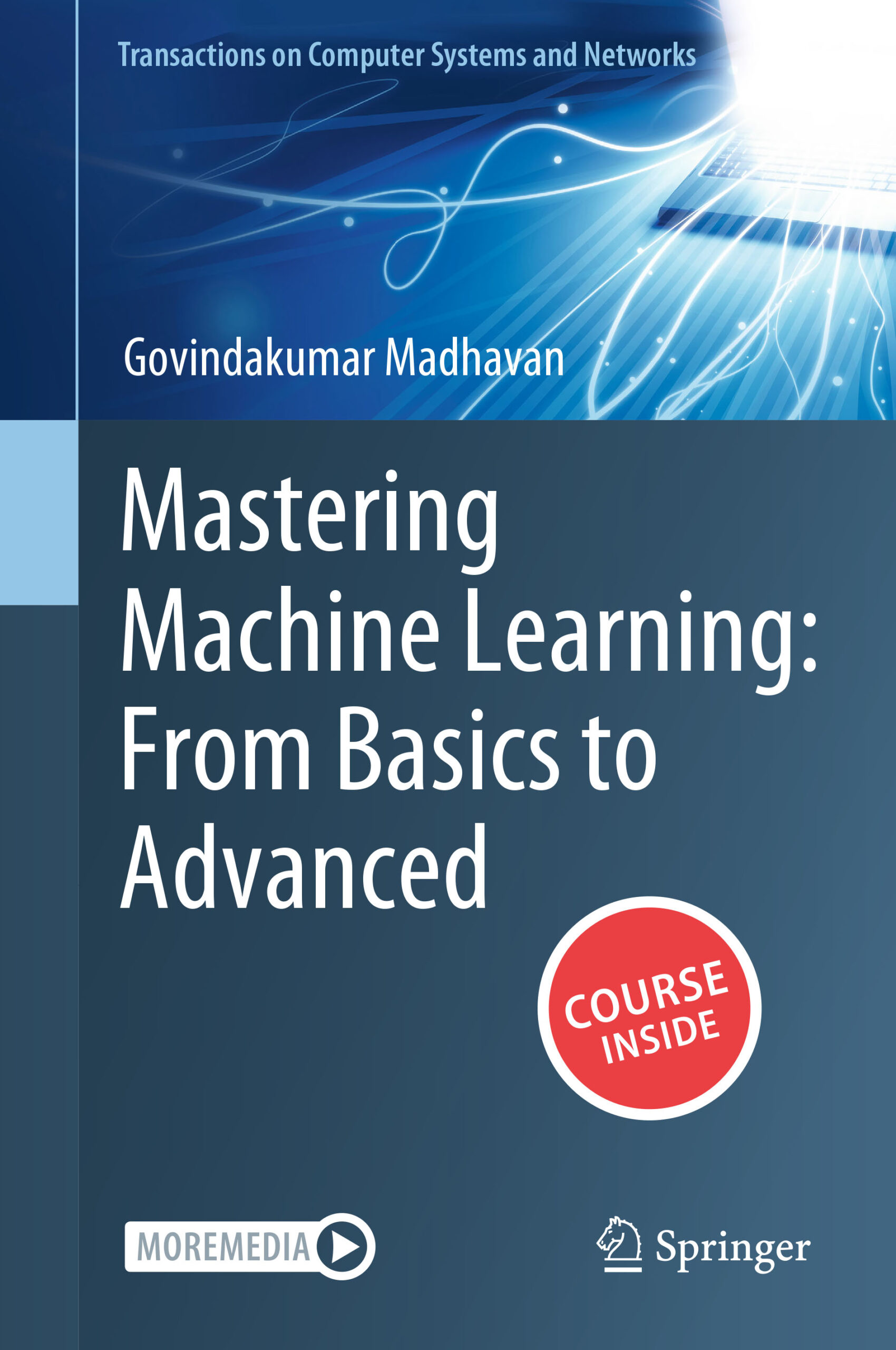
  14. Springer Nature book on machine learning is full of made-up citations

    A newly published machine learning textbook by Springer Nature, titled "Mastering Machine Learning: From Basics to Advanced," has been found to contain numerous fabricated citations. An investigation revealed that two-thirds of the checked citations were either non-existent or contained significant errors, with some researchers confirming they did not author the cited works. The publisher is currently investigating the matter, and the book's author has not confirmed whether an AI tool was used in its creation, though the nature of the errors is characteristic of LLM-generated content. AI

    Springer Nature book on machine learning is full of made-up citations

    IMPACT Highlights the ongoing challenge of AI-generated misinformation and the need for robust editorial oversight in publishing.

  15. The reanimation of pseudoscience in machine learning

    A recent article in Patterns argues that the machine learning field is experiencing a resurgence of pseudoscience, particularly in areas like consciousness and general intelligence. The authors express concern that the field's rapid growth and the pressure to publish may be leading to a decline in rigorous scientific standards. They call for a renewed focus on empirical evidence and falsifiable hypotheses to maintain the integrity of machine learning research. AI

    IMPACT Raises concerns about the scientific rigor and potential for pseudoscience within the machine learning research community.