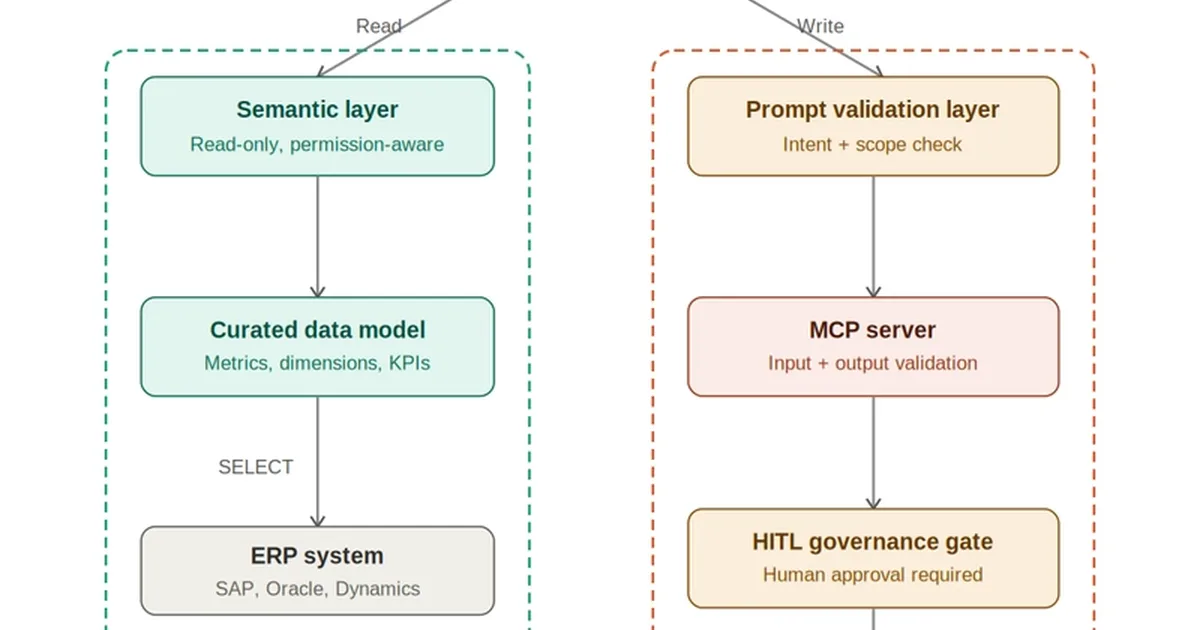
Directly connecting Large Language Models (LLMs) to enterprise systems via the Model Context Protocol (MCP) presents significant security risks, particularly when malicious prompts can trigger unintended write operations. While semantic layers offer a safe, read-only interface, MCP enables write access, creating an attack surface that could lead to data manipulation or system disruption. To mitigate these risks, a three-layered governance control system is essential for any MCP write path, including prompt validation, strict schema enforcement on the MCP server, and a mandatory human-in-the-loop approval gate for critical data operations. AI
IMPACT Highlights critical security vulnerabilities in connecting LLMs to enterprise write operations, necessitating robust governance layers for safe AI integration.
RANK_REASON The article discusses a specific protocol (MCP) and its security implications when used with LLMs and enterprise systems, which falls under AI tooling and infrastructure security.
AI-generated summary · Google Gemini · from 1 sources. How we write summaries →