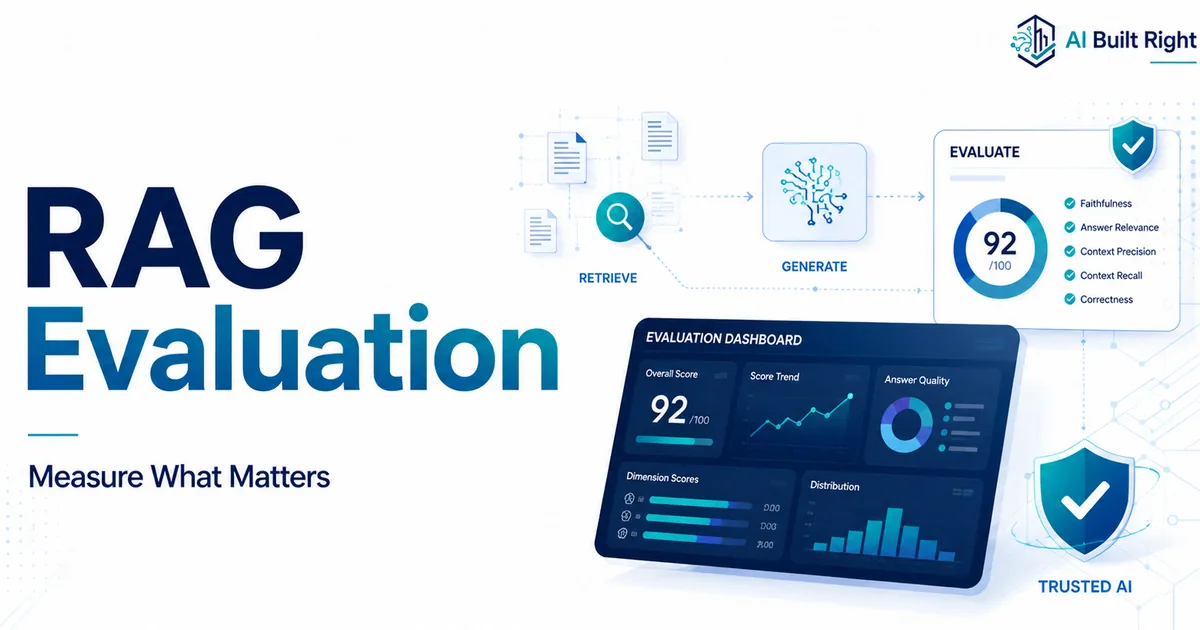
The discussion around Retrieval-Augmented Generation (RAG) and fine-tuning for AI applications highlights their distinct use cases and potential for combination. RAG is favored for frequently changing information and providing up-to-date knowledge by retrieving data from external sources, offering easier updates and lower maintenance costs compared to fine-tuning. Fine-tuning is better suited for altering a model's behavior, style, or understanding of specific terminology, embedding knowledge directly into the model. Advanced systems can leverage both approaches, using RAG for current information and fine-tuning for response quality and consistency. Evaluation frameworks are crucial for assessing RAG systems, with a focus on faithfulness and relevance, and the potential for self-grading versus independent judging is being explored. AI
IMPACT Understanding the trade-offs between RAG and fine-tuning, and robust evaluation methods, is key for optimizing AI application development and deployment.
RANK_REASON The cluster discusses technical approaches to improving LLM performance, specifically RAG and fine-tuning, including evaluation frameworks and comparative guides, which falls under research and development in AI.
- Alibaba Group
- Gemma
- Qwen
- retrieval-augmented generation
- chromadb
- Claude
- Gemini
- Ollama
- OpenAI
- vLLM
- Agentic RAG
- classic rag
- Claude 3
- embedding
- fine-tuning
- generative artificial intelligence
- GPT-4
- LangChain
- large-language models
- LlamaIndex
- Mistral AI
- MLOps
- Vector Databases
AI-generated summary · Google Gemini · from 8 sources. How we write summaries →