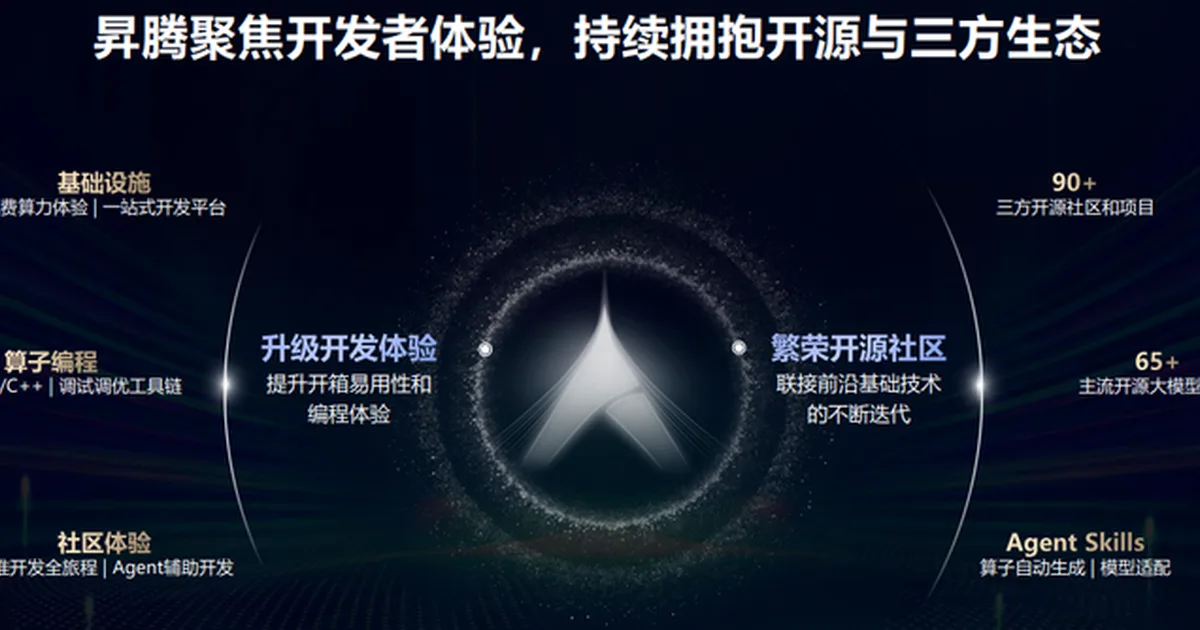
Huawei's Ascend AI accelerators are forging a unique path by eschewing CUDA compatibility to build an independent ecosystem. This strategy focuses on deep architectural changes in their latest Ascend 950 chips to address the evolving demands of large models, such as improved memory access and low-precision computation. By developing their own virtual instruction set, compiler, and runtime, Ascend aims for self-sufficiency while aligning with mainstream frameworks for developer accessibility. AI
IMPACT Ascend's independent ecosystem strategy could offer an alternative to CUDA, potentially diversifying AI hardware and software development.
RANK_REASON This article details a strategic decision by a major tech company (Huawei) regarding its AI infrastructure, focusing on ecosystem development and architectural choices rather than a specific model release or benchmark.
AI-generated summary · Google Gemini · from 1 sources. How we write summaries →