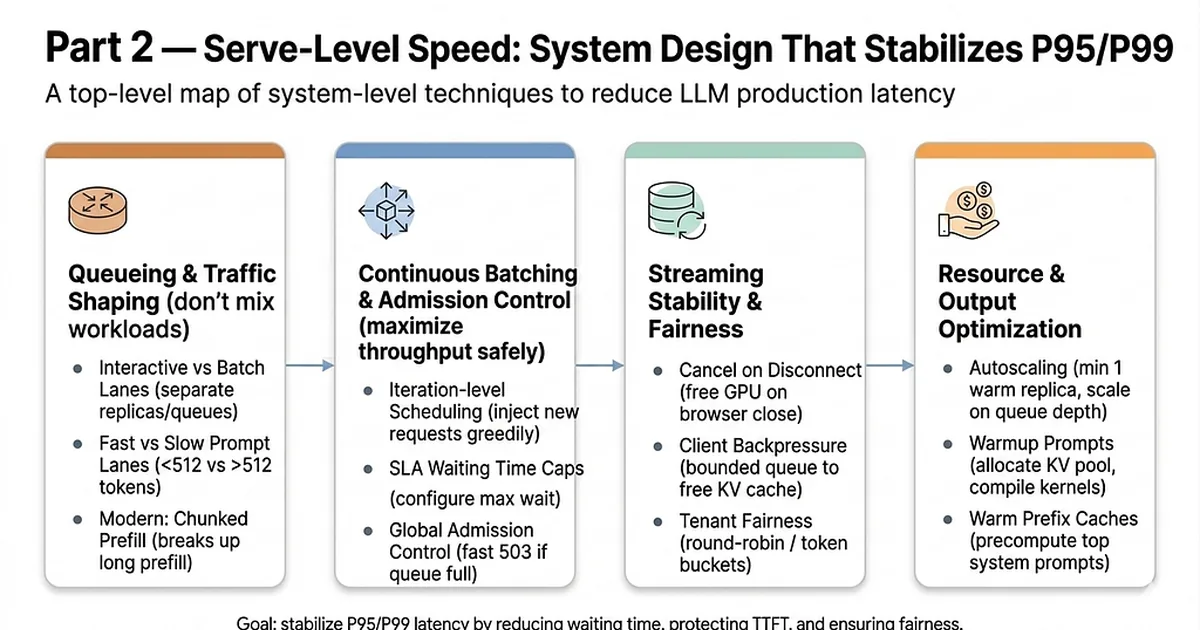
This article discusses how to optimize Large Language Model (LLM) serving performance, emphasizing that latency issues are typically caused by system bottlenecks rather than model compute. It highlights that queueing, noisy neighbors, long prompts, and slow clients are the primary culprits for high P95 and P99 latency. The author stresses the importance of measuring specific metrics like time-to-first-token and queue wait time, and suggests segmenting these metrics by traffic lane to effectively address user-perceived slowness. AI
IMPACT Optimizing LLM serving infrastructure is crucial for improving user experience and reducing operational costs for AI applications.
RANK_REASON This is a technical article discussing best practices for LLM serving infrastructure, not a release or a new development.
AI-generated summary · Google Gemini · from 1 sources. How we write summaries →